
The Met Is Investigating Objects in Its Collection With Ties to Disgraced Dealer Subhash Kapoor. Will Other Museums Follow Suit?
The Metropolitan Museum of
Art has changed course in the way it’s handling objects in its
collection that came from disgraced art
dealer Subhash Kapoor,
who was arrested in 2011 for allegedly operating one of the largest
antiquities smuggling operations in the world.
At the time, the Met said it
would hold on to the objects in its collection connected to Kapoor,
claiming they were not looted. But since Kapoor was charged with 86 felony counts in a New
York City criminal court last month, the museum has been
working with the government in India, where Kapoor was extradited,
to investigate those objects again, according to the New York
Times.
“As we have since learned of the
multiple law enforcement actions, and in the spirit of our enhanced
procedures over recent years, we are now seeking to identify
additional provenance information,” the Met said in a statement
published by the Times.
The museum declined to comment
on the extent of its collaboration with Indian authorities and
whether or not the 15 items now in question—ranging from
first-century terra-cotta rattles to an 11th-century sandstone
sculpture of a dancer—were indeed suspected of being looted. The
objects were either acquired directly from Kapoor or from
collectors that had previously purchased from the
dealer.
If the works are found to have
been obtained illegally by Kapoor, the institution will likely be
pressured to repatriate them to India.
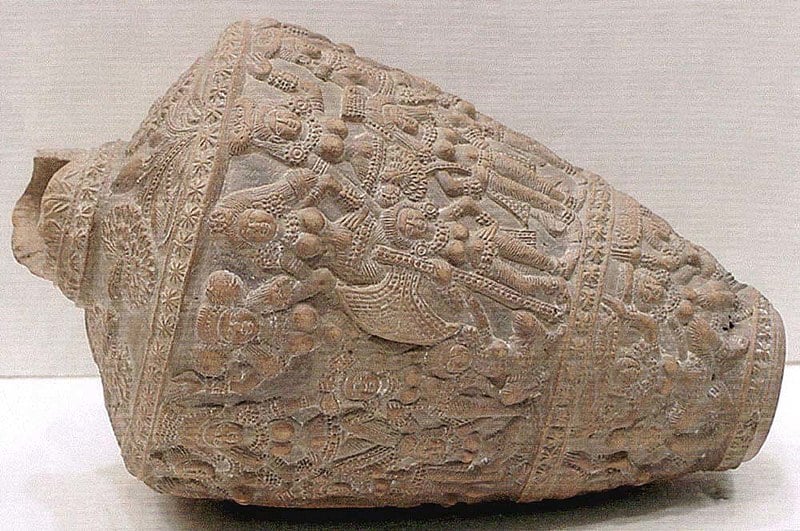
Indian pot, ca. 1st century B.C. Donated
to the Metropolitan Museum of Art in 2003 by Subhash Kapoor.
Courtesy of Wikimedia Commons.
The Met is known for its strict
authentication policy for acquiring artifacts, and reqires that
each commodity come with official export and import licenses.
However, the museum declined to tell the Times if the 15
Kapoor-connected objects entered the collection with such licenses,
noting only that, “as each gift entered the collection it underwent
the review protocol of that time — which is to acknowledge that we
and the entire field have heightened procedures in recent
years.”
The criminal charges filed
against Kapoor by the Manhattan District Attorney’s Office last
month, which include counts of grand larceny and criminal
possession of stolen property, accuse the dealer of selling $145
million in antiquities over the course of nearly 40 years. In
addition to the Met, he counted many major museums as clients,
including the Los Angeles County Museum of Art; the Museum of Fine
Arts, Boston, and the Art Institute of Chicago.
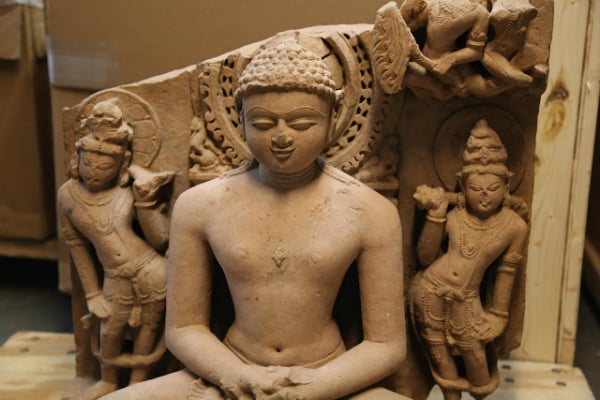
A sandstone stele of Rishabhanata from
the 10th century, believed to have been looted and seized in a raid
of Christie’s as part of an international investigation into
Subhash Kapoor. Courtesy of the Department of Homeland
Security.
Several other institutions,
including the Toledo Museum in Ohio, the Honolulu Academy of Arts,
the Birmingham Museum of Art, and the Samuel P. Harn Museum of Art
at the University of Florida, have all deaccessioned antiquities
connected to Kapoor in the past five years. It remains to be seen
whether the Met’s decision to cooperate with investigators could
influence other museums to follow suit.
Kapoor, now 70, has spent the
last eight years detained in India, awaiting trial. Following the
completion of the case, he will be extradited to the US to stand
trial for the new charges.
The post The Met Is Investigating Objects in Its Collection
With Ties to Disgraced Dealer Subhash Kapoor. Will Other Museums
Follow Suit? appeared first on artnet News.
Read more https://news.artnet.com/art-world/met-investigating-subhash-kapoor-objects-1629703
Further reading


Leave a comment