
‘I Wanted to Leave Something in Return’: Artist Claudia Comte on Why She Installed Permanent Underwater Sculptures Off Jamaica’s Coast
Snorkelers exploring the shores of Jamaica’s East Portland Fish
Sanctuary may encounter something unexpected amid the colorful
tropical fish: concrete sculptures by a sought-after emerging
artist.
Claudia Comte spent six
weeks creating the sculptures of saguaro cacti, which she installed
underwater in Julywith the help of TBA21–Academy, collector and
philanthropist Francesca Thyssen-Bornemisza’s interdisciplinary art
and science organization. In addition to delighting swimmers and
snorkelers, the artworks have an even grander purpose: to protect
marine life and ultimately help revive the local coral reef.
Cacti, a recurring form in the artist’s work, “represent the
arid terrain of the desert and symbolize for me a potential future
version of the earth on land and sea,” Comte told artnet News.
“Placing cacti on the seabed creates quite a rupture, while also
conjuring quite an emotional reaction.”
Comte was commissioned to create “The Cacti Series” as part of
her TBA21–Academy residency at Alligator Head Foundation in Portland,
Jamaica, the academy’s conservation science partner. The artworks
have been installed in a protected area of the foundation’s East
Portland Fish Sanctuary, which has seen a 16 percent increase in
species diversity since its founding three years ago.
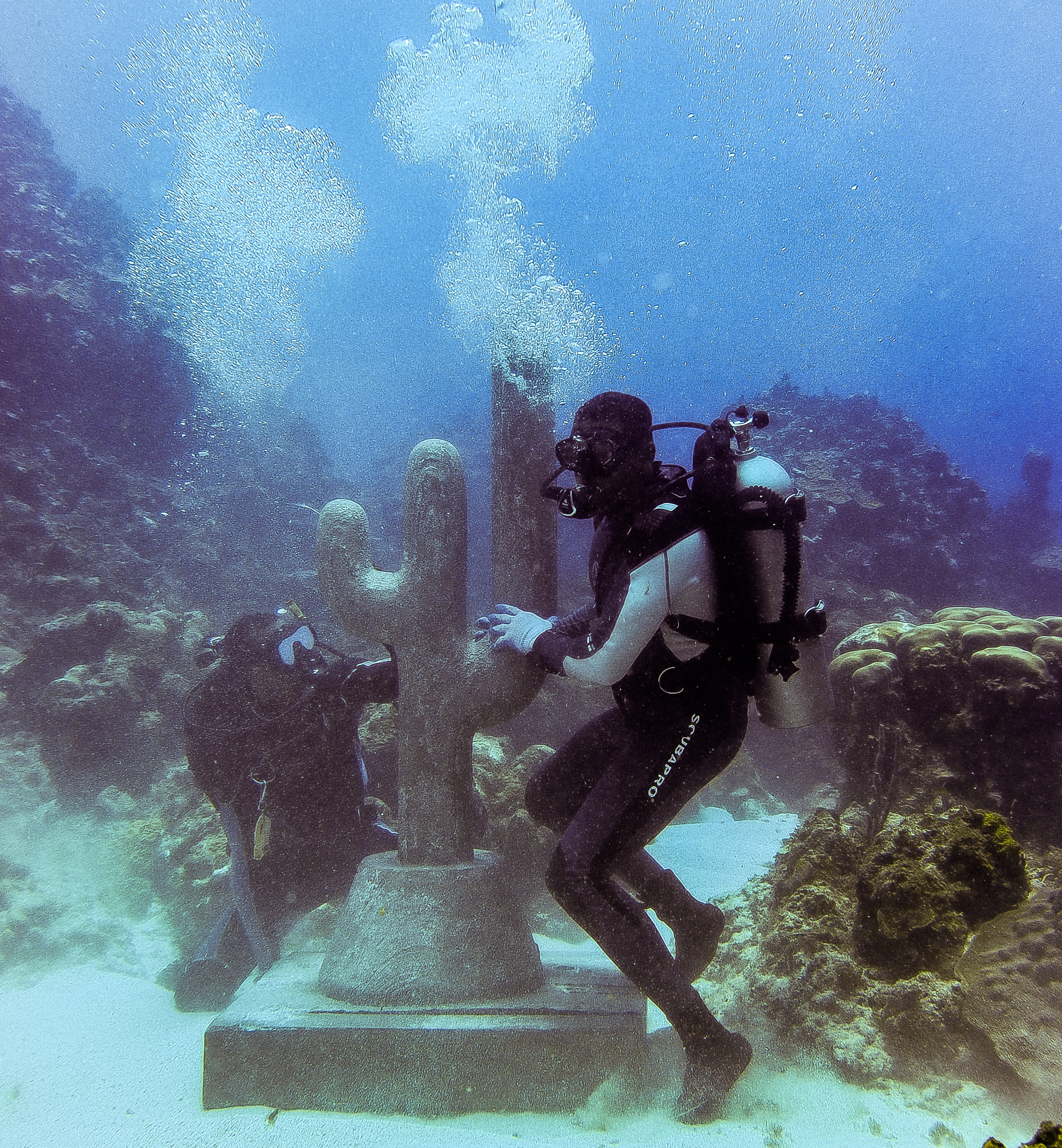
Divers with Claudia Comte’s underwater
cactus sculptures at Jamaica’s East Portland Fish Sanctuary (2019).
Photo by Francesca Thyssen-Bornemisza.
An Unlikely Project
The Comte collaboration marked the first time the academy had
done an aquatic art installation. “Always thoughtful about
environmentally sound practices, we had been quite skeptical
towards this kind of installation in the past,” director Markus
Reymann told artnet News.
It wasn’t originally Comte’s plan, either. When she first began
the residency, the artist—known for her elegant wooden
sculptures—had planned to experiment on dry land with ecologically
sourced wood endemic to Jamaica. But she decided to create the
underwater works as a way of giving back. In January, the
marine sanctuary will overlay baby coral from its nursery on the
cactus sculptures, promoting new growth.
“I felt that as I would be taking this tropical wood out of the
country I wanted to leave something in return,” Comte
said. “It’s important to me that they serve a purpose, that
they are not only sculptures on the seafloor.”
Reymann notes that the reef regeneration has an added benefit,
too: as more divers become attracted to this area of Jamaica, their
presence will be a boon to local businesses. “If Claudia’s work
helps to create a destination which subsequently provides an
economic boost to the local community, then I would be very, very
happy,” he said.
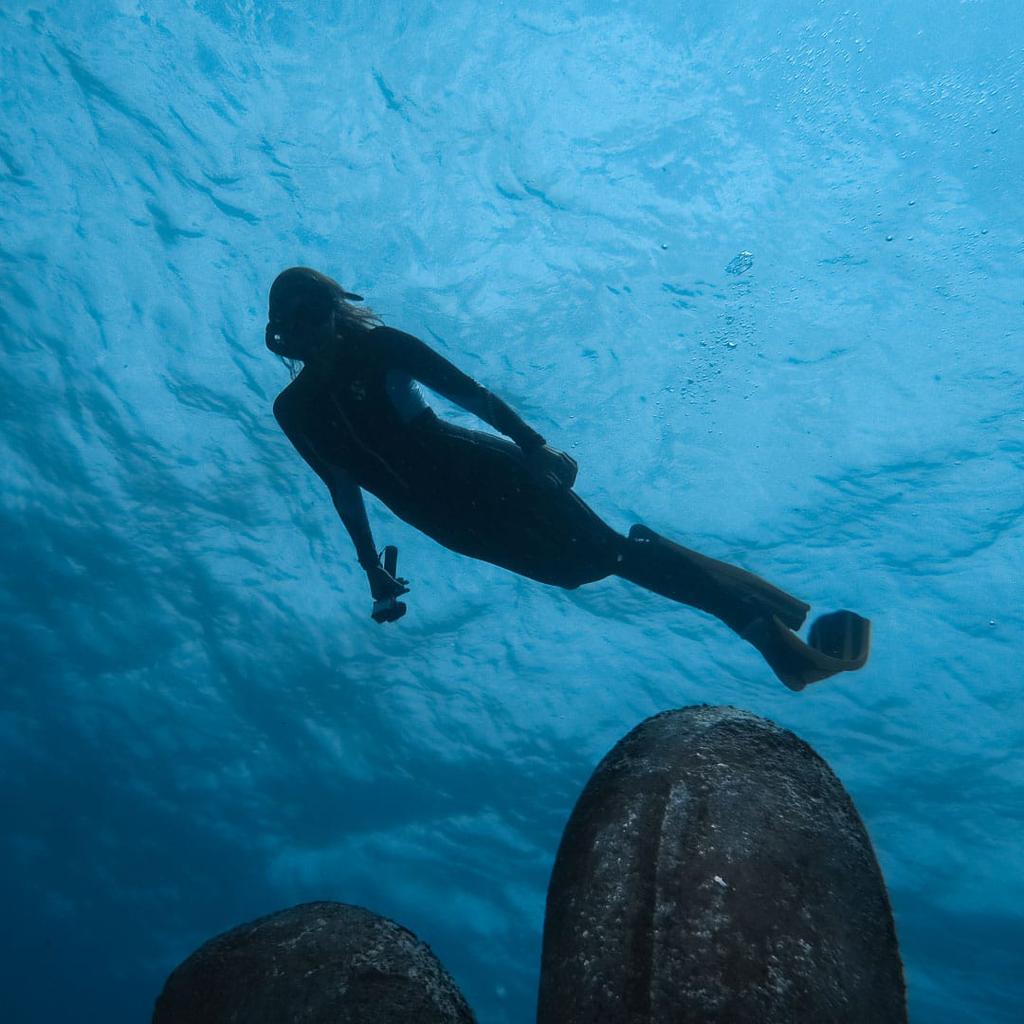
Claudia Comte installing her underwater
cactus sculptures at Jamaica’s East Portland Fish Sanctuary as part
of her TBA21–Academy residency at the Alligator Head
Foundation in Portland, Jamaica (2019). Photo by Francesca
Thyssen-Bornemisza
Under the Sea
To create the submerged sculptures, Comte worked with a wide
variety of experts. Nathaniel Petre, the academy’s first
technology resident, offered advice on how to construct a
sculpture that could withstand ocean currents. Officials at
the Oracabessa Special Fisheries Conservation Area advised
using reinforced concrete, on which coral is known to grow
well.
An experienced scuba diver, Comte was on hand in the water as
her works were being lowered into the sea, which she described as
an “incredible experience.” She knew enough about diving to
recognize how impressive it was that the technical divers were able
to smoothly position the heavy sculptures into place. “As a diver,
you are told to always remain as relaxed as possible and to
not exert too much energy, so it was really something to see what
can be done all while underwater and masked,” she said.
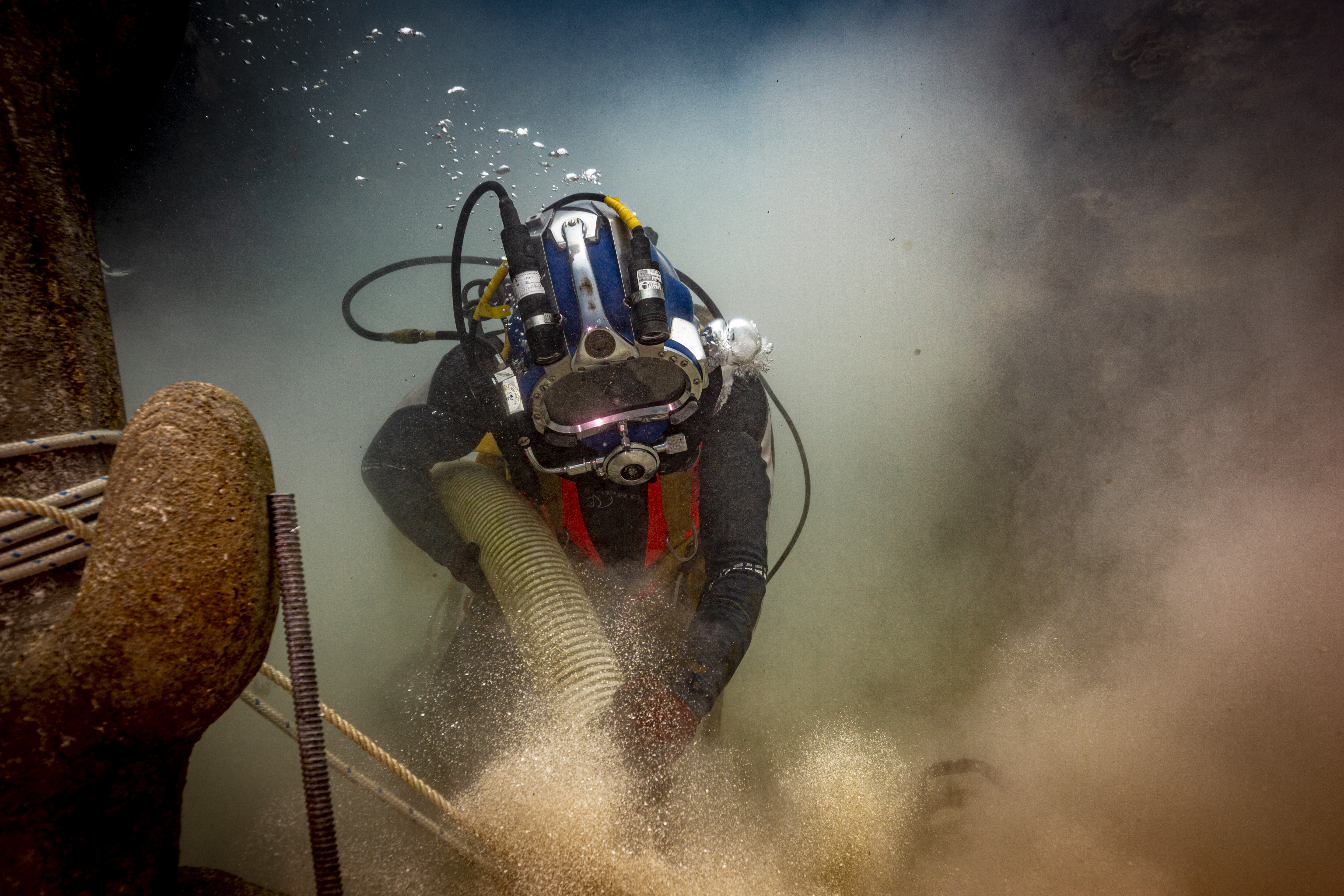
Divers installing Claudia Comte’s
underwater cactus sculptures at Jamaica’s East Portland Fish
Sanctuary (2019). Photo by F-Stop Movies.
Although there were new challenges, Comte’s creative process
remained largely the same. She based the underwater cacti on wooden
sculptures she had previously carved with a chainsaw. As with her
other works in marble, bronze, and ceramic, Comte then 3-D
scanned the pieces for reproduction.
“Using high-tech methods like 3-D scanning and milling robots is
a major part of my creative and conceptual process,” she explained,
allowing her to question the associations we have with “high” and
“low” materials.
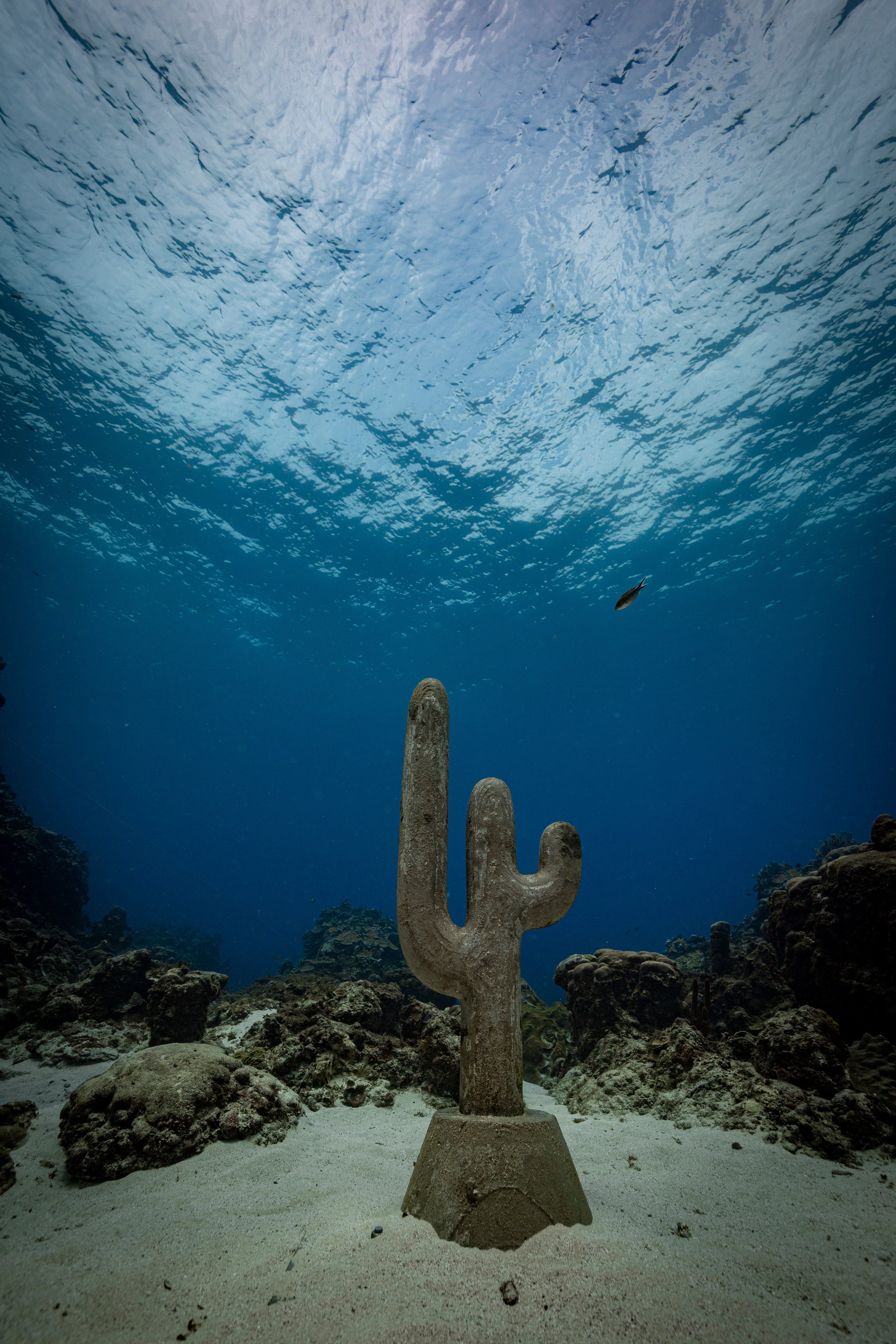
Claudia Comte, Aurélien (Underwater
Cacti), 2019. Photo by F-Stop Movies.
While Comte was creating the cactus sculptures, she was also
continuing her work with fallen trees in Jamaica, carving wooden
sculptures from 40 tree trunks.
The works, commissioned by the Thyssen-Bornemisza Art
Contemporary Foundation and created during the residency, are
inspired by the shapes of sea sponges, coral, and other creatures
living in the Jamaican reef-dwelling organisms. An exhibition of
this work, curated by Chus Martínez, is planned for 2020 at
the Museo Nacional Thyssen-Bornemisza in Madrid.
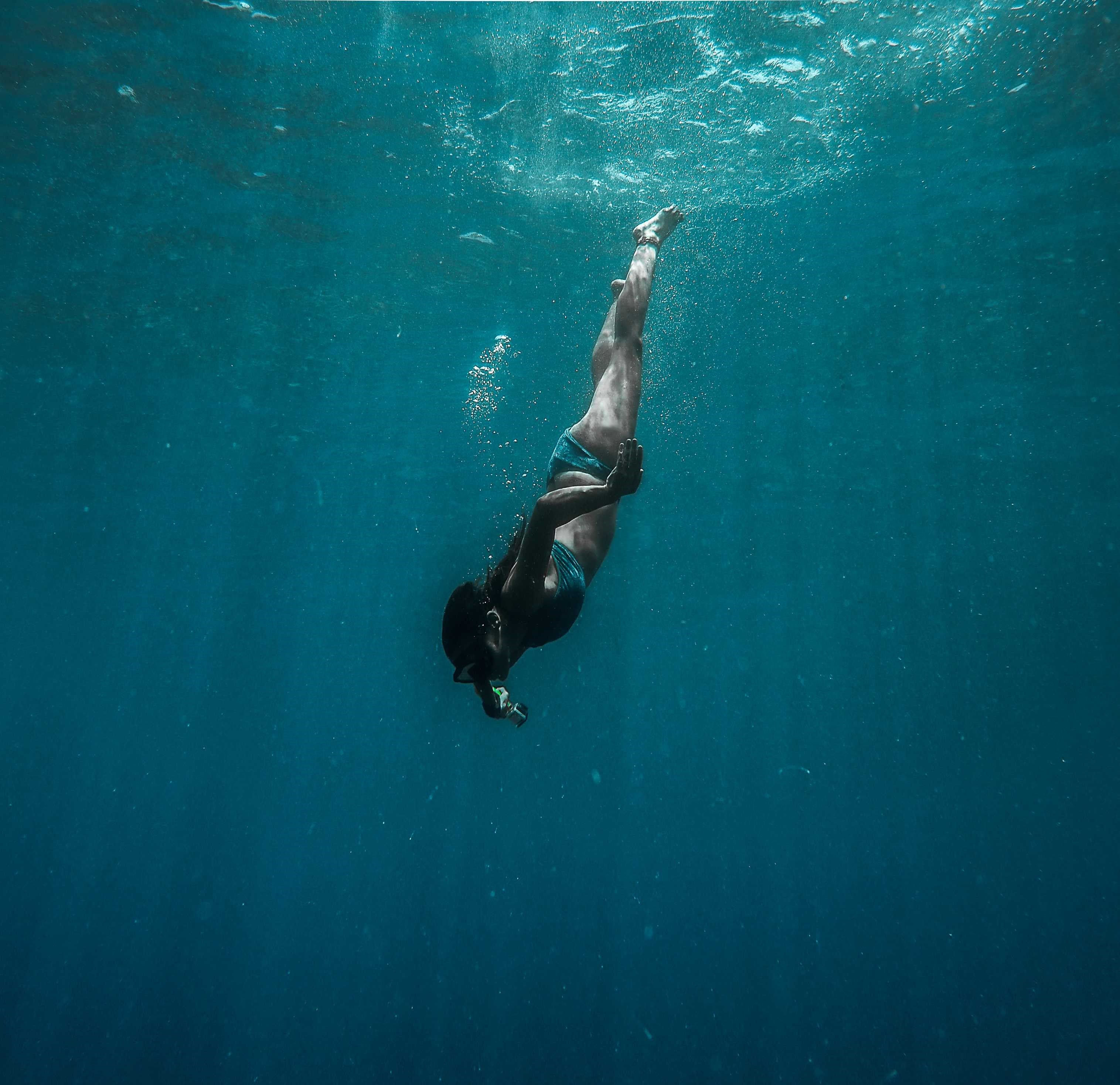
Claudia Comte installing her underwater
cactus sculptures at Jamaica’s East Portland Fish Sanctuary as part
of her TBA21–Academy residency at the Alligator Head Foundation in
Portland, Jamaica (2019). Photo by F-Stop Movies.
Prior to her Alligator Head residency, Comte took part in a
TBA 21–Academy expedition to New Zealand in summer 2018 led by
Martínez. The artist also premiered her performance The Day
That Wood and Matter Wanted to Become Salt Water at
the academy’s Venice
headquarters, Ocean Space, in September 2018.
The hope is that collectively, this programming will inspire
people to learn more about conservation and the importance of
working to combat climate change, particularly with regard to our
oceans. “Most people,” said Comte, “don’t
understand what’s happening underwater. It can seem like one giant
mysterious alien world to us.”
The post ‘I Wanted to Leave Something in Return’: Artist
Claudia Comte on Why She Installed Permanent Underwater Sculptures
Off Jamaica’s Coast appeared first on artnet News.
Read more https://news.artnet.com/exhibitions/claudia-comte-underwater-sculpture-tba21-1624486
Further reading


Leave a comment