
Beyond Context Collapse: 4 Things Fairs Can Do to Differentiate Themselves—and Strengthen the Art World in the Process
Context collapse is threatening
big art fairs. As I discussed in the first part of this
series, context collapse happens when fairs grow too large, and
too quickly, to foster as many meaningful encounters with art as
they could at a smaller scale. But we cannot dismiss fairs—large or
small—as passé or of little relevance. They remain essential to the
survival of the private market, where artists are paid for their
work and galleries have the potential to grow. So the question
becomes: what is working for fairs, and how can we improve
them?
In recent years, successful
large fairs have begun to market themselves by publicizing
benchmark sales, frequently of works priced above $1 million. These
sales largely benefit internationally established artists and
galleries that do more than $50 million in business per
year.
There is value in this approach:
If fairs did not promote the top end of the trade, auction houses
might become the only platform for this echelon. With the help of
fairs, galleries have been able to reframe the market at its
highest end. But this isn’t enough. The focus on the top has
deepened the class system at these fairs, and the benefits are
disproportionately felt.
In other words, context collapse
has created a gap between a fair’s perceived “halo effect” and its
true “network effect.” Fairs are doing their job when they assemble
collectors that galleries want to do business with, who in turn are
more likely to do business with galleries at the fair that are new
to their network. But without significant orientation to the
unknown, established collectors will gravitate toward what they
already know well.
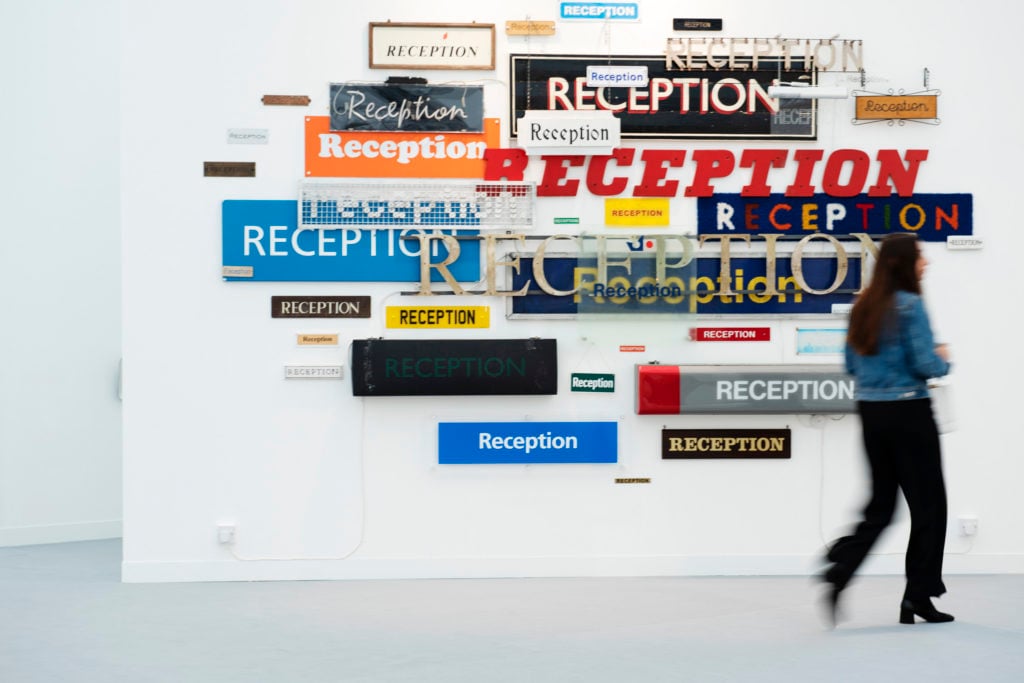
Sunday Painter, Focus, Frieze London
2018. Photo: Linda Nylind.
By refining their strategy,
however, fairs can strengthen their network effect, especially if
they are fighting for the right market. We know the majority of
galleries at fairs need a strong context and support, far more than
the few that show well-established artists. So fairs should foster
the context that is required to redefine and develop markets that
have not yet come into their own.
Context-rich fairs are
incredibly important right now—they provide a needed platform to
introduce and encounter new artists and to foster a culture of
research-based collecting. Fairs that have remained true to a
content-driven vision or a core mission often perform well for
their participating galleries and for themselves. How do these
fairs succeed in avoiding context collapse—and how can other fairs
learn from them? Here are four lessons.
1. Choose a major.
US colleges require students to
declare a major. Each art fair should choose one as well. Like
galleries, fairs cannot be everything to everyone—and they need to
differentiate themselves to avoid looking and feeling the same. And
like galleries, fairs should zero in on what they can offer that
the competition does not. In the process, they have a chance to
define what kind of collector they want to cultivate and what kind
of experience they want to create for that particular
audience.
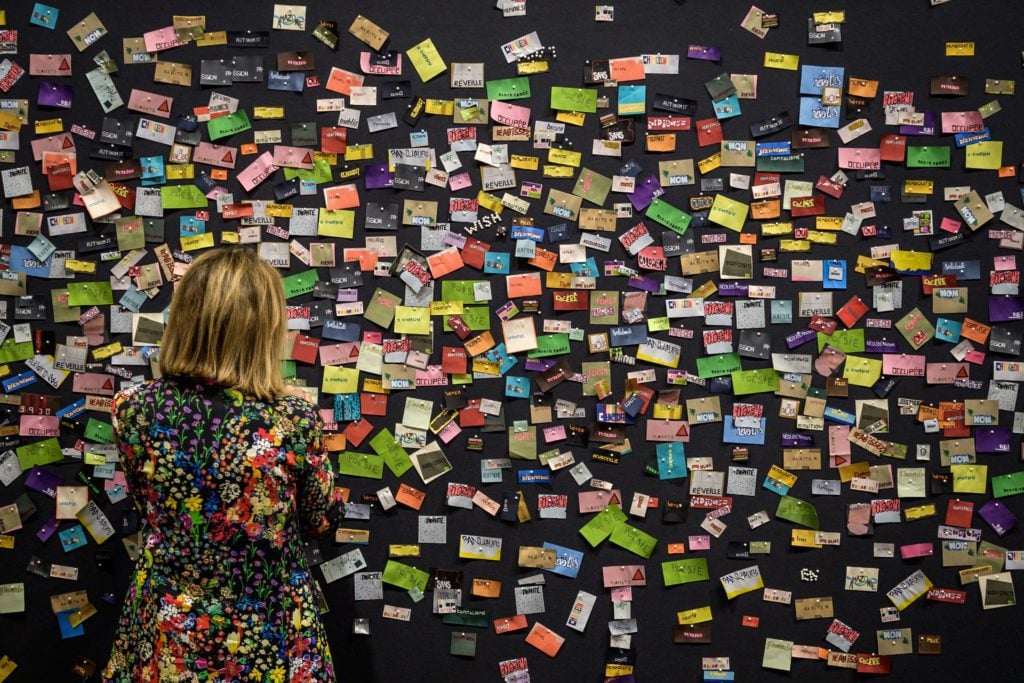
Rivane Neuenschwander’s Bataille
at VIP opening of Art Basel 2019. Photo: FABRICE COFFRINI/AFP/Getty
Images.
Today, many fairs have lost
direction. Instead of being a “place to be,” they have become a
“place I cannot afford not to be.” This is not entirely surprising
during a time of big transitions in several key industries and
economies. But by refining their focus, fairs will be better able
to combat redundancy by fostering direct connections between
collectors and galleries—which should be the goal—rather than
simply between collectors and fairs.
Right now, fairs often present
strong branding, not a strong sense of mission. But having a strong
brand is no substitute for having a strong why.
To remain relevant, fairs should consider limiting their mission to
a few objectives. For fairs, as for other businesses, pivoting,
consolidating, and collaborating are not signs of weakness, but
signs of strength. A narrowing of focus and an enrichment of
context can create a memorable experience for both collectors and
galleries.
2. Privilege experience over data.
Fairs make a decision to align
with one of three elements: people, experience, or sales
information (and the power that comes with accruing that
information). I would argue that most fairs have aligned with the
latter—at the potential expense of people, experience, and
perception.
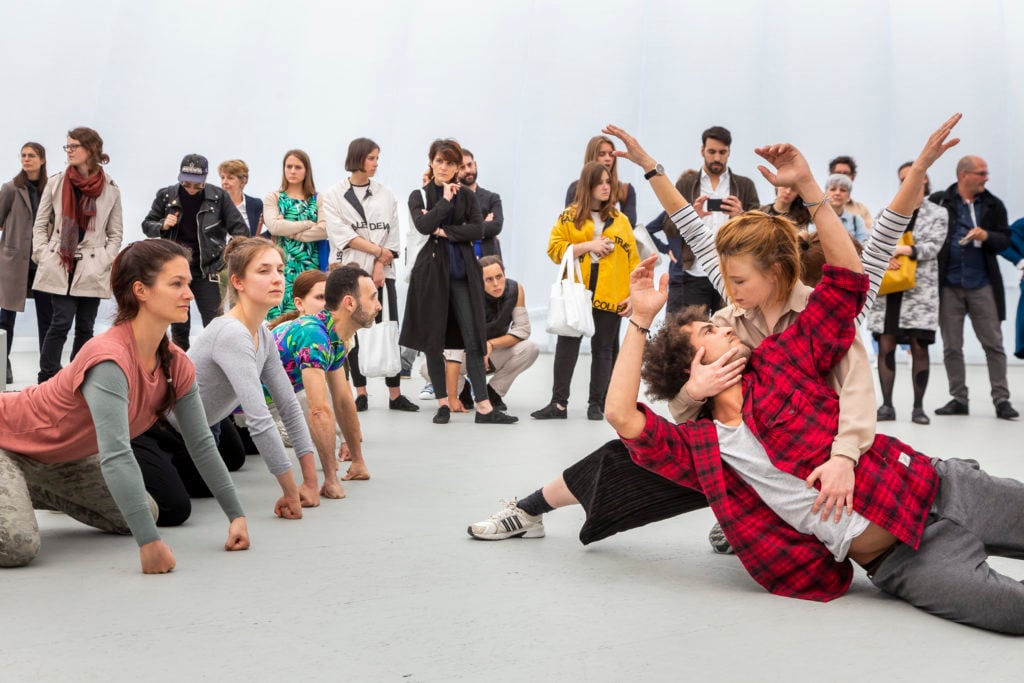
Alexandra Pirici’s Aggregate
(2019). Courtesy of the artist and Art Basel.
When fairs choose to highlight
individual transactions by sending pages and pages of sales results
(which, of course, the press asks for and amplifies), rather than
promoting newly commissioned artworks or the inherent value of
historical material, the big picture gets lost.
Additionally, this entirely
removes the wider art community from the picture; it alienates
collectors (who value an art experience over a shopping experience)
and curators (who don’t participate in the market in the same way)
from the message.
What makes big fairs succeed is
not just sales, but the fact that they serve as gathering places
for a global network. As such, fairs have the potential to
prioritize experience by creating an environment that encourages
authentic discoveries and, in the process, actually expanding the
market.
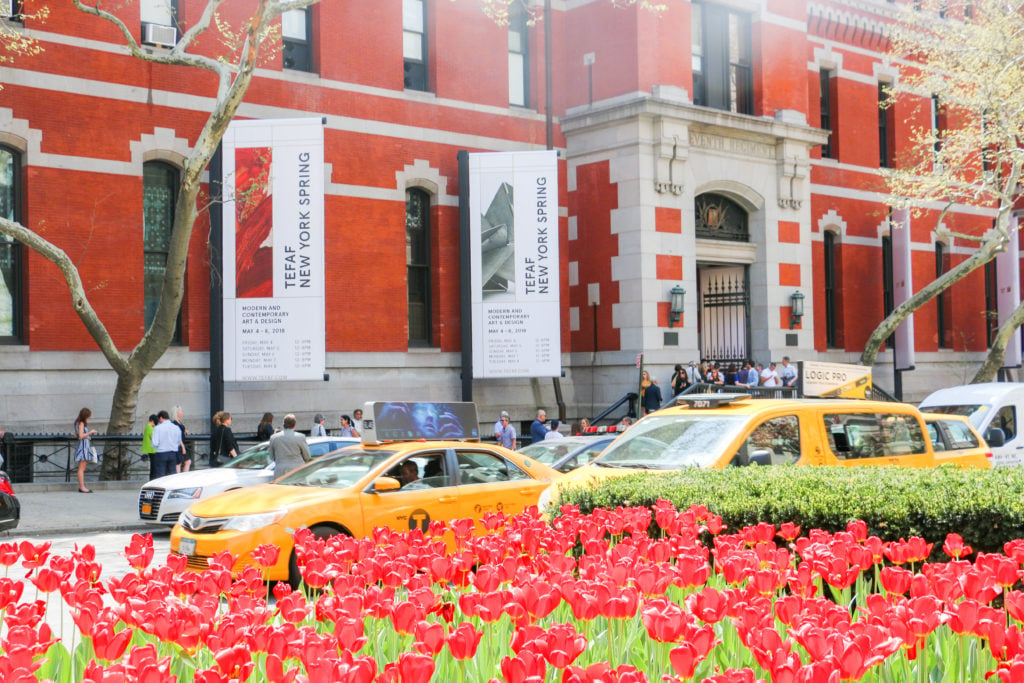
The entrance to the Park Avenue Armory,
TEFAF Spring 2018. Photo: Kirsten Chilstrom.
One example of a fair that has
thrived by privileging experience is the European Fine Art Fair
(TEFAF), which produces three fairs, including two in New York,
which focus on museum-caliber art from the ancient to the Modern
eras. With fewer than 100 galleries per fair in New York, TEFAF’s
modest scale allows it to focus on the overall experience rather
than compete with larger fairs on blockbuster sales. This
prioritizes a community of buyers and galleries over the brand or
market. TEFAF’s distinct agenda in New York revolves around a
communal experience as much as a cultural one. Unfortunately,
TEFAF does not specialize in developing artists and galleries,
where such a model could make a significant
impact.
3. Choose rich content over pay-for-play.
Large fairs have arguably been
expanding beyond what the market will bear by selling more space to
exhibitors who don’t actually need more space—and, in the process,
sidelining galleries that can’t afford a larger footprint. In
addition, some fairs are increasingly offering “curated” or
editorial sections—ostensibly thematic groupings with guest
curators, or press-worthy sectors devoted to emerging artists,
galleries, or rediscoveries—for galleries whose fair budgets do not
match those of the more established dealers. This agenda puts even
greater pressure on galleries to pay to participate, and further
drives economic inequality at these events.
Among the more problematic
sectors are thematic projects inside the fair and outdoor sculpture
sections outside of it. Dividing viewers’ attention is not a
selling point for galleries (though fairs could use these sections
to more creative possibilities if they secured sponsorships to
allow galleries to participate for free). As it stands, however,
these sections tend to contribute to context collapse and create
additional financial burdens for galleries, which have to
underwrite their participation in order to gain visibility (and
stave off invisibility). And as some of these sections approach the
scale of international biennials, galleries have to commission and
produce new artworks and rent additional space beyond their primary
stands to accommodate them with no promise that they will find a
home after the fair is over.

Visitors at Art Basel in Hong Kong are
already familiar with VR and AR technologies. Photo: Theodore
Kaye/Getty Images.
One fair this past season had no
less than eight themed sections devoted to underserved markets. As
an attempt to sell space, avert context collapse, or both, such
practices are problematic. They may actively reinforce bias in
areas of the art world that should be framed as coexisting and
equal, including, but not limited to, emerging or developing
markets. Big fairs may say they are creating platforms for these
emerging and developing markets through the special sections, but I
would argue that they do so largely to serve a primary
purpose—selling real estate at only slightly discounted prices for
far less visibility—and galleries rarely come out ahead.
More manageably scaled fairs
that have a singular mission have avoided a surfeit of themed and
traditional “curated” sections. We do not hear these kinds of
complaints at Independent, the fair I co-founded. I also do not see
this as a problem at Frieze Los Angeles, FOG, the Dallas Art Fair,
MECA, NADA Miami, Felix, Frieze Masters, Paris Internationale, or
TEFAF. That is why I am convinced by that limiting scale and
focusing the experience of collectors around the content lies at
the heart of the solution.
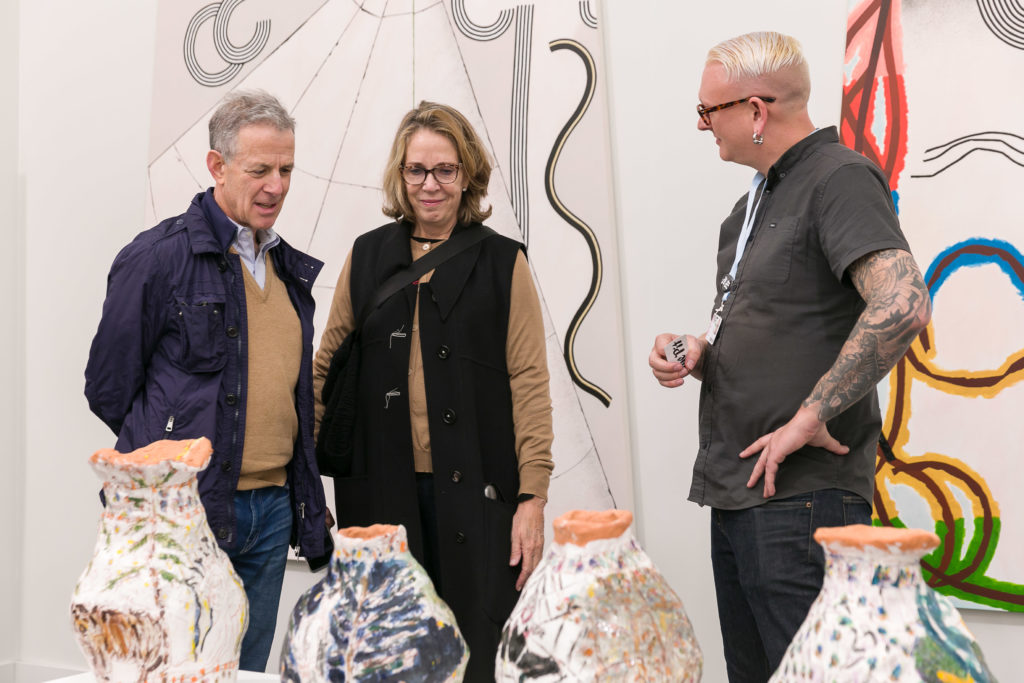
Visitors engaging with gallerists at Frieze Los Angeles. Photo:
Mark Blower, courtesy of Frieze.
4. Decide whether to prioritize the industry or
your community.
The biggest problem facing art
fairs today is a problem of scale—going big without innovation or
collaboration with galleries. Independent avoids context collapse
in large part by each year bringing forward what is unique about a
spectrum of exhibitors that define the fair, reflecting the actual
art ecosystem, and possibly pointing to the future.
Since 25 percent of art
collectors worldwide have a home in New York, there is a great
built-in audience, but also a chance to define a specialty. At
Independent, we cannot be everything to everyone. We don’t aspire
to reflect the market’s top end, but we do succeed in making the
fair a place to be for collectors, and accelerating markets for
both new and historical art.
Independent is fostered by
participating galleries who largely believe that profit is a
byproduct of the art community’s vibrant culture. The fair aims to
offer a picture of the different, overlapping contexts in which
artists and galleries operate. We were among the first, for
example, to present work by outsider artists on equal footing with
and alongside formally trained artists. Our strength lies in
considering how shifting the accepted context of these
presentations might change the way collectors and decision-makers
view the work.

People watching Jon Rafman’s video at
Sprüth Magers © Art Basel, 2018.
This is not the only route.
Fairs that place a premium on promoting sales have unique
opportunities of their own. They could build a tighter network for
the highest performing galleries, currently seen only as
competitors, and leverage this sector’s market dominance beyond one
or two global events and throughout the course of the year. These
fairs already assemble well established galleries (who do not
otherwise collaborate), suggesting that they could develop further
platforms and create alliances that expand exhibitors’ influence
and can compete with the auction houses, helping to shield against
the forces of competition that do not serve their artists or
estates.
Solutions have to be bold and
involve big changes that reflect the art world we want to inhabit
in the future. Fairs can be
powerful territory for change, and fair leadership must take
responsibility for the way they can change the ecosystem for the
better—for galleries, for collectors, and ultimately, for
artists.
The post Beyond Context Collapse: 4 Things Fairs Can Do to
Differentiate Themselves—and Strengthen the Art World in the
Process appeared first on artnet News.
Read more https://news.artnet.com/market/art-fairs-elizabeth-dee-1637368
Further reading


Leave a comment