
A New Move by the Trump Administration Makes It Possible for Collectors to Sue to Reclaim Art Seized by Cuba
Cuban Americans celebrated something of a win this past spring
when the Trump Administration lifted a restriction of the
Helms-Burton Act, making it possible for Cuban citizens in the US
to sue for the return of property confiscated by the Castro
regime.
But the road to restitution is likely to be lengthy process and
filled with political and bureaucratic hurdles.
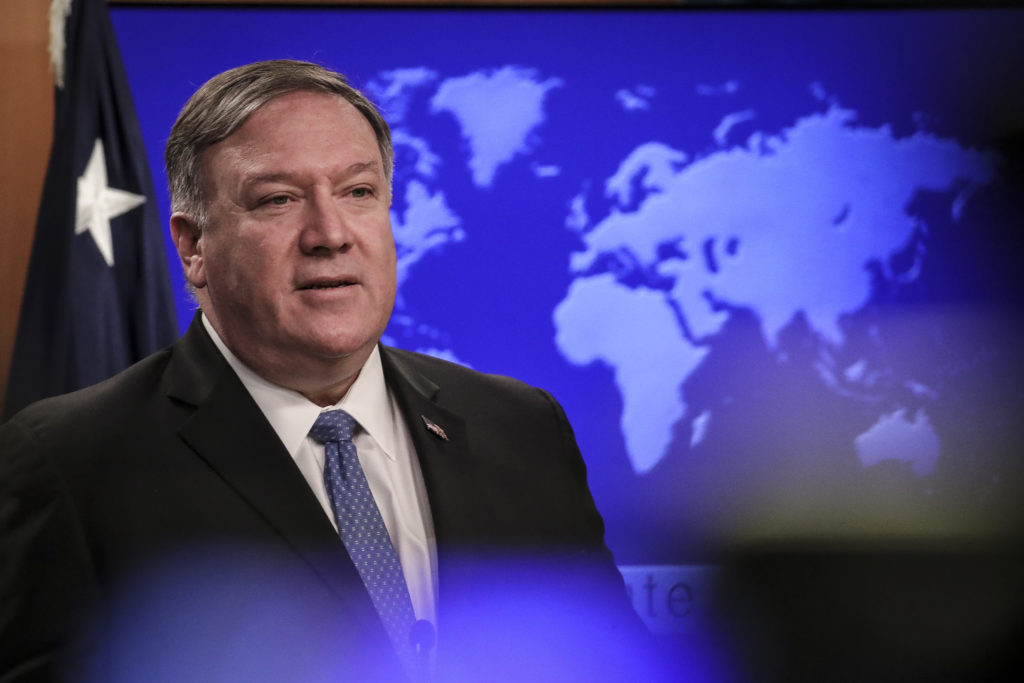
US Secretary of State Mike Pompeo speaks
about the Trump administration’s Cuba policy during a press
briefing at the U.S. Department of State, April 17, 2019 in
Washington, DC. Photo by Drew Angerer/Getty Images.
Before Trump’s decision, the provision in the Helms-Burton
Act that allowed for such restitution claims to move forward had
been repeatedly suspended at six-month intervals ever since the law
was passed in 1996. Foreign governments had deemed it too
restrictive on international trade and the US had kept it as a
bargaining chip to pave the way for stronger relations with the
island nation.
Now that Trump has allowed the suspension to expire, however,
the game has changed. And the stakes are high: The value of
the property—which included an extensive number of
artworks—confiscated by Fidel Castro when he seized power in 1959
is now estimated at $8 billion, according to the Miami
Herald.
“While it’s early in the process, I was contacted a decade ago
by attorneys for some of these families,” attorney Christopher
Marinello, CEO of London-based Art Recovery International, tells
artnet News. As a first step, Marinello encourages interested
parties to register potential property claims on Artive, the international cultural property
database he helped found and back in 2015. (Artive is now run
independently by a nonprofit.)
Experts say it’s important to keep in mind that Cuba remains a
very poor country and that retrieving stolen property, even for
claims that are extremely strong and well supported, will be
difficult. And as the Art
Newspaper points out, the newly active provision applies
only to property worth at least $50,000 when it was seized in
1959.
Red Tape Galore
Most lawyers expect Cuba will argue that the US does not have
authority over cases of stolen property—but even if plaintiffs win,
the decisions will be hard to enforce. “There is a certain amount
of expectation in court judgments and international relations that
people will come forward and respect the judgment,” says Nicholas
O’Donnell, a partner at Boston firm Sullivan & Worcester. “But if
they don’t, and you have a country that says ‘We don’t care about
the courts of the United States,’ then you may not get the thing
back that you want.”
The FSIA or Foreign Sovereign Immunities Act—the primary means
by which the US can sue a foreign nation—”is very hard to collect
on,” O’Donnell notes. “There is a whole body of law about what
assets you can seize to satisfy FSIA, and how it relates to the
lawsuit or whose assets they are.”
On the other hand, the fact of the Trump Administration opened
the door for such suits to be filed “certainly has considerable
value,” O’Donnell says. It’s “an emphatic public statement of the
grievance and it wouldn’t surprise me” if numerous suits were put
into motion, he adds. “People may be talking to lawyers now or
weighing their options.”
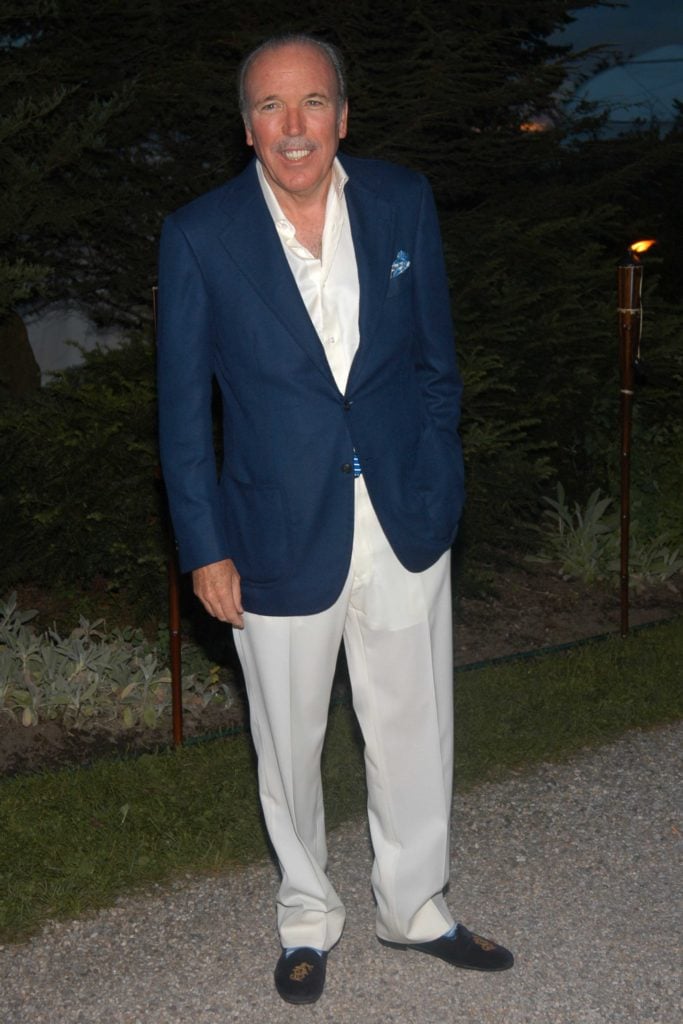
Pepe Fanjul. Photo by Neil
Rasmus/Patrick McMullan via Getty Images.
Possible Candidates to Sue
There are a number of high-profile collectors whose works were
seized during the revolution who might now file lawsuits. Two such
figures are the Fanjul brothers, Pepe
and Alfy, whose family mansion and collection of Joaquín
Sorolla paintings were confiscated by the Castro regime. (The
mansion was turned into the National Museum of Decorative Arts.)
The trove of art is valuable: According to the artnet Price
Database, the record for a Sorolla painting is $6.2 million and 34
of the artist’s paintings have sold for more than $1 million each
at auction.
The Fanjul brothers fled to South Florida and rebuilt their
sugar business and related fortune (albeit while repeatedly dogged
by claims of labor abuse). In 1998, Pepe learned that one of the
paintings, Malaga Port, had surfaced in the London offices
of Sotheby’s, according to a 2004 report in the New York
Times.
The Fanjuls’ pursuit of the painting was nothing short of
aggressive, and included hiring attorneys and private investigators
and engaging in a years-long battle with Sotheby’s to identify the
consignor after the work was withdrawn from a sale. The auction
house reportedly cited client confidentiality as the basis for not
disclosing the identity of the owner. Through an investigator, the
brothers tracked the painting to Italy, but were unsuccessful in
securing its return.
According to the Times, as of 2004, the Fanjuls
“continue to consider legal options to secure the painting, while
pressing their work with their interests in Congress and at the
White House.” An attorney for the Fanjul brothers did not
immediately respond to a request for comment, nor did a
representative for their sugar corporation, Florida Crystals.
It is clear, however, that the Fanjuls’ chances of seeing their
artwork again are higher now than they’ve been for the past six
decades.
The post A New Move by the Trump Administration Makes It
Possible for Collectors to Sue to Reclaim Art Seized by Cuba
appeared first on artnet News.
Read more https://news.artnet.com/art-world/trump-opens-door-cuban-restitution-claims-road-ahead-long-1644436
Further reading


Leave a comment