
Case Studies: How Four Museums Are Taking Dramatic Measures to Admit More Women Artists Into the Art Historical Canon

Our research reveals just how little art by women
is being collected and exhibited by museums. But some institutions
are beginning to address the problem—and starting to find
solutions. Here are four case studies.
The Pioneer: Pennsylvania
Academy of the Fine Arts, Philadelphia
In recent years, institutions
including the San Francisco Museum of
Modern Art and the Baltimore Museum of
Art have made headlines by selling off the work of
canonized white men to raise money to diversify their
collections. But few are aware that another museum quietly
undertook a similar project
way back in 2013.
Now, the Pennsylvania Academy
of the Fine Arts
serves as a case study for how such
moves can create permanent and profound change within an
institution.
PAFA’s decision to auction
Edward Hopper’s East Wind
Over Weehawken (1934) at
Christie’s for $40.5 million was deemed controversial at the time.
But the museum and art school has gone on to use the
proceeds from that sale to
consistently acquire significantly more works by female artists
each year than institutions with far larger budgets, such as the
Brooklyn Museum, the Museum of Fine Arts, Houston, and the Dallas
Museum of Art. (Recent additions to PAFA’s collection include works
by Mary Cassatt, Rina Banerjee and Pat Steir.) The museum
has also acquired more works by
artists of color than almost any other institution we examined in
our 2018 study about the
representation of African American artists.
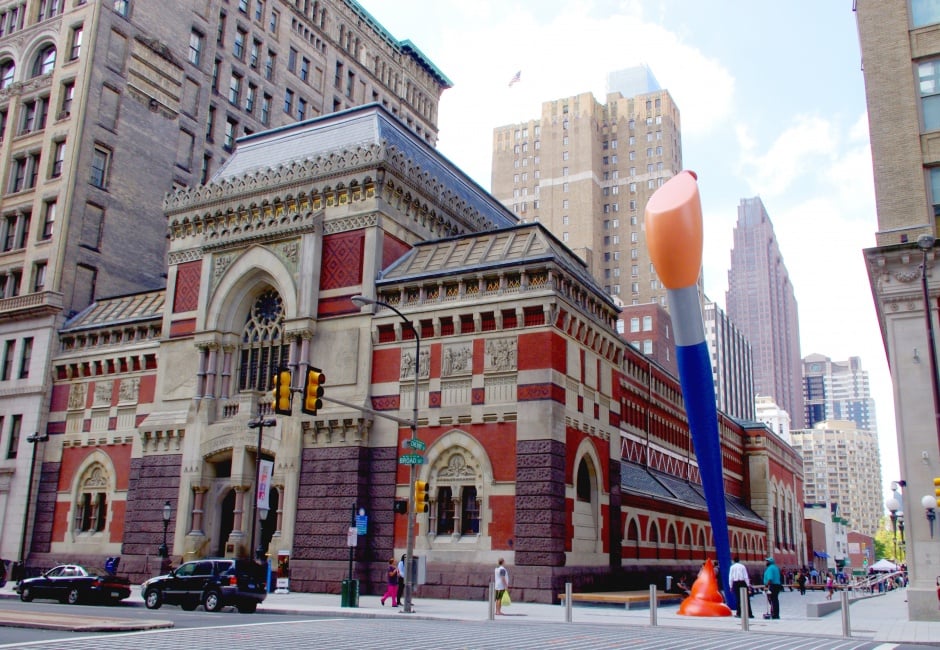
The facade of the Pennsylvania Academy
of Fine Arts in Philadelphia, PA. Courtesy of PAFA.
“We are telling a very
comprehensive story about American art here, and women and artists
of color play right into it—there are no outliers here,” the
museum’s director Brooke Davis Anderson says.
The institution’s previous
director, Harry Philbrick, who initiated the diversification
project before Anderson took over in 2017, strongly believed that
inclusion was a core part of the museum’s mission and machinery—an
emphasis Anderson has sustained. She notes that PAFA was employing
female faculty and showing the work of women before 1920, the year
white women earned the right to vote. “We are just doing something that needs to be
happening more,” Anderson says. “It is long overdue and should just
be the course of museums in general.”
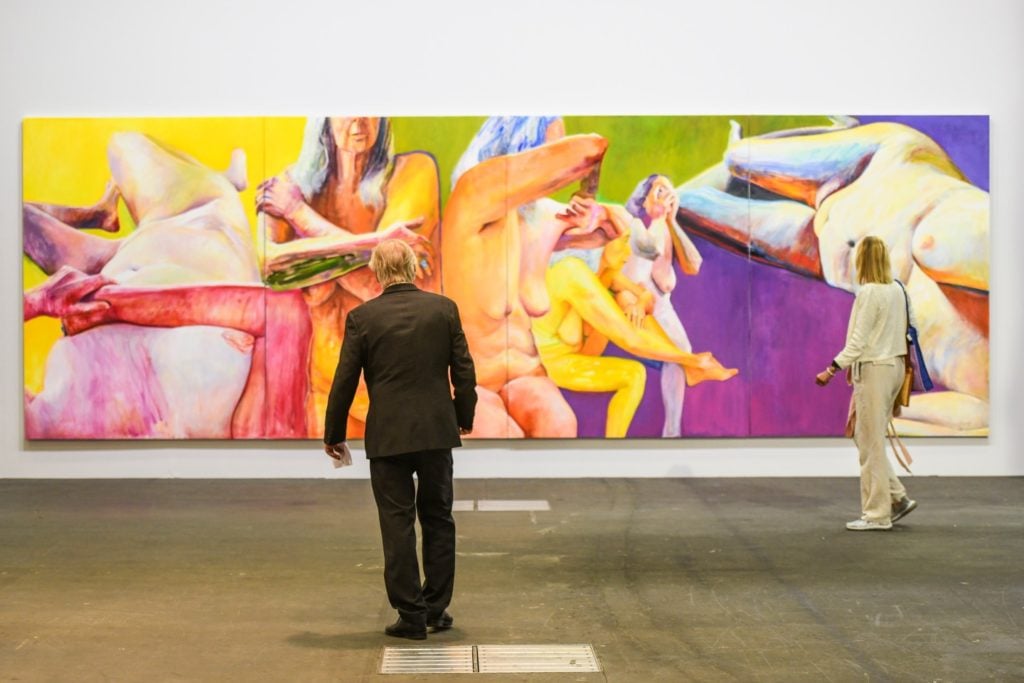
Installation view of Joan Semmel’s
Skin in the Game (2019) at Art Basel Unlimited in 2019.
Courtesy Alexander Gray Associates.
Currently, the museum’s
exhibition schedule is not as equitable as its acquisitions record:
just 9 percent of its
shows over the past decade have been of work by women. But Anderson
has a five-year plan to tip the scales: its program will present
women artists (including the first major retrospective of Joan
Semmel in 2021) in 75 percent of its exhibitions through 2024, while
artists of color will be the focus of 50 percent of the exhibitions in that same
period.
The institutional commitment to
broadening the collection signaled by the board in selling the
Hopper was “one reason I was interested in this job,” she says.
“The resources from the Hopper sale enabled us to up our game—which
we have really done.”
The Risk-Taker: The Solomon R.
Guggenheim Museum, New York
When the Solomon R. Guggenheim
Museum in New York set out to present an exhibition of work by
a little-known Swedish
mystic painter named Hilma af Klint last year, its leadership
feared it would be a flop.
“I thought people would be
unhappy that they weren’t coming to a Klimt show, they wouldn’t be
able to pronounce Hilma, they wouldn’t care,” says the Guggenheim’s
director Richard Armstrong. Instead, the show attracted more than
600,000 people, becoming the museum’s best-ever
attended show. It also drew the youngest audience of any
exhibition since the museum started to measure visitor
demographics.
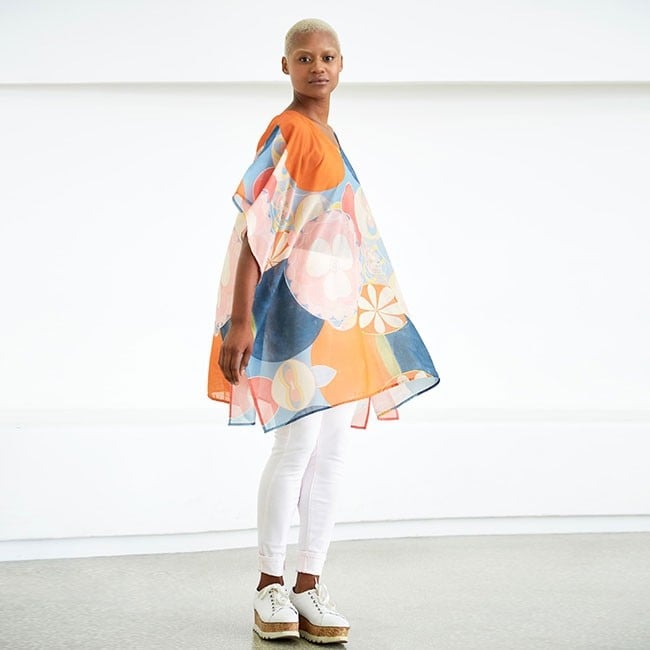
The “Hilma af Klint Childhood Tunic,
Unisex,” available at the Guggenheim Store.
The show was a moneymaker in
more ways than one. During its run, the Guggenheim saw a 34 percent
increase in membership; af Klint-themed products accounted for more
than 40 percent of sales at the museum store; and the catalogue
sold more than 30,000 copies, a new record.
The success of the show defied
traditional wisdom about what people want to see. This was, after
all, a show of an unknown, foreign, female artist whose work is
unsupported by the market. (In her will, af Klint insisted
that her huge body of abstract works should be kept secret for 20
years, and that none of the works should ever be sold
separately.)
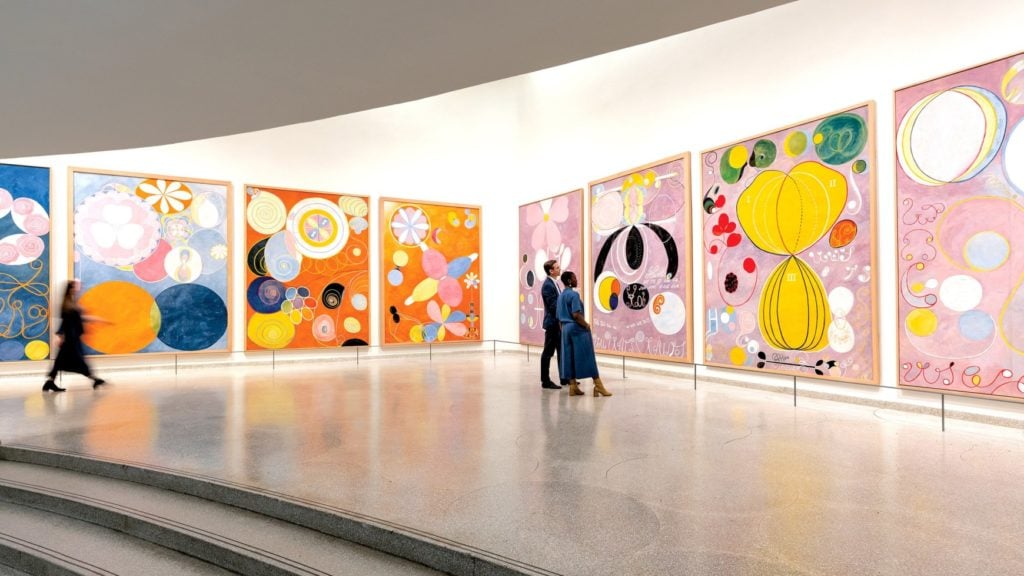
Installation view, “Hilma af Klint:
Paintings for the Future.” Photo: David Heald © Solomon R.
Guggenheim Foundation.
But what the show did offer was
a sense of genuine discovery. Contrary to what the history books
have told us, af Klint could be considered the first great abstract
painter, pre-dating Wassily Kandinsky—which calls into question the centrality of
long-repeated myths surrounding male artistic
genius.
The exhibition is an instance of
institutional bravery—and the decision to take a risk on an
unlikely artist paid off. “We would have done that exhibition if 45
people came,” Armstrong says. He notes that the museum’s board
supported the show, despite him telling them to brace for failure, because the
exhibition “needed to be done and we could do it deeper and more
thoroughly than anyone else.”
Ultimately, “the indices of
progress are in the hands of the curators,” Armstrong says. “They
are the drivers towards the future and they have to be powerful
people who are conscious of these kinds of
inequities.”
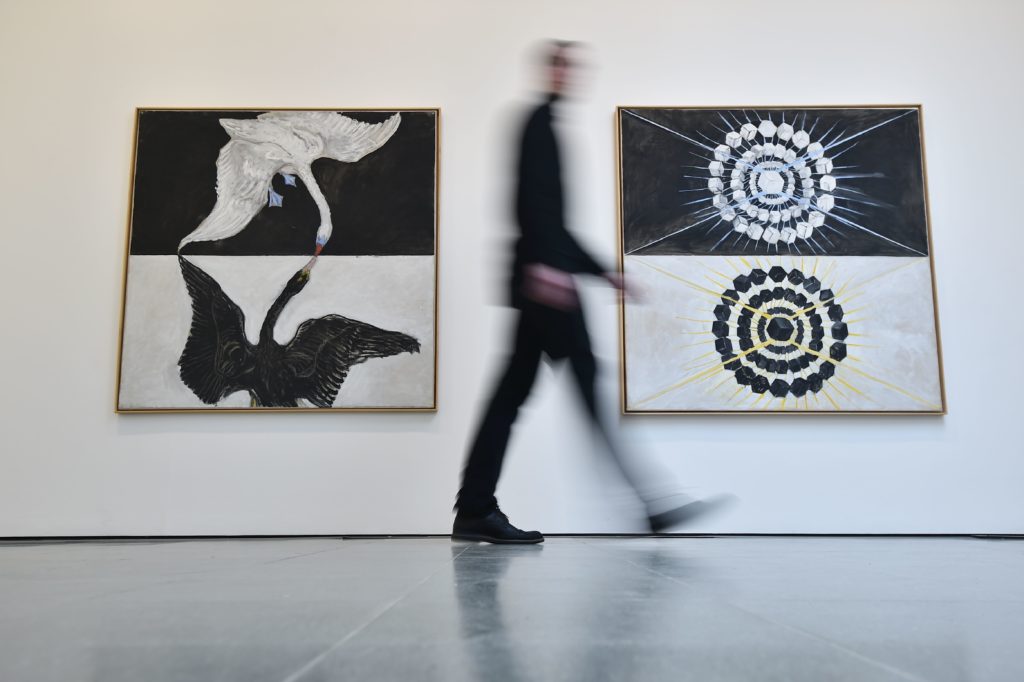
A man walks past art by Hilma af Klint.
(Photo: Ben Stansall/AFP/Getty Images)
The Guggenheim’s chief
curator Nancy Spector says the museum has been doing “a lot of
reflection” about the fact that its program and collection have
“not always been as diverse as it they should have been.” The
institution looked back on its collection and realized there were
“enormous gaps,” she says. “We set benchmarks for ourselves in
terms of where we want to go—and our program looks very different
right now. We are proud of it and want to continue on
that trajectory.”
The Guggenheim’s
data shows a consistent focus over
the past decade, during which 40 percent of its acquisitions have
been of works by women. “It
just feels natural at this point,” Spector says. “And it is about
excellence more than anything else.”
The museum’s exhibition schedule
for the next two years is almost entirely focused on female
artists, including Gego, Sarah Sze, Joan Mitchell, Gillian Wearing,
and Taryn Simon. “We didn’t set out to do two years of shows by
women,” Spector says. “But these were the best projects rising to
the top.”
The Historian: the Los Angeles
County Museum of Art
Encyclopedic museums that cover
thousands of years of history tend to lag behind their Modern and
contemporary counterparts when it comes to gender parity—which,
considering how few female artists most of us were taught
about in art history classes, is
not necessarily surprising.
But one museum is bucking the
trend and outpacing some of the largest Modern and contemporary
museums in America. The Los Angeles County Museum of Art—which
collects art from antiquity to the present—has been increasingly
focused on bringing more gender parity to its permanent collection.
Works by women represent 16 percent of its acquisitions between
2008 and 2018—4 percent more than the San Francisco Museum of
Modern Art and 7 percent less than the Museum of Modern Art in New
York over the same
period.
The findings suggest that the
most important factor in creating change is sheer commitment to the
cause. While LACMA’s numbers still fall woefully short of parity,
they put the museum ahead of other major encyclopedic
museums, such as the Museum
of Fine Arts in Boston, whose acquisitions over the past
decade included just 4
percent of works
by women.
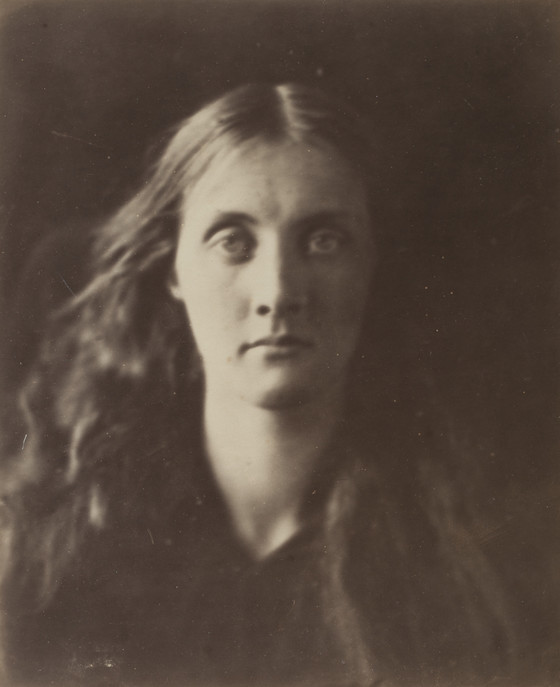
Julia Margaret Cameron’s Julia
Jackson (1868). Courtesy of LACMA.
The findings also suggest the
importance of local context. The Northeast—which includes New York
and Boston—was the worst performing region we examined, acquiring
just 8 percent work by women artists over the past decade.
Meanwhile, the four institutions we surveyed in Southern
California—the Getty (12 percent), LACMA (16 percent), LA MOCA (23
percent), and the Hammer (26 percent)—performed well above the
national average and demonstrated a degree of consistency in their
commitment year-over-year.
Some suggest the region—and Los
Angeles in particular—might be better positioned to present
narratives that challenge the status quo because they were
established later, have patrons who started collecting later, and
for a long time operated outside the glare of the art
market.
Michael Govan, LACMA’s director,
says change is most evident when “you look at what the curators are
presenting for acquisition versus the gifts we get.” He notes that
70 percent of the contemporary works curators have proposed for
acquisition over the past five years were by female artists. “That’s pretty dramatic if
you think about what younger curators are interested in right now,”
he says.
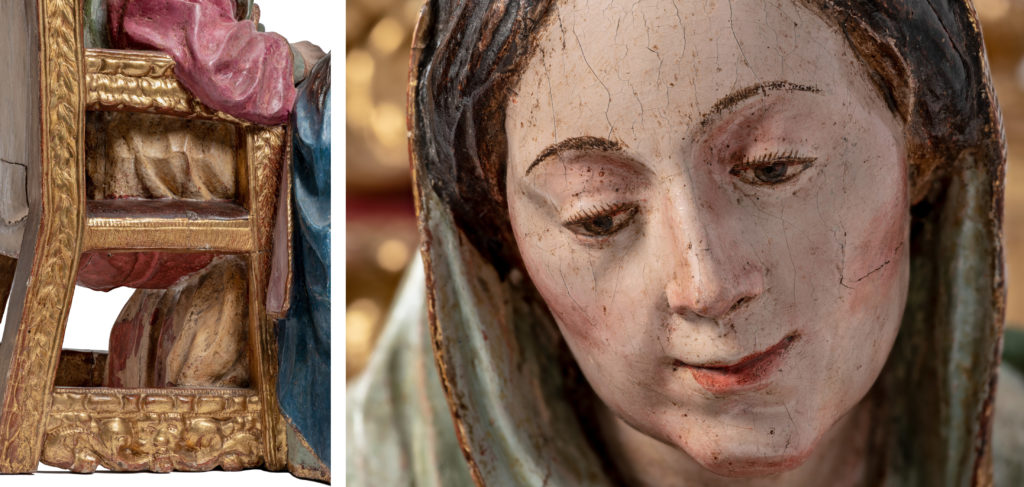
Luisa Roldán, The Education of
the Virgin (early 1680s). Photo © Museum Associates, courtesy
of LACMA.
Meanwhile, around 35 percent of
the historical works presented by curators for acquisition over the
past five years were made by women, including
The Education of the
Virgin by Luisa Roldán,
the most significant female sculptor of 17th-century Spain; Lavinia Fontana’s
The Holy Family with Saint
Catherine of Alexandria (1581); Julia Jackson by Julia Margaret Cameron (1868) and
Butterflies and Poem
by Ōtagaki Rengetsu (1869)—all of
which are now in the museum’s collection.
One of the challenges for
encyclopedic institutions is identifying the gender of the
often-unknown creators of historical objects, which means LACMA’s
figures may actually be higher in some departments
than the recorded numbers,
according to a spokeswoman. She notes that this issue is
particularly likely in
textiles and costumes, art of the ancient Americas, South and
Southeast Asian art, and Middle Eastern art.
“We have a long way to go to
parity—and, yes, it is shocking we are not there in almost the year
2020, and we need to understand why that is,” Govan says. “But I
have hope. The curators are pitching huge numbers of women artists.
From where I sit, I can see a huge change.”
The Detective: the Dia Art
Foundation, New York
Since its founding in 1974 the
Dia Art Foundation has played a central role in shaping our
understanding of what the boundary-breaking art of the 1960s and
’70s looks like: mostly big, male and macho.
More recently, it has emerged as
a powerful force in
reshaping that history by focusing on work by artists active during
that period whose contributions have largely been
overlooked.

Nancy Holt’s Sun Tunnels,
1973-76, © Estate of Nancy Holt/Licensed by VAGA, New York, NY.
Courtesy the Estate of Nancy Holt and Dia.
Most of these artists were
women. Over the past four years, Dia has added work by Michelle
Stuart, Mary Corse, Dorothea Rockburne and Anne Truitt to the
collection, as well as a massive trove of 156 works by little-known German
Minimalist sculptor Charlotte Posenenske. In
2018, Dia also acquired Sun
Tunnels (1973–76) by Nancy Holt, a sculpture comprising four
18-foot-long concrete
cylinders sculptures in
Utah’s Great Basin Desert. It is the first work of land art by a
woman to enter its collection.
Dia’s push to expand the canon
is largely due to the determination of director Jessica Morgan, who
joined the institution in 2015 from Tate Modern in London. Dia had
acquired just 11 works by women in the seven years before she
arrived. That number shot up to 177 in the four years since,
putting Dia’s overall rate of acquisitions over the past decade at
57 percent work by women, the second highest of all the museums we
examined (after the Pennsylvania Academy of the Fine Arts).
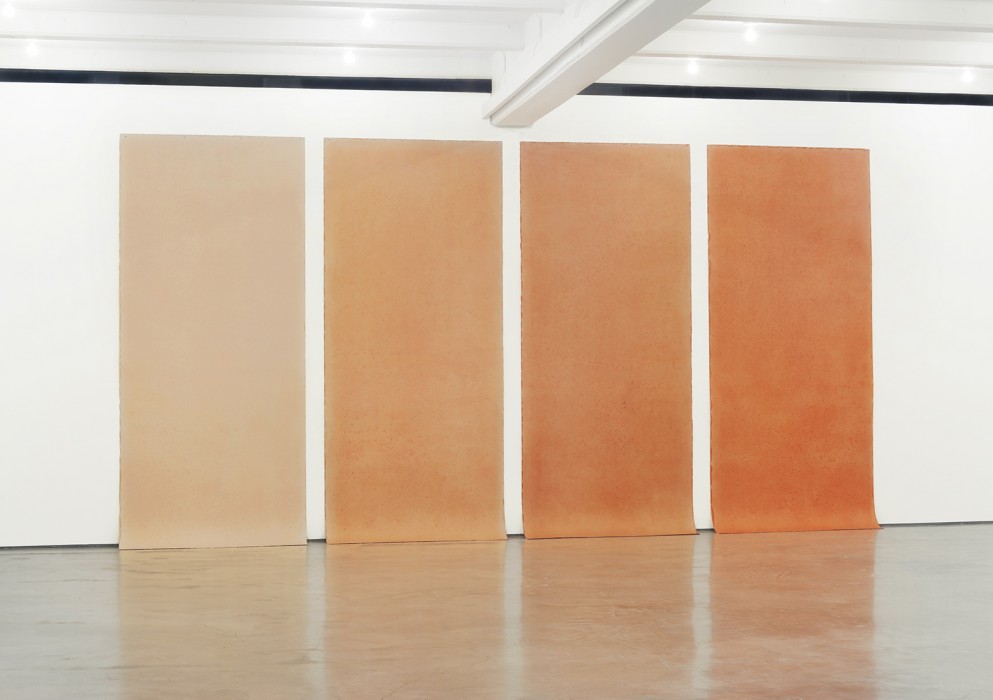
Michelle Stuart, Sayreville Strata
Quartet (1976). © Michelle Stuart. Photo: Bill Jacobson Studio,
NY.
For Morgan, the mission to
expand the canon is not only about creating a richer understanding
of history—it’s also a way to keep audiences engaged with a
period they might otherwise dismiss
as a known quantity. “This doesn’t in any way undermine the
institution’s collection,” she says. “It is reinvigorating a moment
in time, rather than saying, ‘The 1960s: done, we know it’.”
Defying the pervasive logic that
it is harder to find financial support for less mainstream
projects, Morgan has raised $78
million for an infrastructural overhaul and to boost the
foundation’s endowment by focusing on the distinctiveness of her
program.
“There is a sense that if you
program certain artists then the money will come, and that may be
true,” she recently
told In Other
Words.
“But it’s also true that if you run
a different kind of organization, the money will also
come.”
While some of Morgan’s peers
bristle at the idea of instituting quotas for acquisitions, fearing
that it will unnecessarily constrain curators’ freedom, she is an advocate
for such an approach. “Personally, I do believe in quotas,” she
says. “If change is not happening, then set yourself some
goals.”
This story is part of a
research project on the presence of work by female artists in
museums and the market over the past decade. For more, see
our examination of women in
museums; our examination of the women in the
market; our investigation into maternity
leave in the art world; visualizations of our
findings; art-world reactions to
the data; and our
methodology.
The post Case Studies: How Four Museums Are Taking Dramatic
Measures to Admit More Women Artists Into the Art Historical
Canon appeared first on artnet News.
Further reading


Leave a comment