
Big Galleries in the Windy City: Expo Chicago Welcomes a Slew of Power Dealers to the Midwest’s Biggest Fair
Expo Chicago director Tony Karman has a pitch he gives to
galleries when he’s trying to convince them to trek to the Windy
City to show in his fair, and it has to do with the fair’s
predecessor, Art Chicago, a powerhouse for decades before it was
canceled by its owners 2012.
“Long before there was a little fair called Art Basel Miami
Beach, there was a fair in Chicago, and it was the only major art
fair in all of North and South America,” he told me Wednesday night
at the Arts Club of Chicago, where those attending a Luhring
Augustine cocktail party were greeted by a giant Alexander Calder
sculpture set beside stunning Mies van der Rohe stairs. “And the
city is stronger now than it’s ever been before.”
I heard him give the same pitch to journalists gathered at a
press breakfast at the Museum of Contemporary Art on Thursday
morning, and a few hours later, giving it to another reporter who
had never been to the City of Broad Shoulders, perhaps the last
truly American urban mecca. (“The only major fair in North
and South America,” Karman was overheard clarifying.)
And after circling the globe acting as an ambassador for his
city, Karman has made the eighth Expo Chicago as robust as ever,
with a stacked gallery roster that makes it more than simply a
regional fair for the Midwest. In addition to returning megaliths
like David Zwirner and Matthew Marks, Karman convinced major
galleries such as Thaddaeus Ropac, Hauser & Wirth, Lisson Gallery,
and Marian Goodman to carve space out of their jam-packed fair
calendars to set up shop on Navy Pier, the fairground jutting out
into Lake Michigan.
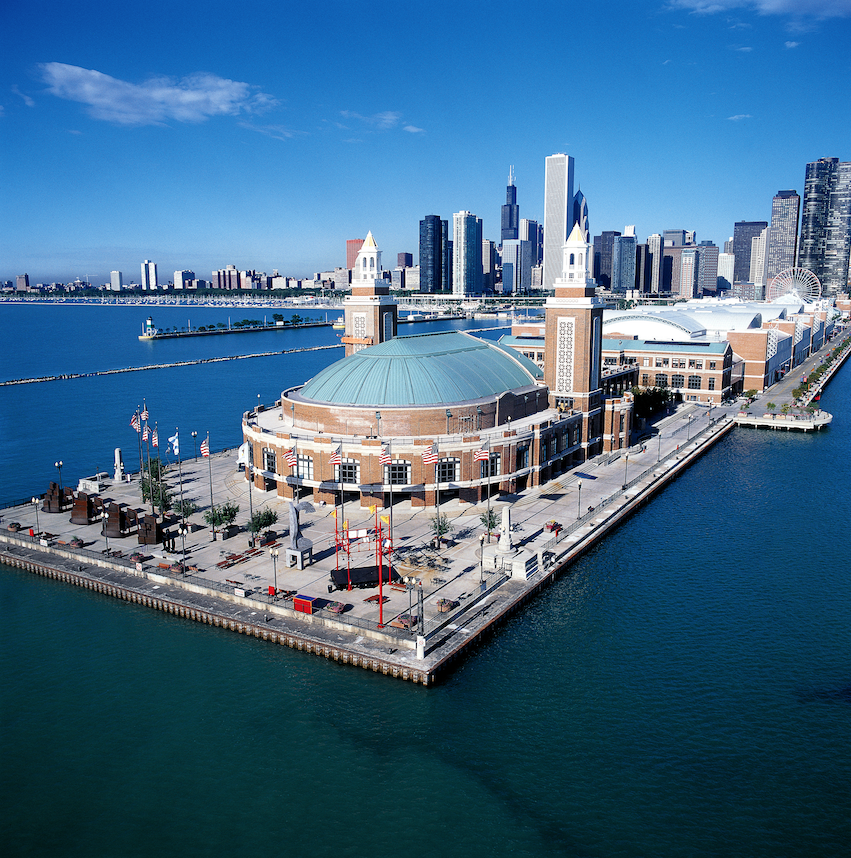
Navy Pier on Lake Michigan in Chicago,
the home of Expo Chicago. Courtesy Choose Chicago.
And what’s more, this year’s edition happens to take place as
the same time as the Chicago Architecture Biennale, the first
edition of NADA’s Chicago International (a show curated by Theaster
Gates of work from the collection of Beth DeWoody), and the
explosion of a long-simmering gallery scene highlighted by the
arrival of Mariane Ibrahim, who moved her gallery from
Seattle to Chicago to get in on the action.
Add that to the evolution of local museums such as the MCA and
the Art Institute of Chicago, which have pockets full of money
gifted by local collectors such as Kenneth C. Griffin, Stefan
Edlis, and the Pritzker family.
“The buying power here—there’s always been respect to touch
Chicago,” Karman told me at the entrance to the fair. “What’s’s
happened this year and last year is that our institutions are
layered with incredible curators. I don’t know if I’ve ever
seen—and I’ve been here for 37 years—such a deep, respected
curatorial core.”
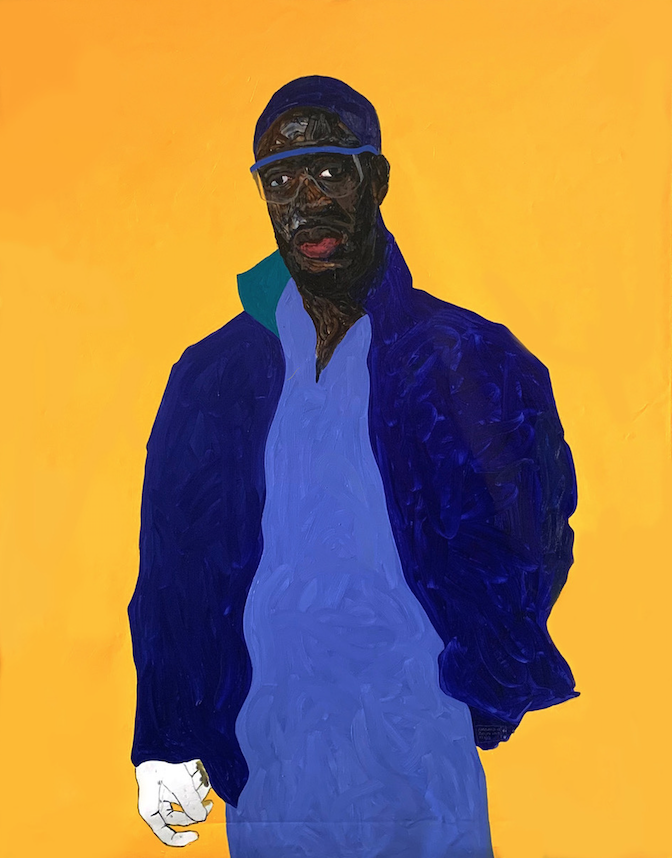
Mariane Ibrahim, who recently relocated
her gallery to Chicago from Seattle, presented Amoako Boafo’s
Steve Mekoudja (2019) in her booth. Courtesy of Mariane
Ibrahim Gallery.
The fair opened at noon on Thursday, and while the namesakes of
Marian Goodman and David Zwirner didn’t make the trip, Thaddaeus
Ropac himself had come to Chicago to man the booth.
“We have some key collectors here, and we recently sold a Judd
stack to a collector in the Midwest,” he said.
Though he had already sold a few smaller works by Robert Longo,
he was expecting more clients to roll in over the weekend, as they
would come in from other cities in the region. Indeed, the
Midwestern vibes of Expo Chicago make for a chill time at an art
fair, without the elbow-throwing frenzy you see at Art Basel or the
fairs in New York. And Ropac said he wasn’t necessarily expecting
to sell everything; Gerhard Richter’s Grau Nr. 334/1
(1973) was on sale for $3 million, in a stratosphere well beyond
the other price points at the fair.
“We brought big and bold,” Ropac said. “It’s out first time and
we wanted to make a statement.”
The presence of international heavyweights such as Ropac is
nothing but a good thing for the smaller local galleries, said
Rhona Hoffman, who has had a space in Chicago since 1976, and has
watched how Art Chicago morphed into Expo Chicago.
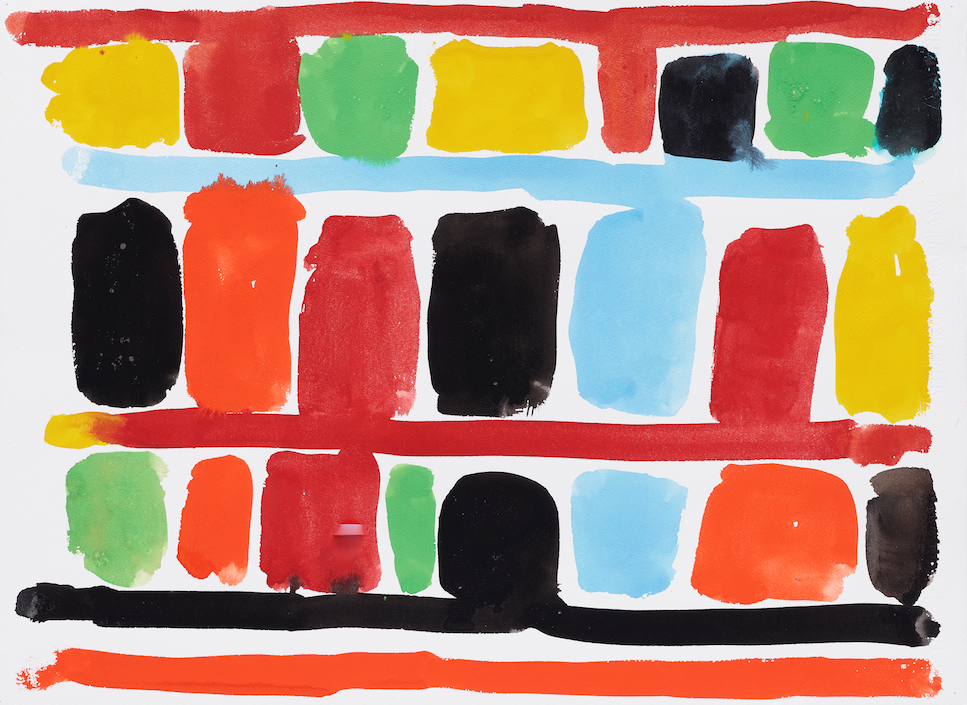
Stanley Whitney’s Untitled (2019)
was on view at the Lisson Gallery booth. © Stanley Whitney.
Courtesy Lisson Gallery.
“The more famous galleries that come, and the more famous
collectors that come, the better it is,” Hoffman said. “The dealers
from out of town finally realize that they have a lot of clients in
Chicago, so it’s good to show up.”
She added that she had sold work by, among others, Michael
Rakowitz and Nathaniel Mary Quinn for as much as $100,000.
Among the bigger sales in motion on Thursday was a sculpture by
Martin Puryear, whose work is still up in the American pavilion at
the Venice Biennale. Stoic Balance (2019) was in the
process of being sold for $250,000 at the Matthew Marks booth.
Marks, sitting at the table as handlers removed just-sold works
on paper by Charles Ray and Vija Celmins, said that he’s done all
eight editions of Expo Chicago because “people like art here—it’s a
sophisticated crowd.”
“And I’ve been coming here since I was a kid, so I know a lot of
people,” he added.
Additionally, Kasmin, a New York Gallery returning to the fair,
sold works by James Nares, Elliott Puckette and Bosco Sodi for
between $30,000 and $125,000. Harper’s Books sold out its booth of
paintings by Marcus Brutus (one sold to the Davis Museum, one sold
to the artist Eric Fischl) for prices between $7,500 and
$12,500
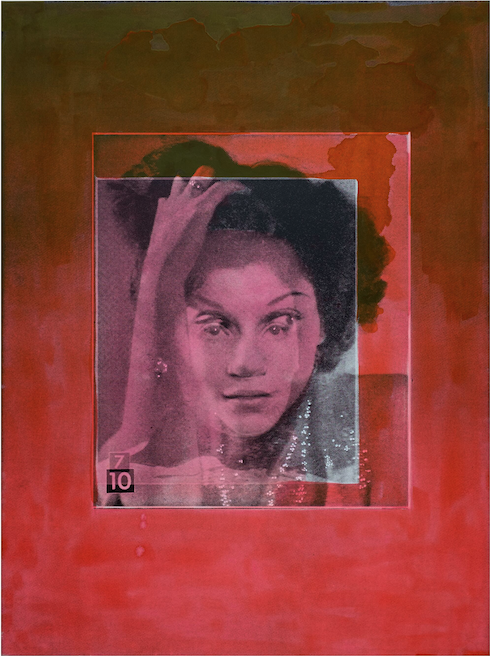
Lorna Simpson’s Special Character
#5 (2019). The artist’s work was on show at the Hauser & Wirth
booth. Photo: James Wang. © Lorna Simpson. Courtesy the artist and
Hauser & Wirth
Hauser & Wirth came for the first time with a solo booth of
brand new works by Lorna Simpson, each priced at $295,000, and was
sold out before the end of the day on Thursday, with half of the
works going to institutions directly or through promised gifts.
“Lorna has a long history with this town,” said senior gallery
director Christopher Canizares. “Her first real survey exhibition
was at the MCA in 1992, and she serves as the artist trustee on the
board. Though Lorna is a New Yorker, Chicago is a town thats dear
to her, so she was very enthusiastic.”
Other standout solo booths came in the form of a new body of
work by Hank Willis Thomas, at Kayne Griffin Corcoran, that
centered on gun violence in the African American community—a
trenchant topic in Chicago, which has the highest murder rate in
the nation. And the Jack Shainman gallery, which was showing at
Expo Chicago for the first time, brought new work by Nick Cave, the
Chicago-based artist who will present his performance-based work,
The Let Go, at the Navy Pier during next year’s edition of
the fair.
When announcing the project Thursday afternoon during a press
conference, Cave explained that, while he already staged the work
at the Park Avenue Armory in Manhattan, it was vital that he stage
it in Chicago, his longtime home, as the performance features
classic Chicago House records as its soundtrack.
As he stood up in front of the audience at Navy Pier, Cave said,
“I am excited to bring The Let Go here.”
The post Big Galleries in the Windy City: Expo Chicago Welcomes a
Slew of Power Dealers to the Midwest’s Biggest Fair appeared
first on artnet News.
Read more https://news.artnet.com/market/expo-chicago-2019-1656568
Further reading


Leave a comment