
An Artist Shut Down His Own Show at New York’s HG Contemporary After Claiming the Dealer Didn’t Pay Him or His Framers
When artist Louis Carreon first met
Philippe Hoerle-Guggenheim he was impressed by the New York
dealer’s sophistication and his last name, which suggested an
impeccable art world pedigree (museum founder Solomon R. Guggenheim
is a “distant” relative, the dealer says on his website). Now that
Carreon has worked with Hoerle-Guggenheim, he has a very different
impression.
Last week, Carreon took down his show at Hoerle-Guggenheim’s
Chelsea gallery, HG Contemporary, a week ahead
of schedule, repossessed the art, and accused the dealer of failing
to pay him for sold work. Carreon’s lawyer
sent Hoerle-Guggenheim a letter informing him of the
termination of Carreon’s consignment and representation
agreement with the gallery and gave the dealer seven days to return
all works by the artist.
Carreon claims that the dealer previously sold one of his works
at an exhibition in Madrid this past spring, but took months to
inform the artist of the transaction and has yet to pay him for it.
“It’s like pulling teeth to get any information out of this guy,”
Carreon told artnet News.
The artist also said he heard from the framers in Madrid that
they were never paid the €3,700 ($4,060) they were owed for their
work—even though Carreon himself footed the bill. “We gave
[Hoerle-Guggenheim] that cash in Madrid months ago,” Carreon
said. “This [framing company] is a small business. They spent
a week making sure the show was framed correctly—those
relationships matter to us.”
Hoerle-Guggenheim denies the allegations. “There are absolutely
no outstanding invoices as suggested,” the dealer told artnet News
in an email. “This feels honestly like a try to get his name in the
press attached to me.”
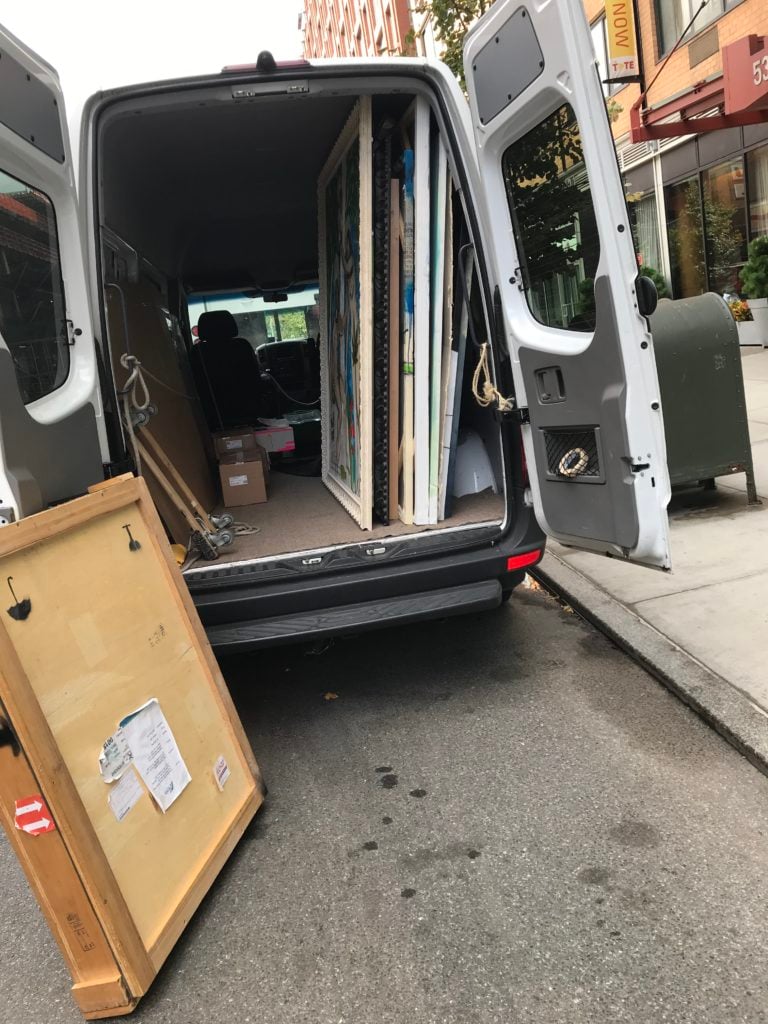
Works from Louis Carreon’s show at HG
Contemporary after the artist closed the exhibition early. Photo
courtesy of Louis Carreon.
In a letter to Hoerle-Guggenheim, Carreon’s attorney wrote
that the dealer’s failure to pay the framers was not only
“unethical” but “has reflected poorly on Mr. Carreon and caused
irreparable harm to his hard-earned reputation.”
That reputation is something Carreon is particularly sensitive
about, having spent two years in federal prison on drug-related
charges. He had gotten his start painting graffiti in the
early 1990s in Long Beach, California, but turned to art further
during his incarceration. Carreon credits his art, which is steeped
in his Christian faith, with helping him overcome addiction.
After years of staging exhibitions on his own, Carreon says he
met Hoerle-Guggenheim in 2018, during Art Basel Miami Beach. The
dealer was hosting a dinner at the Faena Hotel that featured a
project Carreon had done with UBS Wealth Management. In Carreon’s
account, Hoerle-Guggenheim told him that he was impressed with how
far the artist’s career had gone without formal representation and
proposed that they work together.
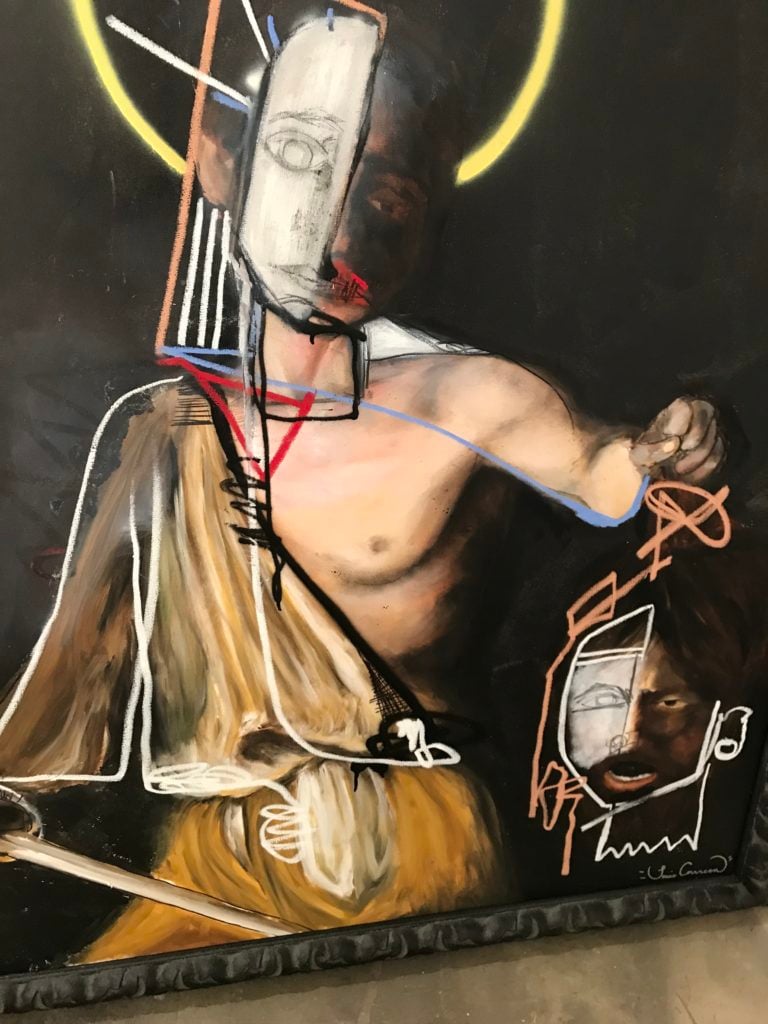
“Louis Carreon: Find Your Halo.” Photo
courtesy of Louis Carreon.
Carreon says he had reservations
about Hoerle-Guggenheim from the start, having read about a
previous lawsuit filed against the
dealer by collectors Liza Vismanos and Randy Rosen. The couple
claimed to have paid the dealer $520,000 for a painting
by Pierre-Auguste
Renoir that was never delivered. The suit also involved a
$90,000 painting by graffiti artist RETNA and a $35,000 work by French
sculptor Cévé, which the couple said they had also
paid for but not received.
RETNA, who used to show with HG Contemporary, denied ever
agreeing to sell his work to Rosen. “Hell fucking no I didn’t,” he
told artnet News at the time. “I don’t even know who Randy Rosen
is. I have an extensive database of who buys and collects my
work.”
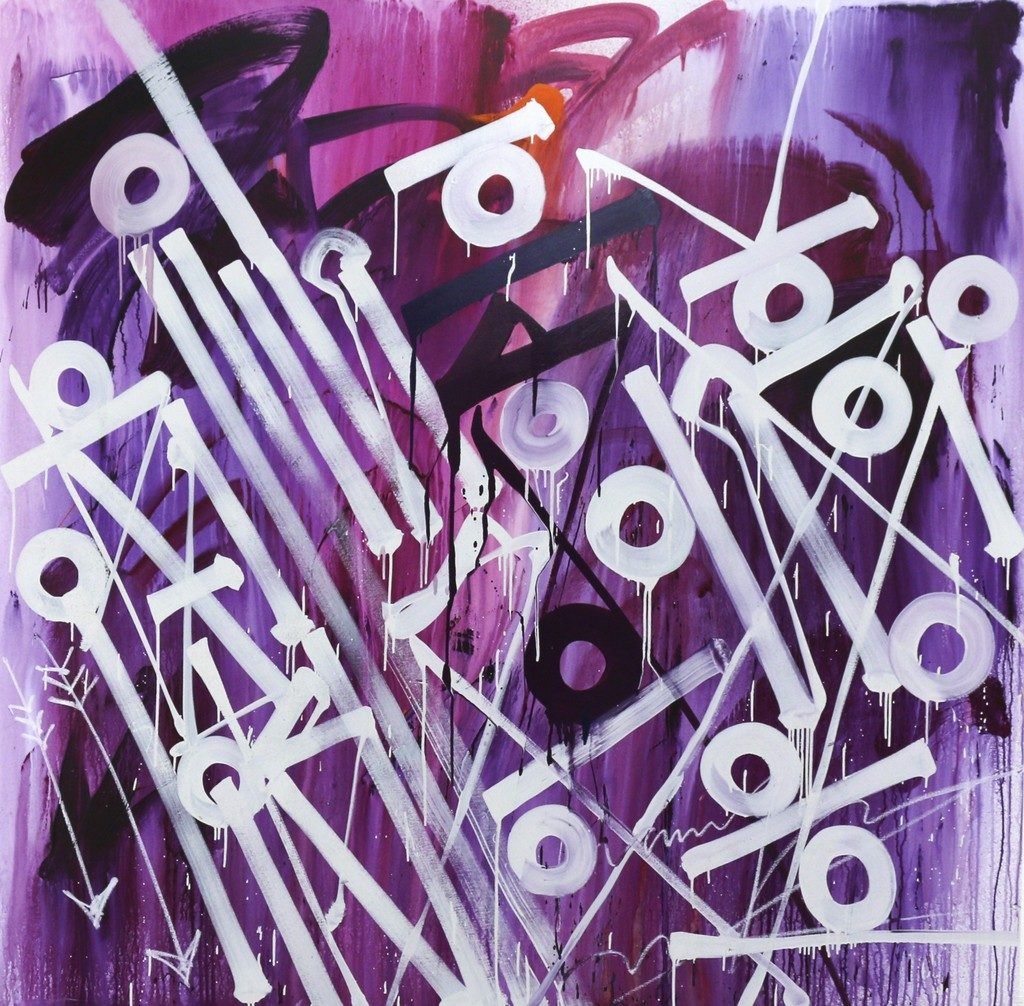
RETNA, Brimstone (2013).
Courtesy of HG Contemporary.
Hoerle-Guggenheim settled that lawsuit in June. “The matter has
been resolved to all parties’ mutual satisfaction and Guggenheim
delivered the pieces by RETNA and Cévé,” Rosen’s lawyer, Jonathan
Steinsapir, told artnet News in an email.
Despite the lawsuit, Carreon says he decided to take the risk
and work with Hoerle-Guggenheim partly because they had bonded over
their Christian faith. “He said he was a Christian and he
wanted a Christian artist. That’s what opened the door for our
relationship and our trust,” Carreon said. “I’m not from the art
world, and the art world’s hard to penetrate.”
But ever since then, Carreon has been disappointed. He
claims that he’s only ever made $30,000 from Hoerle-Guggenheim, for
the sale of a $60,000 painting to Rosen, and that the dealer did
little to promote his work.
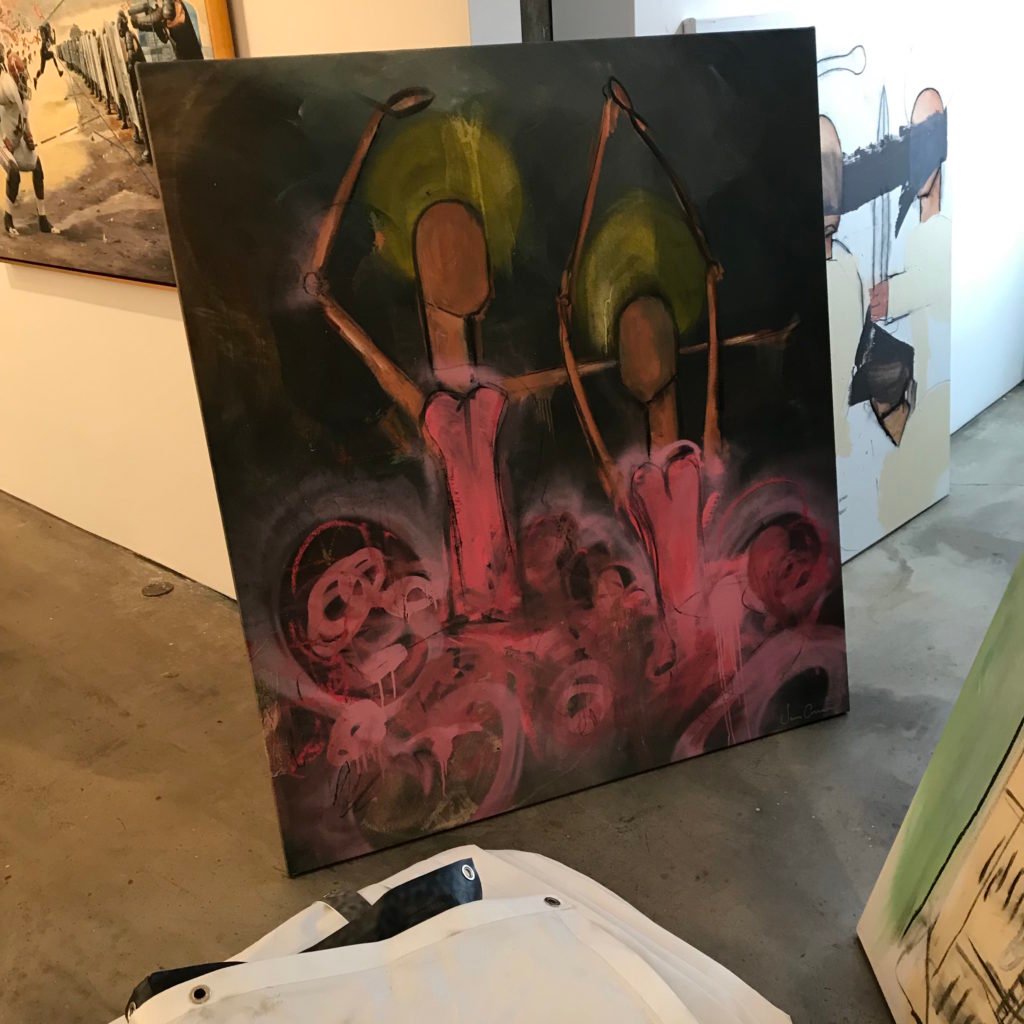
“Louis Carreon: Find Your Halo” being
deinstalled at HG Contemporary. Photo courtesy of Louis
Carreon.
Hoerle-Guggenheim rejected the notion that he has not fulfilled
his end of the agreement. “I do not believe that I have made
promises about sales. I know work always sells over time, we were
new to the artist’s market and it started to pick up
momentum,” Hoerle-Guggenheim wrote in a letter to Carreon’s
lawyer, which was shown to artnet News. “It was all in the spirit
of a partnership, regardless of who gained more from it.”
Even now, Carreon alleges that the dealer is continuing to
“sell” works from the de-installed show even though they’re back in
the artist’s possession. Carreon said that two collectors have told
him that they have already paid Hoerle-Guggenheim for the
works.

Louis Carreon. Photo courtesy of Louis
Carreon.
In an email, Hoerle-Guggenheim wrote that this was partially
true, but that “the sale had been long negotiated pre the ending of
our relationship.” He added that the accusations were “an attempt
of defamation potentially hurting my business and artists signed
with the gallery and will all be taken very seriously.”
“I wanted to believe in this dude, because he’s very charming,”
Carreon said. But, “if you’re smart and you’re a collector, all you
have to do is look this guy up and you’re not supporting his
choices.”
The post An Artist Shut Down His Own Show at New York’s HG
Contemporary After Claiming the Dealer Didn’t Pay Him or His
Framers appeared first on artnet News.
Read more https://news.artnet.com/art-world/louis-carreon-pulls-show-philippe-hoerle-guggenheim-1473244
Further reading


Leave a comment