
Ruby City, a Jewel-Box Museum Dedicated to the Collection of the Late San Antonio Heiress Linda Pace, Sparkles With Personality
It all started with a sketch
from a dream.
Linda Pace, the heiress to the
Pace foods company and a longtime supporter of the arts, had gotten
into the habit of drawing images from her dreams when one night, in
the mid-2000s, she awoke from one and remembered a vision of a
crimson red building,
bejeweled and turreted, where people could look at art. She called
it Ruby City.
The resulting sketch,
admittedly, was not as sublime as the dream’s description. (It
looks like a princess’s crown rendered with child-like glee.) But
it was enough for David Adjaye, the British architect Pace
tapped in 2006 to design an art center in her hometown of San
Antonio, Texas, to work with.
Pace, who died in 2007 following a cancer diagnosis, never lived
to see her masterpiece take shape. But 13 years later,
Ruby City is now
officially open to the public.
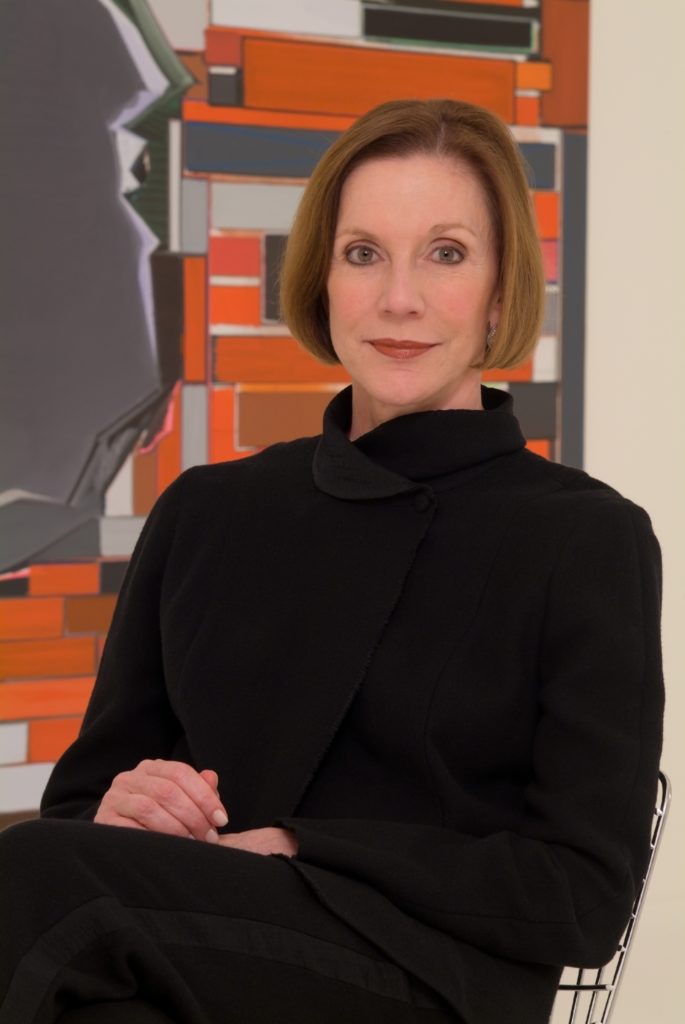
Linda Pace. Courtesy of Ruby City.
Photo: Todd Johnson.
Adjaye’s building, a modernized,
dusty red update on Pace’s dream palace, rises from the street in
angles, like a cactus flower. It was erected from red, precast
concrete embedded with glass and mica, giving it a faint glimmer
from certain angles. Inside, the building houses 900-plus artworks
that made up Pace’s personal collection, now run by the Linda Pace
Foundation.
“It’s a very personal
collection,” says Kathryn Kanjo, a foundation trustee and the
curator of Ruby City’s inaugural exhibition, “Waking
Dream.”
“Linda fearlessly collected from
her own point of view. She resisted pressures of the market and was
not afraid to go against the grain in terms of what was seen in
other public collections, commercials galleries, or private
holdings. She wasn’t trophy-hunting.”
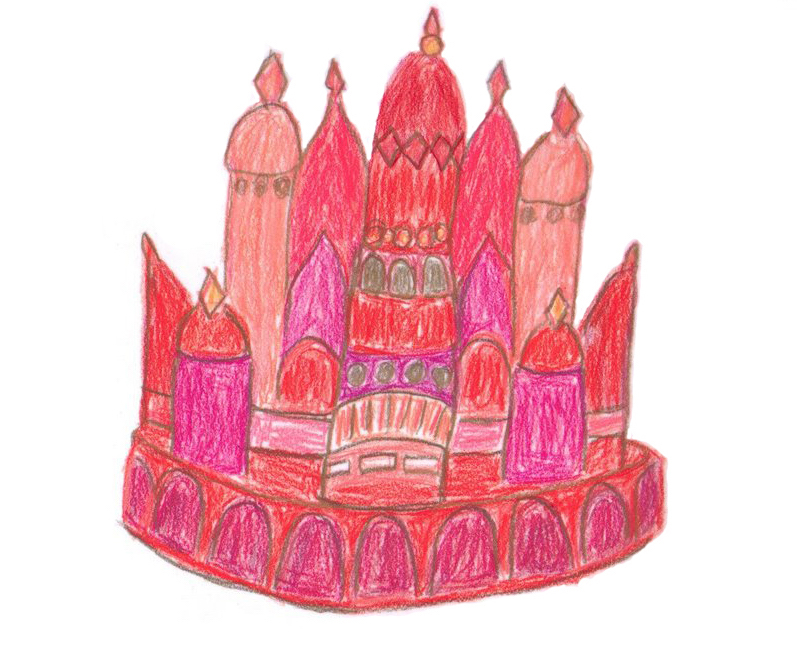
Linda Pace’s dream sketch of Ruby City.
Courtesy of Ruby City.
“The collection to me feels very
experiential,” says Ruby City’s head of collections, Kelly
O’Connor, noting that Pace, who became an artist late in life,
acquired most of her works directly from artists. (Many of them
came through the residency program and gallery she founded,
artpace). “You really see Linda’s intuitive collecting
style. She wasn’t going after one work that was going to represent
that artist’s whole output.”
She preferred to collect work by
female artists such as Laura
Aguilar, Andrea Bowers,
Sarah Charlesworth, Lorraine O’Grady, Nancy Rubins, and Diana
Thater, among many others who feature prominently in the
collection. San Antonio artists such as Chuck Ramirez, Cruz
Ortiz, and Ana Fernandez also enjoy a large presence in the foundation’s
holdings, as do London-based artists like Isaac Julien, Gillian
Wearing, and Rachel Whiteread. (Pace lived in the British city for
five years in the 1990s.)
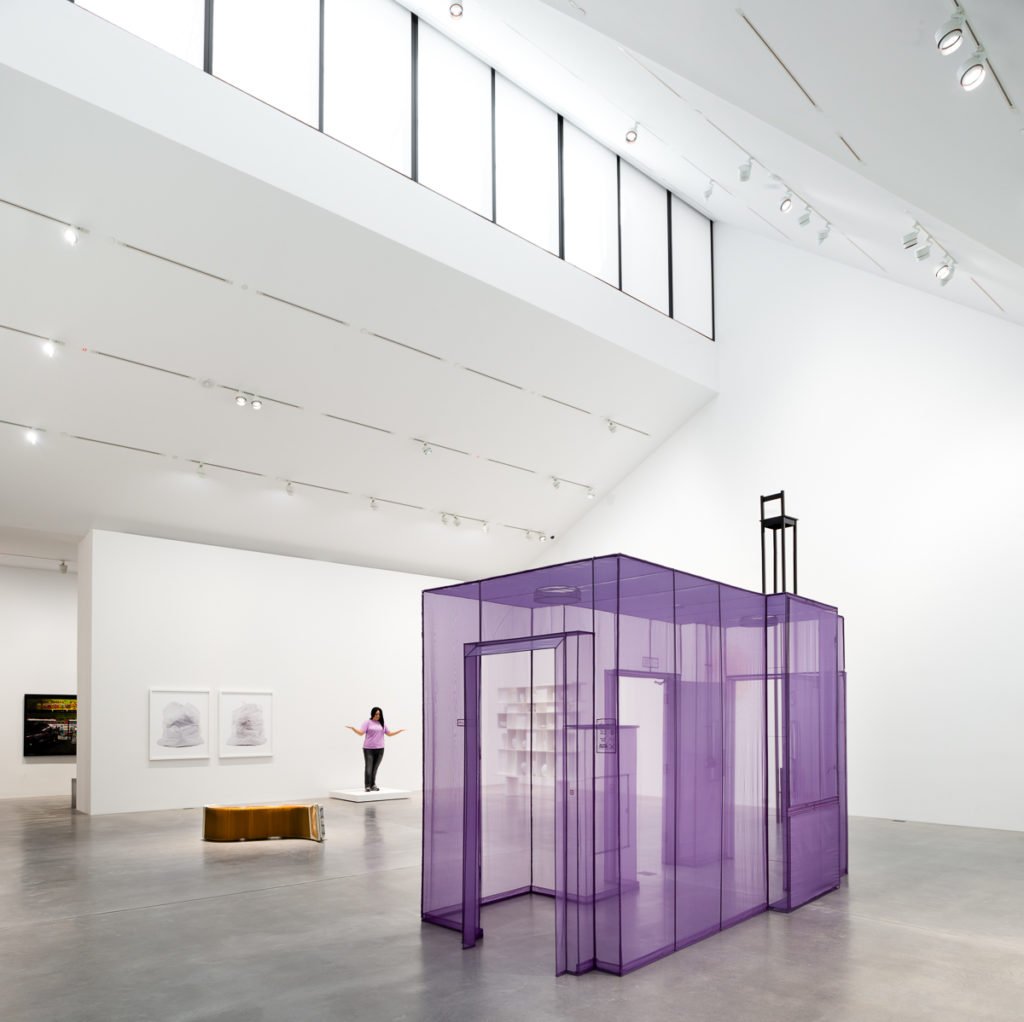
A view of Ruby City’s inaugural
exhibition, “Waking Dream.” Courtesy of Ruby City.
Ruby City, which is free and
open to the public and has no explicit educational agenda, is not a
museum per se—at least not in its stated
intentions.
“Linda didn’t want to replicate
art history,” Kanjo says. “She wanted people to come to the artwork
in an unmediated way. I think she felt that museums are burdened
with having to tell some sort of sanctified art history, that they
can be bogged down, too administrative or
bureaucratic.”
Indeed, it doesn’t
feel like a museum, even though it has all the
trappings of one. You’d never mistake it for a state-sponsored
institution or a staid, white-cube enterprise beholden—financially
and ideologically—to the art world’s status
quo. Pace’s personality
is foregrounded at every turn, down to the center’s fanciful name.
Her picture greets visitors in the entryway and her work is
installed among the biggest names of the collection. Clusters of
gemstones are embedded in the walkways of the park outside of the
museum—a literal manifestation of one of Pace’s favorite phrases,
“jewels in the concrete.”
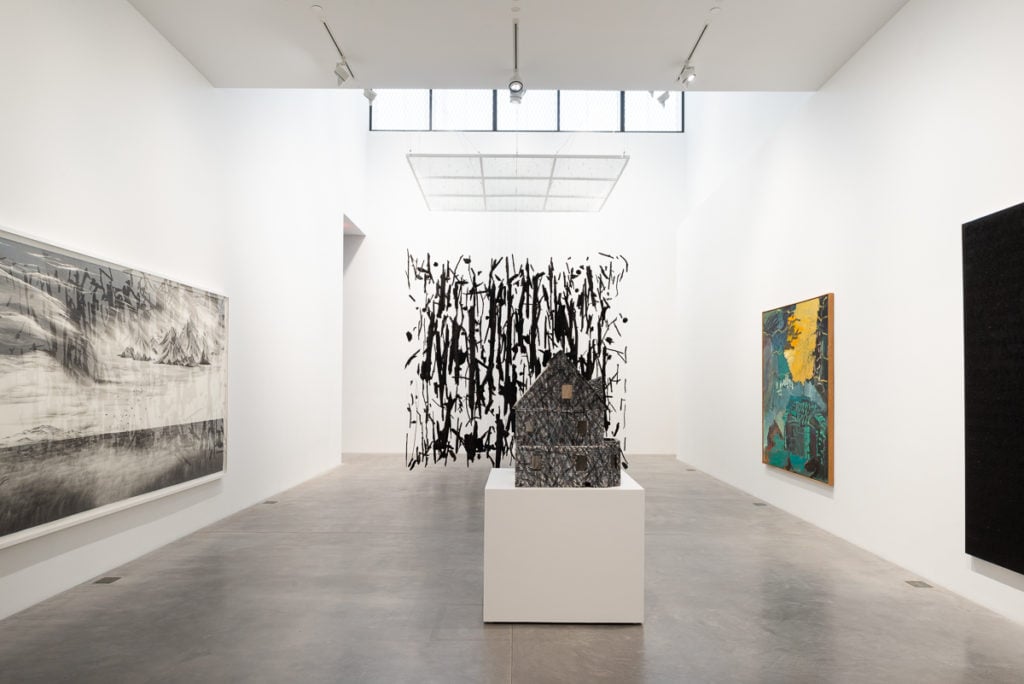
A view of Ruby City’s inaugural
exhibition, “Waking Dream.” Courtesy of Ruby City.
Yet what might seem like an
exercise in ego is, more often than not, actually a trick to strip
away the pretension of contemporary art, putting in its place a
healthy dose of home-spun Texas charm. It’s a maneuver Pace herself
seems to have mastered.
“Fifteen years ago, we would be
nervous to call this thing Ruby City, fearing that it might sound a
little too ‘new age,’” Kanjo says. “But more and more, audiences
want to find authentic expressions. This place is authentically
Linda.”
The post Ruby City, a Jewel-Box Museum Dedicated to the
Collection of the Late San Antonio Heiress Linda Pace, Sparkles
With Personality appeared first on artnet News.
Read more https://news.artnet.com/art-world/ruby-city-san-antonio-1680004
Further reading


Leave a comment