
For Years, the Rubin Museum Has Struggled to Attract Visitors. Can a New Chief Experience Officer Turn Things Around?
The Rubin Museum of Art was in trouble, and the writing had been
on the walls for years.
In 2011, Shelley and Donald
Rubin, who had founded the New York museum more than a decade
prior, donated $25 million to the fledgling institution to help
cover operating costs while the institutions worked to establish
its visibility.
But that money was set to run
out in 2020, and the institution’s revenue was still not growing
quickly enough to sustain day-to-day operations without tapping
further into its $138
million sustaining fund, which operates like an endowment. (The
museum currently uses less than four percent of the
fund.)
So this past October, the Rubin, which is dedicated to the art
of the Himalayas, India, and neighboring regions, announced a
drastic series of cuts to operations, programs, and staff.
Twenty-five percent of its employees were let go, and a plan was
announced to reduce rotating exhibitions from five or six per year
to two. Visitor hours were also cut, with the museum closing one
more day per week.
In a recent interview with Artnet News, Jorrit Britschgi, the executive director, said
the museum was given a challenge: how would it refashion itself in
the face of new expectations?
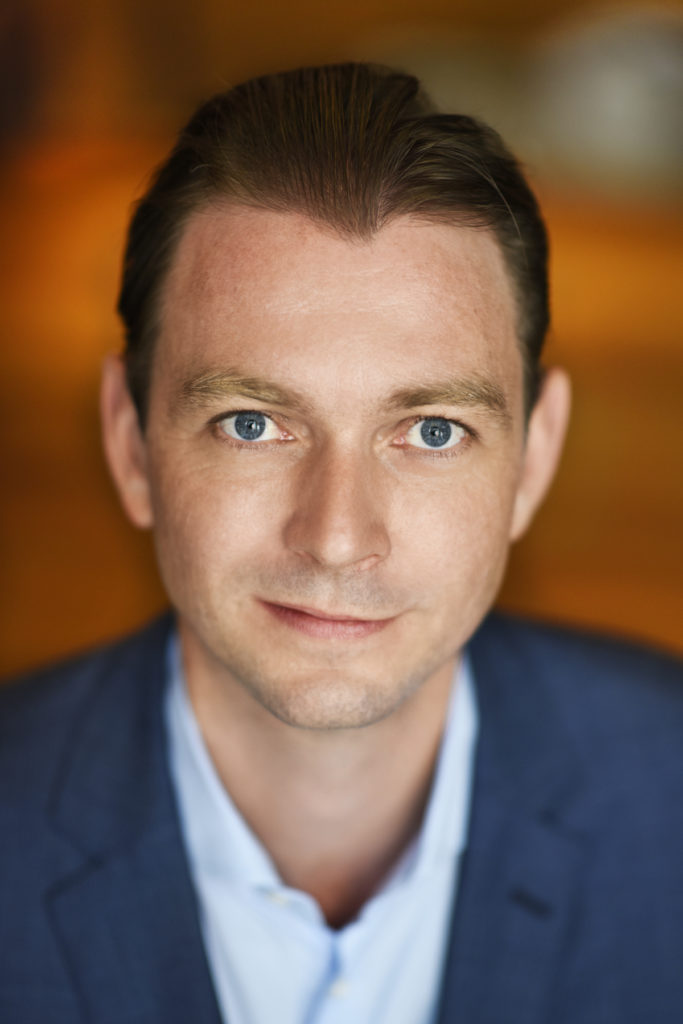
Jorrit Britschgi. Courtesy of the Rubin
Museum of Art.
“The museum sector has really
changed,” Britschgi told Artnet News. “Museums are only starting to
recognize how important the visitor experience is. There’s not one
type of visitor, but countless types, and they all have different
needs.”
As part of the restructuring
effort, Britschgi has created a new position in the
museum: chief experience officer.
Jamie Lawyer, who currently
serves as head of interpretation, digital learning, and evaluation
for the Nelson-Atkins Museum of Art in Kansas City, has been named
to the position, and will be responsible for rethinking the
museum’s relationship with its visitors. She begins her role in
January.
Lawyer will be tasked with
“thinking holistically about how someone interacts with the Rubin,”
Britschgi said.
“It’s about how we care for our
visitors,” Lawyer told Artnet News. “I think about how we can build
their confidence in looking at art and help them understand the
different ways that art can be personally relevant to them. In
order to do that, we have to embrace the right body language across
our institution.”
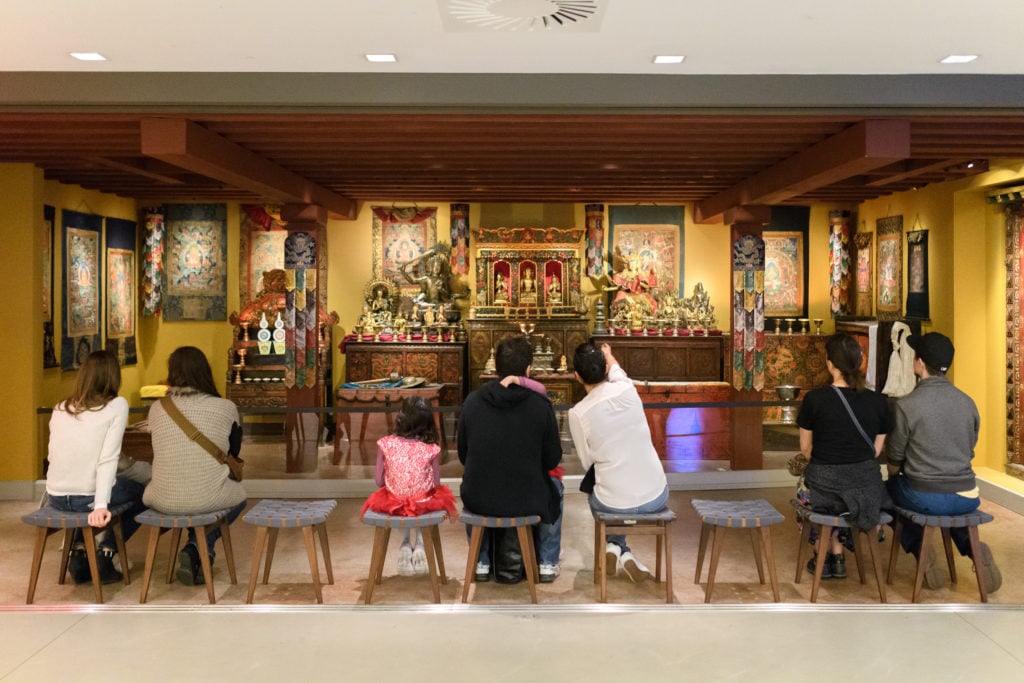
The Shrine Room in the Rubin Museum of
Art. Photo: Filip Wolak.
While the scope of the role is
still being fleshed out, Lawyer notes that she’ll likely be
surveying visitors, working with curators to make exhibitions more
user friendly, and exploring ways in which she can bring digital
elements to the galleries.
One of her first tasks will be
to hire a specialist for Himalayan ideas, another new position at
the museum. This person will bring an academic (but not strictly
art-historical) background to the job, and work to make Himalayan
art more accessible.
A similarly open-minded approach
will drive the museum’s new residency program, which will be open
to curators, writers, anthropologists, and others from the
Himalayas.
And there are more changes
afoot. The museum will rehang its permanent collection to try to
spread the immersive magic of its most popular exhibit, the Shrine
Room, through the rest of the galleries.
The institution is also doubling
down on educational initiatives with a particular focus on college
audiences. Noah P. Dorsky, founder of the non-profit Dorsky Gallery
Curatorial Programs in Queens, will help to overlook it all as the
new president of the museum’s board of trustees, effective January
1.
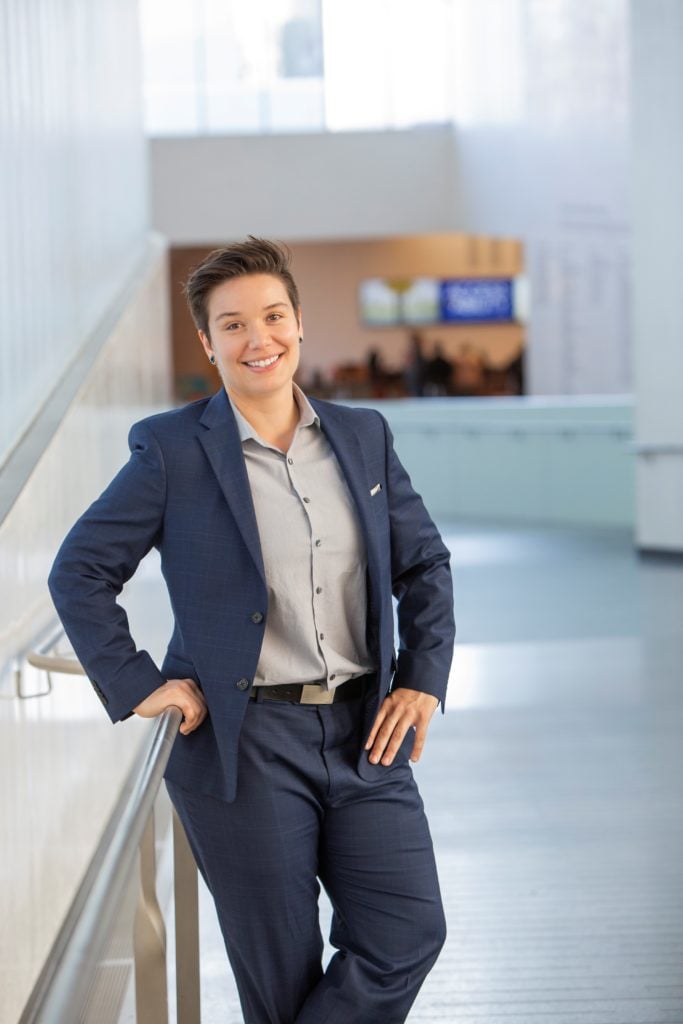
Jamie Lawyer. Courtesy of the Rubin
Museum of Art.
The goal with these changes,
Britschgi said, is not necessarily to hugely increase visitor
numbers. (The museum currently attracts roughly 200,000 visitors
annually.) Instead, it’s about connecting with guests on a personal
level.
“We don’t aspire to get five
million people through our doors every year,” he said. “The
uniqueness of the Rubin is that we try to speak with our art, not
numbers. We want people to say, ‘The Rubin is my home away from
home,’ or ‘There should be a Rubin museum in every city.’ That’s
the feeling we’re looking for in these changes.”
The post For Years, the Rubin Museum Has Struggled to
Attract Visitors. Can a New Chief Experience Officer Turn Things
Around? appeared first on artnet News.
Read more https://news.artnet.com/art-world/rubin-museum-chief-experience-officer-1728681
Further reading


Leave a comment