
Inspired by John Cage, an Italian Collector Commissioned Leading Artists to Transform Pianos Into Weird and Wonderful Sculptures. See Them Here.
A grand piano is turned on its side exposing the outline of a
woman’s body that appears to have smashed right through the top of
the lid and landed on the chords underneath. The late feminist
artist Carolee Schneemann’s absurdist creation is surrounded by an
array of artists’ pianos in Berlin’s KW Institute for Contemporary
Art.
The two dozen “prepared pianos” were inspired by a concept
coined by the avant-garde US composer John Cage, who would place
objects on or between the strings. They were all commissioned by
the late Italian collector Francesco Conz, who met Cage in the
1970s. The Italian art patron went on to commission more than 60
artists to transform the musical instrument, a selection of which
go on show today in the German capital.
Dorothy Iannone’s Courting Ajaxander is as
sexually charged as any of her paintings or sculptures: On the lid
of a grand piano she painted a love story. The Belgrade-based
conceptual artist Raša Todosijević’s piano is exploding with canes,
and a piano by Ben Patterson seems to be overgrown with tropical
foliage.
“The piano was a surface like that of a page or a
canvas—you can find the attitude of the artist behind each work,”
says Gigiotto Del Vecchio, who has co-organized the five-day
exhibition, during which some of the pianos will be performed.
“It’s about the freedom of thinking about something completely new
while using the piano structure to define or to reset something
related to each artist’s practice,” Del Vecchio adds.
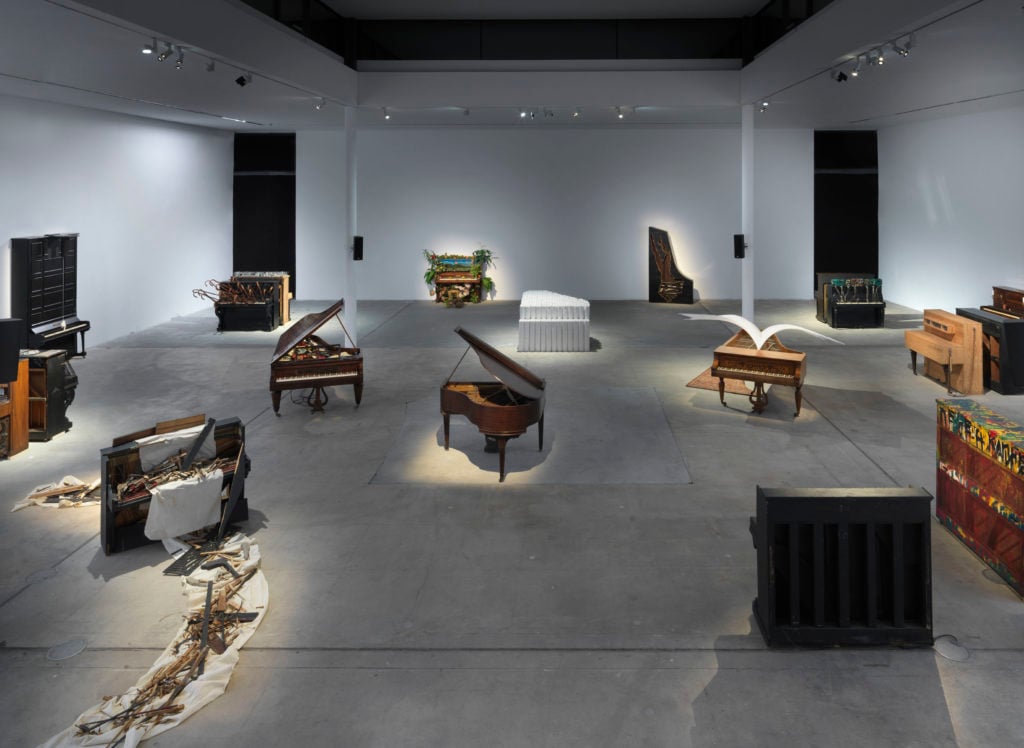
Installation view of “Pause: Broken
Sounds / Remote Music—Prepared Pianos from the Archivio Conz
Collection.” Photograph by Jens Ziehe. Courtesy of Archivio
Conz.
A piano by Nam June Paik exemplifies Cage’s idea. The Korean
artist created a prepared piano in 1975 for Conz. It
reduces the instrument to just one note, and sounds like bells
ringing when played.
Nearby stands another piano that may be more straightforward to
activate, The US artist Allan Kaprow created a
fantastically stretched piano that is nine feet tall. It looks
as if it is being played by a sculpted hand frozen as it slams down
on the middle C key.
Over the next five days performers will activate several of the
pieces, few of which are playable in the traditional sense. How do
you play a piano made of toilet paper rolls? Created by the Italian
composer Walter Marchetti, the musician is best known for making
use of recordings of toilets flushing and pigs squealing in his
work. Another highlight will be Friday evening’s performance by the
72-year-old artist Charlemagne Palestine, who knew Conz
personally.
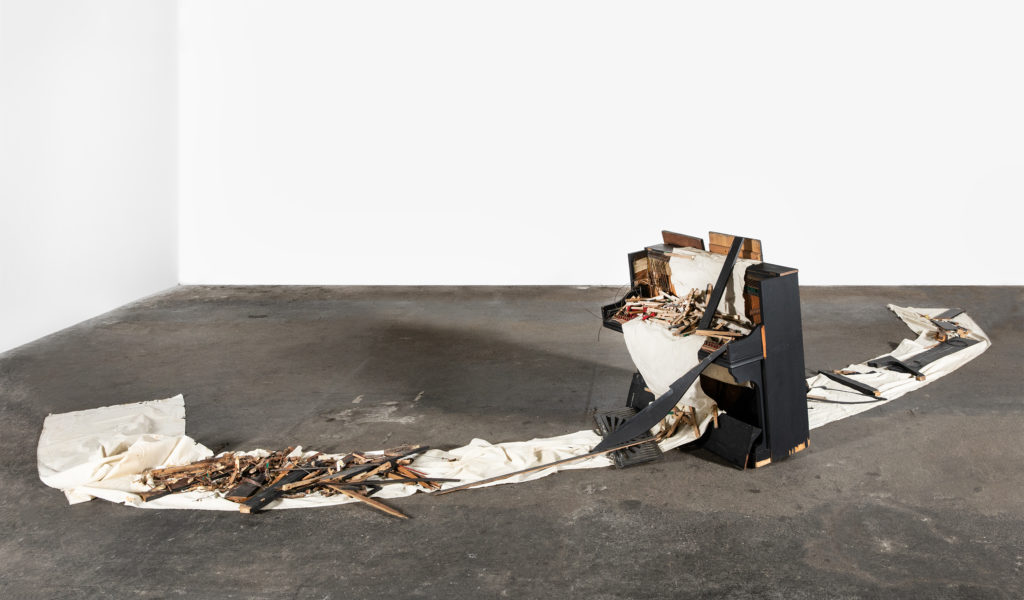
Philip Corner Piano
“Worked” (1983). Courtesy Archivio Conz. Photo: Giorgia
Palmisano.
Unwrapping the Archivio Conz
The Italian collector was also a major supporter of the Fluxus
movement. After the patron’s death, his 3,000-strong collection,
known as the Archivio Conz, was snapped up by the German banker and
billionaire Daniel Hopp. Now housed in a Berlin warehouse, it is
being organized, archived, and curated by the former art
dealers Gigiotto Del Vecchio and Stefania Palumbo. The event
at KW marks one of the first major public displays of a large part
of the collection since Conz’s death in 2010.
Conz met Cage during a trip to New York in 1974, an encounter
which inspired the prepared piano commissions, and also prompted
the Italian to shutter his commercial gallery and set up his
“Secret Museum,” a vibrant underground hub for artists from the
Fluxus movement, but also those involved in concrete poetry,
Lettrism, and Viennese Actionism. A large portion of the collection
is formed by multiples as Conz spent a good portion of his life
working with artists to make editions. The collection includes
works by Robert Ashley, Yoko Ono, Claes Oldenburg, and Lee Ufan,
among others. There are also fridges and cars, which the archive
describes as “festishes” of the collector.
Since 2016, Del Vecchio, Palumbo and their team have been
sorting through the vast archive. They are making discoveries all
the time, like a hundred unique works by Czech artists Josef
Hirsal and Bohumilou Grögerovou that were found in a box recently.
As the estate becomes completely archived, more finds are sure to
follow.
See a selection of the artist’s prepared pianos below.
“Pause: Broken Sounds/Remote Music. Prepared Pianos From the
Archivio Conz Collection,” January 15 through January
19, KW Institute for Contemporary Art,
Berlin.
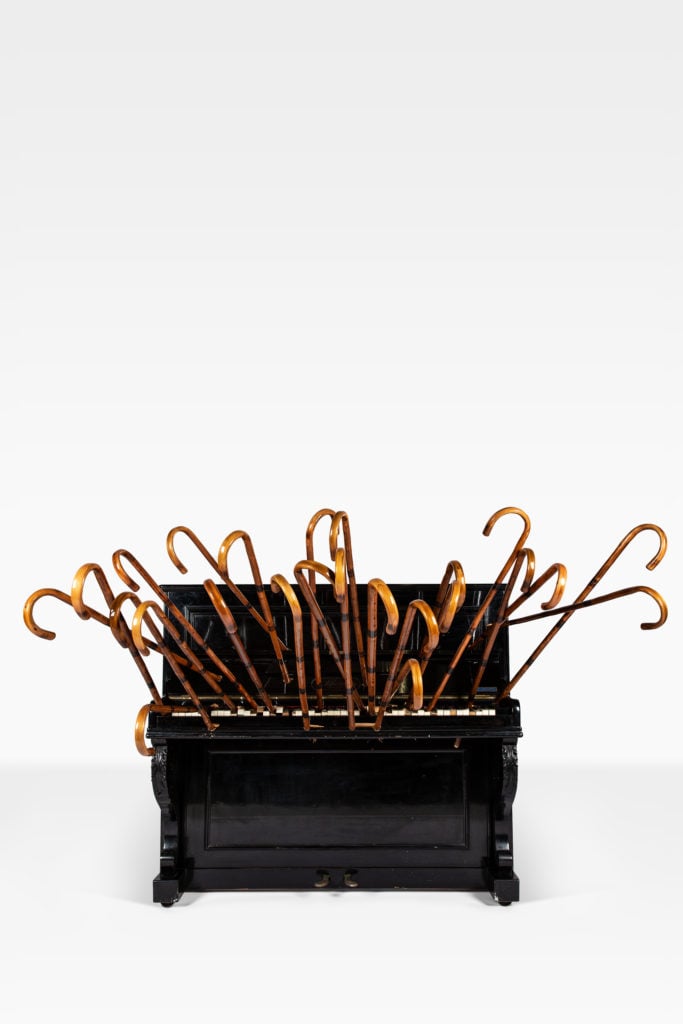
Rasa Todosijevic. Untitled
(2004). Courtesy Archivio Conz. Photo: Giorgia Palmisano.
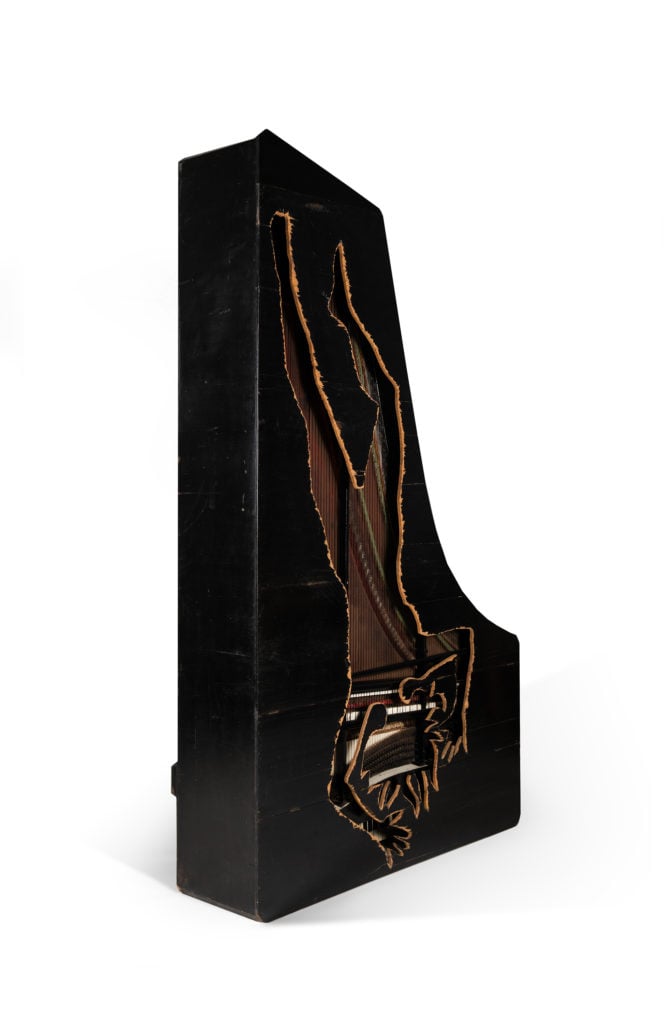
Carolee Schneemann Piano. Courtesy
Archivio Conz. Photo: Giorgia Palmisano.
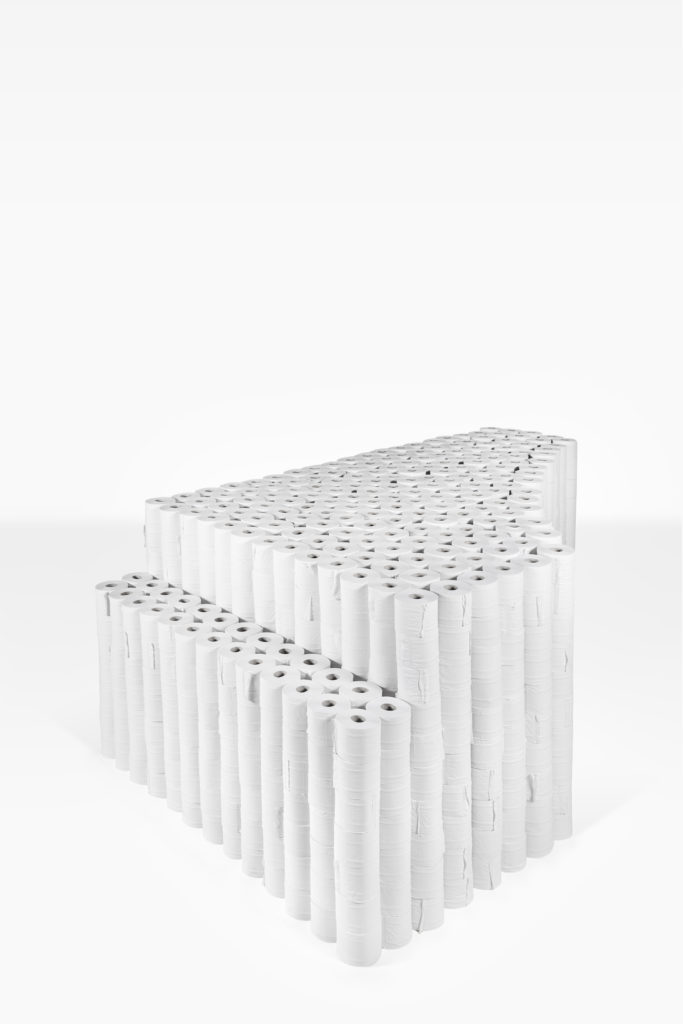
Walter Marchetti Piano del papel
higiénico, (1990). Courtesy Archivio Conz. Photo: Giorgia
Palmisano.
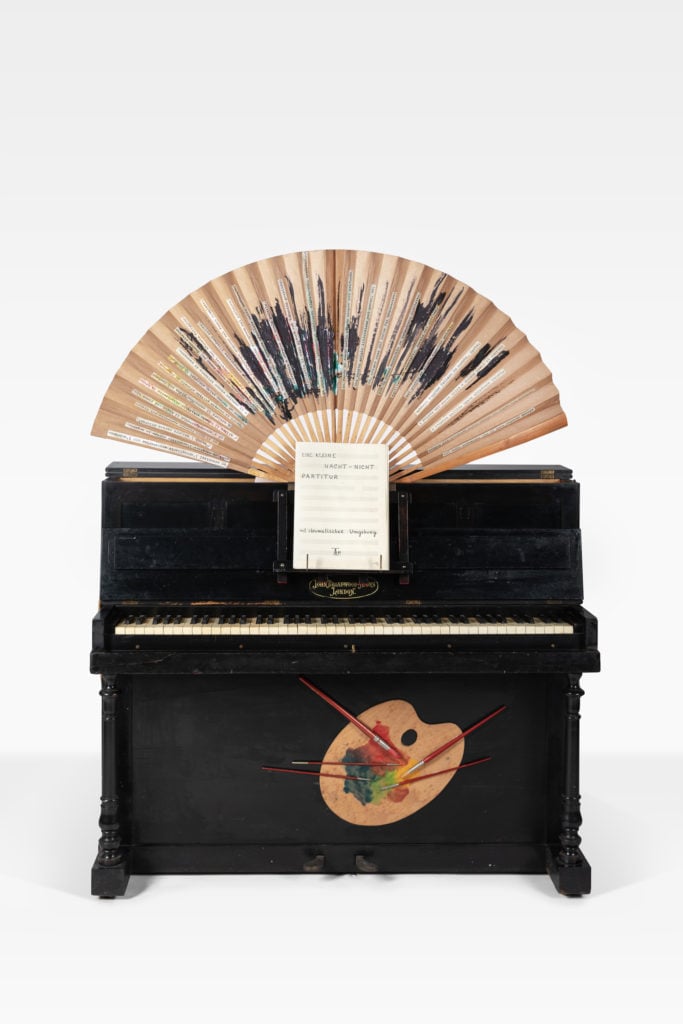
Arrigo Lora-Totino Eine kleine Nacht
– nicht Partitur (1989). Courtesy Archivio Conz. Photo: Giorgia
Palmisano
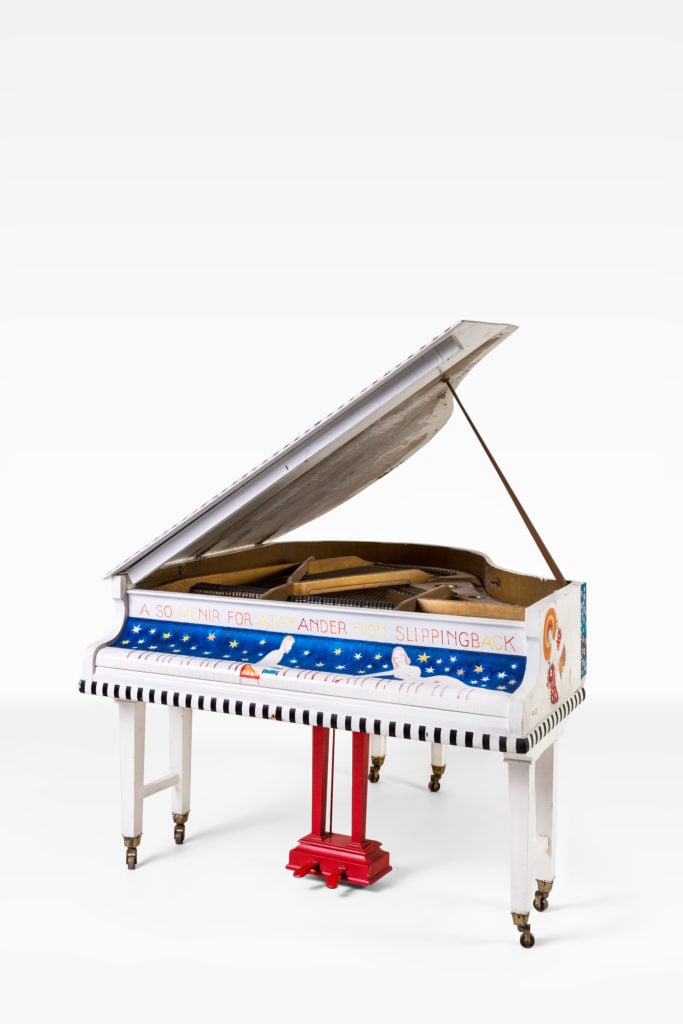
Dorothy Iannone (1989/90).
Courtesy Archivio Conz. Photo: Giorgia Palmisano
The post Inspired by John Cage, an Italian Collector
Commissioned Leading Artists to Transform Pianos Into Weird and
Wonderful Sculptures. See Them Here. appeared first on artnet
News.
Read more https://news.artnet.com/exhibitions/prepared-pianos-kw-pause-1752594
Further reading


Leave a comment