
What Happens When an Art Museum Is Conceived to Cash in on the Experience Economy? Fotografiska New York Is About to Find Out
At Fotografiska New York, you
enter through the gift shop. The Swedish photography hub, which
opened last month inside a dramatic, Gilded Age mansion on Park
Avenue, is one of America’s only for-profit art museums. (Another
one, the Museum of Sex, is located just a few blocks
north.)
“Photography lends itself to the
for-profit model because it helps foster a cultural experience,”
Yoram Roth, the museum brand’s chairman and majority shareholder,
tells Artnet News. “But you can’t just put art on the wall and hope
people come back. This is the experience economy.”
Fotografiska is consequently
adorned from foot to face with the polish you would expect from a
commercial enterprise in the arts. The museum is looking to create
an immersive experience, Roth says, akin to those fostered by
Japanese digital collective TeamLab, whose Tokyo exhibition space
now attracts more visitors
than the Van Gogh Museum in Amsterdam, or the light-show extravaganza
Atelier des Lumières across the pond in Paris.
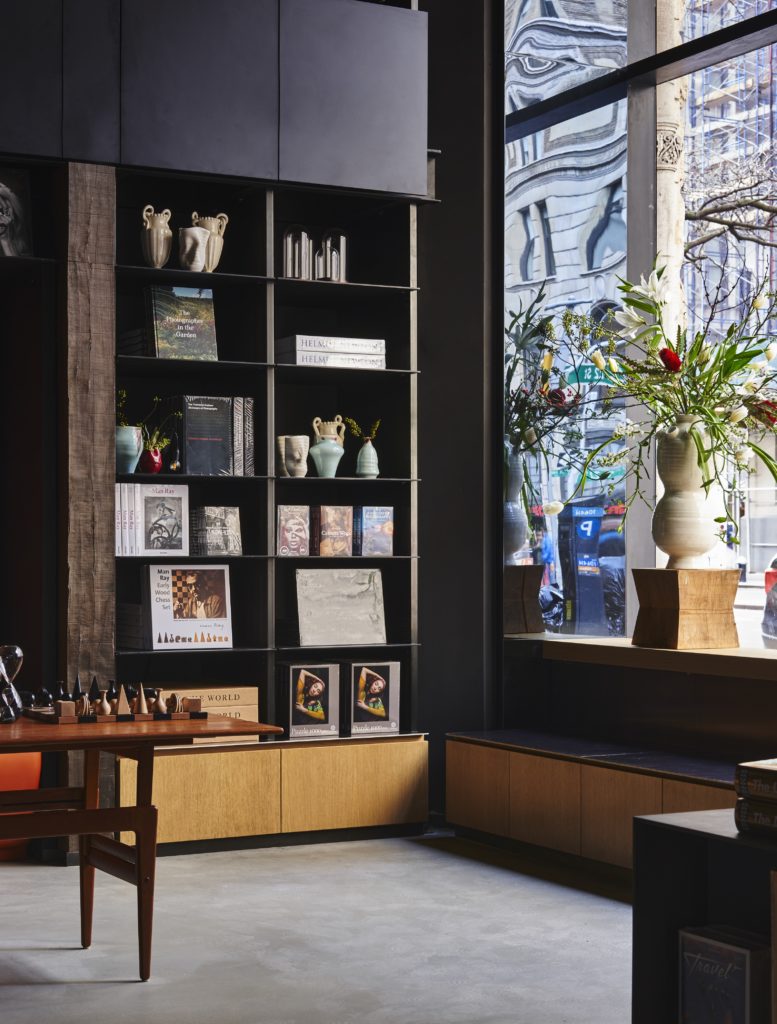
The interior space at Fotografiska, New
York. Photo: Adrian Gaut.
The museum is betting that
in a city where tickets to the Museum of
Ice Cream cost $38, visitors will be willing to pay for the
privilege of experiencing photography in a way that feels more like
socializing than doing homework. (Admission for adults is $28; more
than at the Museum of Modern Art, which charges $25, but less than
for MOIC.)
At Fotografiska, doors are often
open until midnight to accommodate events like DJ sets and artist
talks. Visitors can wander through the galleries with cocktails in
hand before descending to the second floor’s restaurant, Veronika,
named after the patron saint of photography and operated by the
famed restaurateur Stephen Starr. The décor of its upstairs event
space and downstairs bar area mixes the masculine camp of
Abercrombie & Fitch with the velveteen hauteness of Soho
House.
A New Model
Over the past decade,
Fotografiska has developed from an upstart Swedish experiment
inside an old Stockholm customs house into an international brand
intent on opening several outposts across Europe and Asia. When
Roth visited the original Stockholm museum almost a decade ago, he
saw an opportunity to expand on the ambitions of the company’s
founders, the brothers Jan and Per Broman, who also run Fotomässan,
the Nordic region’s largest consumer photography
fair.
What the self-described
“cultural entrepreneur” has created is a closed circuit of museums
around the world that share programming resources with little
overhead cost. According to Roth, who also operates a
strategic asset management firm with investments in hospitality and
real estate, the majority of these locations are buoyed by real
estate investors “who understand that museums bring people into
their neighborhoods.”
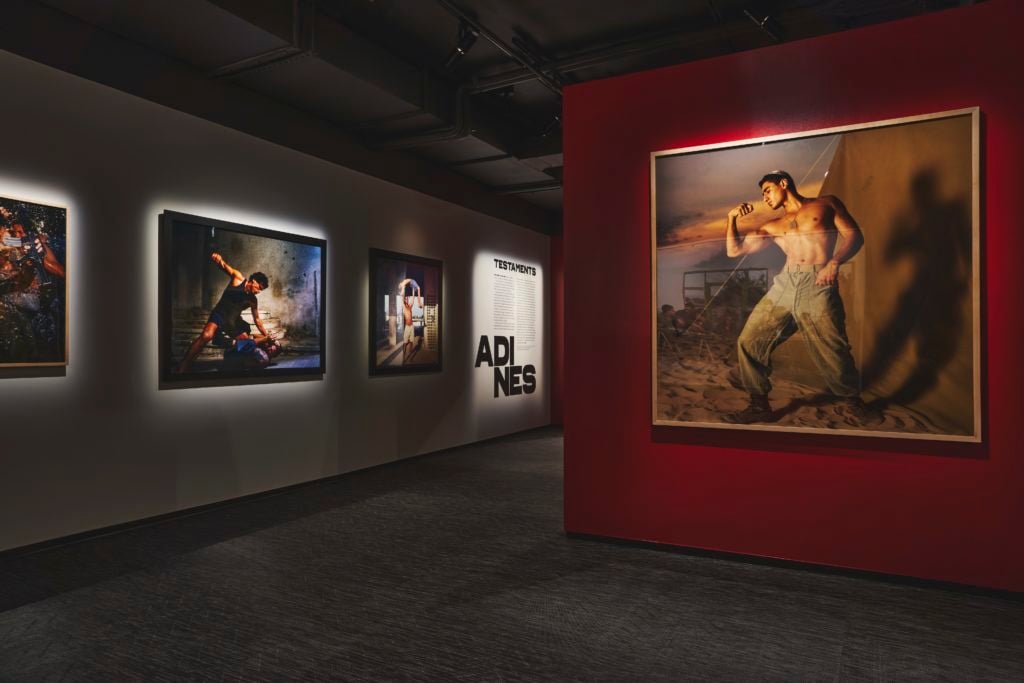
Installation view of “Adi Nes:
Testaments” at Fotografiska in New York, courtesy of
Fotografiska.
That includes RFR Realty, the
owner of Fotografiska New York’s $50 million Church Missions House
location. The company, which is owned by art collector Aby Rosen,
was previously expected to convert the historic building into
luxury apartments selling
between $100 and $150 per square
foot with a total of 45,000 square feet for sale. (You might also
recognize the spectacular building as the one now-jailed scammer Anna
Delvey proposed as the site of her fictional art
foundation.)
Fotografiska New York expects to
mount more than 20 exhibitions per year—a packed schedule compared
to museums of comparable size, which produce closer to a half
dozen. What allows this assembly line to function so efficiently is
an exchange system among museums, enabling shows to travel between
New York, Stockholm, Tallinn, and the forthcoming London
location.
“Our primary concern is
quality,” says Amanda Hajjar, Fotografiska New York’s director of
exhibitions. “There’s a lot of care and thought put into what we do
here.”
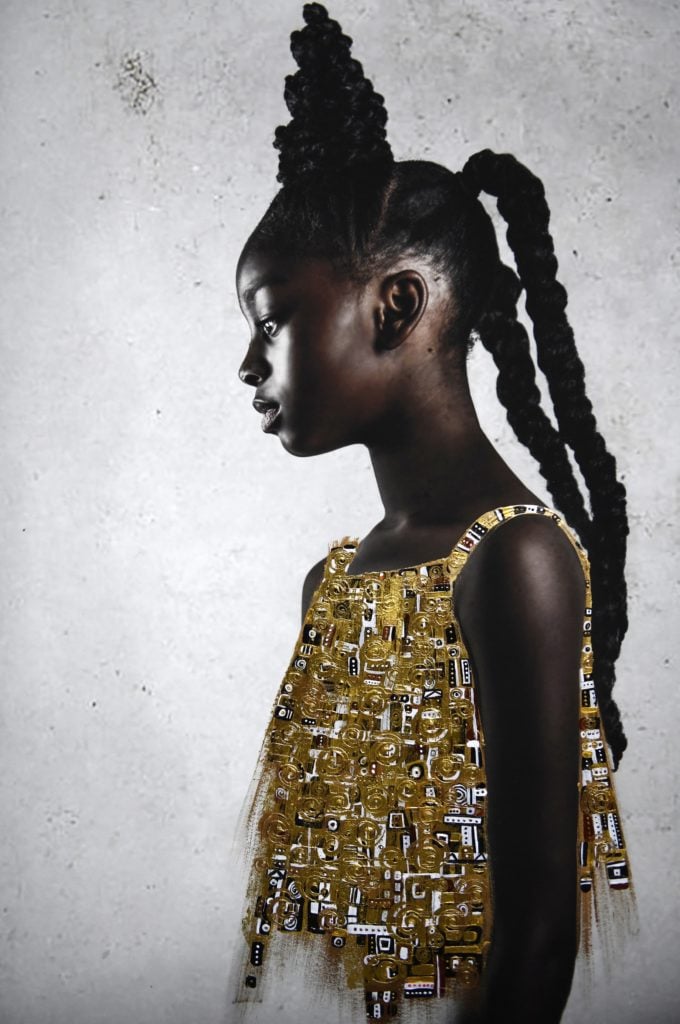
Tawny Chatmon, Castles-The
Redemption (2019). © Tawny Chatmon, courtesy of Fotografiska,
NY.
A Packed Schedule
Fotografiska predominantly
relies on its team of around 60 part-time workers, Hajjar says, the
majority of which handle front-of-house tasks like visitor
services. Additionally, there are approximately 20 full-time
employees in charge of running the museum’s six floors, not
including the restaurant. And according to Hajjar, the exhibitions
team in New York consists of three people. Those employees tend to
come from the sales and commercial realms, rather than academic art
history; Hajjar, for example, worked at Gagosian for more than
eight years before joining Fotografiska. Interestingly, nobody
within the international operation holds the title of
curator.
Fotografiska may lack the
scholarship and research infrastructure typically associated with
museums, but its leadership contends that it provides a necessary
platform for photography that the public might not otherwise be
exposed to in an institutional setting, such as fashion photography
or photojournalism. Among the inaugural shows, for example, is a
portfolio of work by Anastasia Taylor-Lind commissioned by
Fotografiska and TIME magazine that chronicles
the New York families and the caretakers who help raise their
children. “We are a more accessible venue for artists and
visitors,” said Hajjar.
While the museum lacks a
curator, Hajjar says that her staff often collaborates directly
with artists and their representation to create exhibitions,
covering production and travel fees. And although the museum
doesn’t directly sell work from its exhibitions, Hajjar says that
Fotografiska refers inquiring collectors directly to the artists
and galleries they collaborate with.
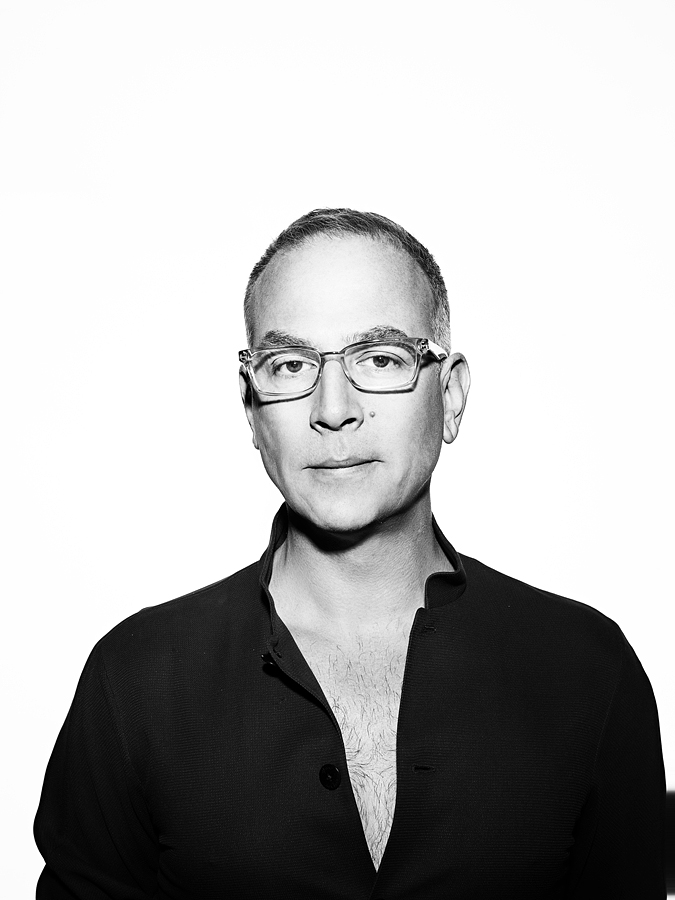
Yoram Roth. Photo: Courtesy of
Fotografiska.
But the lightning pace required
to produce 20 exhibitions per year can leave some participating
artists feeling left behind. For an upcoming exhibition in
collaboration with Vice, one artist says he was invited to
participate by a museum official, but denied any details as simple
as when the show would open and who else was involved. He was also
told by the exhibition’s organizer that he would not be paid for
participating in the exhibition. “I can’t quite tell what they’re
after,” said the artist, who wished to remain anonymous because of
his continued involvement with Fotografiska. (A spokesperson for
the museum clarified that this exhibition is “a bit of an outlier
and not indicative of the typical process,” which usually involves
paying artists an undisclosed fee in addition to travel and
production costs.)
“It’s nice that they are
building a museum in a neighborhood that’s just a dead zone for
art,” the artist said of the area, which has become a hub for tech
and finance start-ups in recent years. “All they have here is
finance bros.”
For some museumgoers, the
variable quality of photography on display was nettlesome. Two
women visiting on a Wednesday afternoon passed through an
exhibition of fashion photographer Ellen von Unwerth with furrowed
brows. They had enjoyed the crisp landscape photographs of Helen
Schmidt’s on another floor, which explored the impact of climate
change, but found these—shots commissioned for fashion editorials
that display models in skimpy clothes posing in bathtubs and on
rooftops—as an odd fit for a typical art museum. As she examined a
photograph entitled It’s a Barbie World, one woman
said, “It just seems like they are trying too hard to say too
much.”
With exhibitions changing every few months, Roth hopes that
visitors like the one above will return to Fotografiska and find
something they love. “Nowadays, it’s important to make art around
experiences,” he explains. “Standing in front of a photographic
print is magic, and that’s not going away. The question is: How can
we top that?”
The post What Happens When an Art Museum Is Conceived to
Cash in on the Experience Economy? Fotografiska New York Is About
to Find Out appeared first on artnet News.
Read more https://news.artnet.com/exhibitions/fotografiska-new-york-experience-economy-1756227
Further reading


Leave a comment