
Painter Noah Davis Died at Just 32. But a New Show at David Zwirner Could Secure the Legacy of His ‘Mad Genius’ for Years to Come
When Noah Davis died of cancer at age 32, he left behind a
legacy that most artists would never dream of in a lifetime: A
gifted painter with a finger on the pulse of his generation, a
scrappy organizer who turned three derelict storefronts into a Los
Angeles cultural phenomenon, and now, five years after his untimely death, a
star of the blue-chip art world.
An absorbing survey of
Davis’s work, organized by curator Helen Molesworth, is
now on view at David
Zwirner. The show blends
the artist’s sensitive, moody paintings with an installation
modeled on the offices at the Underground Museum, an alternative
art space in Los Angeles that Davis co-founded with his
wife, artist Karon
Davis, in
2012.
“On the one hand, I wanted
people to get a sense of the breadth of what he did and what he was
capable of. On the other hand, I didn’t want it to be so
comprehensive that no one would do another show,” Molesworth said
during a recent visit to the gallery.
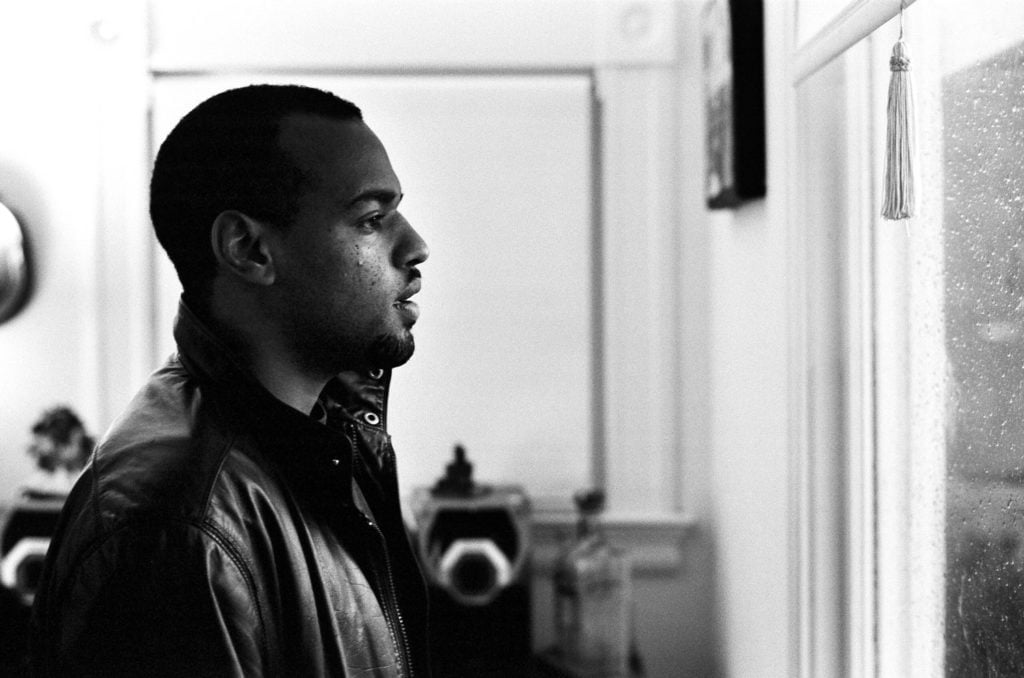
Noah Davis. Photo by Ed Templeton,
courtesy of the Underground Museum.
Molesworth first met Davis at
the Underground Museum in the fall of 2014, when she was still
chief curator of the Los Angeles Museum of Contemporary Art.
Molesworth was actually there to see Davis’s filmmaker brother,
Kahlil Joseph, who is known for his collaborations with Beyonce and
Kendrick Lamar, but the three ended up talking for
hours.
“We both went to the church of
art,” she says of her immediate bond with Davis. “He was an
extremely outgoing, loquacious person. He was funny and had a big,
barrel-chested laugh. He was opinionated and inquisitive, which
don’t often go hand in hand.”
Soon after their meeting, Davis
approached Molesworth with the idea of a collaboration between LA
MoCA and the Underground Museum, then still a humble operation that
doubled as Davis’s studio.
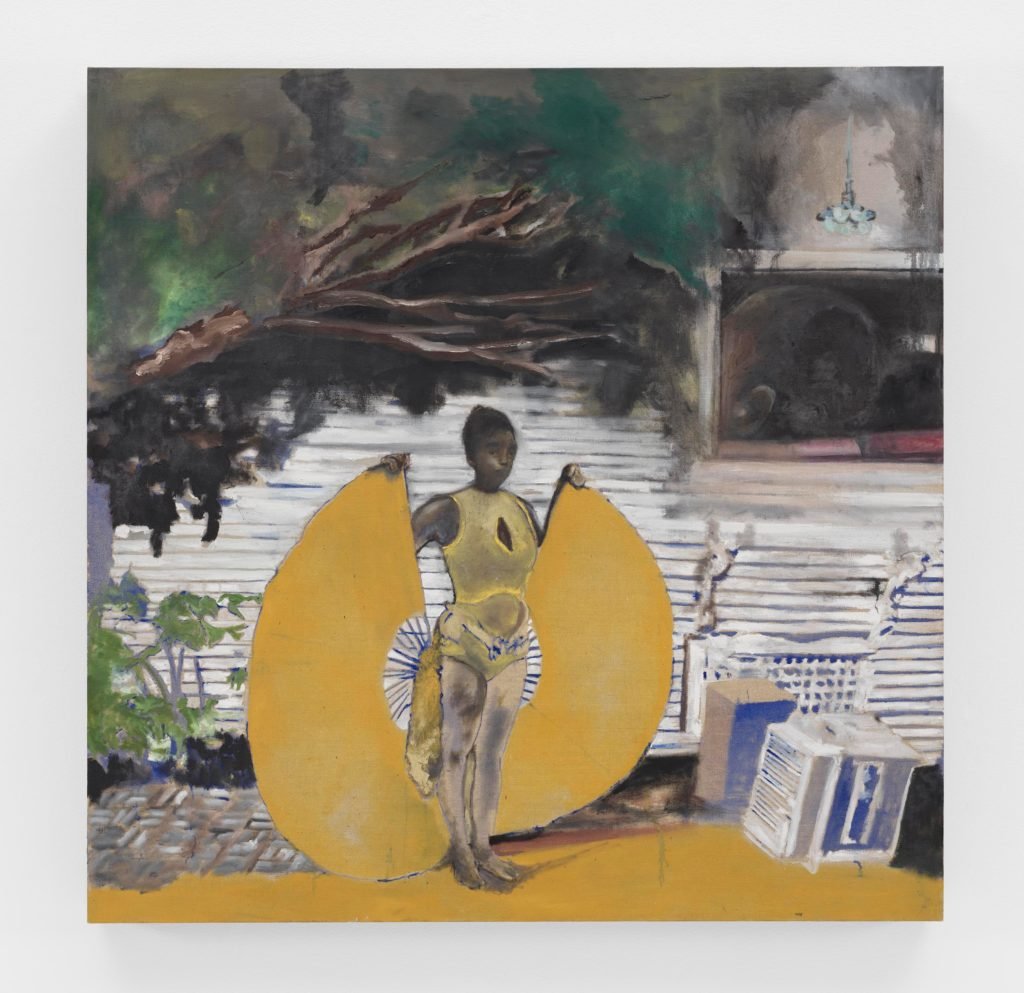
Noah Davis, Isis (2009). © The
Estate of Noah Davis. Courtesy of the estate of Noah Davis.
By that point, “he had asked a
lot of museums in town if they would be willing to lend work.
Everyone said no, and for completely legitimate reasons—the museum
was three dingy storefronts on Washington,” Molesworth recalls with
a smile.
“To be really honest, I don’t
know why I said yes,” she says. “I guess I trusted the situation
and I was looking for another way to work. I wanted a new, more
diverse audience.”
But soon after agreeing to the
partnership, for which MoCA would lend works from its collection to
the Underground Museum for a series of exhibitions, Davis was
diagnosed with a rare form of soft-tissue cancer. He died the day
the first MOCA-supported show opened at his space.
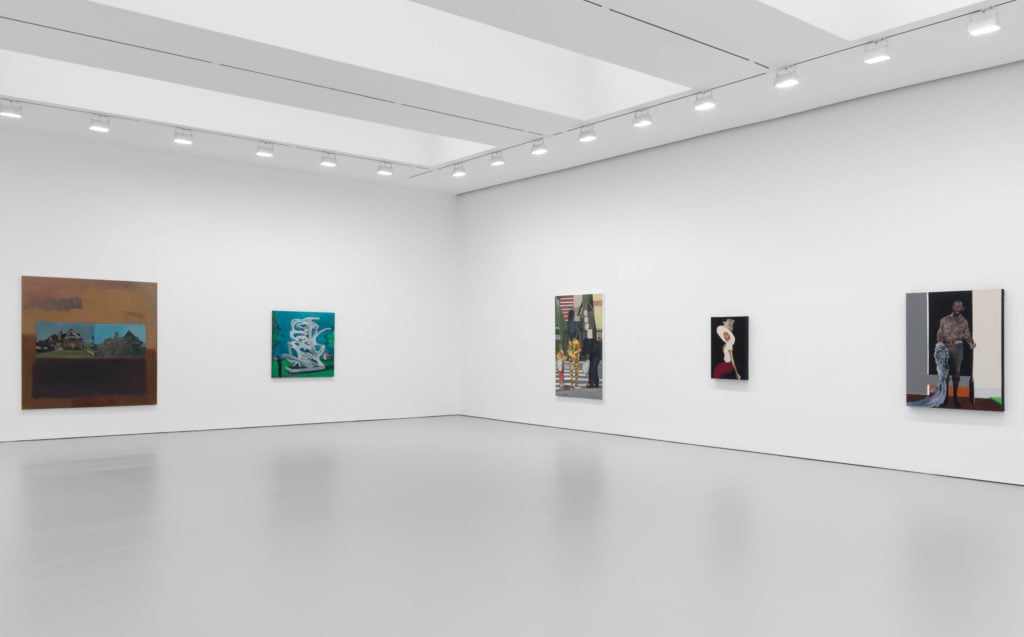
Installation view of “Noah Davis,” David
Zwirner, New York, 2020. Courtesy of the estate of Noah Davis and
David Zwirner.
Davis left behind plans for the
museum with Molesworth, Joseph, and his wife, all of whom continue
to oversee the space today.
“That was Noah’s mad genius,”
says Molesworth. “Because we had all made a promise, and because
the loss was so grave, everyone who was involved just showed up and
made stuff happen. Nobody held back. It was a testament to the
effect he had on people.”
The museum has since evolved
into a hotbed of creative activity, a modern-day salon where the
black artists and thinkers of our day—people like Fred Moten, David
Hammons, Kamasi Washington, and Solange—hold court and hang out.
Bring up Davis’s name today and it’s likely the first of his
accomplishments to be mentioned. But the Zwirner show, which, more
than anything, showcases the artist’s talent as a painter, may
change that.
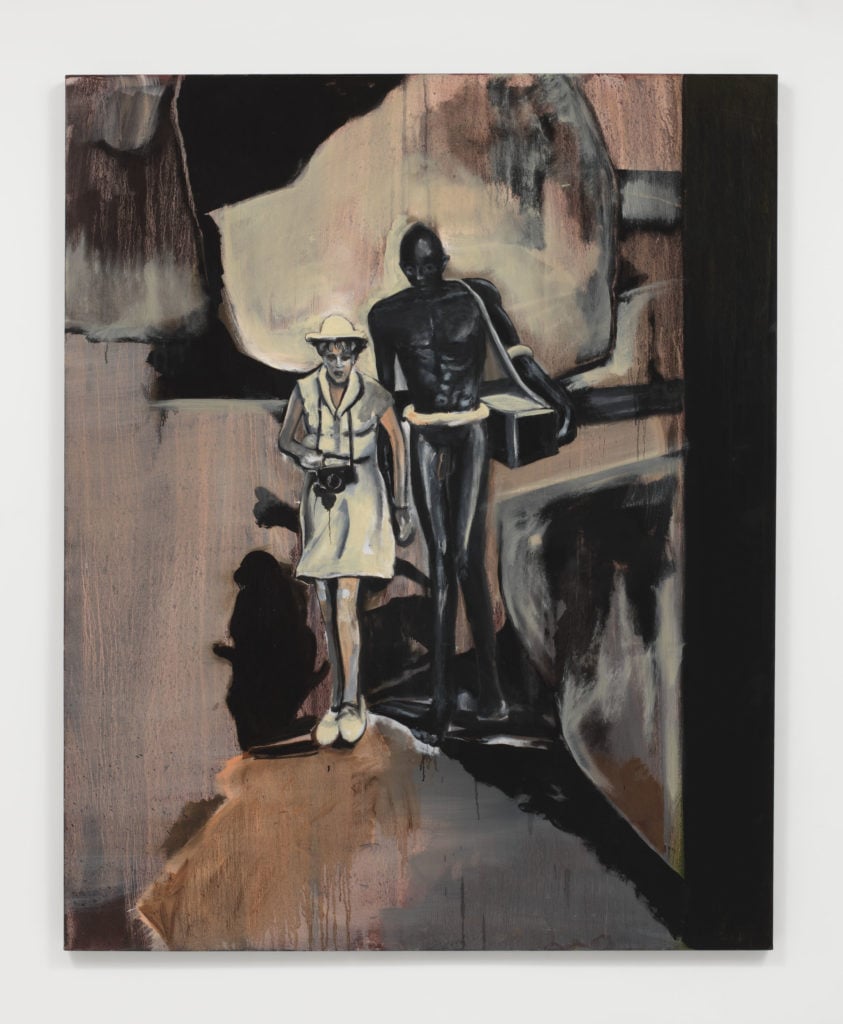
Noah Davis, Leni Riefenstahl
(2010). © The estate of Noah Davis. Courtesy of the estate of Noah
Davis.
Davis’s dreamy scenes of
domestic intimacy, or quiet moments of urban mundanity, touched
with the occasional hint of magical realism, feel like they were
made yesterday. And they come at a time when the market for
figurative painting that foregrounds the black experience has
exploded.
“Things pop and we don’t
understand that of course they’ve been percolating all along,” says
Molesworth. “Noah was very much a part of a generational ethos. A
bunch of kids were coming up in their 20s and 30s and were
rethinking what they wanted from art.”
“Noah
Davis” is on view
at David Zwirner through February 22, 2020.
The post Painter Noah Davis Died at Just 32. But a New Show
at David Zwirner Could Secure the Legacy of His ‘Mad Genius’ for
Years to Come appeared first on artnet News.
Read more https://news.artnet.com/exhibitions/noah-davis-david-zwirner-1759356
Further reading


Leave a comment