
The Civilization on Easter Island May Have Collapsed a Lot Later Than Previously Believed, a New Study Says
Archaeologists have long assumed that the ancient society that
erected the colossal Moai figures on Chile’s Rapa Nui, better known
as Easter Island, collapsed many centuries ago. Now, a new study
indicates that the islanders’ civilization was still going strong
when Europeans arrived in 1722.
The island was settled in the 13th century by Polynesians, and
is known for the famed Easter Island “heads”
(the bodies have been buried by erosion over the centuries). The
research, which appears in the Journal of Archaeological
Science, contests the accepted timeline that the Easter
Island society was already in decline by the year 1600 and its
massive stone statues left to fall into disrepair.
Conducting radiocarbon dating on 11 sites on Easter Island, the
authors determined the timeline of each monument’s construction.
Their findings indicate that Easter Islanders were still actively
building new Moai figures, and maintaining existing ones, up until
at least 1750.
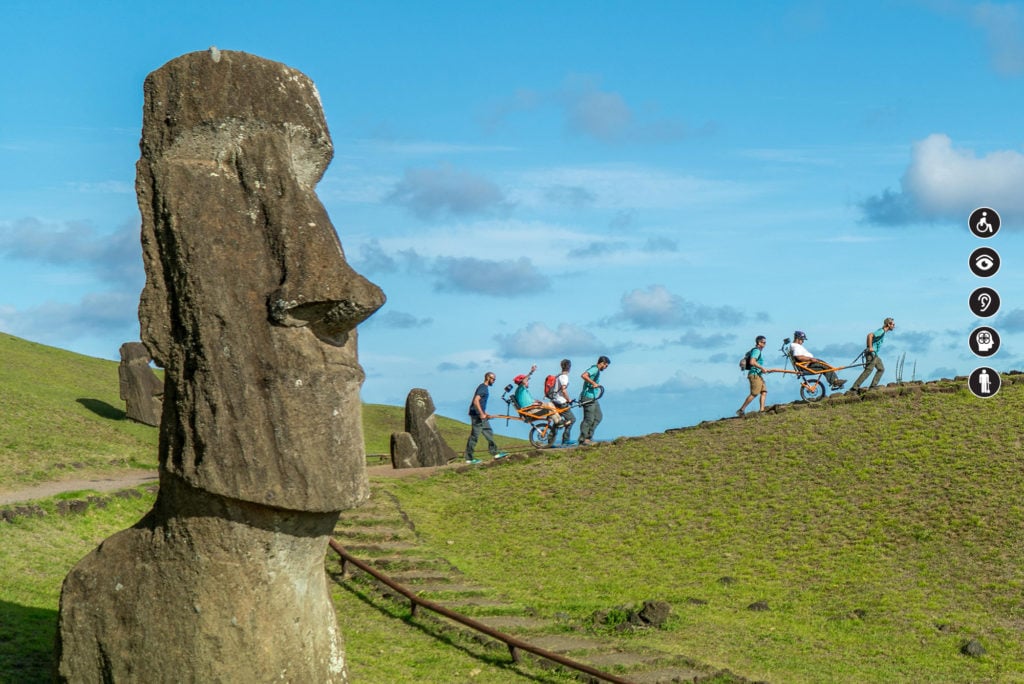
Trekking at Rano Raraku Volcano on
Easter Island. Photo courtesy of Wheel the World.
Further supporting these results are historical documents from
the island’s first European visitors. Written accounts from the
Dutch explorers who arrived in 1722 found that the monuments were
in active ritual use, with no signs of decline, and the same goes
for the Spaniards who landed in 1770. It was only in 1774 that
James Cook found the giant
statues in ruins and the figures knocked over.
“The way we interpret our results and this sequence of
historical accounts is that the notion of a pre-European collapse
of monument construction is no longer supported,” lead author
Robert DiNapoli told Archaeology & Arts.
“Once Europeans arrive on the island, there are many documented
tragic events due to disease, murder, slave raiding and other
conflicts,” added co-author Carl Lipo. “The degree to which
[the Rapa Nui people’s] cultural heritage was passed on—and is
still present today through language, arts, and cultural
practices—is quite notable and impressive. I think this degree of
resilience has been overlooked due to the collapse narrative and
deserves recognition.”
The post The Civilization on Easter Island May Have
Collapsed a Lot Later Than Previously Believed, a New Study
Says appeared first on artnet News.
Read more https://news.artnet.com/art-world/rapa-nui-easter-island-study-demise-1772814
Further reading


Leave a comment