
‘We’re Not Working in an ER’: Dealer Esther Kim Varet on How to Run a Thriving Art Gallery Without Losing Your Mind
This week, dozens of art dealers are packing up their wares and
flocking to Hollywood, hoping to make inroads with the city’s
growing pool of art-collecting celebrities, media moguls, and tech
entrepeneurs by participating in the second edition of Frieze LA,
the art fair taking place in the old Paramount Studios. But despite
the massive amounts of money flowing through Hollywood, Los Angeles
has long proved a frustrating target for art dealers who first had
trouble turning matinee idols into art connoisseurs, and then hit a
wall with the tech scene.
One operation, however, that seems to have figured it out is the
small homegrown gallery, Various Small Fires. Founded in 2012 by
the husband-and-wife team of Esther Kim Varet and Joseph Varet, the
gallery today sits in a former film production office on Highland
Avenue that has been sleekly overhauled by the in-demand architect
Johnston Marklee. Widely referred to by its acronym, VSF, the small
gallery has only 12 multigenerational artists, but it seems to have
an outsize claim on the attention span of LA’s collectors, minting
one art star after another and drawing massive waiting lists for
their work.
So what’s in VSF’s special sauce? Artnet News’s editor-in-chief
Andrew Goldstein called Esther at her office to talk about the
gallery, which she actually likes to think of more as a
startup.
So Esther, you founded your gallery in 2012 in Venice
beach. What were you doing in the time leading up to that
moment?
After I graduated from Yale, I actually spent a couple of years
working at some larger galleries in New York. My advisor from Yale,
David Joselit, actually helped me get a job working as a
receptionist at Paula Cooper, and I was there for a few months
before I sidestepped down the street in Chelsea to Petzel. So I
actually got a start early on by observing and working at other
galleries.
Then I started grad school at Columbia and, along with a couple
of friends, actually started a gallery—somewhat foolishly, I think,
looking back now—but one of my partners actually still owns and
operates that gallery from the same space that we started.

Greta Lee playing Soojin on HBO’s
Girls. Courtesy HBO.
A fun side note is that there is an Asian American character on
the HBO show Girls who starts a gallery, and it turns
out that she was actually based on me!
So very soon after we opened the gallery the recession hit, but
even before that we had started having some troubles, it’s very
challenging to make decisions and come to solid conclusions about
how to run and operate a business, so we broke up the band right
before the recession hit, which was a blessing in disguise for me
because it helped me sit out a couple of those hard years.
That’s when I began my PhD work at Columbia, and I was doing
curatorial work for Performa before I moved to LA.
And Performa, of course, is the performance art biennial
that takes place in New York every two years, and I believe that
was actually how you met your husband.
That is correct. My husband Joseph was on the board of Performa
and we were on a committee together, we sat next to one another,
and here we are.
So the gallery is really a family affair. You run the
dealing operation and your husband works as the CFO, but his
background is actually in startups and as an angel investor for
other early-stage ventures. What kinds
of skill sets does he bring to the gallery
that your typical dealer might not avail itself of?
Joseph, in every sense, does act truly like a CFO, and also is
kind of like the in-house lawyer. Though he doesn’t have a legal
background, he has a lot of experience in business transactions and
partnerships and consignments.
When I was first starting the gallery, he was flabbergasted
looking at the documents that the terms were actually legitimate
terms that we would abide by.
The art gallery business is such that, even putting things in
writing like a consignment, this is really a handshake on paper.
But the VSF consignments are written to protect not only us, but
also the other parties involved, especially our artists, and that’s
thanks to Joseph’s business acumen.
I’ve spent the last four or five years really unlearning what I
had picked up in New York in terms of running a gallery, and
adapting it in ways that felt much more appropriate for my
generation and the generation right under me.
We have players in the gallery that are just as important as
Joseph or I am. My director, Sarah Hantman, is a vital force, as is
our exhibition coordinator and our archivist, and all the staff at
our Seoul location.
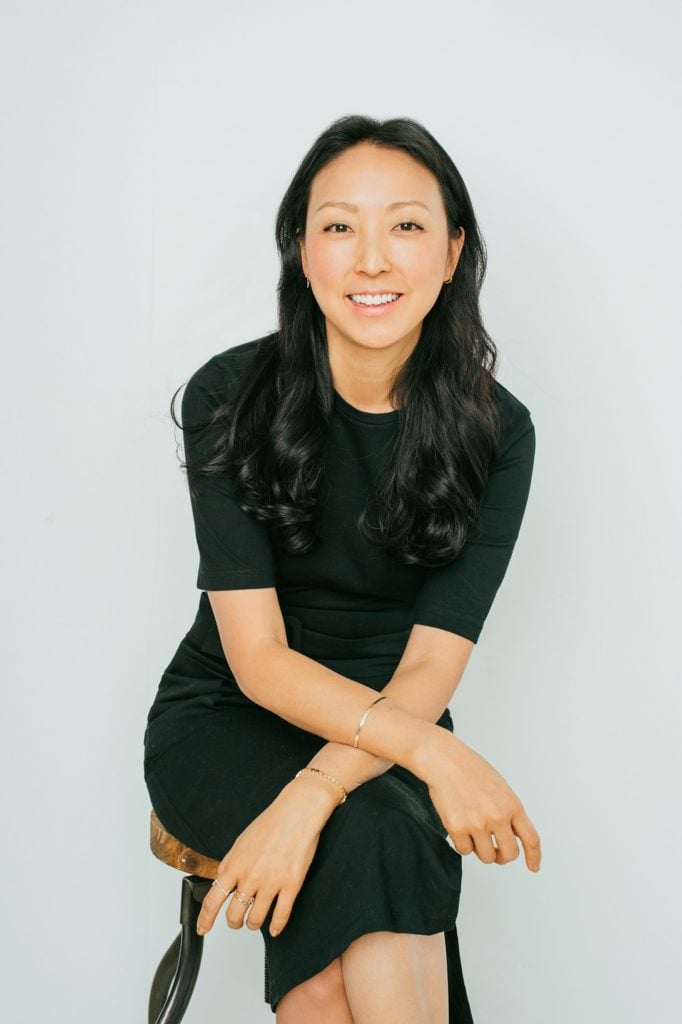
Esther Kim Varat, founder and director
of Various Small Fires.
Within this new framework, how is it that you see
yourself as less of a traditional art gallerist than an
entrepreneur in the year 2020?
For my generation, the role of the gallery is probably the most
vital element to an artist’s career. And when you realize the
gravity of the fact that you are taking care of the livelihoods and
careers of a number of people, you want to do it right.
And you do have to treat it as a business because it is a
business. If you want to stay open, then you have to run it by the
numbers. You have to do an analysis, you have to do quarterly
meetings, which we do at the gallery and with all of our staff.
I’ve worked with a number of artists now that are in their 80s,
and they have gallerists that they have been working with for the
past 50 or 60 years that have never made a consignment with
them.
If you understand how the business of it works and how insurance
works, there are so many reasons to make a consignment, and to draw
clear lines, and the sooner that you establish rules for each
other, then I think the chances of the relationship going on for
much longer are much higher.
Dealers now have to put on fancy shows, while
simultaneously traveling around the world to art fairs, which is
creating a lot of stress on the system. What do you think is the
way to innovate and evolve the traditional gallery
model?
I think the gallery came of age in an era where you had to be
everywhere at once. And I think traditionally the gallery has been
built with a person’s name on the door, and very early on I
realized I didn’t want my name on the door. I wanted more
people than just me expanding the gallery and moving forward. I
wanted to create a brand that was more important than the
individuals behind it. Even calling the gallery Various Small Fires
really enabled us to spread out, to take on staff that we treat
like partners.
I take less for the sake of being able to share more, and
together with my staff I built an 80-page VSF manual detailing
every aspect of how to run the gallery, so that it could be
replicated in another city.
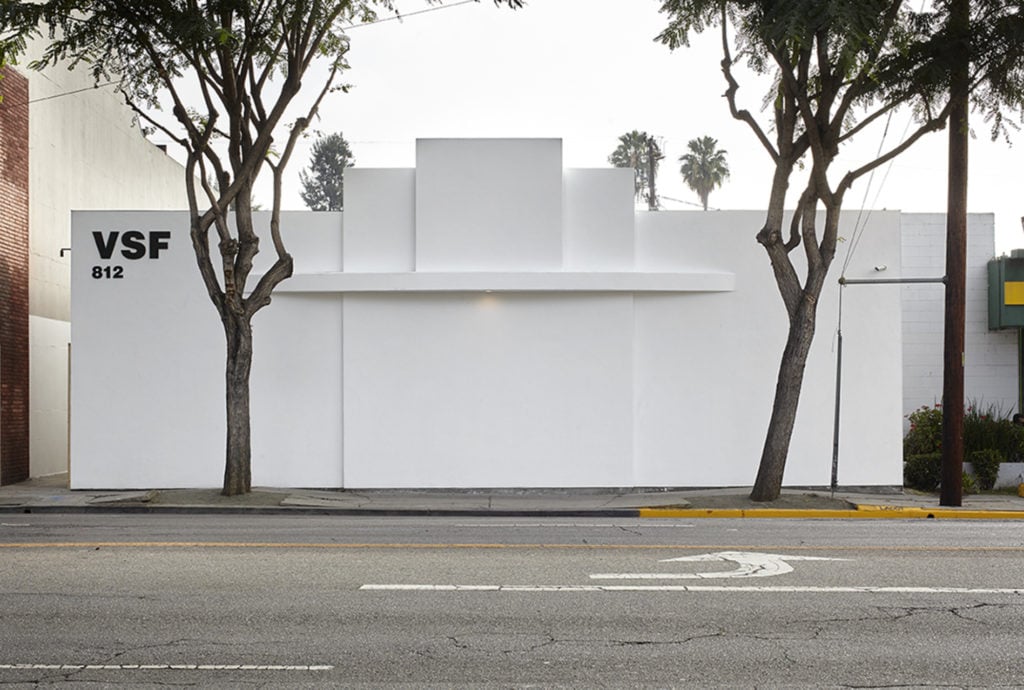
The facade of Various Small Fires in Los
Angeles, California. Courtesy of VSF.
It’s interesting that you have a Various Small Fires
manual because your gallery is named after an artist book by Ed
Ruscha from the 1960s called Various Small Fires and
Milk.
Yes, that’s right.
You have this very vibrant community of collectors that
is supporting the gallery. What are these collectors like in LA and
how has this been changing over the course of your gallery’s
existence?
When I first moved here, I went to a lot of dinners. My husband
is friends with a lot of producers and actors, and we would go to
these dinners and everybody would be talking to me, asking me
questions about street art, because it was the hot thing at the
time. I would politely decline, because I don’t know that much
about street art, but I do know that historically it was very
important to Los Angeles and the concept of culture here.
In the past five years, all of those collectors have kind of
switched over with the rise of the contemporary art scene here and
how it is portrayed in the media.
We have a lot of agents that are collectors, and they are
essentially talent seekers, so the contemporary art market is the
perfect place for them to find new talent, and get in early. I
think it makes a lot of sense that WME bought Frieze, there’s a lot
of synergy there. Over the last four years really, there’s been a
tidal shift, and Frieze has been perfectly timed to launch here
now.
My one hope is that this will translate into more local
institutional support, and that is a huge part of what I feel like
my role is, to match institutions with collectors and broker
partnerships, all while I’m stabilizing the markets of our artists
by placing their work in institutions.
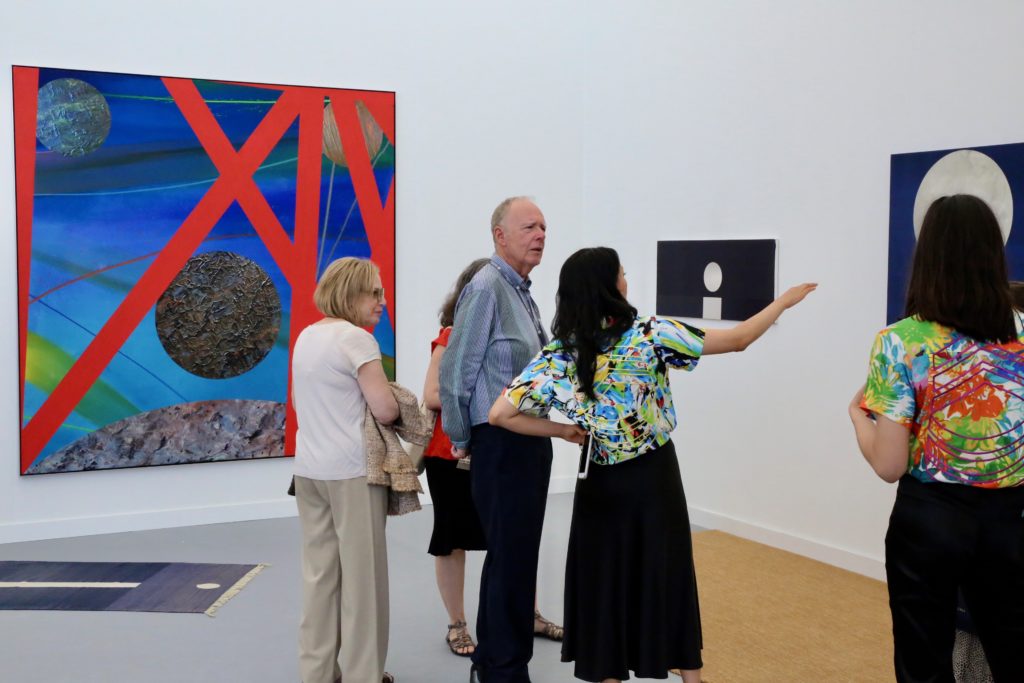
Varios Small Fires. Photo: Henri
Neuendorf.
That is a mark of a mature collector, somebody who is on
museum boards. That way dealers like you who are putting down a
hard wall on flippers will look at them differently, and more
seriously.
So if there’s anything I could say to the listeners in
the Hollywood industry out there who are hearing this podcast, get
on museum boards, because that is going to help in a big way. I
mean, does that sound true to you?
There are a lot of people joining acquisition committees and
boards so that they can get access. And $15,000 to join the
acquisition committee at LACMA is a very cheap buy-in for a
credential for them to get access to work. Institutions know their
collections are starting to become transformed by market interests
precisely because of these collectors that are infiltrating
themselves.
It’s a double-edged sword. I think the takeaway is that when I
talk to young collectors here who ask me, “do you think this
painting is good bang for my buck?” you have to say, “it’s great
that you’re interested in buying something you love and wish will
accrue in value, but you have to think holistically about how to
help this artist on a grander scale.”
When the laws of institutional giving were written in the ’60s,
it was the beginning of the formation of the modern museum, so I
spend a lot of time thinking about the different funding
structures, and what the long term implications of that
are. Understanding how to build market stability around
artists is really native to us, and you realize like just as much
as you’re being instrumentalized by the system, we’re all kind of
using each other in this three-way circus.
I would imagine what people object to is when the money
actually gets accrued by the collector and doesn’t go down to the
studio. Is that something that you’re seeing developing in LA,
where there are all these speculative people who are getting in and
trying to really maximize their return while minimizing the return
for the galleries and the artists?
I feel like there is no evil in the art world anymore because
based on old rules, everything would be an evil, right? But we’re
not functioning under those old rules anymore, and I think that we
should just count our blessings that the art market as we know it
continues to grow.
You opened a gallery offshoot last year in Seoul, which
is where I believe your family is from.
Yes. I am the daughter of immigrants in America, I was born and
raised in Dallas, Texas. But my family has always maintained their
roots to Korea, I’m fluent in the language and I am familiar
culturally. About four years ago, I really started thinking about
what the next step would be for the gallery. When I was growing up
in Dallas, as far as being Asian American, the whole art world felt
very Eurocentric to me. And I am American, but it wasn’t really
until I moved to California and I opened the VSF LA space that I
really started understanding the strength of my own identity.
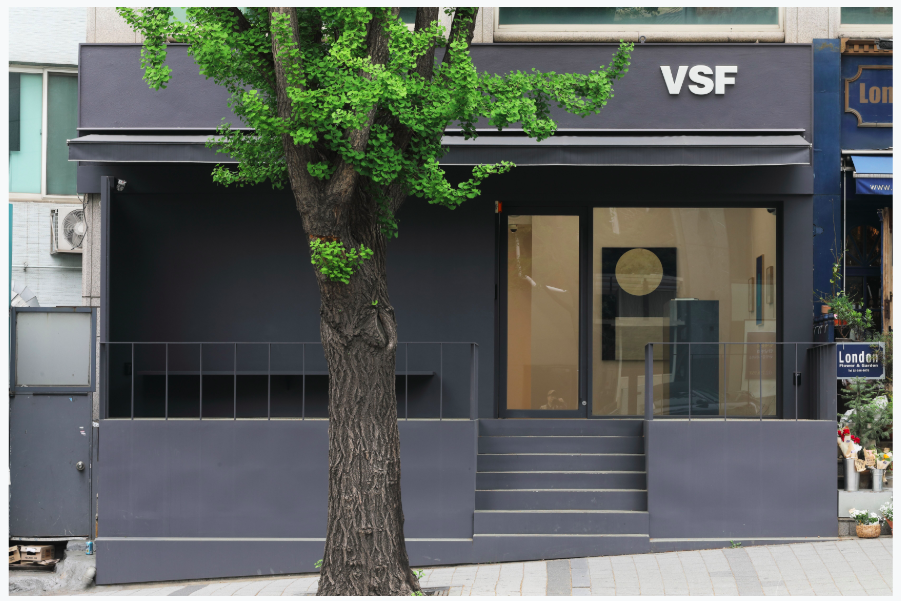
The facade of Various Small Fires in
Seoul, South Korea. Courtesy of VSF.
Korea has the highest per capita of collectors in Asia, and also
has zero percent import tax and zero percent sales tax on art,
which makes it very unique. Korea is not a country with that many
natural resources, so very early on after the Korean war, the
government really emphasized culture and technology, which we’re
now seeing even more.
Up until now, I think a lot of Koreans had looked at art as an
investment and were only primarily invested in blue-chip art. There
are so many gallery outposts opening up in Korea—Lehmann Maupin,
Pace, Perrotin—which are amazing galleries and incredibly
collaborative with us. But I realized there weren’t any galleries
of our generation who were specialists in this emerging market that
we’re puncturing and setting down roots in.
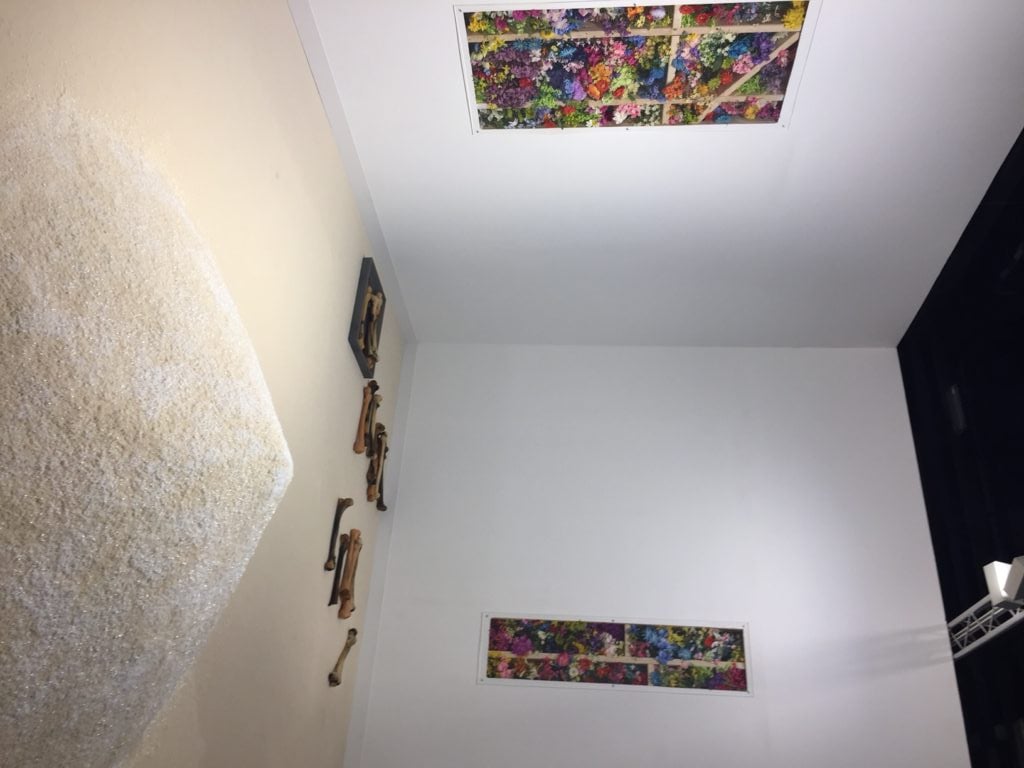
Installation of Amy Yao at Various Small
Fires Gallery in the “Positions” section of Art Basel in Miami
Beach. Photo by Eileen Kinsella
So one of the few things I know about Korea is that
there is a very well established corporate collecting tradition.
But what seems to be happening now is that this is really
diversifying with a young generation. Nowhere can this be seen more
vividly than in the unexpected link that is popping up between
K-pop superstars and the contemporary art world. For instance, I’ve
heard that one very famous K-pop star, TOP, actually started coming
to your gallery a few months ago when he was doing his mandatory
military service and has since become a major supporter of the
gallery. He started out collecting sneakers, I think, and then
transitioned into collecting fine art.
Well, you have to also remember that TOP is in his early
thirties which, again, generationally is where we are. And also
just as a side note, a lot of the collectors that are cropping up
in Asia in general are my generation. And I think it makes sense
for them and for us that we’re growing together. But also, the way
our gallery program has been built, you spoke about how we have a
lot of “hot artists,” but when Zombie Formalism [happened]—a very
white, male-centric kind of abstraction—we were not working
with those artists. We were working with women of color. We were
working with artists that were working out troubling problems
concerning the environment and climate change, like the Harrisons,
who were considered the founders of that movement, and artists like
Liz Magic Laser, who is breaking down what is happening in American
politics and the systems of control.
So we’re really focusing on things that feel really relevant to
us for our generation. It’s a kind of storytelling that I think
feels really relevant right now, especially in this era, and I joke
around that I think maybe the gallery program wouldn’t be as
popular if Trump had not been elected president.
A new artist that you are going to be introducing during
Frieze LA is Calida Rawles, who specializes in photorealistic
portraits of black Americans submerged in this kind of
otherworldly, beautiful, watery situation. So this is not only the
first time that you’ve shown her work, it’s also the first time
that she’s ever had a major solo show anywhere. How did you come to
discover this artist and what is it that really draws you to what
she’s doing?
We have the habit of asking our own artists for recommendations
of artists to work with, and I find that that’s been the most
effective way for us to grow our own artists community. So Calida
is a good friend of Diedrick Brackens, who gave me a list of six
artists to check out, and Calida was at the top of that list. She’s
based here in Inglewood and I went with my director, Sarah, and we
were totally blown away.
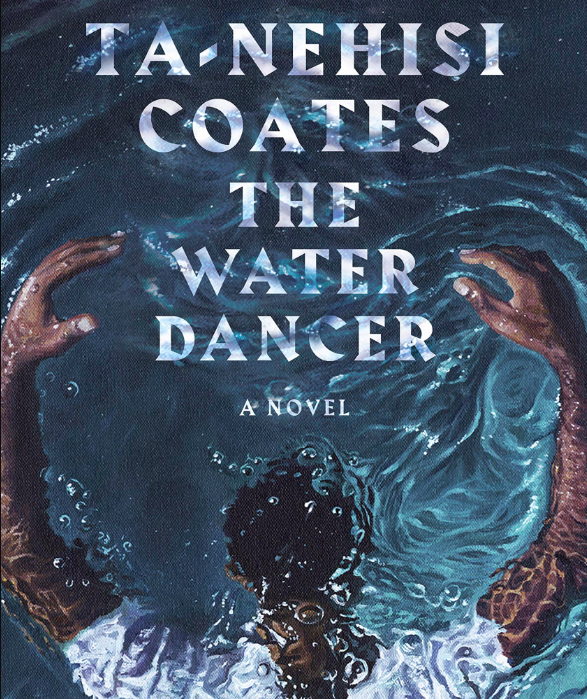
Ta-Nehisi Coates, The Water
Dancer front cover by Calida Rawles. Courtesy of Amazon.
She’s in her mid 40s and has three kids, she had never had a
commercial solo show before, but the timing was interesting because
she had just done the cover for Ta-Nehisi Coates’s new
book, The Water Dancer, which was about to be
released in the fall. So we kind of had an intuition that a lot of
people would start paying attention to her work because of that,
and we really went based on instinct.
We offered her a show and fast forward nine months later, here
we are. She’s a photo realist painter, and it’s important because
she was trained as an abstract painter; when she went to grad
school they told her that photorealist painting was a dead end.
In any case, five years ago, she started doing the paintings
that she wanted to do. I think photo realism is definitely going to
have a moment in the next couple of years, and I think that
Calida’s voice is an incredibly important one. A lot of people are
getting excited about her work, a lot of collectors of color,
in particular have been supporting her for a while, which is so
important for Calida, to feel like her own community has been
supporting her. But the interest has expanded really quickly into
Asia, really everywhere. So we’re excited, and I think you’ll start
seeing her work being circulated pretty heavily everywhere.
This is a big moment for her, and her reaction has been to just
work harder, which is I think, the appropriate reaction. Our job
has just been to remind her to stop when she feels really tired, to
not burn herself out. I think every single one of us feels invested
in what we’re doing individually, and wants to bust our asses off
to do our best.
We’re all often in danger of burning ourselves out, and so I
have a mantra: we’re not working in an ER, there are no lives to
save here, we’ve all just got to chill out.
I think everybody who’s going to be coming to LA for
Frieze LA could do very well to follow that advice, to chill out,
enjoy the weather, and just kind of marvel at what an incredible
new year this is to partake in.
The post ‘We’re Not Working in an ER’: Dealer Esther Kim
Varet on How to Run a Thriving Art Gallery Without Losing Your
Mind appeared first on artnet News.
Read more https://news.artnet.com/art-world/various-small-fires-esther-kim-varet-interview-1773888
Further reading


Leave a comment