
There Were Many Female Pioneers of Surrealism But Only a Handful Are Well Known. These Overlooked Artists Are Now Getting Their Dues in a Major Show
Female artists’ contributions to the
Surrealist movement may be well known, but only a handful have
received the recognition they deserve. A scholarly new exhibition
in Frankfurt has brought together works by 34 important artists,
several of whom have been long overlooked and excluded from the
male-dominated art historical canon.
The quantity and diversity of their
work shows how female perspectives were central to Surrealism from
its birth in the aftermath of World War I. Included
in “Fantastic Women. Surreal Worlds from Meret Oppenheim to
Frida Kahlo” at the Schirn Kunsthalle Frankfurt in Germany are a
staggering 260 paintings, works on paper, sculptures, photographs,
and films.
On show are works by lesser known
artists, such as the Toyen, Bridget Tichnor, Alice Rahon, Kay Sage,
and Ithell Colquhoun, alongside their more famous contemporaries,
Frida Kahlo, Meret Oppenheim, Lee Miller, Claude Cahun, Leonora
Carrington, Dora Maar, and Dorothea Tanning. Highlights include a
screening of pioneer French filmmaker Germaine Dulac’s The
Seashell and the Clergyman. Made in 1927, it is considered to
be the first Surrealist work in the history of film.
“To this day, the names and works of the huge number of
important women artists throughout the world are missing in many
reference guides and survey exhibitions on Surrealism,” writes the
exhibition’s curator, Ingrid Pfeiffer, in the publication that
accompanies the show. “The reasons for this are many, including the
endless repetition of an outdated canon in spite of recent
research—a problem which pertains to art history in general.”
Many of the artists are connected
through their association with Surrealist co-founder André Breton,
or through their participation or contributions to key group
exhibitions, and publications. The exhibition also explores the
network of friendships of these female pioneers that stretched from
Europe, to the US, and Mexico.
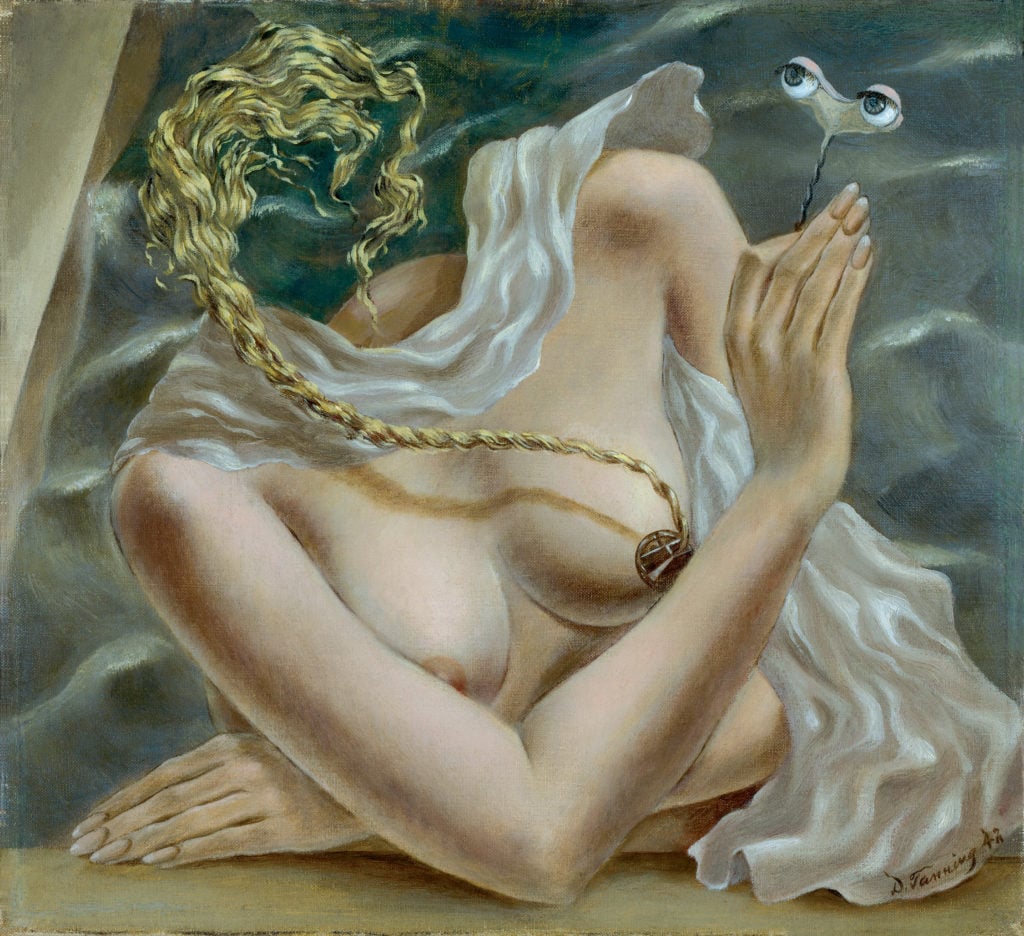
Dorothea Tanning, Voltage (1942).
Collection Ulla und Heiner Pietzsch, Berlin. © The Estate of
Dorothea Tanning/VG Bild-Kunst, Bonn 2020. Photo: Jochen
Littkemann, Berlin
In 1944, Breton, the high priest of Surrealism wrote: “It is
high time for woman’s ideas to prevail over man’s, whose bankruptcy
is clear enough in the tumult of today. It is up to the artist, in
particular, to privilege as much as possible the feminine system in
opposite to the masculine system, to draw exclusively on woman’s
faculties.” The exhibition notes that he was supported, including
financially, by several key figures in the movement, including the
French artist Valentine Hugo.
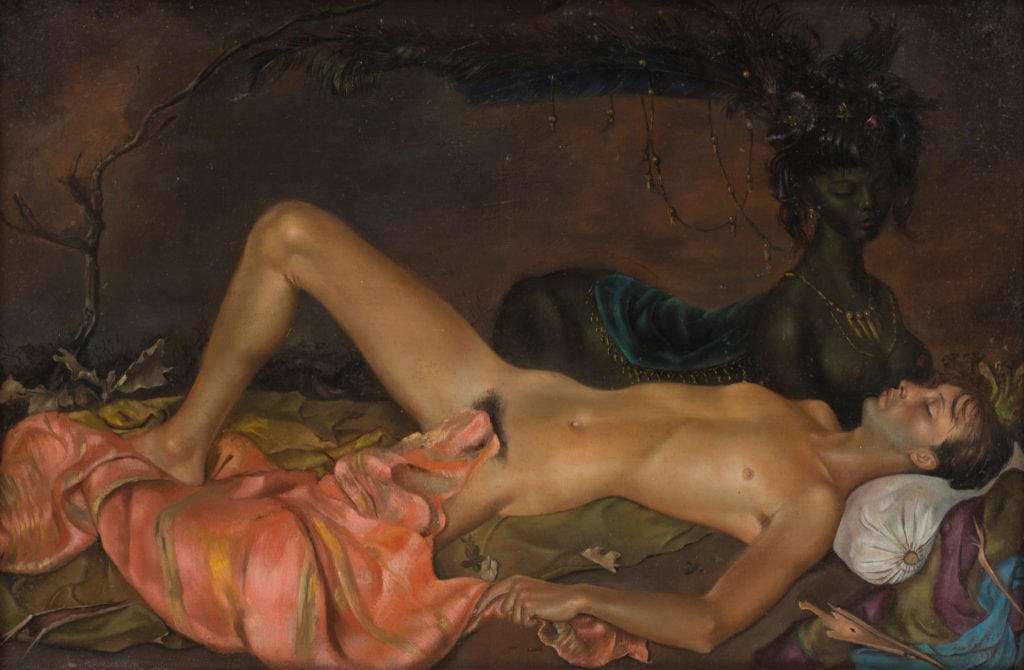
Leonor Fini, Chtonian Deity Watching
over the Sleep of a Young
Man (1946). © Weinstein Gallery,
San Francisco and Francis Naumann Gallery, New York / VG
Bild-Kunst, Bonn 2020
The show charts many important Surrealist themes, such as the
“exquisite corpse,” collaborative artworks, automatic writings, and
depictions of mythical creatures, and landscapes of the
subconscious. “On the whole, the [Surrealist] movement in many
ways strikes as decidedly ‘feminine’, since it rejected all
traditionally masculine, patriarchal, and imperialist structures,”
notes Pfeiffer. The female Surrealists had to deal with their
share of sexist attitudes but they experienced a lot of freedom in
the time, and were never only mere muses; instead, they were
instrumental in the movement’s many controversies.
Another highlight is the exhibition’s trove of self-portraits, a
genre that female Surrealists made their own; it was a form much
less used by their male counterparts. Pfeiffer speculates why this
was the case, writing: “[M]any of them had been portrayed before by
their male fellow artists as an ‘object’ of male projection.”
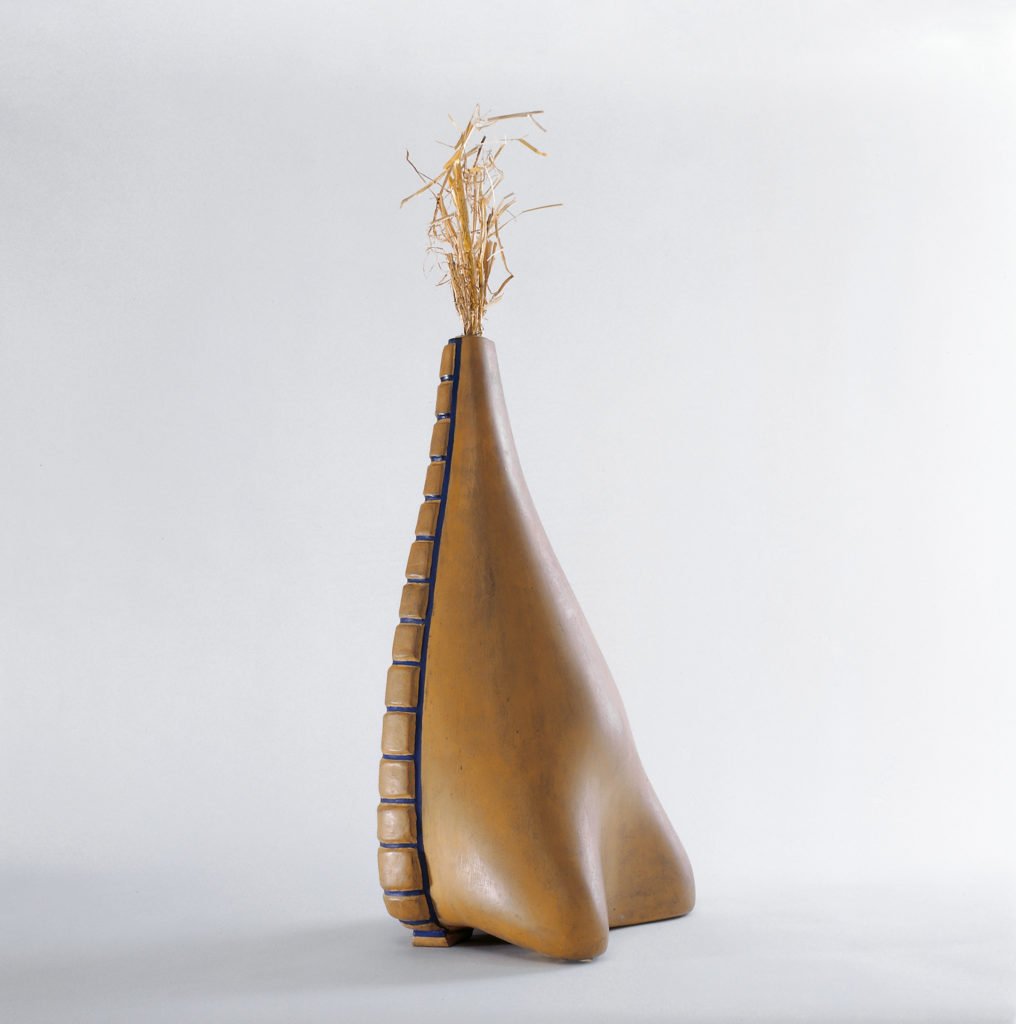
Meret Oppenheim, Venus primitive
1962 (1933). © Kunstmuseum Solothurn / VG Bild-Kunst, Bonn
2020
She cites Meret Oppenheim standing nude beside a printing press
in Man Ray’s famous series, or Unica Zürn depicted as a tied-up
doll in a work by Hans Bellmer. Women, according to Pfeiffer
were “in many cases, anonymised as ‘the woman’, a mysterious,
desired being. The omnipresence of the female body in Surrealist
art confronted women artists with the task of growing, with their
own ways of seeing and thinking, from a passive object into an
acting subject.”
The exhibition includes the work of the late Surrealist Louise
Bourgeois. By the end of the end of the 1960s, many of the
pioneering female artists of the movement were living in relative
obscurity, their Surrealist art only gradually rediscovered shortly
before they died, or posthumously. “Fantastic Women,” which travels
after its run in Frankfurt to the Louisiana Museum of Modern Art in
Denmark, reveals how the art movement was shaped by many more
female artists than historians have appropriately recognized. They
were extraordinary women whose playful and self-confident approach
to their body image and female sexuality was ahead of its time.
See some of the incredible works below.
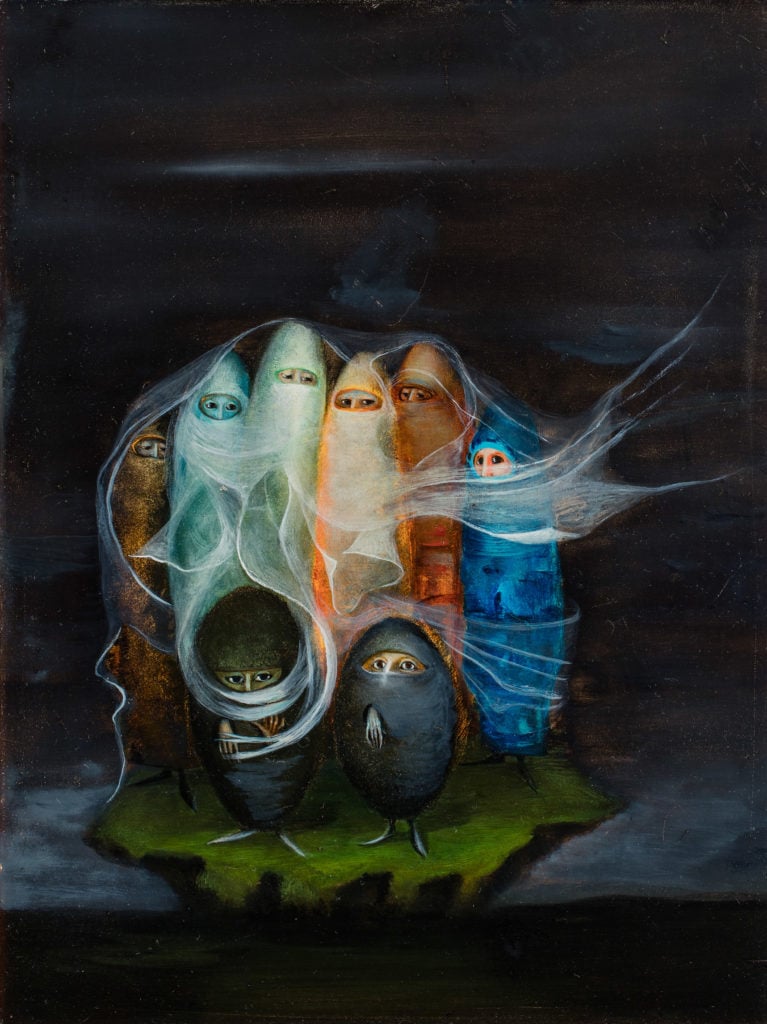
Bridget Tichenor, The Surrealists/The
Specialists, (1956). Private Collection Mexico, © Bridget
Tichenor.
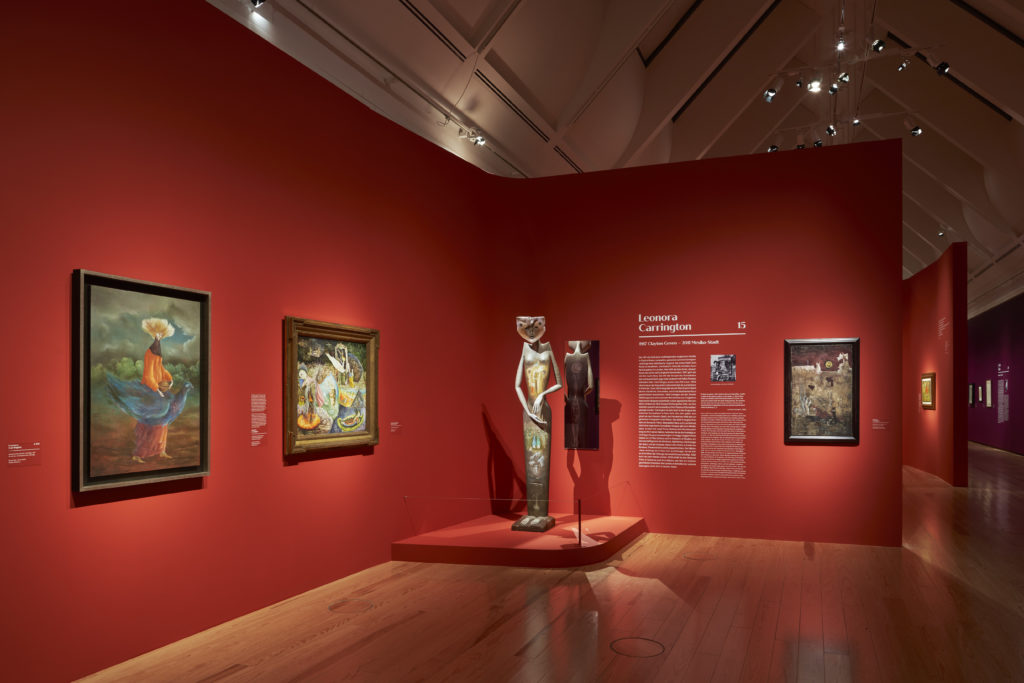
Installation view from “Fantastic Women.
Surreal Worlds from Meret Oppenheim to Frida Kahlo.” © Schirn
Kunsthalle Frankfurt, 2020, Photo: Norbert Miguletz.
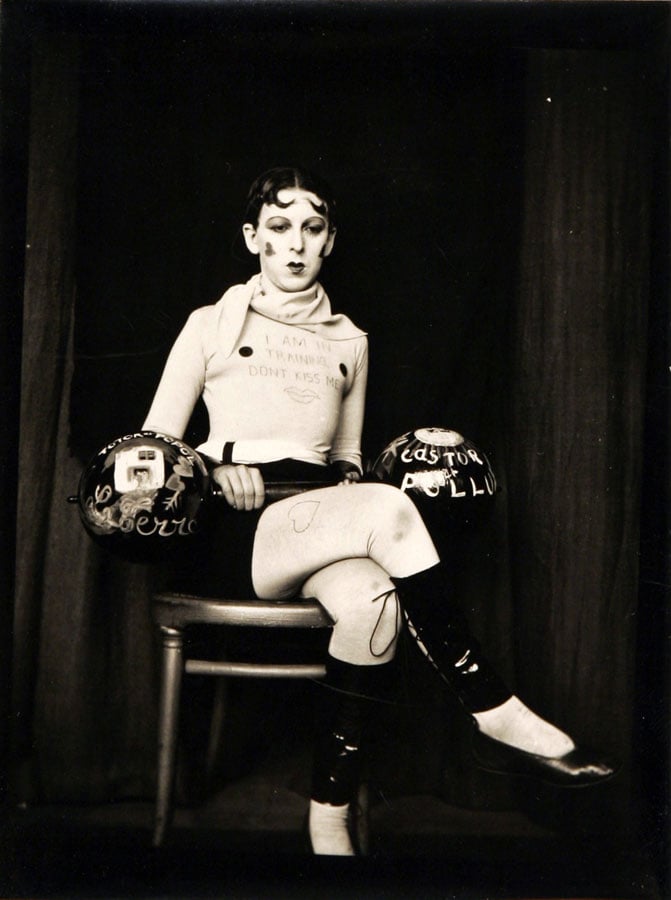
Claude Cahun, Self-portrait (I am in
Training… Don’t Kiss Me), (ca. 1927). Private Collection. ©
Claude Cahun
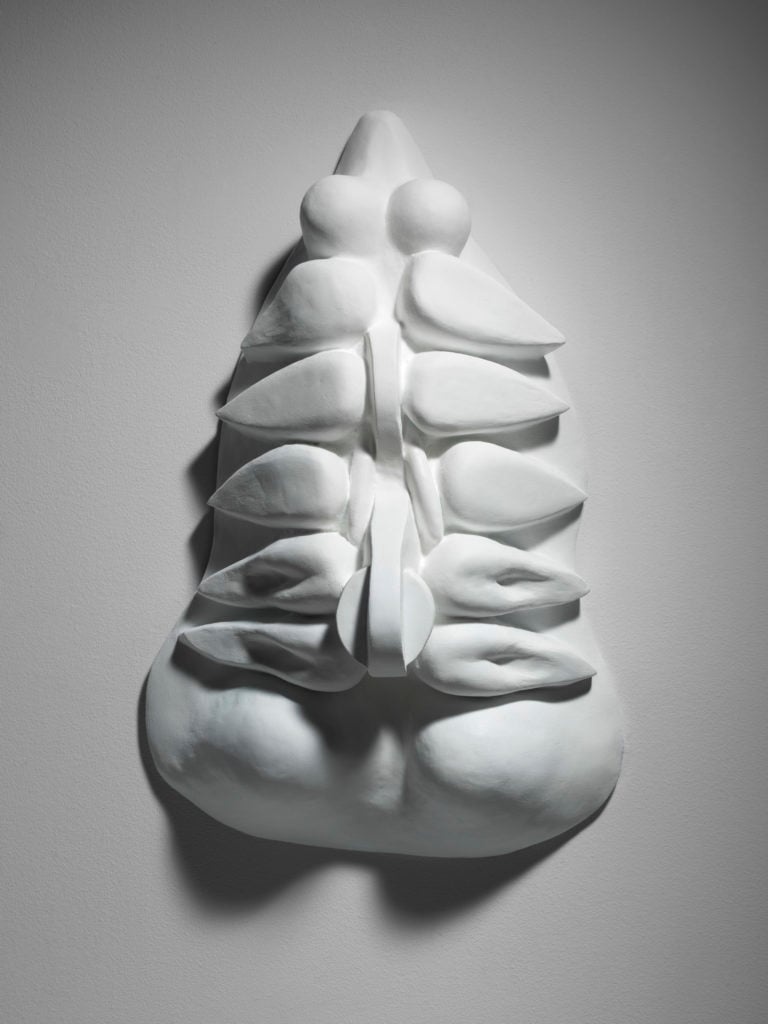
Louise Bourgeois, Torso
Self-Portrait (1963-64). Collection the Easton
Foundation © The Easton Foundation / VG Bild-Kunst, Bonn 2020,
Photo: Christopher Burke.
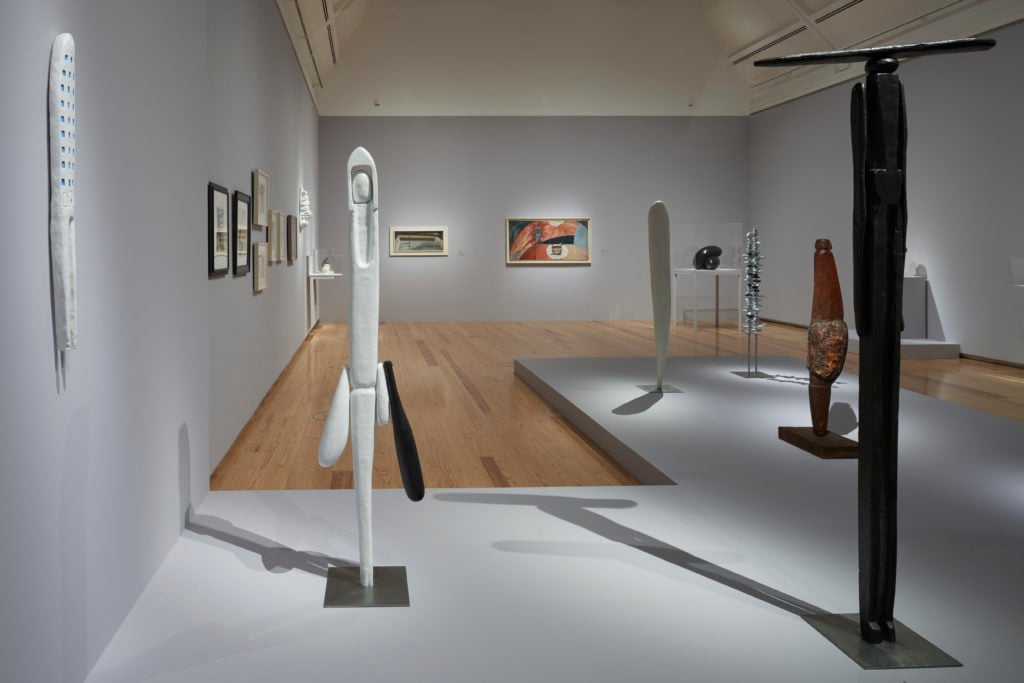
Installation view from “Fantastic Women.
Surreal Worlds from Meret Oppenheim to Frida Kahlo.” © Schirn
Kunsthalle Frankfurt, 2020, Photo: Norbert Miguletz.
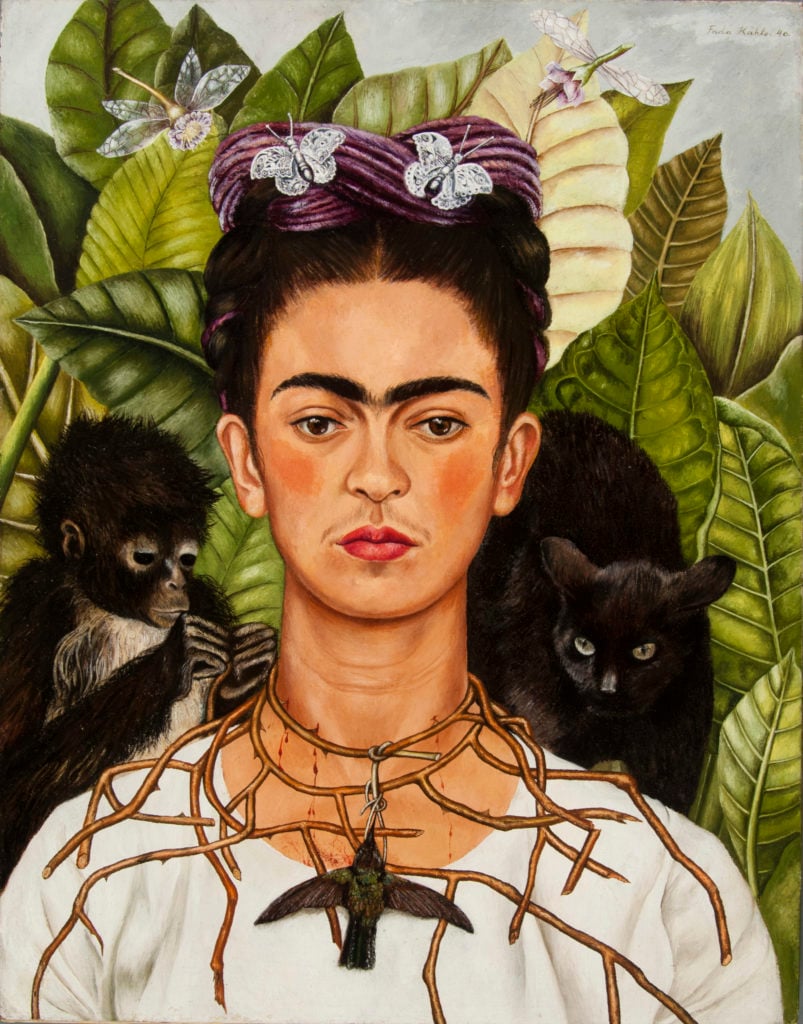
Frida Kahlo, Selfportrait with thorn
necklace, (1940). Collection of Harry Ransom Center, The
University of Texas at Austin, Nickolas Muray Collection of Modern
Mexican Art © Banco de México Diego Rivera Frida Kahlo Museums
Trust/VG Bild-Kunst, Bonn 2020.
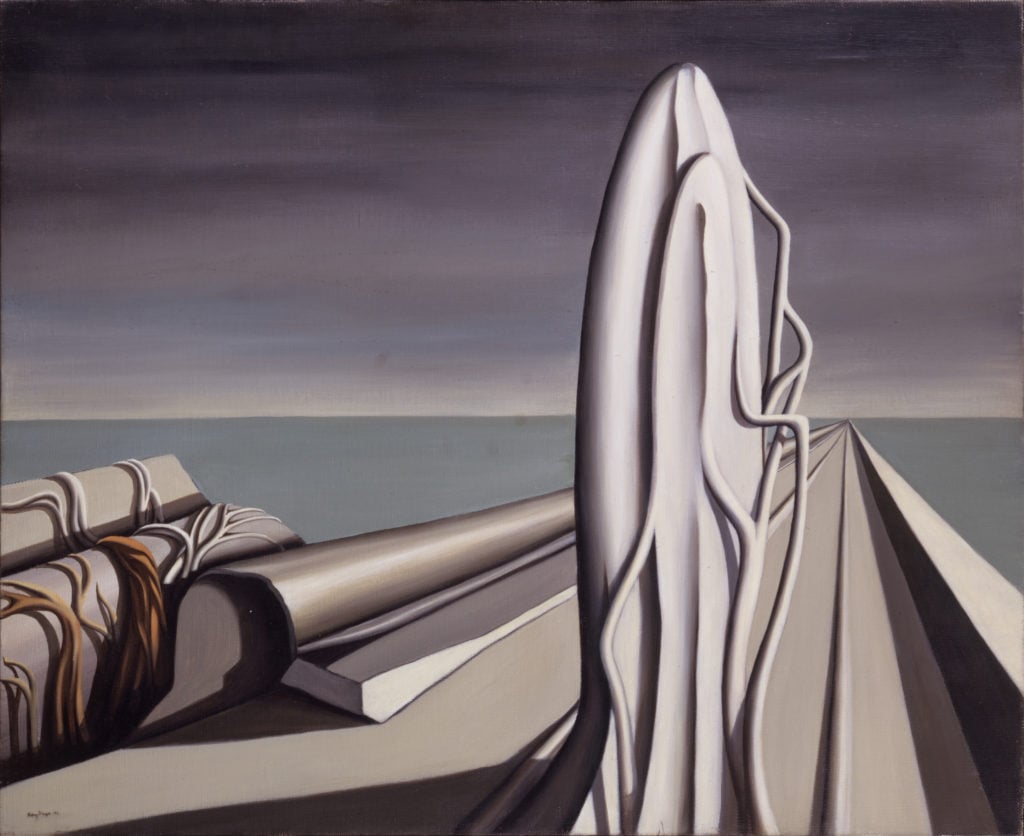
Kay Sage, At the Appointed Time
(1942). Newark Museum of Art, Bequest of Kay Sage Tanguy, 1964 ©
Estate of Kay Sage/VG Bild-Kunst, Bonn 2020
“Fantastic Women. Surreal Worlds from Meret Oppenheim to
Frida Kahlo” is on view at Kunsthalle Schirn in Frankfurt, Germany
until May 24, 2020.
The post There Were Many Female Pioneers of Surrealism But
Only a Handful Are Well Known. These Overlooked Artists Are Now
Getting Their Dues in a Major Show appeared first on artnet
News.
Read more https://news.artnet.com/exhibitions/kunsthalle-schirn-surrealist-women-1779669
Further reading


Leave a comment