
Experts Discover a ‘Shrine’ of 15,000-Year-Old Animal Carvings and Mysterious Symbols in a Spanish Cave
Experts have discovered a cave full of
prehistoric carvings in northern Spain. Among the hundreds of rock
carvings, some believed to be 15,000 years old, are vivid
depictions of horses, deer, and bulls, as well as a wealth of
mysterious and abstract symbols. Unlike the famous prehistoric
paintings at Altamira, also in northern Spain, the recently
discovered cave art in Catalonia is carved directly into the soft
surface of the rock.
A team
of archaeologists stumbled across the richly decorated cave at the
end of October, although their discoveries have only just been
announced. Josep Maria Vergès, who led the team from IPHES (the
Catalan Institute of Human Palaeoecology and Social Evolution)
described the find as “exceptional” in a statement, and compared
the cave to a “shrine.”
The
cave art is now being recorded and studied using 3D scanning
technology. The engravings were created on a layer of soft sand
deposited on the cave’s surface in an area that is difficult to
access. The artworks are extremely fragile and can be damaged if
touched; several figures seem to have been damaged in the past by
visitors who were unaware of their existence. Experts are now
studying the best way to preserve the remarkable
finds.
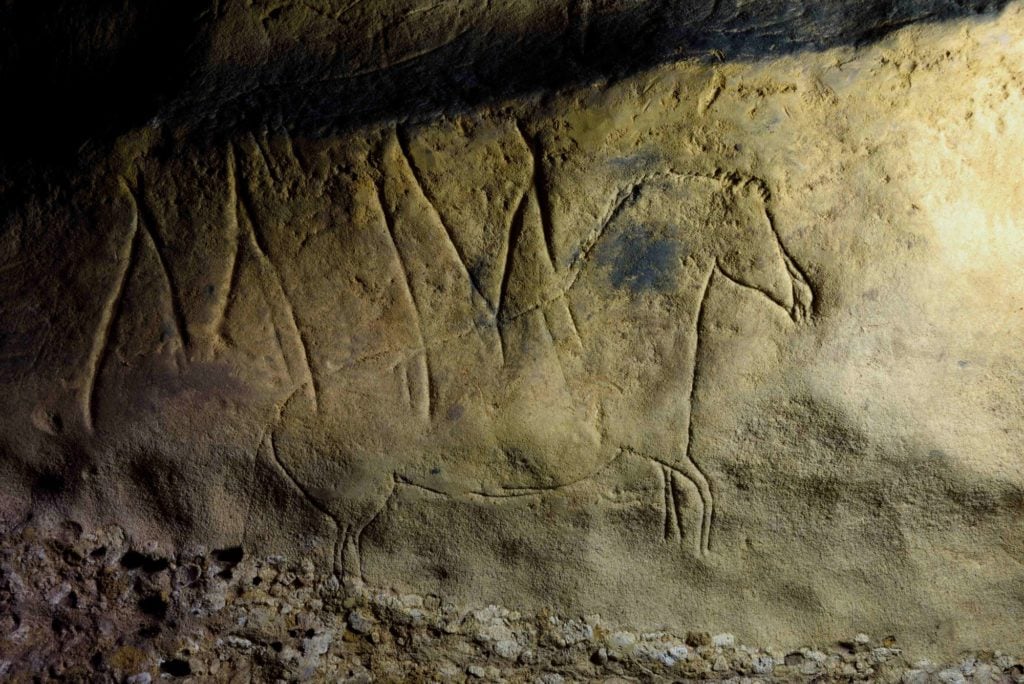
Cave art at Font Major. Photograph by
Josep Maria Vergès, courtesy of IPHES.
The
oldest art in the cave is believed to date back to the Late Stone
Age, or Upper Paleolithic period. The earliest cave paintings at
Altamira date from the same period, although they are around 20,000
years older.
Researchers uncovered the art within a nearly
two-mile-long complex of caverns about 60 miles from Barcelona
called the Cave of Font Major, which was first discovered in 1853.
Parts of this cave complex, one of Europe’s largest, are open as a
subterranean museum, although the specific stretch containing these
carvings is closed to the public.
How
does this new find stack up with other recent discoveries? It’s
impressive, but not quite as ancient. Anthropologists working at
Abri Blanchard in France’s Vézère Valley announced in 2017 the
rediscovery of a
38,000-year-old rock engraving. It depicts an
aurochs, or wild cow, and rows of dots. That ancient image is
believed to be one of the earliest artworks found in Europe.
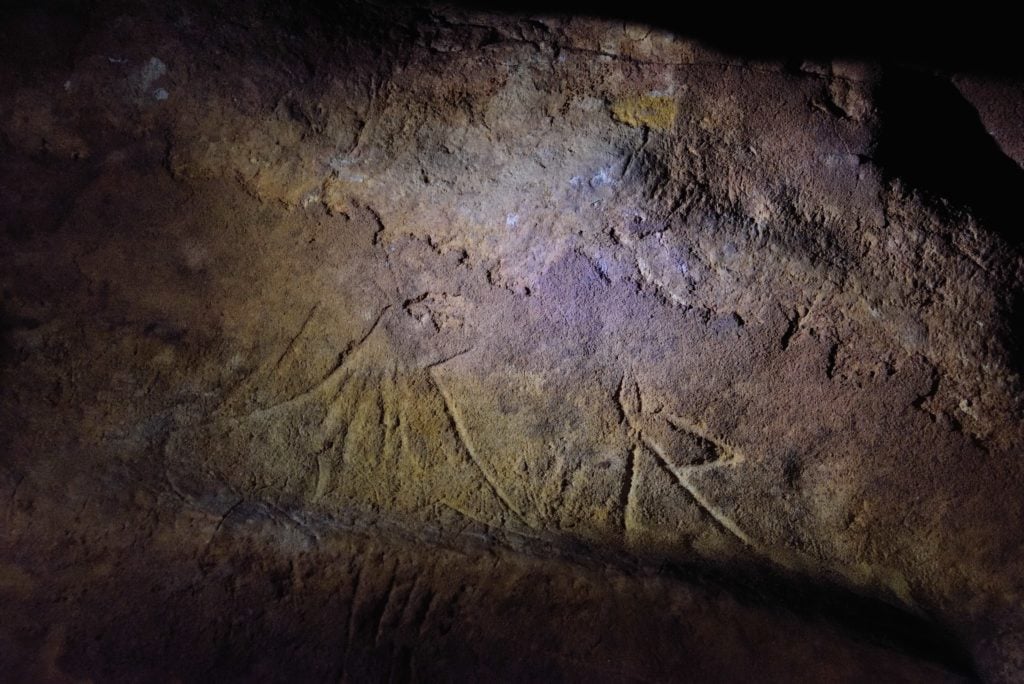
Abstract prehistoric carvings at Cave
Font Major. Photograph by Josep Maria Vergès, courtesy of
IPHES.
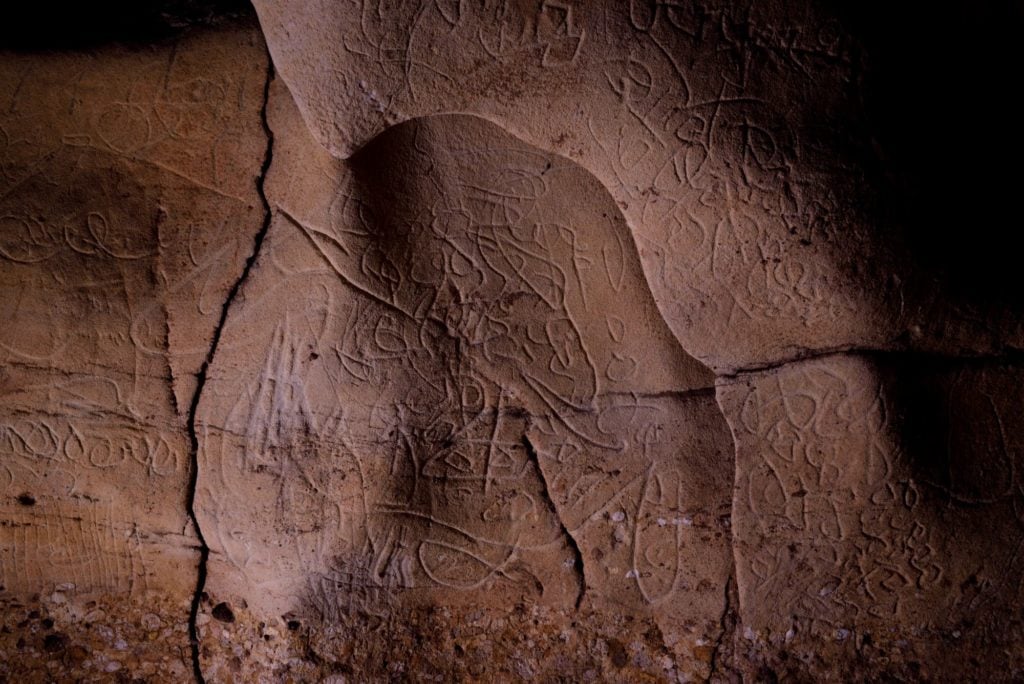
Abstract prehistoric carvings at Cave
Font Major. Photograph by Josep Maria Vergès, courtesy of
IPHES.
The post Experts Discover a ‘Shrine’ of 15,000-Year-Old
Animal Carvings and Mysterious Symbols in a Spanish Cave
appeared first on artnet News.
Read more https://news.artnet.com/art-world/prehistoric-cave-art-animals-1779519
Further reading


Leave a comment