
The Met’s Newly Reopened British Galleries Tell a Much More Honest Story About Wealth, Class, and Empire—and Their Dark Side
The newly revamped British
galleries at New York’s Metropolitan Museum of Art open to the
public on March 2 as part of the institution’s 150-year anniversary
program.
There, you’ll find a wealth of
eye-opening juxtapositions. Rococo tea caddies bearing romanticized
colonial scenes are on view alongside an anti-slavery medallion;
fine silverware from aristocratic homes hovers over lowly
earthenware jugs from Tudor households. And throughout, British
humor and eccentricity are on frequent display: Don Quixote battles
a set of windmills in a cartoonish 17th-century textile, and a
19th-century jar takes the form of a goofy, grinning
bird.
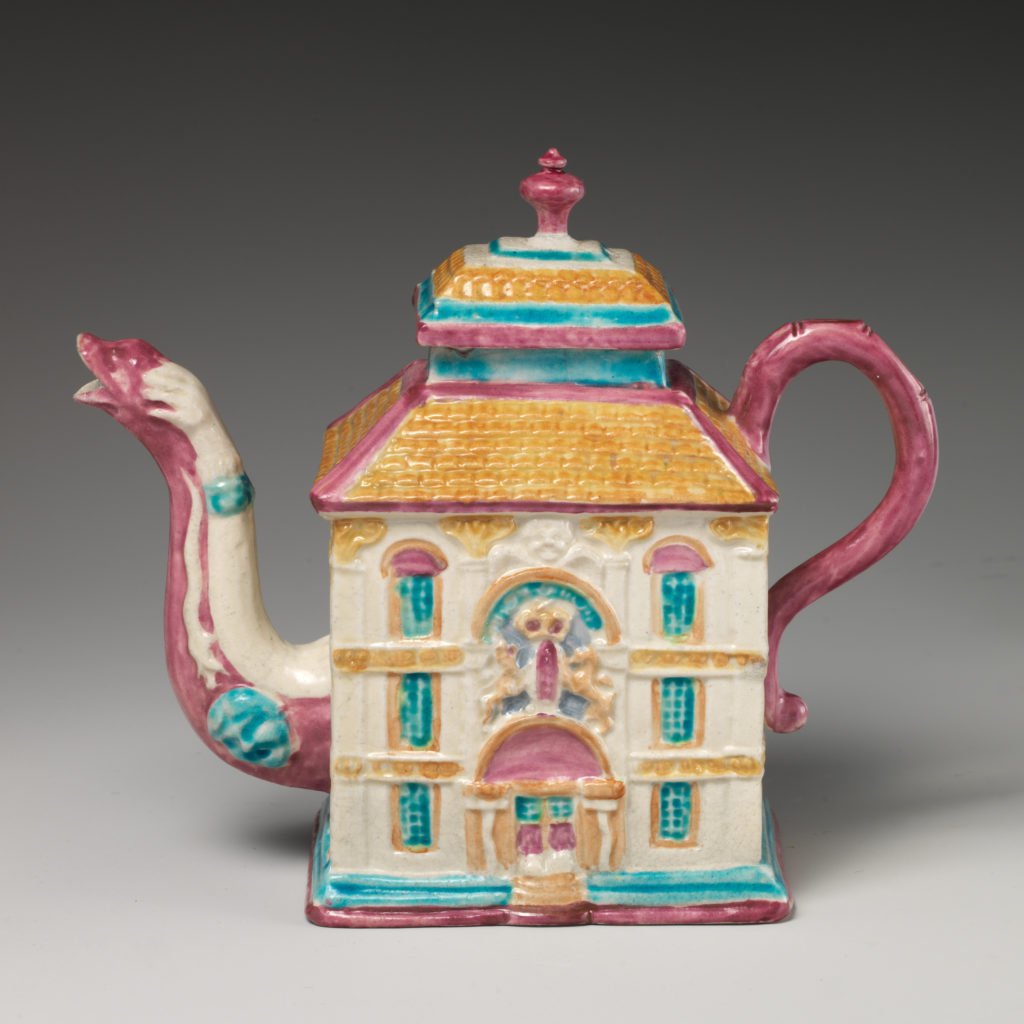
British, Staffordshire. Teapot, ca.
1755. Salt-glazed stoneware. 5 x 6.25 in. The Metropolitan Museum
of Art, New York, Gift of Carleton Macy, 1934.
The renovation of these
galleries, some seven years in the making and with a price tag of
around $22 million, enlivens the United States’ most comprehensive
collection of British decorative arts and design (there are also
paintings and sculpture peppered throughout). This facelift is
intended to inject some life into a relatively dry presentation and
show a far more nuanced representation of material cultural
traditions that relied heavily on empire-building and wealth
amassed from slave labor.
Formerly, the galleries focused
heavily on the tastes of the British upper classes—and failed to
draw much foot traffic, Met curator Wolf Burchard told Artnet News.
Recreated interiors from luxury country homes formed the backdrop
to its collection of textiles, ornaments, and artworks.
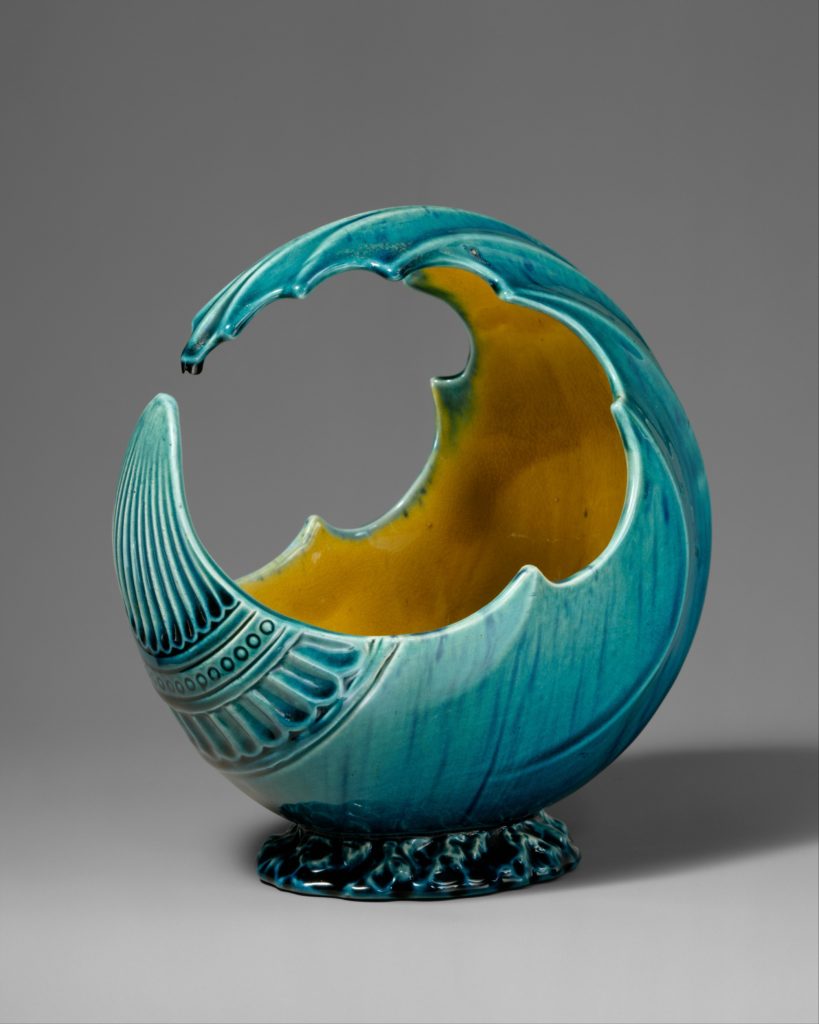
Attributed to Christopher Dresser
(British, 1834–1904). Manufactured by Linthorpe Pottery Works
(British, 1879–1889). Wave Bowl, ca. 1880. Glazed earthenware. The
Metropolitan Museum of Art, New York. Purchase, James David Draper
Gift, in memory of Robert Isaacson, 2001.
In an effort to make these
objects relevant to a contemporary audience, the museum has sought
to expand its perspective, emphasizing the development and growth
of the British Empire—with all of its systems of exploitation, as
well as its cultural appropriations and
cross-pollinations.
There’s also a fresh emphasis on
the traditions of the working and middle classes, and significant
additions to the museum’s 19th-century holdings. More than a
quarter of the objects on view are new
acquisitions.
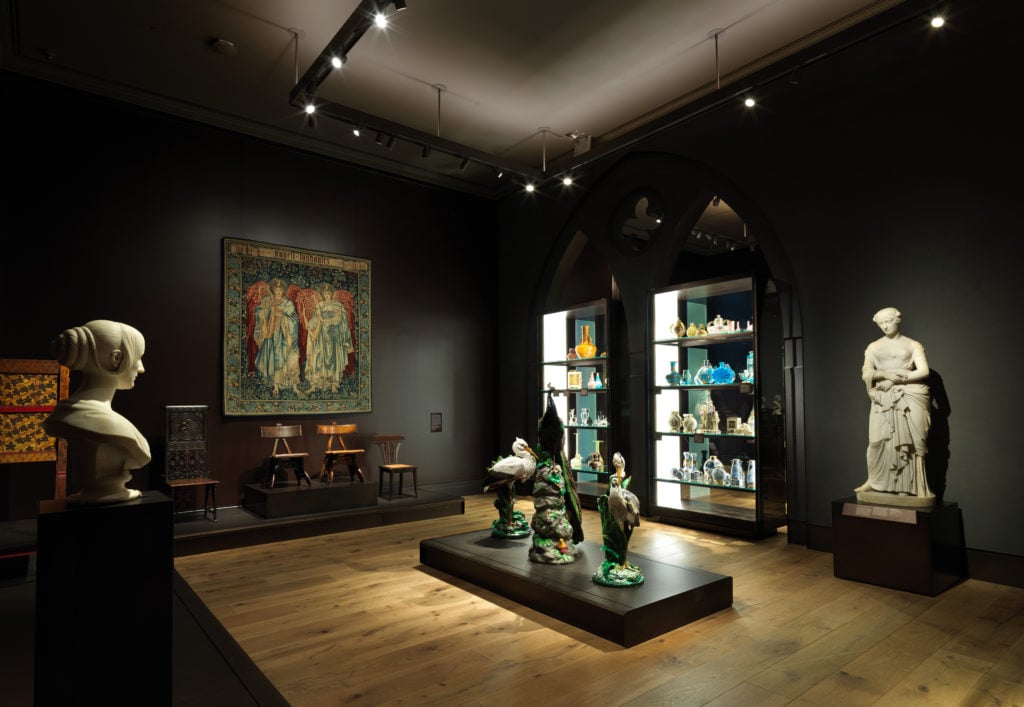
Installation view of the 19th Century
Gallery in the Met’s new British Galleries. Photo by Joseph Coscia,
February 2020. Courtesy of the Metropolitan Museum of Art.
“The previous galleries were of
their time,” said Burchard. “They were pretty interiors designed to
showcase the most wonderful objects that we have in our
collection.” The core of the collection was donated to the museum
in the mid-to-late-20th century, when British decorative arts were
immensely popular and fetched high prices at auction—and when art
history was considerably less attuned to the broader political and
social context of museum displays.
“For all the beauty of these
objects, the British empire was the backbone of the British economy
and the funds made available to produce these things is in part due
to the empire and the slave trade—and you have to acknowledge
that,” Burchard explained.
That said, there are still
plenty of luxury accoutrements and lavish interiors to ogle. The
10-room display, which begins in the 16th century and winds up in
the 19th, includes a restored 17th-century staircase from stately
Cashbury Park, which visitors can ascend to a mezzanine. At some
point in its history in the Met’s collection, the staircase got
chopped up and stored in pieces. Its various parts have now been
located and returned, more or less, to their original
magnificence.
Elsewhere, there is an
extraordinary bed from Hampton Court Castle—a great pompous mass of
wood and blue silk damask drapery— made by Huguenot upholsterers
after they left France, where they’d been persecuted by King Louis
XIV. (The bed appeared in the previous gallery display as part of
an interior, but here gets its own spotlight in order to emphasize
its sculptural character, said Burchard.)
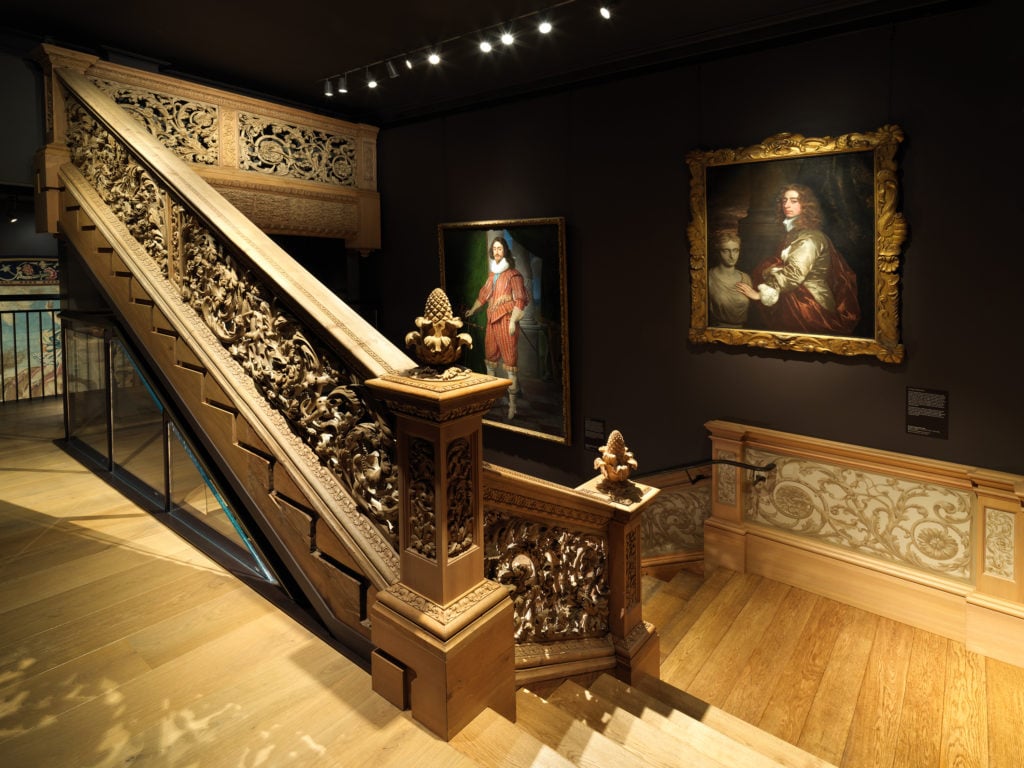
Installation view of the Met’s new
British Galleries, featuring the 17th-century Cassiobury staircase.
Photo by Joseph Coscia, February 2020. Courtesy of the Metropolitan
Museum of Art.
A handful of comprehensive
interiors do remain in the refurbished galleries—like an
18th-century room from Croome Court, with walls covered in lush,
full-bleed tapestries made at the historic Gobelins textile
workshop in Paris. But the interiors of these spaces have largely
been emptied of objects so that viewers will “appreciate them as
architectural masterpieces in their own right,” said Burchard.
.
All this opulence is balanced
with displays that give new dimension and color to the various
layers of British society and its transgressions overseas. A
highlight is the Trade & Empire section, which features a vast
figurative chintz showing a battle between the English and French
in Southeast India. Nearby, a towering display of teapots—nodding
to Britain’s best-loved import and legacy of its forays East—runs
the gamut from high to low, from a deluxe Chelsea porcelain vessel
with ornate gilding (“the Ferrari of teapots,” according to
Burchard) to an earthenware teapot in the form of a
cauliflower.
It is in this section that an
anti-slavery medallion made by the Wedgwood pottery workshop,
showing a man in shackles, appears alongside a set
of Paul de Lamerie silver tea
caddies showing exotic scenes of abundance overseas. The objects,
placed in a corner cabinet, could easily go unnoticed—but, like
other subtle details in the display, they leave you with the sense
of a narrative that is as richly complex and vibrant as it is
morally abhorrent.
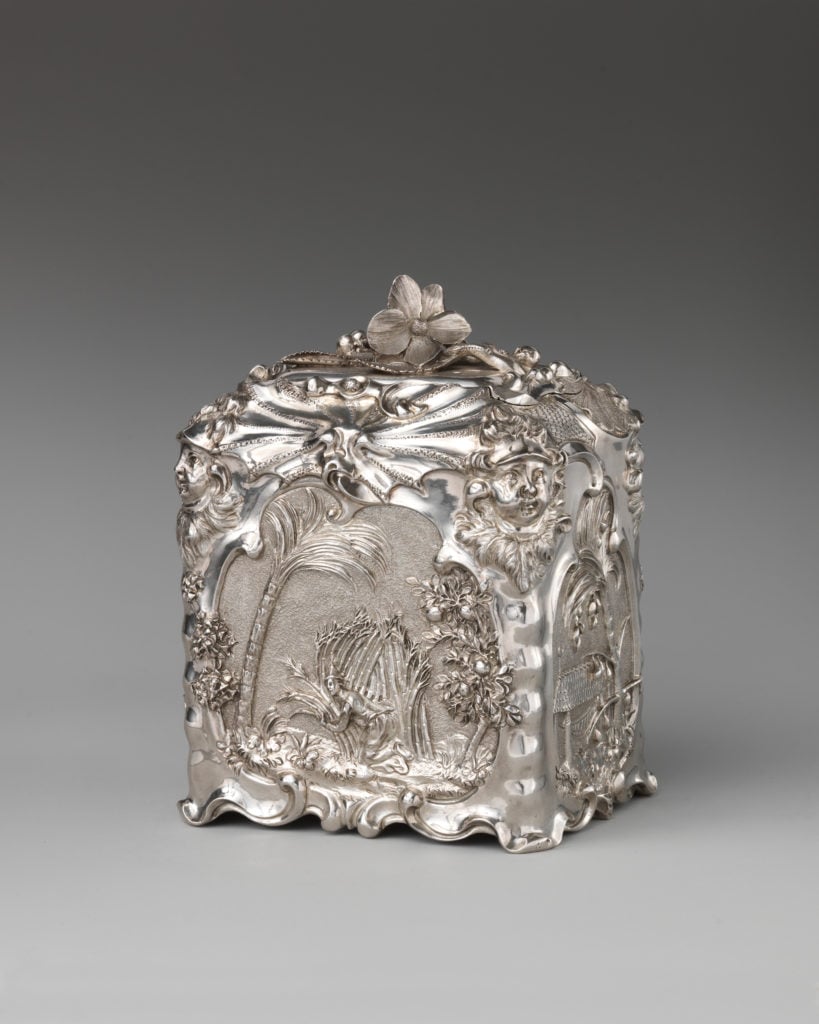
Paul de Lamerie (British, 1688–1751,
active 1712–51). Silver sugar box, 1744/45. The Metropolitan Museum
of Art, New York, bequest of Rev. Alfred Duane Pell, 1925.
Throughout, the museum is eager
to provide context and address any potential 21st-century
sensitivities. An ivory candelabra, for example, is accompanied by
a wall text that warns of the troubling ethics of the ivory trade.
“We are obviously not in any way endorsing its use,” said Burchard
of the material. “We think it’s important that when you put objects
on display like this that you take the responsibility of showing
that they were of their time.”
The galleries paint a picture of
a country reaching out far beyond its borders and enjoying the
benefits of global trade—as seen in the many Chinoiserie porcelain
objects, an Egyptomania bench and candelabra, and ample evidence of
the numerous, rich cultural interactions between Britain and the
Continent represented here. As such it offers a stark contrast with
a country that today is turning inward, gripped by
Brexit.
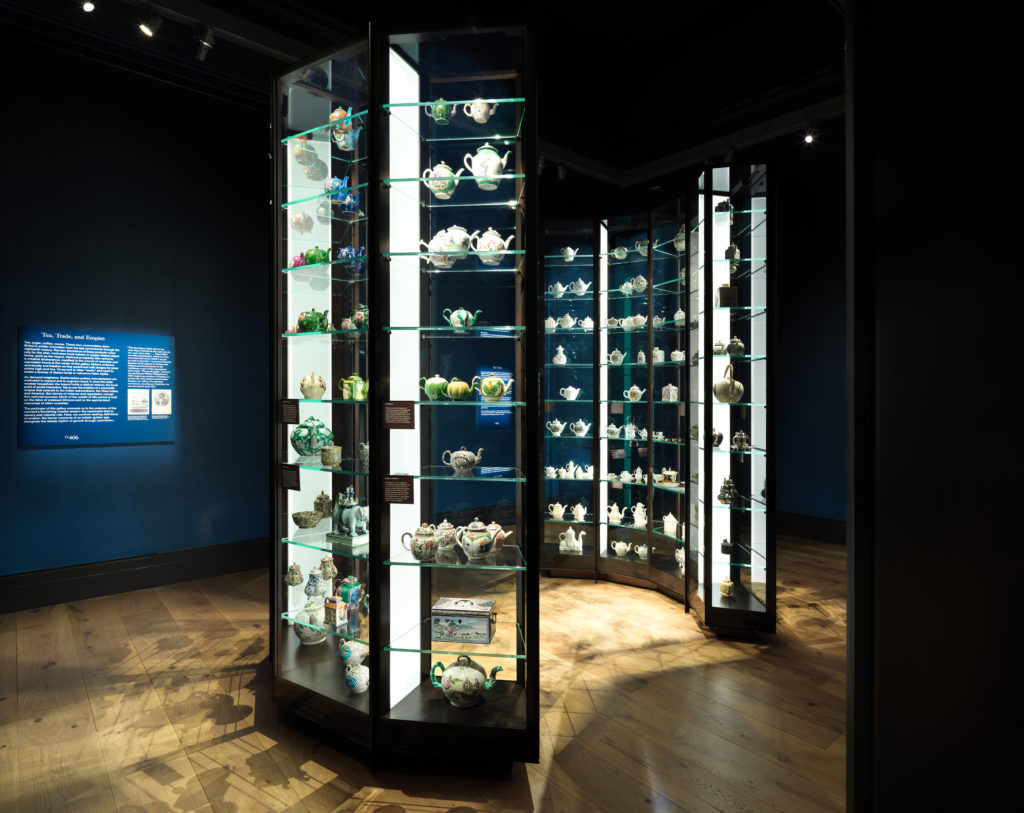
Installation view of the “Tea Trade and
Empire” room within the Met’s new British Galleries. Photo by
Joseph Coscia, February 2020. Courtesy of the Metropolitan Museum
of Art.
The showcase is, above all, a
celebration of the innovation and entrepreneurship of artisans and
craftspeople in Britain over four centuries—like the feverishly
inventive, diverse shapes and patterns created by the 19th-century
homeware designer Christopher Dresser, who incorporated styles from
Japan and other parts of the world into his wares.
While Dresser is well-known,
however, many of the craftsmen represented here are not.
Craftspeople, of course, have long enjoyed considerably less
prestige than painters and sculptors. “These galleries are really
dedicated to the unsung heroes of the decorative arts,” said
Burchard, “the majority of whom will remain anonymous for eternity
because we just don’t know who made these objects.”
The post The Met’s Newly Reopened British Galleries Tell a
Much More Honest Story About Wealth, Class, and Empire—and Their
Dark Side appeared first on artnet News.
Further reading


Leave a comment