
9 More Recipes From Artists Who Are Getting Creative in the Kitchen to Spice Up Dining in the Era of Social Distancing
As much of the world hunkers down, practicing social distancing
and sheltering in place, everyday life is shifting dramatically.
And for artists, like the rest of us, that means preparing for an
extended stay at home by stocking up their larders.
In search of a little culinary inspiration, we turned to artists
who have worked with food in their practices, either as a material
or subject matter, to ask them what they’re cooking during these
unprecedented times.
Here are the dispatches they sent in from around the world—from
New York, Chicago, Los Angeles, Italy, and Thailand—on their
favorite recipes, their strategies for stocking up for long
stretches, and advice special diets. So as we face this extended
period of home isolation, we hope their contributions get your own
creative culinary juices flowing.
Enjoy—and don’t forget to check out more artists’ recipes here.
Nikki Maloof, Western
Massachusetts
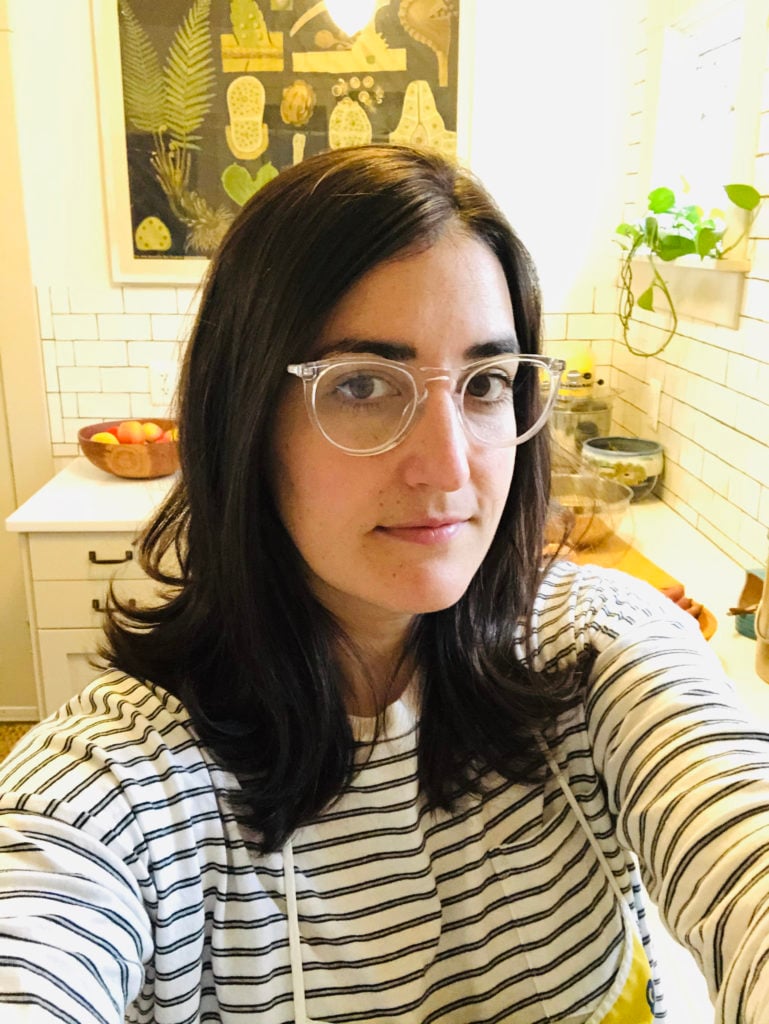
Nikki Maloof. Photo courtesy of the
artist.
Truthfully, my cuisine hasn’t changed a whole lot since the
lockdown. I have a tendency to cook in a frenzy a few days a week.
I try to sustain myself from the energy of those cooking days for
as long as possible. That’s why soups, stews, and braises are my go
to. They are easy, comforting, and practical, because you can make
big batches to eat later or freeze ahead. There’s nothing better
than when you’ve exhausted yourself working in the studio (or
worrying about global catastrophe) and you have something at home
cooked waiting for you in the fridge.
The recipe I chose is for Pozole Verde. I have been known to add
anything I have on hand—corn, kale, beans—but hominy is
essential.
POZOLE VERDE
INGREDIENTS:
1 whole chicken
2 carrots
2 celery stalks
2 onions
1 head of garlic
1 bay leaf
1 bunch of cilantro
2 cans of hominy
1 can pinto beans
For the green sauce:
1.5 pounds tomatillos, husks removed
1 quartered onion
1 jalapeño (or more if you like spice)
2 poblano peppers, halved and seeds removed
5 whole garlic cloves
Put the first six ingredients and half a bunch of cilantro in a
stock pot. Fill with water until it just covers everything. Bring
to a boil, then reduce temperature and cook 30 minutes until the
chicken is cooked through. Remove chicken, and gingerly remove the
meat from the bones once it’s not scalding hot. Put the carcass
back in and continue reducing the stock while you prepare the
rest.
Heat the oven to broil setting.
Throw the sauce ingredients on a sheet pan. Drizzle with oil and
sprinkle with salt. Broil until there are charred parts here and
there, and the tomatillos are soft. Throw everything in a blender
with a handful of cilantro leaves and blend smooth. Taste and add
kosher salt.
Strain the stock and put it back in the pot with the shredded
chicken, green sauce, and drained cans of hominy and beans, and
whatever else sounds good. Add salt to taste. Serve with dollops of
sour cream, chopped cilantro, and a lime wedge.
Martha Rosler, Brooklyn
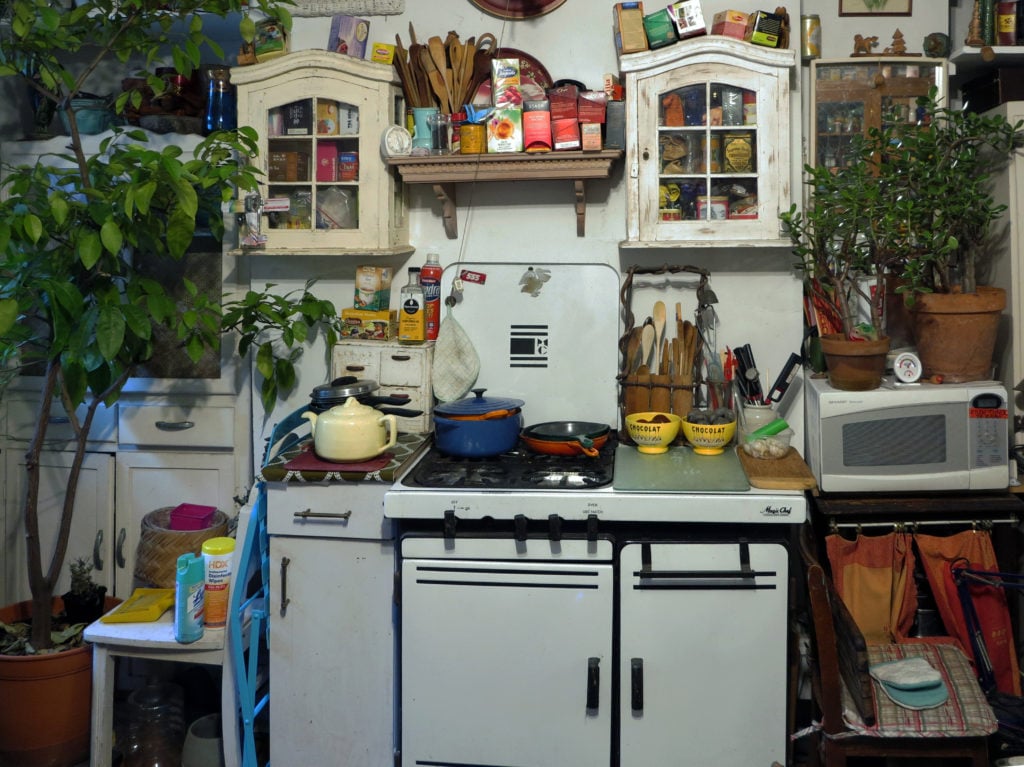
Martha Rosler’s kitchen. Photo courtesy
of the artist and Mitchell-Innes & Nash, New York.
I am self-sequestered at home, as ordered by the people with a
clue. That’s a rowhouse in Greenpoint. My studio is most of the
house, so I don’t have to leave to go to work.
I try to maintain a fairly healthy diet, mindful of the fact
that I am getting far less exercise. I also want to support one or
two of my local restaurants, so I occasionally get take-out. I
found that at the supermarket, I wasn’t a disciplined shopper, but
I did try to get salad fixings and nuts as well as some other
staples and treats. Pasta was, luckily, the last thing on my mind,
because as everyone now knows, there wasn’t any to be had. I do
have a stock of Chinese noodles in my pantry.
I have no desire to be particularly adventurous in cooking
during this crisis, as I still have to get work done without the
help of in-studio assistants. I’m not sure cooking for myself alone
would be worth the effort of scaring up the ingredients. My own
recipe, below, requires some common elements but not everyone might
have them on hand.
Here’s something simple and good-tasting that I’ve been making
for years. Its origin is lost in time, but I have it copied out on
a piece of paper. The smell alone makes it worth cooking.
MEDITERRANEAN SPINACH
INGREDIENTS:
6 pounds spinach, washed and drained
5 tsp salt (or to taste)
5 cloves garlic, minced
6 tbsp pine nuts
½ cup each of sliced black and green olives
2 tbsp capers
2 handfuls seedless raisins
INSTRUCTIONS:
Cook the spinach and salt five minutes in a little water; drain
and chop. Hold aside.
Heat olive oil in a skillet, stir in garlic and pine nuts, cook
until golden.
Mix in olives, capers, raisins.
Mix in spinach.
Heat quickly and serve.
DeVonn Francis,
Brooklyn

DeVonn Francis in the kitchen. Photo
courtesy of the artist.
My food philosophy focuses on a few key principles: generosity,
representation, and transformation. Cooking has always been a
really important way to shed light on underrepresented communities
and their value sets, while simultaneously remembering that there’s
so much joy and pleasure that comes from sharing and making
food.
The reality of the current situation is that even before the
health crisis reached New York, there were a lot of communities
that were disenfranchised by our current economic climate. This has
been a great way to think about how food can be a tool for
empowerment and wellness. How can we as artists and chefs support
health and longevity?
Right now, it’s really important that I’m making food that keeps
my spirits high and is mostly vegetarian and whole-grain based.
Scraps and leftovers from my refrigerator are a really great way to
get creative and stay conscious of waste. It’s really important to
think about waste management especially because overstocking or
hoarding food can cause food insecurity problems for other
folks.
In terms of stocking up, I have a little list of staples that
come from both my own heritage staples as well as food that I know
will either last a while or I can repurpose throughout different
types of meals.
Currently, I’m in my apartment in Brooklyn, which I’ve turned
into a kitchen studio of sorts. It’s been really nice because I
have time to kind of reconnect with the ways in which food makes me
feel good as a person, and not just someone who is an artist or a
chef.
Here’s a recipe:
PAPRIKA ROASTED CABBAGE
INGREDIENTS:
1 medium-sized cone or Napa cabbage
Marinade:
⅛ cup olive oil
2 whole dry chili de árbol, crushed
2 tbsp shrimp paste (you can substitute 1 tbsp fish sauce)
1 tbsp fine sea salt
2 tbsp smoked paprika (reserve 1 tbsp paprika for dusting)
To Garnish:
Maldon Salt, to taste
Yogurt or labneh
INSTRUCTIONS:
Preheat oven to 375 degrees.
Peel away any bruised leaves from the head. Cut cabbage
lengthwise into eight pieces and set aside.
In a small bowl, combine olive oil, chili de árbol, shrimp
paste, and fine sea salt. Brush mixture on to the cut sides of each
cabbage.
On a metal sheet rack, roast cabbage, cut side dow,n until
wedges becomes slightly tender, about 12 minutes.
Increase oven temperature to 500 degrees. Broil cabbage for
eight to 10 minutes, or until edges blacken.
Remove cabbage from oven. Immediately sprinkle with smoked
paprika and Maldon salt. Serve with a dollop of yogurt or
labneh.
Dana Sherwood, Copake, New
York
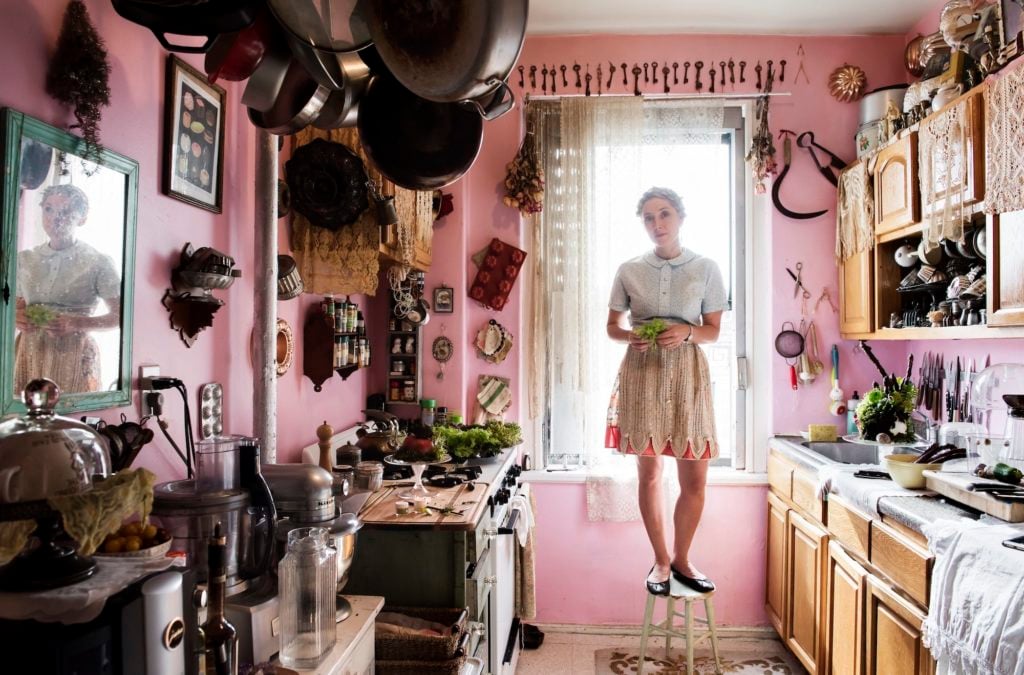
Dana Sherwood in her kitchen. Photo by
Emily Andrews.
When it came time to stock my kitchen cupboards for an
undetermined period of time, I found I was already pretty well
stocked with basics like flour, sugar, yeast, and the like. I tend
to amass food like a collector and have many exciting ingredients
from my travels, like rosewater from Istanbul, tamarind paste from
Indonesia, and whole buckwheat from Mongolia.
I recently got a good recipe for beans from Tamar Adler on her
podcast, Food Actually. I’ve made her beans
twice so far. Once with chickpeas and once with white beans. It
makes a good quantity and lasts for several meals. I kind of
changed it up each time, having it once with sautéed greens.
The main difference with Tamar’s recipe is to add salt right
from the beginning of cooking, debunking an old food myth. The
other is adding a ton of olive oil as the beans cook. So, as far as
shopping for quarantine goes, I did purchase a large quantity of
dried beans and garlic, as well as a lot of olive oil and
butter.
The most important thing these days is community. My heart goes
out to those among us who are alone, who have compromised immune
systems, who have lost their way to make a living, to the
imprisoned, the elderly, and all of us who are scared and unsure of
what’s to come.
I am a survivalist at heart. During my recent research in Ulaan
Bataar, Mongolia, I learned from the nomadic herders to add butter
to my tea to give it density and satisfying fat calories. I also
learned how to make very simple homemade dumplings from my friend,
the Mongolian artist, Tuguldur Yondonjamts. It is remarkably easy
to do.
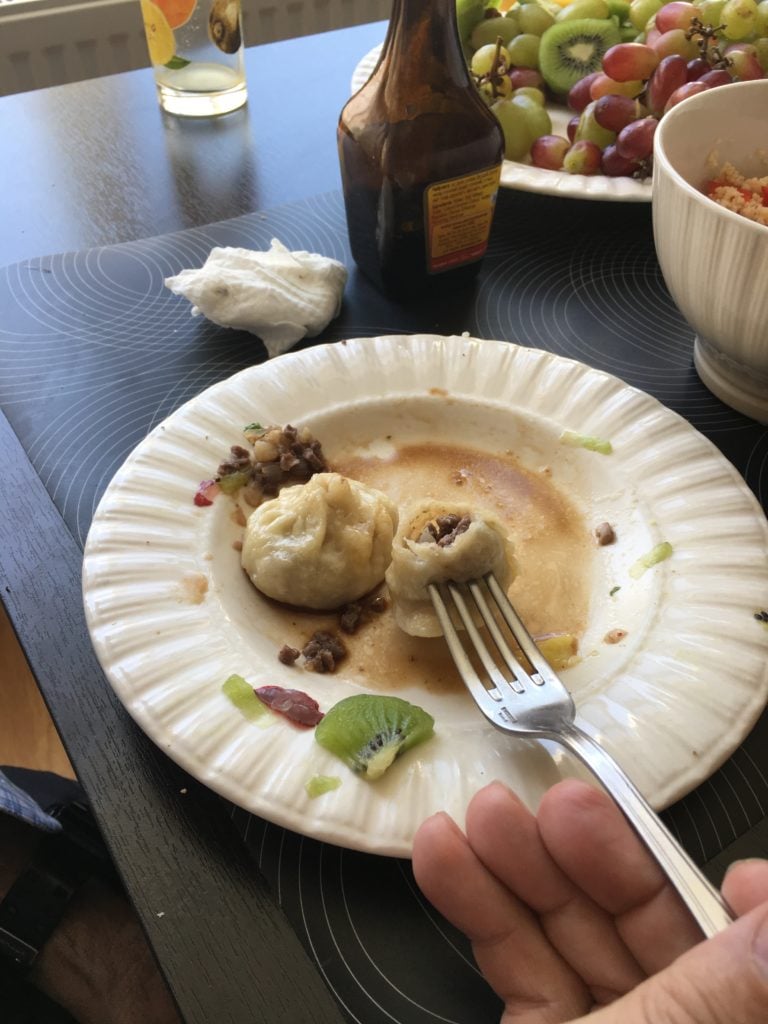
Dana Sherwood’s Mongolian buuz. Photo
courtesy of the artist.
MONGOLIAN BUUZ
INGREDIENTS:
1 lb ground lamb (or beef if you don’t have lamb)
1 small chopped raw onion
flour
water
salt
oil
INSTRUCTIONS:
First, mix the chopped lamb and the onion in a bowl and mix it
up with your (sanitized) hands. Add a pinch of salt.
This is a little vague, but that’s kind of how they roll in
Ulaanbaatar. Mix flour, a tiny bit of salt and water until it is
the consistency of pizza dough, not too sticky. You can add a
little oil to this mix if you like. Roll the dough into a log and
cut into ½ inch slices so you have a flat disc the size of a
cookie. Coat your hands with flour to keep the dough from sticking
as you form little, flat tortillas in your palm. You can also roll
them out on a board with a rolling pin if that’s easier.
Try and get the dough in your palm as thin as possible, then
drop a heaping teaspoon of the meat mixture into the center.
Then you pinch all the edges together until you have a little
dumpling shape like a gyoza or a juicy bun.
Grease your steamer basket (we use a veggie steamer because we
don’t have a fancy dumpling steamer) with butter or oil and steam
for 10 minutes or so until cooked.
Eat with dumpling sauce made from soy sauce and rooster sauce or
similar… however you like your dumplings!
Jennifer Rubell, New
York
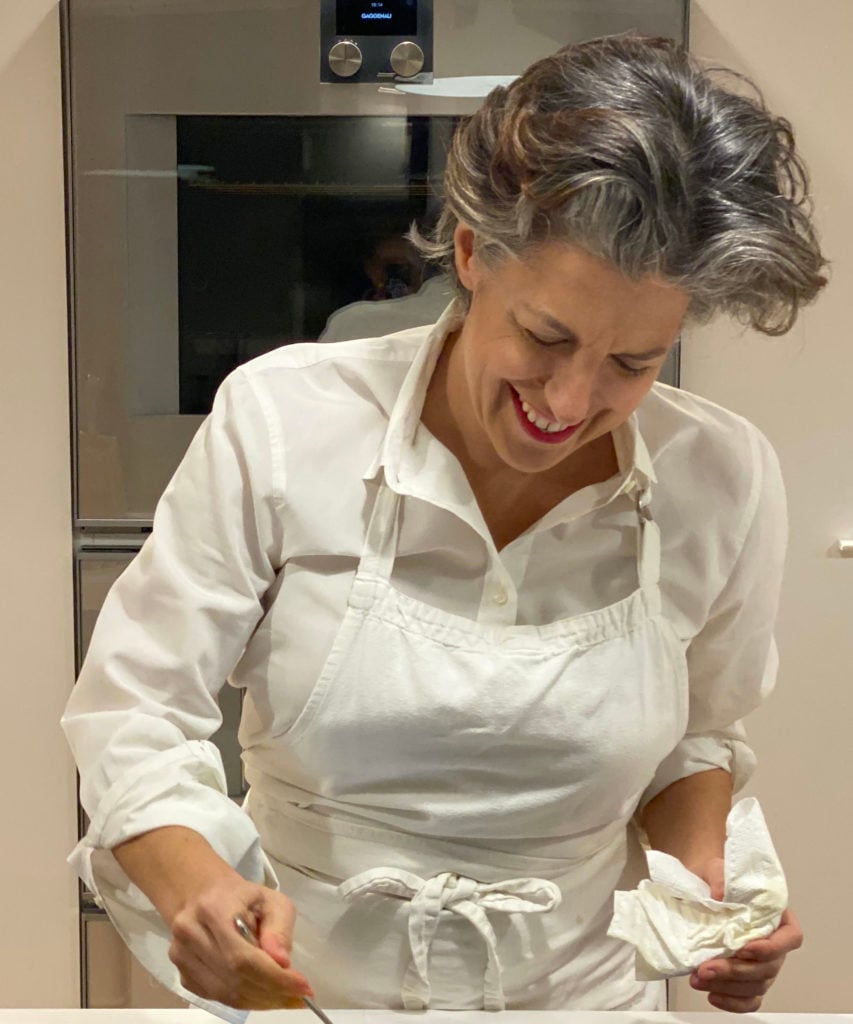
Jennifer Rubell. Photo courtesy of the
artist.
GREEN BEANS WITH CAPER VINAIGRETTE AND KALE-CHIP
CRUMBS
Tip and tail a bunch of string beans. Boil them in salted water,
then drain.
Meanwhile, make the vinaigrette. Whisk 2 teaspoon of lemon
juice and a teaspoon of dijon mustard. Add a few drops of sherry
vinegar if you have some around. Slowly add in 2 tablespoons of
olive oil, whisking to emulsify. Add a couple dozen capers.
Done.
Throw the string beans in the vinaigrette. Add salt and
pepper.
Mix it around and put it on a plate, still warm.
Take some leftover kale chips (eight, 10, whatever), put them in
a plastic bag, and crumble them. Pour them on top of the string
beans.
Be aesthetically attentive to the plating, obviously.
Preheat the oven to 350 degrees. Wash and dry like a half a
bunch of kale, rip off the hard stems, break them into big pieces.
Toss with a very little bit of olive oil, maybe a teaspoon. And no
salt (kale is weirdly naturally salty). Put them on a sheet pan,
with nothing touching anything else. Bake them til they just start
to look a little brown in places. They should be crispy. Done.
Maybe like 15 minutes. Store them in an airtight bag if you have
any left over.
Friends With You, Los Angeles

Friends With You’s Arturo Sandoval II
and Samuel Borkson. Photo courtesy of the artists.
Borkson:
I have a great vegan collard green recipe.
VEGAN COLLARD GREENS
Brown a full sweet onion with coconut oil or vegan butter.
Then add lots of garlic, finely chopped.
Add greens, apple cider vinegar, and a can or two of diced
tomatoes.
Season with salt, pepper, and Louisiana hot sauce.
Bring to a boil and let simmer about 20 mins or so, keeping
those greens alive and nutritious.
Happy cooking!
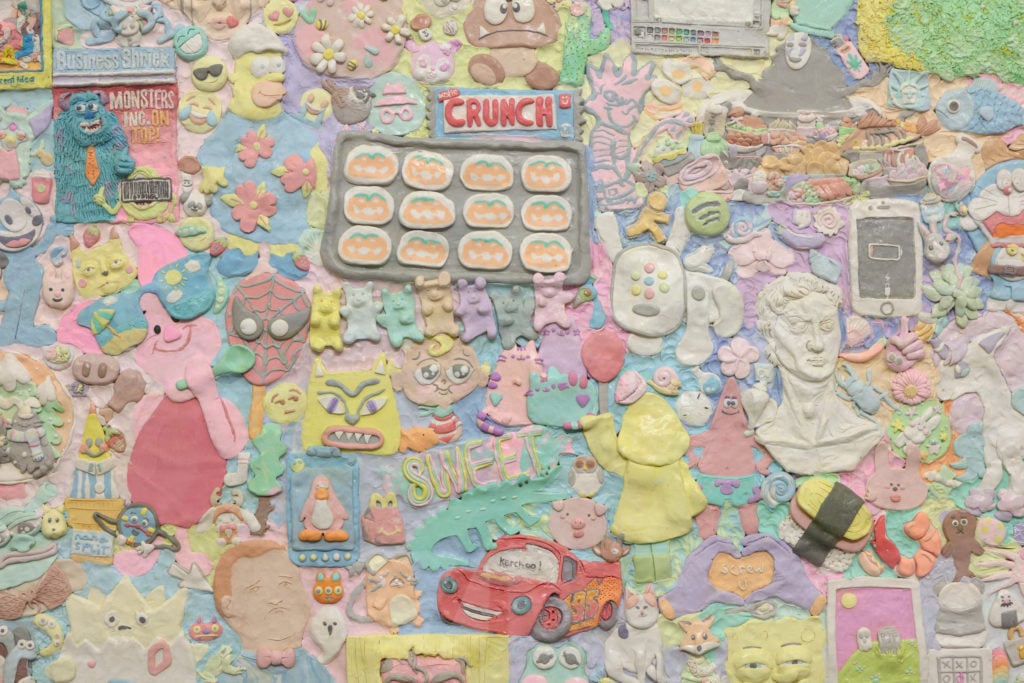
Work by Friends With You. Courtesy of
the artists.
Sandoval:
Here is my Grandma Cirita’s black beans recipe. This is my
number one comfort food for clean fuel!
GRANDMA CIRITA’S BLACK BEANS
INGREDIENTS:
2 tablespoons olive oil
1 small onion chopped small
3 garlic gloves minced
½ large red pepper cut into 5–6 irregular shaped chunks
1 dried bay/laurel leaf
2 cans of plain organic black beans
1 cup water
1 tsp apple cider vinegar
1 tsp sugar (white, brown, coconut, or even maple syrup works!)
½ tsp ground cumin
½ tsp oregano
½ tsp salt (or more to taste)
⅓ cup of Manzanilla green olives (pimento stuffed—no pit)
INSTRUCTIONS:
Make the sofrito (sautéed taste bomb!) by placing the
olive oil, onion, garlic, bay leaf, and red pepper into a
medium-sized pot. Sauté on medium heat, stirring often, until the
onions begin to brown slightly.
Add the two cans of black bean (with the liquid and everything)
as well as the cup of water. Also stir in the cumin, salt, and
oregano. Bring to a boil.
Once boiling, add the vinegar and the sugar. Reduce to a
simmer.
Once simmering, mix in the olives and cover.
Simmer covered for 45 minutes, stirring often to avoid sticking
to the pot. Once the beans have thickened, they are ready to serve.
Serve over white rice and enjoy!
Olafur Eliasson’s Studio Kitchen,
Berlin
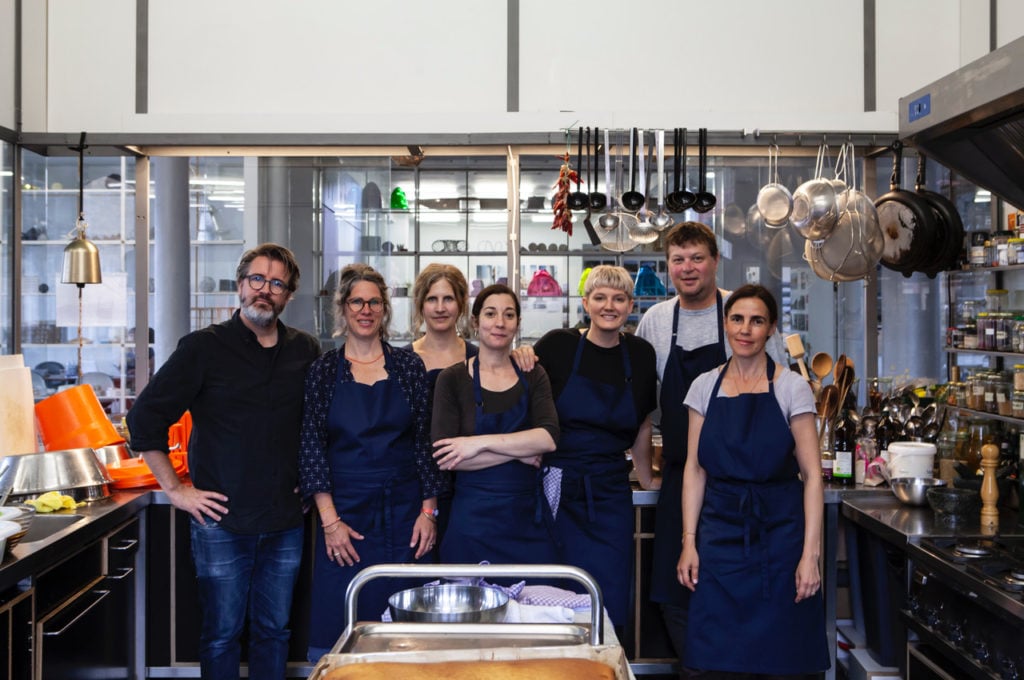
Ólafur Elíasson, Christine Bopp, Lauren
Mauer, Montse Torreda, Victoría Elíasdóttir, Leifur Kolbeinsson,
and Nora Wulff at Eliasson’s studio in Berlin. Photo by María del
Pilar García Ayensa, courtesy of the artist.
We’d like to share with you simple, seasonal recipes, with
vegetarian and vegan options, that we would cook for ourselves, our
families, and our friends at home when we have little time on hand.
This is soul food pasta for an easy-going evening at home.
SIMPLE PASTA
Serves 2 people (please double or triple or increase as
needed)
INGREDIENTS:
Approximately 10.5 oz pasta
2–3 leeks
1 head of radicchio (or chicory)
1 handful of almonds (or hazelnuts, sunflower seeds, or
walnuts)
Approximately 4.5 oz chèvre goat cheese (or feta or Parmesan, or
vegan without cheese)
Olive oil
Approximately 6 tbsp balsamic vinegar
Salt
Pepper
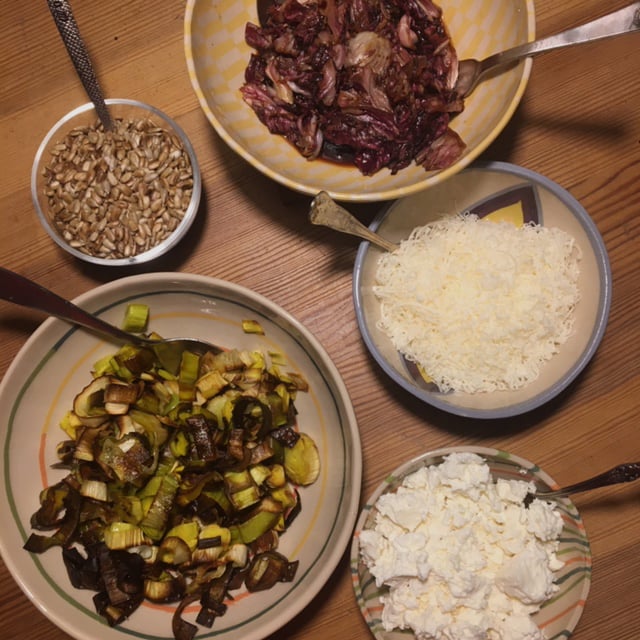
The ingredients for Simple Pasta. Photo
by Studio Olafur Eliasson Kitchen.
INSTRUCTIONS
Preheat the oven to 390 degrees.
Roast whole almonds in the oven for five to seven minutes.
Wash and cut the leeks in three-quarter-inch rings, mix with
oil, salt, and pepper and distribute on a tray,
When the almonds are done, put the leeks in the oven and roast
at 390 degrees until lightly browned, about 10 to 15 minutes.
Cut the radicchio roughly, into eight to 12 pieces.
Boil the pasta in salted water.
Sauté the radicchio with olive oil and salt in a wide pan until
it’s wilted and lightly browned. Add balsamic vinegar and stir to
combine.
Crumble the cheese.
Serve separately if you wish or mix the radicchio into the
pasta, serve in bowls and top with the leeks, cheese, and almonds.
Add freshly ground pepper and salt to taste.
For the vegan option, add fresh herbs, finely chop the almonds
and mix with salt for a topping, or add sweet or rosemary roasted
nuts.
Zina Saro-Wiwa, Los Angeles
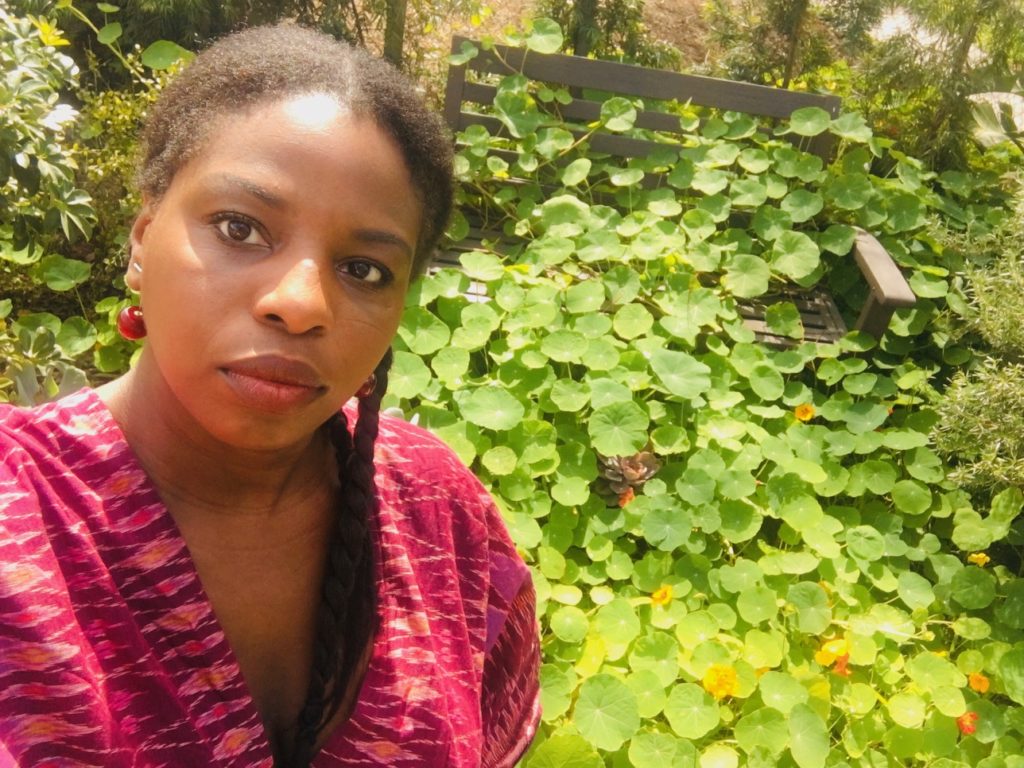
Zina Saro-Wiwa in her garden. Photo by
Zina Saro-Wiwa.
The comedian “Fat Carrie Bradshaw” said it best in his Twitter comment: “I am
either going to come out of this quarantine 50 pounds lighter or
100 pounds heavier. Only time will tell.”
I myself am experiencing a sort of dietary schizophrenia. On the
one hand I am eating very healthily—my body feels like it wants to
cleanse—but then on the other I want to be comforted because of all
the stress we’re all under.
There is, sadly, a difference between looking after yourself and
comforting yourself. And for me comforting myself means almond
butter-filled dark chocolate, “high-end” fructose-free hibiscus
gummy candies, double chocolate Milanos dipped for a millisecond in
piping hot Earl Grey tea, and salt and vinegar Taytos crisps. Also
quesadillas. I’m making cheesy, crispy, hot breakfast quesadillas.
Lord help me.
But I started my quarantine (last Thursday) eating Nigerian
food. Okra soup and garri, black-eyed bean porridge and fried
plantain. It’s just something my soul needed to feel settled.
Grounded. This “soul food” happily falls into both camps of looking
after and comforting myself. The ingredients aren’t easy
to find in LA though.
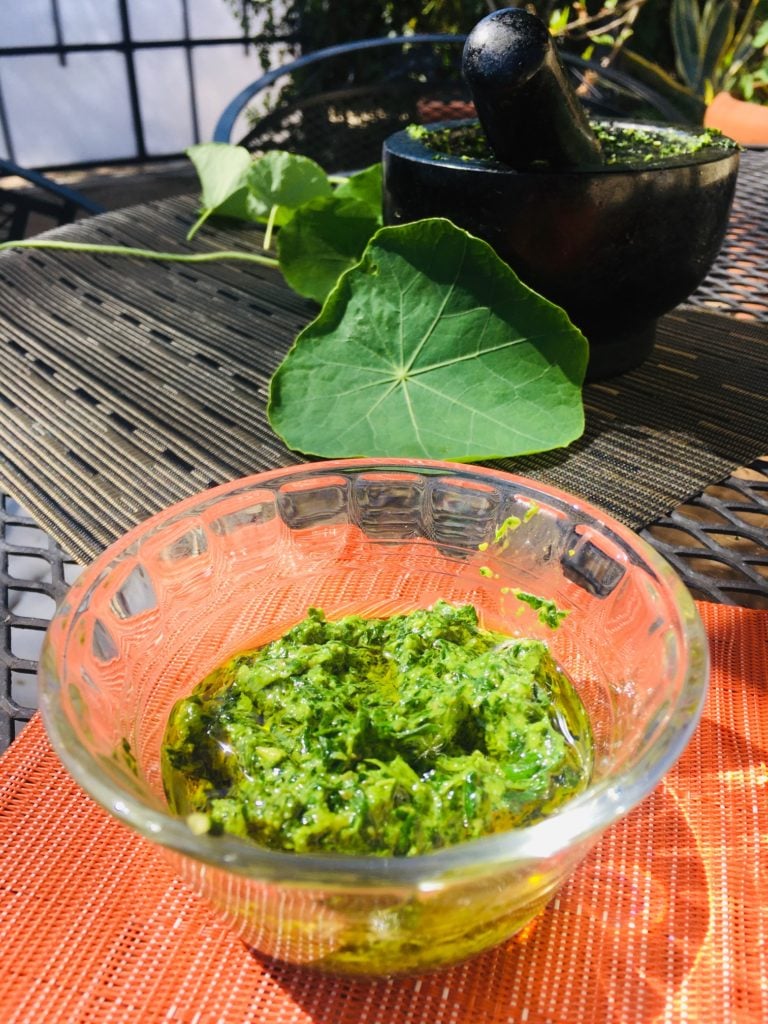
Pesto made from nasturtium in Zina
Saro-Wiwa’s garden. Photo by Zina Saro-Wiwa.
I’m very well stocked with fruit, frozen kale, proteins, beans,
lentils, rice, and also my beloved plantains. But I’ll share with
you the recipes for some of the quarantine meals I’m preparing that
feature ingredients found in the garden where I live in LA.
First up is nasturtium pesto. There is a surfeit of nasturtium
in the garden. It is everywhere. I am on a pesto kick (the pestle
and mortar pounding is a real tension reliever) and I picked
several nasturtium leaves and washed and dried them. Then I pounded
two garlic cloves and two salted anchovies in the mortar, adding
the nasturtium bit by bit. Then I threw in a teaspoon of capers,
lemon juice, and some pine nuts. More pounding.
There is no parmesan in this pesto. The anchovies deliver the
umami and the pine nuts deliver the creaminess. The pesto is pretty
fabulous. Peppery, vivacious and chlorophyll-y.
I stirred it into some gluten-free spaghetti and topped it with
a soft-boiled egg and steamed asparagus, and then I shaved some
pillowy aged parmesan on top because I couldn’t not. Next I want to
try the pesto as a crust on some salmon which I will air-fry. I’ll
add some of the peppery edible nasturtium flowers into the pesto
too when I do.
Then there are the kumquats which grow right next to my outdoor
dining table/work station. Again I use my pestle and mortar and
gently pound three ripe kumquats, then pour the bruised fruit into
a glass and pour very hot water on it and let it steep to make tea.
I don’t add honey, but you can. It’s super refreshing and
cleansing.
The kumquat is oily as well as astringent, so I use the juices
and oily pith on my skin when I want to give myself a facial.
Both kumquats and nasturtium are high in Vitamin C and great for
your immune system. There is something wonderful about eating right
from the garden at this time. Almost certainly a foreshadowing for
our collective agricultural futures…
Pope L, Chicago
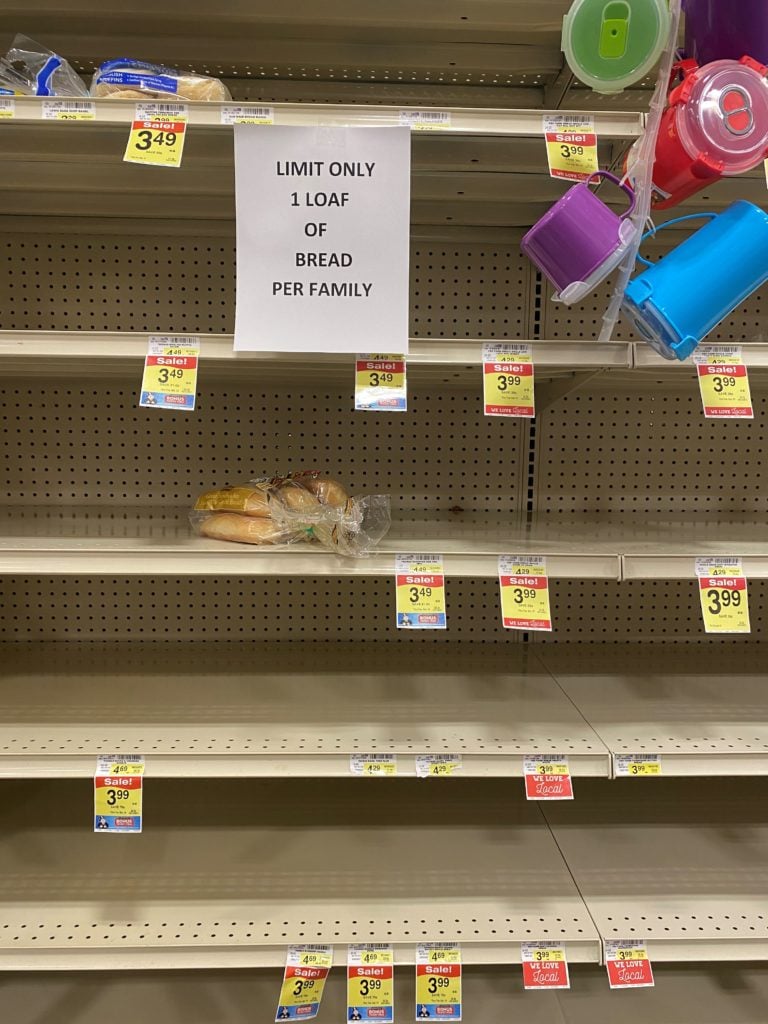
A photo of the supermarket by Pope L.
Photo ©Pope.L, courtesy of the artist and Mitchell-Innes & Nash,
New York
3.18.20, “Today I Went To The Supermarket. —On Kawara.”
The post 9 More Recipes From Artists Who Are Getting
Creative in the Kitchen to Spice Up Dining in the Era of Social
Distancing appeared first on artnet News.
Read more https://news.artnet.com/art-world/artists-cooking-social-distancing-part-2-1813887
Further reading


Leave a comment