
‘This Is the Biggest Challenge We’ve Faced Since the War’: How the Coronavirus Crisis Is Exposing the Precarious Position of Museums Worldwide
The Metropolitan Museum of Art
sent shockwaves through the museum world last week when it revealed that
it expected to lose as much as $100 million and remain closed until
July as part of a global effort to fight coronavirus. Layoffs, its
leadership suggested, were likely.
Many administrators at other
museums immediately wondered: if an institution as wealthy as the
Met, which has an endowment of more than $3 billion, will struggle
to survive the pandemic without drastic measures, what hope is
there for the rest of us?
The global health crisis has
thrown an uncomfortable spotlight on the precariousness of the
museum sector, which operated on relatively tight budgets even
before COVID-19 hit. Now, institutions are being faced with
incredibly difficult questions about how long they can afford to
pay their staff before layoffs, about which programs to cut and
which ones to keep, and about how to bring profoundly in-person
experiences into a virtual world. And like others around the world,
museum leaders have little reliable information about what the
future holds.
“How long do we have to be
closed? Will we have to close again? We don’t know that yet,” says
Mary Ceruti, the director of the Walker Art Center in Minneapolis,
which shuttered earlier this month alongside hundreds of museums
around the globe.
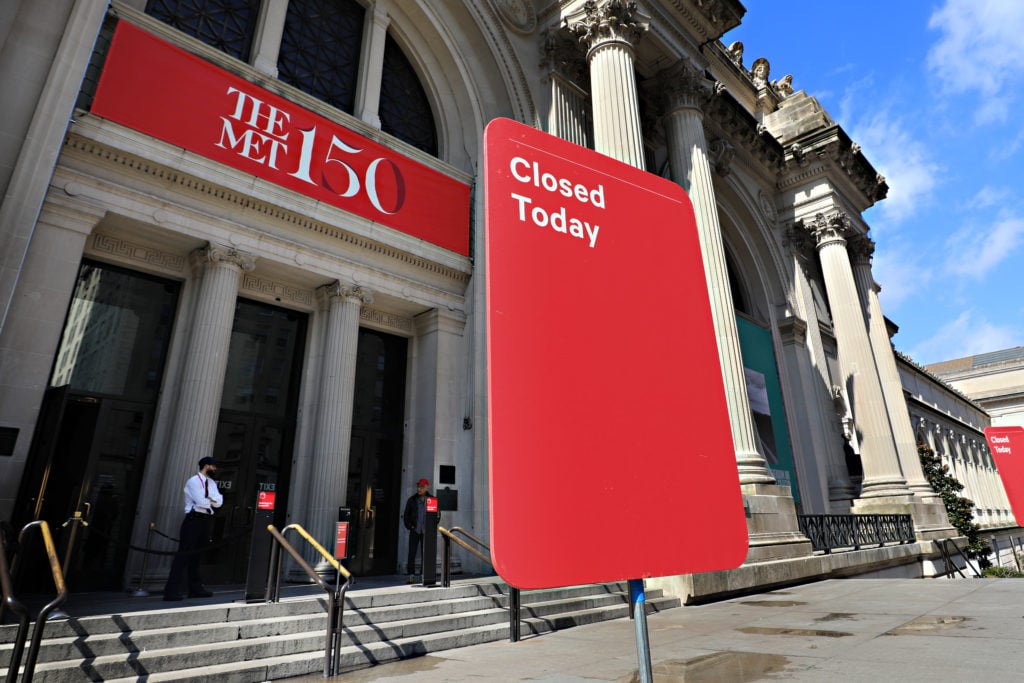
A sign outside the Metropolitan Museum
of Art on March 13, 2020. Photo by Cindy Ord/Getty Images.
In the US, museums are losing an
estimated $33 million a day as a result of coronavirus, according
to the American Alliance of Museums, which last week asked Congress
for $4 billion to boost
the sector. The
organization estimates that as many as 30 percent of museums—many
of which are in small and rural communities—will remain closed
permanently without federal aid.
“This is the biggest challenge
we have faced since the war,” says Hartwig Fischer, the director of
the British Museum in London. Speaking for his peers across the UK
and echoing museum leaders around the world, Fisher noted that
although spending on emergency health care should be the top
priority, it is “absolutely crucial that the government is behind
us, backs us, and helps us to go through this.”
But while the UK
and Germany
have already pledged hefty sums to
support the culture industry, the US has lagged behind—and layoffs
have already begun.
On Tuesday, the Museum of
Contemporary Art in Los Angeles let go of almost
100 part-time workers,
including gallery attendants and educators, equivalent to more than
half its workforce. Meanwhile, the Carnegie Museums of Pittsburgh
furloughed around half its 1,000-person staff, implemented pay cuts
for the remaining workers, and withdrew $1.5 million from its
investment fund.
Some believe the crisis will
accelerate trends that have been putting strain on the sector for
some time, including a winner-takes-all
dynamic in fundraising that benefits only the biggest
institutions. “There is consolidation we have been seeing for a
decade in the museum field,” says Tim Griffin, the director and
chief curator of the Kitchen in New York. “This could easily be the
thing that pushes it over the edge.”
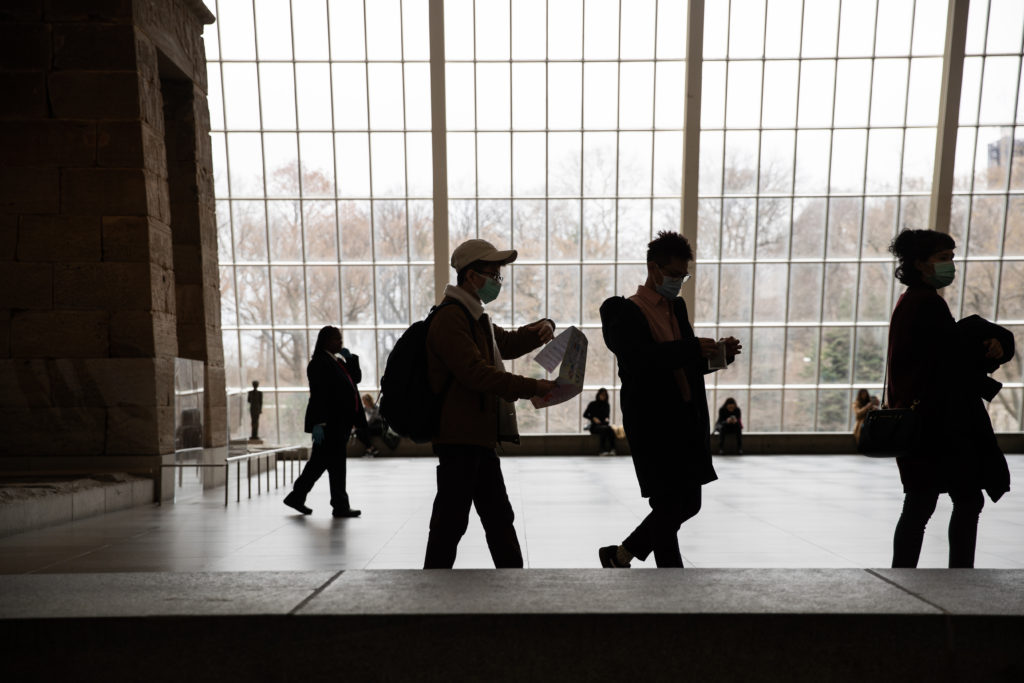
Tourists wearing protective masks at the
Met. Photo by Jeenah Moon/Getty Images.
There Is No Blueprint for This
It was just two weeks ago that
the world changed within mere hours for museums.
After the Met announced its plan to close to
the public on March 12, institutions across the country shuttered
in rapid succession as local governments raced to restrict public
gatherings. In London, the Tate was the first big
museum to announce it was closing on March 17. The Royal
Academy of Arts shuttered the same day—and it was like coming to a
“screeching halt,” says its chief executive, Axel
Rüger.
Almost overnight, exhibitions
around the world that have been years, if not decades, in the
making were shuttered or postponed indefinitely. Treasures from
museums’ collections were stranded halfway around the world on loan
with no scheduled return date.
“The speed of this has been the
biggest shock,” says Brooke Davis Anderson, the director of the
Pennsylvania Academy of Fine Arts in Philadelphia. “It was a fast
decision, and museums are not notoriously swift—this was out of
character.”
Since then, museums have shifted
from dealing with immediate concerns—like how to close down an
institution for an indeterminate period of time with 24 hours’
notice—to longer-term issues. Institutions that rely on income from
tickets, restaurant revenue, and event rentals (which experts
estimate often comprise around 30 percent of a museum’s income,
although this can vary widely) are anticipating a serious cash
crunch.
“The majority of organizations
don’t have a plan B,” says Zannie Voss, the director of SMU
DataArts. According to a 2016 survey she conducted, the median art
museum had just 1.5 months’ worth of working capital (or cash in
hand), underscoring the potentially catastrophic impact of a
two-month closure.
The timing of the pandemic is
also particularly tricky because major fundraising events for
institutions, especially small ones, are usually held in the
spring; April is referred to as “gala season” in the art
world.
The Kitchen, for example,
usually holds two fundraising events: a gala in the spring and an
auction in the fall. But its leadership opted to tweak that
schedule for the first time this year, converting its fall auction
into a spring exhibition.
“What that meant was all our
eggs were in this five-month basket that is suddenly being hit,”
Griffin says. He estimated money from these now-postponed events
accounted for 20 percent of the institution’s annual operating
budget.
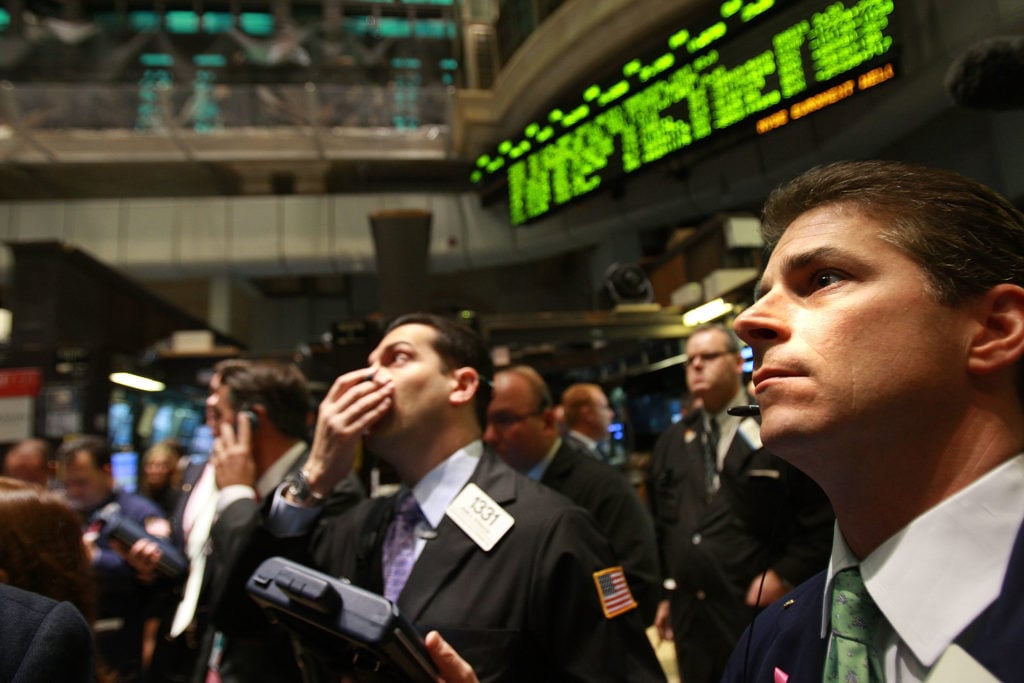
Traders work on the floor of the New
York Stock Exchange moments after the opening bell on October 13,
2008. Photo by Spencer Platt/Getty Images.
Why This Looming Recession Won’t Be Like the Last
For many, the unfolding economic
crisis brings back painful memories of the 2008 recession, when
museums saw the value of their endowments tumble and philanthropic
donations shrink, forcing directors and boards to get inventive
about how to boost their bottom lines.
During the Great Recession,
institutions scrambled to organize benefit auctions, rent their
spaces out for special events, reduce the number of exhibitions
they mounted each year, and relied more heavily on their
collections and less on expensive loan shows. Directors dipped into
reserves when necessary, and could always rely on some box-office
revenue.
“All those cushions and reserves and discretionary spending
funds, those have been depleted or redirected for years at many
institutions,” says Olga Viso, the former director of the Walker
Art Center and a senior advisor at Arizona State University’s
Herberger Institute. “That’s how we’ve survived to the present
moment.”
And with the fat already trimmed
from the bone, Elizabeth Merritt, the director of the AAM’s Center
for the Future of Museums, anticipates that this time around will
be worse. “The financial collapse was bad, but anyone who had been
alive for a while had been through a recession before,” she says.
“If it’s been over 100 years since we had our last major
pandemic—people don’t have that lived memory and may not have the
same confidence.”
And it’s the daily staffers who
are feeling the pain first. Merritt estimates that a museum’s
costs are as much as 75 to 80 percent payroll. This week, the
Hammer Museum at UCLA laid off 150 part-time student employees,
many of whom staff the reception desk.
“The people working in ancillary
and support industries in the museum sector—they are often the
people who give an institution its vitality, and the first to be
laid off,” says Adrian Ellis, the founder of AEA
Consulting.
Museums have taken different
approaches to paying their staffs. The Met has committed to paying
all its employees only through April 4, while the Walker has
committed to paying all staff, including part-time visitor-services
associates and gallery guards, through May 31. In London, Tate has
pledged to pay everyone until May 1, including those in
front-of-house roles. Smaller institutions in the UK are looking to
the government’s emergency scheme to pay 80 percent of employees’
pay (up to £28,000 a year) to help them weather the financial
crisis.
To unlock money, some museums are asking patrons to relax
restrictions on donated funds so they can use them to cover general
operations. The director of the Nasher Sculpture Center in Dallas,
Jeremy Strick, said one of his longtime donors called him to ask if
he was paying his part-time staff during the shutdown—and
volunteered to help if that became difficult as time goes on.
But even if social-distancing
provisions are lifted in a matter of weeks, which looks
increasingly unlikely, the aftershocks of the financial hit will be
long-lasting. Because of the way museums structure their spending,
those that can rely on income from their endowments to get through
bumpy periods are unlikely to feel the impact of a stock-market
tumble for two to three years.
Viso notes that in the aftermath
of the financial crisis, she was able to stave off layoffs for up
to two years at the Walker by cutting spending and boosting
fundraising. But eventually, the shrunken endowment forced her to
cut staff.
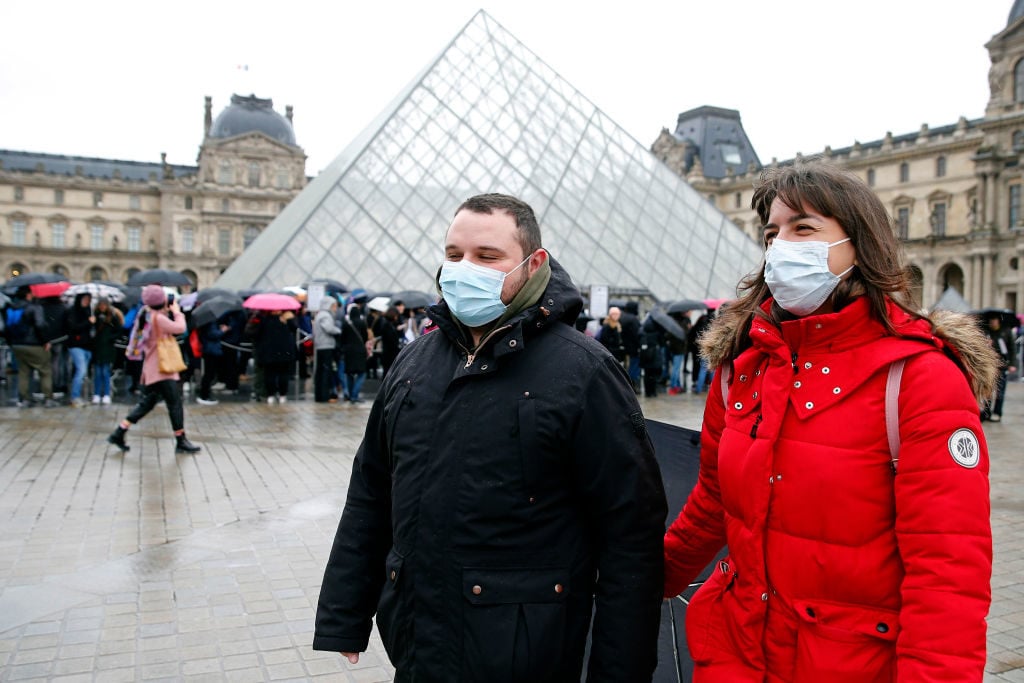
Tourists wearing face masks walk past
the Louvre Museum as the museum was closed for a staff meeting
about the coronavirus outbreak on March 2. Photo by Chesnot/Getty
Images.
Brace Yourself for Big Changes
With lots of time to think and
stew at home, museum leaders are also beginning to fret about a
seemingly existential concern: that even after the coronavirus
crisis has subsided, people will feel uncomfortable in crowded
places.
The Met has already anticipated
lower levels of tourism for at least the next year. But the impact
may be felt even on museums’ most valued clientele: their dedicated
local audience. Having been told by government officials that
standing in close proximity to others is a danger to public health,
“surely that is going to have some lowering effect on people’s
propensity to go gather in social spaces,” Adrian Ellis
notes.
That trend would be particularly
problematic for museums, which measure success (rightly or wrongly)
by attendance—and which have increasingly identified themselves as
community hubs rather than cloistered academic
institutions.
But others suspect that it is
precisely museums’ function as a critical thread in the social
fabric that will enable them to make a case for the government and
philanthropic funding they need to weather the
crisis.
“It’s an opportunity for museums
to be saying, ‘We are part of the network and services that will
help our communities survive and recover,’” Elizabeth Merritt says.
“You may find donors doubling down on arts and culture because it’s
an effective mechanism to provide support for social cohesion and
education and engagement.”
Regardless of the size and
location of their institution, museum leaders around the globe
agree that this unprecedented crisis will require them to question
assumptions about how their institutions have always worked. Now,
they must prepare to make lasting changes.
“Over the past decade, people in
art and culture have been looking at how institutions need to be
restructured,” Tim Griffin says. “And now everybody’s hand is being
forced to rethink those structures to address a really radically
changed landscape. We are going to be entering a period of
invention.”
The post ‘This Is the Biggest Challenge We’ve Faced Since
the War’: How the Coronavirus Crisis Is Exposing the Precarious
Position of Museums Worldwide appeared first on artnet
News.
Read more https://news.artnet.com/art-world/museums-coronavirus-crisis-1815993
Further reading


Leave a comment