
Letter From Madrid: The Director of the Reina Sofia on What It Will Take for Museums to Rise Again—and What They Can Do in the Meantime
It is hard to believe, but it was
less than five weeks ago that Madrid’s art museums were thronged
with visitors and its international art fair, ARCO, was in full
swing. Now, the city’s art institutions are shuttered indefinitely
and the fair’s venue has been transformed into a temporary field
hospital. The director of Madrid’s Reina Sofía Museum has been
working to keep his institution operating remotely in the hopes
that it can serve as a beacon to those looking for inspiration. He
reports that although some of his staff members are sick, none have
died, and that they have kept their jobs thanks in part to Spain’s
governmental assistance program. Borja-Villel has led Spain’s
national museum of Modern and contemporary art since 2008 and also
serves as a leading member of the Institute of Radical
Imagination. As experts predict the coronavirus death toll has
peaked in hard-hit Spain, the curator and art historian reflects on
what the pandemic might mean for society and cultural life in the
future.
Manuel Borja-Villel, director of the Museo Reina Sofía,
Madrid
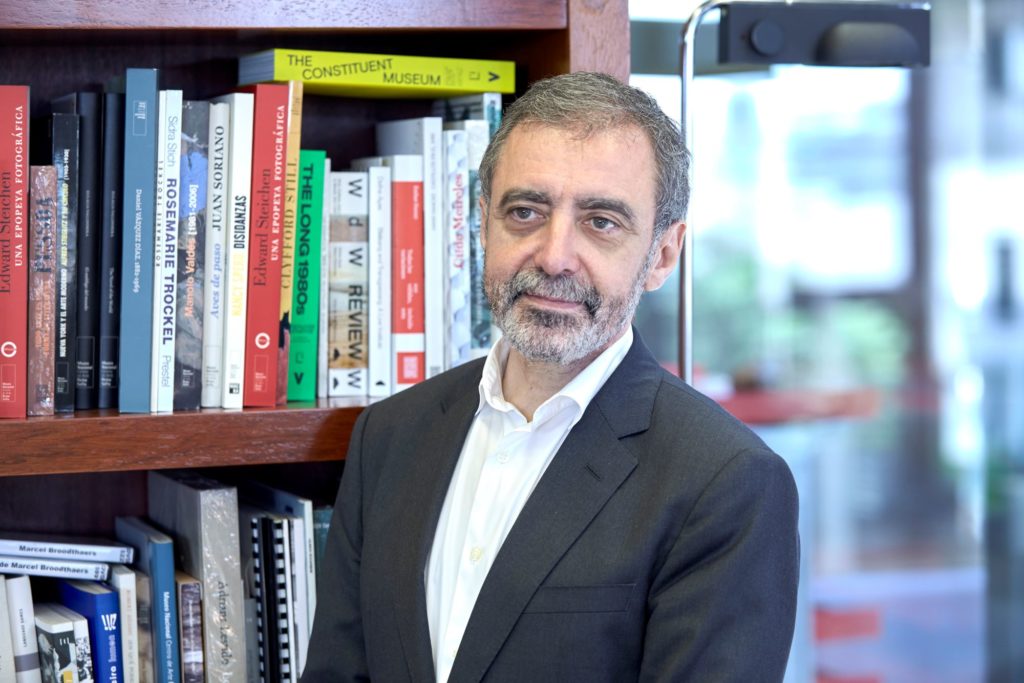
Photo courtesy of the Museo Reina
Sofia.
Nobody could imagine this a
month ago. Many of us were complaining about the state of the world
in general, about how the health care system had been weakened,
about the need to care more for nature, but no one could have
imagined the emergency would develop so quickly, and that things
would go this badly. There will be a “before” and an “after” this
crisis. It will be a paradigm shift, just as everything changed
after World War II.
The
economic effects are going to be almost like a postwar situation
when it is clear that what has happened is that the system failed.
Things should not be like they were before. We will need something
like a Marshall Plan for society and, of course, for culture—not to
rebuild things as they were, but rather to imagine new worlds in
which caring for other people and other species should be
central.
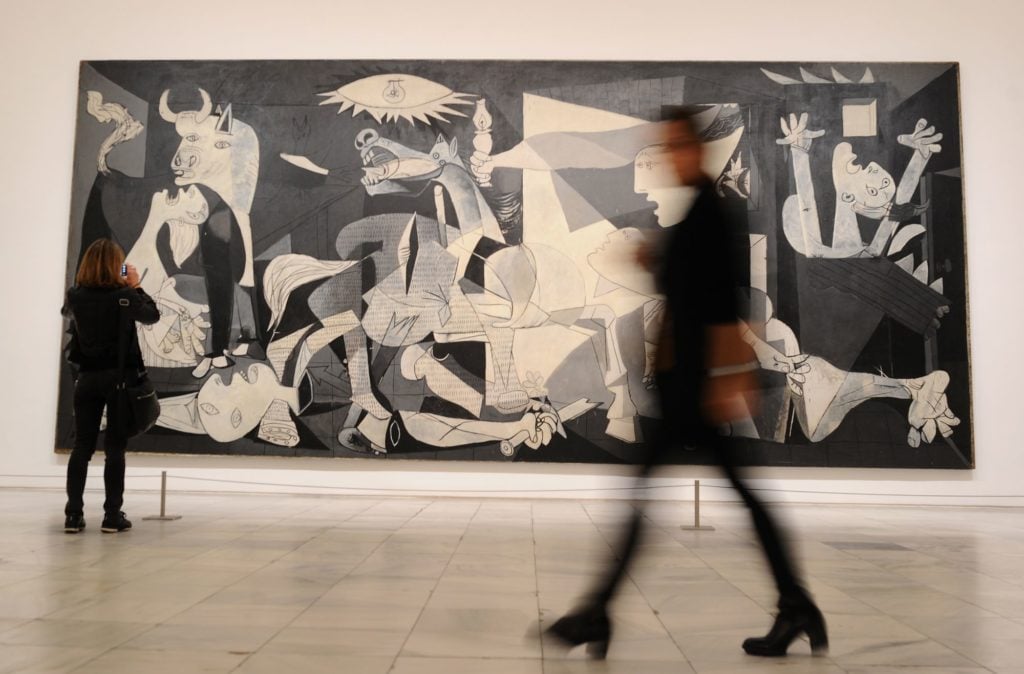
”Pity and Terror in Picasso: The Path to
Guernica” at the Museo Reina Sofia in 2017. Photo by Denis Doyle,
Getty Images.
In the
art world, there are many things that need to be reconsidered.
Eventually, museums will reopen, but will people be afraid of being
close to one another? Will we be able to continue developing large
exhibitions that are anti-ecological? Maybe blockbuster exhibitions
are over. Maybe we should think more about process and
research.
When
the Reina Sofía reopens—certainly to begin with—we will have to
limit the number of people in the Guernica room. But in addition to managing visitor flow
safely, we also need to be careful that we do not turn into a
society in which people are not empathetic, in which they are
afraid even to touch each other. We cannot let public spaces
disappear. There is an element of joy, of learning, and of
democracy in being together with other people.
Right
now, we are working with a confederation of European museums
to curate a visual manifestation of
the balcony singing that has become so popular and
uplifting in Italy. We have invited 14 artists initially to
participate, but everybody will be included. We are asking them to
create an intervention in their window, or on their balcony. They
have complete artistic freedom, of course, but we are asking them
to reflect on what it means to be on lockdown, and to imagine a
better future. It is important to remember that human beings cannot
be separated from nature, the importance of joy, and the importance
of care.
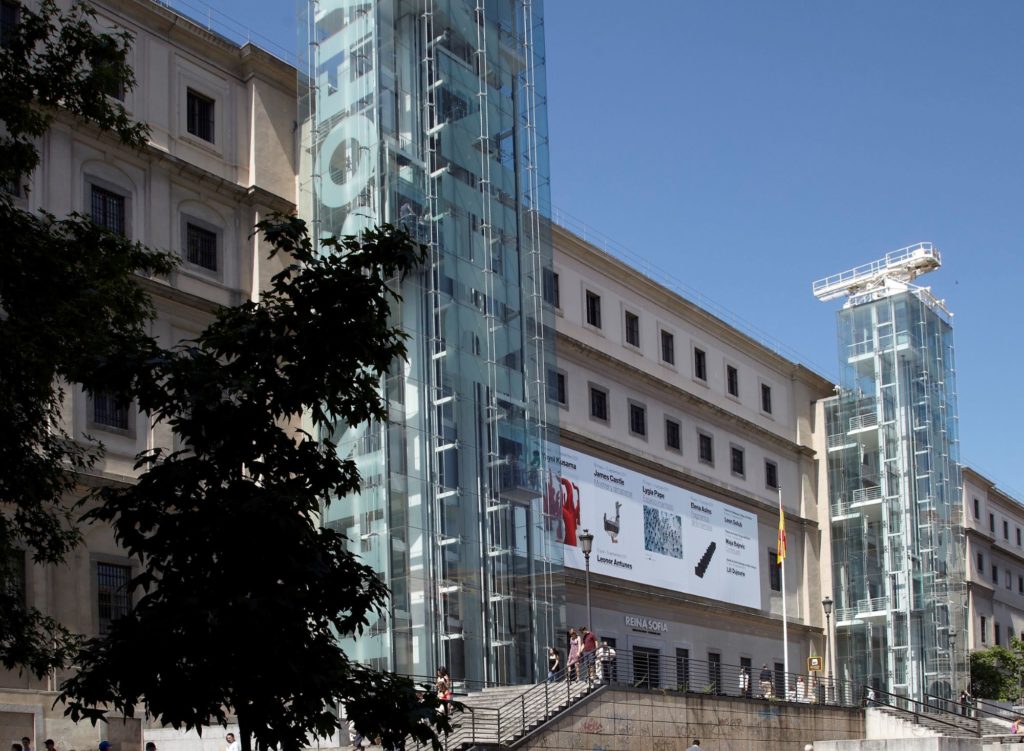
Museo Reina Sofia’s Sabatini Building is
a former hospital. Photo by Joaquin Cortes/Roman Lores.
Fortunately, we have always been big believers
in archives, so we have a huge resource that until now we have not
been able to fully activate. We also have a radio program, we have
videos, we have documents on our website. We are now working to
make more of this material available for free. We always imagined
that, eventually, we would make it free, so we have already paid
for the rights.
At the same time, we are
developing new programs online. One is a poignant lecture by the
art historian José Emilio Burucúa, which he was supposed to deliver
at the museum. He traveled through Paris but was caught there when
the lockdown began. When he went back to Argentina, he had to go
into quarantine, so we did the lecture through Zoom. It was very
emotional. The title was, “Like a Bird, Hope Flies.”
As told to Javier Pes
The post Letter From Madrid: The Director of the Reina Sofia
on What It Will Take for Museums to Rise Again—and What They Can Do
in the Meantime appeared first on artnet News.
Read more https://news.artnet.com/opinion/madrid-reina-sofia-director-1824210
Further reading


Leave a comment