
How Do You Start a New Job as a Museum Director When Your Institution Is Closed Indefinitely? Just Ask Laura Raicovich of the Leslie-Lohman Museum
You know what sounds unappealing? Starting a new job as a museum
director at a time when your institution is closed indefinitely,
you can’t meet any of your new colleagues face-to-face, and art
institutions around the world are experiencing historic budgetary
shortfalls.
But that’s the challenge that Laura Raicovich, the former
director of the Queens Museum, has willingly taken on.
This week, she began her new role as interim director of the
Leslie-Lohman Museum of Art, the big-hearted, beloved New York
institution dedicated to queer art. Raicovich replaces Gonzalo
Casals, who was recently
appointed New York City’s Cultural Affairs Commissioner. An
experienced and politically outspoken museum administrator,
Raicovich has had stints at Creative Time, the Dia Art Foundation,
and the Guggenheim before serving as director of the Queens Museum,
a post she stepped down from in 2018 amid a dispute with the
board over her activist approach. She is now working on a book
about politics in the museum, which is due to be published by Verso
in 2021.
Although she doesn’t anticipate holding the job at the
Leslie-Lohman permanently (she feels the role would best be filled
by a queer person), Raicovich said she hoped to “hand it off in at
least as good a condition as it was handed to me.” Earlier this
week, we spoke with Raicovich (over the phone, of course) about
what it’s like to begin leading a museum you can’t set foot
inside.
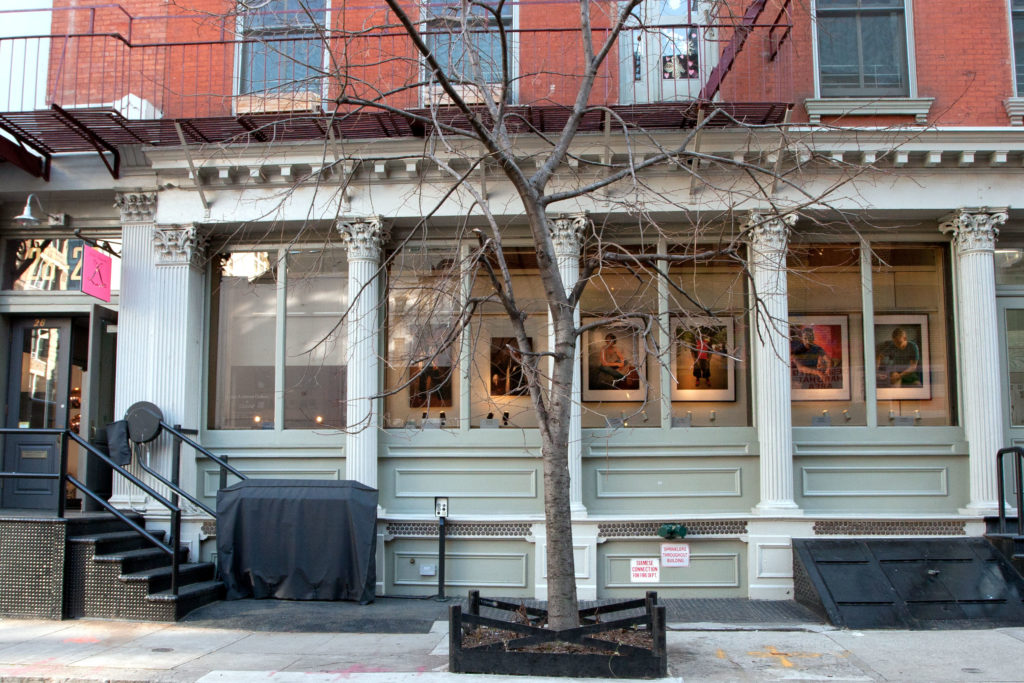
The Leslie-Lohman Museum of Gay and
Lesbian Art. Courtesy of Mon Iker.
How do you start a new job as a director when your museum is
closed and you can’t meet any of your staff in person?
I’ve been trying to think about
what I would do if we weren’t in lockdown and translating that into
this new reality, like writing emails introducing myself to all the
stakeholders. After this conversation, I have my first all-staff
meeting on Google Hangouts. It’s not a huge team: 14 people, plus a
handful of teaching artists.
Many museum directors are asked in interviews about their
plans for their first 100 days—but this isn’t a typical first 100
days. What are your priorities right now?
I’ve been trying to wrap my arms
around the finances, to work with the programming and curatorial
teams on what our goals might be, what our exhibition schedule
might look like—to invent a reality of future potential and at the
same time think about what we can do programmatically right
now.
Any transition of leadership
creates a lot of insecurity. Now, we have doubled down on that
feeling of insecurity on every single front—spiritual, physical,
financial—and people need some reassurance.
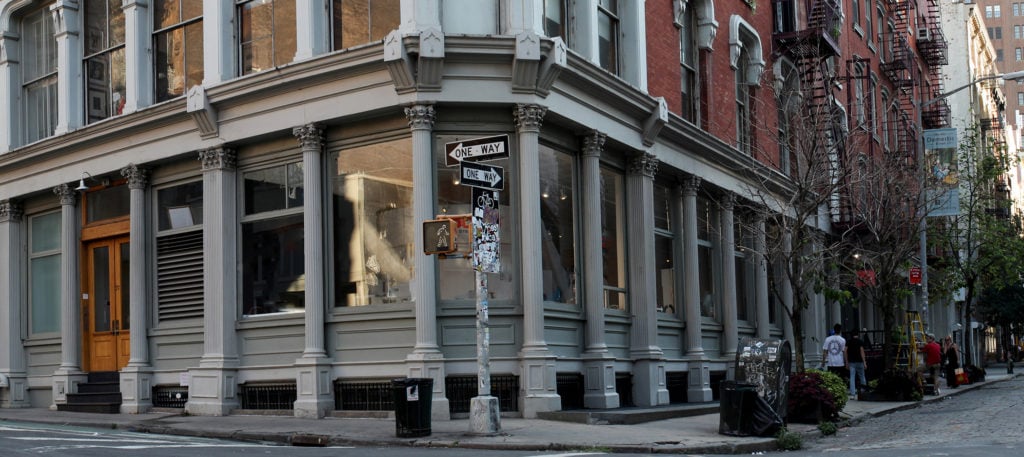
The Leslie-Lohman Museum of Art.
Courtesy of Mon Iker.
How do you give that reassurance at a time when so many
museums are making layoffs and furloughing staff and facing serious
budget shortfalls?
I don’t know what kind of
difficult decisions we might need to make. But I think it’s
important to convey that whatever they might be, they will be made
with thoughtfulness and care. They need to come from that place of
deciding you are going to prioritize caring for people, because
cultural institutions are not their buildings and collections, they
are their people—from the people engaging with folks who come
through the door to the folks who are writing the
checks.
What projects are you able to actually start working
on?
The museum is launching a new
website soon—at the end of April, beginning of May—which is
something that was already in the works before all this started.
Our program director has a big focus on where queer art and access
intersect, and disability activism is something I’m really
interested in right now. When we’re talking about digital space,
we’re really talking about public space—but that public space is
largely controlled by major corporations.
So how does a museum—and a closed museum, no less—start to
even think about addressing a problem like that, which is so
structural and so big?
We need to be working on a
number of different registers simultaneously. What’s funny is
talking to you now is fun because, being a glass-half-full kind of
gal, everything is full of potential.
I initially started thinking
about this project that artist Shannon Finnegan was working on at
Eyebeam last year about alt text [words that are embedded into HTML
code to describe the appearance and function of an image on a page,
which makes the images accessible to those with vision
impairments]. We could have Shannon do a workshop with us about how
to have beautiful alt text on our site. And then I thought, maybe
we should make it public, because a lot of people are taking this
time to update their websites, and maybe we can collaborate with
other organizations.
On another register, we also
started thinking about physical mail. I’m sure every institution is
talking about this, too, because everyone knows about the deep and
beautiful history of mail art. A friend recently posted something
on Instagram asking for people to send their snail-mail addresses,
and it was so delightful to get her note. Sure, we could email, but
to get this physical thing that she had touched—maybe there’s
something a little transgressive about that right now because we
are also afraid of touch. We’re trying to be thoughtful about the
different registers that might spark people’s
imaginations.
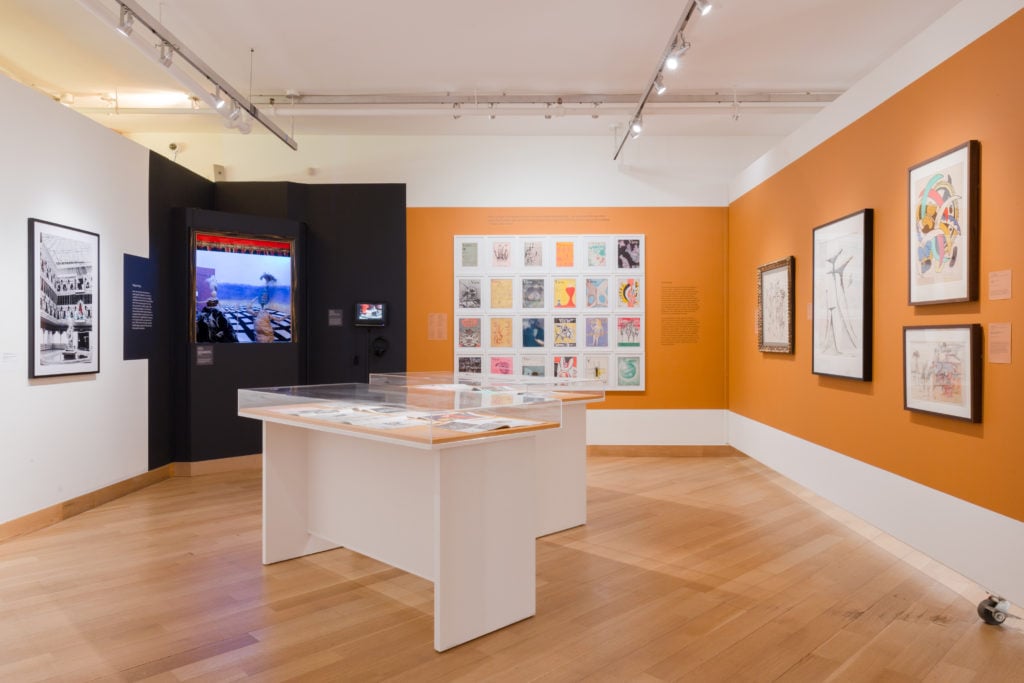
The Leslie-Lohman Museum’s most recent
exhibition, “Other Points of View.” Photography: ©️ Kristine Eudey,
2020. Courtesy of the Leslie-Lohman Museum
I think this moment has really revealed the precariousness of the museum sector. I know I
would feel existentially threatened if I missed three paychecks,
but before all this, I would have liked to think that museums were
more responsible with their money than I am.
We have a real problem in the
United States because we don’t have robust public support for
cultural space. I think we need to have a discussion at some point
about what culture means in the US and what various publics desire
from cultural space.
There are different realities
for museums that receive a huge amount of visitors from the public.
After 9/11, when I was working at the Guggenheim, part of the
crisis was due to the fact that we relied so much on the gate for
our revenue—and all of a sudden, international visitors went to
nil. The Leslie-Lohman Museum takes a voluntary, almost tip-jar
approach, so we don’t have that instability, although our budget is
a lot smaller. We have other concerns. Institutions like Dia and
Leslie-Lohman have bequests of property that yield income and the
fall in potential rental income would affect us more than
gate.
The biggest question in my mind
is how much philanthropy is going to step up. Also, one of the most
important pieces to come out of the federal CARES Act is the
Payroll Protection Program. We have applied for that, and I know
many other institutions have, too.
There has been a lot of discussion about how museums are
making the decision about who to furlough and lay off, and who to
keep. As a museum director, how do you even go about making those
calls?
That is something anyone in a
leadership position is really struggling with right now. And my
heart goes out to institutions that have had to make commitments to
major furloughs and layoffs. But I also feel like we need to be
more creative about how we sustain the people upon whom we rely for
the inventiveness, beauty, and connectedness of our
institutions.
You know, sometimes your Twitter
feed makes meaning, and recently, I saw the announcement that MoMA
was cancelling contracts of its
educators, and the next tweet was from the Queens Museum that
they were going to start doing family workshops online. Of course,
different institutions have different priorities and capacities.
But if ever there was a time to recalibrate and radically reimagine
so many things about our world, and particularly the cultural
sector, it is now.
How do you think the museum sector will change in a
post-lockdown era?
There are two spaces that I
think will shift. One is around collaboration, and a spirit of
generosity that I think we need to bring to our work. How can
like-minded organizations leverage our close funding contacts to
advocate for one another as a consortium? We might go to a large
funder like the Ford Foundation and make the case for all of us
being important.
The other piece is slowing down.
We have been on this race to overproduce: content, programming. I
think we are producing too much. It needs to be done more
thoughtfully. Maybe it’s all my time working at Dia, but I think we
move too fast in changing exhibitions. Before this current crisis
hit, I was feeling like there was no way that I could get to even a
tiny percentage of the art stuff that was happening—and I love it
all. Let’s try to achieve a little more balance.
The post How Do You Start a New Job as a Museum Director
When Your Institution Is Closed Indefinitely? Just Ask Laura
Raicovich of the Leslie-Lohman Museum appeared first on artnet
News.
Read more https://news.artnet.com/art-world/laura-raicovich-leslie-lohman-interview-1829187
Further reading


Leave a comment