
Mega-Galleries Aren’t the Only Ones Supporting Pandemic Relief Efforts. Here’s How Dealers With a Lot More to Lose Are Giving Back
Like most independently owned businesses, art galleries are
grappling with the fallout from the global pandemic, the canceled
exhibitions and indefinite closures wreaking havoc on their
finances and that of their artists. Nevertheless, many galleries
are adapting to the times with initiatives intended to
simultaneously keep their own businesses afloat and aid those in
most urgent need of support during the crisis.
One of the main ways galleries are stepping up is by donating a
percentage of their sales to charity. Galerie Lelong, for example,
is giving 10 percent of the proceeds from its recently launched
online group show “Red” to Heart to Heart
International, an organization that aims to improve health
access worldwide, particularly to communities impacted by
crises.
The initiative was modeled off of past philanthropic
undertakings at the gallery. “Many
of the gallery artists’ works reflect a high degree of social
awareness and consciousness,” says director Mary Sabbatino.
“Previously, when the refugee crisis was at a zenith and we made a
booth at Frieze focused on this theme, we donated a portion of the
sales to the International Rescue
Committee.”
For any sales made,
the donation will come
out of the gallery’s portion. “It’s a hard time for all of us and
harder for the artists,” Sabbatino says.
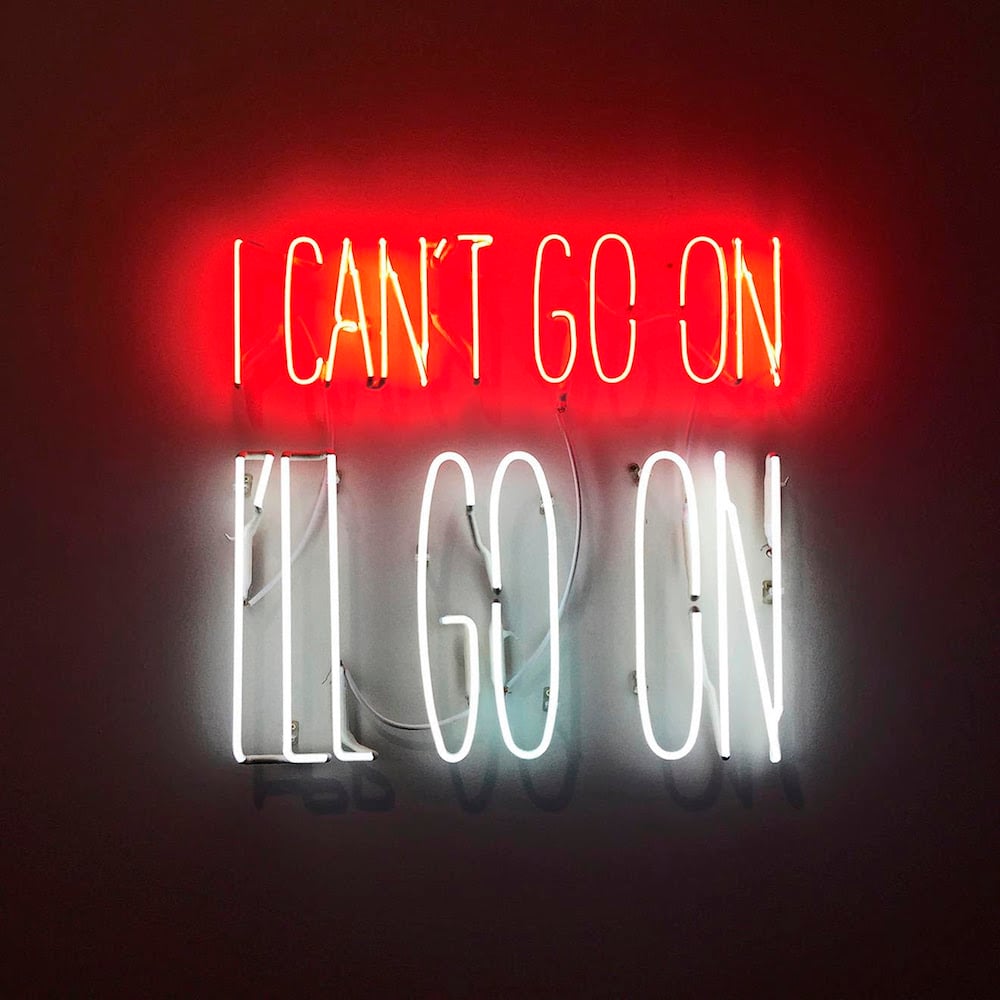
Alfredo Jaar, I Can’t Go On. I’ll Go
On (2016). Image courtesy of the artist and Galerie
Lelong.
The Journal Gallery in
Tribeca has launched a similar initiative, in which it is donating
part of the gallery’s side of sales made over its online platform,
called Tennis Elbow Window, to the Food Bank for New York City,
City Meals on Wheels, and No Kid Hungry.
“We wanted to keep the gallery’s
donation local and New York-focused, benefiting the ones that are
the most affected by the pandemic: the elderly, children from
economically challenged backgrounds, and people in need of food
during this time,” said gallery cofounder Michael Nevin.
“We decided that we were able to
donate 10 percent of our end of the sale while still allowing the
gallery a source of income to continue operations, including
keeping staff,” said cofounder Julia Dippelhofer.
Some artists have chosen to match
the gallery’s donation, or have designated a charity of their
own. Last week, Journal Gallery introduced a new work
by artist Darren Bader, who opted to donate 100 percent of his end
of the sale to the Workers Justice
Project COVID-19 Jornalera Relief Fund.
“If a collector were to want to
match the donation, of course we would be thrilled, but the point
is that we want to donate, we are not trying to tell people what to
do,” Dippelhofer said.
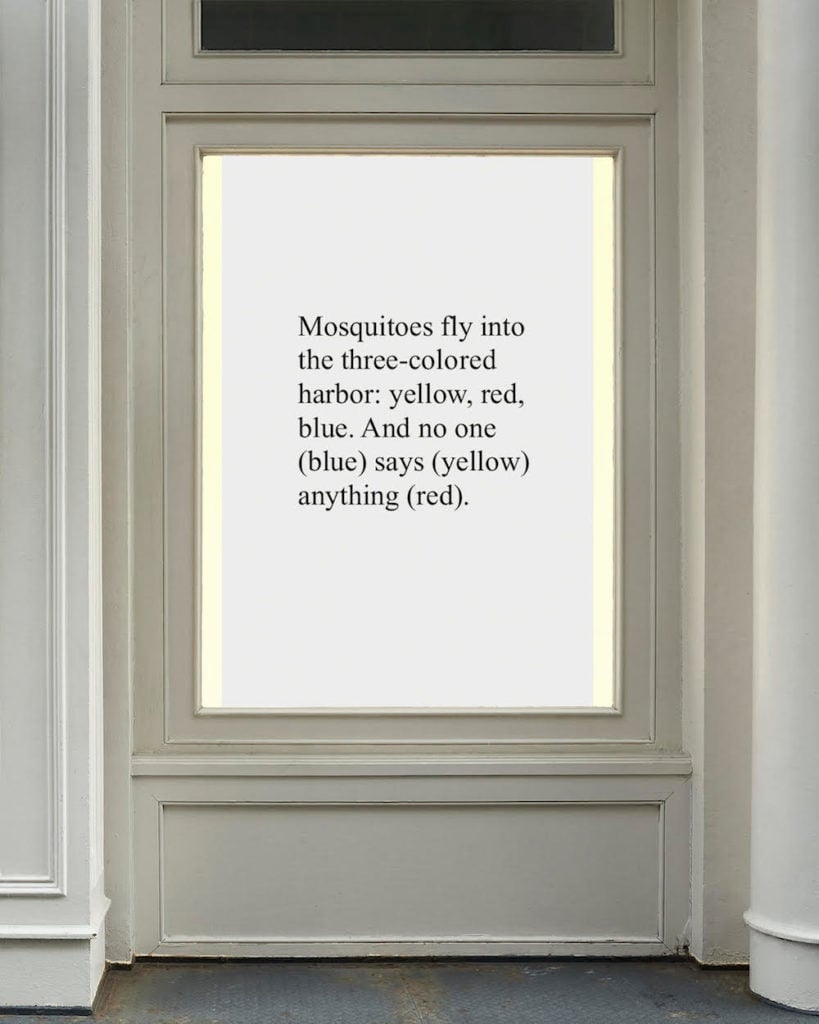
Darren Bader, Mosquitoes fly into the
three-colored harbor: yellow, red, blue. And no one (blue) says
(yellow) anything (red). (2020). Photo by Sarah Guittar. Image
courtesy of the artist and Journal Gallery.
Meanwhile, Gavin Brown’s Enterprise is also donating 10 percent
of sales from its online viewing room to five organizations in the
two cities where it operates, New York and Rome: Comunità di Sant’Egidio, Harlem United,
NYC Health + Hospitals Donation Fund, the Studio Museum Fund, and
UNICEF Italia.
Up-and-coming gallerists are joining the effort as well—and
sometimes giving even more. Tribeca dealer Monica King, a veteran
of both Pace and Kasmin galleries, had only been open under her own
name for less than a year when the pandemic hit. Her “Spring to
Action” initiative on her website will donate 25 percent of a
work’s total proceeds to Feed the Frontlines, an organization
providing meals to hospital workers around New York City (with King
and the artist each giving 12.5 percent).
“I spent quite some time in my
early ‘quarantine days’ deciding which organization was
a good fit,” King told
Artnet News in an email. “I liked that Feed the Frontlines
wasn’t a traditional charity, as they aren’t a 501(c)(3) charity
per se. This isn’t about tax deductions—far from it.”
Instead, King calls the organization “a true grassroots movement started by a local
business owner who was looking to make a heartfelt and direct
difference during an immensely difficult time in
the world.”
As of April 21, the auction had sold 14
works by nine artists. New works and artists are
being added daily to the initiative, which currently features 100
works by 46 artists.
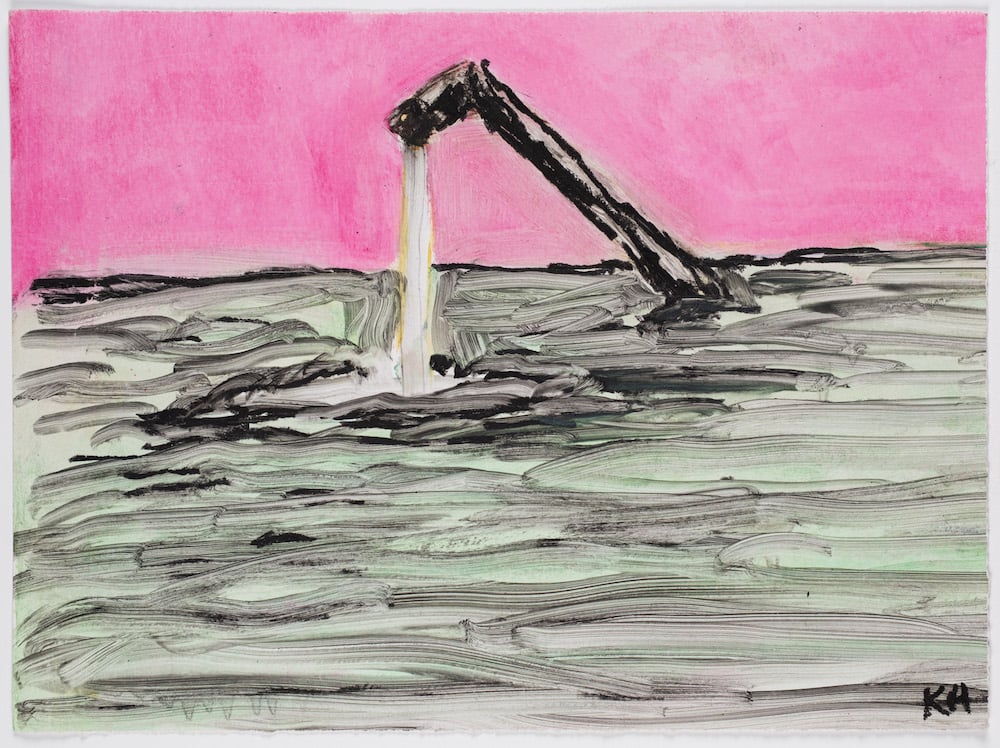
Kathleen Henderson, Outtake Drawing
#156 (2020). Image courtesy of Track 16 Gallery, Los
Angeles.
Los Angeles gallery Track 16 had already been donating 50
percent of the proceeds from artist Kathleen Henderson’s series of
“Outtakes” drawings, priced at $250 each, to the Navajo
Nation to help register voters.
(The artist and the gallery each donate 25 percent of their
share.)
“Now we’re pivoting to
donate 50 percent of these sales to the DigDeep Navajo Water Project to help Navajo communities and local hospitals
confront COVID-19 surges,” says owner Sean Meredith. “The Navajo
Nation is struggling with a high infection
rate, compounded
by a serious lack of access
to clean water. DigDeep is bringing Navajo families clean running
water critical to controlling the spread of the
COVID-19.”
More recently, the gallery added to its donations with a new
initiative under which it donates between 25 percent and 50 percent
of sale proceeds from artist Galia Linn’s works to
the LA Regional Food
Bank.
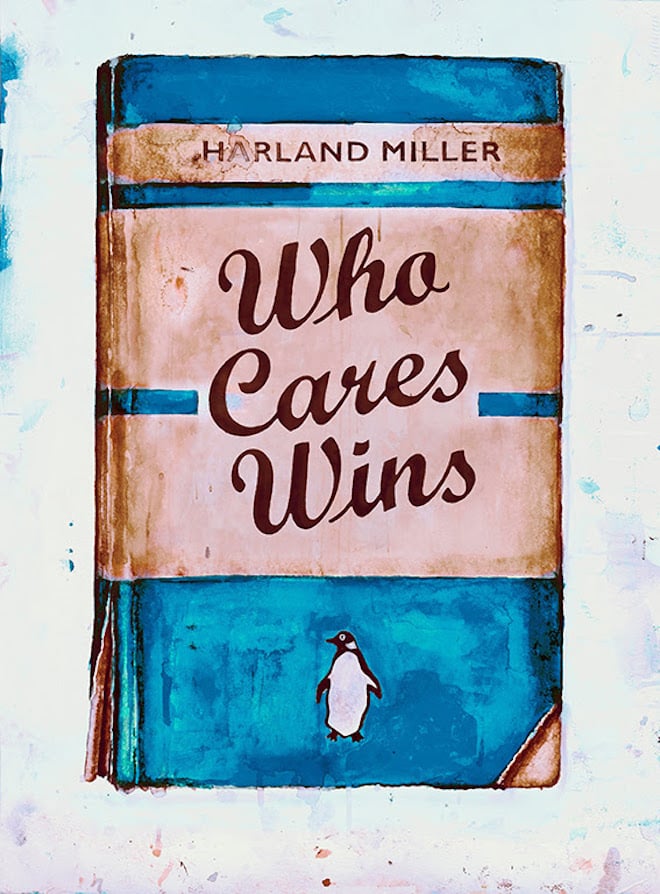
Harland Miller, Who Cares Wins (2020).
Image courtesy the artist and White Cube.
On the pricer end of the spectrum, White Cube and artist Harland
Miller are releasing a special limited-edition signed print,
Who Cares Wins (2020), with the artist’s signature
book-cover art in an effort to raise £1.25 million ($1.6 million)
in support of frontline health workers. The 250 prints will be
priced at £5,000 ($6,200) each.
The gallery will donate the funds to the UK’s
National Emergencies Trust, the New York Community Trust, HandsOn
Hong Kong, as well as the York Teaching Hospital Charity in
Yorkshire, England, “reflecting Miller’s close relationship with
his hometown of York,” according to a statement from the
gallery.
The post Mega-Galleries Aren’t the Only Ones Supporting
Pandemic Relief Efforts. Here’s How Dealers With a Lot More to Lose
Are Giving Back appeared first on artnet News.
Read more https://news.artnet.com/market/galleries-relief-efforts-1839042
Further reading


Leave a comment