
I Founded a Museum to Encourage Slow Looking at Art. Here’s Hoping This Moment Will Encourage All Viewers to Do the Same
When I opened Muzeum Susch in January 2019,
I was convinced that the museum of the future would be more likely
to thrive on the periphery than in the center.
I hoped to create a place where
a dedicated public could engage in a modern pilgrimage. The concept
echoes the monastic history of Susch, Switzerland, which was once
an important rest stop on the ancient pilgrim route to Santiago de
Compostela. From the
very beginnings of planning my institution, I proposed an approach
called “slow art”—the idea that it’s the quality, not quantity,
of art-looking that matters. In 2019, 25,000 visitors took the
time and the effort to join us on this journey.
I strongly believe that no
digital presence can substitute for the actual experience of a
place, especially a place of almost mystical energy like Susch,
where, in the face of its imposing Alpine mountains, our common
sense of time seems to disappear.
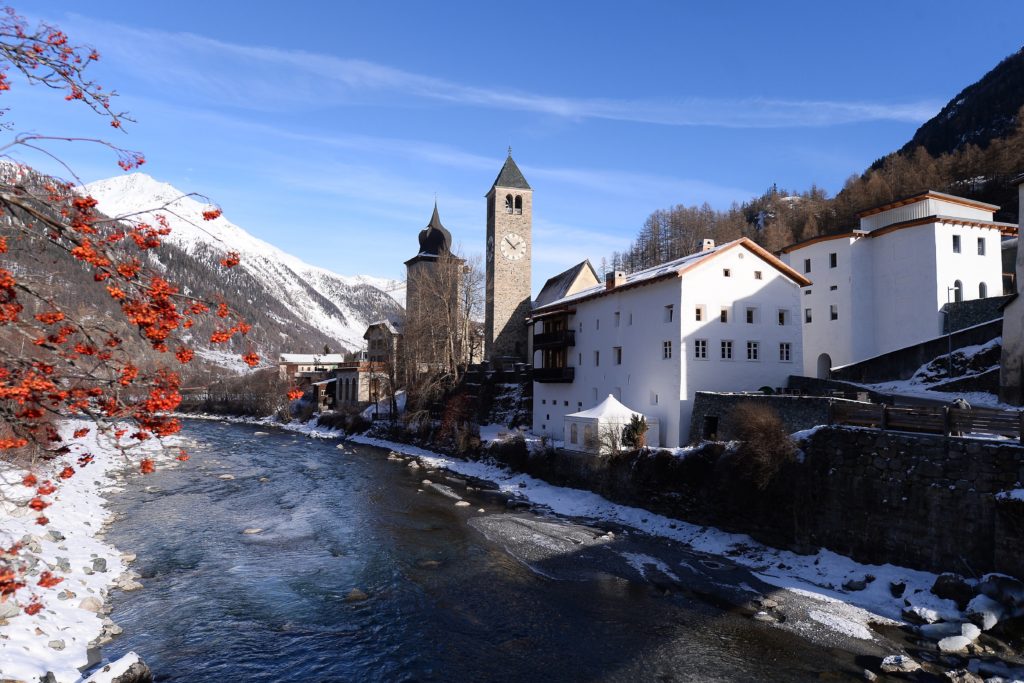
Muzeum Susch. Image courtesy of Muzeum
Susch.
But of course, when I embraced
slow art and opposed the instantaneous and superficial consumption
of art through social media, livestreams, and the subjective eyes
of so-called influencers, I could not see this moment coming.
Museum doors are closed during the lockdown, and solitary digital
experiences and exchanges have become a vital substitute for museum
visits while we are physically barred.
And while we are forced to “exist” online—and I am committed to
offering continued accessibility through virtual solutions—I do not
believe that these alternatives will ever holistically replace the
in-person experience of art.
We don’t know what the art world will look like on the other
side or who will survive. Reports by Comité Professionnel des
Galeries d’Art have shown that a third of galleries in
France are at risk of permanent closure, and the International
Council of Museums has reported that one in ten museums may not
reopen.
But it will always be important to see art in person. The
in-person art experience can manifest in the serendipity of
discovering new artworks and artists—something that is almost
impossible in virtual echo chambers that reflect what we ask to
see, which is often what we already know.
The sustainability of the cultural ecosystem at large is reliant
on the connection among art, ideas, and people. The collapse of
these structures would be an existential threat not only to the
market, but to the whole system. Buying and selling art is a vital
part of the art world, no matter how we judge the intentions of the
sellers and the buyers, and it needs to be sustained.
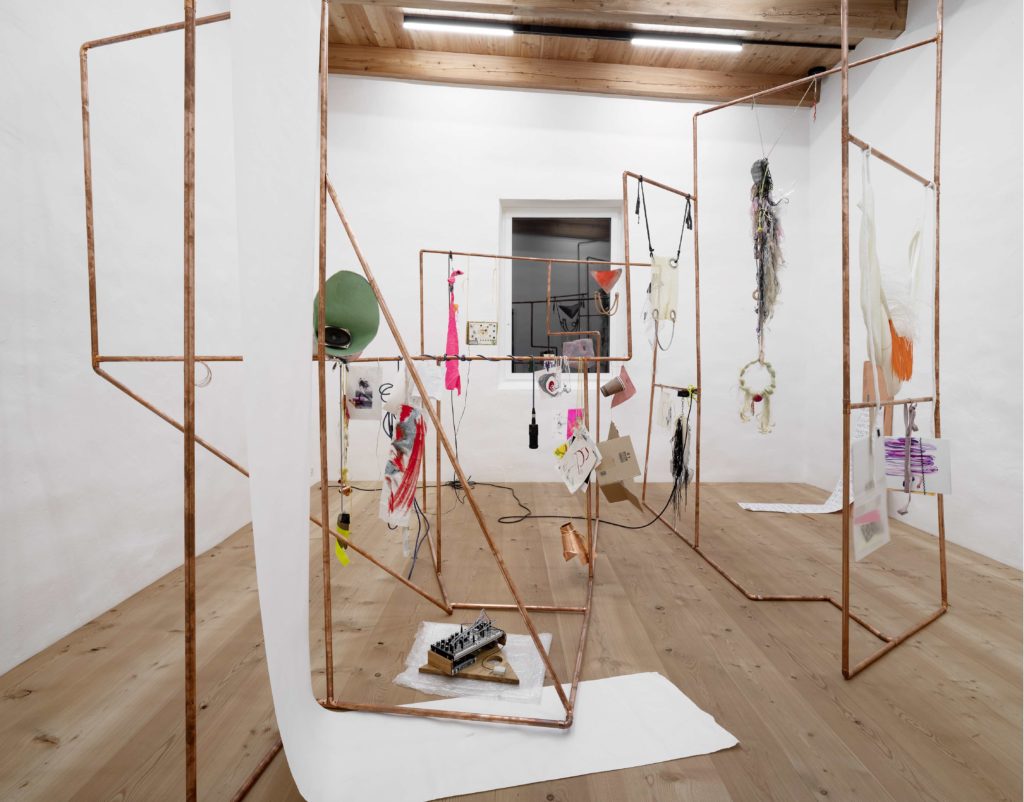
Chicks on Speed, Noise Bodies
(2019), installation view at Muzeum Susch. Photo: Maja Wirkus
All the while, with the sudden slowing down of life that we are
all experiencing, we need to find ways of coping with solitude and
stillness. The Finnish architect Juhani Pallasmaa, who has been
providing thoughtful guidance throughout my work with architecture,
wrote: “A powerful architectural experience silences all external
noise; it focuses our attention on our very existence, and as with
all art, it makes us aware of our fundamental solitude.”
At Muzeum Susch, this concept is expressed through what has
informally been named the “weeping room”: the grotto is a dramatic
space that breaks from the white gallery rooms with water flowing
freely and shares with visitors the mystical energy that first drew
me to Susch. Art in this setting is imbued with new meaning and
context, conditions that ask for stillness, contemplation, and
introspection.
We must listen carefully to artists, whose making is
intrinsically linked to the notion of our fundamental solitude,
while in looking at and talking about art, we create the world as
something we have in common. I have worked to foster such
experiences remotely while acknowledging that simply viewing art on
a screen is not impactful. For instance, our new podcast
series “Stillness & Motion” is bringing together the voices of
visual artists and poets, authors and critics, choreographers and
dancers—all meditating on the notion of stillness as a performative
and a visual gesture. Right now, it seems even more important to
make these voices heard, and to have the artists commissioned to
participate and remunerated for their time.
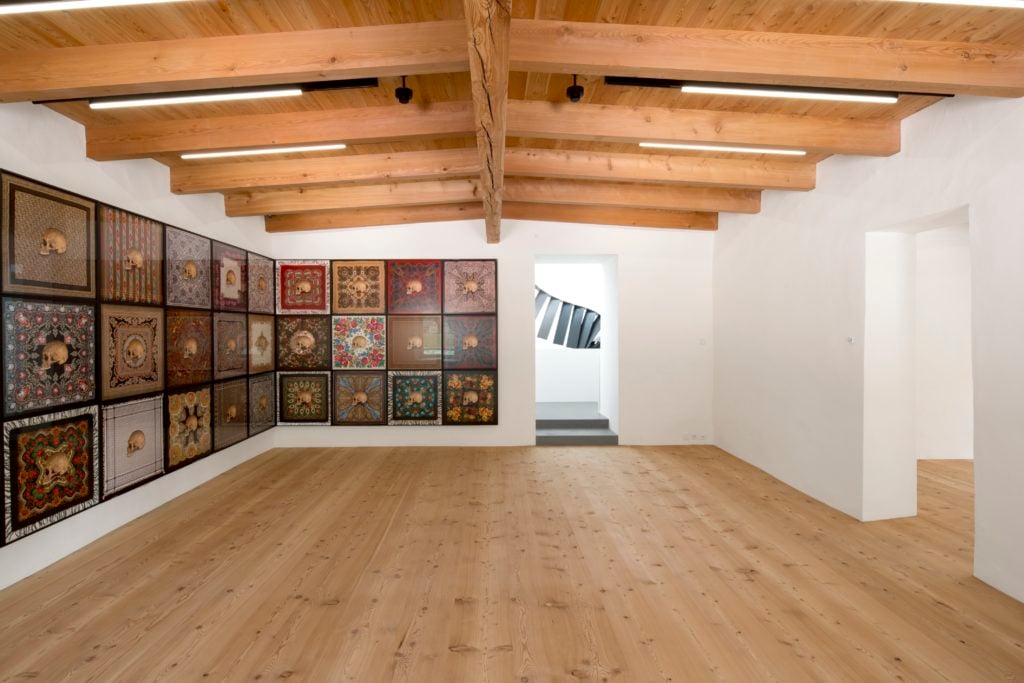
Zofia Kulik, Ethnic Wars. Large
Vanitas Still Life. Courtesy Studio Stefano Graziani, Muzeum
Susch/Art Stations Foundation CH
If there is something we can
take from this crisis, it is a new sense of community that might
help us to sustain the dignity of something as essential as art and
to insist on the essential public function of museums. I also hope
that, when we can eventually return to museums and galleries, we
will have learned from this situation, and will return to art with
a fresh appetite for engagement and new ways of looking, taking the
time to really appreciate what is there in front of us now that we
have known what it is like when art is not so readily available in
all its physical forms.
For years, reports have shown that museum visitors spend between
15 to 30 seconds on a single piece of art. Before the pandemic,
people largely found themselves to be time-poor. My hope is that we
take newly learned coping mechanisms from this time in waiting into
the new reality ahead. Ideally, that means spending more time on
individual works, giving them the time to move us, even if we end
up seeing less overall. There is a poetic reciprocity in this
interaction.
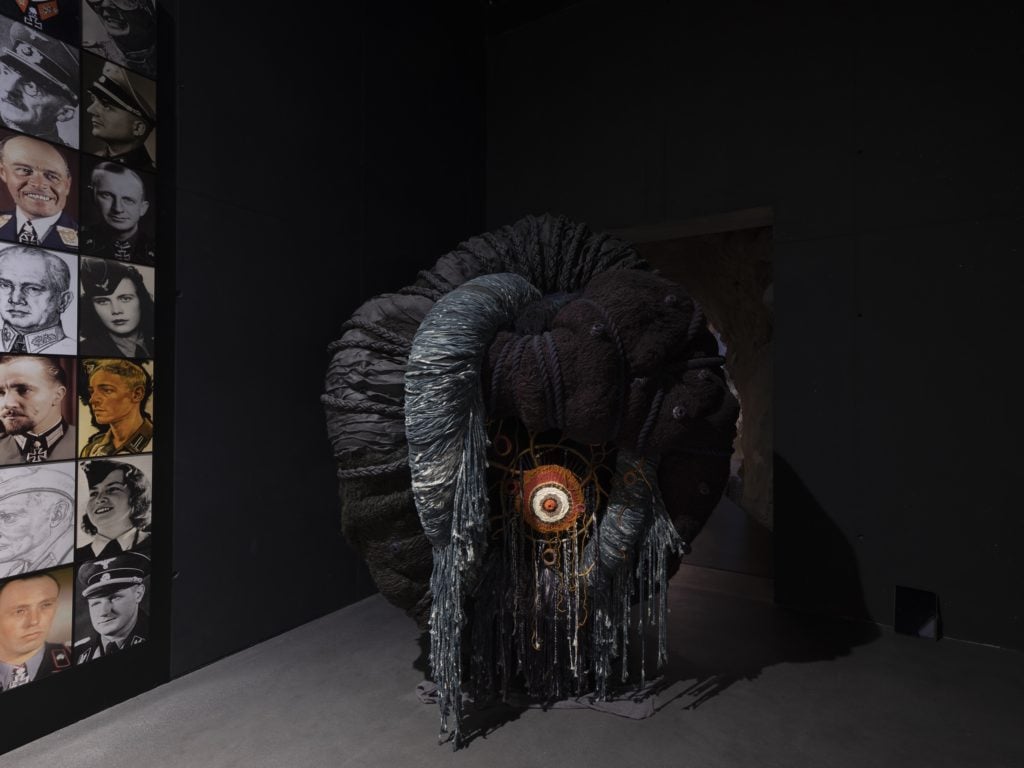
Piotr Uklański Untitled (Story of the
Eye). Courtesy Studio Stefano Graziani, Muzeum Susch/Art
Stations Foundation CH
Thankfully, in Switzerland
museums are to reopen sooner than planned and Muzeum Susch will
open its doors to the public again on May 14, with the
necessary precautions in place of course (increased
social distancing, readily available sanitizer, allotted
visiting times, visitors numbers restricted, and so
on). And we will continue to provide remotely
accessible means to engage with the museum as the rest of the world
begins to leave this period of isolation.
For the time being, from the
unique Alpine scenery of the Engadin, I would like to invite you to
embark with us on imaginary journeys—trips into worlds of sounds,
memories and readings—until we can meet again in the emancipatory
embrace of physical presence.
The post I Founded a Museum to Encourage Slow Looking at
Art. Here’s Hoping This Moment Will Encourage All Viewers to Do the
Same appeared first on artnet News.
Read more https://news.artnet.com/opinion/grazyna-kulczyk-muzeum-susch-recovery-1852734
Further reading


Leave a comment