
‘My Art Is a Superpower That Allows People to Grieve’: Artist Nikkolas Smith on Painting Ahmaud Arbery and Other Victims of Injustice
Like many, artist Nikkolas Smith was horrified
when he first saw the footage of the killing of Ahmaud Arbery, the
25-year-old black man who was gunned down by two white men while
jogging in his Georgia neighborhood on February 23.
But more than just echoing the outraged calls for justice, Smith
turned to his art, creating a moving tribute to Arbery and sharing
it on social media.
“Today I will not draw joy,” he wrote in the Instagram caption accompanying the raw,
sketchy portrait of Arbery wearing a black suit and bow-tie. “Today
I draw Pain. Today I sketch Injustice.” Over the past five days,
the image has amassed nearly 64,000 likes.
The Los Angeles artist has a knack for responding to major
cultural moments, and for addressing issues of social justice,
particularly racial disparities, through his art.
On Thursday, following the widespread dissemination of video
footage of Arbery’s death and the subsequent public outcry, Travis
McMichael, 34, and his father, Gregory McMichael, 64, were charged
with murder and aggravated assault. The two men claimed they armed
themselves and chased down Arbery because they believed he was a
burglary suspect.
We spoke with Smith over email about his work and its
relationship to activism.
"background:#FFF; border:0; border-radius:3px; box-shadow:0 0 1px 0 rgba(0,0,0,0.5),0 1px 10px 0 rgba(0,0,0,0.15); margin: 1px; max-width:500px; min-width:326px; padding:0; width:99.375%; width:-webkit-calc(100% - 2px); width:calc(100% - 2px);">
View this post on Instagram
How do you feel about the strong response you received
for your portrait of Arbery?
The response to my Ahmaud art has been overwhelming and
humbling. It has become the most viral art piece I’ve posted to
Instagram. I’ve received so many messages that say that I’ve
painted what people are unable to say, and that my art is a
superpower that allows people to process and grieve during highly
emotional moments of injustice.
While I wish I didn’t have to create so many artivist pieces
related to death, it makes me feel empowered that my art can be a
therapeutic tool for so many people—it causes people to think and
talk about issues that are often very uncomfortable to deal
with.
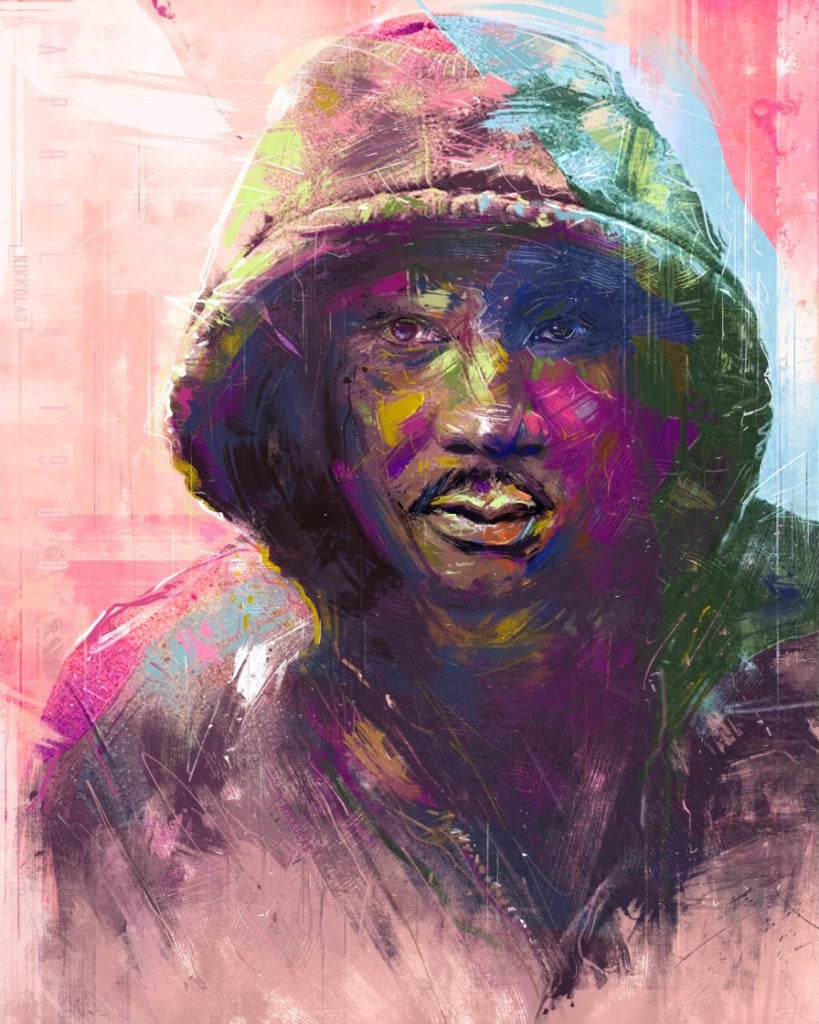
Nikkolas Smith depicts Martin Luther
King Jr. in a hoodie as a tribute to Trayvon Martin. Courtesy of
Nikkolas Smith.
How did you first come to hear of Arbery’s death and
what motivated you to create the piece and depict him as you
did?
I first saw the unthinkable murder of Ahmaud when it was posted
[on Twitter] by Shaun King
[a writer and civil rights activist]. For a day or two, I couldn’t
bring myself to create anything related to this tragedy, but the
more time passed, the more hurt and sadness I felt, along with many
people in the black community and around the world. When these
unjust murders occur, the pain I feel will often motivate me to
create a visual response.
What is your artistic process like and what tools and
materials do you use?
My style of art is what I would call unfinished, painterly,
semi-abstract, and expressive. I mainly create digital paintings in
Photoshop, using my Wacom Intuos tablet. I give myself anywhere
from 30 minutes to three hours every Sunday and just speed paint
what I’m feeling.
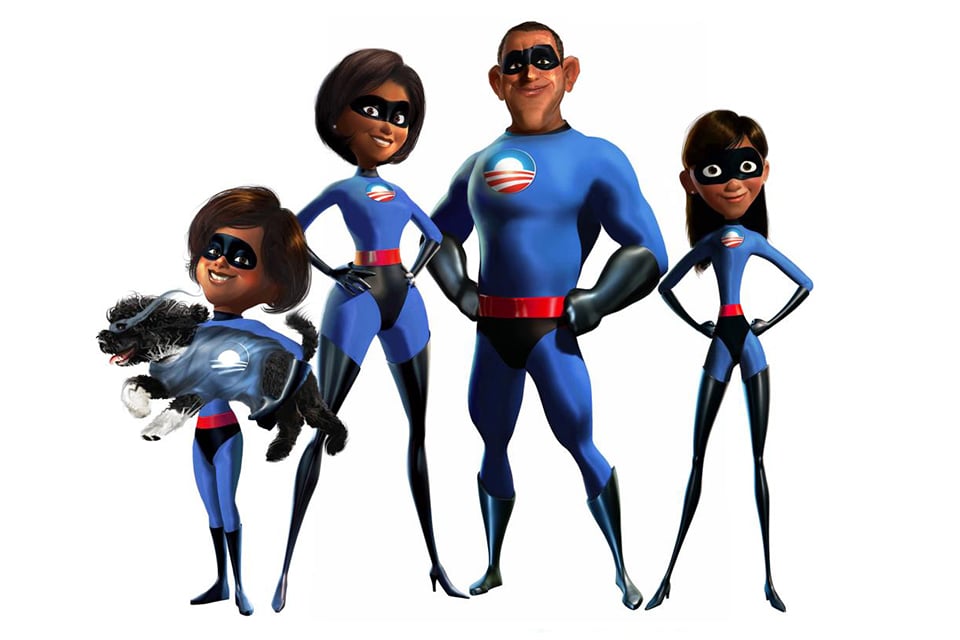
Nikkolas Smith depicted the Obamas as
the superhero family from Pixar’s The Incredibles.
Courtesy of Nikkolas Smith.
Do you normally make several drafts before finalizing a
composition?
Nope. I just jump into speed painting with a sort of
addition-subtraction method of adding paint strokes, and continue
to refine as I go along, oftentimes using just one single layer in
Photoshop.
When did you first realize that art could be a tool for
activism?
About seven years ago, I created an art piece of Martin Luther
King Jr. in a hoodie, in response to the unjust murder of Trayvon
Martin. It quickly became the most viral piece I had ever created
at the time, and the next day I was being interviewed live on CNN,
explaining the meaning of the art and how it was linked to Dr.
King’s ideal of not being judged by your outward appearance. That
was the moment I realized how universally impactful activist art
can be to inspire people to make a positive change in the
world.
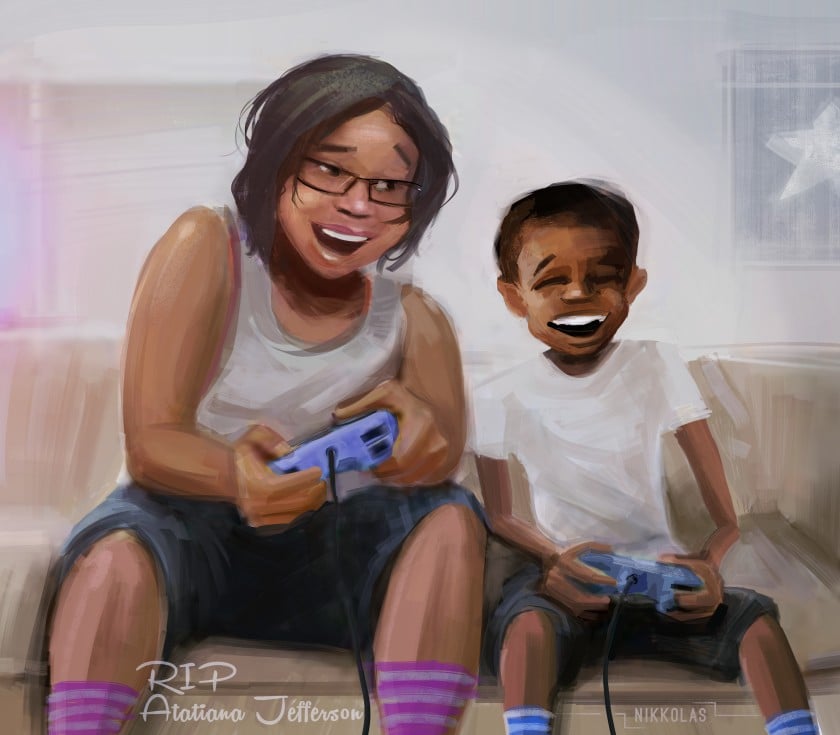
Nikkolas Smith made a painting of
Atatiana Jefferson and her nephew, capturing the moment before she
was killed by police responding to a non-emergency response call at
her home. Courtesy of Nikkolas Smith.
Are there specific moments where you feel like you have
had an important impact through your work?
My most viral art of 2019 was my recreation of Atatiana
Jefferson’s final joyful moment of life, playing video games with
her nephew, before being inexcusably murdered by the police in her
own home. To my surprise, Congressman Marc Veasey blew up the art
to poster size and displayed it on the floor of Congress as he was
passionately advocating for police conduct reform. This was a
moment I never could’ve imagined, that my art would be used in such
a monumental way.
Throughout the years, creating art of a Syrian child in Aleppo,
children in immigration camps, families seeking asylum, or NFL
players kneeling against police brutality, I have been honored to
be a part of helping to raise awareness and funds for issues that I
never thought I would be able to advocate for. It has truly shown
me the power of art to help people see the world through another
human being’s eyes.
The post ‘My Art Is a Superpower That Allows People to
Grieve’: Artist Nikkolas Smith on Painting Ahmaud Arbery and Other
Victims of Injustice appeared first on artnet News.
Read more https://news.artnet.com/art-world/ahmaud-arbery-nikkolas-smith-1859649
Further reading


Leave a comment