
‘We’re Holding Down the Fort’: How Guards, Groundskeepers, and Collections Managers Across the US Are Doing Their Jobs in Shuttered Museums
It’s been roughly two months since museums across the US, both
big and small, were forced to abruptly shutter. Most of them had to
do so with only a few days notice, meaning there was little time
to formulate long-term plans—and no expectation that the
shutdown would stretch this long.
Since then, museums have had to adapt, figuring out how to care
for their collections and grounds amid indefinite closures, all
while keeping staffs safe.
We spoke to employees working on site at museums across the
country to get a sense of how they’re doing their work. Here’s what
they told us.
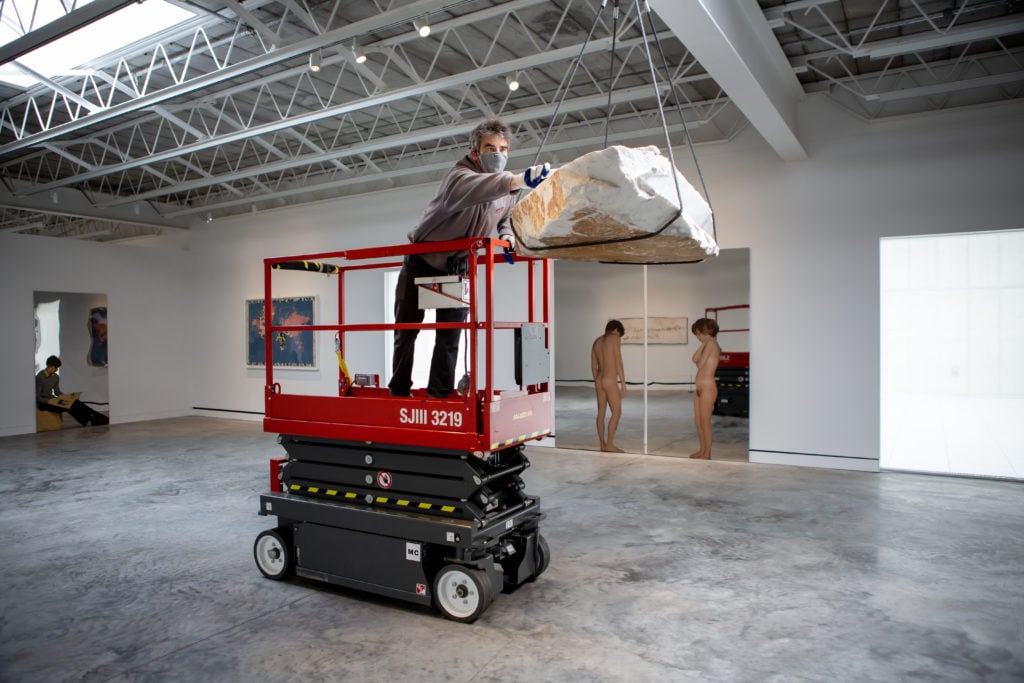
Thomas Huber, head preparator and
facilities Manager at Magazzino Italian Art. Photo by Leslie
Kenney, LK Photography, courtesy Magazzino Italian Art Foundation,
Cold Spring, New York.
The Art
A normal day for Thomas Huber, the head preparator and
facilities manager at the Magazzino Italian Art
Foundation in Cold Spring, New York, begins with prepping
artworks: setting out the flags that make up Giulio Paolini
II’s Cielo e Ditorni (1988) in the museum’s
garden, and checking on the refrigeration system that
sustains Pier Paolo’s ice sculpture, Calzolari Senza
Titolo (Omaggio a Fontana) (1989).
But these are not normal days, and Huber is now spending his
extra time on other tasks. “I decided to take advantage of
this relative downtime to reorganize our storage and preparatory
facilities,” he says. “For the past couple of weeks, it has been
pretty much full time.”
The routine at the country’s biggest institution, New York’s
Metropolitan Museum of Art, is more complex. Carolyn
Riccardelli, an objects conservator at the museum, is one of four
people newly tasked with leading efforts to monitor the Met’s vast
holdings. And while the museum has plans for how to deal
with natural disasters and other direct physical threats to
the collection, it had to quickly draw up new protocols for how to
handle a long-term closure.
“You’re not going to just walk away from your collection for an
unknown period of time,” Riccardelli told Artnet News. “There are
things you have to check on.”
Thirty museums staffers, representing all 17 curatorial
departments and the museum’s separate conservation
departments, now make biweekly visits to the museum in groups
of three, accompanied by Riccardelli or one of her colleagues.
Wearing masks and keeping their distance, the staffers—selected
in large part because of their ability to travel to the museum
without taking public transportation—begin by patrolling special
exhibitions and checking on loan objects.
“It’s about sharing responsibility and keeping an eye on
things,” she says.
The staffers then check on the galleries and storage facilities
for their own departments, monitoring for leaks, pests, and changes
in temperature and humidity levels. The koi pond in the museum’s
Astor Court also needs attention.
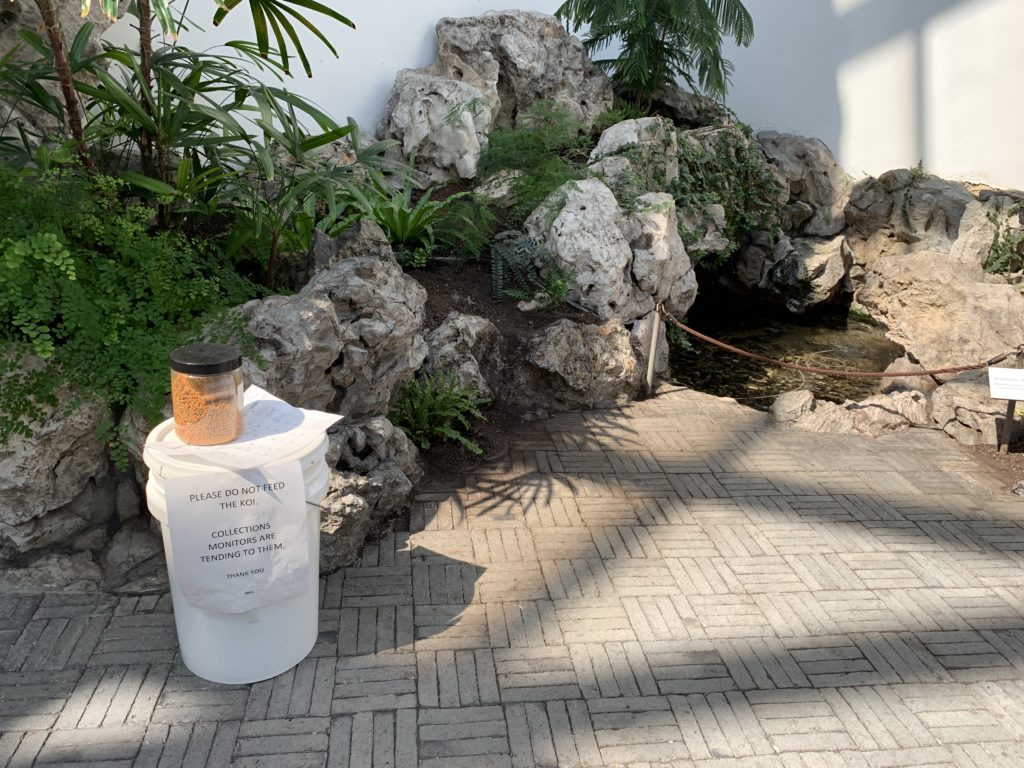
Fish food in the Astor Court koi pond at
New York’s Metropolitan Museum of Art. Photo by Carolyn
Riccardelli.
“There’s a whole water pump system behind the scenes that I’ve
been introduced to,” Riccardelli says. “You have to go in a secret
door and climb up a complicated cat walk. I’ve been at the museum
more than 18 years, and I’m still discovering places that I had no
idea existed.”
There are other tasks as well. “On a weekly basis, we’re warming
up our X-ray machine,” Riccardelli says. “It’s like an old
car—it needs to run from time to time to keep it in working
condition.”
To limit unnecessary light exposure that can damage works of
art, the lights in the museum have been turned off, so the
emergency team has to use flashlights, and is equipped with radios
for communication.
“It’s a strange experience, but we’re kind of used to it by
now,” Riccardelli says.
For solace, she’s turned to Anthony van Dyke’s Saint Rosalie
Interceding for the Plague-stricken of Palermo, which the
museum purchased in 1871. The picture was painted in veneration of
the saint said to have put an end to a deadly epidemic.
“Even though I’m not religious, I’ve been stopping and looking
at her,” she says. “She’s the one who delivered Palermo from the
plague. It’s the perfect painting to look at right now.”
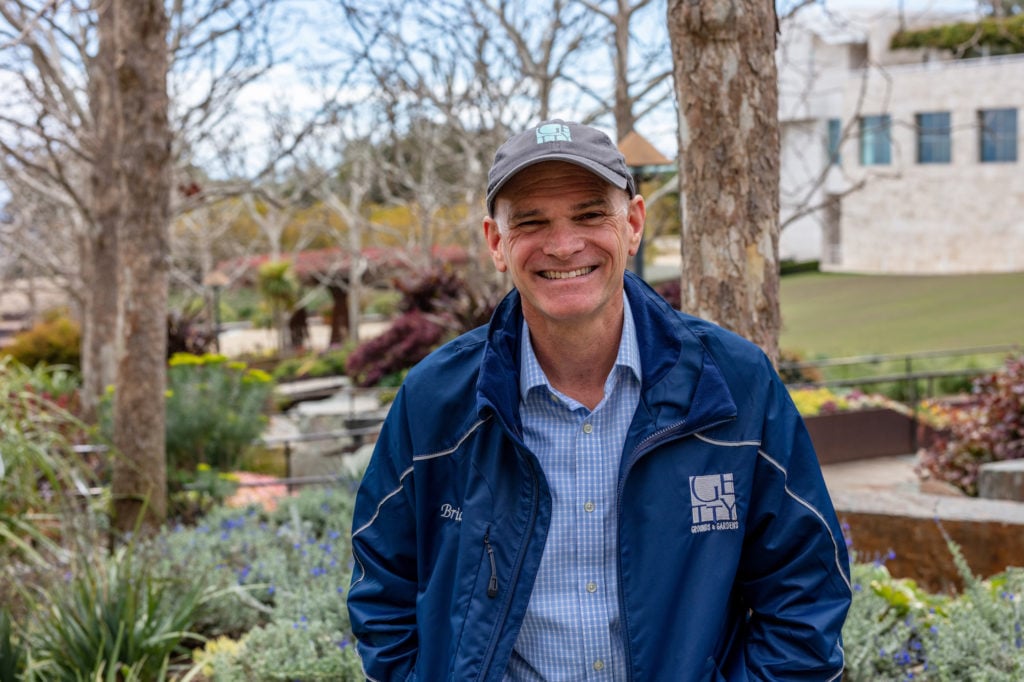
Brian Houck, head of grounds and gardens
at the Getty Center. Photo by Christopher Sprinkle, courtesy of the
Getty Museum.
The Grounds
Uptown at the Met Cloisters, managing
horticulturist Marc Montefusco is now attempting to do
the work of three full-time staff, plus four dedicated volunteers.
And he’s learning as he goes along: his first day on the job
was March 2, just ten days before the museum closed
indefinitely.
“I felt as a newcomer, it was the least I could I do,”
Montefusco says of volunteering to work during the lockdown. “This
is probably the busiest time of year for a garden. If we didn’t
continue working, when it came time to reopen, the tasks would be
overwhelming, and our visitors might be disappointed.”
But no matter what he accomplishes now, the public will
still miss some of the work his colleagues have already done,
including the flowers that have sprouted from 30,000 bulbs planted
last fall.
“They did a wonderful job designing and implementing this
gorgeous display, and no one gets to see it,” Montefusco
laments.
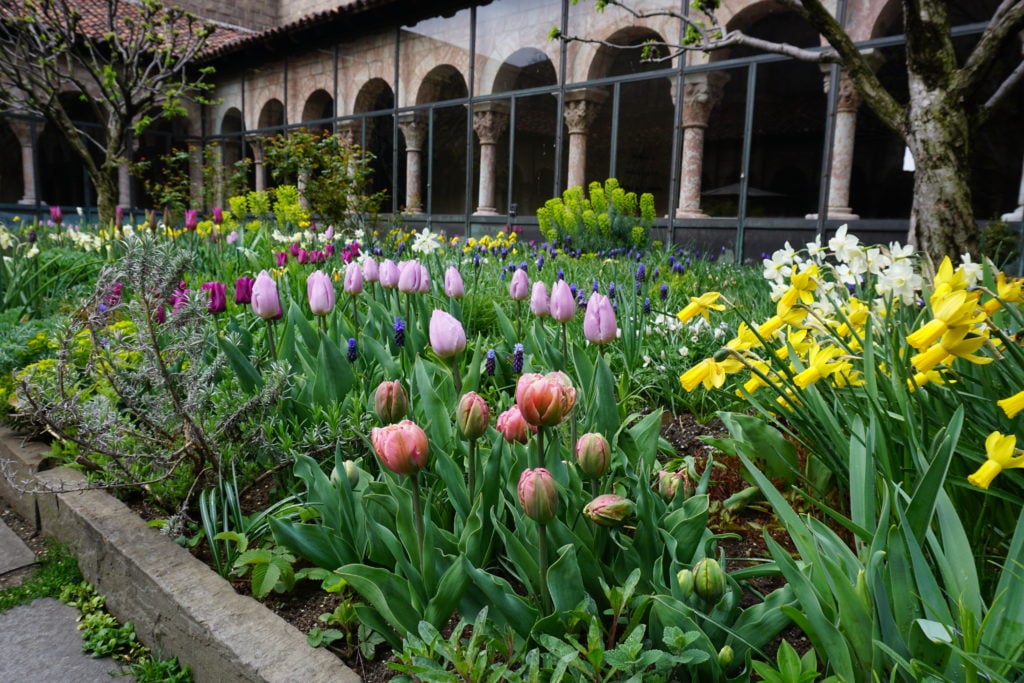
The Met Cloisters during the closure.
Photo courtesy of Marc Montefusco.
The Getty Museum in Los Angeles, meanwhile, has a 50-person
grounds crew that has the run of the place, even as they
wear face masks and gloves and keep six feet apart from one
another.
“The biggest thing is making sure our workers are safe,” says
Brian Houck, the manager of the grounds and gardens. “But nature
doesn’t stop.”
In recent days, the staff has gotten a head start on its
annual fire-management work, which involves surveying 7,000 acres
of land to trim grass and clear brush to prevent the spread of
California’s devastating fires.
His team also protects the museum’s outdoor sculpture
collection, and makes sure the grounds continue to meet strict
landscape standards. “The grounds are the backdrop to the
architecture. Taken together, that’s the Getty’s image—our brand,”
Houck says. “A silver lining is that we have the space to
ourselves to take in that overall aesthetic.”
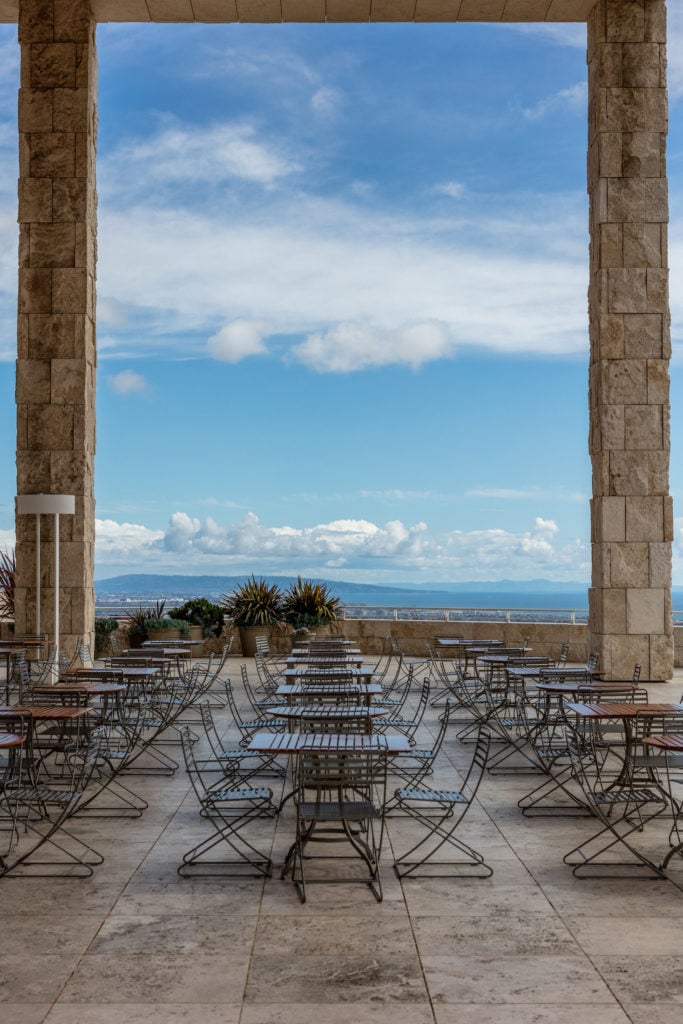
The Getty Center devoid of guests. Photo
by Christopher Sprinkle, courtesy of the Getty Museum.
But the indefinite closure of the museum also meant cancelling
plantings for the annual dahlia show—which Houck admits was a
difficult decision to take.
“Gardeners do a lot of work to get things ready for people to
see and enjoy,” he says. “We look for the smiles on people’s faces.
That was a little heartbreaking.”
But there are happier moments too. At Magazzino, Huber, the
preparator, tries to check on the museum’s Sardinian donkeys once a
day, even though their usual caretakers are still on the job.
“Our shuttle driver, Jay Nicholas, who is also an accomplished
musician, has visited a couple of times and played guitar for the
donkeys,” Huber says.
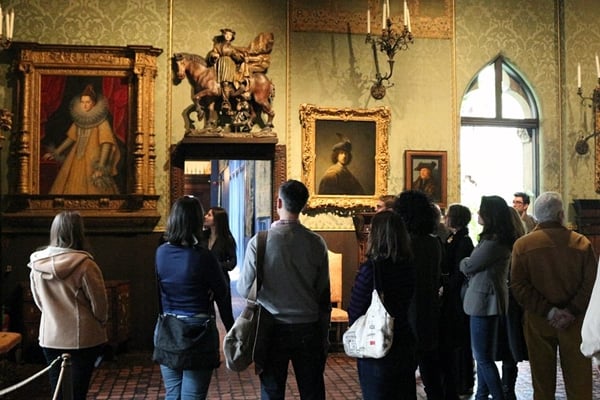
Visitors at the Isabella Stewart Gardner
Museum in Boston. Photo: Isabella Stewart Gardner Museum.
The Security
Before Diane Wright, the the interim director of
curatorial affairs at the Toledo Museum of Art, can even enter
the museum, she has to have her temperature taken. There is
hand sanitizer at every door, making her hyperaware of just how
many surfaces she touches on a daily basis.
“The only people who are there every single day on their regular
schedule are security guards,” she says.
The situation is not dissimilar at the Isabella Stewart
Gardner Museum: if non-security staff want to enter, “it has to be
coordinated in advance and they are under escort,” says Anthony
Amore, the museum’s director of security. “We’re on
lockdown.”
The normal configuration of security posts throughout the
Gardner allows for natural social distancing, and masks are
available. In some ways, Amore’s job is easier now.
“There are a lot of security technologies and practices that are
impractical when we’re open,” he says. “Our role has changed from
watching people interact with our art, to watching our grounds and
perimeter and making sure we’re secure.”
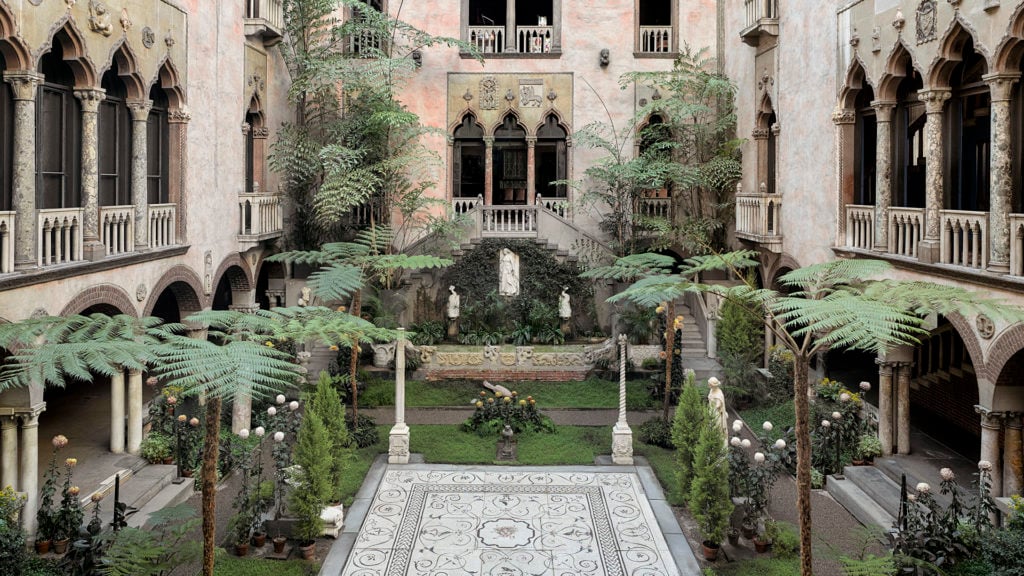
The courtyard at the Isabella Stewart
Gardner Museum, Boston. Photo by Sean Dungan, courtesy of the
Isabella Stewart Gardner Museum, Boston.
And although a couple of institutions have been robbed during
lockdown, Amore sees no cause for concern.
“Security never sleeps. We’re holding down the fort at the
Gardner,” Amore says. “I’m very confident about the security
measures we’ve put into place. Right now, museums are more secure
than when we’re open—a great many art thefts happen in the middle
of the day.”
But nothing can fully replace a bustling museum full of eager
art lovers.
“When I do my walkthroughs of the building, I swear to you the
paintings look different without people there enjoying them,” Amore
says. “There’s a loneliness to the artworks—they seem a little less
vibrant.”
Which is a point Wright agrees on as well.
“There’s something about people walking through the hallways
that brings wonderful life to the building,” she says. “We’re
really eager to be able to have people come back.”
The post ‘We’re Holding Down the Fort’: How Guards,
Groundskeepers, and Collections Managers Across the US Are Doing
Their Jobs in Shuttered Museums appeared first on artnet
News.
Read more https://news.artnet.com/art-world/essential-museum-staff-1853196
Further reading


Leave a comment