
Understanding Why Nobody Made Great Art About the Previous World-Shaking Pandemic + Two Other Illuminating Reads From Around the Web
Each week, countless articles, think pieces, columns,
op-eds, features, and manifestos are published online—and not a few
of them cast new light on the world of art. To help sift through
this barrage of content, I pick out a few each week that might
inspire some larger discussion.
“The Spanish Influenza
Transformed Everyday Life. But Artists Struggled to Visualize Its
Impact” by Aubrey Knox, Art in America
“How Did Artists Respond to
the Spanish flu? Searching for Traces of a Forgotten
Catastrophe” bu Jeremy Eichler, The Boston
Globe
“How Art Movements Tried to Make Sense of the
World in the Wake of the 1918 Flu Pandemic” by Anna Purna
Kambhampaty, Time
“Close Contact” by
Michael Lobel, Artforum
“The 1918 Spanish Flu Wreaked Havoc
on Nearly Every Country on Earth. So Why Didn’t More Artists
Respond to It in Their Work?” by Taylor Dafoe, Artnet
News
In the last month there’s been a volley of writing looking for
the 1918 Spanish flu’s impact on art. All start from the same
enigma: the catastrophic damage wrought by this pandemic of a
century ago, juxtaposed with how very little we are left with in
terms of images or stories that directly reckon with its
horrors.
Michael Lobel’s thoughtful Artforum essay tries to
find traces of the 1918 pandemic by looking at a pair of works
usually read as about the effects of chemical warfare in World
War I, both by John Singer Sargent: Gassed (1918-19)
and the less famous Interior of a Hospital
Tent (1918). He speculates that their depictions of the
wounded drew on the contemporaneous experience of the Spanish flu.
While working as a war artist, Sargent himself was laid up at a
military hospital with influenza, where he recovered alongside both
gassed and sick soldiers. In Interior of a Hospital
Tent, above, the different-color beds in fact indicate
whether the patient was “contagious” or not.

John Singer Sargent, Gassed
(1918-1919). Image via Wikipedia Commons.
Art historian Corinna Kirsch, interviewed by Time,
argues that you probably have to look for the traces of the
pandemic less in specific images, and more in the general tone of
the famous art movements that came in its wake. It’s true, for
instance, that an obsession with hygiene animated modern
architecture. Charles Jencks once remarked on how much the
avant-garde architects of the era were inspired by wanting to
cleanse the “microbes and streptococci” of the filthy 1910s urban
landscape: “The deep metaphor of modernism was that of the
operating theater, the hospital, of a place where the difficulties
of everyday life would be expunged, would be fumigated out.”
Still, even if you read the art of the ’20s as encoding the
Spanish flu as some kind of repressed reference, the question of
why art didn’t directly engage with the fallout of such a scarring
pandemic seems important—both to understand why we have so few
cultural references to anticipate the feeling of living through a
pandemic today, and to try to guess at how our own moment
might be processed.
The Spanish flu unfolded in tandem with the epochal carnage of
the Great War, which crowded it out in historical memory. But, all
told, the 1918-’19 influenza pandemic actually killed 10 million
more people than World War I, and affected a wider part of the
globe, including, as Knox describes in fascinating detail, bringing
disruption and heartbreak to the US homefront. So you’d think its
memory would be more vivid.
Partly, the lack of attention may be due to the well-known news
bias towards spectacular, sudden events. The terrorist attacks of
September 11, which killed close to 3,000 people, triggered huge
reaction, and the museum that commemorates the attack, the
9/11 Memorial Museum in Lower Manhattan, was one of the
most-visited in the United States until lockdown. Meanwhile,
diarrhea, an easily treatable disease, kills close to 2,200
people every day—and inspires no all-out Global War on
Diarrhea, no museum.

Peter Bruegel the Elder, The Triumph
of Death (ca. 1562). Image via Wikimedia Commons.
The Black Plague brings many, many more images quickly to mind
than the Spanish influenza. But these are ciphered through
religious imagery, which helped turn a senseless affliction into a
Divine Judgement, giving pestilence the face of a Horseman of the
Apocalypse, and so fit disease into a meaningful framework. That
makes me think that secular societies, cut free from a sense of a
divine plan and allegorical thinking by 19th-century science, have
a harder time making art about disease. In a world defined only by
human events, a plague is both a senseless alien incursion and
anti-heroic, sucking away your agency.
The AIDS pandemic did inspire much memorable and important art.
But, thinking about this, I realize that probably the most
circulated artworks of the AIDS crisis today are the protest
graphics associated with ACT-UP, targeting either government or an
indifferent public. These essentially invented a narrative for the
plague, rallying a community to fight and naming antagonists. They
made the crisis not just a senselessly unfolding public-health
event but a condition whose meaning was being shaped by the
hostility of powerful people and institutions.
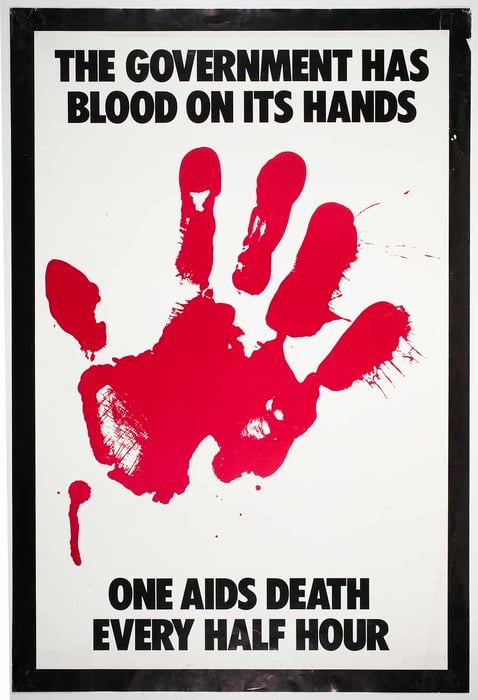
Gran Fury, The Government Has Blood
on Its Hands. Image courtesy International Center of
Photography.
The Spanish flu was a huge part of the horror experienced by
soldiers amid the filthy crush of the front lines of World War I.
Yet it doesn’t figure in the memory of the war much, and perhaps
that’s for the same reason we don’t think too much about friendly
fire as a peril of war: those deaths seem senseless, while
soldiers who fall fighting a foe have the entire force of whatever
heroic narrative is driving the conflict to make the death
meaningful, to turn it into something full of larger social
symbolism.
“The Museum Does Not
Exist” by Dana Kobel, Ssence
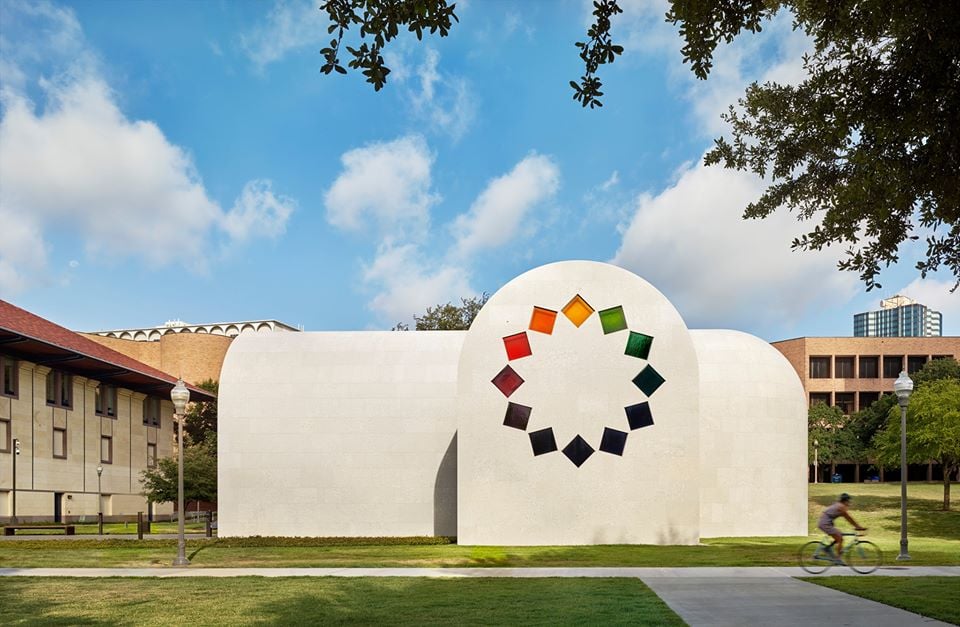
Image of the Blanton Museum in Austin,
which has so far avoiding layoffs. Image courtesy Blanton Museum of
Art.
Kobel was one of the organizers of the New Museum’s union drive.
She was furloughed on April 2 by the New York institution. Here,
she surveys the cascading mass layoffs across the museum world, and
what they say about the deep inequalities that have festered
throughout the system. (As a complement, it’s worth reading Blanton
Museum director Simone J. Wisha’s piece this week for the
Wall Street Journal about how she avoided making such
cruel staff cuts.) In Kobel’s account, I think there’s also the
small hope that the mutual-aid networks that have popped up as
stopgaps among artists might serve as the germ of a better,
alternative art world.
“Letter to Young Artists
During a Global Pandemic” by Paul Chan, 4 Columns
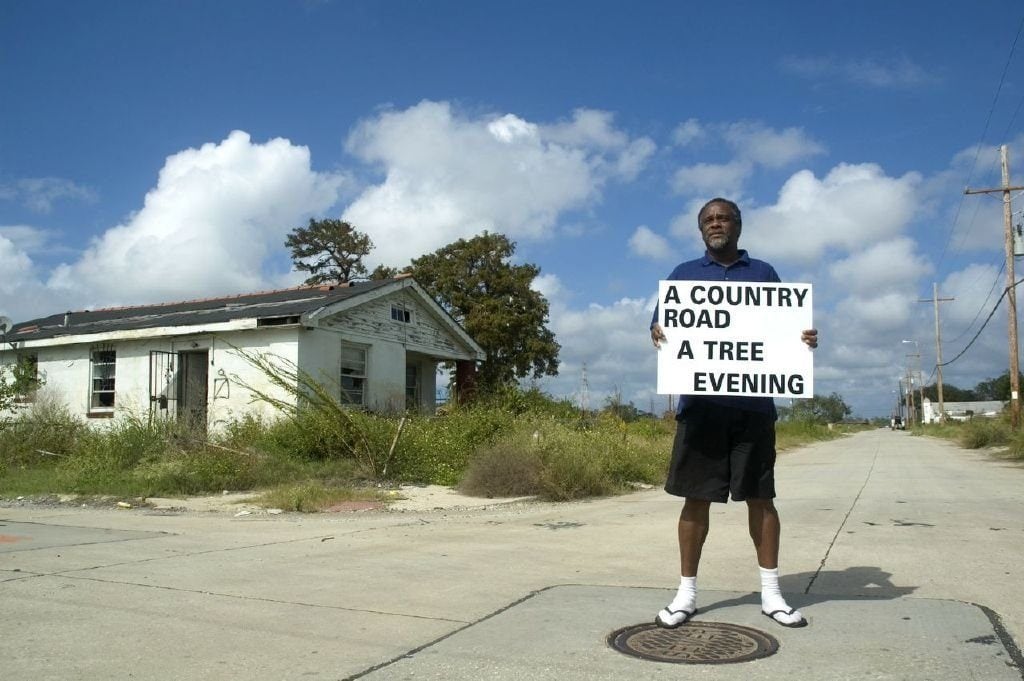
Image from Paul Chan’s Waiting for
Godot in New Orleans in 2007. Image courtesy Creative
Time.
Paul Chan is one of the sharpest artists around, and this talk
he gave to the Hunter College MFA program probably hits me
particularly because it resonates with all that stuff I just
wrote about pandemic and narrative.
Chan famously staged Waiting for
Godot in New Orleans in 2007, with Beckett’s existential play
finding new meaning in the immediate post-Katrina environment.
Here, he recounts the story of a mother stuck on a rooftop during
the flooding of Katrina, her child paralyzed by fear amid the
looming threat. She begins telling him a tale. In Chan’s words:
“The story was an adventure about two heroes, her and him. The
mother recast what was about to engulf them from all sides into an
adventure that they—the heroes—had to endure if they were to win
the day, and survive.” And through this lens, the child can refocus
on reality and fight. Art’s capacities of escapism can also be
tools to help escape a reality that is too-present and
paralyzing—and so to be able to act on it.
“I came to tell you that what is new in art is a reminder of
what is worth renewing in life,” Chan says. “And that what is new
in art, and what is worth renewing in life, may depend on
cultivating an aesthetic sensibility capable of recasting what
troubles us into a plot that is pleasing or interesting enough to
warrant our undivided focus and participation.” Beautiful
thought.
The post Understanding Why Nobody Made Great Art About the
Previous World-Shaking Pandemic + Two Other Illuminating Reads From
Around the Web appeared first on artnet News.
Further reading


Leave a comment