
At Glenstone, We Dramatically Limited Attendance Well Before the Pandemic. Here’s How More Space Changes Our Relationship to Art
Right now, as museums around the
world are beginning to admit visitors after being shuttered by the
pandemic for months on end, the operational playbook is more or
less the same everywhere: online ticketing, staggered entry times,
hand-sanitizer stations, mandatory face coverings, one-way
circulation routes, and reminders to stay at least six feet away
from others. Receptions, tours, and other on-site programming are
suspended for the foreseeable future.
Audiences will, without a doubt,
struggle to adapt to these new rules. Commentators have been quick
to point out the loss in visitor amenities, but not many have
considered what people stand to gain from a pared-down museum visit. Those who have
grown accustomed to bustling lobbies, ticket queues, and
blockbuster exhibitions will return to a much quieter, socially
distanced art-viewing experience. And it is one that will look
strikingly similar (minus the face masks) to an average day at
Glenstone, the institution I founded
with my husband Mitch, and where I serve as
director.
In October 2018, we opened the
Pavilions, a museum building designed by Thomas Phifer and
Partners, to expand upon the exhibition program we had been
presenting at our first building where we had been welcoming
visitors for over a decade. The Pavilions increased our total
indoor exhibition space from 9,000 to 59,000 square feet, on par
with that of The Broad in downtown Los Angeles and the Whitney
Museum of American Art in New York. But while The Broad and the
Whitney each saw around one million visitors in 2019, we hosted
one-tenth of that number in our first year of operation. The fact
that Glenstone is situated in a quiet exurb of Washington, D.C.
only partially explains the magnitude of the disparity. The real
reason is that the experience we have developed for visitors is
slow, quiet, and contemplative by design.

Emily Wei Rales. Photo: Julie
Skarratt.
Since Glenstone’s inception, we
have maintained a distinctive approach to the visitor experience
that is based on the notion that lower crowd density enables
prolonged and meaningful encounters with art. Before we even
started designing the Pavilions, we devised a formula to determine
our optimal visitor capacity by surveying attendance and square
footage figures at various museums. We learned that, on average, an
individual visitor occupied between 10 and 30 square feet of open
space in a gallery. At the same time, we observed that we could
comfortably accommodate up to 30 people in our existing building,
which translates to 300 square feet per person, a number that
would later inform the dimensions of the Pavilions.
The quality of spaciousness
extends to the artwork displays as well. We follow a “less is more”
strategy in our installations, placing a premium on negative space
that acts as a palate cleanser between artworks. Reservations are
required in order to maintain a steady flow of visitors through the
gate. What we have found is that diffuse visitation patterns not
only give our staff a better chance at protecting the safety of the
artworks on display, they also eliminate bottlenecks and lines,
allowing for a calmer experience. Notice that the goal is not to
host fewer
visitors, but rather to maintain a
particular dispersal of visitors spread out over a given area—a
nuance that is especially germane during our current health crisis.
Before COVID-19 forced us to close, we were able to comfortably
accommodate up to 600 visitors per day.
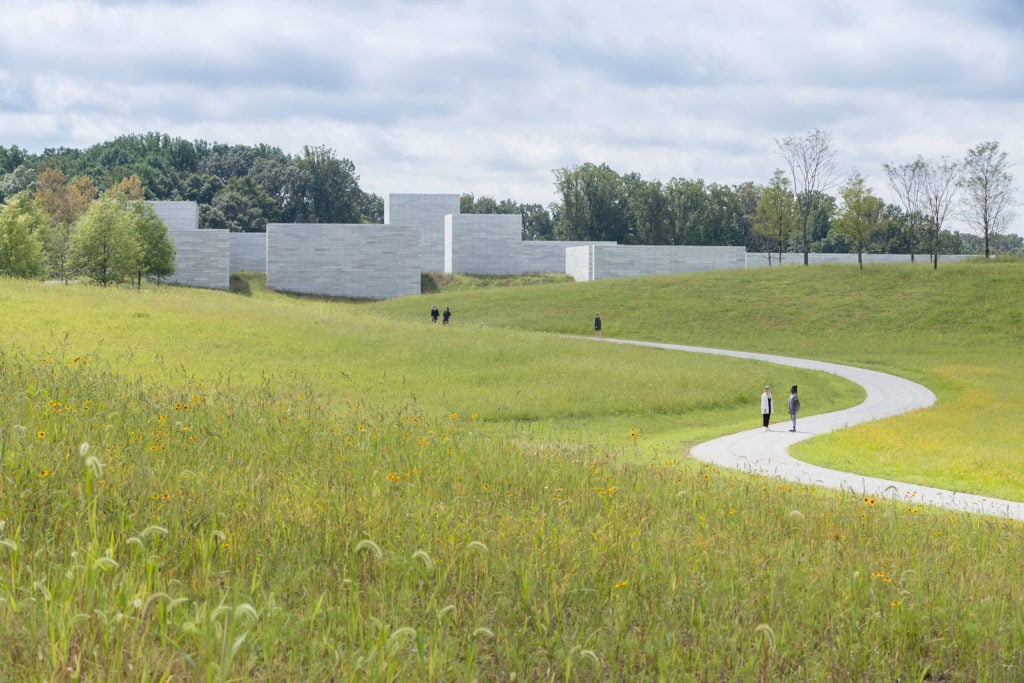
Approach to the Pavilions at Glenstone.
Photo: Iwan Baan, courtesy of the Glenstone Museum.
Fewer crowds change the dynamics
of spectatorship. People are encouraged to linger. It wasn’t until
after we opened our expansion that we were introduced to
Slow
Art by Arden Reed,
who argues that lengthening the duration of an encounter with an
artwork is critical to gaining a deeper appreciation for it,
contrary to the way most visitors see art in museums. According to
Reed, Americans spend on average between six and ten seconds with
individual artworks in galleries and museums, whereas at Glenstone,
it’s common for visitors to gaze at objects for well over half an
hour.
A sampling of comments that
we’ve received testifies to the benefits of this kind of viewing.
Glenstone, one visitor told us, has an “austere, and indeed,
spiritual atmosphere” that imparts an “exhilarating sense of
privacy” and allows for moments of quiet, intense focus. Not having
to battle crowds is “refreshing” and “luxurious, kind of like
seeing art in a private home.”
Whether Glenstone brings to mind
a place of worship or a patron’s private gallery, these reflections
suggest that our approach to visitation does more than deepen a
viewer’s engagement with art. It shapes our relationship with our
audience. They recognize the effort we have invested in creating an
intimate, gracious, and meditative experience, and with that comes
a closer connection with the institution. A high school art teacher
who organized multiple visits for her students wrote,
“Glenstone encourages individual
ownership of the museum experience. The feeling of belonging
increases at every visit.”
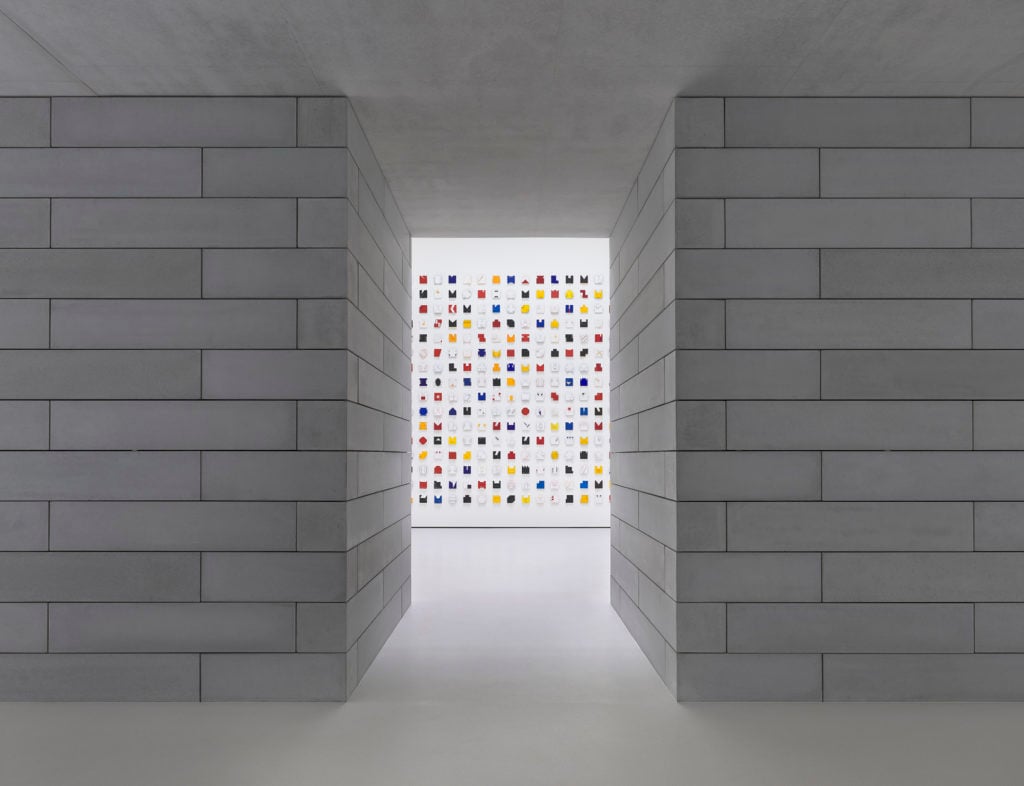
View into Installation of Lygia Pape,
Livro do Tempo I (Book of Time I) (1961). ©Projeto Lygia
Pape. Photo: Ron Amstutz, courtesy Glenstone Museum.
Not everyone prefers the
solitude and slow pace of what I’ve just described. For many, a
museum is a site of communal gathering filled with the pulsing
energy of social activity, a cultural crossroads where ideas
collide. I don’t disagree, but I believe there is room for both
ends of the spectrum, and everything in between, because audiences
deserve a diverse range of art experiences.
However, COVID-19 has
effectively erased well over half of that spectrum in one fell
swoop. It has also rendered useless the number one measure of
success of arts organizations: attendance. And while there is
general consensus among museum directors that attendance is not the
sole metric for success—after all, the majority of institutions
were established to collect and preserve material culture, and to
provide educational programming—it is, as Guggenheim Museum
director Richard Armstrong put it, an “index of
relevance”
in a world where museums compete
with sporting events, musical performances, and other forms of
cultural activity for the attention of the public. Without
exception, museums in the COVID-19 era must find alternative ways
to gauge how well they are serving their
audiences.
This is not a new problem.
Museum leaders have been proposing and applying more thoughtful,
holistic yardsticks for quite some time. Yet the misconception that
museums only measure their worth in attendance figures persists due
to the fact that qualitative, “soft” standards—such as the quality
of the experience or the fulfillment of an educational mandate—are
tricky to substantiate and measure, making them a tough pitch to
trustees and prospective donors.
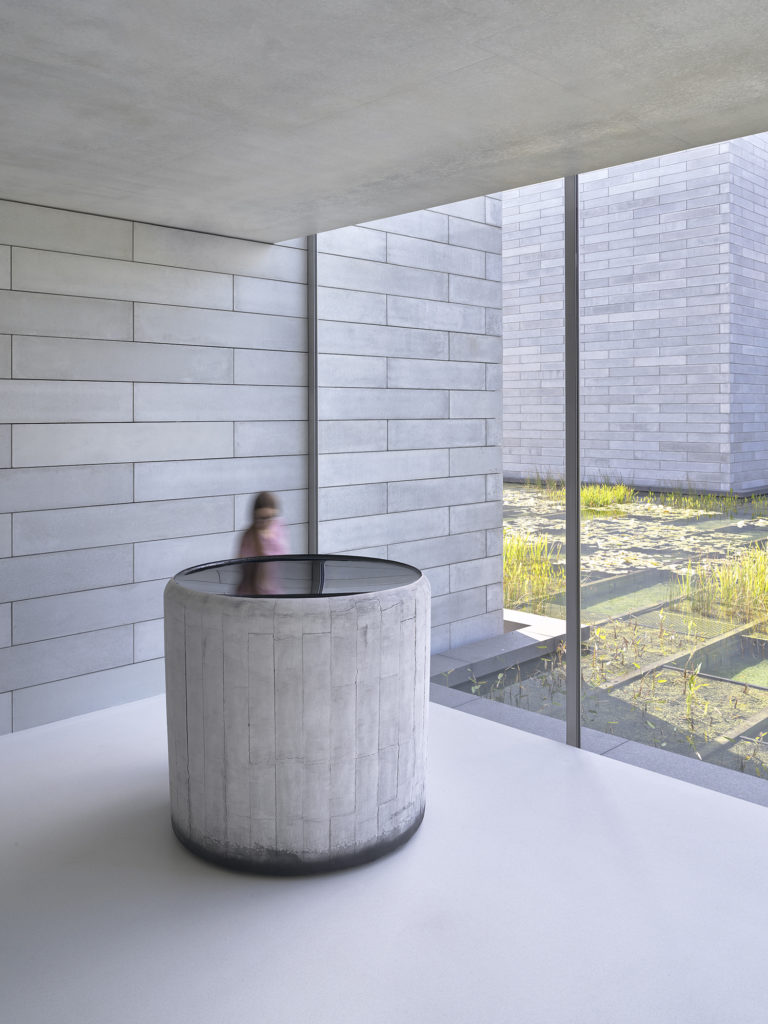
Roni Horn at Glenstone. Photo: Ron
Amstutz, courtesy of Glenstone Museum.
In this regard, social media can
offer a helpful analogue for how to evaluate impact. Social-media
influence can be measured in multiple ways: analysts refer to
“reach” as the number of users who see your content, while
“engagement” is the number of likes, comments, and interactions
those users have with that content. Rather than publicize how many
visitors or “followers” a museum has, now is the time of focus on
the rate of engagement, which tells us more about the degree to
which audiences feel connected to and enriched by their
experience.
As museums begin to tentatively
unlock their doors to the limited number of visitors who venture
out, they will naturally become places of respite from the chaos
and uncertainty so prevalent in these troubled times. And in doing
so, they will satisfy an essential need that is far more profound
than entertainment.
Emily Rales is the co-founder
and director of Glenstone.
The post At Glenstone, We Dramatically Limited Attendance
Well Before the Pandemic. Here’s How More Space Changes Our
Relationship to Art appeared first on artnet News.
Read more https://news.artnet.com/opinion/glenstone-attendance-emily-rales-1869363
Further reading


Leave a comment