
In a Post-COVID World, What Museums Do Outside Their Walls Will Become as Important as What They Put on Them
Museums are catalysts of
culture. They generate new ideas and experiences that influence the
choices we make both as individuals and across society. Yet in many
discussions of museums, what often gets overlooked is their
economic impact. Last year, in the United States alone, the museum
sector—including children’s museums, historic houses, botanic
gardens, planetariums, science centers, zoos, aquariums, as well as
visual arts museums like the Museum of Contemporary Art Chicago
(MCA), which I direct—welcomed more than 850 million visitors
combined.
That this sector attracts 2.5
times the population of the US each year is remarkable in itself.
But the economic impact of museums extends far beyond what happens
inside their buildings. Collectively, according to a 2017 report
from the American Alliance of Museums, these organizations
contribute more than $50 billion to the GDP, generate $12 billion
in tax revenue, and produce over 725,000 jobs—double that of the
professional sports industry. In the wake of COVID-19, the size and
impact of this economic footprint means that the health and
vibrancy of our cities and communities is closely tied to the fate
of museums.
The MCA Chicago, along with most
of the museum sector, closed to visitors in mid-March. Since then,
our work has been driven by three values: to protect the safety and
well-being of our staff and public; to keep our audiences engaged;
and to ensure our organization remains
sustainable.
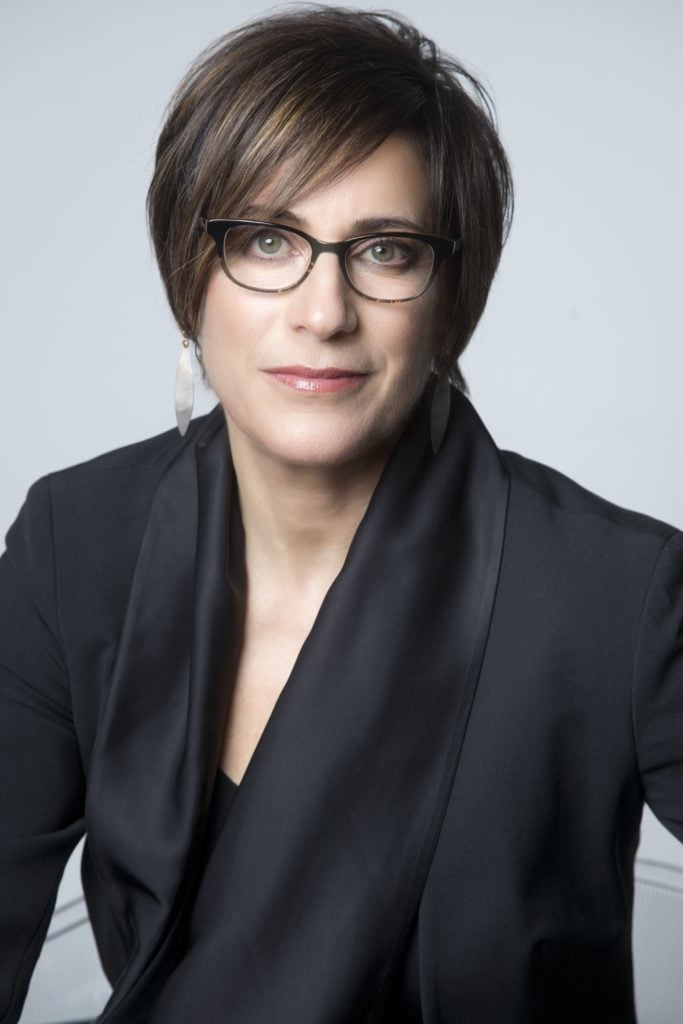
Madeleine Grynsztejn, director of the
MCA Chicago. Photo: Maria Ponce
As we all start to move toward
reopening the economy, these values are embedded in two principles
that I believe are touchstones in our sector’s ongoing response to
the present reality.
The first is a mantra that I
have heard echoed from friends and colleagues across other
organizations: The museum we closed will not be the same as the one
we will open. Not programmatically, not operationally, not
circumstantially. As physical attendance drops for the foreseeable
future, our financial models will completely change, and we will
need to find other sources of income. What’s more, the profile of
our attendees—which in the MCA’s case was 50 percent tourists—will
become hyperlocal and regional. And in an era when museums were
laser-focused on deepening their levels of visitor interaction and
engagement, we must now develop programs and facilities that
deliver the very opposite—a socially distanced
experience.
The second principle comes in
the form of a question that every organization must ask itself: How
will you serve your community? A silver lining of this terrible
crisis is that it has shown us how people can join together.
Because the pandemic can also be used as cover for xenophobia,
racism, and nativism, it is critical that museums find ways to
strengthen the social fabric and to make social belonging a core
value—a task for which art, because of its ability to connect
people across time and place, is uniquely suited.
In the time of COVID-19, I see
four fundamental shifts in how museums meet and lead these
challenges:
1. The Online Museum Is Here to Stay
Many museums have already
established a fulsome virtual platform, building digital
institutions with stand-alone offerings. These digital gains will
expand to become full partners in how our audiences experience our
institutions. Attention paid to the digital museum as an
intentionally welcoming and inclusive space is now paramount for
building community. Digital space breaks down barriers of distance
and mobility—combine this with a welcoming online front door, and
you mitigate the “threshold
fear” experienced by a
large swath of visitors for whom the museum’s location, spatial
design, and entrance sequence create obstacles to access both
physical and psychological.
As for programming, online
audiences are unconstrained by the physical limitations of our
theaters or auditoriums, freeing us to make marquee lectures and
large gatherings a permanent fixture of our virtual spaces while we
focus on more intimate offerings and private contemplation on site.
Generationally speaking, virtual programming for a younger,
technically savvy demographic, as well as an aging culturally
inclined population that might be self-isolating in waves, presents
extraordinary opportunities to bring together communities and
populations that might otherwise never be together in a physical
environment.
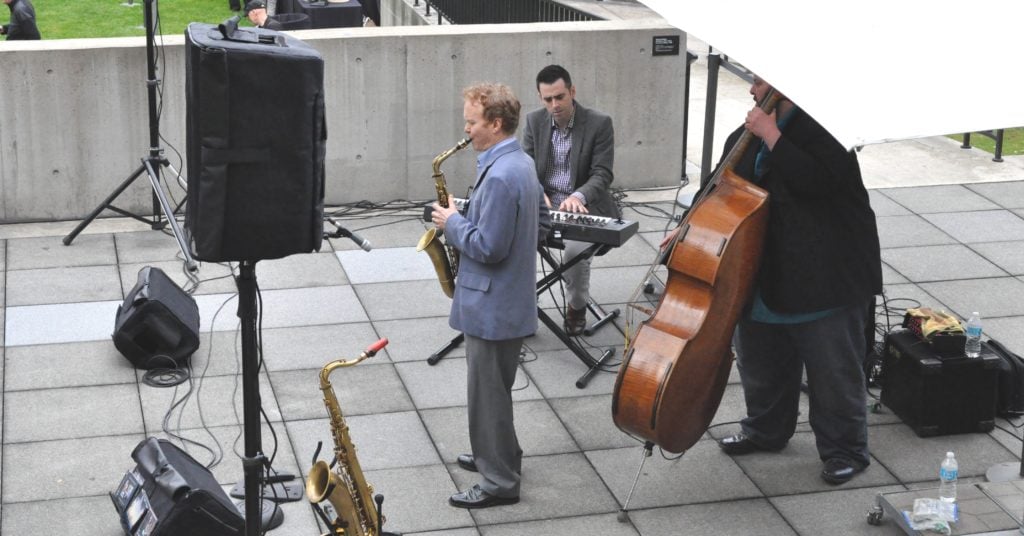
Tuesdays on the Terrace at MCA Chicago.
Photo: Abraham Ritchie
2. Redefining Museums as Gathering Places
Many museums like ours are about
gathering people together to experience art and each other’s
perspectives. Until our confidence in public gathering is restored,
however, we must think about how to gather differently. Safe physical participation does not need to
be limited to online-only convenings or a carefully monitored
museum-sited program. Rather, for the duration that our buildings
and locations are liabilities, we must invert our focus and find
other ways to be more visible, credible, and relevant in our
communities. We must be leaders in art and civic life.
We will create opportunities for
safe and engaging discourse both in and out of the museum, thus
developing a wider outreach and building shared values and
community through the lens of art and culture. In gathering, we
move away from the dynamics of older outreach models where we are
experts instructing a passive public and instead ground our work in
mutually beneficial, collaborative, and committed art and community
partnerships.
At the MCA Chicago, we are also
working on pivoting many of our activities to a dual
on-site/off-site option. For instance, our outdoor Tuesday on the
Terrace program—a summertime fixture offering jazz concerts and
dining options—can now be experienced either at the museum as a
physically distanced in-person event, or from your own terraces and
balconies, where we’ll deliver to you a boxed supper to enjoy with
your nearest and dearest while live-streaming our music.
Building this kind of option makes for a much larger MCA, one that
is available both here and there, simultaneously.
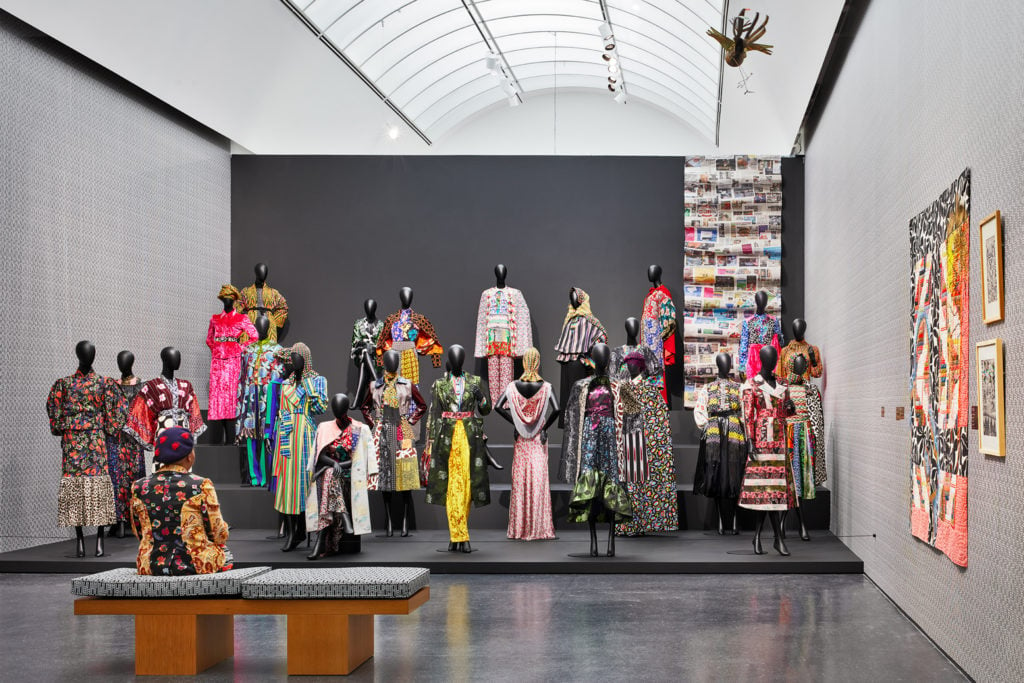
Installation view, Duro Olowu: Seeing
Chicago, 2020. Photo: Kendall McCaugherty.
3. Goodbye Blockbuster, Hello Collection
We love blockbusters for their
transformative art experiences and financial advantages. However,
given the difficulty in gathering a multitude of international
loans, the increased costs of transport and insurance, and the lack
of attendance to justify the investment, such exhibitions are not
going to happen again for a while.
Two benefits will emerge from
this. First, the resources we would normally commit to blockbusters
can now be redirected toward other opportunities that increase the
visibility and importance of the great works of art in our own
collections. Second, the stories that are often displaced by
blockbuster shows, but which are themselves enormously valuable to
our culture and society, will now be given the spotlight. These new
perspectives will strengthen our commitment to emerging artists and
ideas—long a sweet spot for contemporary art museums like the MCA
Chicago.
The recent success of our
exhibition Duro Olowu: Seeing
Chicago—comprising
an exceptional assembly of works drawn from Chicago’s public and
private collections, under the cosmopolitan eye of British-Nigerian
fashion designer Duro Olowu—gives me great hope that our sector can
use the current limitations to see the stories that are already in
front of us. And these stories are no more provincial for being
drawn from local riches, nor any less able to situate audiences in
a globalized world. Done right, these newly strengthened pathways
will generate audiences that are as large and enthusiastic as those
that attended our traditional blockbusters.
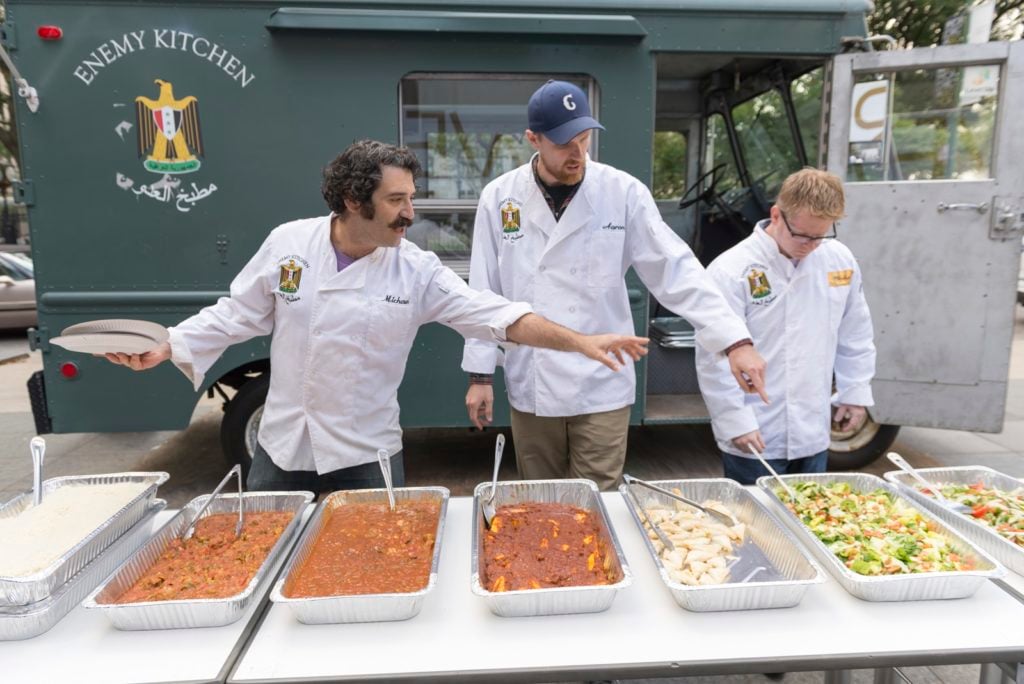
Activation of Michael Rakowitz’s
Enemy Kitchen (2012–ongoing), with the artist at left, on
the MCA’s plaza, October 1, 2017. Photo by Nathan Keay, © MCA
Chicago.
4. Revive the WPA Model—Ourselves
This is more a hope than a
prediction, so let me begin by saying that the economic shutdown
has hit artists particularly hard. Galleries that would be selling
their works have closed, and museums are laying off the
kinds of freelance jobs artists depend on, all as the nation’s
unemployment rate rises to Great Depression–era levels. I bring up
the Great Depression because FDR’s New Deal provides a template for
how we can address the damage being done to the art community by
COVID-19.
Under the New Deal, the Works
Progress Administration (WPA) put tens of thousands of artists to
work across 800 cities, where they created murals, sculptures,
posters, and stage sets; taught art courses; and established
community art centers. The original intention was to keep artists
employed, but ultimately the WPA changed the course of art history,
producing some of the 20th century’s greatest photographers and
painters. At a time when we are again experiencing a huge crisis
and a highly precarious time for creators, a 21st century WPA could
do vital work for ensuring the short- and long-term sustainability
of our art and artists. This can be a public-private enterprise,
one that isn’t bound to the former government
model.
At the MCA Chicago, we are
instigating just this sort of urgently needed project. We are
commissioning Chicago artists to create new works that we plan to
exhibit this fall when the museum is again physically open. Artists
always show us the way out of a dilemma and pivot us to the future.
As such, they will be the first to articulate how we live in a
post-COVID world.
What we have learned from this
crisis is that only by working together can we overcome what seems
insurmountable. This is the time when we share our gratitude and
support with our community and find our voice by advocating for one
another in a wider network of philanthropy. And I mean that in the
original sense of the word—love of humankind. Support is not just
financial; it is emotional, and it is collective.
We are living now in a moment of
potential reset and redesign. Given their cultural impact and
economic footprint, museums have a critical and unique role to play
in helping to build a society with an increased sense of social
responsibility that is both equitable and inclusive. I believe they
have never been more important.
Madeleine Grynsztejn is the
Pritzker Director of the Museum of Contemporary Art,
Chicago.
The post In a Post-COVID World, What Museums Do Outside
Their Walls Will Become as Important as What They Put on Them
appeared first on artnet News.
Read more https://news.artnet.com/opinion/madeleine-grynsztejn-mca-chicago-op-ed-1875996
Further reading


Leave a comment