
In the Era of Social Distancing, Biennial Organizers Face Unprecedented Challenges—and ‘a Car Crash of Cultural Events’ in 2021
Not long ago, many in the art
world wondered if we had hit peak biennial. The year 2017 saw so
many international art exhibitions crowding the calendar that it
was nicknamed
“art-maggedon.” Now, following a wave of postponements due to
the public-heath situation, it seems that 2021 may give 2017 a run
for its money. There are at least 20 major biennials—more biennials
than months—so far scheduled for next year, many of which were
originally due to take place in 2020.
The stakes are high for these months-long
events, which are often years in the making, require extensive
travel, complicated funding arrangements, and the movement of
sizable works of art. Few curators know exactly how these
festivals will adapt to the social-distancing era, or the economic
crunch that is headed their way.
“It is not easy to pull off a
biennial right now,” said Fatos Üstek, the director of the
Liverpool Biennial, which was postponed a few months shy of its
scheduled opening July date. The public-health situation “presents
the art world with a crisis unlike any it has faced before,” she
said.
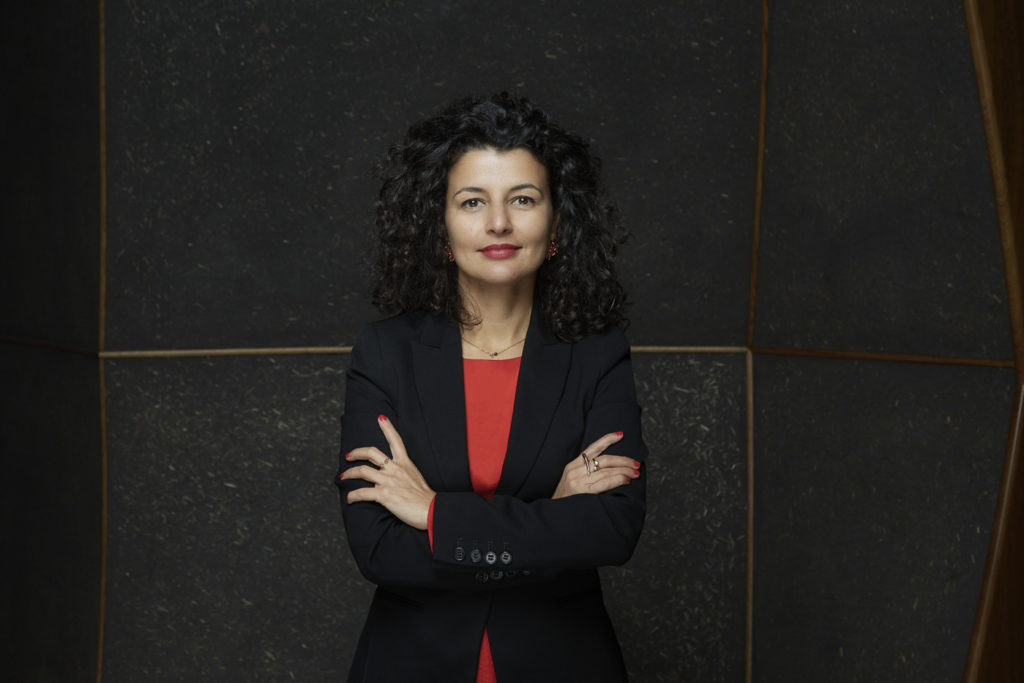
Portrait of Fatos Ustek. Photo by
Christa Holka.
Before the new dates are
finalized, Üstek—as well as many of her curator peers—must consider
a head-spinning number of novel issues. She must revise the
performance and public programs—which have emerged as important
elements of many biennials in recent years—as well as any
commissions that require people to gather in close proximity.
While Üstek stresses that there will be no changes to the
artist list, specific artworks may need to be
re-evaluated.
And that is just the beginning.
When will borders reopen, and when will flights begin operating
regularly and affordably? What health and safety regulations need
to be taken into account? Without a widespread vaccine or reliable
antibody testing, when will the art world be comfortable
congregating and traveling for these kinds of events? How can
biennials adapt to fit a future we can’t fully
imagine?
Calendar Clashes
Where yet more biennials can fit
into an increasingly overloaded calendar is another quandary. The
challenge of drawing an international audience that is spoilt for
choice is one thing, but there is also a matter of coordinating
with artists who might now be double booked. “There will be
multiple biennials and festivals in the UK and the world in
2021,” Üstek said. “You could say almost a car crash of
cultural events.”
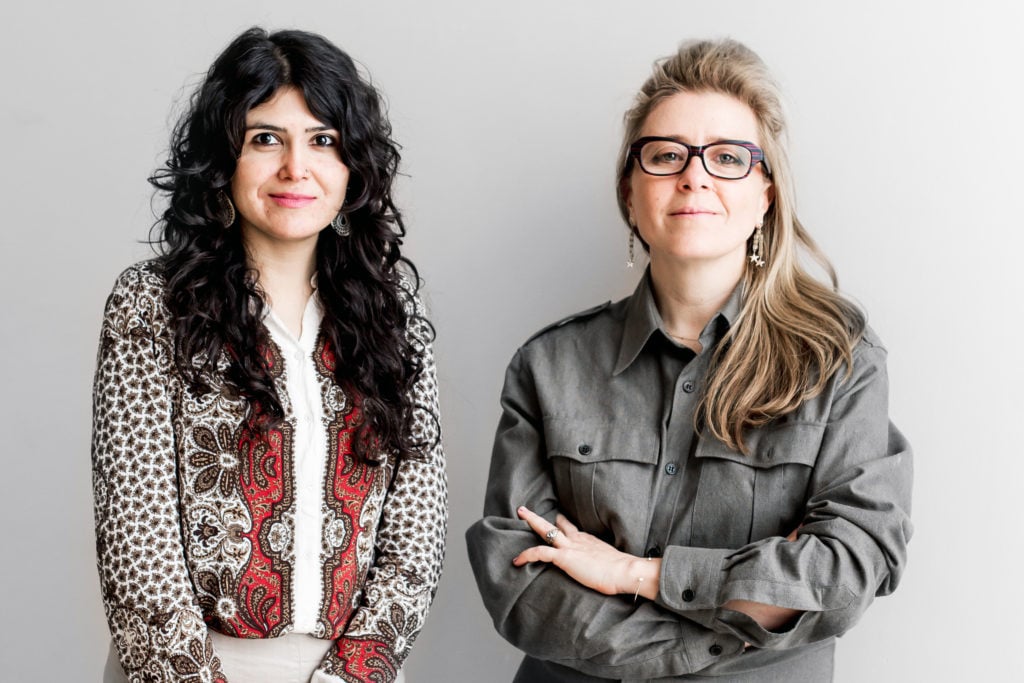
Portrait of the artistic directors of
the Gwangju Biennale, Natasha Ginwala and Defne Ayas. Photo by
Victoria Tomaschko.
The organizers of the Gwangju
Biennale in South Korea are facing the same challenge. Their
exhibition was meant to open in September, and while they held on
for as long as they could, artistic directors Natasha Ginwala and
Defne Ayas ultimately determined that problems with transporting
artworks and halted international travel made organizing the
biennale this year an impossible task.
The rescheduled
Gwangju Biennale is now due
to be held in February next year, a timetable some might say is
optimistic given the uncertainty of the crisis—not to mention the
fact that a second wave of the outbreak in South Korea caused museums and
galleries to shut down again last week.
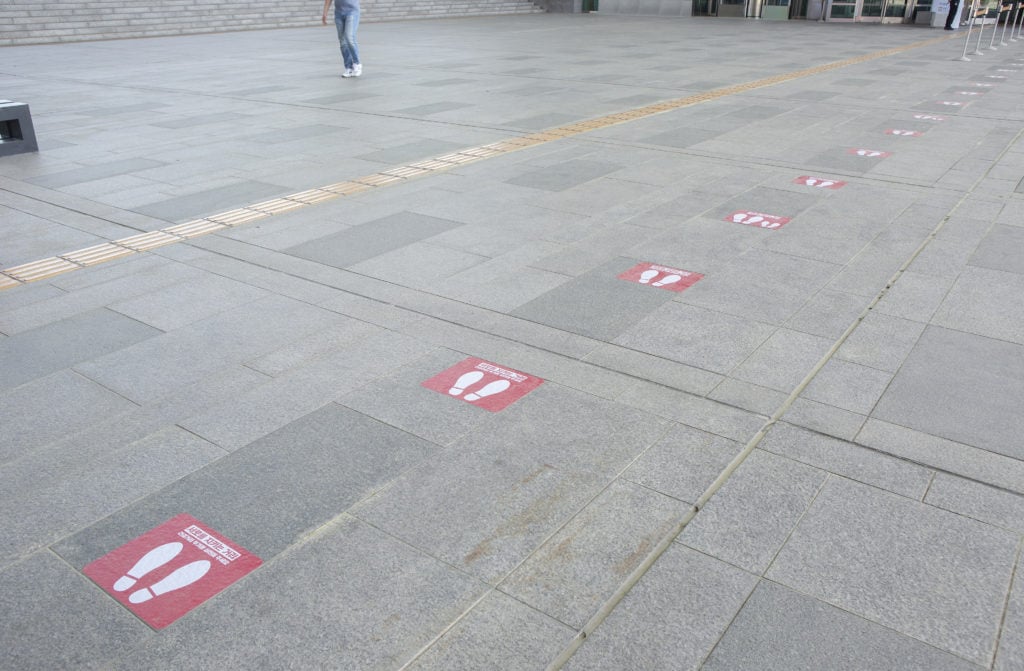
Markers show visitors where to stand for
social distancing in Seoul. Photo by Jong Hyun Kim/Anadolu Agency
via Getty Images.
The knock-on effect of the
sliding dates has already displaced some biennials that were
scheduled for 2021 in the first place. The Venice Biennale, widely
considered to be the most significant international biennial, has
been pushed to 2022 after the architecture biennial, which was
meant to open this year, took its spot in 2021. Others are also
hedging their bets and moving their dates to 2022, which could be a
risky strategy in a rare year when the quinquennial documenta
exhibition and now the Venice Biennale are both scheduled
to take place.
The Lyon Biennale, which was originally slated for 2021, has
also been pushed to 2022 after the city’s dance biennale was moved
back from this year to next. But artistic directors Sam Bardaouil and Till
Fellrath feel the move will also give them a chance to better
integrate the current moment. “It will be important to let some
time pass, and to leave some distance to create in order to create
a response that is not only confined by a sense of immediate
urgency, but will rather have a much broader and long-term impact
in a meaningful way,” they said.
The Question of Funding
The calendar isn’t the only
obstacle facing biennial organizers; another is funding. Cities
often invest significant funds in these events because they
generate tourism. But in a future when international travel has cratered and
local budgets have been redirected to relief, they may no longer
seem so appealing.
“Funding is one of the areas
that we are working hard to rebalance,” Üstek said, adding that the
Liverpool Biennial was about to host a reception to launch a new
fundraising initiative when the crisis hit. In terms of public
funding, the Arts Council England has committed to extending
its support of the biennial, and Liverpool City Council also
committed to the full grant.
But Üstek said that public
support alone will not be enough to finance the ambitious
commissions and programming she has planned. “It will be a tougher
environment if these individuals and foundations decide to fund
less and even pause until the economy comes back to a healthy
balance,” she said.
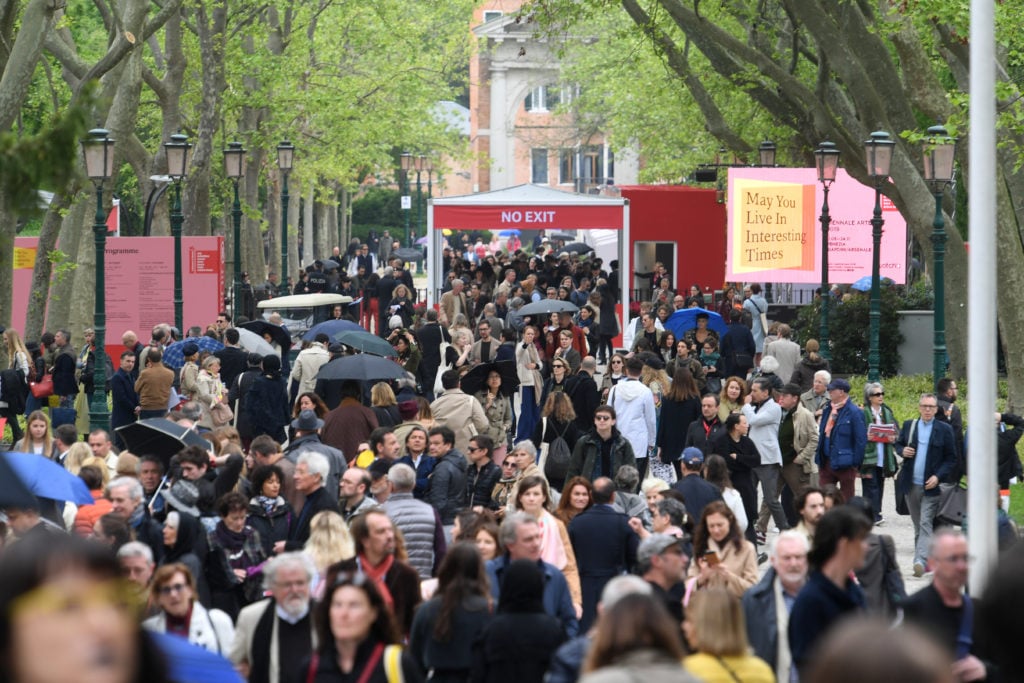
Throngs of people pushing to get into
the Venice Biennale. Photo by Felix Hörhager/picture alliance via
Getty Images.
The organizers of the Lyon
Biennale are facing similar hurdles. “A priority for many of the
biennial’s stakeholders is to address the current health crisis,
and understandably many institutions and private individuals are
prioritizing more urgent needs,” Bardaouil and Fellrath told Artnet
News.
The artistic directors added
that they were already careening toward the deadlines for funding
applications, which can close more than a year before the opening
of an exhibition, despite not having been able to visit the city of
Lyon or any of the artists they had been considering for
inclusion. They are
optimistic about having an extra year to source
funding. “We have
already gotten many emails of support from potential donors,
pledging their support, and stressing the importance of the arts
and of supporting the artists in our societies,” they
explained.
A Return to the Local
With the future uncertain, some
organizers have decided to push ahead with events scheduled for
this year, with an understanding that the models that worked in the
past will not work now. They suggest that, rather than the splashy
international convenings we have grown used to, the biennials of
the future will be more homespun, smaller scale, and geared towards
a local audience.
The Yokohama Triennale is going
ahead as scheduled on July 3, and organizers are planning to build
up the exhibition piece by piece as restrictions ease, hoping to
see it complete by the time it closes in October. The delayed
Bienal de São Paulo is also going to open in October, focused on
drawing a local audience.
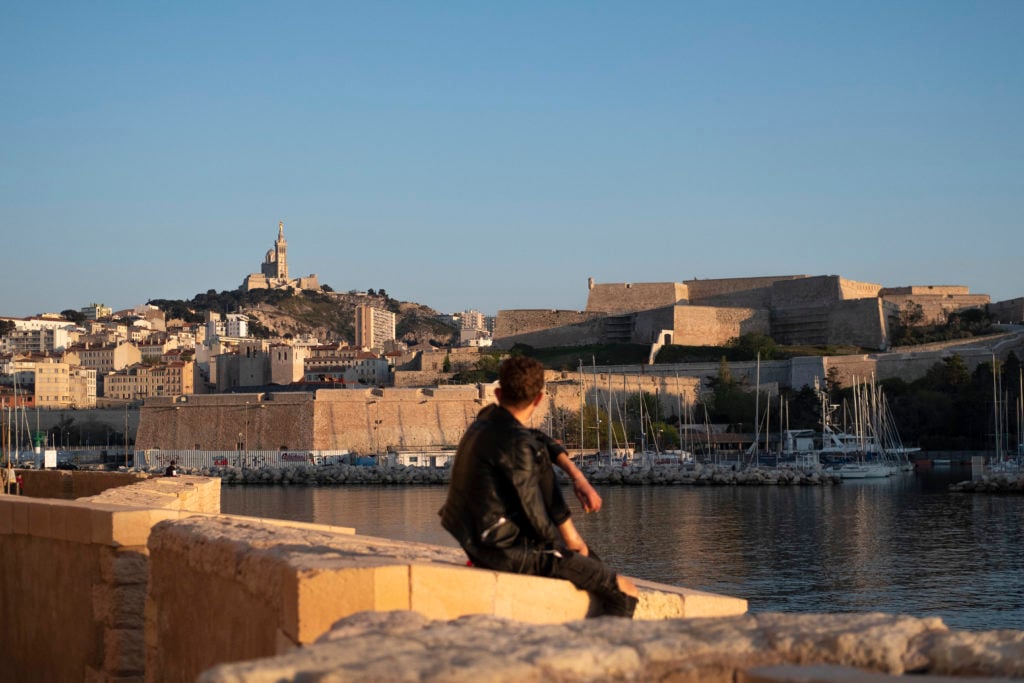
View of Notre-Dame de la Garde basilica
and of Old Port of Marseille in Marseille, France.
©VOST/Manifesta.
Similarly, Manifesta 13, which
was originally scheduled to open in June, will now debut a
scaled-down version in Marseille at the end of
August. Manifesta’s
founder, Hedwig Fijen, told Artnet News that the itinerant model of
the biennale, which is held in a different city each edition, makes
them well positioned to adapt to the uncertainty of the current
climate. Like some of the other biennials moving forward this
summer, they will spread programming out over time
to accommodate shifting
policies on social distancing, mobility, loans, traveling, as well
as a possible second wave of lockdown.
“Rather than organizing
exhibitions for international visitors, Manifesta’s focus has
gradually shifted to supporting existing local initiatives for
urban and social transformation processes,” Fijen said, adding that
collaborations like these help to build up local cultural
infrastructures that can continue long after the biennial has
passed through. Manifesta is not interested, she said, in
being “an international player in the globalized curatorial
circus.”
The Bigger Picture
Scheduling might not be the only
reason biennials become more local. These events have ballooned
over the past two decades as they became seen as potential economic
engines, both by cities hoping to generate tourism and boost their
cultural profile and by private actors such as galleries, which
began funding ever more flashy projects to offer their artists a
bigger platform. (While the Venice Biennale is not seen as a
commercial event, many artists’ markets are boosted by inclusion,
and in the early years of the exhibition, it even had its own sales
office.) All told, there are 270 global biennials listed in
the Biennial Foundation’s directory.
“With restricted budgets,
exhibitions will stay on for longer and blockbuster shows will be
less attractive and financially viable to produce due to the loss
of income through ticket sales,” Üstek said, adding that
exhibitions will be scaled down because social distancing measures
will also mean that fewer artworks can be shown at
once.
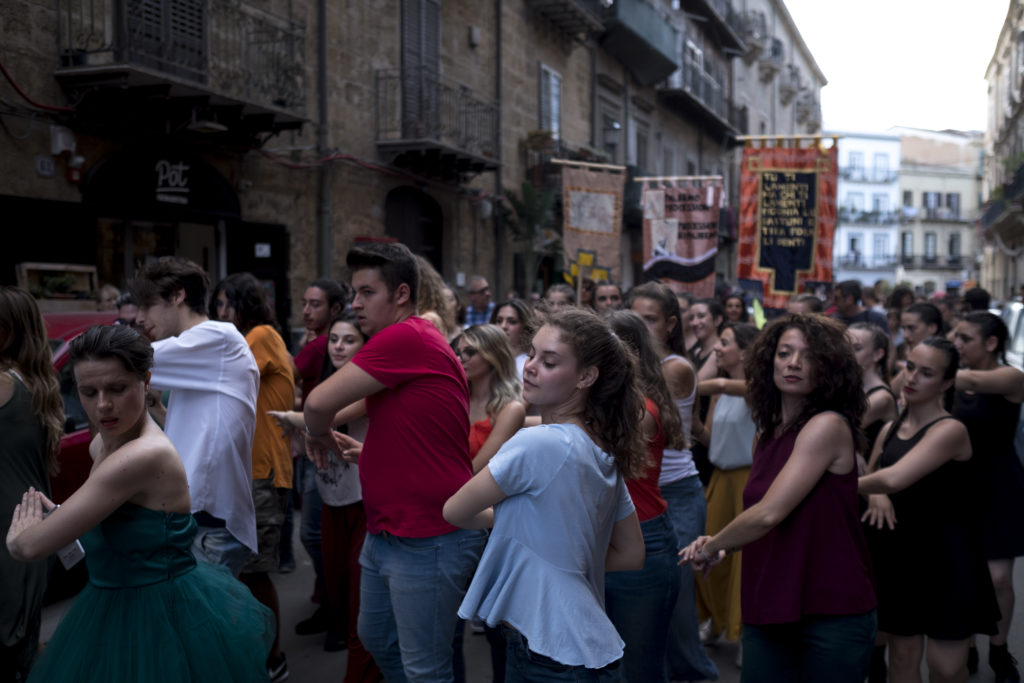
Marinella Senatore, Palermo
Procession (2018). ©Manifesta. Photo by Francesco Bellina.
Biennials and art institutions
might also start engaging more local and national artists to reduce
costs, a trend that has already begun in some cities,
like São Paulo and
Shanghai, because of complex customs rules and high taxes. At the
Liverpool Biennial, Üstek says that climate change concerns were
also factored into the planning, with 90 percent of shipments
coming from within the EU and the UK.
But amid all these changes, the
director does not predict that all biennials will become local
exercises, as she says their international outlook is their
strength. “Every biennial forms a relationship with its city,
raises concerns through its context-specificity, the history and
culture of its country,” she said. “However, it brings an
amalgamation of world-perspectives, different practices, ways of
seeing and being that cannot be compromised.”
The post In the Era of Social Distancing, Biennial
Organizers Face Unprecedented Challenges—and ‘a Car Crash of
Cultural Events’ in 2021 appeared first on artnet
News.
Read more https://news.artnet.com/exhibitions/biennials-2021-car-crash-1874445
Further reading


Leave a comment