
The 100 Works of Art That Defined the Decade, Ranked: Part 3
This is the third part of a series looking at the art of the
2010s. The first two parts are here and here.
50.
Fictilis, Museum of Capitalism (2018)
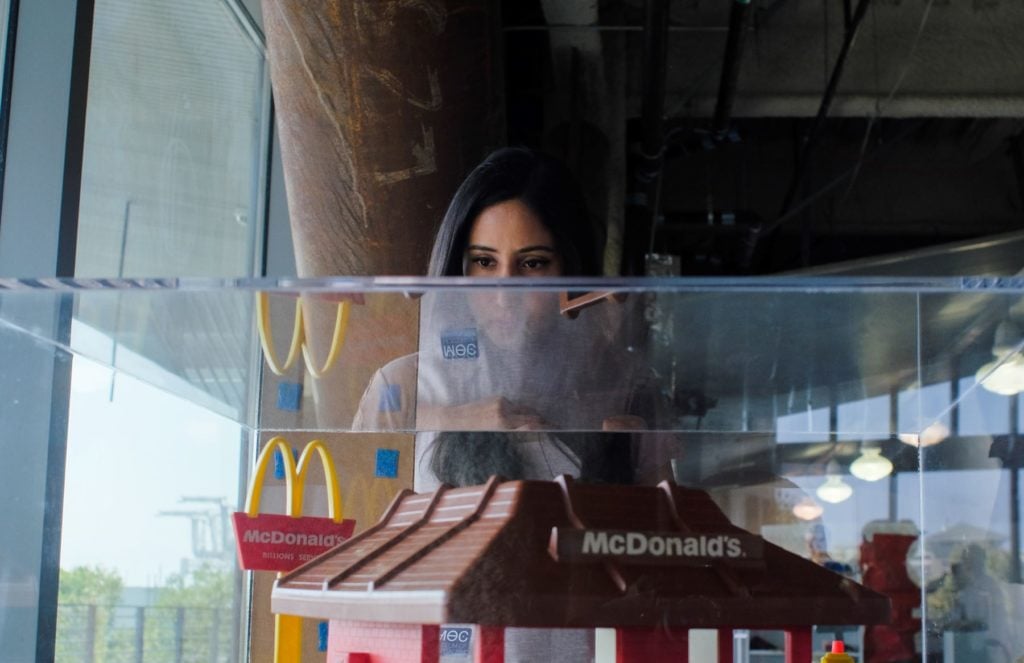
A view of the Oakland exhibition of the
Museum of Capitalism. Photo by Cinque Mubarak, courtesy Museum of
Capitalism.
An authentically viral project, based on a good idea. Seeing an
unused space in Oakland, Timothy Furstnau and Andrea Steves, aka
Fictilis, asked the question: “What would a
Museum of Capitalism look like, if we were to look back on just how
strange our present system is from the point of view of a future
where it had passed into history?” They invited artists to
contribute exhibits to the fictional museum, and the results have
spawned a whole touring educational eco-system of its own.
49.
Damien Hirst, Treasures From the Wreck of the Unbelievable
(2017)
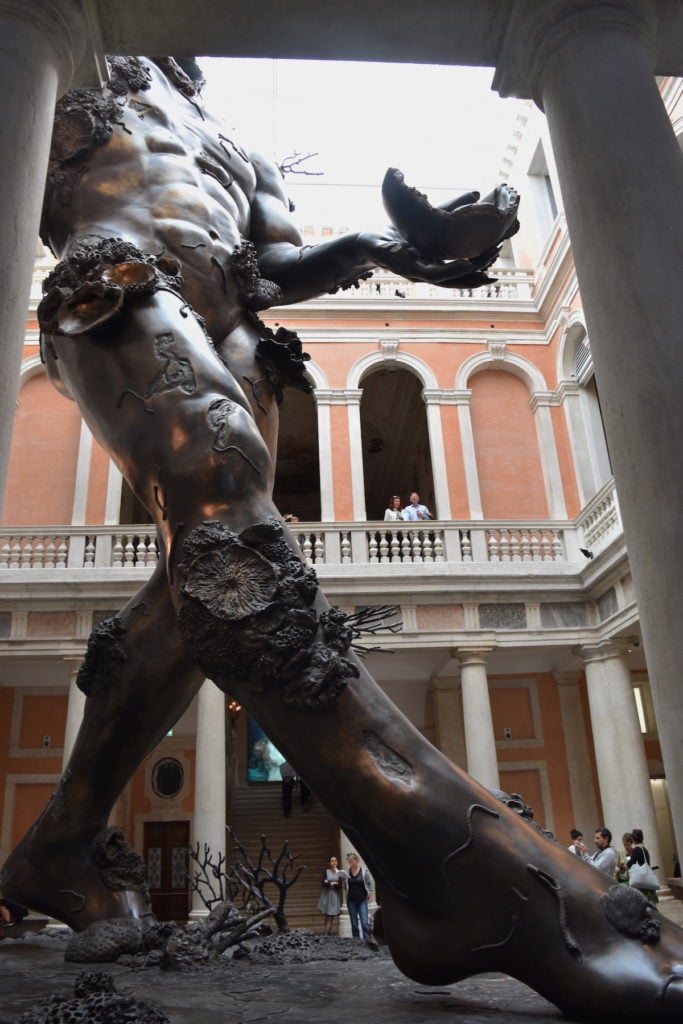
Colossus at the entrance of Damien
Hirst’s “Treasures From the Wreck of The Unbelievable.” Image
courtesy Ben Davis.
There is plenty to question and criticize in Damien Hirst’s
vast, involved,
ultra-high-production show in Venice, featuring endless
chambers of imagined treasures, presented as if they were a hoard
from a shipwreck, complete with a diorama of the wreck and even a
fake Netflix
documentary. But I’m not going to pretend I’m not impressed!
Give credit where credit is due: unlike many artists with his level
of fame, the guy hasn’t stood still, with “Treasures From the Wreck
of the Unbelievable” raising the bar for the
level of sheer, interconnected myth-making you need to stay ahead
of the game.
48.
Duke Riley, Fly by Night (2016)
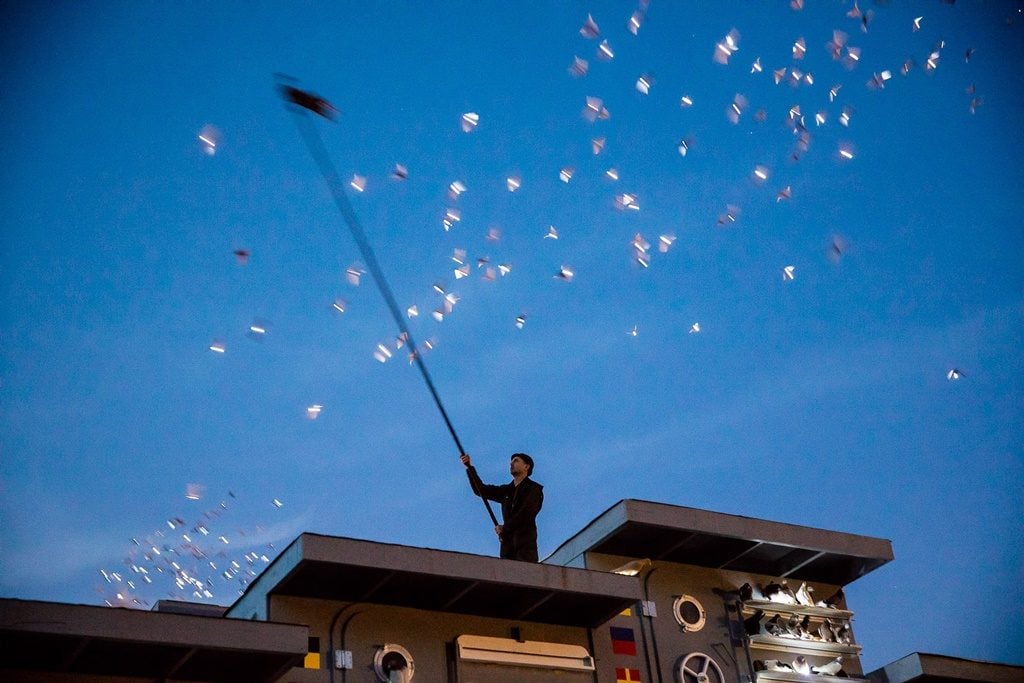
Duke Riley, Fly by
Night (2016). Courtesy Creative Time/photographer Tod
Seelie.
Riley choreographed swarms of pigeons with LED lights affixed to
them to offer a thoroughly delightful civic spectacle, building off
the artist’s love of urban esoterica, in this case his affection
for the Big Apple’s tradition of rooftop pigeon keepers.
47.
Anthea Hamilton, Project for Door (After Gaetano
Pesce) (2015)
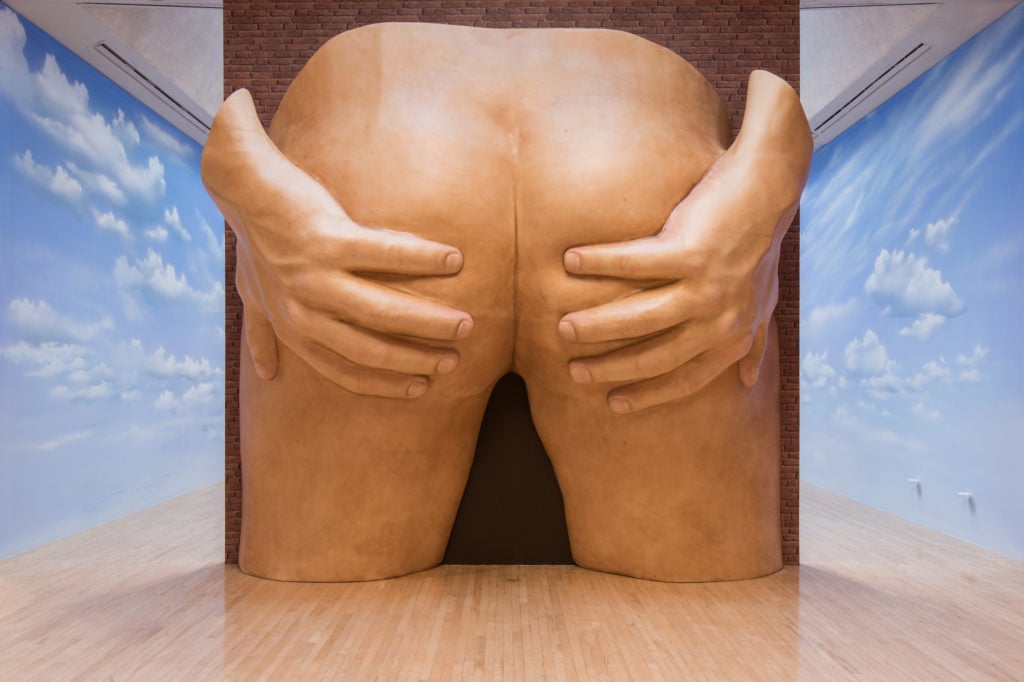
Anthea Hamilton’s exhibition at the
Turner Prize 2016. Courtesy Joe Humphrys ©Tate Photography.
It is described, wonderfully, as “a large backside (or
‘butt’) inspired by a photograph showing a model by Italian
designer Gaetano Pesce.” Originally seen at the
SculptureCenter in New York, Hamilton’s sculpture is one of the
most memorably wacky things ever to be nominated for the Turner
Prize.
46.
Jordan Wolfson, (Female Figure) (2014)
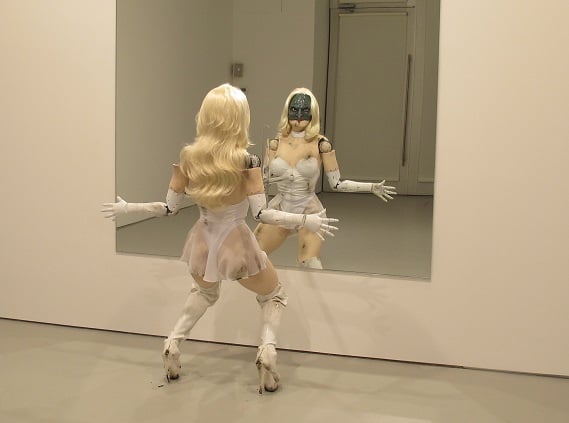
Jordan Wolfson’s (Female
Figure) (2014) at David Zwirner gallery.
Photo: artnet News.
It has a a nasty edge, but Wolfson’s
witch-masked robot stripper, which literally stares back at the
viewer as it gyrates in a mirror, is undeniably unnerving.
Realized by state-of-the-art Hollywood special effects house
Spectral Motion for a reported
half-million dollars, with capital fronted by David
Zwirner gallery, (Female Figure) set a high-water
mark for artists working with robotics.
45.
Ann Hamilton, The Event of a Thread
(2012)
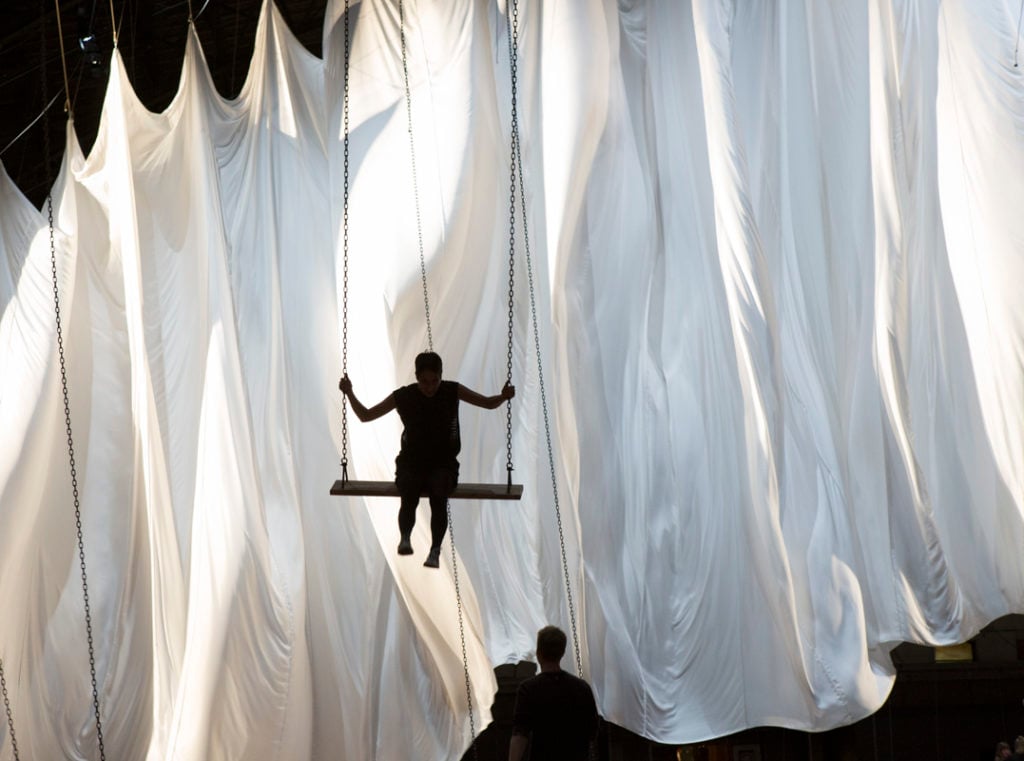
Ann Hamilton’s The Event of a
Thread at the Park Avenue Armory. Image courtesy Park Avenue
Armory.
The Park Avenue Armory’s specialty in big art was one of the
major forces of the decade. It’s hard to do justice to that kind of
space while also doing something thoughtful and poetic—and
Hamilton’s elegant piece did just that.
44.
Jacolby Satterwhite, Reifying Desire
(2013–14)
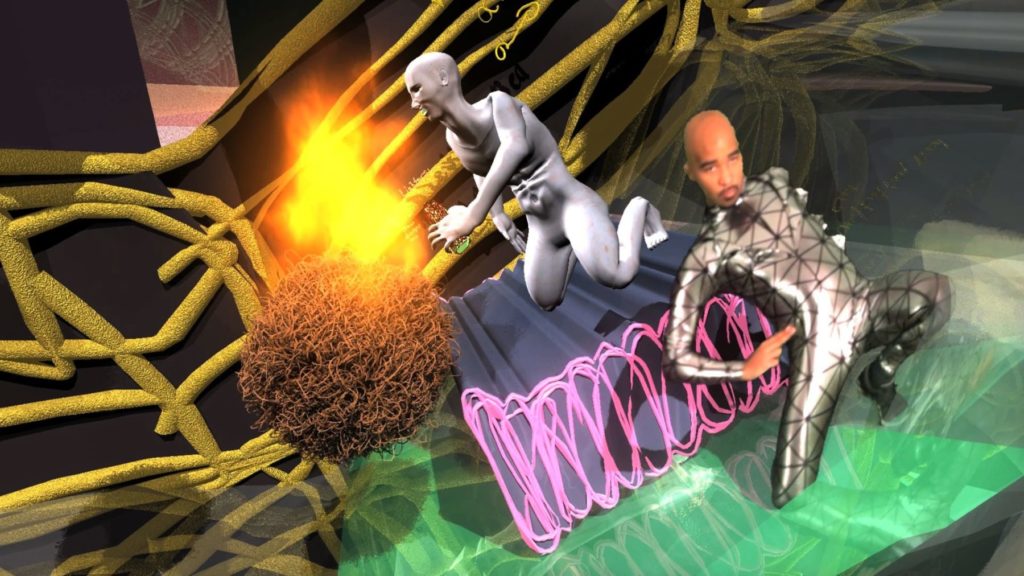
Jacolby Satterwhite, Reifying Desire
5 (2013). Image courtesy Museum of Modern Art.
Satterwhite’s mother had schizophrenia and coped by making
drawings of imaginary products inspired by TV commercials. For his
star-making series of animated videos, the artist gives life to
those ideas and animates his own body into the resulting digital
world, using virtual space as a forum for candy-colored, liberated
possibilities.
43.
Simone Leigh, Brick House (2019)
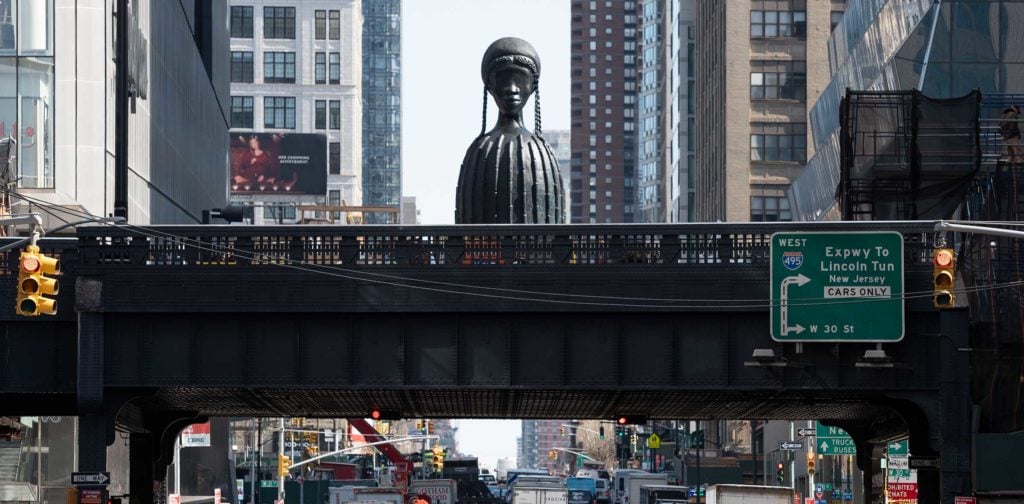
Simone Leigh, Brick House at
the “spur,” the last section of the original structure of the High
Line to be converted into public space in New York. Photo courtesy
of the High Line.
The work chosen to inaugurate the High Line’s public sculpture
commission was also the most ambitious realization of Leigh’s
ongoing “Anatomy of Architecture” series. As a description explained, the title of the
16-foot-tall monument “comes from the term for a strong black woman
who stands with the strength, endurance, and integrity of a house
made of bricks.” The artist’s distinctive iconography of calm and
centeredness manages to project this sense, miraculously, amid the
bustle.
42.
Korakrit Arunanondchai, No History in a Room Filled with People
with Funny Names 5 (2018)
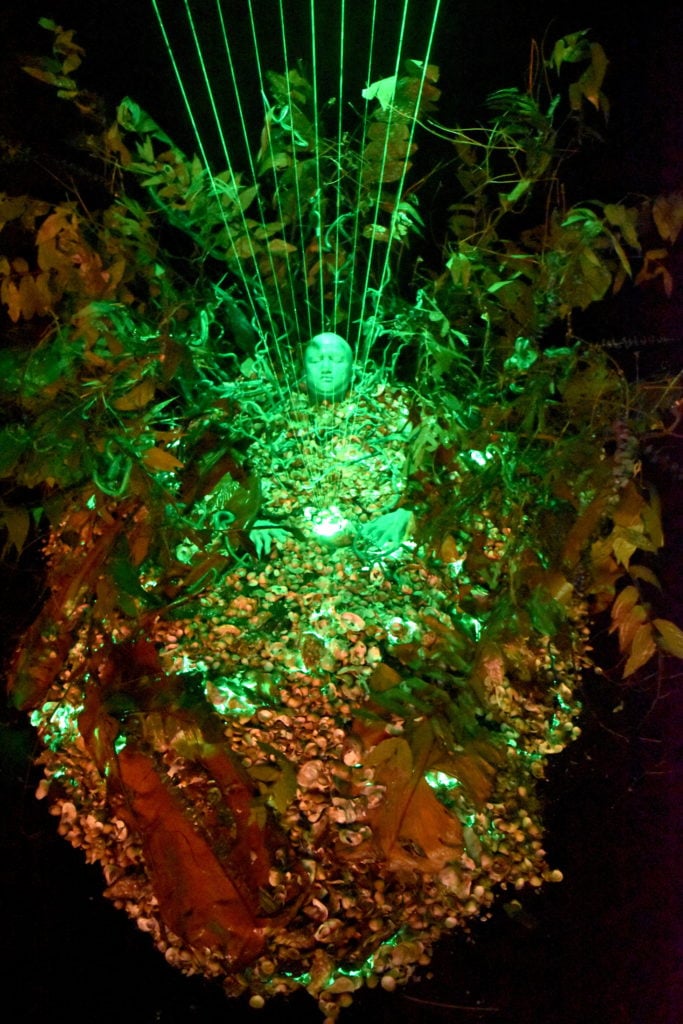
Korakrit Arunanondchai, No history
in a room filled with people with funny names 5 (2018). Image
courtesy Ben Davis.
Trance-like and brimming with intense, indescribable emotion,
Arunanondchai’s work crams a year of human experience into one
symbolic space, flickering from a narrative about the artist’s
mother’s dementia to a laser-studded performance by boychild, the
transcendent gender-nonconforming performance artist, to news from
the 2018 Tham Luang cave rescue. Seen at the apocalyptic Venice Biennale
earlier this year where it was presented in Arunanondchai’s
characteristic sculptural environments, it gives an overpowering
sense of a world where levels of emotional reality—pleasure and
pain, celebration and despair—are collapsing into each other.
41.
Moyra Davey, Les Goddesses (2011)
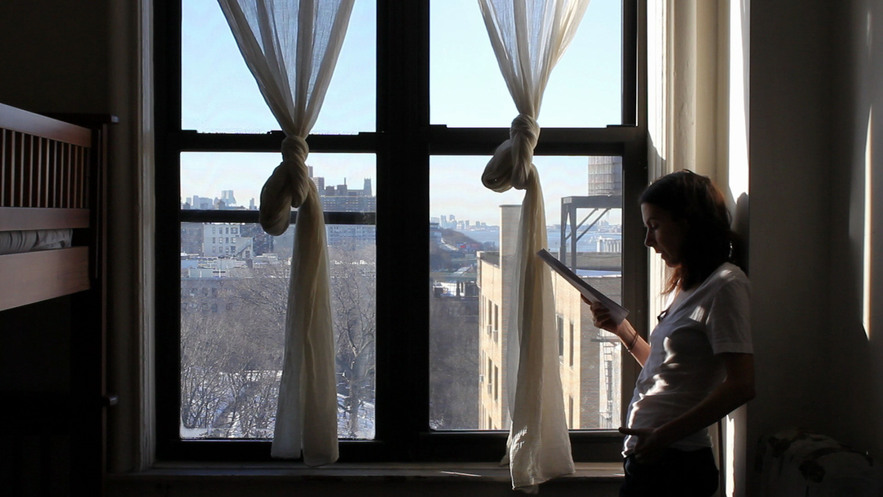
Moyra Davey, Les Goddesses
(2011). Image courtesy the artist.
Erudite, intimate, and influential as a model
of how to be personal while breaking out of a certain narcissism,
Davey’s Les Goddesses is an experiment in
autobiography, trying to find a way to engage with “unspeakable
memories” via the device of the artist weaving together the details
of her own life and the details of the life of early feminist Mary
Wollstonecraft.
40.
Mickalene Thomas, Le Déjeuner Sur l’Herbe: Les Trois Femmes
Noires (2010)
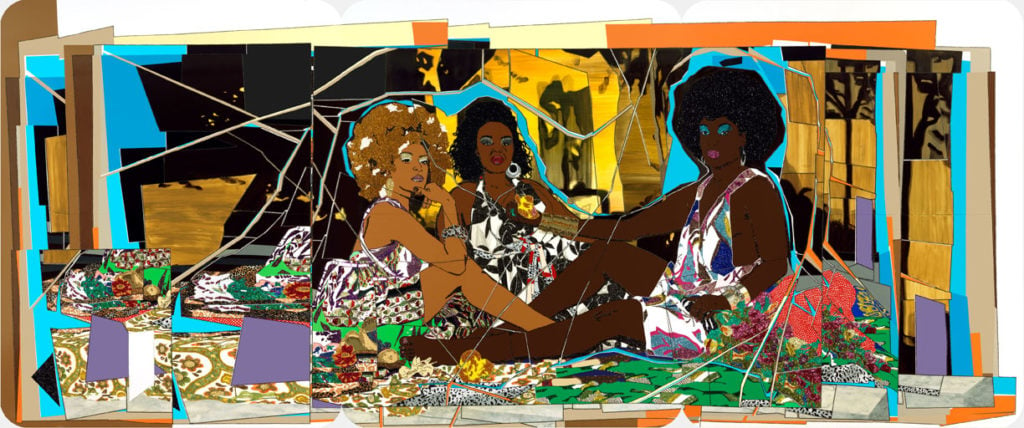
Mickalene Thomas’s Le Déjeuner sur
L’herbe: Les Trois Femmes Noir (2009). Image courtesy of the
artist and Lehmann Maupin Gallery.
Begun as a commission for MoMA, Thomas’s confidant
rhinestone, acrylic, and enamel reclamation of Manet’s famous
picnic as a stage to center black beauty has found a huge audience.
39.
Camille Henrot, Grosse Fatigue (2013)
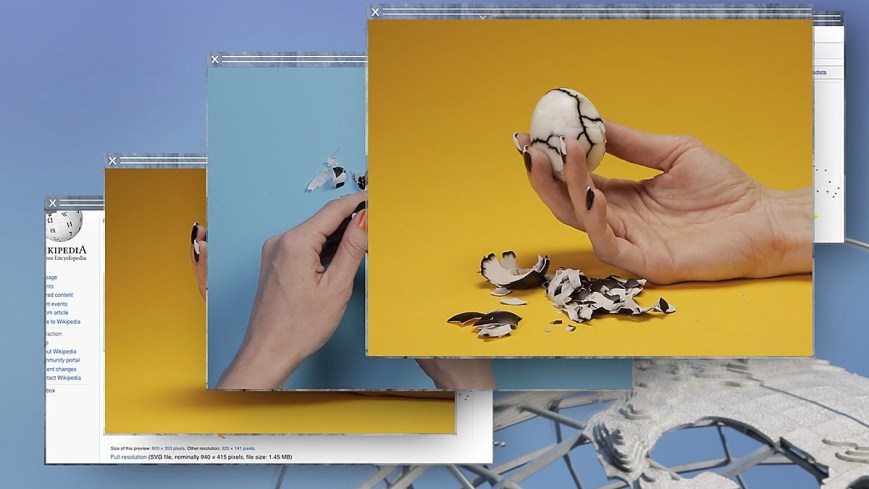
Camille Henrot, Grosse Fatigue
(2013). Image courtesy the artists and the Guggenheim.
The story of the universe, told from the point of view of images
shuffling across a desktop; Cosmos meets desktop
cinema.
38.
Martine Gutierrez, Indigenous Woman
(2018)
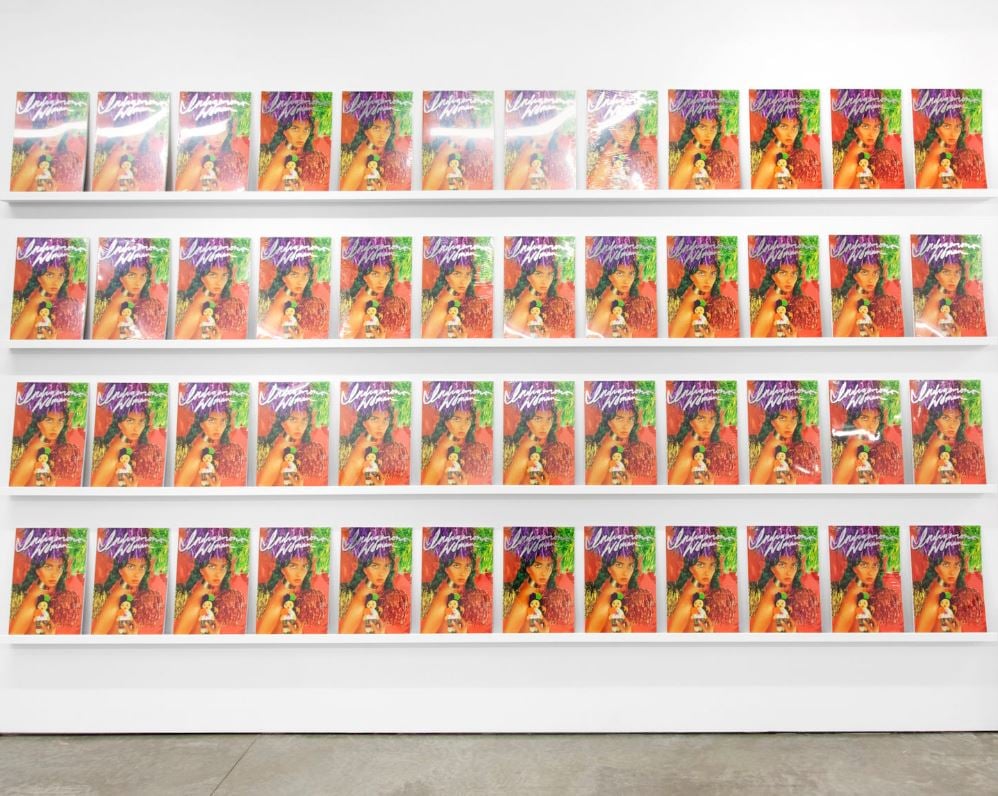
Installation of copies of Indigenous
Woman at RYAN LEE Gallery. Image courtesy the artist and RYAN
LEE Gallery.
Gutierrez’s great idea was to create a fictional 126-page glossy
fashion magazine dedicated to “Mayan Indian heritage.” For the
project, she plays art director, model, and editor (and, less
glamorously, as she told Vice,
“also the crew. I’m the schlepping person”). This allowed her to
claim different nuances of identity “as a woman, as a transwoman,
as a latinx woman, as a woman of indigenous descent, as a femme
artist and maker” in a fun, outspoken way. Images from the project
made Gutierrez a break-out at the 2019 Venice Biennale as well.
37.
Andrea Geyer, Revolt, They Said
(2012–ongoing)
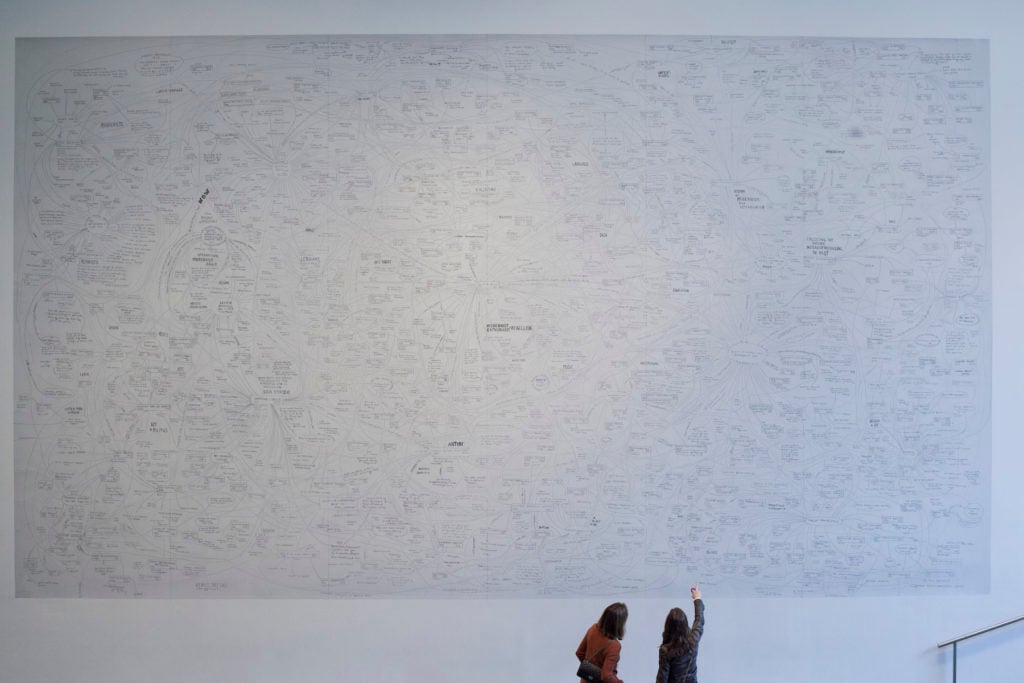
Installation view of Andrea Geyer’s
Revolt, They Said (work in progress) at the Museum of
Modern Art, 2015. Image courtesy Museum of Modern Art.
Geyer’s wildly ambitious graph detailing all the affiliations
and relationships of some 850 women who helped
define modern culture is tremendous as a work of research, but also
swarms with graphic energy.
36.
Random International, Rain Room (2012)
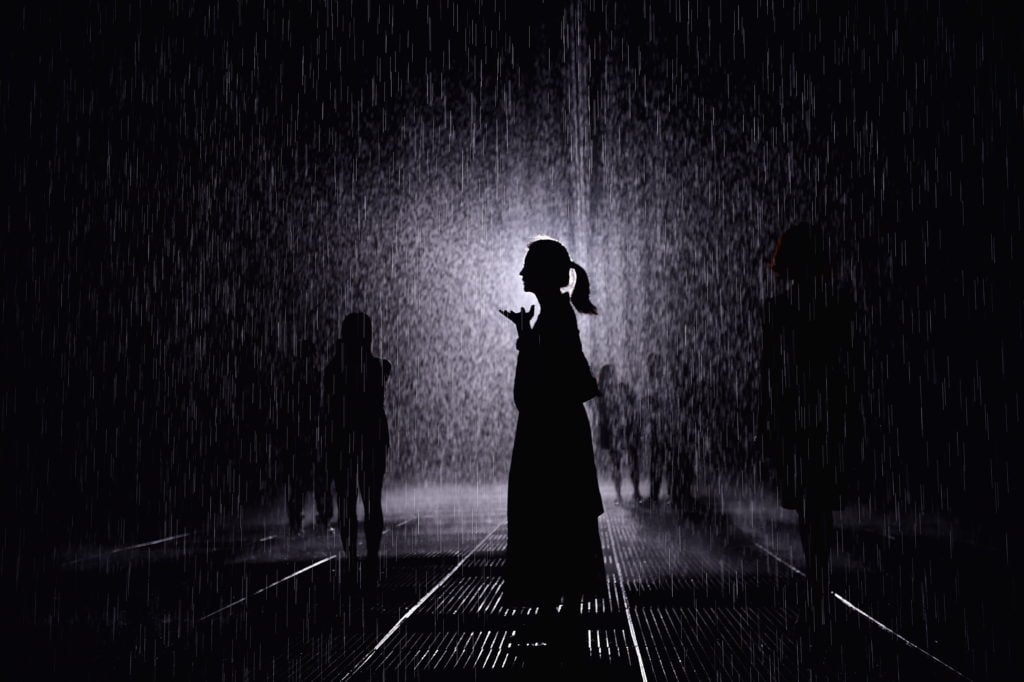
Random International’s “Rain Room”
displayed at the Yuz Museum in 2018. Photo courtesy of the Yuz
Museum.
These design-artists’ precision-engineered interactive
wonderground offered one of the major, crowd-courting museum
attractions of the era. Could anyone have guessed just how much
museum-goers hungered to be in a storm but not get wet?
35.
Eliza McNitt, Spheres (2018)
Does McNitt’s virtual reality
trilogy count as immersive cinema or art installation? “VR
experience” collapsed those strands into one,
and Spheres is the most convincing thing I saw in
this much-explored category. I could quibble with how it fudges the
science that it purports to make concrete, or whether its use of
breathy voiceover (from Jessica Chastain, Millie Bobby Brown, and
Patti Smith) doesn’t skip over
lingering problems with holding attention in the medium. But as
pure experience, I still remember Spheres’s
rendering of being sucked into the depths of a black hole or of
floating through the solar system, across the rings of Saturn, and
towards the Earth. Pretty far out.
34.
Alex Da Corte, Rubber Pencil Devil (2018)
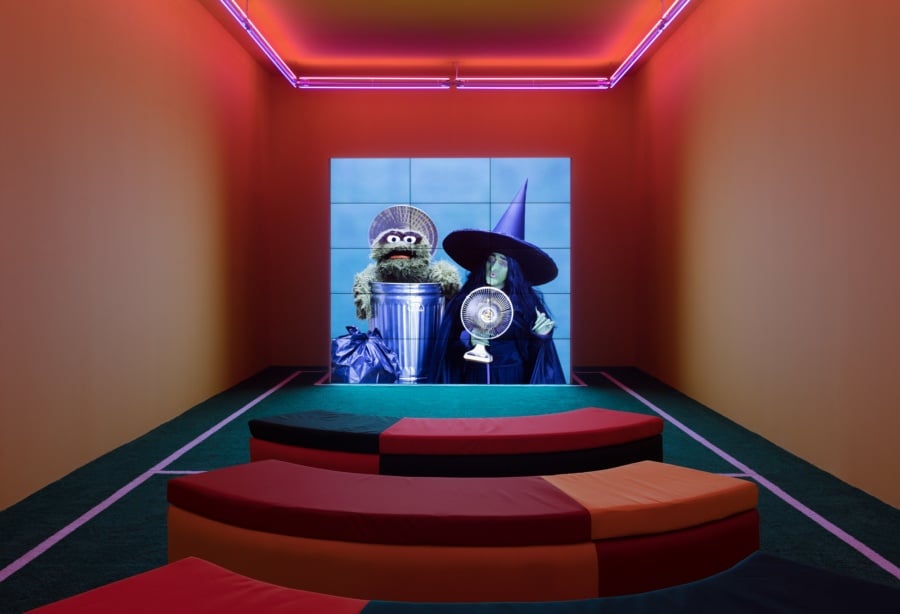
Alex Da Corte, Rubber Pencil
Devil at the Venice Biennale in 2019. Image courtesy the
artist and Karma.
Seen at the Carnegie International and then at the Venice
Biennale, this eerie, 57-part anthological video work that features
the artist giving scabrous, nightmarish life to a variety of
personae from pop culture (from Bart Simpson to Mr. Rogers to a
Heinz Ketchup bottle), Rubber Pencil Devil is like being
dragged behind a boat along the rocky bottom of someone’s
junk-strewn mind.
33.
Cameron Rowland, Attica Series Desk (2016)
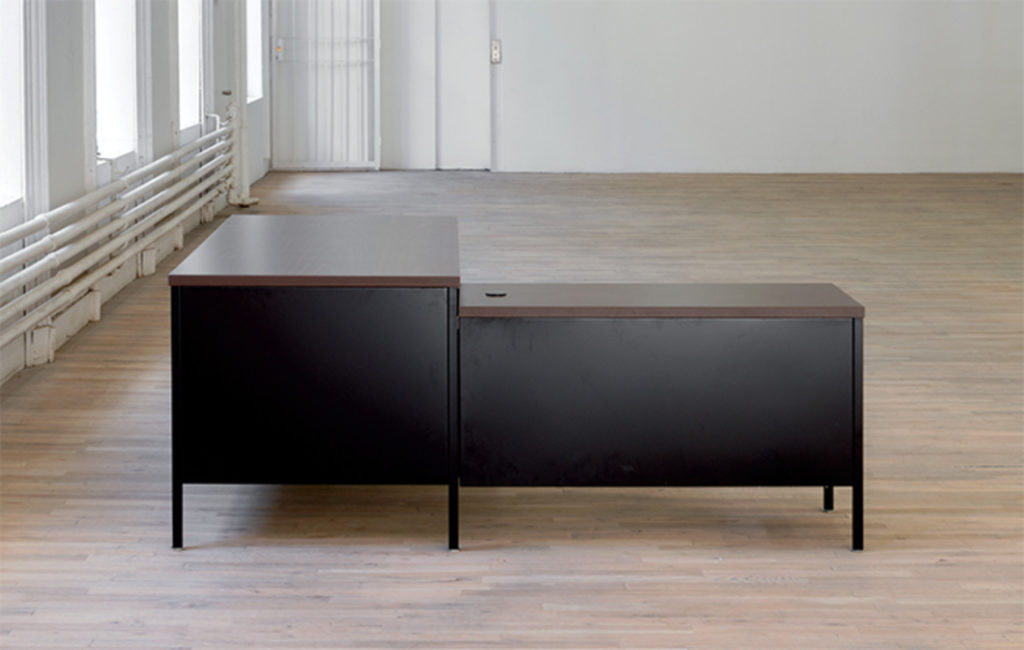
Installation view of Cameron Rowland,
Attica Series Desk (2016) at Artists Space, 2016. Photo:
Adam Reich.
Recharging the severity of classical Conceptual art, Rowland’s
desk presented an object manufactured by Corcraft at Attica
Correctional Facility, displaying the results of inmate labor
unadorned so as to stress the everydayness of the objects that it
produces and thus how the structure of mass incarceration is part
of the deep tissue of US life. One of its most important aspects is
invisible (except when reading about it),
which is the way that it also makes the economic relations around
itself part of its meaning: It is not sold. Instead, it “may be
rented for 5 years for the total cost of the Corcraft products that
constitute it.”
32.
Chris Johnson and Hank Willis Thomas, Question Bridge: Black Males
(2012)
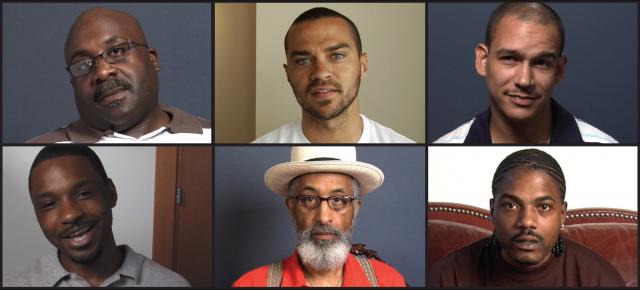
Still from Chris Johnson and Hank Willis
Thomas, Question Bridge: Black Males (2012) Image courtesy
the artists.
Based on conversations with 150
self-identified black men from a variety of backgrounds in 12
cities, Johnson’s and Thomas’s
innovative transmedia art project edited together 1,500 video
exchanges into a video installation/conversation in which their
subjects appear to be interrogating one another. It toured more
than 30 different
institutions, and also lives on as a book, a website, and a curriculum.
31.
DIS Magazine, DISimages (2013)

Screenshot of DIS Images, 2013. Image
courtesy DIS.
The oddball corporate surrealism of DIS (aka Lauren
Boyle, Solomon Chase, Marco Roso, David Toro, plus
sundry collaborators), which launched this initiative to create an
online archive of artist-designed stock image photos, sort of
defined a moment (what Christopher Glazek called “Generation DIS.”)
30.
Adbusters, What is our one
demand? (2011)
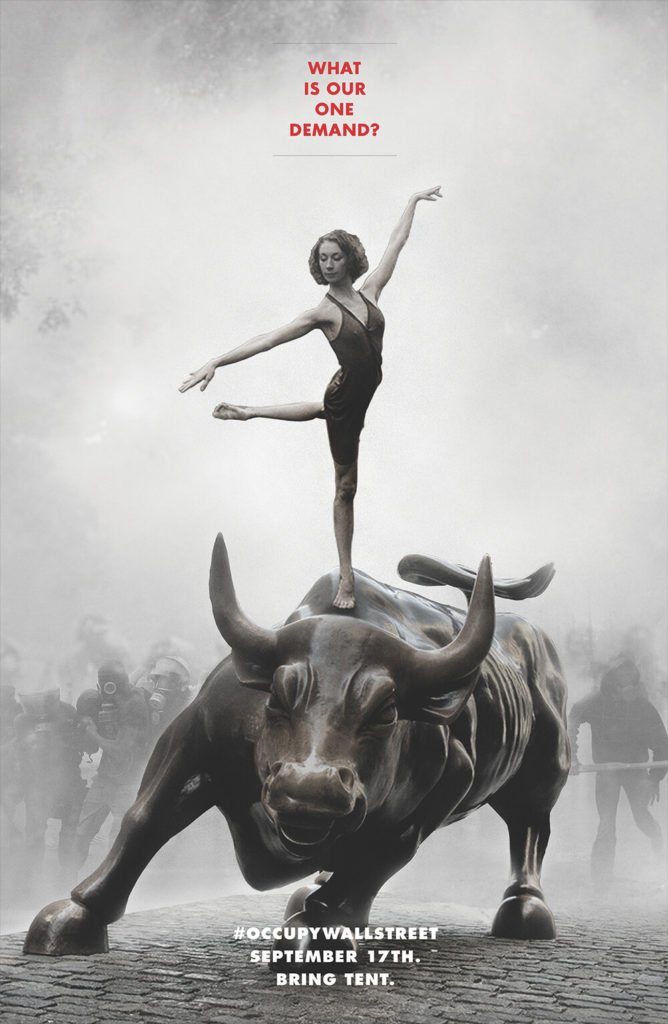
Adbusters poster, July
2011.
“There was some magic about it,” Adbusters editor Kalle
Lasn said of the image of
the ballerina twirling atop Wall Street’s Charging Bull sculpture
amid clouds of teargas. This romantic, even whimsical graphic is
probably the artwork most associated with Occupy Wall Street. It
hit the hopeful note of reawakening what you thought was possible
of that moment.
29.
Haroon Mirza, stone circle (2018)
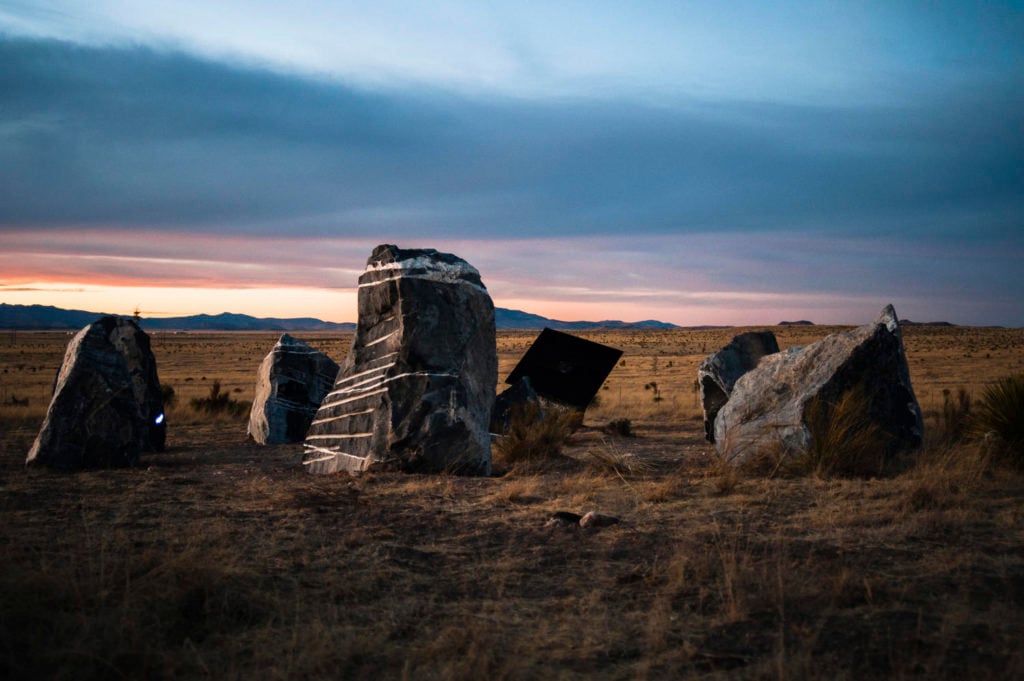
Hiroon Mirza, stone circle in
Marfa. Image courtesy the artist and Ballroom Marfa. Photo by Emma
Rogersm, courtesy of hrm199, Ballroom Marfa, and Lisson
Gallery.
Mirza’s mighty “solar-powered Stonehenge” in
the West Texas desert is designed to “activate” itself on the full
moon, coming to life with LED lights and spacey electronic sounds
(you can hear snippets of it here). It’s a monumental
mixture of ancient and contemporary. As a side note, it seems to
have intensified local
interest in solar power.
28.
Damon Davis, All Hands on Deck
(2015)
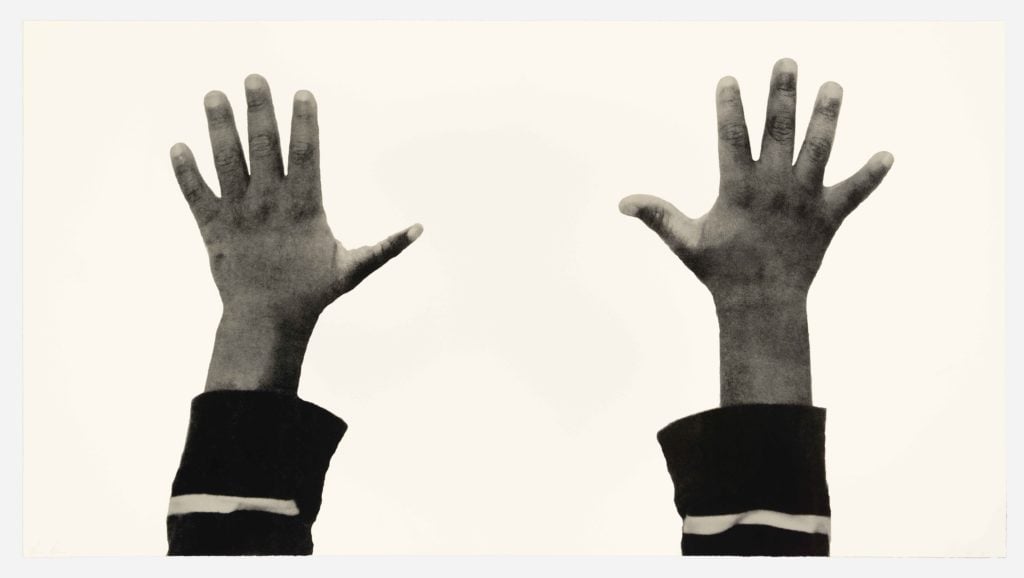
Image from Damon Davis, All Hands on
Deck (2015). Image courtesy Museum of the artist and
Contemporary Art, San Diego.
St. Louis-based Davis’s idea, hatched in the wake of the
rebellion in Ferguson, seems simple: take pictures of multiple
hands, raised in the “don’t shoot” gesture that became a symbol of
that movement, and wheat-paste these on buildings boarded up in the
wake of the protests (they were also taken up in various other cities and shown at the Museum of
Contemporary Art, San Diego in 2016). The zoomed-in emphasis on
the individuality of the various hands stood as a kind of symbol of
the social depth of Black Lives Matter demonstrations, a way to
visually cut against dehumanization and claim solidarity. (It
persists as a digital archive.)
27.
Kehinde Wiley, President Barack Obama (2017)
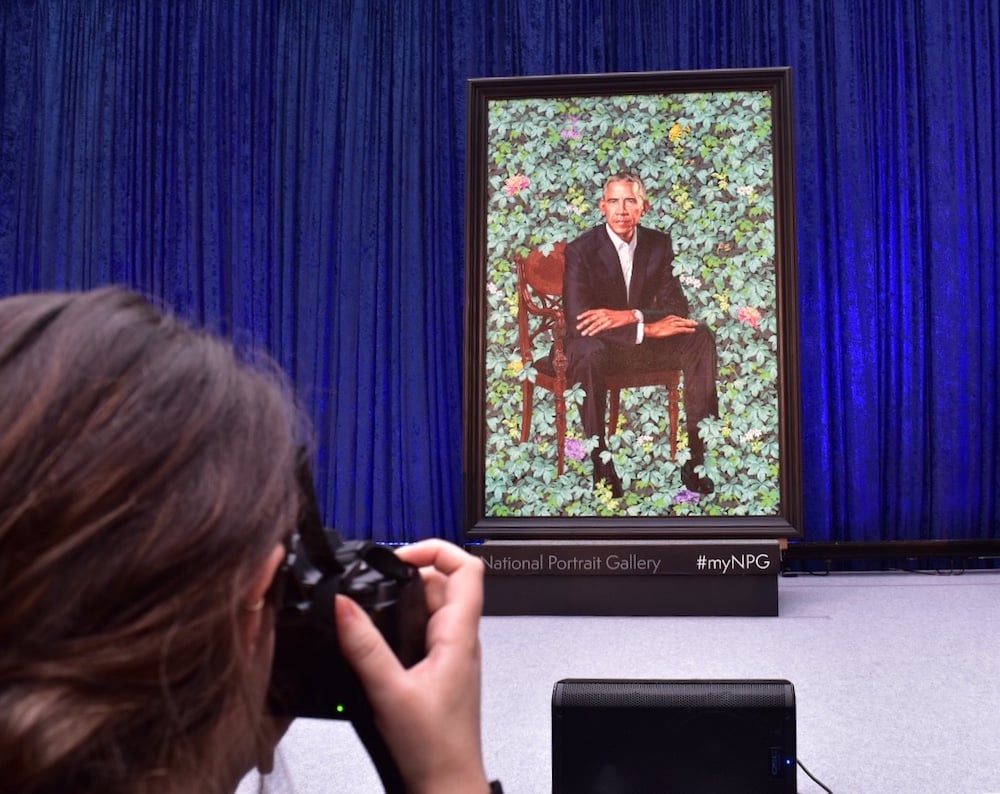
Kehinde Wiley’s portrait of Barack Obama
at its unveiling at the National Portrait Gallery. Image courtesy
Ben Davis.
Definitely one of the signal art events of the decade, even
if I have my questions about
it.
26.
Frank Benson, Juliana (2015–16)
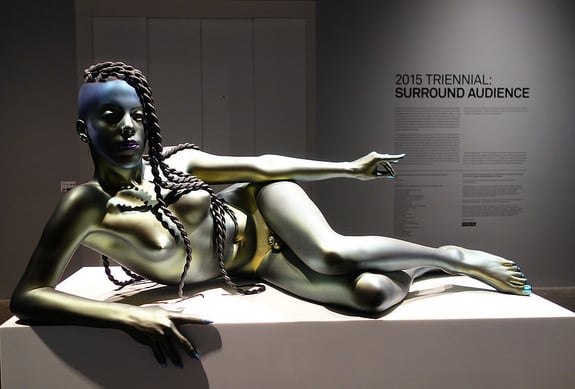
Frank Benson, Juliana in the
New Museum Triennial. Image: Ben Davis
Referencing classical sculpture in its pose and a future-is-now
sensibility in its “digital machine finish,” Benson’s
hyper-detailed, 3D-scanned sculpture of Juliana Huxtable, the
multi-talented artist and
performer, was claimed as a
symbol of transgender pride after its presentation at the 2015 New
Museum Triennial. It’s also just a commanding work of art.
The post The 100 Works of Art That Defined the Decade,
Ranked: Part 3 appeared first on artnet News.
Read more https://news.artnet.com/opinion/100-artworks-decade-part-3-1738743
Further reading


Leave a comment