
Meet Collector Robert Tibbles, Who Snapped Up a $1,000 Damien Hirst Work in 1989 That Could Soon Sell for $2.3 Million
It’s common these days to imagine that art collecting is akin to
investment banking. But back in the 1980s, when bond trader Robert
Tibbles was forming his art collection, the two fields didn’t
necessarily overlap.
His colleagues, who were more interested in accruing flashy
watches and cars, derided his strange purchase, in 1989, of a
medicine cabinet by an unknown artist—especially considering that
he paid £600 for the thing (which is just shy of $1,000 in today’s
money).
But the artist, of course, was Damien Hirst, and now that early
purchase could fetch Tibbles 3,000 times his initial
investment when it goes up for sale at Phillips in London this
week. (The work, titled Bodies, is estimated to
sell for between £1.2 million and £1.8 million, or $1.6
million and $2.3 million.)
It’s the kind of financial return anyone would dream of, but
this isn’t a case of a quick flip. Tibbles has lived with the piece
for three decades, and is now selling it off along with the rest of
his YBA-heavy collection in a series of sales at the auction
house.
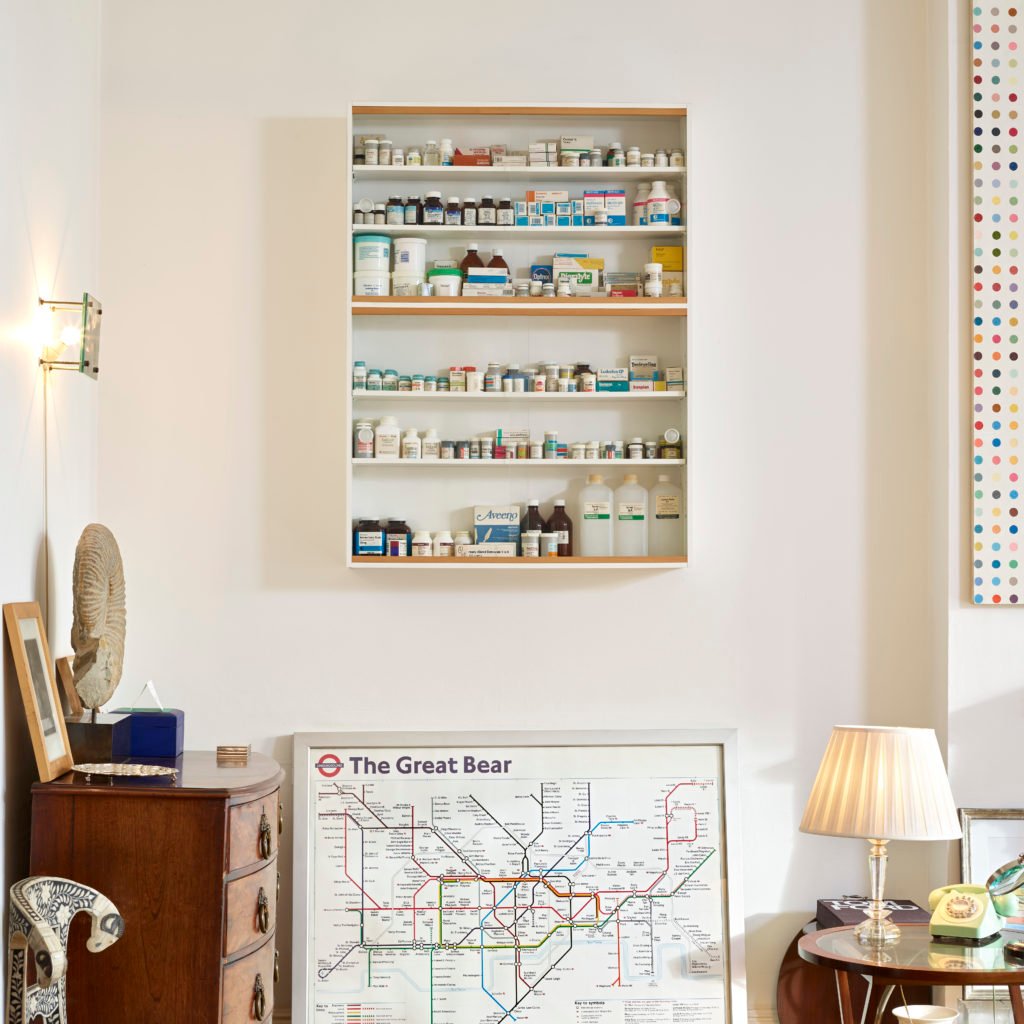
Damien Hirst, Bodies (1989).
Image courtesy of Phillips.
Getting Addicted
Tibbles began building his collection in 1988. He was 28, had
just started making money as a trader, and was looking for some art
to fill his apartment in London’s upscale Pimlico neighborhood.
After getting in touch with the late dealer Karsten
Schubert, he was introduced to Hirst, then a young artist.
But while he sometimes bought works directly out of studios, he
preferred to work with dealers whose advice he trusted, and whom he
relied upon to present works he might be interested in. But even as
he traveled through such rarefied circles, his choices were not
always met with approval from his peers.
“Collecting was actually quite far away from what anybody I
knew—either close friends or just friends—was doing. Particularly
having the medicine cabinet up in the flat, and the spots, it
challenged a lot of people,” Tibbles says, referring
to another work by Hirst in his collection. “The medicine
cabinet always, always, had a very strong reaction from
everybody.”
The cabinet, titled after a Sex Pistols track, was one of four
Hirst had made for his graduation show at Goldsmiths. (It has been
shown publicly just three times since then, at the Museo
Archeologico Nazionale in Naples; L&M Arts in New York; and
Tate Modern, in 2012.)
But while there has long been market interest in such works
by Hirst, Tibbles says he could never bring himself to part
with it.
“It was like tearing off part of something that was a body,” he
says.
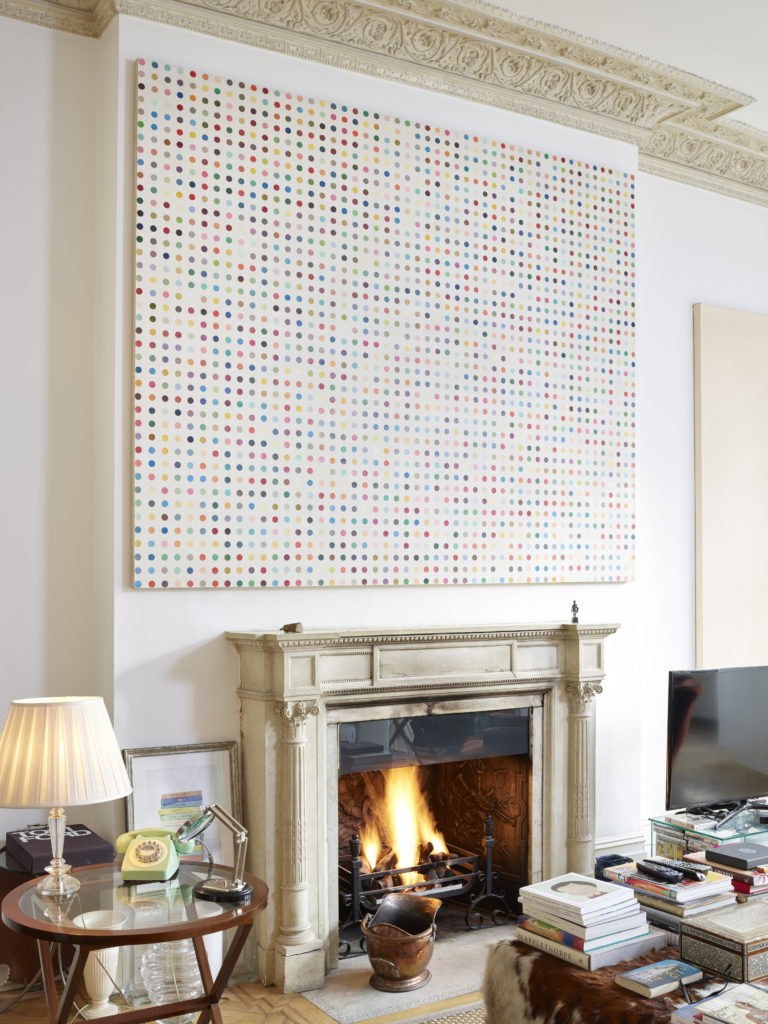
Damien Hirst, Antipyrylazo III
(1994). Image courtesy of Phillips.
Despite the impressive profit margin Bodies is expected
to make, Tibbles says if he was pushed “on pain of death” to pick a
favorite work, it would actually be Antipyrylazo III,
a spot painting by Hirst in Tibbles’s collection. At Phillips, it
will also be on sale, and is estimated to bring in
between £900,000 and £1.2 million ($1.2 million–$1.6
million).
“It’s very uplifting, very warm, and a very enveloping work that
really dances,” he says.
A Historical “Time Capsule”
The medicine cabinet is the prize item in the sale, which
includes five other Hirst works (all six carry a third-party
guarantee, so Tibbles has practically already sold them) as well as
examples by Ed Ruscha, Gilbert & George, Julian Opie, and
Sarah Morris.
There are also two pieces by famed YBA mentor Michael
Craig-Martin in the sale, including Full (2000), a huge
work that used to hang in Tibbles’s bedroom. It is estimated at
£80,000–£120,000 ($100,000–$160,000).
A spokesperson from Phillips tells Artnet News that the estimate
is “conservative,” and that the work—a “masterpiece” of
Craig-Martin’s—is expected to set a new record.
(The current auction record for a work by the artist is
£175,000, or $226,115, realized for a portrait of George Michael
commissioned by the late singer. It sold at an auction of Michael’s
estate at Christie’s last March.)
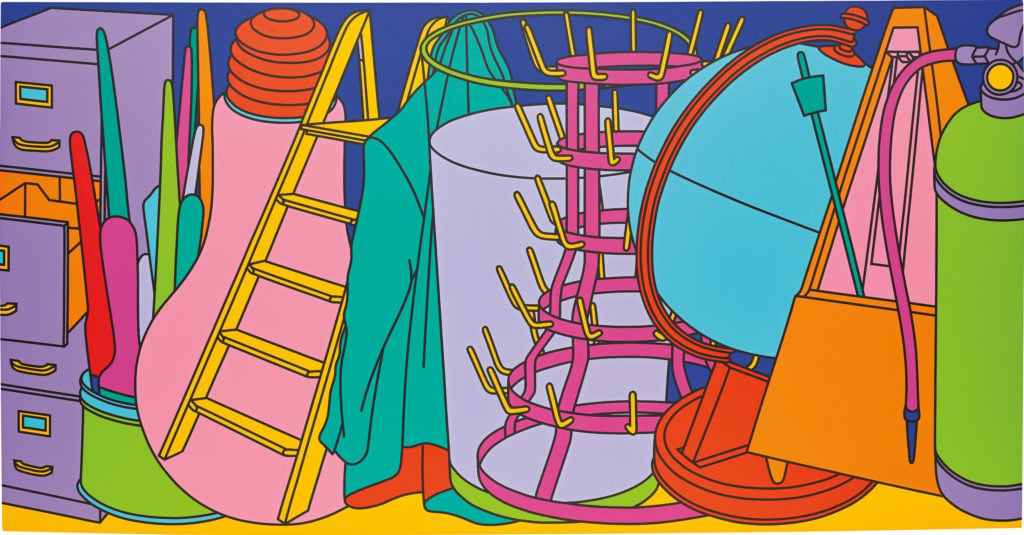
Michael Craig-Martin, Full
(2000). Image courtesy of Phillips.
Tibbles shopped his collection at all three major auction
houses, but ended up consigning to Phillips in part because of his
pre-existing relationship with the company’s global chairwoman,
Cheyenne Westphal.
“Cheyenne has always been incredibly kind, super smart, and a
very nice person,” Tibbles tells Artnet News. “She knows her stuff,
so it felt natural to ask her.”
“The response so far has been very positive, especially given
the majority of the works have not been seen since Robert acquired
them directly from the artists or galleries the same year of their
creation,” Westphal tells Artnet News. (The collection—which
Westphal calls a “time capsule” that captures “the genesis of a
movement that transformed contemporary British art”—has been on
view at the auction house since February 3.)
Parting Is Such Sweet Sorrow
Asked why he thinks now is the right time to part with his
collection, Tibbles says he feels he’s been spoiled by his good
fortune. “I was shown all these fantastic works just as the
artists had painted them.” That heydey lasted around 15 years,
after which making smart additions became more difficult.
“I kept buying works which filled in gaps, and honestly I found
that to be a very flat experience,” Tibbles says. Realizing his
collection was complete, he says he felt “liberated.”
“I want to live with and look at the stuff that I’ve bought,” he
says. “Some people are not like that. Some people are very
acquisitive, but not me.”
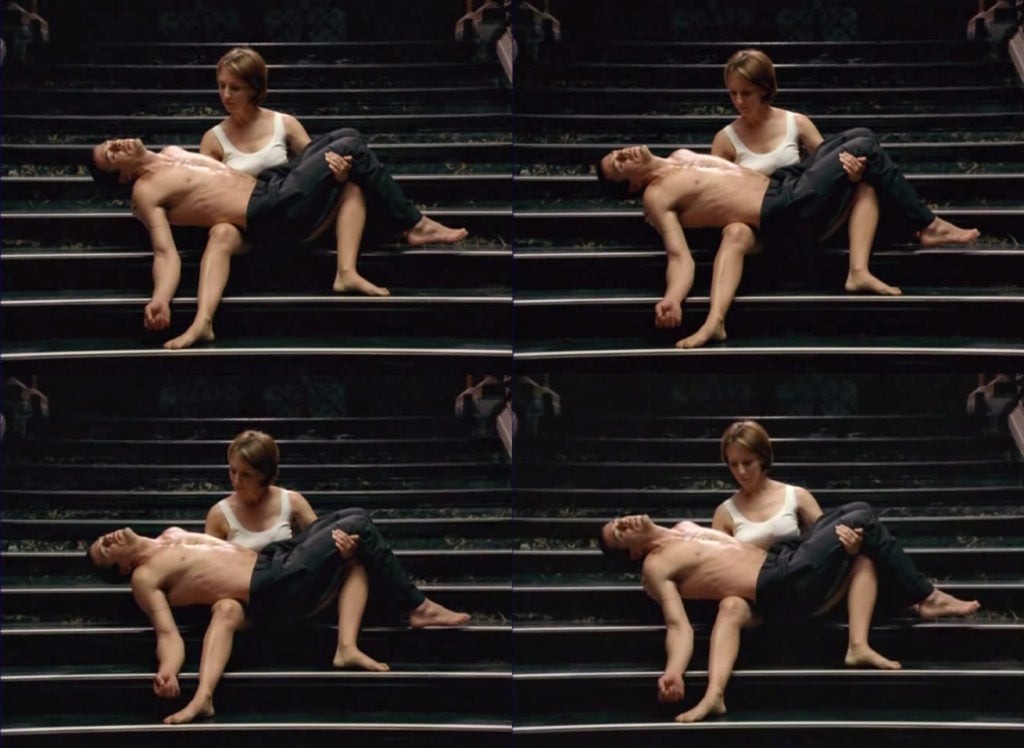
Sam Taylor-Johnson, Pietà
(2001). Image courtesy of Phillips.
But it does not matter to him that the collection stays
together. “What would give me the greatest pleasure is to know that
all of the works have gone to good homes.”
Tibbles says he doesn’t know yet what he will do with all his
open wall space, but he is now trying to learn about younger
artists.
“I am looking forward to the new phase enormously,” he says. “It
is really like having a friendship or falling in love. You don’t
know quite what is going to happen.”
“Cool Britannia: The Robert
Tibbles Collection” will be sold at at Phillips’s 20th Century
and Contemporary Art evening sales on February 13 and 14 and at
subsequent sales in London and New York.
The post Meet Collector Robert Tibbles, Who Snapped Up a
$1,000 Damien Hirst Work in 1989 That Could Soon Sell for $2.3
Million appeared first on artnet News.
Read more https://news.artnet.com/market/robert-tibbles-collection-phillips-1771608
Further reading


Leave a comment