
‘How Can We Think of Art at a Time Like This?’: A Star-Studded Online Show Weighs the Triviality—and Importance—of Art in a Crisis
As galleries and museums across the US shuttered this week in
a desperate attempt to slow the spread of the
novel coronavirus, the writer-curators Barbara Pollack and Anne
Verhallen spent the weekend putting together a group show
responding to the crisis—one that would be hosted not in a white
walled gallery, but online.
On Monday, they unveiled the fruits of their efforts, titled
“How Can We Think of Art in a Time Like
This,” featuring, thus far, work by Lynn Hershman
Leeson, Judith Bernstein, Janet Biggs, Miao
Ying, Dread Scott and Jenny Polak, Kathe Burkhart,
and Zhao Zhao.
The prevailing themes, as you might expect, are dark. “We were
looking for artists who had futuristic pessimism, political
outrage, or psychic meltdowns,” Pollack told Artnet News.
“Art in a Time Like This” is meant to serve as a platform
for the exchange of ideas at a time when the world is in turmoil
and everyday activities are disrupted by social distancing and
increasingly strict directives to stay at home.
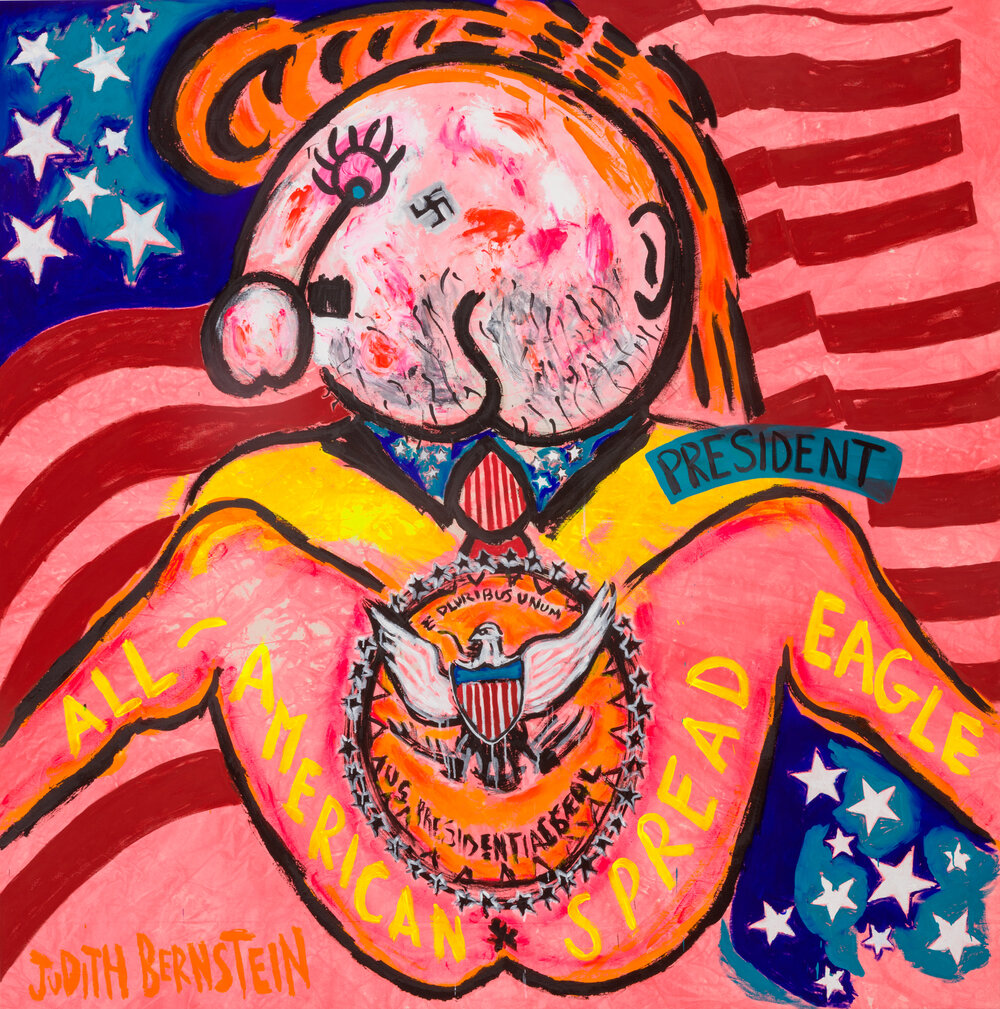
Judith Bernstein, President
(2017). Courtesy of the artist.
“The comments page allows for open dialogue,” Pollack added. “We
want a space where people can vent, can get hysterical, can get
outraged, and can have free expression when so much is getting
cancelled and shut down.”
The curators hope the show might resemble traditional modes of
art viewing. “We invite people to treat it as if they are visiting
a proper exhibition,” Verhallen told Artnet News. “Each artist has
submitted about five works, and some of it is video content. We
hope people take the time to navigate through the different artists
and read their statements.”
With all that is going on in the world right now, both curators
are quick to acknowledge that art, and the ability to see it, may
seem relatively unimportant.
“It’s always been an intriguing contradiction between how
important art is and how trivial it can be at the same time,” said
Pollack. “When crises come up, I think it’s a question we all ask
ourselves,” she said. “There is always something going on in the
world that seems to overshadow creative effort, and yet it’s so
important for creative effort to continue.”
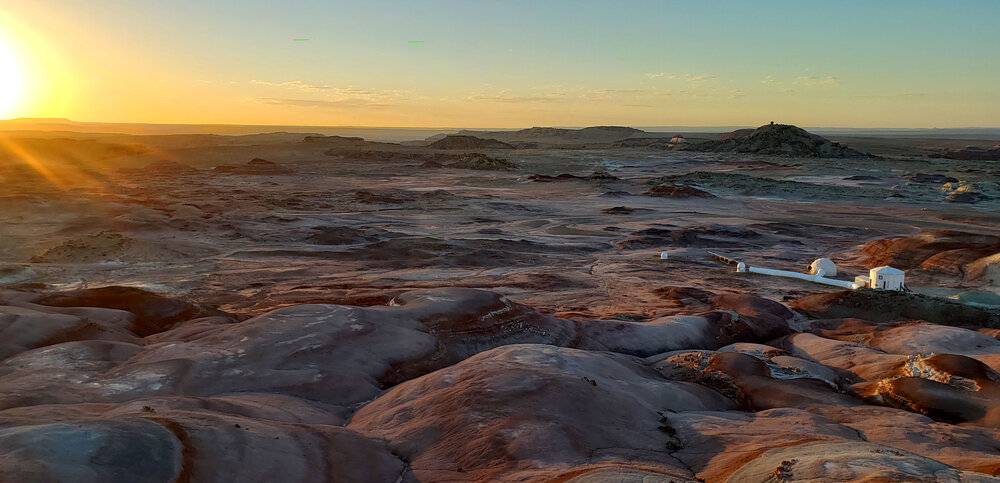
Janet Biggs, Mars Desert Research
Station (2017). Courtesy of the artist.
The exhibition is also something of a lifeline for artists who
are suddenly seeing their schedules cleared, upcoming and projects
and exhibitions on indefinite hold as the world deals with the
global threat to public health.
“The feeling of having something canceled can be terrible and
very traumatic for an artist,” Pollack said. “We wanted a space
that gave people a chance to share their work.”
The curator and critic was speaking from experience. Back in
2001, when Pollack was a practicing artist, her photography show
“Dance Party” was set to open on September 12, the day after the
deadly terrorist attacks on the World Trade Center.
At the time, creating an online exhibition wasn’t something
Pollack considered. Fast forward nearly 19 years and galleries, art
fairs, and institutions are scrambling to offer digital
alternatives to planned events, like the online viewing room for
Art Basel Hong Kong, which opened to VIPs today.
“What’s different about our initiative is we’re not selling
work; we’re not making it a commercial space at all,” said Pollack.
“We’re inviting artists to a curated show.”
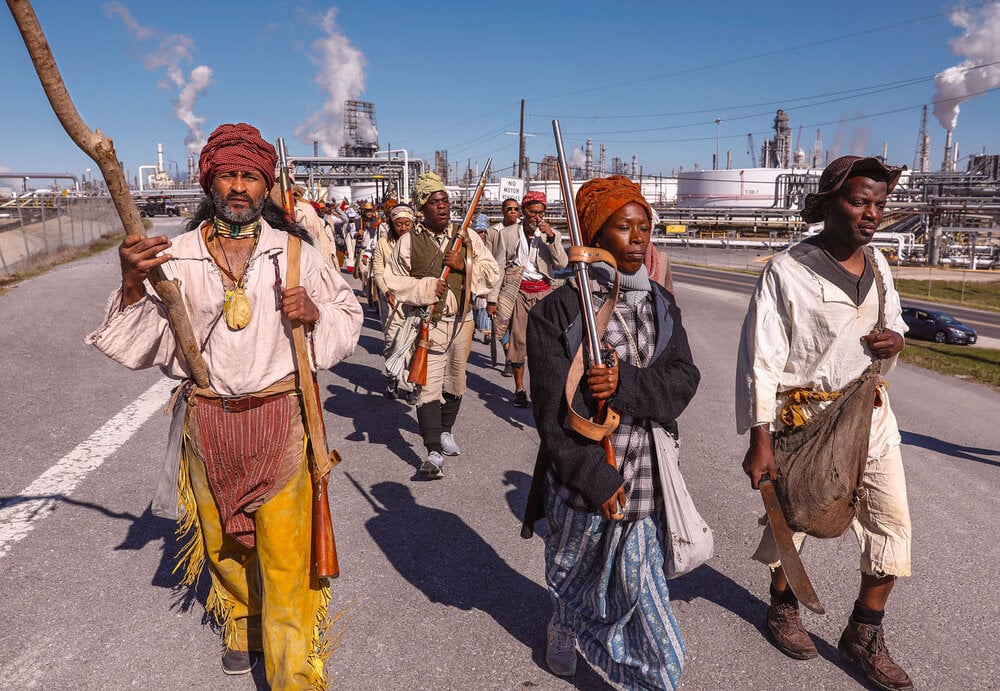
Documentation of Slave Rebellion
Reenactment, a community engaged performance initiated by
Dread Scott. Performed November 8-9, 2019 in the outskirts of New
Orleans. Photo by Soul Brother.
The curators will be adding work by new artists every day, with
Ai Weiwei and Shinique Smith among those on deck. Most are
contributing existing pieces, although at least one artist is
working on new project for the occasion.
The project came together remarkably quickly. The duo spent
48 hours recruiting the artists and launching the site with
all the associated social media channels (all while working
remotely from their respective apartments).
For Pollack, who has been dealing with the fallout from
coronavirus longer than most, moving quickly felt essential. An
expert on Chinese art, she was forced to suspend her travel plans
as early in January, when the initial outbreak of the disease saw
exhibitions she had curated in the country canceled.
“I think people are in the first wave of shock in New York City,
but for those of us who deal with Asia, the shock hit a little
earlier,” Pollack said.
“Immediacy was obviously very important to us,” said Verhallen.
“We didn’t want to wait.”
The post ‘How Can We Think of Art at a Time Like This?’: A
Star-Studded Online Show Weighs the Triviality—and Importance—of
Art in a Crisis appeared first on artnet News.
Read more https://news.artnet.com/exhibitions/online-exhibition-art-at-a-time-like-this-1807593
Further reading


Leave a comment