
A Former Janitor at a Migrant Detention Center Has Turned Items Confiscated From Detainees Into Art
The desert along the Mexico-U.S.
border is a treacherous place. People with no other options,
escaping difficult situations often produced by U.S. intervention
in their homelands, travel shocking distances in search of a better
life. And then, if they’re lucky enough to survive, they are often
captured by U.S. border agents, processed, and deported. “El Sueño
Americano | The American Dream: Photographs by Tom Kiefer,” a new
show at the Skirball Cultural Center in Los Angeles, hones in on a
step in that unforgiving process.
Tom Kiefer yearned to photograph
grain silos and billboards—“the American landscape,” he calls
it—like his heroes Walker Evans, Robert Frank, and Frank Gohlke.
But his idea of the American landscape, and the focus of his lens,
changed after taking a job as a custodian at the U.S. Customs
Border Protection processing center a few miles outside of the
small southwestern Arizona town of Ajo, where he
lives.
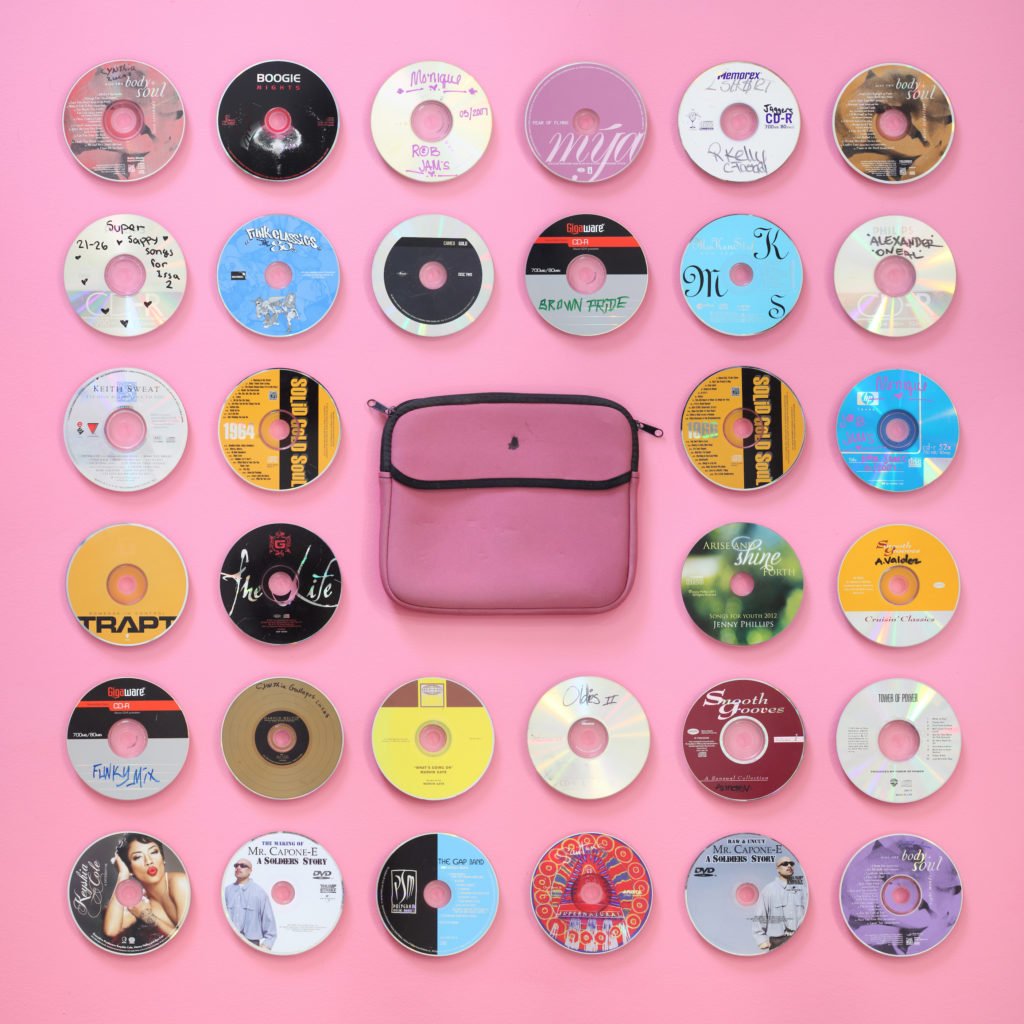
© Tom Kiefer, Cynthia’s CD
Collection (2017). Courtesy of Redux Pictures.
There, he began collecting
objects confiscated from apprehended migrants and discarded in the
trash that it was his job to take out. Kiefer eventually figured
out ways to photograph the belongings as a way to honor their
former owners.
In the early 2000s, Kiefer had moved from L.A. to the small
former copper mining community of Ajo in the Sonoran Desert, so he
could achieve his goal of becoming a homeowner, something that had
proven impossible in Los Angeles. He took a job as a janitor,
because “art doesn’t pay the bills,” he tells me over the phone
from his home in Ajo, about 40 miles or so from the Mexican
border.
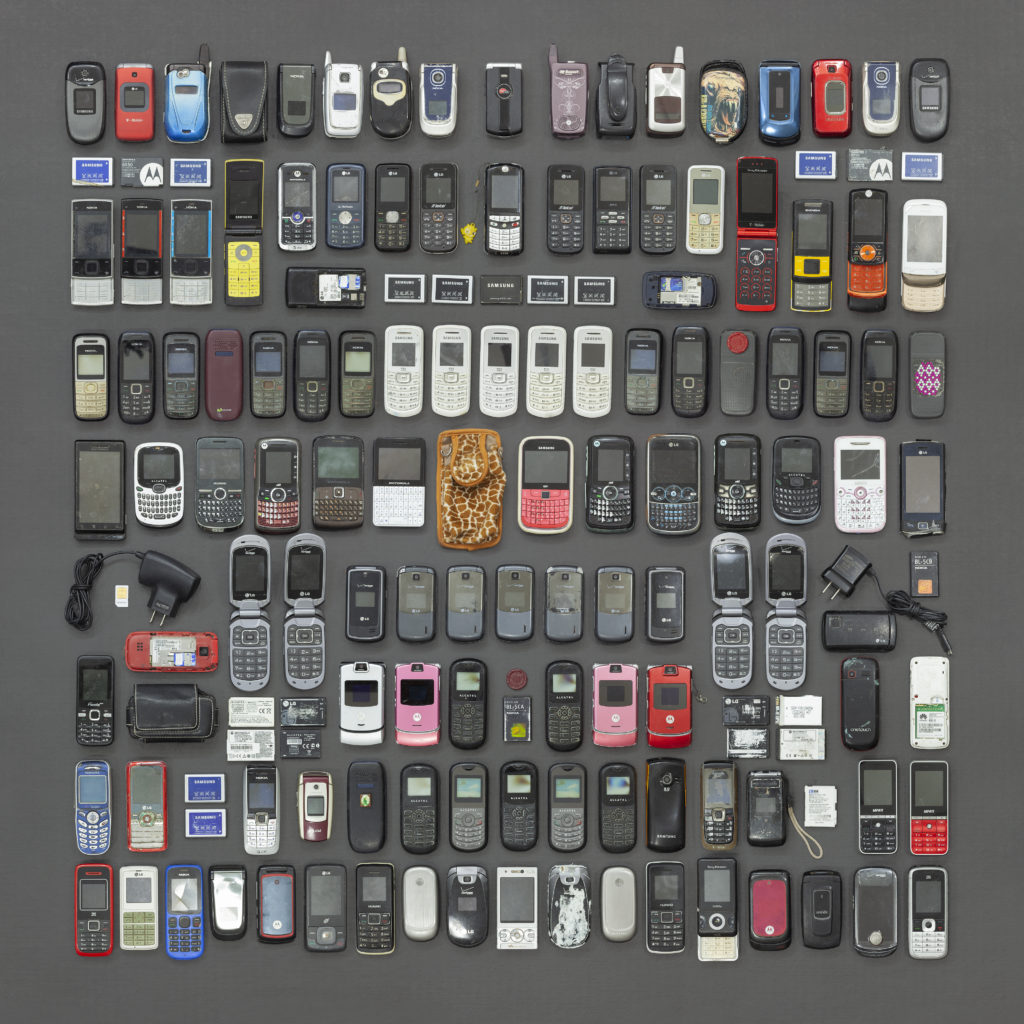
© Tom Kiefer, Cell Phone Assembly
(2019). Courtesy of Redux Pictures.
Kiefer went in every day to the
processing center and did his job until 2014. Moving through the
space as a janitor, he could blend in, and he became almost a fly
on the wall, able to see the entire operation. Vehicles would pull
into the sally port—a small fenced-in docking station—of the
center, and out would step people who had crossed the Mexico-U.S.
border, risking it all to seek a better life in America before
being picked up by CBP officers.
“The people that had been apprehended in the desert would pile
out, and then that’s where they would start the first stages of
processing,” Kiefer recalls. “First, either the agent or the person
apprehended go through the backpacks [full of belongings that the
migrants had been carrying with them through the desert]. They
basically empty just about everything in the backpack because they
aren’t allowed extra shoes or clothing they brought with them, or
belts or shoelaces or toiletries; anything considered nonessential
or potentially lethal was confiscated and thrown in the trash.”
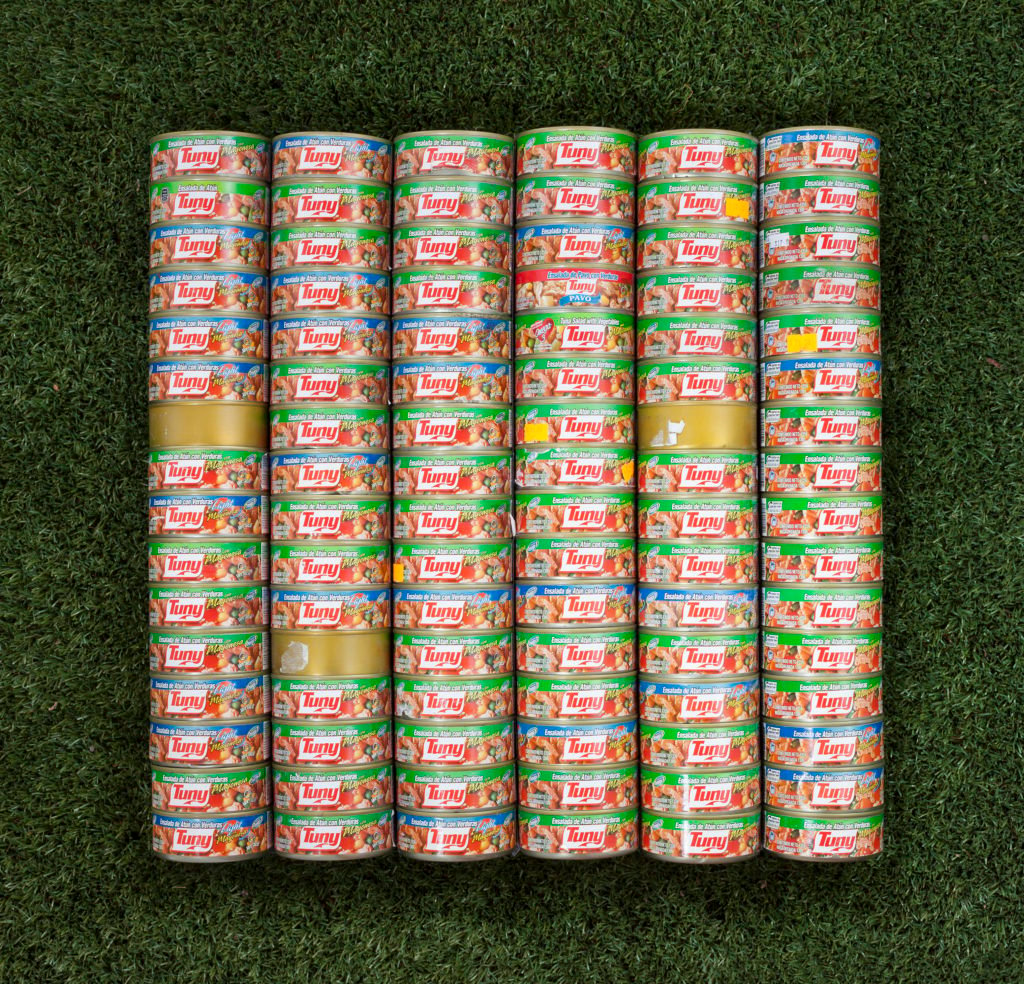
© Tom Kiefer, Tuny (2015).
Courtesy of Redux Pictures.
At first, Kiefer noticed that
there was quite a bit of non-perishable food being thrown out—stuff
that needed to last the trek through the desert—and in 2007, he
asked his supervisor if he could bring the items to a food bank.
The supervisor acquiesced and Kiefer started going through the bags
to pull out food. But one day he noticed another item in among the
bags: a rosary, and other personal items.
“And I thank God that I just listened to my heart and my head,
and said, ‘No, I can’t, I can’t let this rosary stay in the trash,
or this Bible, or this family photograph,’” Kiefer recalls
thinking. “’This just ain’t right.’”
So he began to clandestinely swipe things destined for the
garbage. He would stash them at home in boxes, organized by
object—toothbrushes in one box, rosaries in another, kids’ shoes in
one, medication in another.
“What I recovered was such a
small portion [of the objects confiscated from the migrants],”
Kiefer says. “I was there to empty trash. I couldn’t stand around
above a dumpster or garbage can—everything was a split-second
decision. And I couldn’t draw any attention to myself.”
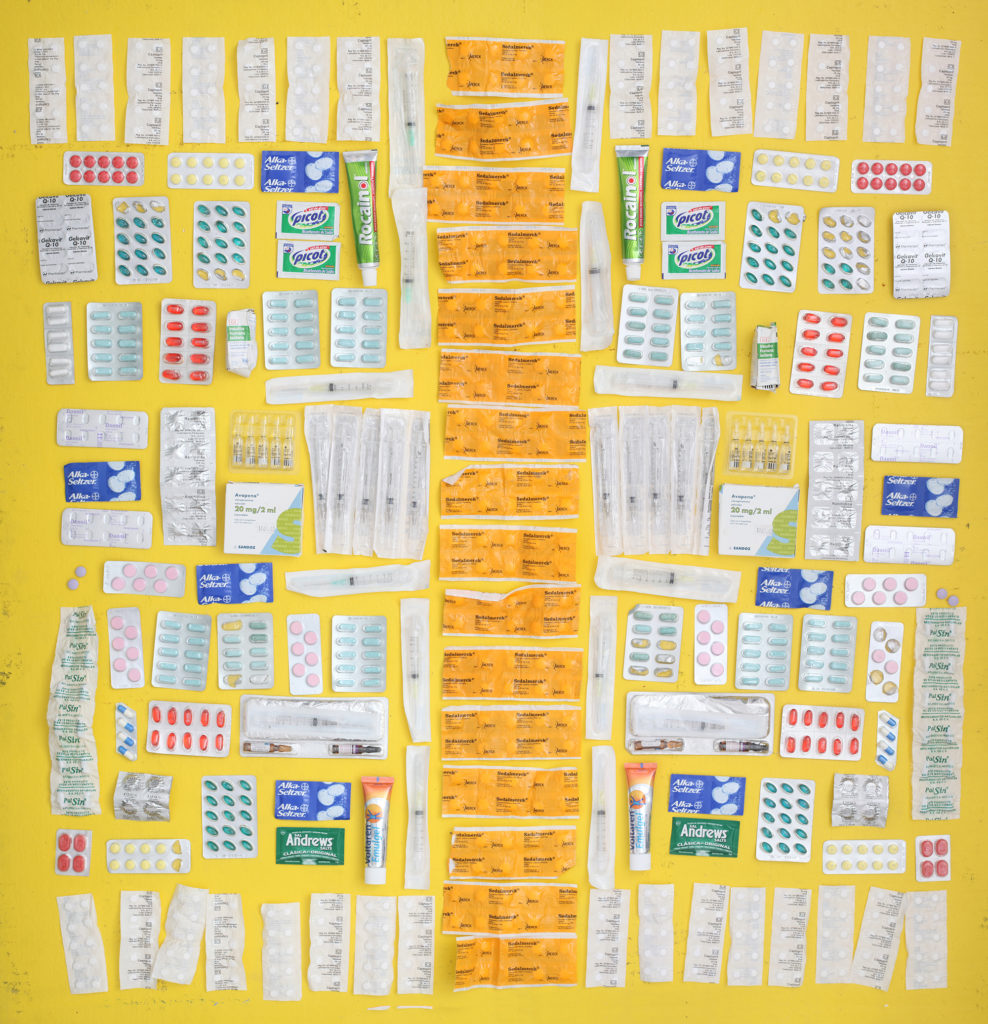
© Tom Kiefer. Pain Relief (2017).
Redux Pictures.
For six years, Kiefer continued
to his collection, not knowing exactly what he was going to do with
it all. He didn’t want to
create false, staged narratives by placing the objects in a desert
setting, as if they had been left behind. Finally, he realized that
he could use color and type to bring the objects to life. He
photographed black combs on a black background and pink combs on
pink backgrounds; arranged toothbrushes in an almost ironic red,
white, and blue; and placed rosaries together against a vibrant red
backdrop. For Kiefer, the images are a reminder that the people
were here, and that they aren’t forgotten.
“Where I always come from is a
place of deep reverence and respect towards these belongings that
were taken away from people,” says Kiefer. “I use color to, not to
doll it up or make it pretty, but just to make it beautiful—give it
its rightful moment in the sun, so to speak.”
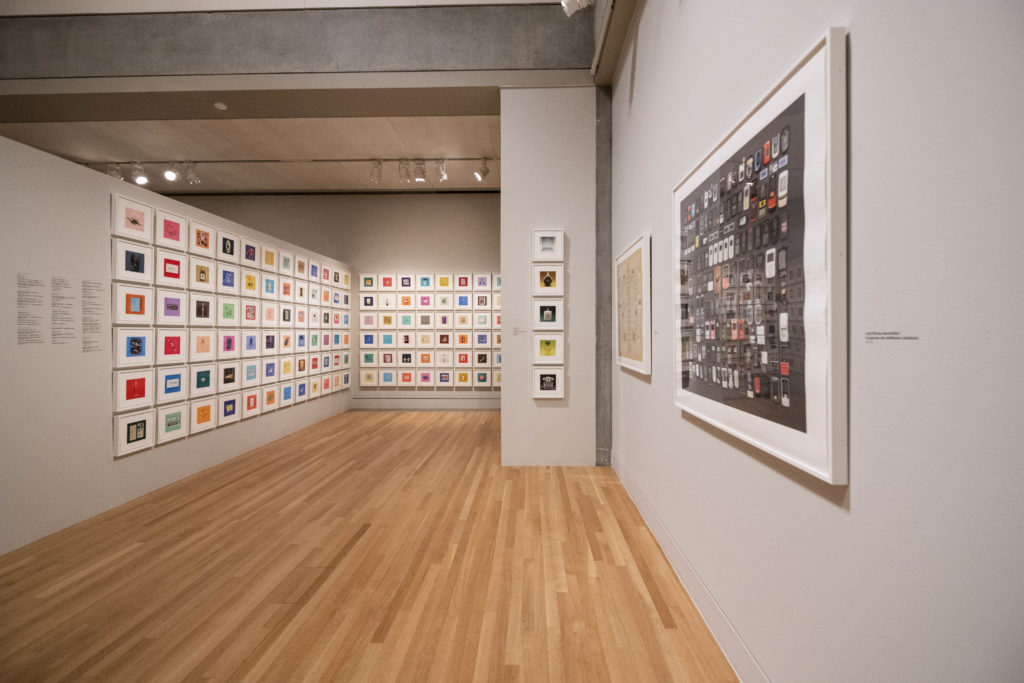
Installation view of “El Sueno
Americano” at the Skirball Cultural Center.
Kiefer sees his images as
documents of a dark period of American history, one that he thinks
will be remembered with shame.
“One of the things that I want
this work to accomplish is just for people to think for themselves,
about what is our country becoming?,” he says. “Is this how we want
to treat the most vulnerable? I mean, we’re not talking about
terrorists, for God’s sake. You take away a Bible and a rosary. How
is that protecting the border?”
The post A Former Janitor at a Migrant Detention Center Has
Turned Items Confiscated From Detainees Into Art appeared first
on artnet News.
Read more https://news.artnet.com/art-world/tom-kiefer-photos-confiscated-items-migrants-1723776
Further reading


Leave a comment