
As Asia’s Art Market Begins to Reopen, Here’s Everything You Need to Know About Three of Its Most Vibrant (and Underrated) Art Capitals
A version of this story first
appeared in the spring 2020 Artnet Intelligence
Report.
Over the past decade, Hong Kong’s vibrant market has gained
ever-greater primacy in the region through headline-grabbing
auctions, a mushrooming of blue-chip international gallery
outposts, and, above all, the Art Basel Hong Kong fair,
which—until this year’s
cancellation amid the outbreak of COVID-19—convened the
industry’s most powerful players on the island city every
March.
The Special Administrative Region owes its pole position to its
status as a tax-free mercantile hub, though its biggest boost has
come not from the global marketplace, but rather from the
tremendous economic growth right across its border, in mainland
China. In the first decade of the new millennium, the country saw a
staggering GDP increase that peaked in 2007 at 14.2 percent,
according to the World Bank. After a dip during the financial
crisis, its growth climbed back up to 10.6 percent in 2010—the same
year that the Greater China region (which includes mainland China,
Hong Kong, Macau, and Taiwan) became the world’s second-largest art
market.
“Frankly, Chinese clients have been the golden goose for Western
dealers and gallerists,” said Laure Raibaut, a Hong Kong-based art
consultant and curator. “They could sell high-value works of varied
quality for some years, and some [galleries] opened in Hong Kong to
benefit from the favorable tax conditions.”
Fast-forward a decade, however, and the outlook is less rosy.
Last year, China’s annual GDP growth fell to the lowest level since
1992, a decline that has been linked to the ongoing trade war with
the United States.
Meanwhile, Hong Kong recently endured the worst political crisis
in its history. As pro-democracy protesters flooded the streets,
the city’s economy shrunk for two consecutive quarters last year.
Unsurprisingly, the art market stumbled as well: total auction
sales in Hong Kong and mainland China shrank 5.4 percent in 2019,
according to our analysis—the second annual dip in a row.
Considering the Opportunities
Regardless of the largely unknowable future of the pandemic, it
now appears likely that Hong Kong and other Asian cities are likely
to recover more quickly than those in Europe and the United States.
And in countries like South Korea and Taiwan, the outbreak was less
widespread than in Hong Kong. All this combines to make the Asian
market—which also offered a compelling opportunity in the wake of
the Great Recession—an increasingly appealing place for local and
international art sellers alike to watch.
And there are many potential sites for growth. Before the 1997
financial crisis rocked the region, Hong Kong, Taiwan, Singapore,
and South Korea were collectively known as Asia’s Four Little
Dragons. The nickname was meant to symbolize the quartet’s strong
economic growth in the decades following the 1960s, with Taiwan and
South Korea establishing themselves as manufacturing powerhouses
while Hong Kong and Singapore became financial centers.
Decades later, these are still among the wealthiest places in
East Asia. And while Singapore, South Korea, and Taiwan have not
yet eclipsed Hong Kong as art-market destinations, the three former
Little Dragons have lively scenes, with quality museums, dynamic
art schools, forward-thinking galleries, and acclaimed artists.
A combination of ambitious private-sector initiatives and
committed public support suggests these three countries have a
promising future—and that Asia’s art world is built on a whole lot
more than just one city.
Singapore
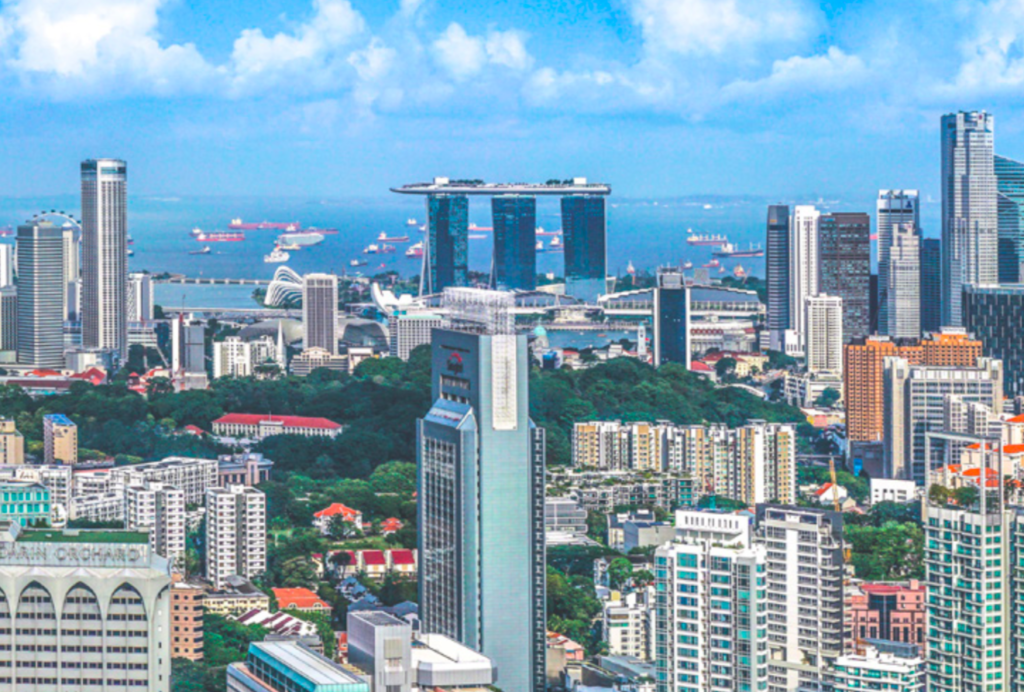
City skyline of Singapore. Courtesy of
flickr creative commons.
The Lion City’s art scene is informed by its long and complex
history as a crossroads for British, Malaysian, and Indian people,
as well as the Chinese diaspora. “It is an access point of
Southeast Asia, showcasing the best from the region,” local curator
John Tung said.
The island’s first major artistic movement was the Nanyang Style
of the 1930s, characterized by Chinese migrant artists’ impressions
of their new landscape. From the 1950s to ‘70s, artists responded
to colonialism and independence through Social Realism. Ink was
(and remains) an important medium, exemplified by Tang Da Wu’s
reinvention of the genre in the 1980s.
The Singaporean government is a bullish supporter of culture,
funding up to 85 percent of the country’s arts activity. But public
support is a double-edged sword—Singapore is known for its
censorship. Exhibitions must get licenses before they can open, and
anything that “undermine[s] public order” will be rejected.
Major Industries
Finance, energy, manufacturing, electronics
Wealth
Singapore comes in fourth in Global Finance magazine’s
ranking of the world’s wealthiest countries.
Economy
Still, it hasn’t escaped the volatility hitting the region. Last
year, Singapore’s economy grew between zero and 1 percent.
Art Fairs
After the abrupt cancellation of Art Stage Singapore in 2019,
two art fairs have emerged to fill the gap: the boutique S.E.A.
Focus fair in January and the larger Art SG in October.
Key Galleries and
Institutions
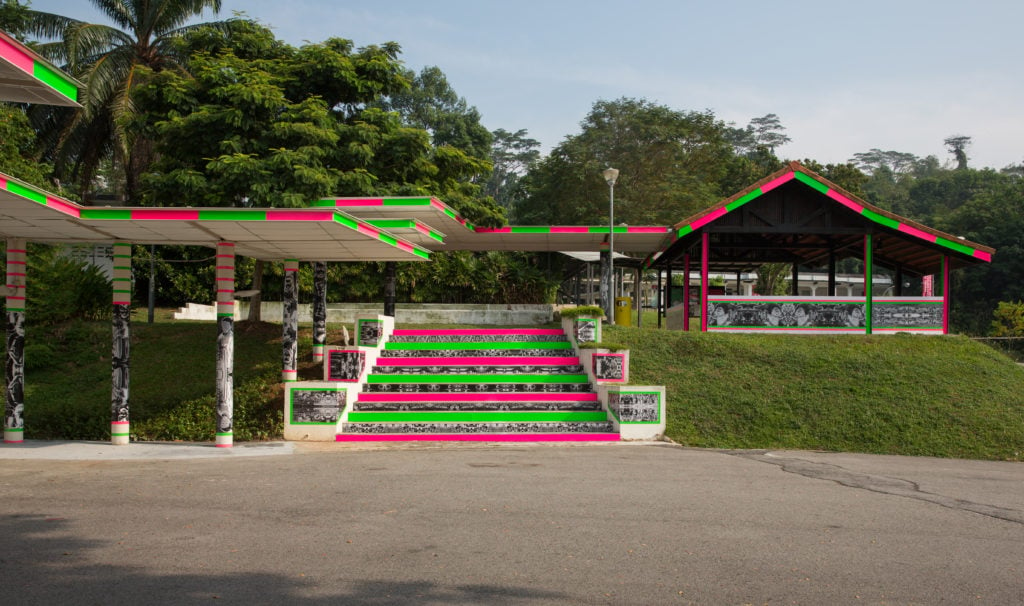
Biennale Vanghoua Anthony Vue,
Present-past-patterns, 2019. Image courtesy of Singapore Art
Museum.
National Gallery Singapore
Housed in the former city hall and supreme court buildings, the
five-year-old museum boasts the world’s largest public collection
of Singaporean and Southeast Asian modern art.
Singapore Art Museum
Under renovation since 2019, the Lion City’s first museum has
positioned itself as a contemporary art institution at the nexus of
Southeast Asia. It also organizes the Singapore Biennale.
Gillman Barracks
The former military barracks were transformed into a
contemporary art hub in 2012 to attract commercial galleries to
Singapore. The public-private institution now houses 12 homegrown
and international galleries and hosts the S.E.A. Focus fair.
STPI Creative Workshop & Gallery
A regular at leading art fairs, STPI is a hybrid commercial
gallery and nonprofit with a special focus on works on paper. The
nonprofit portion encompasses exhibition space, a residency
program, and artists’ studios. (Around 25 percent of its budget
comes from the government; the rest is funded by the commercial
operation.)
Collectors to
Know: Nathaniel Gunawan
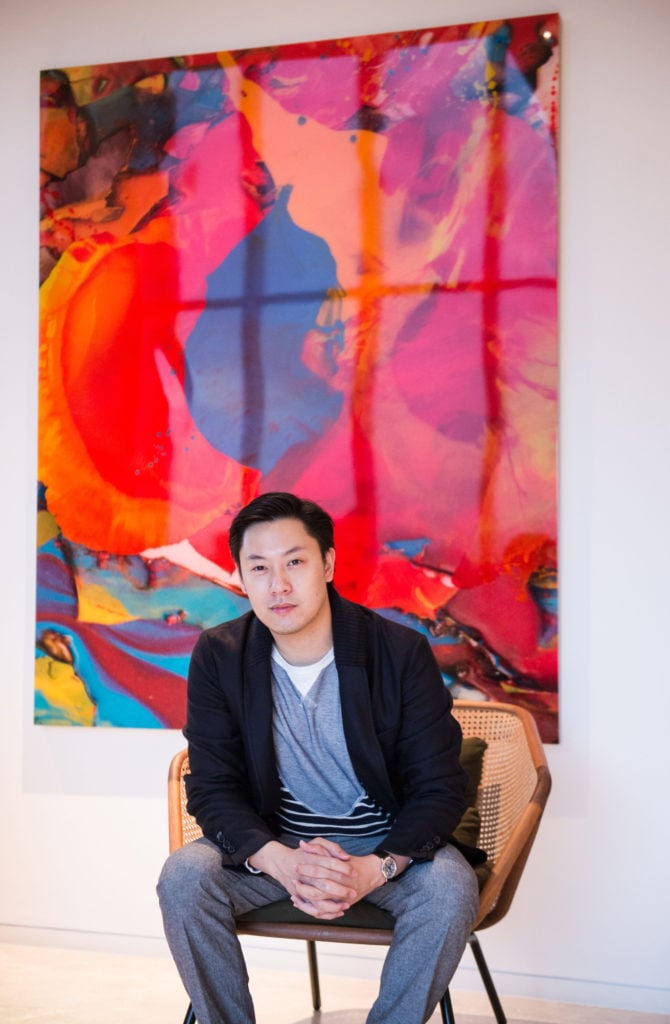
Portrait of Nathaniel Gunawan, with a
work by Arin (Dwihartanto) Sunaryo from his collection. Courtesy of
Nathaniel Gunawan
What to Know
Gunawan, the director of a bottled-water company, is part of a
rising generation of Singaporean art enthusiasts. He sits on the
board of young collectors at the Art Jakarta fair.
What He Collects
Together with his wife, Natalie, Gunawan pays regular visits to
galleries and artists’ studios across the region. They have
acquired work by Chun Kai Qun, along with Arin Sunaryo, Syagini
Ratna Wulan, and many pieces by Robert Zhao Renhui.
In His Own Words
Gunawan’s interest in collecting grew out of his sense of
isolation in the digital age. “I want to be part of a community
where I can talk about intellectual, political, or philosophical
things or feelings,” he told us. “A lot of young collectors who are
still with their family business do not have the capital to become
major collectors yet. I’m still collecting on my own salary.”
Jim Amberson
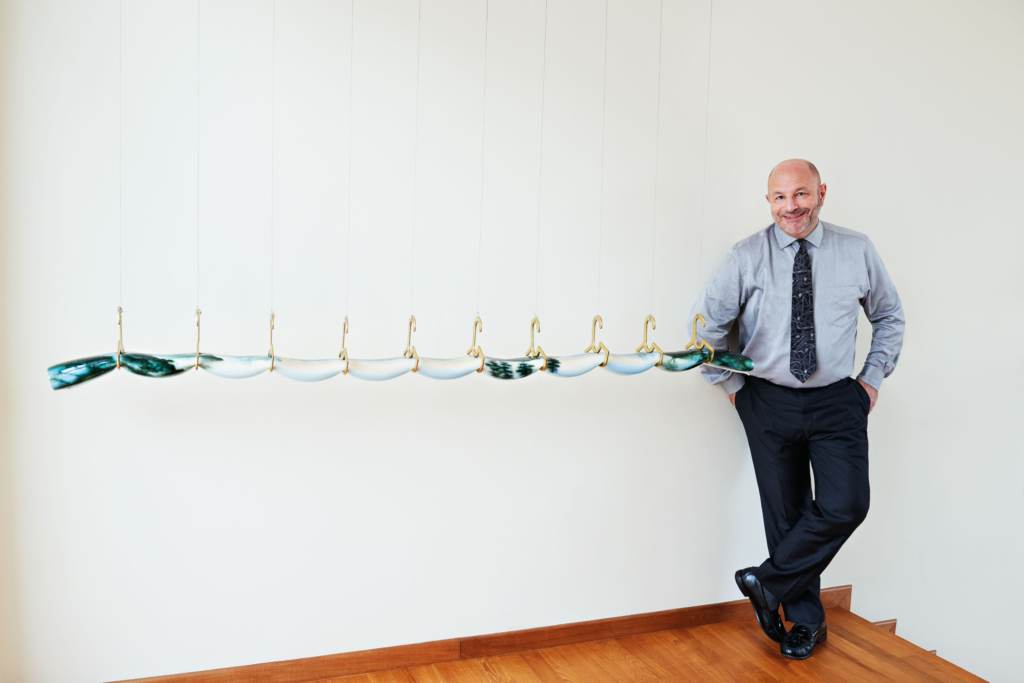
Jim Amberson. Photo courtesy Jim
Amberson.
What to Know
A director at a multinational insurance company, Amberson has
been based in Asia since 1998 and serves as a member of the S.E.A.
Focus advisory committee.
What He Collects
An enthusiastic collector of art from across Southeast Asia,
Amberson owns work by Geraldine Javier (the Philippines); Sopheap
Pich (Cambodia); Handiwirman Saputra (Indonesia); and Suzann Victor
(Singapore).
In His Own Words
“Singapore has some of the best-equipped and professional
museums and arts organizations in the region, not to mention an art
scene full of fresh and talented young artists,” Amberson told
us.
Ann Mui Ling
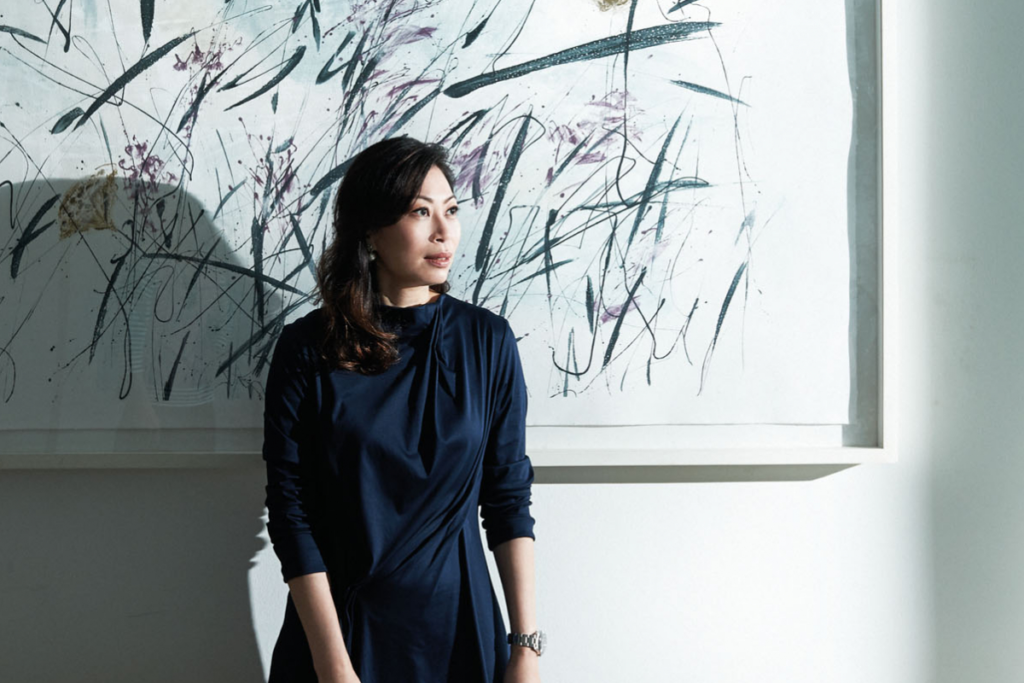
Ann Mui-Ling, courtesy Ann Mui-Ling.
What to Know
An executive at Singapore’s ANZ Bank, Mui Ling has been
collecting art since 2005. Her passion led her to become a
volunteer at the Singapore Art Museum for over a decade.
What She Collects
Particularly interested in works on paper, she has acquired
pieces by the late Singaporean artist Chua Ek Kay and also owns art
by Genevieve Chua, Hong Sek Chern, and Ming Wong.
In Her Own Words
“I feel the art is more important than the collector,” she has
said. “I prefer to see more opportunities for local artists to show
their works to the public (not only in museums).”
South Korea
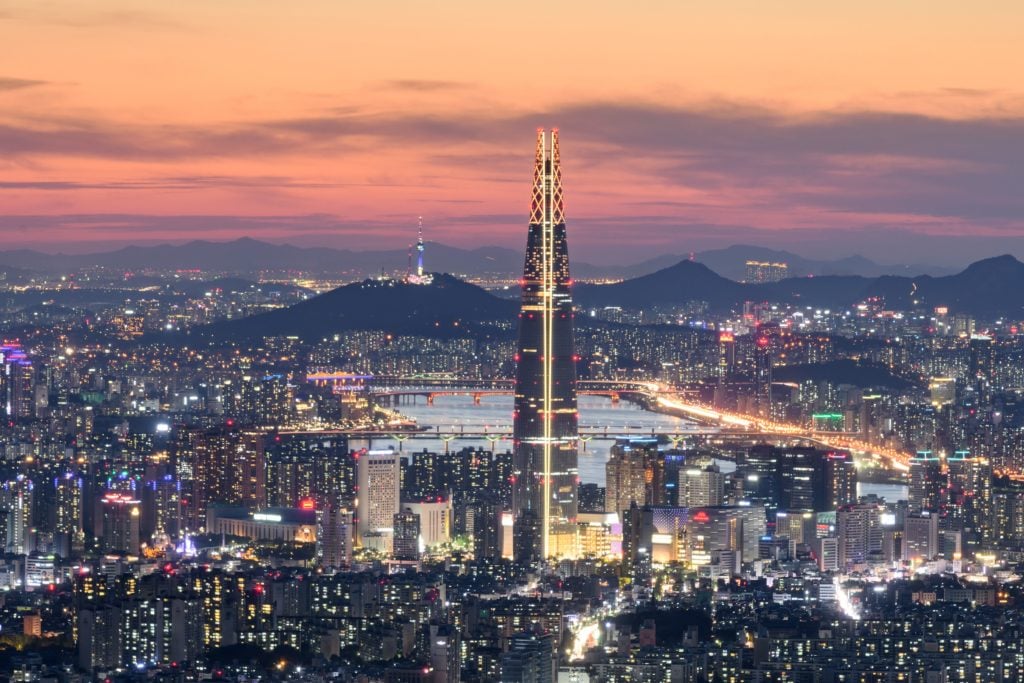
Seoul city skyline and Han river during
sunset. (ED JONES/AFP via Getty Images)
Nam June Paik, Do Ho Suh, Lee Ufan—there is no shortage of
renowned artists from South Korea. And don’t forget Tansaekhwa, a
major minimalist art movement in the mid-1970s that became a global
art-market craze about five years ago.
Korea’s market has also been boosted by a long tradition of
corporate collecting. Samsung and other companies have built
impressive holdings, often under the direction of their executives’
wives. Now, individuals are starting to catch up.
“There were only a few big collectors in Seoul in the past, but
within the last 10 years, people started to engage more,” said
Kyungmin Lee, director of the local project space Whistle. “The
major collectors are still conservative, but the number of young
collectors is growing.”
While galleries like Hyundai and Kukje have been pushing South
Korean art abroad, international businesses have set up shop in
Seoul, including Pace, Perrotin, Lehmann Maupin, and Various Small
Fires.
Major Industries
Electronics, automobiles, telecommunications
Economy
South Korea generated only 2 percent economic growth last year,
in part because of a downturn in the computer-chip market.
Government
The country has been described as a “new patron state” because
of its robust cultural policies, which allow for the “coexistence
of cultural freedom and state intervention,” according to Hye-Kyung
Lee, a senior lecturer at King’s College London.
Market Watch
The Korean International Art Fair in Seoul has begun to attract
some international galleries. But others have their eye on Busan,
the port city that is home to a successful film festival and a
growing gallery scene.
Galleries and
Institutions to Know
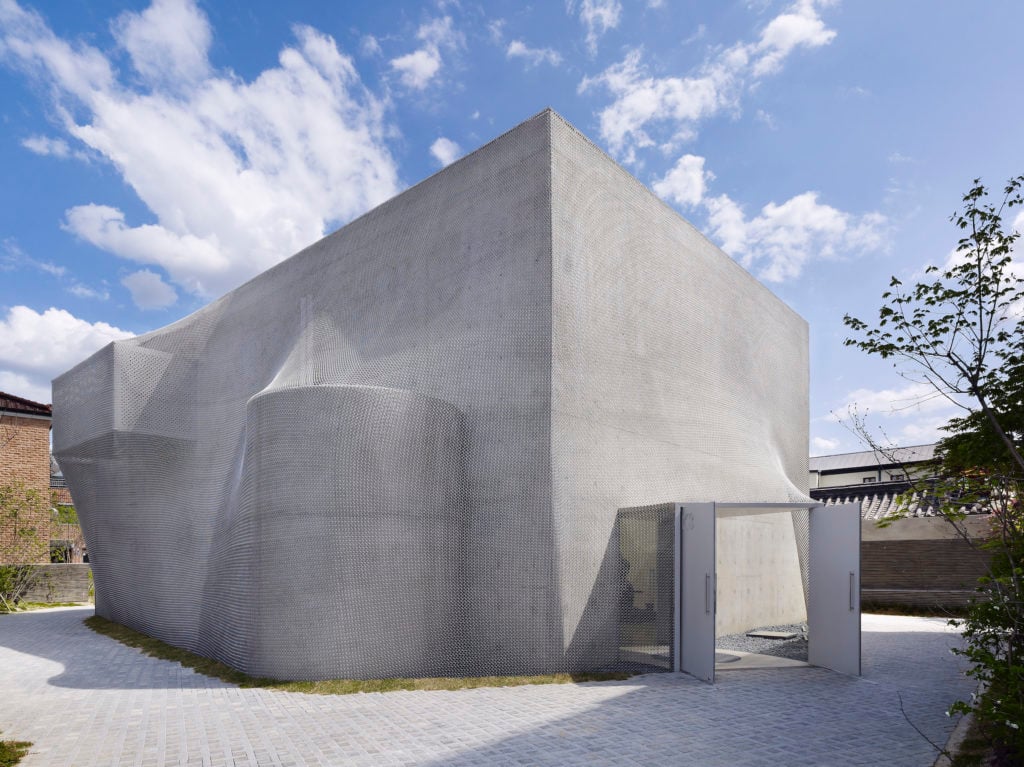
Kukje Gallery. Photo: Yong-Kwan Kim.
Courtesy of Kukje Gallery.
Leeum, Samsung Museum of Art
Founded by the electronics giant’s nonprofit cultural arm in
2004, the museum houses a stellar collection of traditional Korean
art as well as modern and contemporary work. The Seoul institution
consists of three buildings, each designed by a star architect:
Mario Botta, Jean Nouvel, and Rem Koolhaas.
Asia Culture Center
Situated in Gwangju, the city that witnessed South Korea’s
bloody struggle for democracy, the center promotes Asian culture
through exchange, research, and education. Past projects include a
collaboration with the Bangladesh Liberation War Museum to
commemorate the 40th anniversary of the May 18 Democratic Uprising
in 1980.
Museum San
Tucked into the mountains of Wonju, about a two-hour train ride
from Seoul, this museum is South Korea’s answer to Naoshima in
Japan. Designed by Tadao Ando, it allows visitors to commune with
nature and meditative art by the likes of James Turrell.
Kukje Gallery
Since 1982, Kukje Gallery has showcased Korean and international
artists ranging from 70-year-old landscape painter Min Joung-ki to
critically beloved sculptor Haegue Yang. In addition to its space
in the heart of Seoul, the gallery has a branch at the cultural
complex F1963 in Busan.
Collectors to
Know: Hyun-Sook Lee
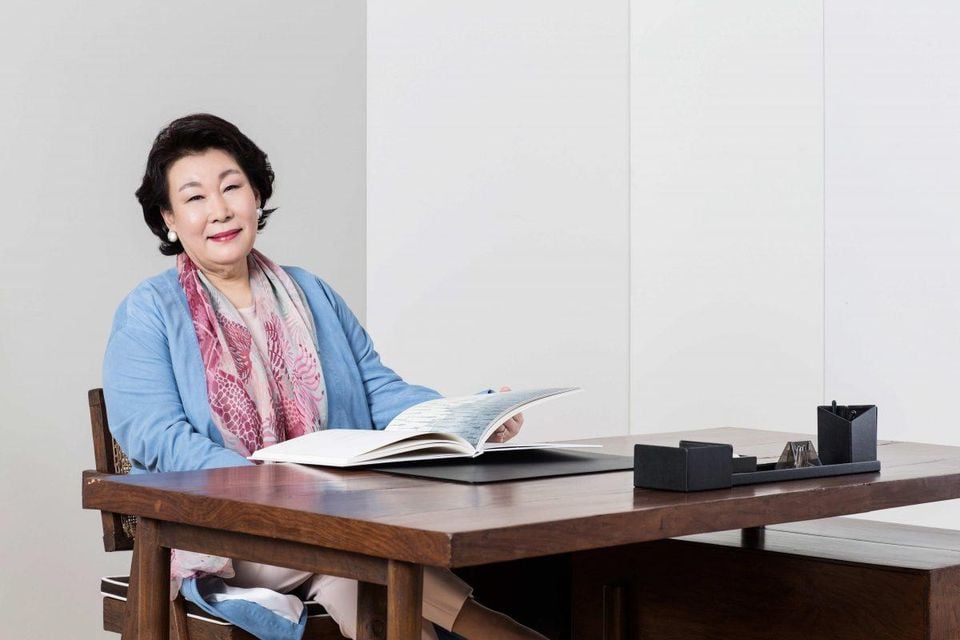
Hyun-Sook Lee. Courtesy Kukje
Gallery.
What to Know
She may be best known as the founder of Kukje Gallery, but
Hyun-Sook Lee started out as a collector herself, along with her
businessman husband.
What She Collects
Her eclectic holdings include works by Alexander Calder, Roni
Horn, Anish Kapoor, and Kyungah Ham. In some cases, she mixes
business with pleasure, representing artists she also collects,
like Haegue Yang.
In Her Own Words
“Many Korean artists have been educated overseas, which creates
a solid foundation for global outreach and reception for their
works,” Lee told us.
Choi
Seung-hyun
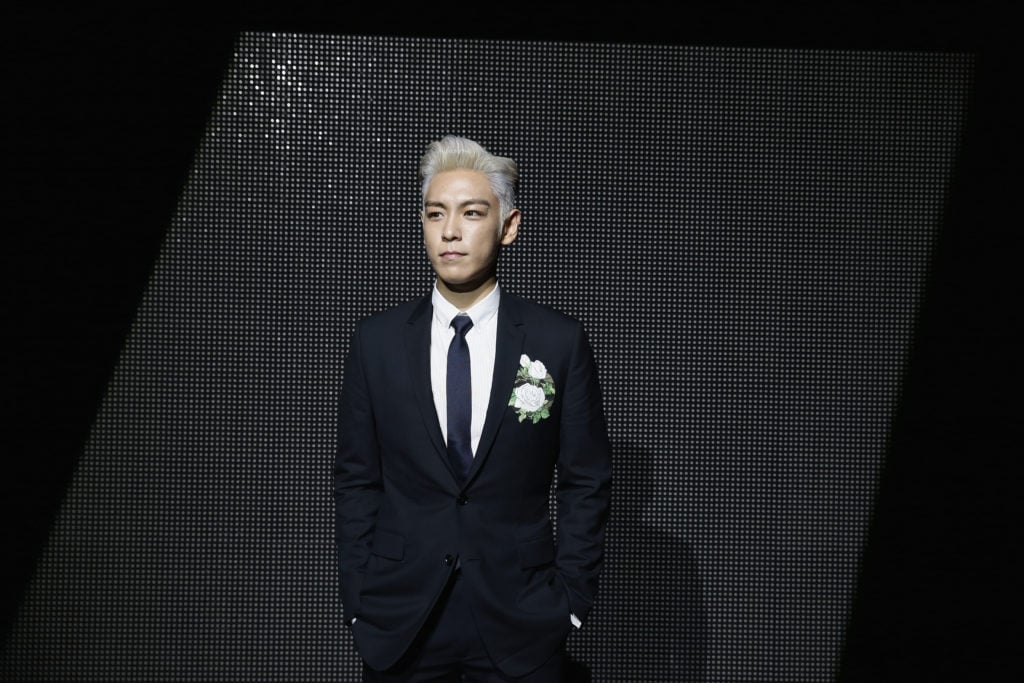
Kpop star and art collector T.O.P.
(Photo by Vittorio Zunino Celotto/Getty Images)
What to Know
Also known as T.O.P., the superstar from K-pop boy band Big Bang
burst onto the art world’s radar in 2016, when the then-32-year-old
organized a sale at Sotheby’s Hong Kong. (Fun fact: he is said to
be related to the late Korean abstract painter Kim Whan-ki.)
What He Collects
His taste spans East and West, including blue-chip names like
Gerhard Richter and Takashi Murakami as well as rising stars like
Kohei Nawa and Robin F. Williams. Before graduating to art, he was
a passionate collector of Bearbrick figurines, sneakers, and
designer furniture.
In His Own Words
“Western collectors tend to focus on Western contemporary art,
but in Asia there is an openness to combining both,” T.O.P has
said.
Kim Chang-il
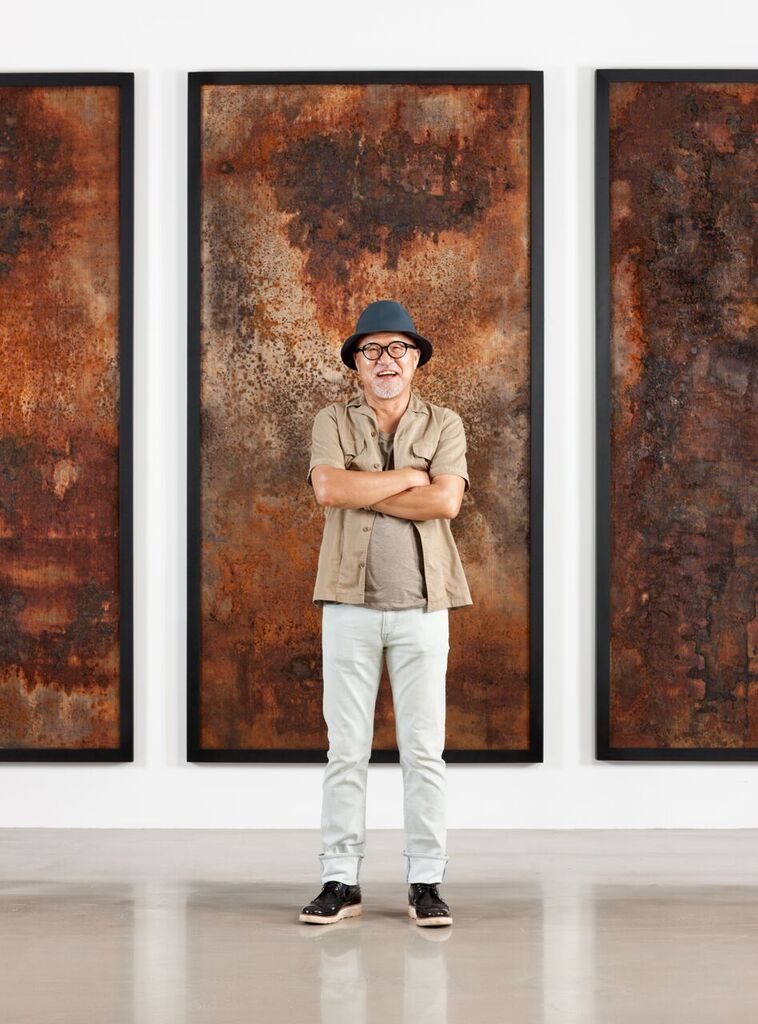
Kim Chang-Il.
What to Know
A self-made multimillionaire with an empire of department
stores, restaurants, and movie theaters, Kim has one of the largest
private collections of Asian and international contemporary art in
the world—and, late in life, began making art himself.
What He Collects
His stellar collection—housed at his Arario Museum, which has a
branch in Seoul and three on Jeju Island— includes works by Nam
June Paik, Cindy Sherman, Damien Hirst, and Andy Warhol.
In His Own Words
“I realized that I should know all the things in Asia first
before exploring the world, rather than moving back and forth all
the time,” Kim told us. “I am Asian and I have a strong interest in
Asian art, so if I have a firm identity and I know the Asian world,
then I think I will not fail, even if I go to New York.”
Taiwan
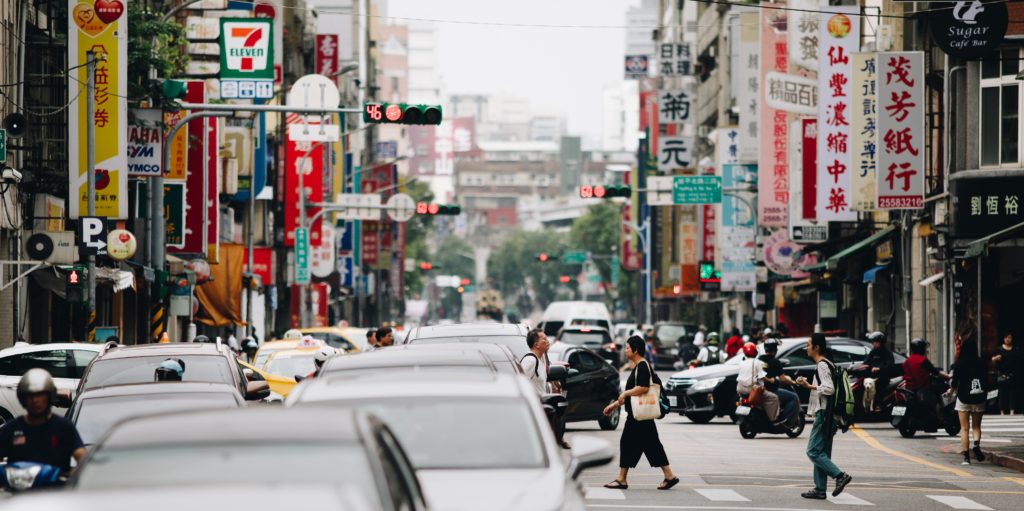
Taipei Taiwan City Cityscape Asia People
Street. Bohdan Chreptak from Pixabay.
Collecting in Taiwan, which has been separated from mainland
China since 1949, can be traced back to the 1960s—or earlier, to
when the National Revolutionary Army arrived with a haul of Chinese
artworks, now housed in the National Palace Museum. The ‘60s
efflorescence coincided with the emergence of avant-garde movements
led by the Fifth Moon and Ton-Fan groups, which fused the
aesthetics of Abstract Expressionism with Asian philosophy in order
to break from traditional Chinese artistic language and
Soviet-style Socialist Realism.
Unlike mainland China, Taiwan has a democratic political system
and freedom of speech, both of which inform its art. “Contemporary
art is to ask questions, to deal with contemporary issues,” said
Li-Chen Loh, the director of the Museum of Contemporary Art Taipei.
Although the island lost its position as Asia’s leading art-market
hub in the late 1990s, it now hopes to claw back some of its market
share from Hong Kong. The Taipei Dangdai fair, which the founders
of ArtHK debuted in 2019, has helped raise the profile of Taiwan’s
art market.
Major Industries
Telecommunications, financial services, utilities, computer
hardware
Wealth
Taiwan is home to 40 billionaires with a total net worth of
$85.5 billion, according to a 2019 report from UBS and
PriceWaterhouseCoopers.
Economy
Taiwan’s economy has remained surprisingly resilient amid the
regional slowdown. It posted higher GDP growth at the end of last
year than both Singapore and South Korea.
Politics
In January, Tsai Ing-wen, of the Democratic Progressive
Party—who has been an enthusiastic supporter of creative
industries—won a second term as president in a landslide
victory.
Galleries and Institutions
to Know
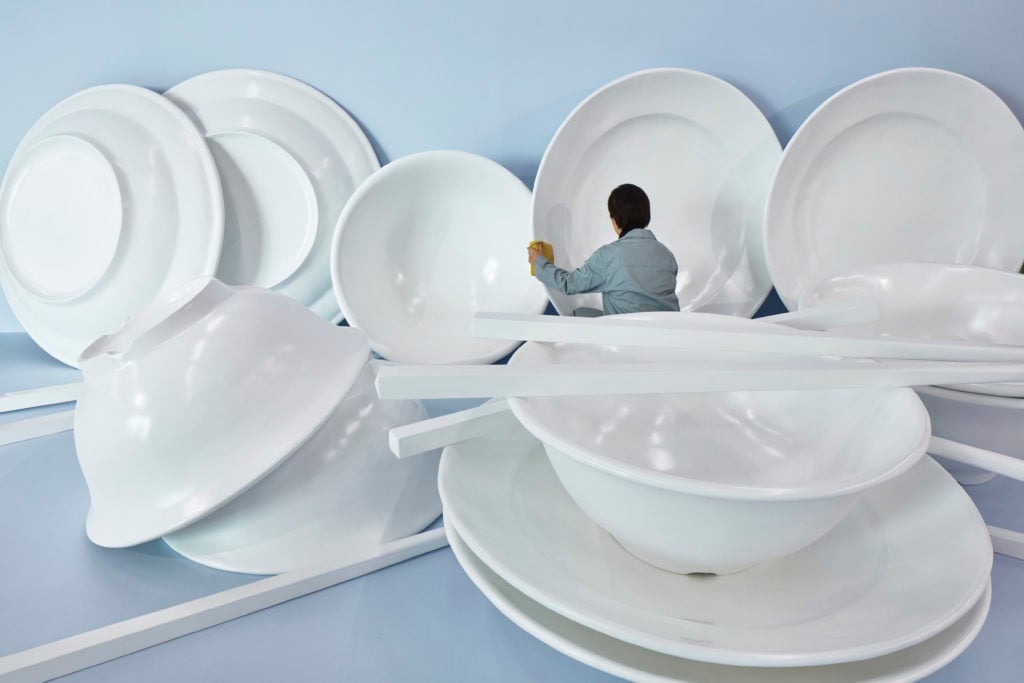
TA-Taipei Dangdai-Edouard Malingue
Gallery. Courtesy of Taipei Dangdai
MOCA Taipei
The museum has garnered international attention for staging
daring exhibitions, including the first museum show dedicated to
LGBTQ+ issues in Asia and a presentation based on the controversial
2019 Aichi Triennale.
Taipei Fine Arts Museum
Taiwan’s first museum dedicated to Modern and contemporary art
boasts a collection of more than 5,000 works that place Taiwan’s
art history in an international context. It also commissions
Taiwan’s pavilion at the Venice Biennale.
Tainan Art Museum
The newest addition to Taiwan’s cultural scene opened last year.
Its two buildings, a former police station and a new structure by
Shigeru Ban and Shi Zhao Yong, house a collection that illustrates
the 400-year history of Tainan, the island’s capital during the
Qing dynasty.
Tina Keng Gallery and TKG+
Veteran art dealer Tina Keng has been specializing in Modern
masters such as Zao Wou-Ki and Sanyu for decades. Her daughter,
Shelly Wu, opened TKG+ in 2009 to showcase contemporary art.
Collectors to
Know: Yao Chien
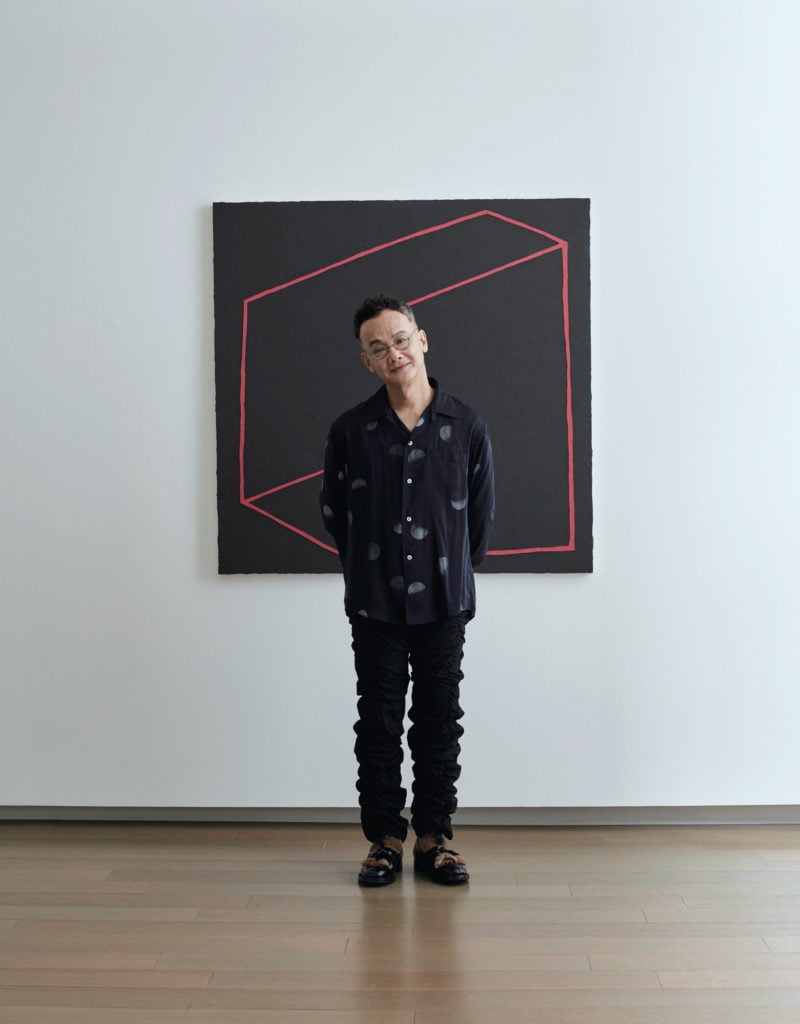
TA-Yao Chien and painting by Shida Kuo.
Courtesy of Yao Chien and Troy Wang for BAZAAR Art Taiwan.
What to Know
The renowned lyricist and producer is the mastermind behind some
of the greatest Mando-pop hits in the Chinese-speaking world.
What He Collects
Yao started collecting in 1997 with a focus on modern Asian
works, including pieces by Sanyu and Pan Yu-Lin, but has since
expanded his purview to contemporary art with works by Shida Kuo
and Antony Gormley. More recently, he has begun to collect Old
Master paintings; a stunning Rubens nude hangs in his dining
room.
In His Own Words
“The most distinguished feature of Taiwan’s art-collecting
culture is diversity of intention,” he told us. “Certainly, there
are people who collect art as a form of investment or to show off
their social status, but I know a lot who collect art just to
enrich their lives.”
Patrick Sun
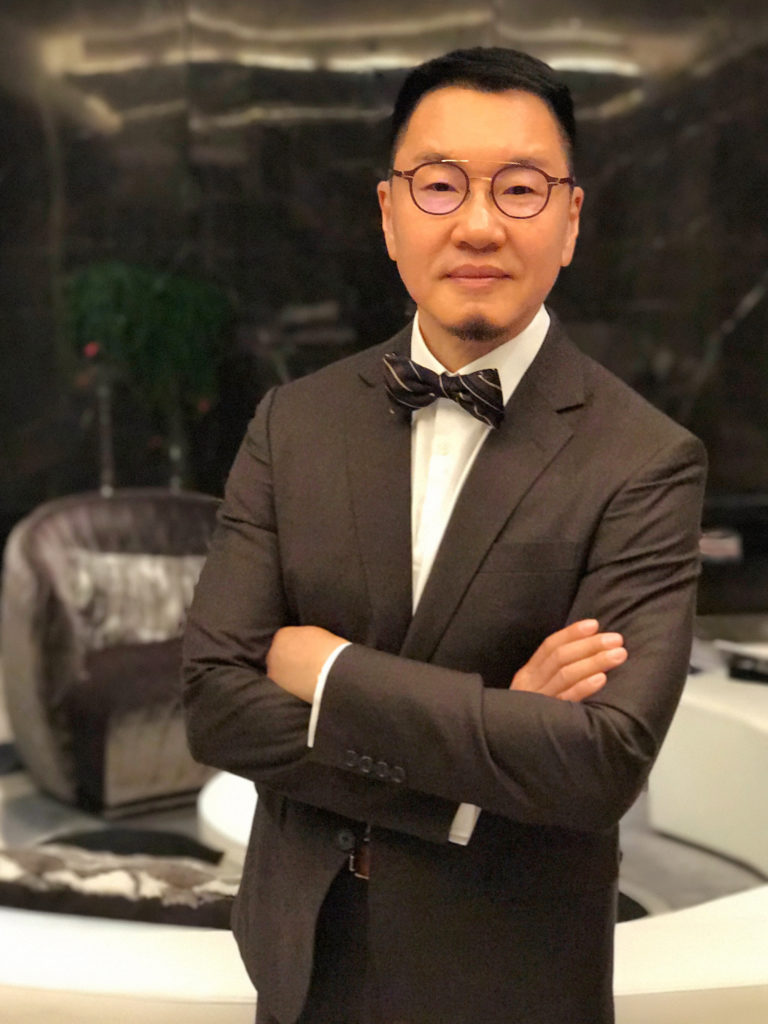
Patrick Sun, courtesy of Patrick
Sun.
What to Know
The property developer is based in both his home city of Hong
Kong and Taipei, where his partner lives.
What He Collects
He began buying art in 1988 with a focus on Chinese ink
painting, but his interests changed in 2014 when he founded
Sunpride Foundation, an organization dedicated to art addressing
LGBTQ+ issues in the region. His foundation was behind the 2017
exhibition “Spectrosynthesis – Asian LGBTQ Issues and Art Now” at
MOCA Taipei, which opened two years before Taiwan became the first
country in Asia to allow same-sex marriage.
In His Own Words
“Taiwan has been a force in Asia in terms of art collecting [and
the] quality of art and artists,” Sun told us. “Now, a top-quality
international art fair has brought in an art ecosystem that links
together everything the Taipei art scene has to offer.”
Leslie Sun
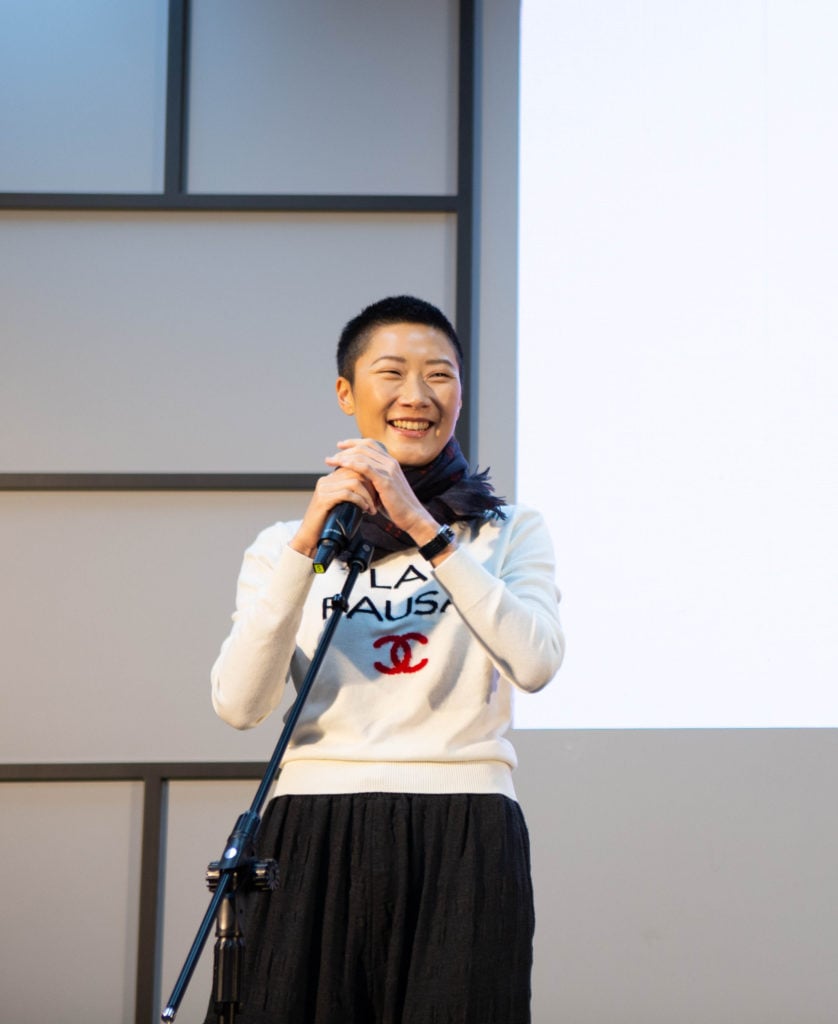
Leslie Sun. Courtesy of Taipei
Dangdai
What to Know
The founder of lifestyle brand Sunset and the newly appointed
editor-in-chief of Vogue Taiwan is among the most
prominent young collectors in the region. (She has no relation to
Patrick.)
What She Collects
She started buying prints after design school but has since
graduated to significant works by big-name artists like Richard
Serra, Eddie Peake, Mel Bochner, and Wu Chi-Tsung. She frequently
shares her collecting adventures on Instagram, where she has nearly
35,000 followers.
In Her Own Words
“Collectors of the older generation aren’t interested in the
social aspects of the art world,” Sun has said. “But we are
different. We like to share and talk about art.”
A version of this story first appeared in the spring
2020 Artnet Intelligence Report. To
download the full report, which has juicy details on how A.I. could
transform the art industry, what art top collectors are buying (and
why), and how titans of the finance industry are infiltrating the
auction houses, click here.
The post As Asia’s Art Market Begins to Reopen, Here’s
Everything You Need to Know About Three of Its Most Vibrant (and
Underrated) Art Capitals appeared first on artnet
News.
Read more https://news.artnet.com/market/asian-art-scene-intelligence-report-1821483
Further reading


Leave a comment