
As Germany Plans Shows on Nazi-Sanctioned Art, Some Begin to Wonder Why So Much of It Is Housed in the US
The German Historical Museum in Berlin is planning two
exhibitions in 2021 that will trace art history after 1945, in the
early days of the post-war Federal Republic, and look at the
ongoing influence of National Socialism on German art.
One show will consider the history of documenta, the
international exhibition founded in Kassel in 1955 as the
nation’s bid to forge a new artistic voice after the war, while the
other explores what happened to the careers of Hitler-supported
artists after the fall of the Nazi regime.
The museum is also hosting “Historical Judgement,” an
international symposium this October to begin exploring the
subject. “For the first time, we want to work together with
artists, curators, and historians to discuss whether and to what
extent documenta marked a ‘new beginning’ in the still young
Federal Republic after a phase of extreme political-ideological
instrumentalization,” says the president of the German Historical
Museum, Raphaela Gross. “From this historical approach, we do
not only hope for our own success in the exhibition, but also new
and fundamental insights into the world of art, and the complex
relationship between history, art, and politics.”
The new programming comes at a time of growing questions about
what to do with the troves of Nazi propaganda art that’s stowed
away in Germany, and in the US as well. To this day, many works of
Nazi propaganda and Nazi-sanctioned art are stashed away at the
Center of Military History Fort Belvoir, outside of Washington, DC,
and there is no imminent plan for its return.
The US military uncovered and removed troves of art after the
war as part of the de-Nazification process. Though most of it was
returned in the 1990s and is now housed at the German Historical
Museum’s locations, works with particularly odious imagery stayed
behind, like the massive painting Hitler at the
Front by Emil Scheide, which shows young soldiers eagerly
crowded around Hitler, another painting of soldiers
titled Organization Todt (Organization Death), as
well as a series of small watercolors by Adolf Hitler himself. It
is estimated that there are more than 500 works of art from the
Third Reich still in the US Army Center of Military History.
“After the war the [Nazi art] was confiscated by the US Army and
parts were later turned over to the Federal Republic of Germany;
since the end of the 1990s the collection has been left to the care
of the German Historical Museum,”Fritz Backhaus, head of
collections at the museum, told artnet News.
Backhaus adds that the German government also transferred other
paintings and prints that had belonged to the so-called House of
German Art Collection to the Berlin museum for safekeeping,
rather than being held at the Haus der Kunst in Munich. These works
are kept in the painting depot or at the print collection of the
museum and are available for scholarly research. Some of these
works include art that was exhibited or acquired in the infamous
“Great German Art Exhibition” organized by the Nazi party.
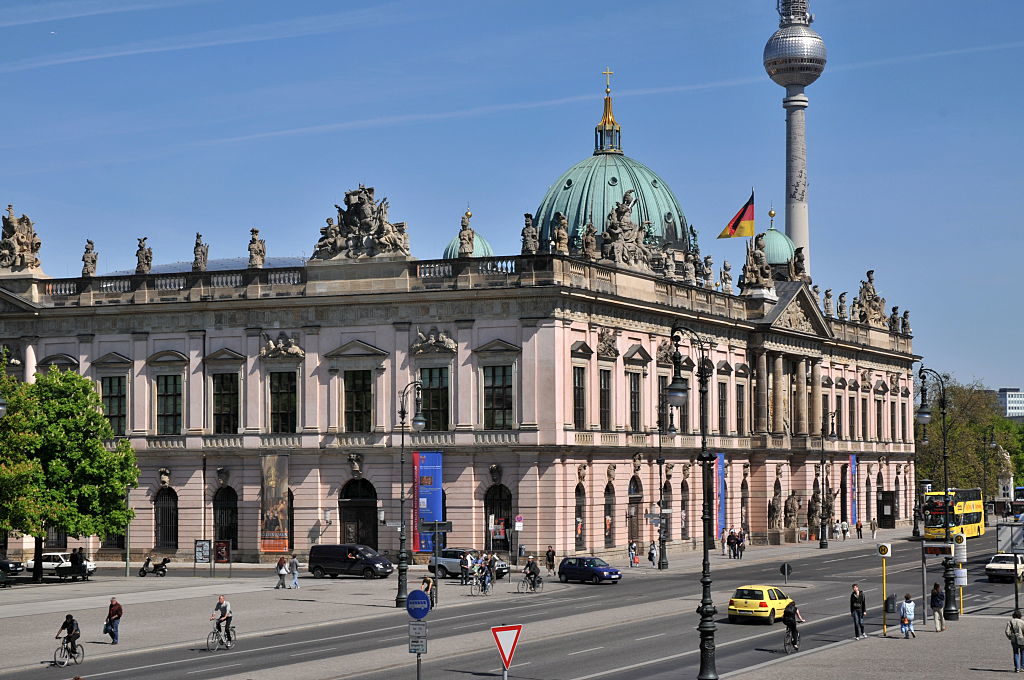
The German Historical Museum (DHM).
Photo: Schöning/ullstein bild via Getty Images.
Nazi officials had a so-called Gottbegnadeten
Liste (a divinely gifted list). Backhaus says that some of
these artists’ works are held within the German Historical Museum’s
collection and will be presented within the exhibitions planned for
2021. But many of the museum’s works are stored at a holding depot
in Spandau, just outside of Berlin.
“Despite all the research that has been conducted into the Nazi
period and all of the conclusions that have been reached, art from
the Third Reich remains a taboo. Many, it would seem, believe that
these works contain some dark and dangerous power,” writes
journalist Ulrike Knöpfel in Der Spiegel.
“The paintings were put here by the German Historical Museum
with a single aim: They were to be forgotten,” added Knöpfel.
Backhaus says that the German war art collection consists of
some 340 paintings and more than 7,000 graphic prints that were
made by artists in the armed forces of Nazi Germany during World
War II. “They show primarily heroicizing and propagandistic scenes
of war, but also a great many portraits or landscape depictions,”
he said.
A selection of these paintings are permanently on view at the
German Historical Museum in Berlin as examples of National
Socialist propaganda art. All of these works are owned by the
German government, rather than the museum. The Haus der Kunst, too,
has a wartime collection and several times in years past has loaned
works out for exhibitions on art in the time of National
Socialism, Backhaus says.
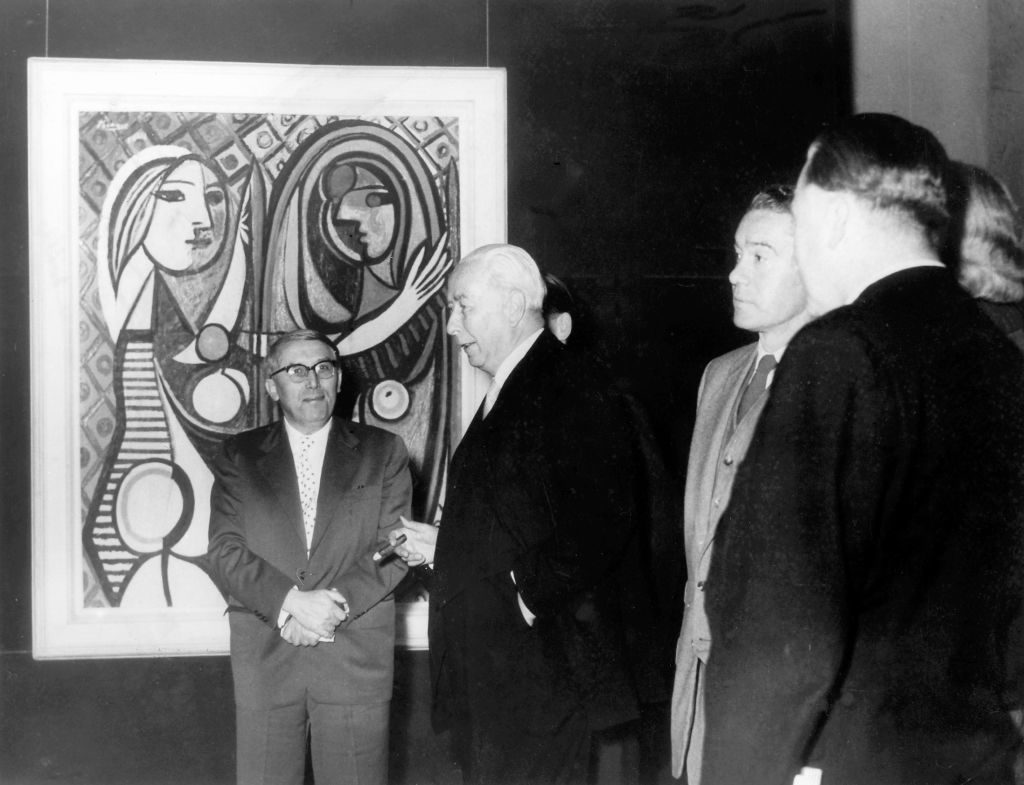
German President Theodor Heuss (second
from left) talking with painter Arnold Bode by a Picasso painting
during the first documenta in 1955. Photo: picture alliance via
Getty Images.
What the future holds for the art held in Washington remains an
open question. Culture minister Monika Grütters, who took over leadership of
the German federal art collection and administration in July, did
not reply to a request for comment.
Grütters’s office did reply to the Der
Spiegel article, however, telling the magazine that
“issues related to the return of German cultural heritage could not
be equated to investigations into the massive theft of largely
Jewish-owned cultural heritage by the Nazis.” She added that the
question of German wartime art falls under the jurisdiction of
the Foreign Office. The office did not respond to a request for
comment.
The post As Germany Plans Shows on Nazi-Sanctioned Art, Some
Begin to Wonder Why So Much of It Is Housed in the US appeared
first on artnet News.
Read more https://news.artnet.com/art-world/berlin-washington-nazi-art-trove-1627675
Further reading


Leave a comment