
Can Gee’s Bend—the Tiny Alabama Community Behind America’s Most Dazzling Quilts—Become an Art Destination to Rival Marfa?
In a review of the Whitney
Museum of American Art’s landmark 2002 exhibition of quilts from
Gee’s Bend, New York
Times critic Michael
Kimmelman described the textiles
as “some of the most miraculous works of modern art America has
produced.” The quilts, he wrote, were “so eye-poppingly gorgeous
that it’s hard to know how to begin to account for
them.”
Since then, these dazzling
geometric artworks have traveled around the globe, been reproduced
on official US postage
stamps, and become broadly recognized as an important part of
American art history.
But back in Gee’s Bend—the tiny
Alabama hamlet formally known as Boykin that has nurtured three
generations of quiltmakers—the impact of the quilts’ renown has
been more subtle.
According to the most recent US
Census, 20 percent of the area’s roughly 300 residents, a
significant number of whom are active in the quilting community,
live below the poverty line. The median annual household income is
under $16,000.
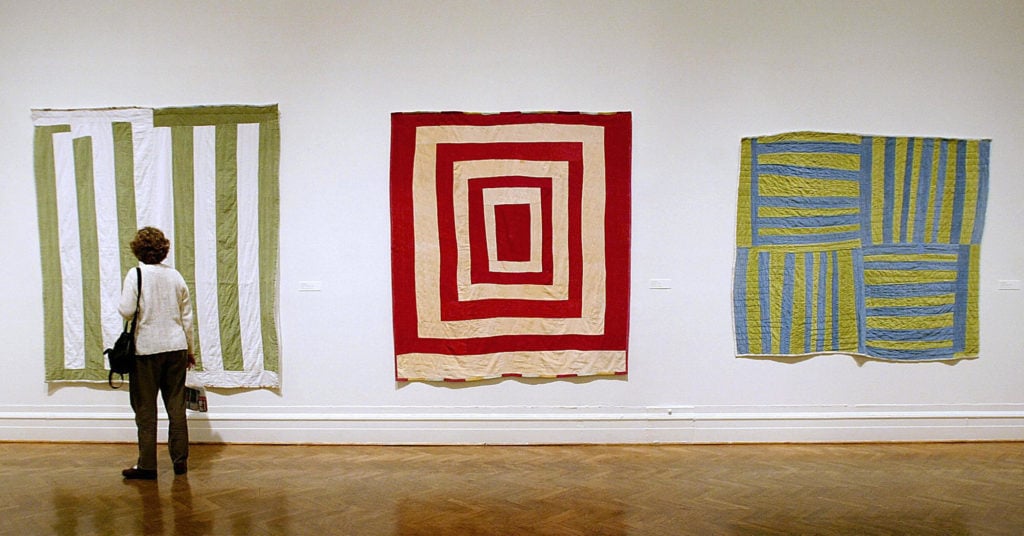
A visitor looks at the “Quilts of Gee’s
Bend” exhibition at the Corcoran Gallery of Art in February 2004.
Photo: Stephen Jaffe/AFP via Getty Images.
“We don’t have a store, a gas
station, not even a red light down here,” Mary Margaret Pettway, a
third-generation quilter and Gee’s Bend resident, tells Artnet
News. “If you came down, you’d be hard pressed to try to leave
money [behind], even if you wanted to.”
That may soon begin to change,
however. A new initiative spearheaded by Souls Grown Deep, a
nonprofit dedicated to promoting the work of African American
artists from the South, aims to transform Gee’s Bend into a tourist
destination.
“It’s a thriving community that
continues to create,” says Raina Lampkins-Fielder, the curator of
Souls Grown Deep. “We’re looking at why these artists might be
disenfranchised to ensure they find their rightful place within the
canon, but also that they are supported on the ground
level.”
The thinking goes: If Marfa, the
pint-size Texas town located a three-hour’s drive from the nearest
airport, can become a site for pilgrims seeking to commune with
Donald Judd’s Minimalist art, why can’t Gee’s Bend become a magnet
for art historians, craft enthusiasts, and American history buffs
who want to know more about the source of the world’s most
acclaimed quilts?
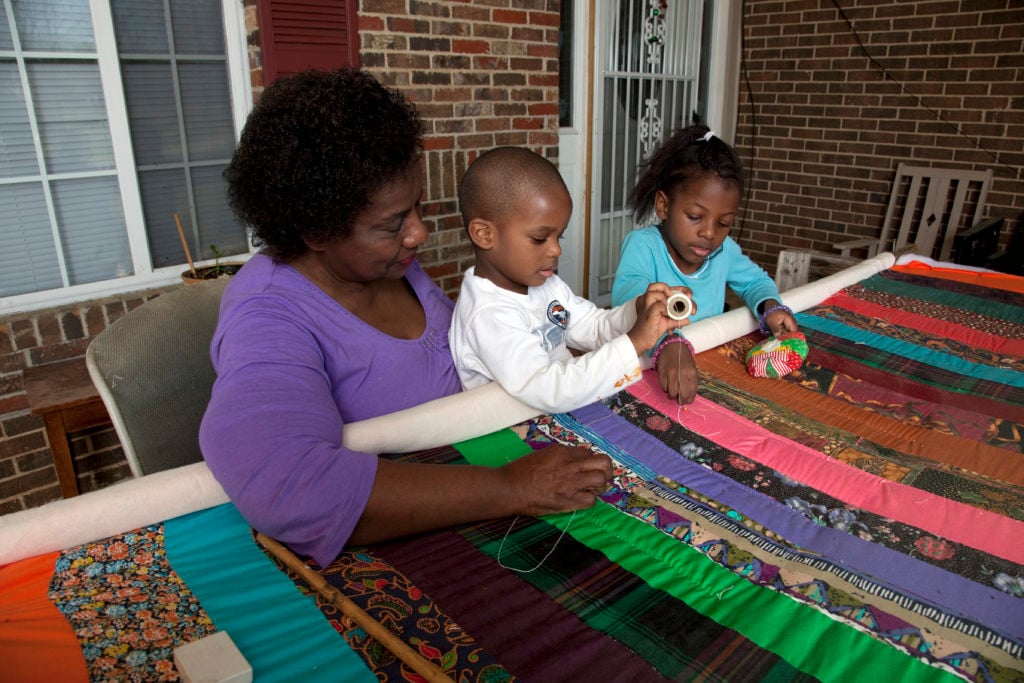
Quilters at Gee’s Bend. Photo: Carol M.
Highsmith/Buyenlarge/Getty Images.
Opening Up the Bend
A series of initiatives, some of
which have been in the works for years in collaboration with local
residents, will be formally announced today. The first is a
collaboration with Nest, a nonprofit that promotes handmade crafts,
which will work to make Gee’s Bend quilts more accessible for
purchase online and enable Gee’s Bend quiltmakers to license their
work for reproduction. Additional projects may include the
development of a cultural center, a hub for quilting workshops, a
marketplace for locally sourced goods, walking trails, cottages for
people to stay, and community-run Airbnbs.
The project also includes
funding to maximize local participation in the 2020 census
(including providing public internet access so community members
can fill out the forms online), which organizers hope will allow
the historically under-counted population fairer access to federal
resources. Another important component is resurfacing the
history of individual quilters. Even when the US Postal Service
released its Gee’s Bend stamps in 2006, Lampkins-Fielder notes, the
artists were not identified by name.
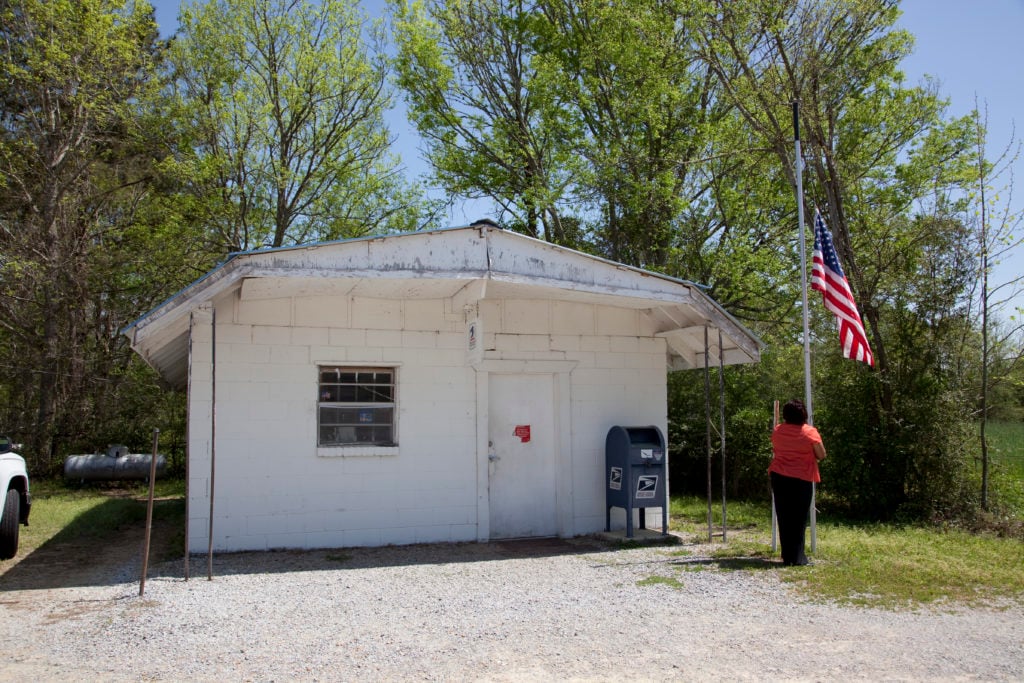
A view of Gee’s Bend, Alabama, which is
formally known as Boykin. Photo: Carol M.
Highsmith/Buyenlarge/Getty Images.
“There has been this tendency of
just grouping the quiltmakers as ‘the quiltmakers’ and not naming
them as individual artists, which flies in the face of what is done
in museums,” she says. To address this oversight, the organization
will work with quilters, their families, and the leading graphic
design consultancy Pentagram to revive and expand the Gee’s Bend
Quilt Trail, which marks the homes of leading
quilters.
Lampkins-Fielder says that Souls
Grown Deep’s work in Gee’s Bend will have an impact not only on the
community itself, but also on a chapter of art history that remains
under-explored. Better
known Southern artists, such as Thornton Dial and Lonnie Holley,
for example, were aware of and inspired by the work of the Gee’s
Bend quilters—connections that scholars are only just beginning to
examine.
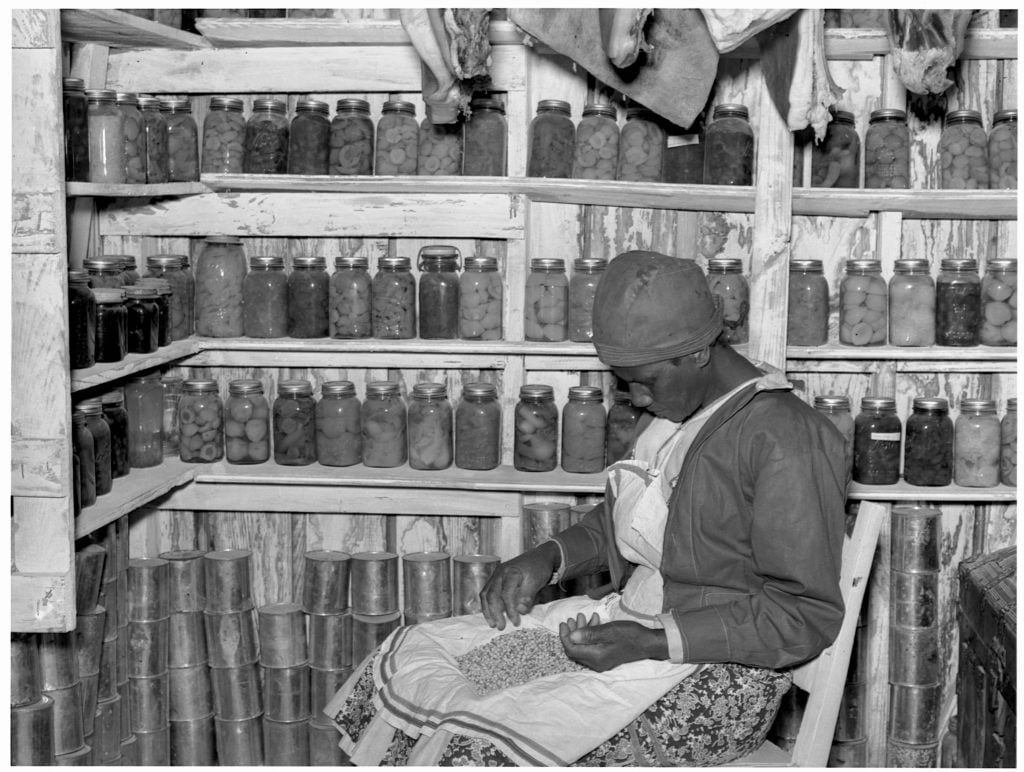
Jorena Pettway, a Gee’s Bend resident,
sorting peas inside her smoke house with last year’s preserved
fruits and vegetables on the shelves around her. This photo was
taken in May 1939. © Corbis/Corbis via Getty Images.
An Uphill Battle
No transformation of Gee’s Bend
would be easy. For decades, the small hamlet has suffered from
poverty and isolation, which is partly a product of geography: the
community is nestled in a
literal bend in the Alabama River and is surrounded by water on three
sides, making it almost
an island.
But its isolation is also a
function of systemic racism. The first paved road leading into and
out of town was laid down in 1967—around the same time that ferry
service was suspended in an effort to keep the local black
population from crossing the river to register to
vote.
Ferry service was restored in
2006, but most Benders must still drive hours to get to and from
their jobs. (When we spoke, Pettway was on her way back from
dropping off her daughter at work an hour away.) “Right now, there
are very few jobs here [in Gee’s Bend],” says Pettway, who is also
Souls Grown Deep’s board chair.
Initiatives like the revival of
the Freedom Quilting Bee Legacy, a community organization tasked
with restoring and reopening a building formerly operated by
quilters, would offer welcome employment opportunities as well as a
gathering place for creatives (who currently work independently at
home) and those who want to take workshops or study with
them.
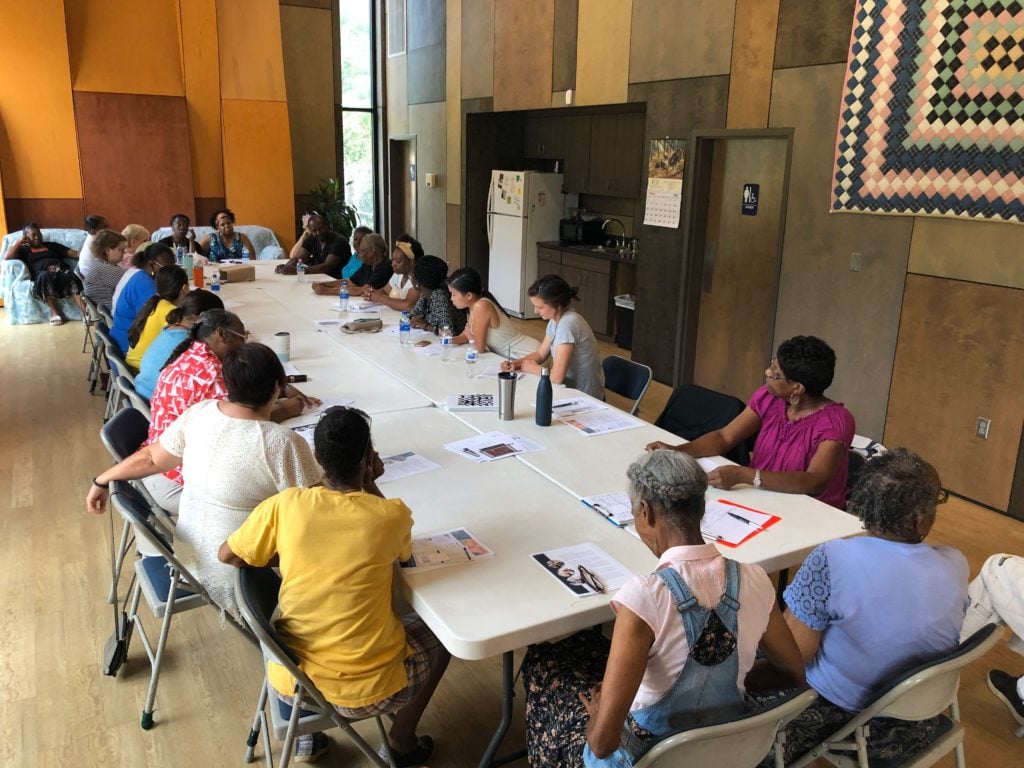
A community meeting at the Gee’s Bend
Welcome Center with Souls Grown Deep, Nest, and the Democracy at
Work Institute in August 2019. © Scott Browning.
Nobody involved in the
initiative expects Gee’s Bend to transform into the kind of
hipper-than-thou hotbed that Marfa has become—nor do they want it
to. “There won’t be any G6s landing—this is a bus trip,” says
Maxwell Anderson, the president of Souls Grown
Deep.
But he maintains that the
community could conceivably become a regular stop on tours of the
American South undertaken by those interested in the history of
Civil Rights—especially people drawn to Alabama because of its new Legacy Museum and
National Memorial to Peace and Justice.
For her part, Mary Margaret
Pettway is already picturing a new future for Gee’s
Bend.
In 10 years, “virtually every
house would have a marker, and people can go and tap their
smartphones and pull up information about that quilter,” she
imagines. “It would be something to see. We are living
history.”
The post Can Gee’s Bend—the Tiny Alabama Community Behind
America’s Most Dazzling Quilts—Become an Art Destination to Rival
Marfa? appeared first on artnet News.
Read more https://news.artnet.com/art-world/gees-bend-souls-grown-deep-1759461
Further reading


Leave a comment