
Exploring the Roots of Luxury Luggage Maker RIMOWA, and Its Proud Place in the History of Modern Design
In the final years of the 19th century, progressive minds across
Europe eagerly beckoned a new aesthetic age. Vienna Secession
patriarch Gustav Klimt, together with a band of like-minded
radicals, moved to rid the Austrian capital of its suffocating
artistic conventions. The post-Impressionists rejected the imposing
limitations of their forebears in favor of more liberated
compositions. Art Nouveau pioneers endeavored to merge heavily
decorative art with practical design.
And it was amid this propulsion toward Modernism that German
designer Paul Morszeck produced a maiden fleet of luxury wooden
trunks, out of which the high-concept luggage company RIMOWA would develop.
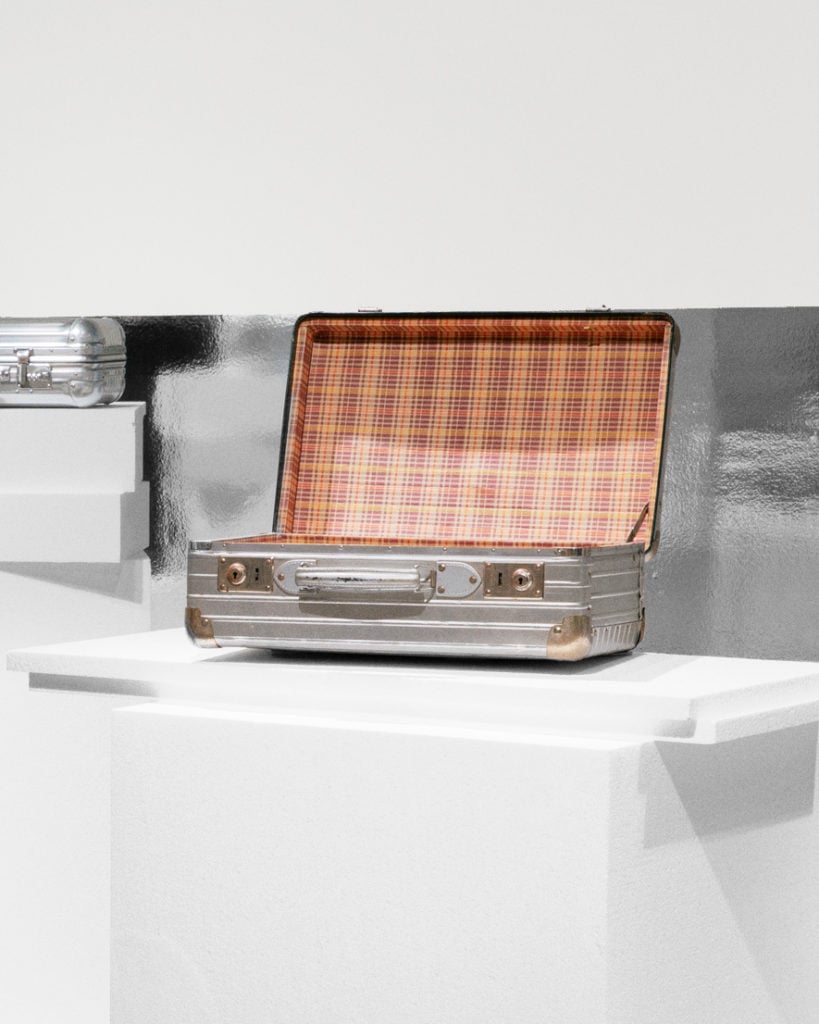
RIMOWA suitcases have always been
attractive, resilient, and lightweight—an unbeatable trifecta
coveted by high society’s globetrotters.
Morszeck’s proprietary series was attractive, resilient, and
lightweight—an unbeatable trifecta coveted by high society’s
globetrotters. The material culture of travel has of course
transformed since 1898, when Morszeck introduced his inaugural line
in Cologne, but RIMOWA continues to pursue that holy trinity. The
brand has masterfully melded form and function since its inception.
And while RIMOWA luggage has markedly evolved from its lumber
origins, the label remains one of the most trusted and timeless
names on the market.
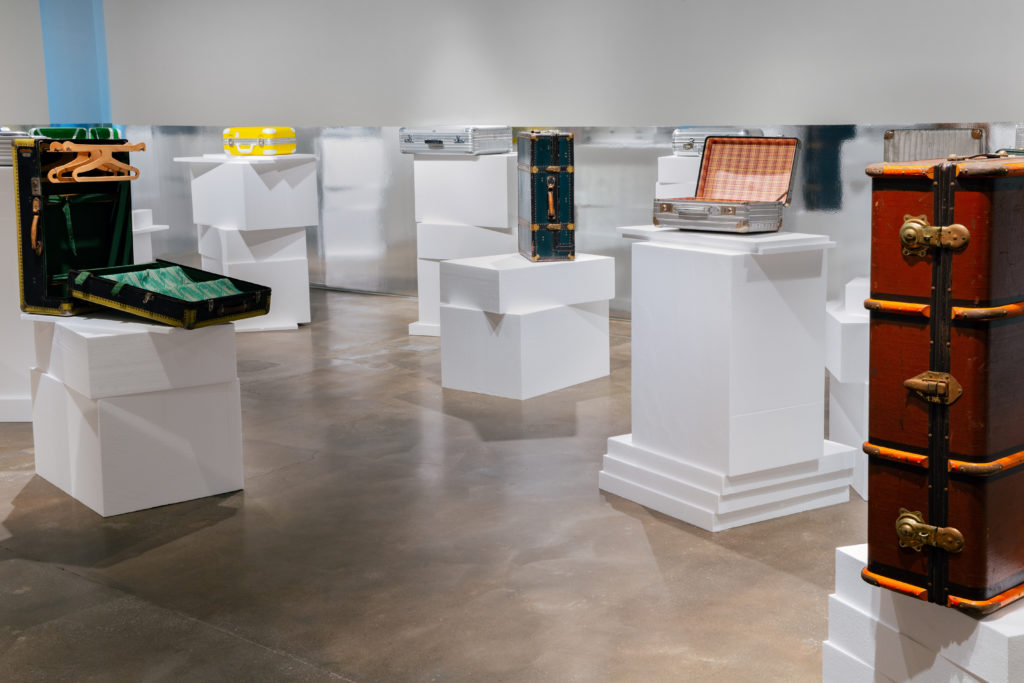
The exhibition begins with early RIMOWA
relics, from a seven-foot vintage cello transport case.
Today, Sotheby’s unveils an unprecedented
exhibition that surveys RIMOWA’s design chronology and its
monumental impact on travel by way of revolutionizing the suitcase.
“RIMOWA Archive Collection: 1898–2019” is the first-ever RIMOWA
retrospective, and features a selection of the key models that
comprise the brand’s over 120-year history, from heritage styles
plucked from private collections to contemporary collaborations
with major artists and designers like Dior and Supreme. With each
piece situated atop a plinth and showcased as a work of art in its
own right, Sotheby’s offers comprehensive insight into RIMOWA’s
long-haul narrative.
The exhibition begins with early RIMOWA relics, from a
seven-foot vintage cello transport case, to a wood-and-leather
wardrobe trunk with sumptuous green lining from 1927. But RIMOWA,
as it’s known today, didn’t come into focus until the late 1930s.
It was in 1937 that Paul Morszeck’s son, Richard, lent his name to
a lasting rebrand which yielded “RIMOWA,” a composite of the first
two letters of Richard, Morszeck, and Warenzeichen (the latter word
means trademark in German). That same year, Richard forged a metal
trunk that would define RIMOWA’s metallic archetype—a fortunate
invention following a less fortunate and rumored factory fire that
incinerated everything but his stash of aluminum.
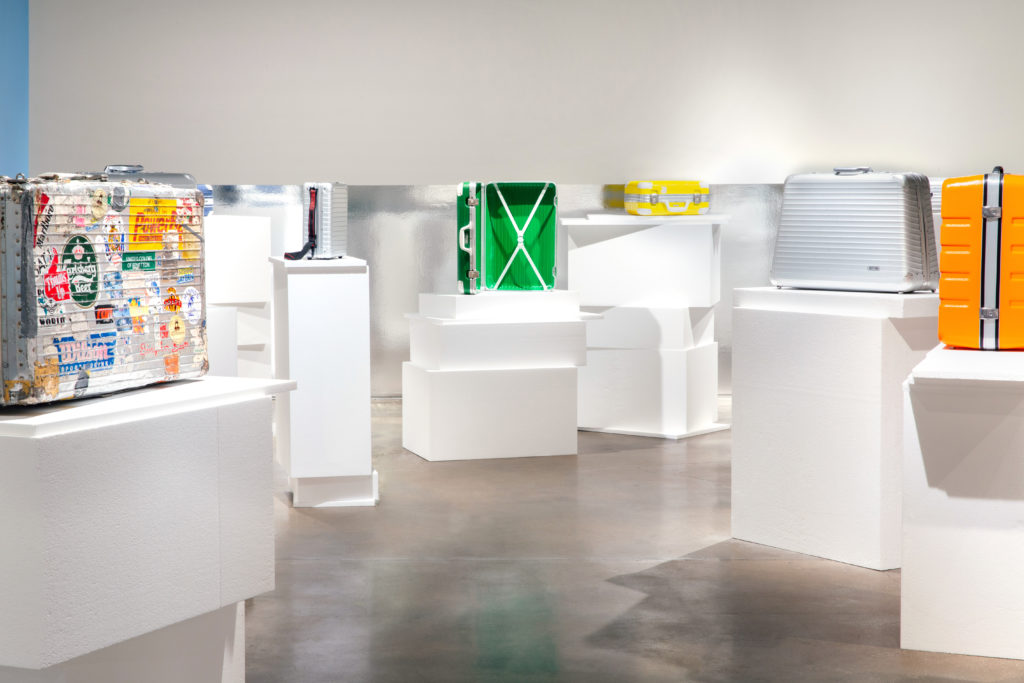
With the development of commercial
aircraft, the luggage landscape was completely transformed.
Richard oversaw RIMOWA’s output during one of the most pivotal
eras in design history. In the wake of World War I, the artists
behind the Dutch De Stijl movement sought to restore a semblance of
visual harmony by distilling color and form down to their most
elementary states. The German Bauhaus school encouraged a utopian
confluence of creativity and functionality. Art Deco, meanwhile,
was born from anxiety brought on by the cold indifference of mass
production.
It was the commercial aircraft, however, that would not only
elevate the glamor of travel, but completely transform the luggage
landscape. The world’s first all-metal plane, the Junkers F13, duly
inspired RIMOWA’s iconic grooved aluminum suitcase in 1950. Made
from duraluminium, the same copper and aluminum alloy that composed
the Junkers F13, this sleek prototype laid the groundwork for
RIMOWA’s most enduring case, which had to be lighter, tougher, and
more spatially efficient than its progenitors. Its minimalist
design also served as a malleable template for technical
improvements like waterproofing in 1976.
The world’s first all-metal plane, the
Junkers F13, duly inspired RIMOWA’s iconic grooved aluminum
suitcase in 1950.
In a design feat that rivaled RIMOWA’s grooved aluminum
suitcase, Richard Morszeck’s son and his son, Dieter Morszeck,
embraced the 21st century with the virgin polycarbonate suitcase.
Pure polycarbonate is the strongest of its kind on a molecular
level, resistant to extreme temperatures and extensive wear and
tear. Subsequent advancements included a patented eight-wheel
system for fluid, 360-degree movement, an electronic tag, and a TSA
security lock. Regardless of make or model, each suitcase is 80
percent hand-made and inspected at every stage of assembly at
RIMOWA-owned factories, where the brand can maintain control over
its meticulous process and test new ideas to perfection.
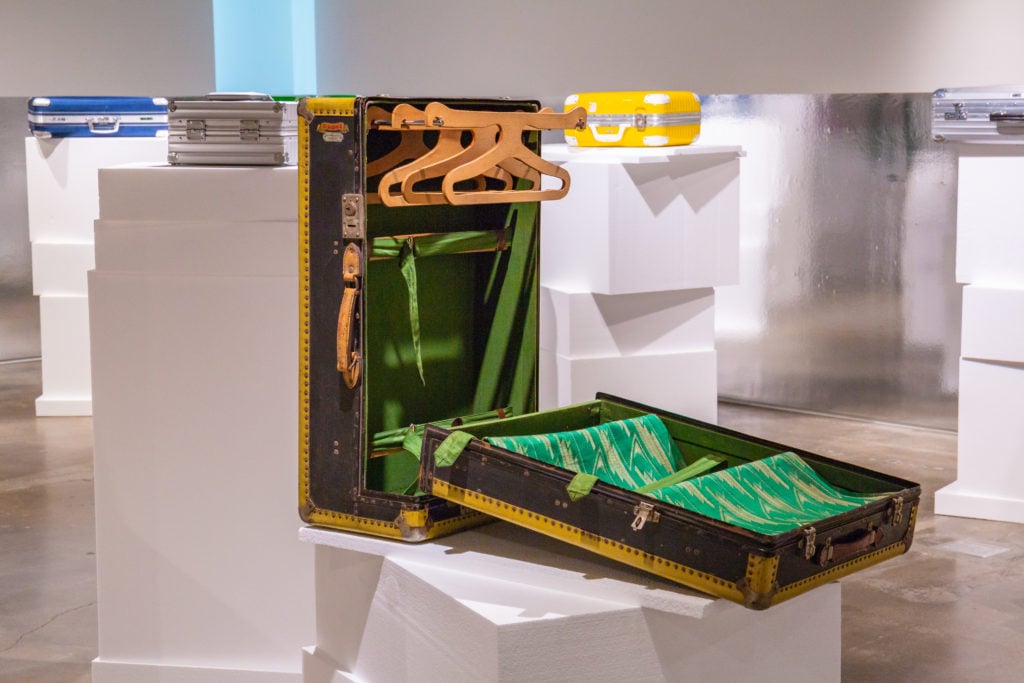
A wood-and-leather RIMOWA wardrobe trunk
with sumptuous green lining from 1927.
In addition to the classics, special limited-edition suitcases
also inhabit “RIMOWA Archive Collection.” To coincide with the
Frieze LA art fair in February 2019, artist Alex Israel evoked the
Los Angeles sunset with gradients of coral and blue on the RIMOWA
Original model. Also in 2019, artist Daniel Arsham came up with the
Eroded Attaché, a crumbling, artifact-like version of the RIMOWA
Attaché suitcase made from sand and volcanic ash, placed inside the
original Attaché, a comparative symbol of durability.
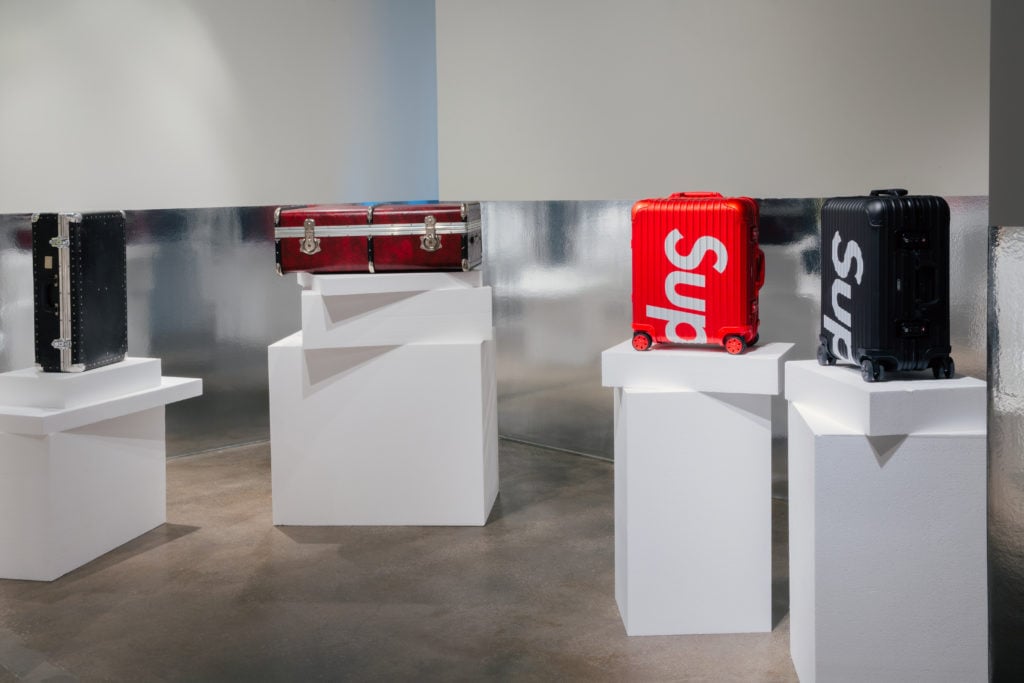
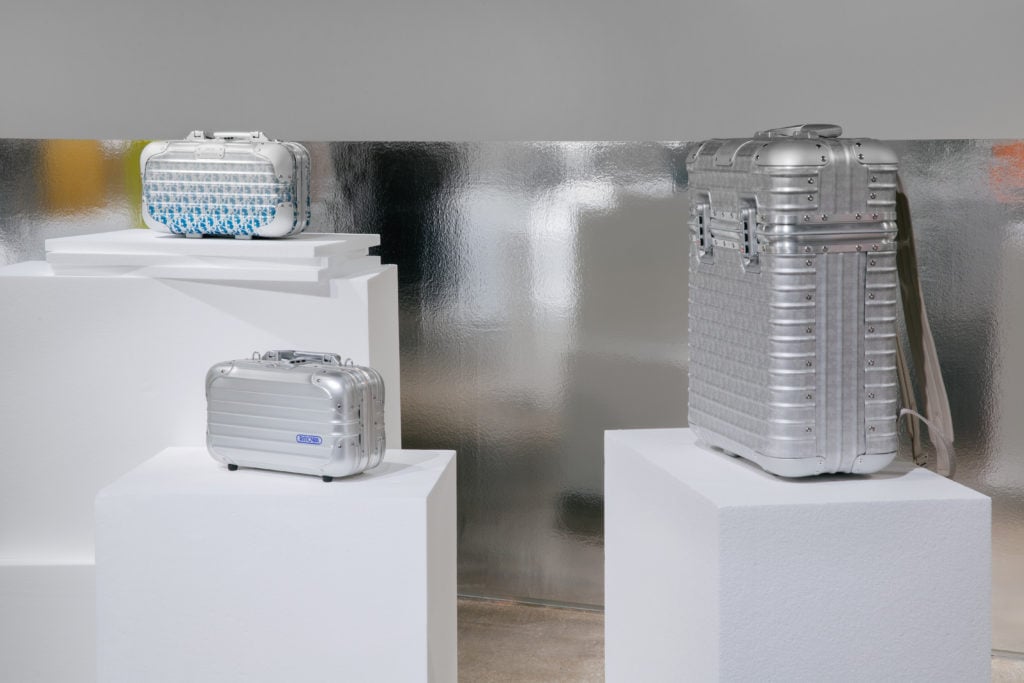
The show includes examples of RIMOWA
collaborations with major artists and designers like Dior and
Supreme.
The tail-end of RIMOWA’s current timeline is marked by a small
pearlescent polycarbonate suitcase, the Essential Cabin Lite in
Pearl Rose, a North American exclusive that debuts with the
exhibition’s opening. The model revisits a bestselling color,
“Pearl Rose,” and weighs 30 percent less than the RIMOWA Essential
suitcase that came before it. This small but mighty summation of
RIMOWA’s celebrated history is the ultimate accessory for tireless
travelers who embody the brand’s ethos: “No One Builds a
Legacy by Standing Still.”
“RIMOWA Archive Collection: 1898–2019” is on view at Sotheby’s
New York from September 20–25, 2019. The exhibition is part of
Sotheby’s bi-annual sale, Contemporary Curated. This season’s
Contemporary Curated includes works by Kerry James Marshall, Cecily
Brown, Jean-Michel Basquiat, and Joan Mitchell, and is organized by
the avid art collector and renowned Italian chef, Massimo
Bottura.
The post Exploring the Roots of Luxury Luggage Maker RIMOWA, and
Its Proud Place in the History of Modern Design appeared first
on artnet News.
Read more https://news.artnet.com/art-world/rimowa-sothebys-1656109
Further reading


Leave a comment