
Have We Already Gone From a Viewing Room Boom to Viewing Room Gloom? The Art World Feels the Strain of Too Many Online Events
How would you like to hit up a panel conversation organized by
Art Basel in the morning, rush over to a Frieze art fair preview
after breakfast, spend the afternoon browsing a dozen gallery
shows, and end the day with a video art screening at the Whitney
Museum? This isn’t a pre-lockdown fantasy. It’s possible now—all
without leaving the couch.
Welcome to the new art world: an intensely social ecosystem
that, when forced to remain confined at home, has in record time
found a way to squeeze all of that air-kiss energy onto the
internet. It’s easy to forget that, not that long ago, a hot topic
of conversation with art world was “fairtigue,” that
special brand of weariness that afflicted the industry in the
pre-lockdown era as it made an endless march through the convention
centers of cultural capitals. Leave it to the same industry to
figure out a way to make sheltering in place just as frantic.
VIPs on the East Coast had to wake up before sunrise in order to
enter the Art Basel Hong Kong viewing room in March—the first major online art
fair—by 6:00 a.m. And now, there’s a lot more content where
that came from.
“The amount of emails I receive now a day is
record-breaking,” said Rachel Cole, an art advisor who,
pre-COVID, frequently traveled to the physical editions of Art
Basel in Hong Kong as well as Basel, Switzerland and Miami Beach.
“I think it’s wonderful, the amount of creativity and online
promotion that’s coming through, and it’s the perfect time for us
to all receive it—but at the same time, it’s hard to filter through
it all.”
What at first seemed at first like a temporary solution has
quickly ballooned as a way to fill the void. And it has led some to
wonder: In just eight weeks of this new reality, have we already
hit peak online art fair?
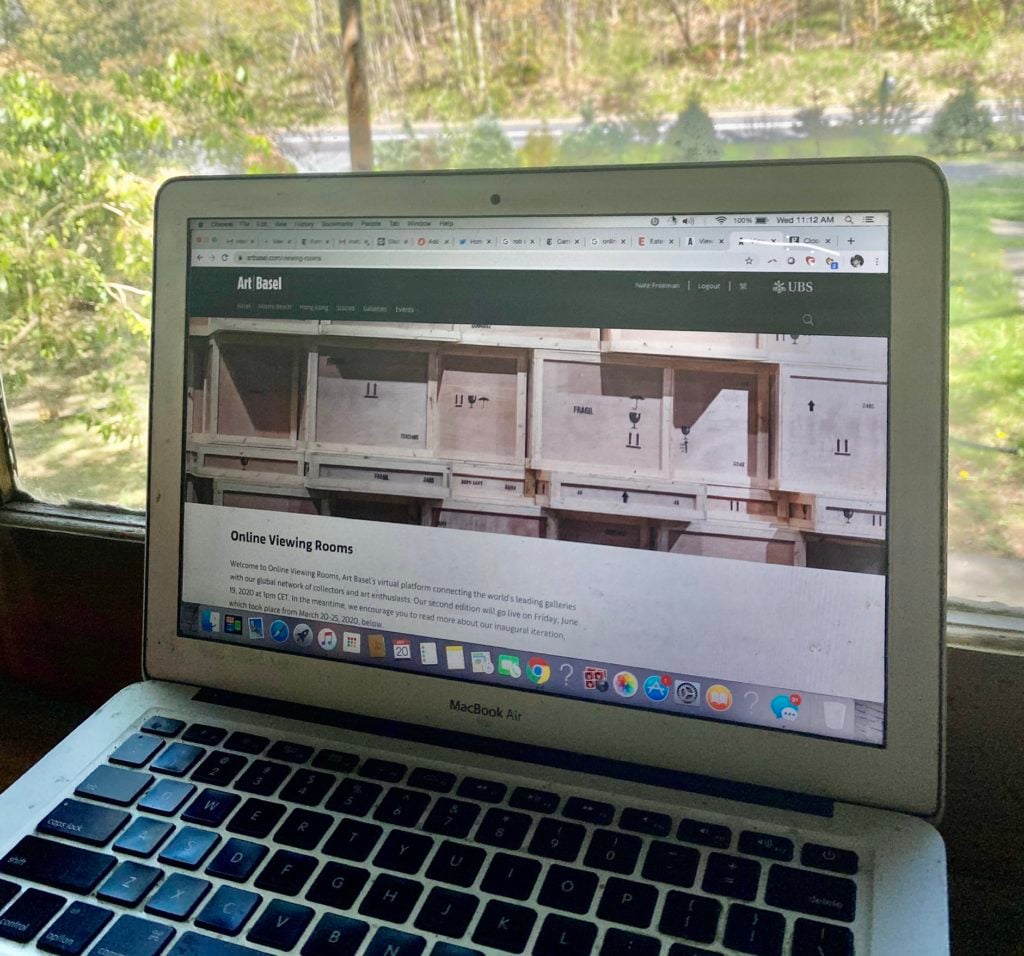
The Art Basel viewing room as seen on a
laptop. Photo courtesy Nate Freeman.
Too Much Internet
Without the possibility of physical interaction, some kind of
online presence was inevitable. Art dealers still have inventory to
sell in order to keep large overhead from sinking the ship. Artists
are making new work, and this work is still coveted by collectors.
Buying online is, at least for now, basically the only way to get
it.
“If you take people’s spaces away, they need another space,”
said Alex Logsdail, executive director of Lisson Gallery, which has
been successful in selling works through its viewing room and
virtual fairs while its spaces in New York and London remain
closed.
Within weeks of the physical world shutting down, David Zwirner
donated the gallery’s
website real estate to hard-hit youngsters, effectively turning
a mega-gallery viewing room into to a virtual satellite fair.
Sotheby’s launched a gallery
network—an unprecedented partnership between an auction house
and galleries to sell primary-market work. An initiative called Not
Cancelled planned week-long programming sprees for galleries in
Berlin, Vienna, Paris, Chicago, Dubai, and others. Small galleries
jerry-rigged viewing rooms
together from whatever parts they could find. Mega-galleries
quadrupled their programming, adding video interviews, podcasts,
texts, and essays to complement the pictures of artworks on a
screen.
The first ever extended reality platform for the art world
launched with a fair-like
collaboration between Zwirner and Victoria Miro. The first ever virtual reality
art fair launched with Untitled Art Online. Even the artist
Darren Bader launched an art fair.
Anyone could.
Mix all this new programming with the existing fair schedule,
which has been more or less transposed to the digital sphere. Since
Art Basel’s first-out-the-gate effort, there have been digital
versions of the Dallas Art Fair, Art
Monte Carlo, 1-54 New York, the Outsider Art Fair, Paris Photo New
York, and the Future Fair. Last week, Frieze Viewing Room
launched with a digital version of Frieze New York. Today,
NADA launched FAIR, its
new online initiative that charges galleries not a set booth price
but a proportion of sales. Coming up next is an online version of
the most important art fair on the planet, Art Basel.
After two decades of slow digitalization, the global quarantine
has convinced galleries and fairs to fully embrace online
resources. And now, the pressure they may have felt to organize a
dinner during Art Basel or attend every regional fair has been
translated into pressure to do it all online—organize
Instagram Live talks, host special online exhibition previews, and
create content, content, content.
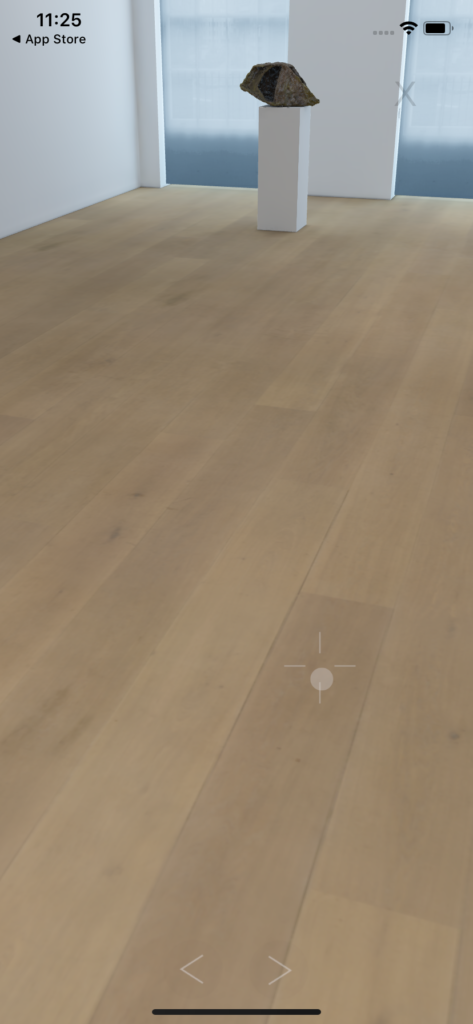
Exploring “Side By Side,” an exhibition
presented by David Zwirner and Victoria Miro, in the Vortic app.
Photo courtesy Nate Freeman.
Skeptical of the Virtual
For many, the sheer volume of virtual fairs, auctions,
exhibitions, events, talks, and even parties is a bit overkill for
an industry that for centuries has been pretty much strictly
in-person—and, until recently, was criticized for going overboard
on the social component and not spending enough time on the
art.
“The dense art fair schedule had long ago reached a saturation
point—a break in the schedule almost felt like a relief package,”
said Rob Teeters, the founder of the advisory service and project
space Front Desk Apparatus and a frequent attendee of physical art
fairs.
The newly packed online agenda has created a brand of fatigue
all its own. “The online platform is like scanning a desert
sand dune by way of a drone—the eye is present but the body is
disconnected.” Teeters said. “When you start to see a lot of work
that you’ve seen at past fairs or gallery exhibitions it becomes
less exciting and exhaustion sets in.”
Since the glitchy Basel edition in March, online fairs have
gotten spiffier. When it opened two weeks ago, Frieze’s clean-lined
modernist aesthetic washed over its site design. Now, the
conversation sectors of fairs feature live video chats with the
same level of heavy-hitters who would be sitting in the exhibitor
lounge speaking to a crowd of bubbly-sipping patrons. But
verticals stuffed with fresh video content can’t replace the
jet-setting socializing that once took place at fairs in
Europe.
“There’s no substitute for seeing works in person,” said
Caroline Taylor, an art consultant and appraiser who prior to the
pandemic was a regular presence on the European fair circuit. She
added that, after a period of test-confirmed symptomatic infection
and the required weeks of quarantine that follow recovery, she
logged into her email and found her inbox “clogged with online
viewing rooms.”
“Art is supposed to be fun and enchanting,” said Alexander
Adler, the president of the advisory firm Adler Beatty and former
director of Richard L. Feigen & Co. “This is not like going to
Frieze Masters in a nice tent and then having a frickin’
martini.”
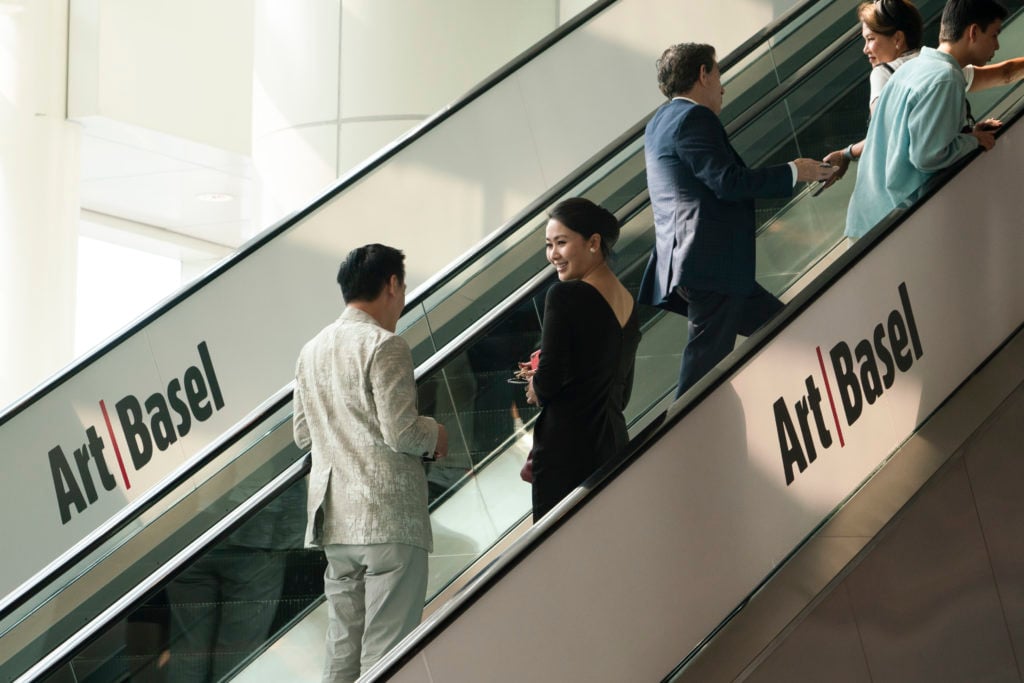
Visitors arrive at Art Basel on March
27, 2019 in Hong Kong, Hong Kong. (Photo by Theodore Kaye/Getty
Images)
Tech Issues
There’s another problem with this online migration, Adler
pointed out. It’s one thing to get digital natives to transition
from IRL cocktail parties to Zoom ones—it’s quite another for the
foundational collectors who still wield considerable influence and
account for a large chunk of all transactions to truly embrace new,
tricky widgets. Wheeling around in the virtual cube in the Vortic
app, currently being utilized by Zwirner and Victoria Miro for
their VR exhibit, was plenty confusing even for a sorta-tech-savvy
reporter.
“Half of these people don’t know how to use technology,” Adler
said. “If anything, they figured out how to log in and then got
annoyed and closed the window.”
In addition to the lack of schmoozing opportunities, advisors
and dealers said that no matter how diligent they are about
attending, the viewing rooms are not amenable to the aimless
grazing that leads to discoveries. Instead of taking a stroll
through the emerging artist sector where impulse buys could happen,
the plan of attack is to beeline for the works that had been
already offered via direct dealer-to-collector PDFs, and then click
x on the tab.
“I don’t feel obligated to go through every fair with the same
intention of the physical viewing experience,” Teeters said. “For
the most part we look for very specific things for our clients that
aren’t likely to be stumbled across at an online art fair. I do
look with high hopes but often find work that I’ve previously
seen.”
What’s not clear is how much of this infrastructure will remain
once the virus is behind us. Logsdail said that, when collectors
and art lovers can safely venture out to his galleries in New York
and London—either by appointment perhaps this summer, or in larger
crowds once a vaccine is developed—the online viewing rooms,
regardless of all their bells and whistles, will no longer get the
attention they are getting now.
“At the end of the day, it’s just a website,” he said.
The post Have We Already Gone From a Viewing Room Boom to
Viewing Room Gloom? The Art World Feels the Strain of Too Many
Online Events appeared first on artnet News.
Read more https://news.artnet.com/art-world/online-fair-overload-1866516
Further reading


Leave a comment