
‘Hope’ Artist Shepard Fairey Breaks Down 6 Public-Health Design Campaigns to Explain What Works—and What Doesn’t
Shepard Fairey, the street
artist who made his name in the 1990s with his “Obey Giant” murals
and stickers, became known worldwide 12 years ago when he designed
the “Hope” poster for Barack
Obama’s 2008 presidential
campaign. (Eight years later, he designed a memorable series of feminist images,
titled “We the People,” protesting Donald Trump’s
election.)
Since then, Fairey has created works honoring healthcare
workers and has collaborated with the design lab Amplifier, which has been commissioning
artists to create
public-health and safety messages
as part of a COVID-19 campaign.
As part of the project, Fairey
is selecting images for Amplifier’s image library, which also
contains other posters aiming to raise awareness of grassroots
movements.
The project “bypasses
most of the gates that exist in the
art and design world,” Fairey tells Artnet News, because it invites
artists and designers from all background to contribute. The
resulting images are also free for anyone to download.
But while posters have
historically been important as messaging tools in times of crisis,
not all campaigns are equally effective. “I’ve
never felt that art by committee yielded great results,” Fairey
tells Artnet News. He says that artists are better than
bureaucrats at grasping
what makes images effective.
“Breaking down what makes a good
poster is not easy because there are a lot of variables,” Fairey
says. But he appreciates images that “have enough personality to be
memorable, but are simple enough to be very instantly
legible.”
We asked Fairey to break down six COVID-19-related
public-service campaigns to explain what works, and what
doesn’t.
Rise Above Hate
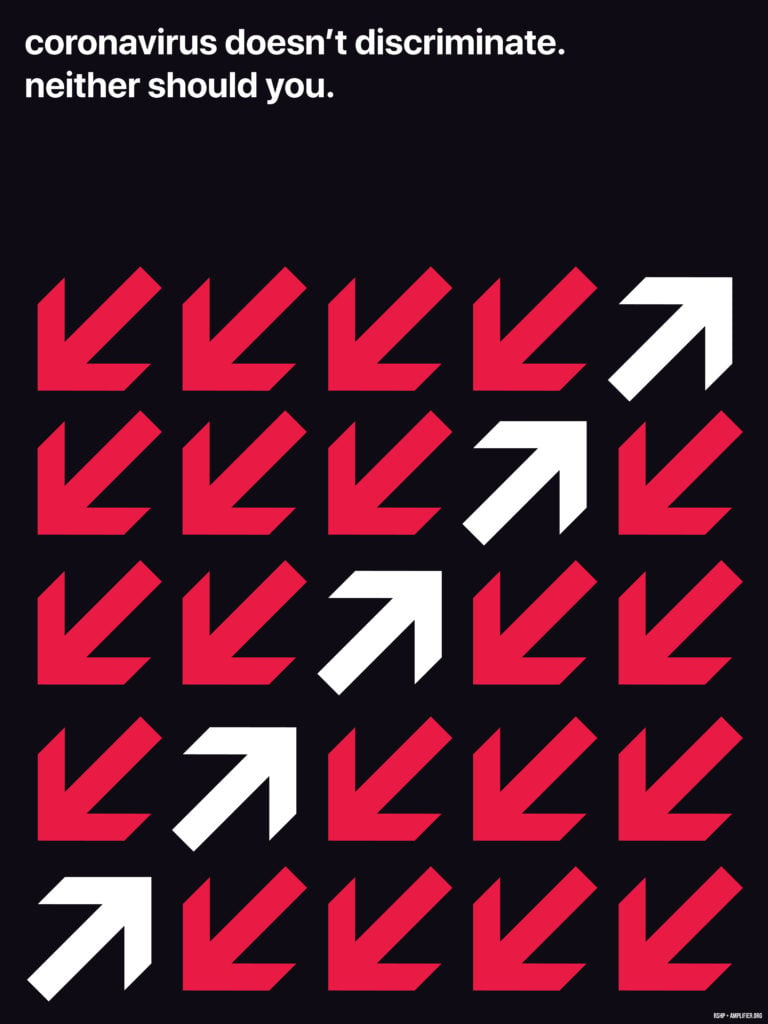
RSHP, Rise Above Hate (2020).
Courtesy Amplifier.
Fairey: I think
the symbols work, and the arrow of things moving in different
directions is easy to understand. Overall, it has a graphic appeal,
but I don’t think it has enough emotional appeal. Maybe the safety
of not giving a particular identity to discrimination—who is the
oppressor and who is being discriminated against—keeps it more
neutral and open-ended. Still, I’m not sure it builds a bond with
the viewer. But I like it graphically.
One and a Half Meters
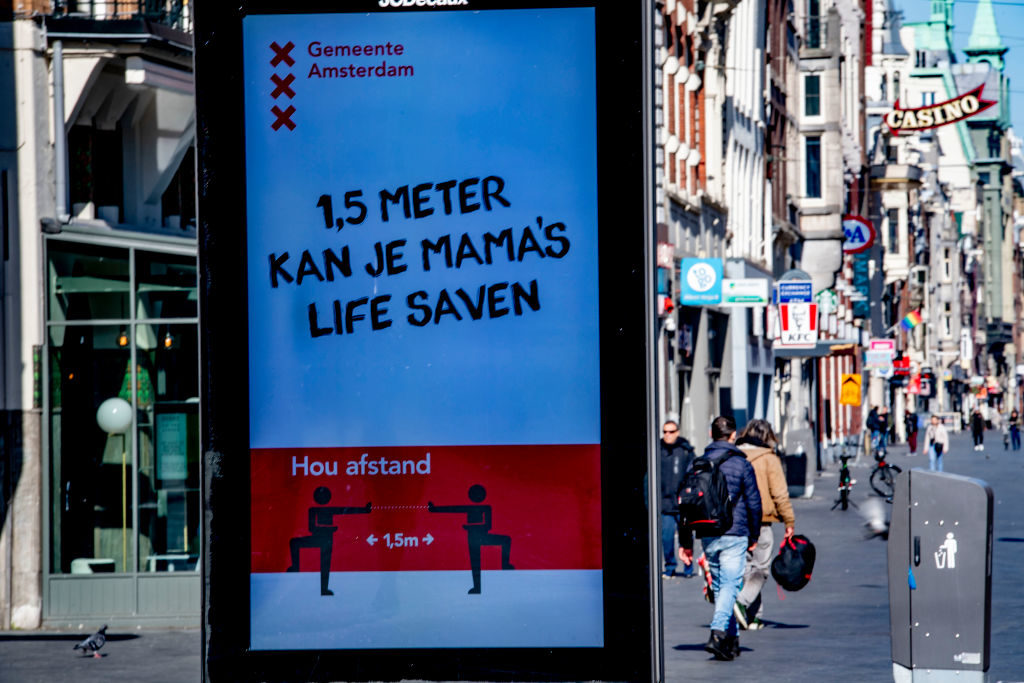
A sign from the city of Amsterdam that
reads: 1.5 meters can save your mama’s life. Photo by Robin
Utrecht/SOPA Images/LightRocket via Getty Images.
Fairey: I
don’t think this is very effective because the type looks like it’s
trying to feel cool and edgy, but it’s not that well executed. The
international symbol-style people are sort of generic, and I don’t
think anyone’s going to feel an emotional connection to it. I do
like that it’s saying that moms’ lives are important. I wouldn’t be
here without my mom.
Keep This Far Apart
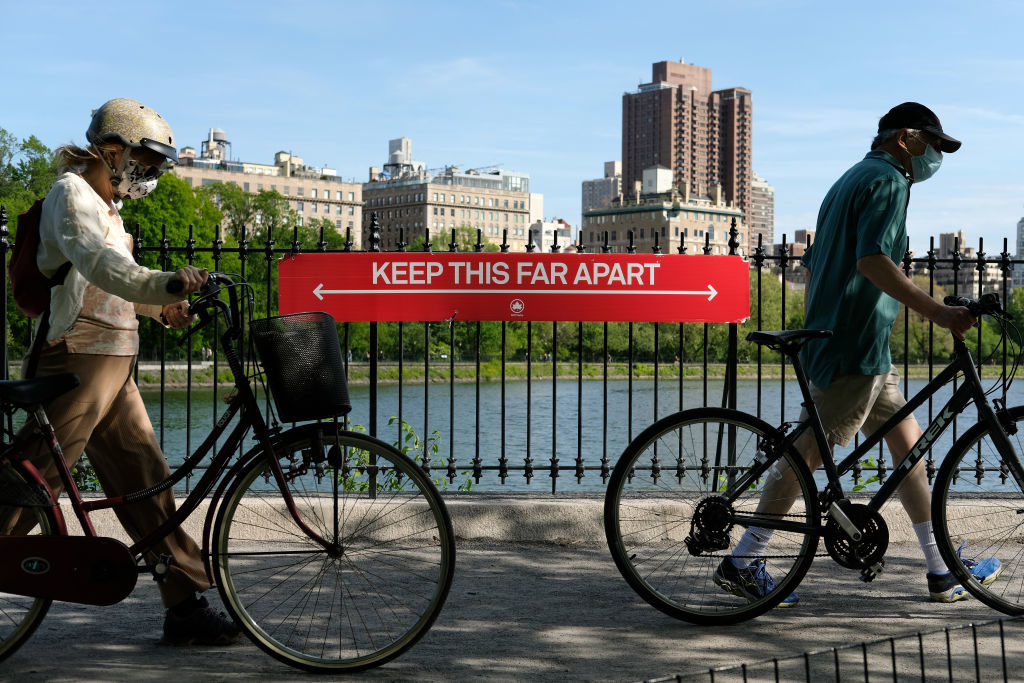
NYC Parks signage reading “Keep This Far
Apart.” Photo by Dia Dipasupil/Getty Images.
Fairey: As
far as giving an understanding of social distancing with a
relatable object, it achieves that and little else.
Control the Virus
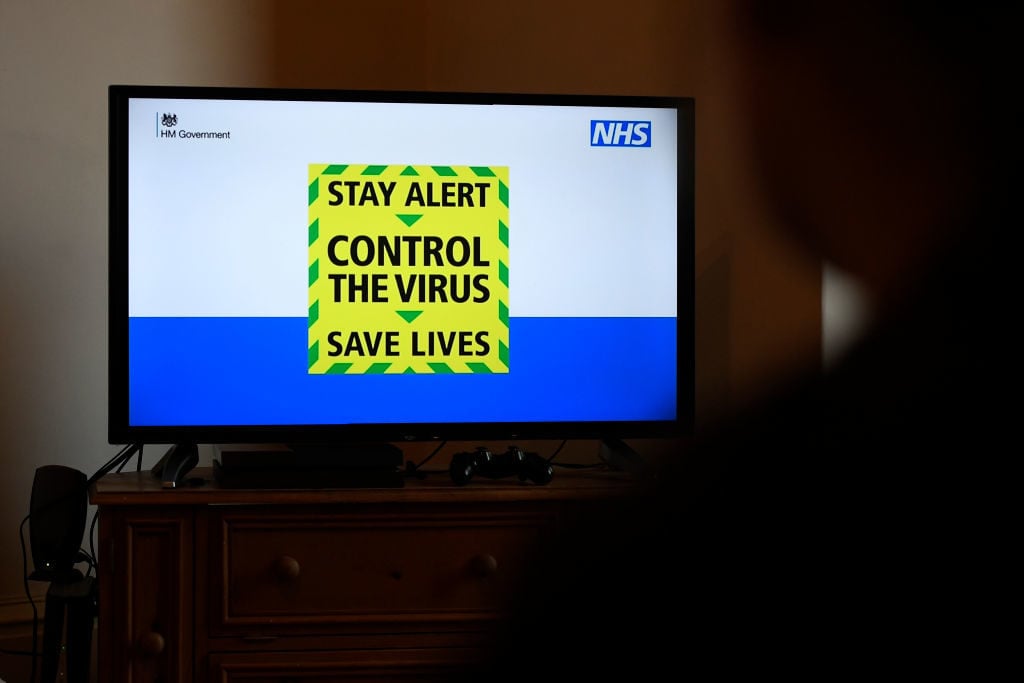
UK government’s new slogan “Stay Alert,
Control the Virus, Save Lives.” Photo by George Wood/Getty
Images.
Fairey: I
like the intensity of the colors here and how quickly this one can
be digested. I think the psychology of “control the virus” rather
than “control yourself” sounds like you’re uniting against the
enemy rather than conforming to some sort of paternalistic command.
I think that’s effective. But once again, it’s a prompt, not
something that you’re going to remember and revisit in your
imagination.
Solidarity in Light
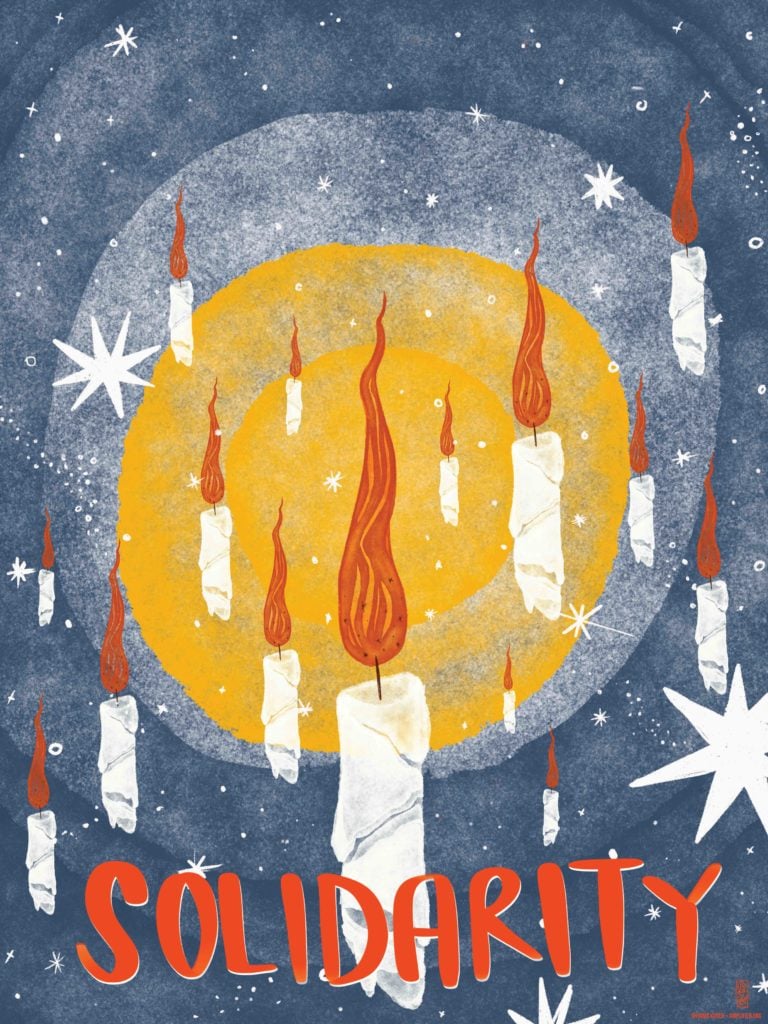
Shyama Kuver, Solidarity (2020).
Courtesy Amplifier.
Fairey: I
think this is pretty effective because the art is nicely done. It’s
a nice illustration. The candles have a lot of different cultural
references that make it relatable to a lot of people in different
ways. Whether it’s a religious service or a rock concert, the idea
of unity with a candle, lighter, or cell phone is something that
people can understand. This is effective both emotionally and in
terms of the message.
Global Forefront
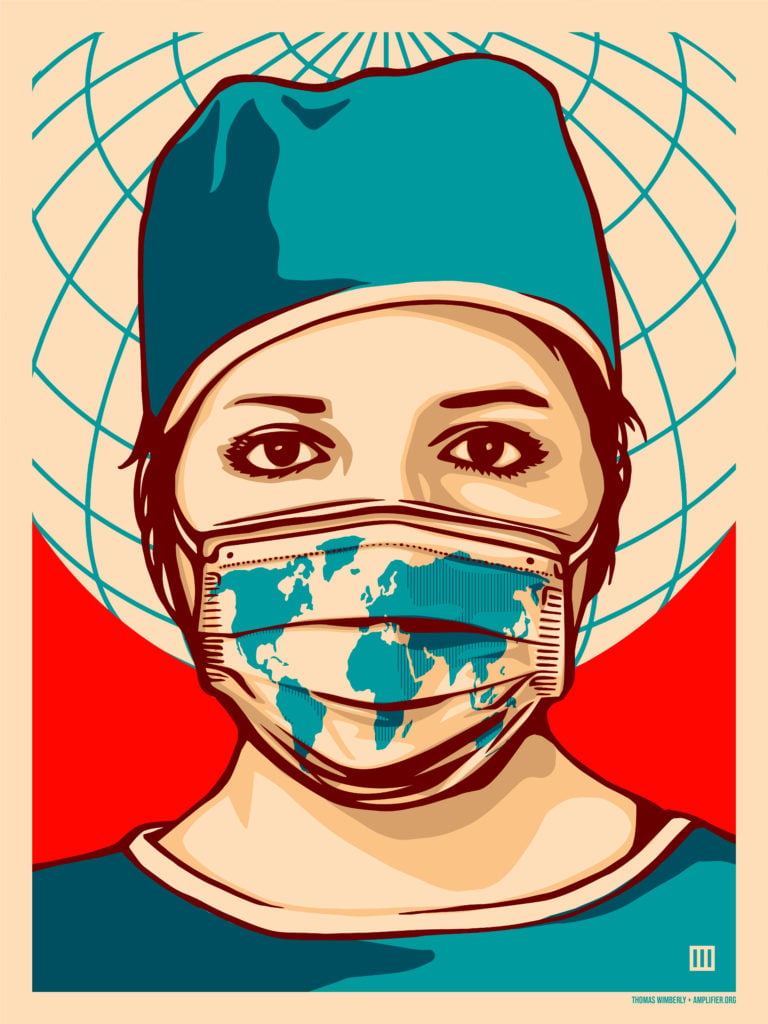
Thomas Wimberly, Global
Forefront (2020). Courtesy Amplifier.
Fairey: This piece
is effective in the color combination and the symbolism. The viewer
meets the subject’s gaze, and [there is a sense of] implicit
accountability to everyone in the world during this pandemic. I
think this piece has all the winning ingredients. People
frequently use imagery as a supplement to language, but some of the
most effective works use language to supplement a message that is
already understandable. Thomas Wimberly’s Forefront, with
the globe behind the woman’s head and the protective mask with the
continents on her face and with her direct gaze at the viewer,
communicates the need for a global response to COVID-19 without
needing text.
The post ‘Hope’ Artist Shepard Fairey Breaks Down 6
Public-Health Design Campaigns to Explain What Works—and What
Doesn’t appeared first on artnet News.
Read more https://news.artnet.com/exhibitions/shepard-fairey-covid-19-psa-1880175
Further reading


Leave a comment