
How Does an Artist Get a Gallery, Anyway? Here Are 11 Practical Steps That Could Lead to Bona Fide Representation
Every year sees many thousands of newly credentialed artists,
bearing degrees in the fine arts, looking to make their stamp in
the art world. While there are numerous paths to success, many
artists, young and not so young, are seeking the same goal: a
gallery to show and sell their work to collectors and museums, to
help them mount successful exhibitions, and maybe even to subsidize
the production of their work.
Of course, gaining a gallery isn’t the next step for every
artist. Some are perfectly content to work day jobs that grant
enough security to continue to create work; some have a busy
schedule of residencies; some are able to build a résumé by
exhibiting at nonprofits; some who focus on a research-based
practice might even benefit from a few years in a studio art PhD
program.
But if you are looking for a relationship with a dealer who will
support and represent you, you’ll need to know how to get there—and
the art world is notoriously opaque when it comes to such matters.
Are there any tips for speeding up this painful process? We asked
both artists and dealers for advice on practical steps to
gaining representation. Here’s what the experts had to say.
1. Don’t Show Up on the
Doorstep
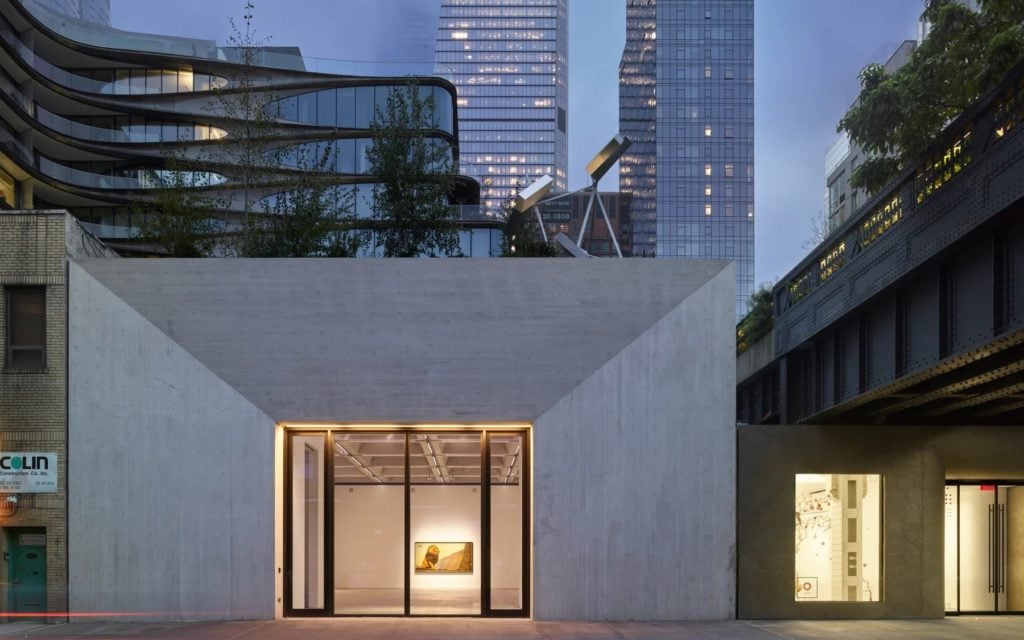
The exterior of Kasmin Gallery in
Chelsea. Courtesy of Kasmin Gallery.
Before the “do’s,” let’s just get one “don’t” out of the way. If
there is one tactic everyone artnet surveyed strongly
discouraged, it is showing up unannounced at a gallery with a
portfolio of your work. This is just not the way to do things.
“That’s the worst thing you could ever do,” said Christopher
Rivera, co-founder (with Manuela Paz) of Embajada Gallery, in San
Juan, Puerto Rico. “It’s a cliché. You look desperate.”
2. Know Your
Worth
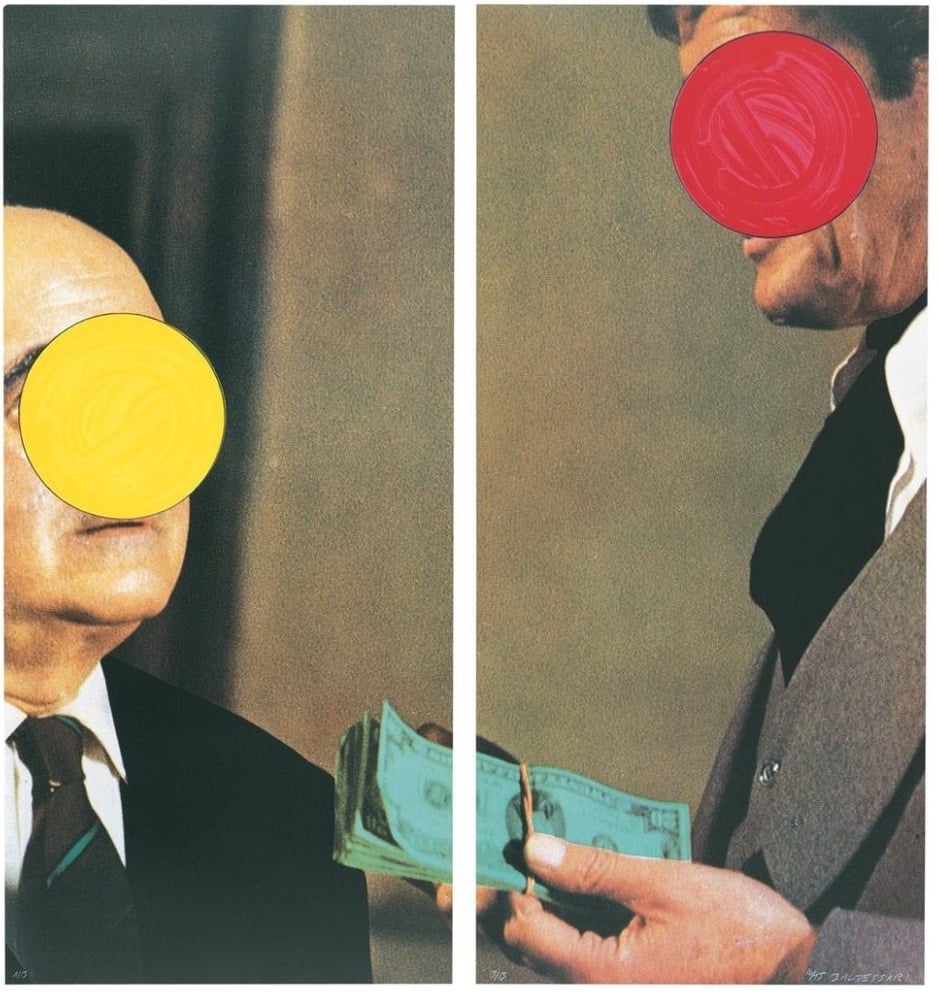
John Baldessari, Money (with Space
Between), (1991) courtesy Gemini G.E.L.© John Baldessari.
When trying to make a career in art, one principle has to be in
“the DNA that carries through every decision you make,” says Lauren
Wittels, partner at New York gallery Luhring Augustine: “Your
work has value.”
While it’s important get your work out there, reputation is
important too. There is no shortage of unscrupulous people who will
happily exploit artists’ eagerness for an opportunity—potentially
setting a precedent for how others see them further down the
line.
“Don’t give [art] to people who are not going to treat you and
your work with respect,” says Wittels, who also teaches in the
Bronx Museum’s AIM professional development program for artists.
“There has to be a consignment agreement specifying insurance,
terms of payment, shipping arrangements, and so on. If they want to
put your paintings in the back of a car and say they’ll send a
consignment later, no.”
3. Figure Out What Your
Scene Is
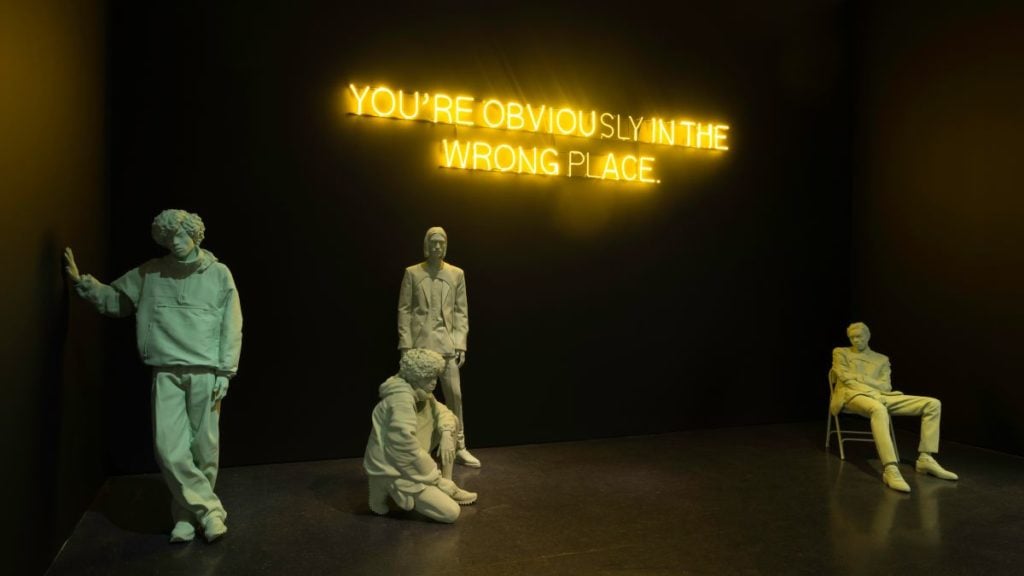
Installation view “Virgil Abloh: Figures
of Speech” at MCA Chicago. © Nathan Keay, Courtesy of MCA
Chicago.
In the economy in general, study after study has
shown that most jobs are never posted, and upwards of 70 percent of
all jobs are found through personal contacts or networking. In a
small, personal field like art, these effects are only amplified—so
it’s very important for artists to define for themselves what scene
they are a part of and what networks they are attached to.
“You have to be part of a scene, part of a group of artists,”
Rivera advises. Cohorts that form in school or in residency
programs have to share contacts and opportunities, he says. The
most common path an artist finds to success is through another
artist who has found success.
Sharing goes both ways, Wittels points out. “If you’re in a show
about, say, performance and the body, and you have a friend whose
work explores those issues, recommend them!”
The art world is fiercely competitive, which can lead artists to
guard their contacts jealously. Wittels assures aspiring artists
that there’s enough opportunity to go around. “It’s human nature
not to want others to steal opportunities,” she says, “but a lot of
the artists in our gallery came through other artists.”
Hank Willis Thomas, who shows with the major New York gallery
Jack Shainman, found his way through dumb luck and some help from
his friends. “Someone I was in graduate school with was working as
an art handler at Jack’s. They had a show of mostly
African-American artists of my generation, organized by Trevor
Schoonmaker and Isolde Brielmaier. He told Jack’s business partner,
Claude Simard, ‘If you like that, you might like this.’”
4. Be a
Presence
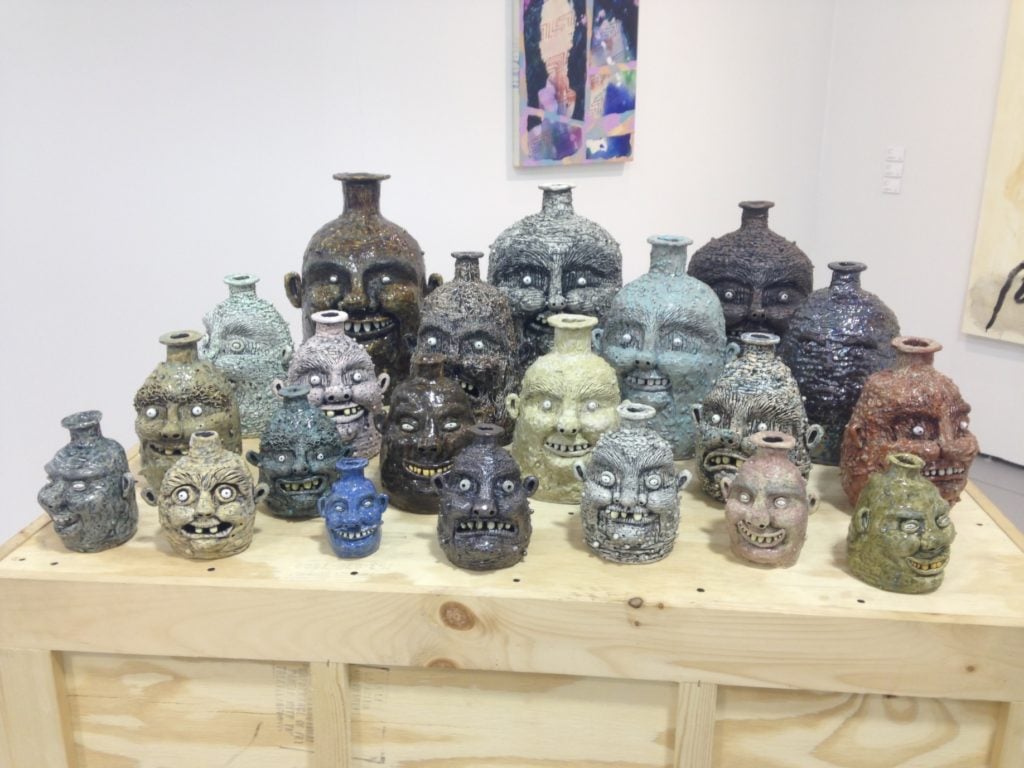
Rebecca Morgan, Assortment of Face
Jugs at Asya Geisberg Gallery. Photo: Cait Munro
Nothing can substitute for being a regular presence at the place
you want to be, say the experts.
Artist Rebecca Morgan hosts “ask me anything” sessions for
artists via her Instagram, dealing with this very subject. “You
should make the effort to attend all the programming that you can
at galleries you like,” says the artist, who is currently preparing
a solo show at New York’s Asya Geisberg Gallery. “By
being present and showing up, you will become a familiar face. I
think it’s helpful to post pictures from the opening or exhibition;
galleries are also always looking at who is present and attending.
In my experience, they almost always check out who is posting or
signing the book, or who is a regular attendee.”
Rivera is even more blunt: “You’ve got to go to openings! You’ve
got to suffer! Either you can waste time going to the movies or you
can go to an opening and then go to the after party.”
5. Pick a Specific
Target
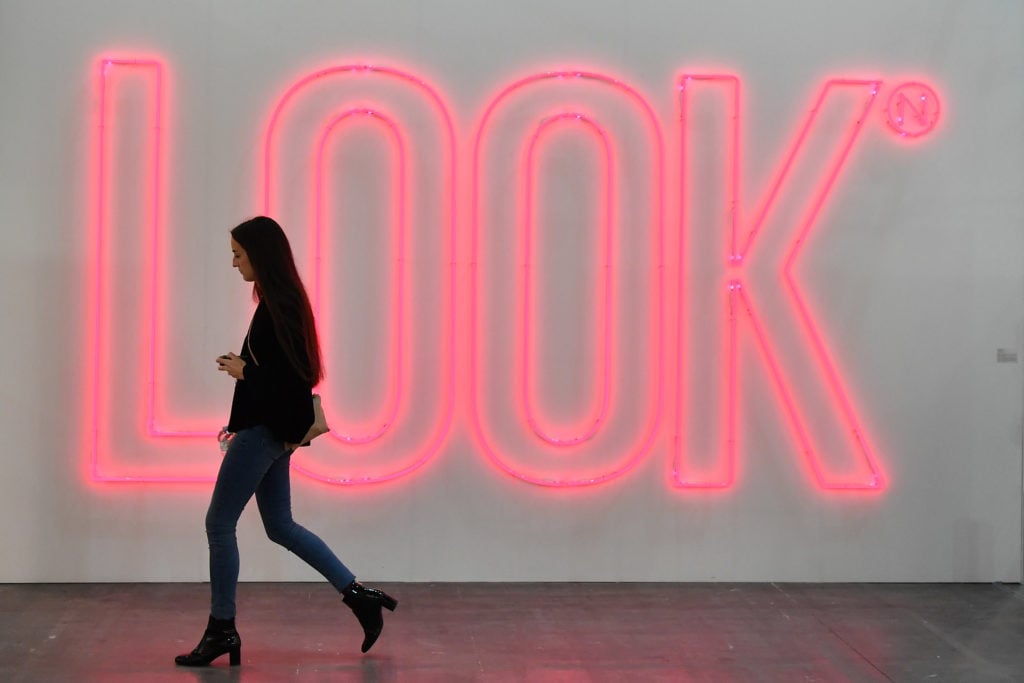
The opening of Artissima, International
Fair of Contemporary Art on November 2, 2017 in Turin, Italy. Photo
by Valerio Pennicino/Getty Images.
A light touch and a measure of sincerity are important,
according to Morgan. “You should introduce yourself to the gallery
owner or manager, or other artists in the stable, with nothing more
than ‘I have been coming to this gallery for a while and I really
love the exhibitions and wanted to say hello,’” she says. “Actual,
real relationships happen from saying ‘Hello, I really admire you’
or ‘I like your program.’”
Nota bene: That part about “liking the program” is key. A
very common mistake is for artists to look at the problem of
getting a gallery indiscriminately, as if all galleries are the
same. Knowing what, specifically, a certain space specializes in,
and why your art, in particular, would work for it, is very
important if you want to be taken seriously.
“If you tell the person at the front desk that you admire the
gallery, you really should be able to discuss some artists in the
gallery’s program to show that you mean what you say, that you’re
really interested in what they do and you’re not just looking for
any gallery to work with you,” Wittels councils.
6. Yes, Do Instagram. But Do
It Right.
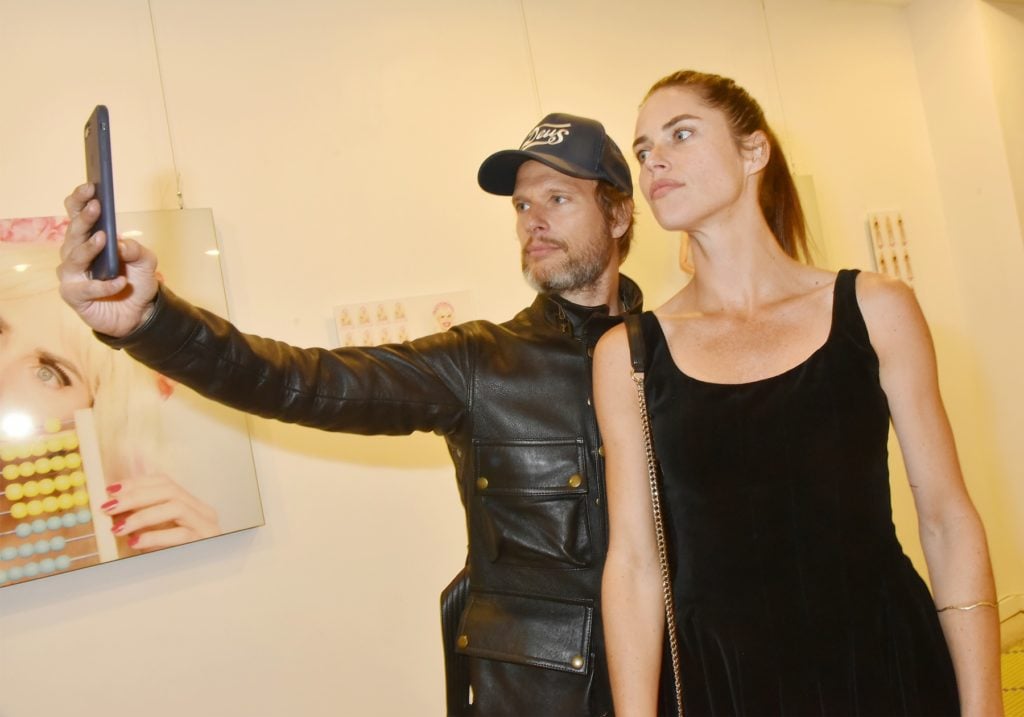
Artist Zoe Duchesne and a guest pose for
a selfie during the “‘Poupees’ de Zoe Duchesne” preview at Galerie
Marguerite Milin on September 13, 2018 in Paris, France. Photo by
Foc Kan/WireImage.
Instagram and other social media are fine tools for artists.
They have offered ways to network and gain exposure that previous
generations just didn’t have, opening new entryways into the
profession.
But keep in mind, not all exposure is created equal.
“I was just talking to an artist who was getting ready to reach
out to a gallery and I looked at their Instagram,” Morgan says. “I
had to tell them, ‘Look, I don’t see any of your work. I see
selfies.’ Be mindful of what it’s going to look like when people
are trying to find your work. Get your house in order.”
7. Learn the Delicate Art of
the Studio Visit
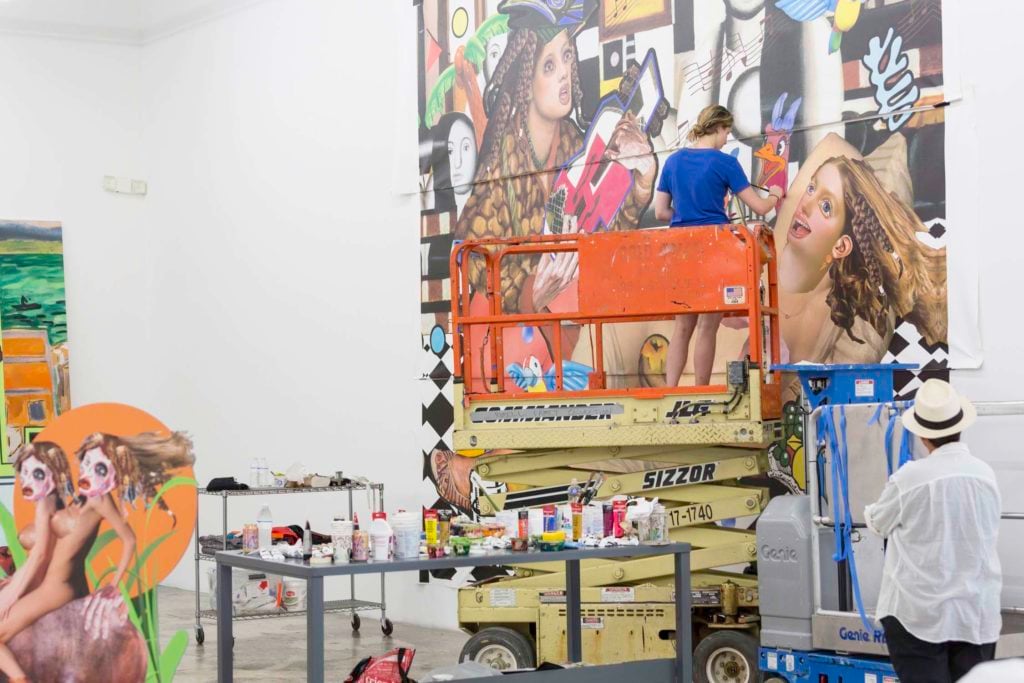
Allison Zuckerman in the summer of 2017.
Courtesy of Kravets Wehby Gallery and Rubell Family Collection.
A studio visit is almost always the first step toward a gallery
relationship, Wittels points out, so it’s important to know some
basic protocol. “There has got to be a respectful dialogue,” she
says. “It can’t be a monologue on either side. If you’re going to
lecture me, you could just send a press release.”
On the flip side, it’s important actually to listen to what your
visitor wants to say, Wittels advises. “Let them tell you their
ideas about your work, or what other artists your work reminds them
of. You want them to see things you’ve never thought of
before.”
Also worth keeping in mind: You’ll need to have a healthy amount
of work to show your visitor. “I’ve been to studio visits where
there was one painting there,” Wittels says. Referring to Jay
DeFeo’s ten-foot-tall
masterpiece, she adds, “unless it’s The Rose, there
better be more than one!”
Then again, don’t overdo it. “I’ve had studio visits where I’ve
seen fifty paintings. There has to be a happy medium between the
extremes.”
8. Don’t Get Ground
Down
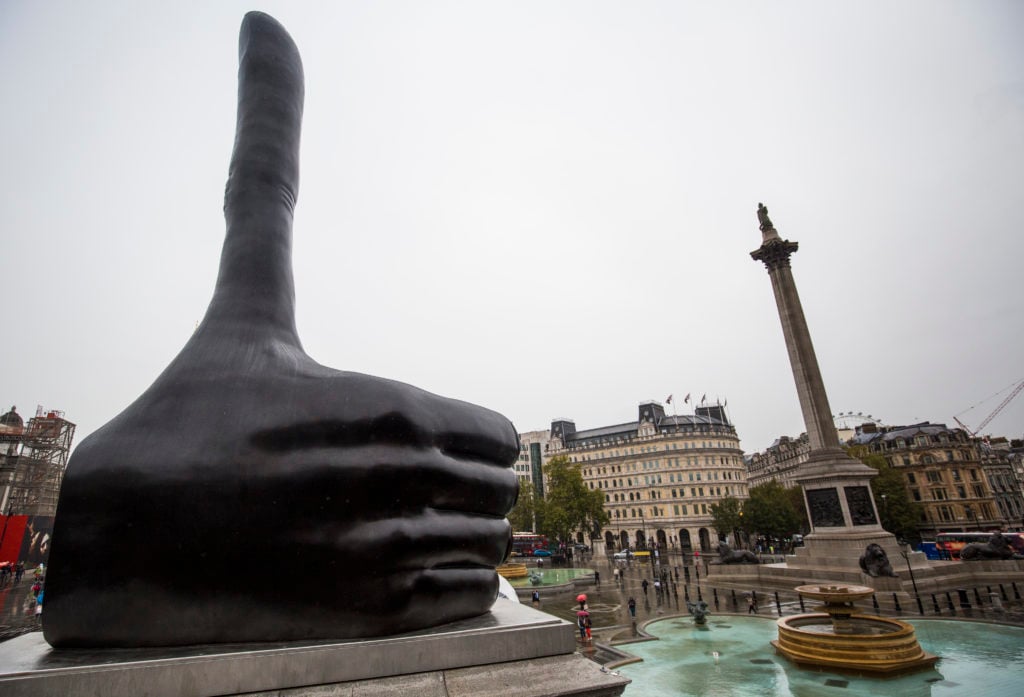
The Fourth Plinth sculpture by British
artist David Shrigley, ‘Really Good’ is unveiled at Trafalgar
Square on September 29, 2016 in London, England. (Photo by Jack
Taylor/Getty Images)
There is a lot of rejection baked into art, an inherently
demoralizing condition. It’s worth remembering that this is totally
normal. Don’t let it rattle your self-confidence too much.
“I’ve been giving people the same advice about putting yourself
out there,” says Morgan, “and sometimes they have trepidation to do
it. I completely understand how intense it is. Yes, it’s
uncomfortable. Yes, there’s a hierarchy. People say, ‘I’m so shy or
anxious, I can’t.’ But at the end of the day, you have nothing to
lose and everything to gain.”
9. Remember You Can Always
Take the Side Door
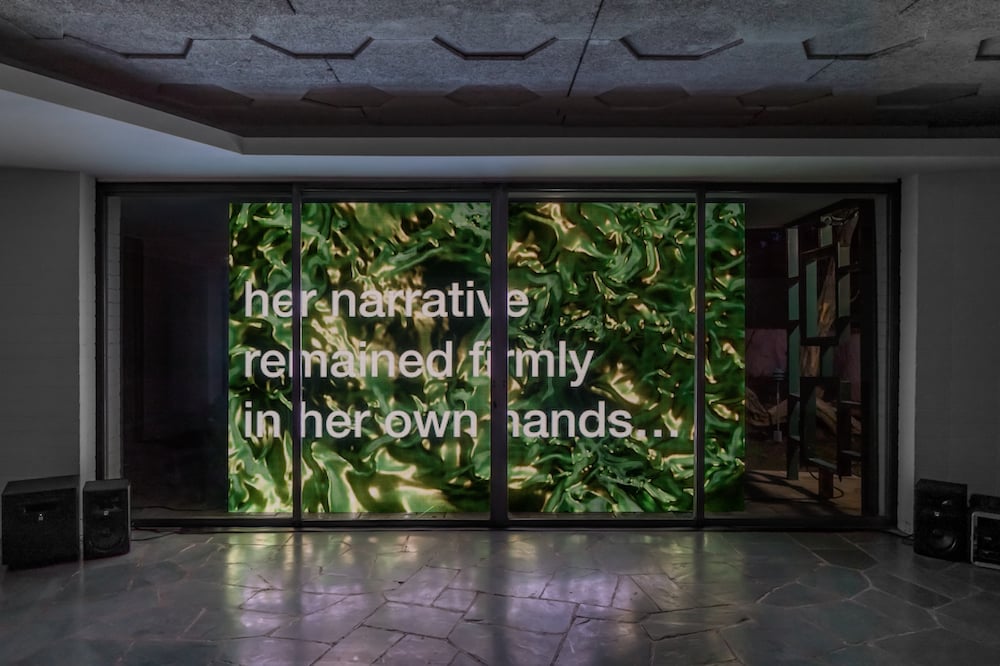
Tony Cokes, Della’s House (2019).
Image courtesy the artist and Hannah Hoffman, LA. Photo: Elon
Schoenholz.
“No one wants to hear this,” says the artist Tony Cokes, who
works in video and recently signed to New York gallery Greene
Naftali (and is presently in a two-person show with
Oscar Murillo at The Shed in New York). “But this is how it
happened: They asked me. It wasn’t a long campaign of socializing
and insinuating myself into the program.”
Demanding video work like Cokes’s, which often deals with issues
of race and representation, took him down an alternative path: It
found a home at nonprofits and in festivals before he broke into
the commercial world.
“I didn’t think the campaigning was going to work anyway,” says
Cokes, who is a professor of modern culture and media at Brown
University. “I hate to sound old-fashioned, but do work that you
need to do and find possible venues for it. Make the work you want
to make!”
10. Make Your Own
Opportunity

Josh Kline, FREEDOM (2015)
Image: Benoit Pailley. Courtesy the New Museum.
The bottom line is that there is always a risk for dealers in
starting to show a new, unknown artist. The task is to get on the
radar. Paradoxically, this means that the best way to get someone
else to show your work is sometimes to start by showing
yourself.
Morgan coaches artists that they might need to make their own
luck. “Remove all the furniture from your apartment and start your
own gallery!”, she says. “What are you going to do for yourself?
How bad do you want this?”
11. Keep It All in
Perspective
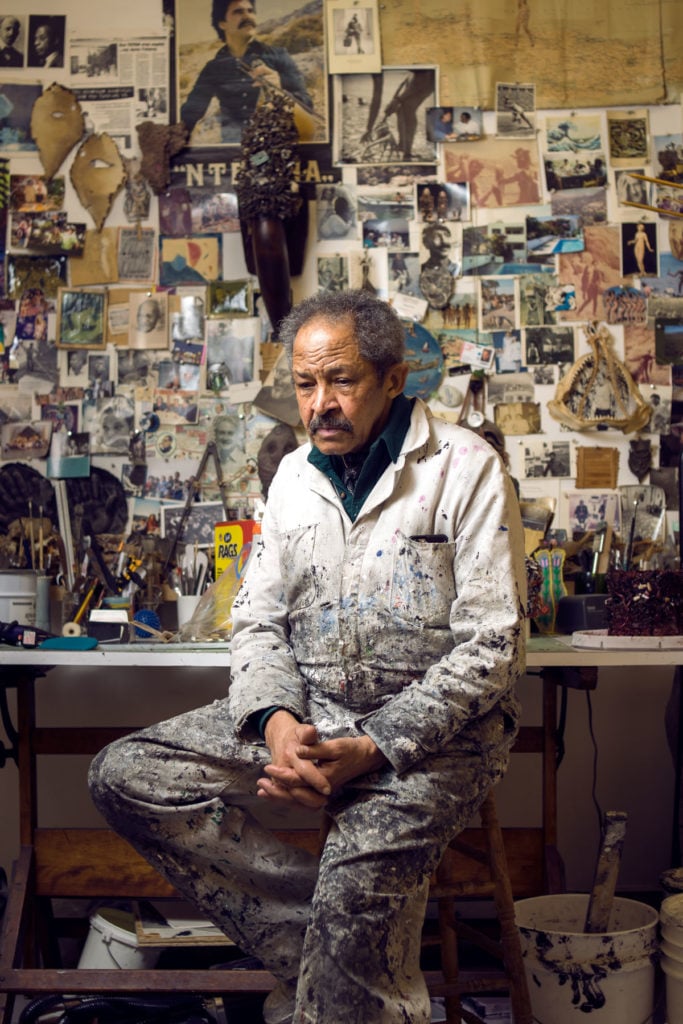
Jack Whitten in his studio, 2016. Photo
by Taylor Dafoe.
As the art world has become more professionalized, it might be
hard for a young artist not to feel impatient about finding
representation. But in the end, it’s important to remind yourself
that early success is more the exception than the rule, and that a
lack of representation now certainly doesn’t rule out recognition
later on.
“Some artists feel that if they haven’t made it by forty, then
they haven’t made it,” says Hank Willis Thomas. “But there are so
many artists just getting recognized in their sixties and
seventies.” He rattles off a list of artists from Howardena Pindell
and Lynn Hershman Leeson to Jack Whitten and MacArthur Binion, as
well as his own mother, photographer Deborah Willis.
Wittels sounds a similar note. “The more art becomes a viable
career path, the more pressure there is on artists,” she says.
“Fifty years ago, just having a show in New York meant you were a
success.”
Paraphrasing Shakespeare in Merchant of Venice, she
assures young artists that if you keep at it, “the art will
out.”
The post How Does an Artist Get a Gallery, Anyway? Here Are
11 Practical Steps That Could Lead to Bona Fide Representation
appeared first on artnet News.
Read more https://news.artnet.com/art-world/how-to-get-a-gallery-1621384
Further reading


Leave a comment