
How Have Artists Shaped Previous Protest Movements? 7 Historians on How the Past Can Help Us Understand the Present
Across the United States—and the rest of the world—images have
become central to the ongoing protest movement that has gained
strength since the police killing of George Floyd in Minneapolis.
Artists have painted “Black Lives
Matter” banners on streets so large they can be viewed
from space, demonstrators have covered the fence of
the White House with vivid protest art, and statues of
Confederate figures have become a central
rallying point.
To help us better understand the current moment and the role art
and artists have to play in it, we asked academics who have studied
artistic responses to previous rebellions and Civil Rights
movements to provide context for what we’re seeing now. Read on for
their perspectives on how artists of the past contributed to and
helped shape historic moments of change.
Casarae L.
Abdul-Ghani
Professor of African American literature at
Syracuse University
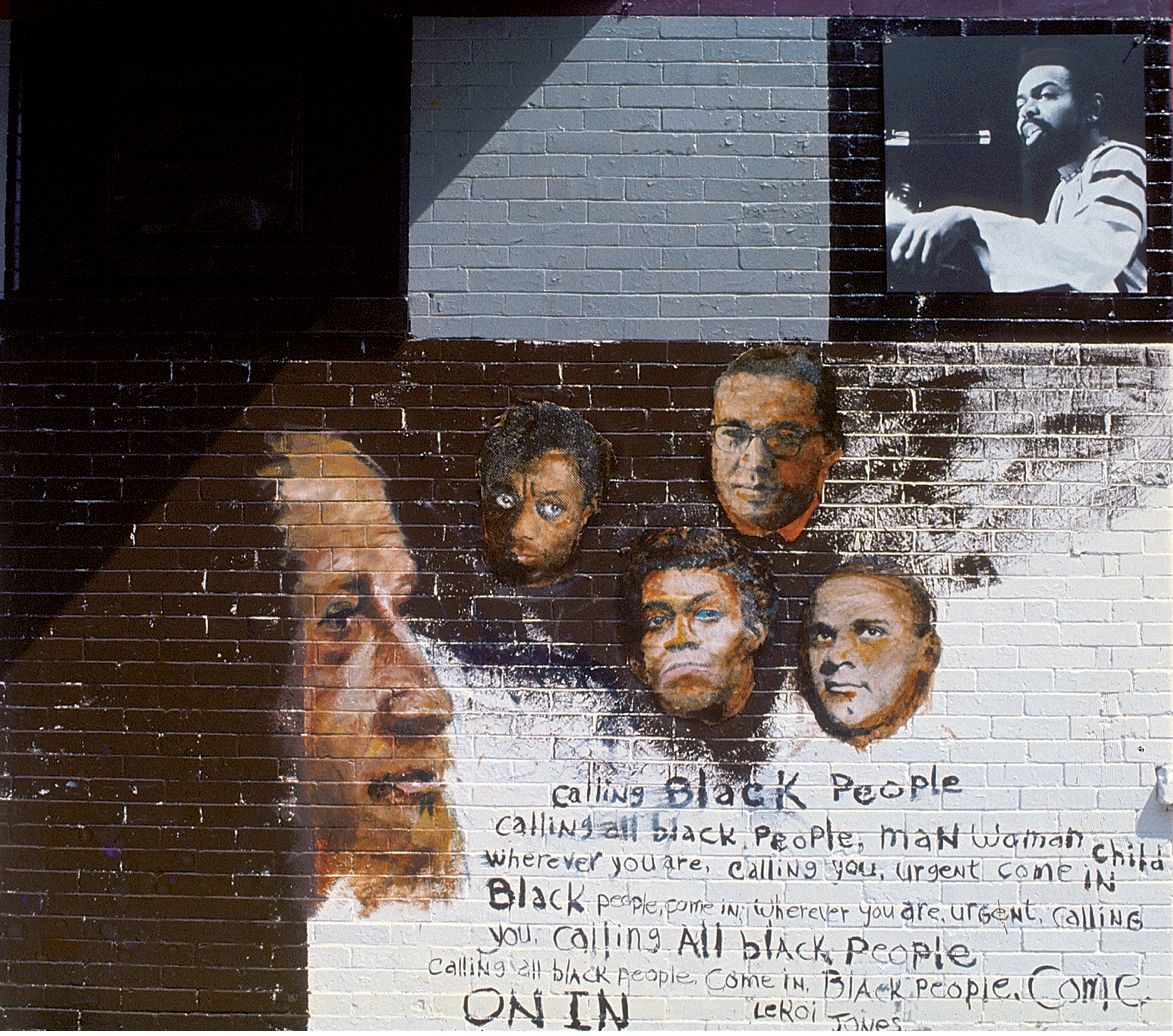
‘The Wall of Respect’ celebrating black
literary figures, Chicago, IL, 1967. From left: W.E.B. Dubois,
James Baldwin, Lerone Bennett, Amiri Baraka, Gwendolyn Brooks, and
John Killen. (Robert Abbott Sengstacke/Getty Images)
The artist’s role in an uprising
has always been to address the discontent of the people.
Particularly, African American artists have used their platforms to
humanize the Black experience and cast uprisings as something
not un-American, but inherently American and in line with a longer
history of revolt across the Americas, from [the time of] slavery
to the present.
Protest is what shapes artists’
identity and moves them to respond. However, the ability to spread
[art] to the masses, to individuals or groups that might be unaware
of the broader protest, or showing solidarity with grassroots
movements, becomes viable to the mainstream whether it’s received
well or not.
The historical figures that I
examine in my research that respond to uprisings are Gwendolyn
Brooks, Henry Dumas, Amiri Baraka, Ben Caldwell, and Sonia Sanchez.
What we can learn from these artists today is to give a voice to
the unheard and to create a language for the voiceless that not
only places their political speech at the fore, but makes the world
cognizant of hard truths associated with America’s. and the Western
world’s, racial present.
Eddie Chambers
Professor of visual arts
of the African diaspora, University of Texas at Austin
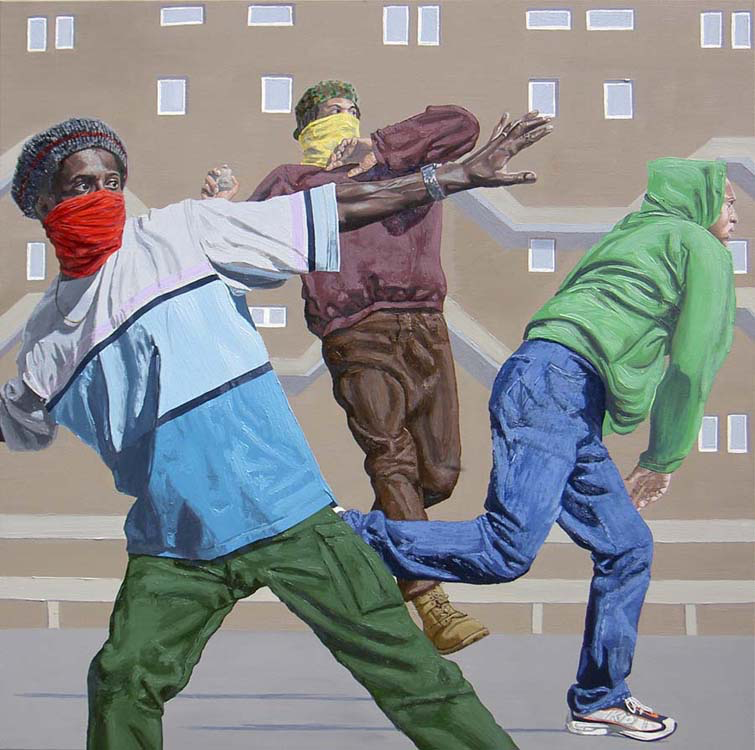
Kimathi Donkor, Coldharbour Lane
1985 (2005). Courtesy of the artist.
Some Black British artists have
made important works that speak to, or emerge from, unrest,
protest, and what the dominant media characterizes as
“rioting.” Artists’
commentary on the “rioting” that took place in cities such as
London and Birmingham in the early and mid-1980s includes one of
Tam Joseph’s signature works, Spirit of the Carnival, as well as memorable pieces by the late
Donald Rodney that made use of an image of a young Black man,
stalking his quarry, lit petrol bomb in hand. Kimathi
Donkor is another artist whose work countered dominant media
narratives of the Black insurrectionist, thereby visualizing not so
much “rioting” as resistance.
Paul
Rucker
Research fellow, Virginia Commonwealth
University
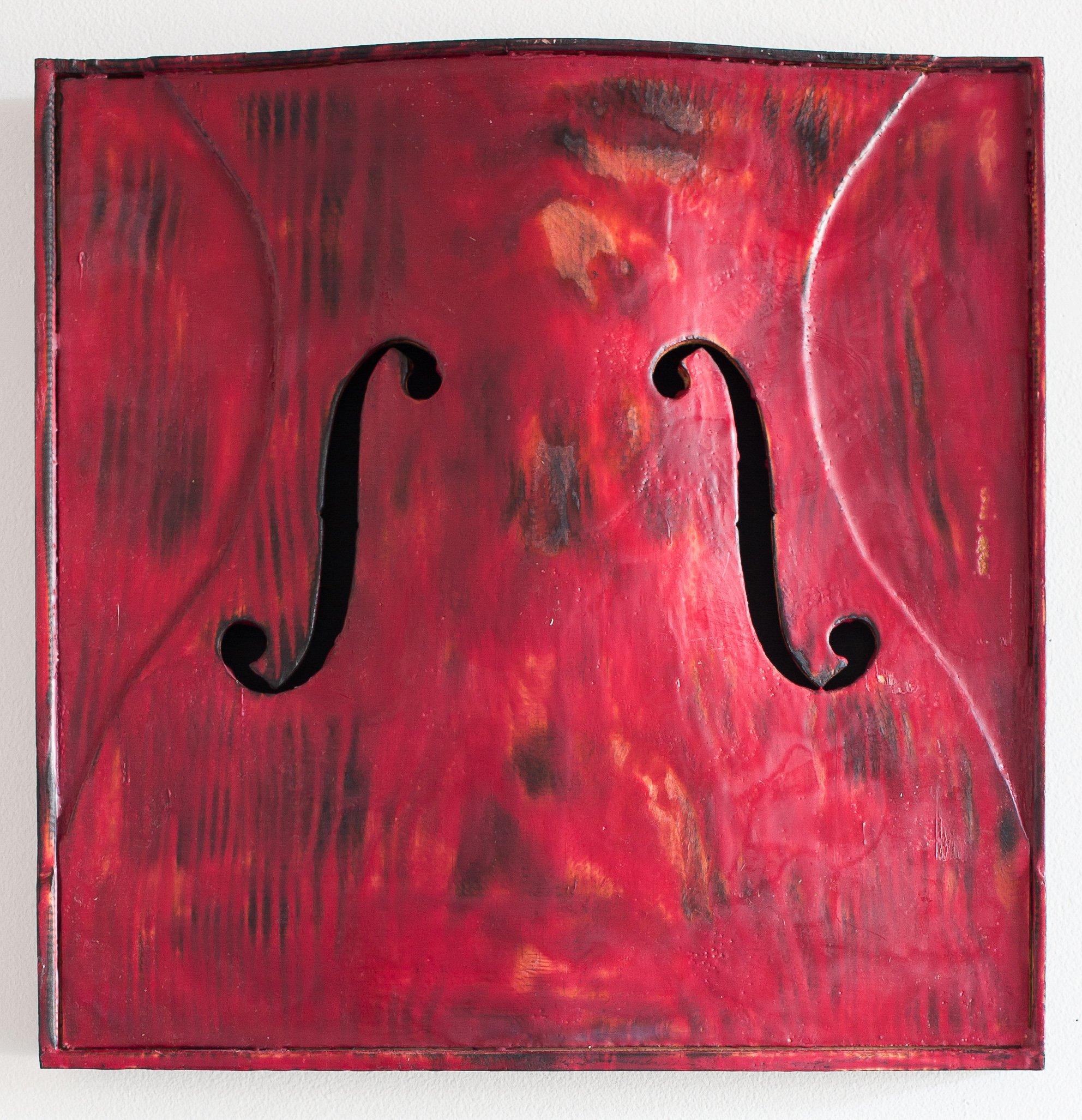
Paul Rucker, Red Summer. Photo
courtesy of the artist.
The last major pandemic, in
1918, was followed by race riots and massacres in 38 cities in
1919, now known as the Red Summer. Early last year, I presented a show by that name at Kenyon
College, which included
newspapers and lynching postcards from the time, as well as
original sculptures and performances, anticipating a reprise of
this rarely talked-about major historical event.
It’s easy to see a parallel
between then and now. Many point to potential positive outcomes
from what the COVID-19 pandemic and this year’s global protests
against police violence have exposed. But there should be caution
along with the optimism and action. After the Red Summer came the
Black Wall Street massacre and
other forms of retribution: the passing of the Johnson-Reed Act of 1924,
which banned Chinese immigration and imposed immigration quotas,
and the rise of the Ku Klux Klan. Unintended consequences could
lead to white supremacy strengthening through today’s
events.
Sandipto Dasgupta
Professor of politics at the
New School
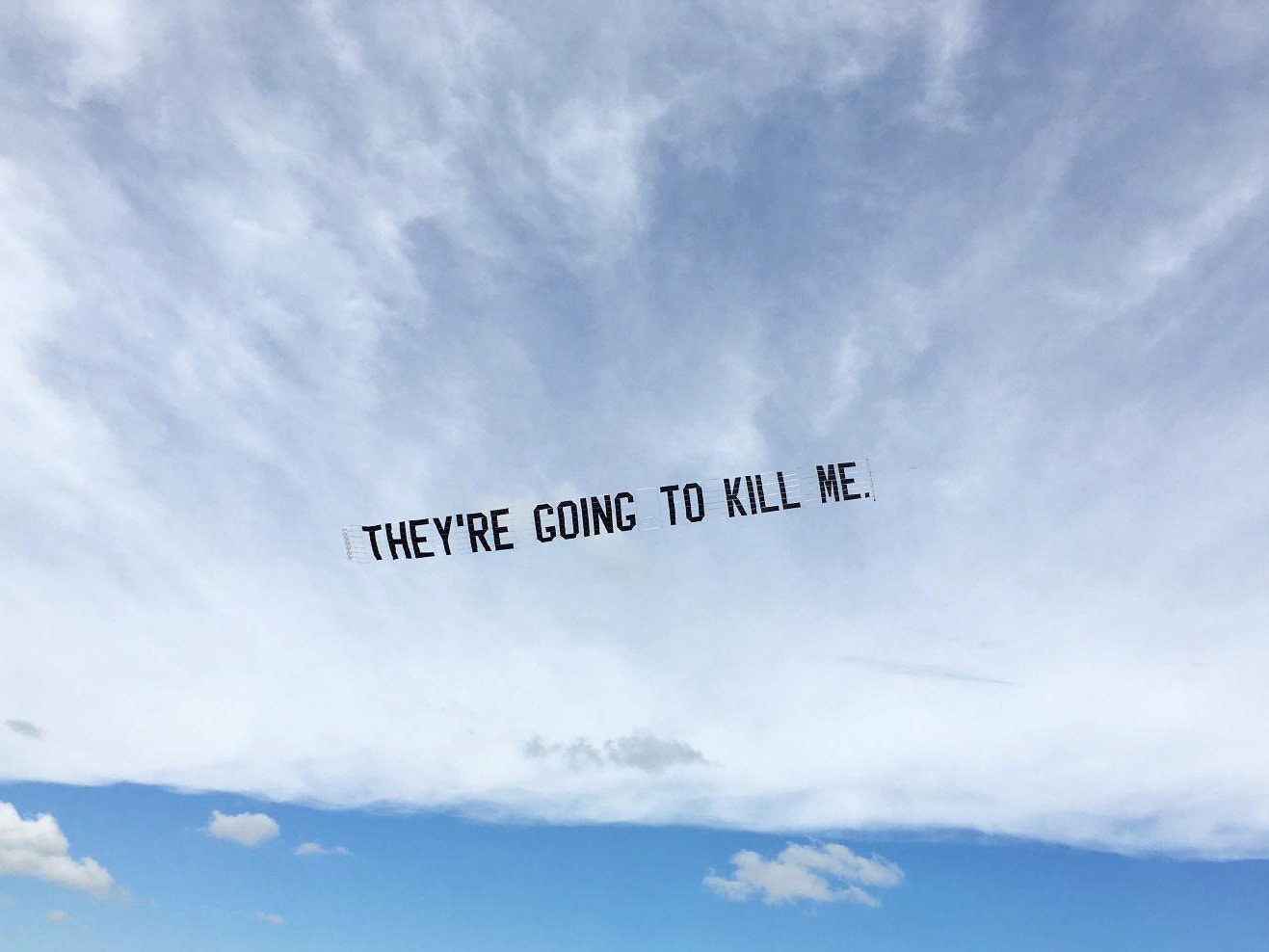
Jammie Holmes, They’re Going to Kill
Me (New York City) (2020). Photo courtesy of the artist
and Library Street Collective.
We are, every day, saturated
with images and texts offering narratives that symbolically gloss
over the real contradictions in our society. Times of rebellion
crack that narrative. They demand and generate a new language and
new ways of seeing. Works of art aligned to rebellions make
apparent those contradictions and fissures, and at times produce an
image of a better future, both in form and substance. Instead of
producing beautiful objects for consumption in the art market, they
strive to produce a vision of a different world. When they succeed,
they remain impossible to co-opt into the comforting narratives of
the powerful.
Susanne
Altmann
Curator of the exhibition “The Medea Insurrection:
Radical Women Artists Behind the Iron Curtain“
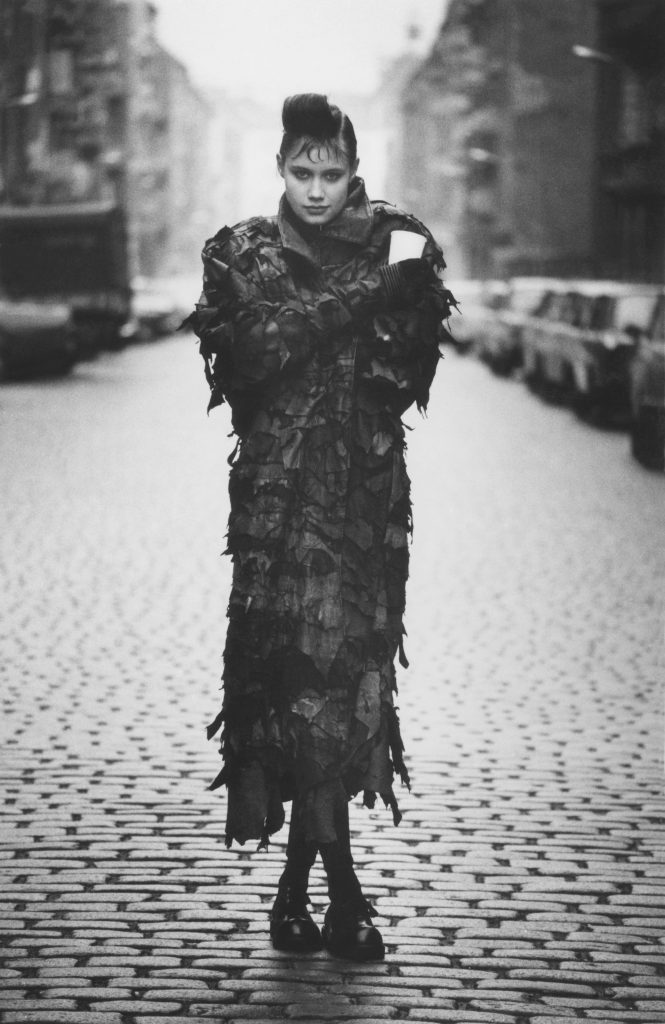
Sibylle Bergemann, Heike, Allerleirauh,
Berlin (1988). Design: Angelika Kroker. © Nachlass Sibylle
Bergemann, OSTKREUZ; Courtesy Loock Galerie, Berlin
Most countries behind the Iron
Curtain pursued an ideology-based cultural policy which turned
finding your own artistic voice or medium or material into an act
of subversion already. Pushing experiments with Modernist forms,
conceptual photography, film, and performance would often lead to
not having institutional exposure. For this reason, the artists had
to create their own subversive networks—kind of a managing their
visibility for themselves, establishing an artistic and mental
independence from official publicity. In my view, the political
restrictions even led to a higher degree of freedom compared to
societies where “anything goes.” Within that context, tackling the
issue of female identity was even more courageous, because the
structural machismo prevailed well into the unofficial
circles.
Melissa Chiu
Director, Hirshhorn Museum and Sculpture Garden and author
of Art and China’s
Revolution

Liu Chunhua, Mao En Route to
Anyuan (1967).
The book came from the research I did with Zheng Shengtian on
the important period spanning the decade from 1966 to 1976 in
China. Artists played a significant role in this movement because a
large part of it was about developing a new modern visual
vocabulary that symbolized the new modernity espoused by Mao
Zedong. Artists created paintings that were then printed into
posters for large-scale dissemination of ideas. One work by Liu
Chunhua titled Mao En Route to Anyuan was reproduced 900
million times.
It is important to remember that there
were artists persecuted at this moment (mostly from an older
generation), and a younger generation who were a part of the
revolution. The images that younger artists created during
this period defined the Cultural Revolution. They showed the
political priorities and emphasis, which allowed those values to be
circulated in an unprecedented way for that time in history.
Looking back, the prevalence of these images of political intent
have left an indelible mark on the generation that experienced it,
and the art of the time is synonymous with the politics of the
time.
Diana Wylie
Professor of history at the African Studies Center, Boston
University
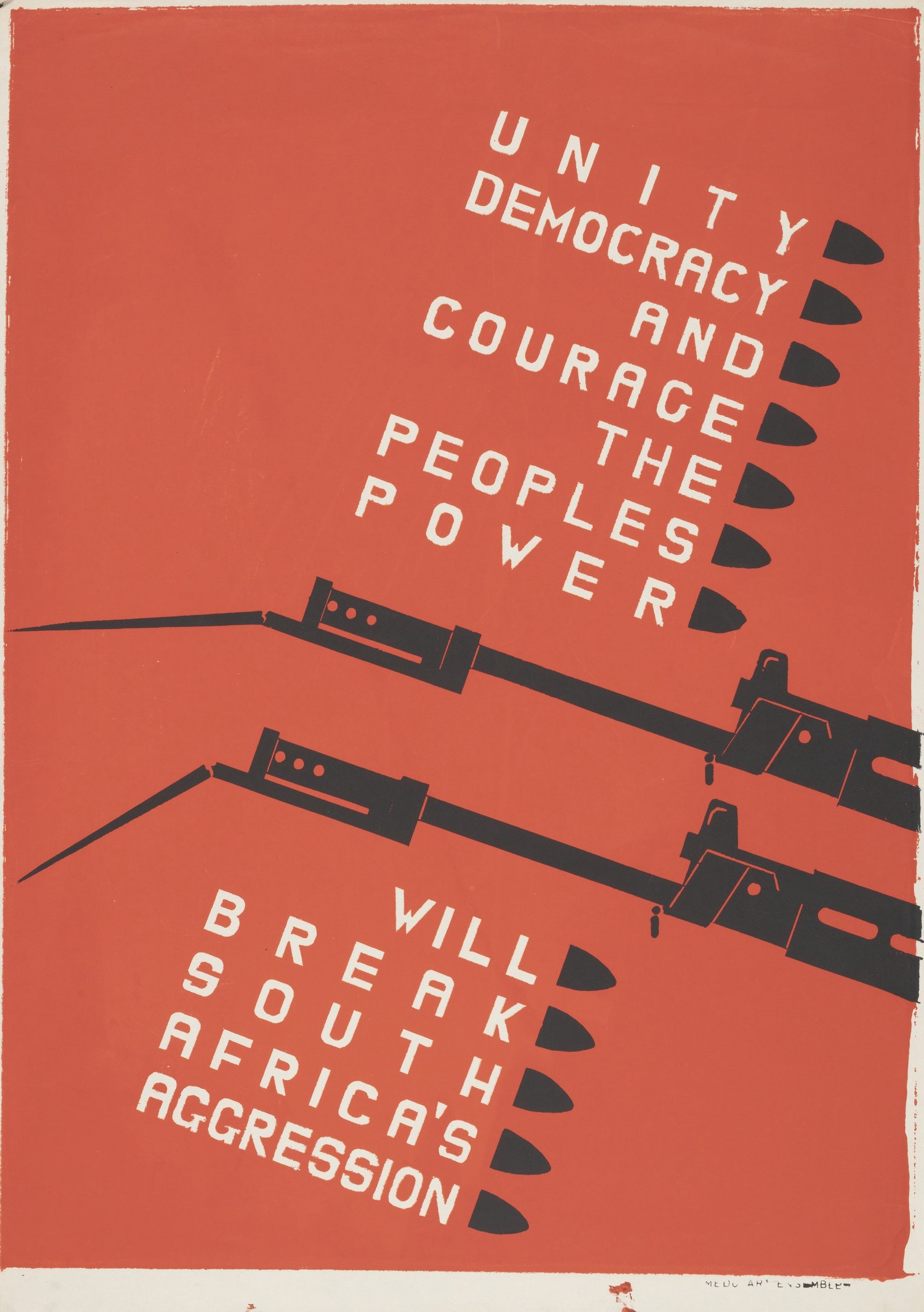
Medu Art Ensemble (Thamsanqa Mnyele),
“Unity, Democracy and Courage” (1983) (The Art Institute of
Chicago, gift of Artworkers Retirement Society © Medu Art
Ensemble)
One of the most pressing questions before us in the United
States now is how to resolve the tension between our personal
visions and needs, on the one hand, and the demands of being a
member of a community, on the other. Even a popular television
series has recently broached the question, “What do we owe other
people?” I had the privilege of knowing a South African
artist—Thami Mnyele (1948–85)— whose life was strung up between the
two poles of being absorbed in his own hopes and fears and of being
useful to his community. Mnyele dealt with the dilemma by spending
his first decade as an active artist expressing with delicacy his
feelings while living under apartheid. Then he joined the African
National Congress and put his gifts at the service of a movement
fighting for liberation from white supremacy. The ANC gave him the
daunting chance to sacrifice himself—his vision and his life— for
the idea of a greater good. Mnyele’s art opens a window on the
double-edged opportunity—for creativity and for sacrifice—afforded
by a time of profound social crisis, not unlike the one we’re
living in now.
The post How Have Artists Shaped Previous Protest Movements?
7 Historians on How the Past Can Help Us Understand the Present
appeared first on artnet News.
Read more https://news.artnet.com/art-world/art-and-protest-historian-response-1882494
Further reading


Leave a comment