
How Maria Qamar’s Feminist Desi Pop Art Went Viral on Instagram, Charmed Mindy Kaling, and Broke Into the New York Art World
The title of artist Maria Qamar’s first solo show, “Fraaaandship,” comes
from a popular pickup line among South Asian men. The
Canadian-Pakistani artist—who has become an Instagram sensation for
her feminist-tinged, Pop art-influenced riffs of Desi culture—had
found herself commiserating and bonding with other women about how
men overuse the proposal of “fraaandship” online as a euphemism for
sex.
Today, Qamar has garnered enough attention—her Instagram
account, @hatecopy (a reference to
how much she disliked her first career, in advertising copy), has
182,000 followers—that she has someone else to screen messages for
her. Fortunately, a direct message from New York dealer Richard
Taittinger got through.
“When we discovered Maria’s work, we were wondering how to
approach her,” Taittinger told artnet News. “Normally, as a
gallery, there is a traditional way to start the discussion,” he
said, but “guess what? The best way to reach out to her is to send
her a message on Instagram! The galleries must go into the 21st
century.”
Taittinger, whose gallery is five years old, hopes to attract a
younger audience by showing social media-savvy artists like Qamar.
“Galleries should not wait for people to come to us,” he said. “We
should be more proactive in appealing to the new generation by
using their language.”
Qamar, who lives in Toronto, wasn’t familiar with Taittinger at
first. But his gallery was based in her favorite neighborhood in
New York City, the Lower East Side. And, more importantly, she had
long been waiting to work with an art dealer.
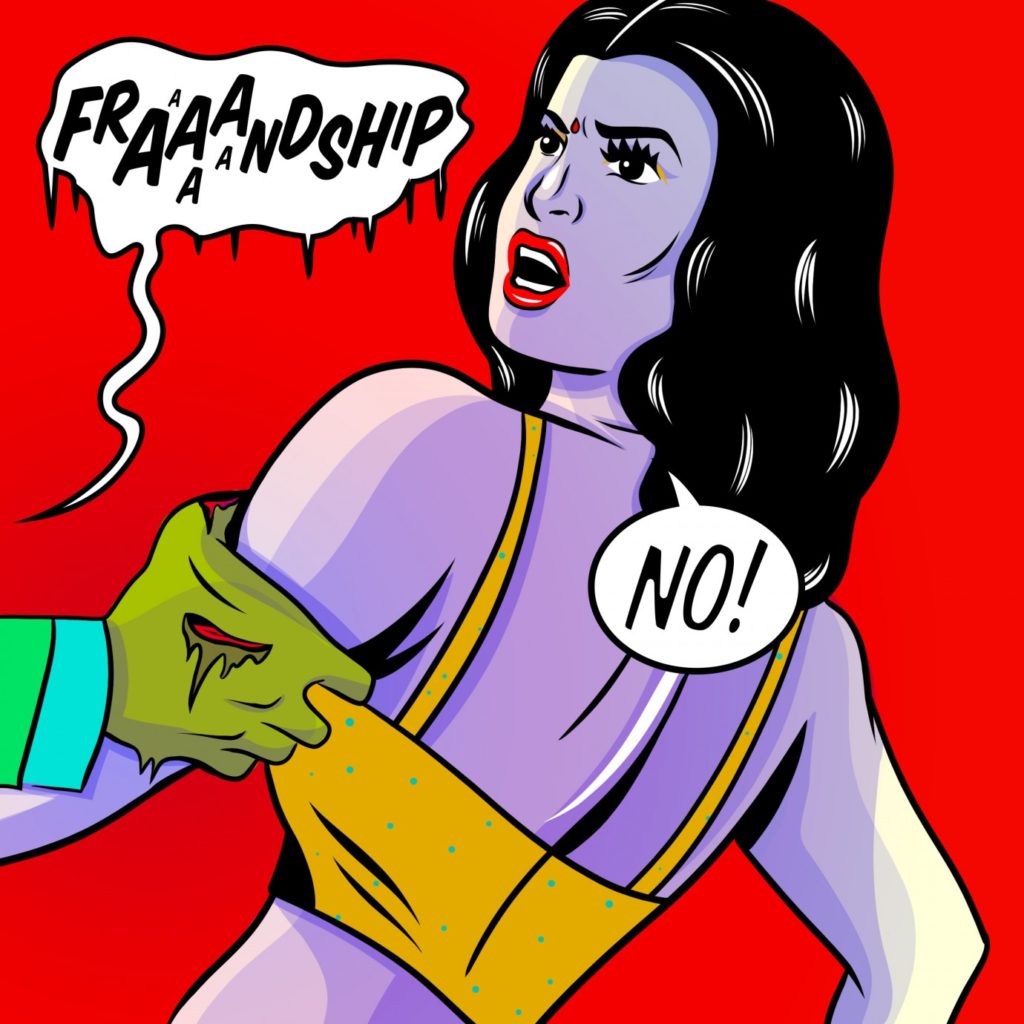
Maria Qamar, FRAAAANDSHIP
(2019). Courtesy of Richard Taittinger Gallery, New York.
An art outsider on the inside track
Qamar developed her signature style back in 2015 with a simple
drawing on lined paper of a woman tearfully admitting “I burnt the rotis.” She shared the work on
Instagram with the caption “what if Lichtenstein parodied Indian
soap operas.”
She continued drawing and painting Bollywood-beautiful women
with cartoon speech bubbles that spoke to the trials and
tribulations of 21st-century Desi life in a way that immediately
seemed to resonate.
At first, “I actually didn’t know I had struck a chord or that
it was popular, because I thought everything I was drawing was just
something that I found entertaining,” Qamar recalled.
“Then I started getting requests from restaurants and different
people.”
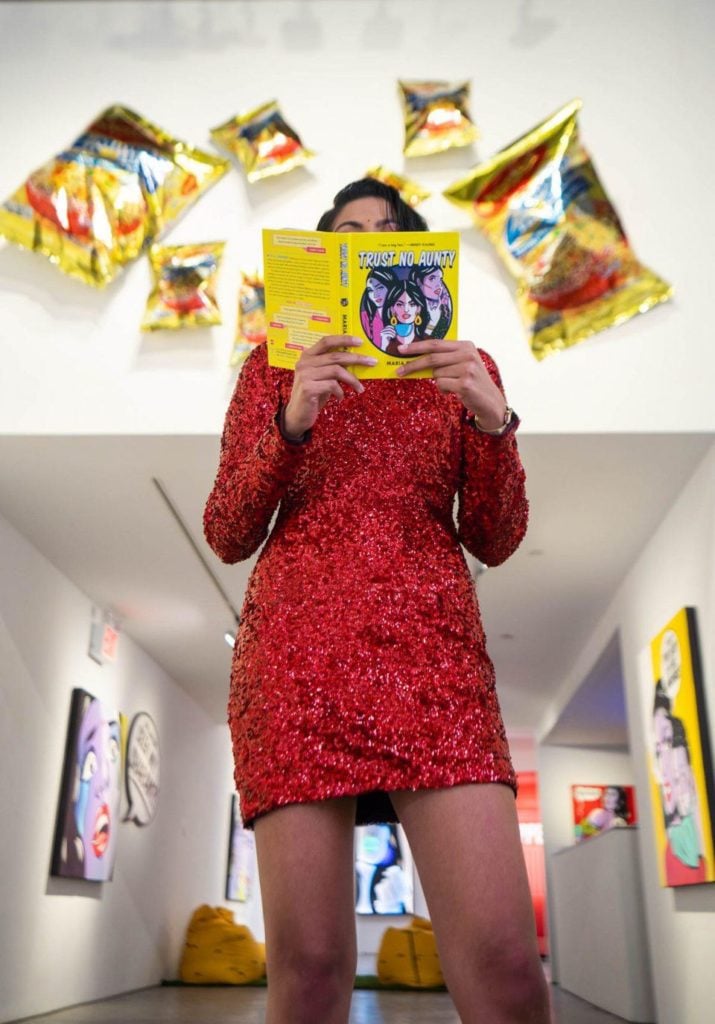
Maria Qamar with her book Trust No
Aunty at “Maria Qamar: Fraaaandship” at Richard Taittinger
Gallery, New York. Photo by Happy Monday.
As her following grew, Qamar was tapped to create works for
Indian celebrity chef Floyd Cardoz’s Bombay Bread Bar in New York
and the set of The
Mindy Project, the television series created by Indian
American actor and writer Mindy Kaling.
But Qamar still had to stage her own art exhibitions, finding
locations and installing works for herself—until she heard
from Taittinger. “It was the perfect time. I was at a
point of my career where I really just wanted to paint and get that
work out,” Qamar said. “This is an industry that’s hard to get
into, especially for someone who hadn’t gone to art school and
didn’t have any connections in the field. It seemed impossible for
me to enter that space.”
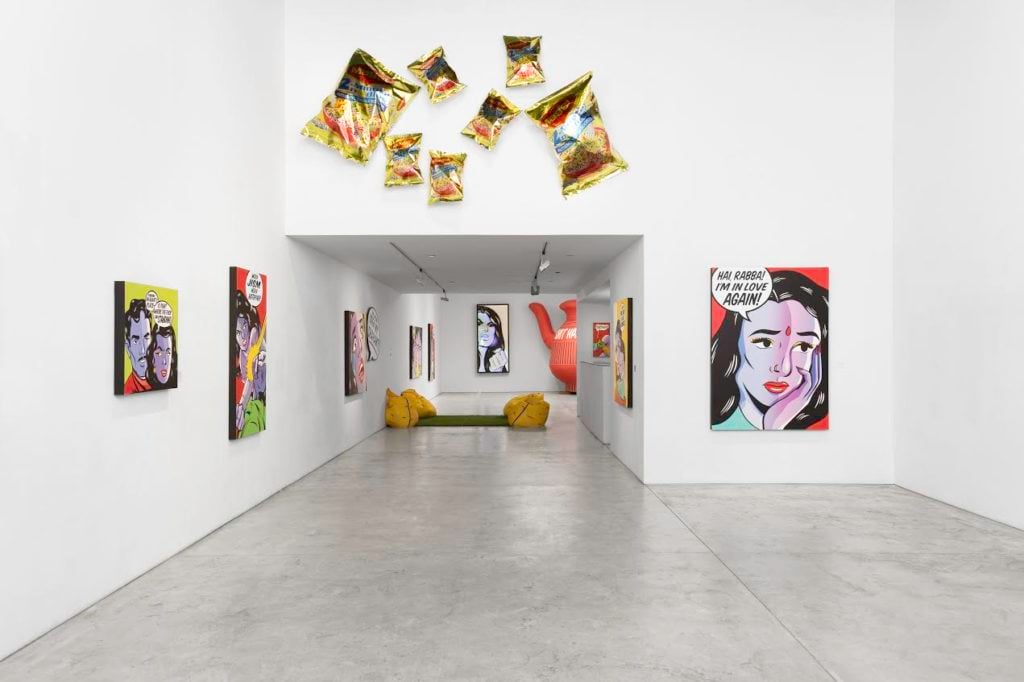
Installation view of “Maria Qamar:
Fraaaandship” at Richard Taittinger Gallery, New York. Photo
courtesy of Richard Taittinger Gallery.
Universal and specific
It was Jenna Ferrey, who works for the gallery in research and
business development, who first introduced Taittinger to the
colorful, witty images on Qamar’s Instagram account. Although they
specifically referenced the South Asian immigrant experience of a
Millennial woman, Qamar’s themes were also universal.
For example, take Qamar’s giant inflatable lota, a vessel that
typically sits by the toilet in South Asian households, to be used
for hygienic purposes. The sculpture, which sits in one corner of
the gallery, is inscribed with the words: “shit happens.”
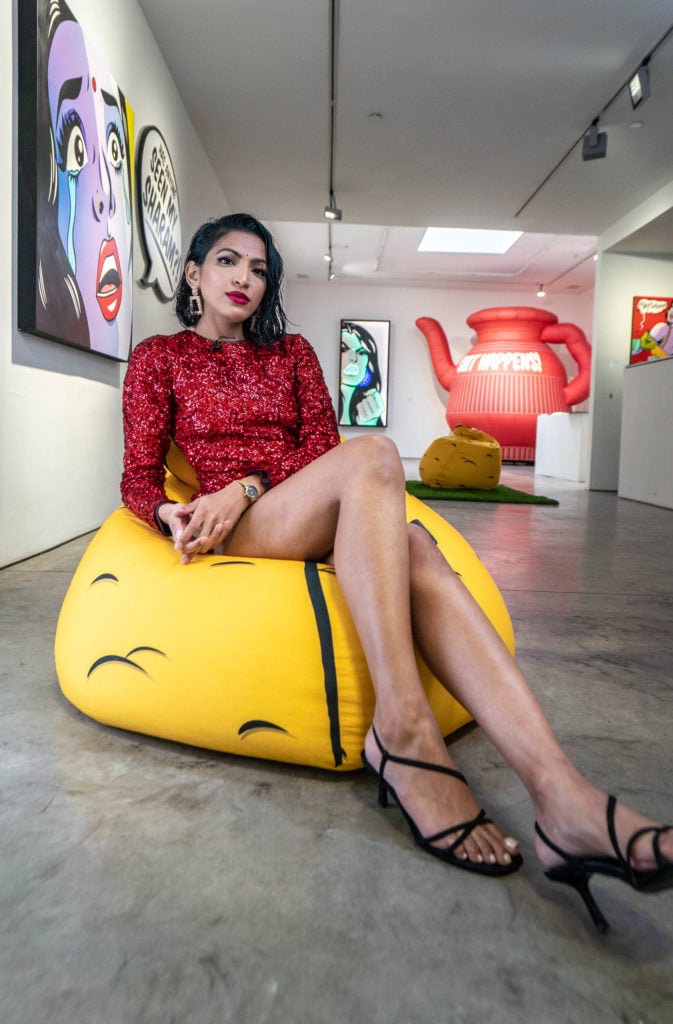
Meanwhile, near the desk where a gallery assistant would
normally sit, are a group of samosa-shaped beanbag chairs, inviting
gallery goers to sit back and relax.
“People have to do a
little work to understand it and I think that’s fantastic,” Ferrey
said. “From the
intersectional feminism point of view, it’s important to take the
time to meet someone in their own space.”
Bringing Desi culture to the mainstream
From a very early age, art was a way for
Qamar to articulate her struggles between her family’s traditions
and her life in North America. “For me, comics were a way to
communicate,” she said. “It’s like a teenager writing in her
diary—but I’m drawing everything out in panels.”
This was complicated by the fact that her parents strictly
disapproved of her interest in art. “I wasn’t allowed to take art
history. I wasn’t allowed to engage with anything art related,
period,” Qamar said. “If there were any art classes on the
schedule, my parents would go insist the school take that off my
curriculum!”
A large part of Qamar’s audience can relate to the challenges of
growing up in a strict South Asian household, with impossible
parental standards, a rotating cast of judgmental aunties, and
warnings about sharam, or shame, for wearing an
immodest outfit.
“There’s a billion of us out there,” Qamar said. “Our culture
should be a little bit more known here.”
At the same time, she hopes the work resonate with those outside
of her own community. “These are specifically the things that I
have gone through that have been obstacles in my life,” she
said. “But don’t we all
get bullied or picked on for being different? We’re not that
different—we’re fighting for basic human rights for women and women
of color.”
"background:#FFF; border:0; border-radius:3px; box-shadow:0 0 1px 0 rgba(0,0,0,0.5),0 1px 10px 0 rgba(0,0,0,0.15); margin: 1px; max-width:500px; min-width:326px; padding:0; width:99.375%; width:-webkit-calc(100% - 2px); width:calc(100% - 2px);">
View this post on Instagram
A summer splash
Qamar’s show opened earlier this month to a line down the block.
Among the wall-to-wall crowds were Hasan Minaj, host of the Netflix
show Patriot Act With Hassan Minaj, and Rajiv
Surendra, who played rapping mathlete Kevin “G.” Gnapoor in the
2004 hit Mean Girls.
“Everybody told us ‘don’t have an opening in August,’” said
Taittinger. “But summer is a great time to discover a new
artist!”
Sales, too, have been buzzing. The majority of the works are
large-scale acrylic and ink paintings on canvas or vinyl and LED
works on wood panel, which range in price from $3,000 to $15,000.
There is a limited-edition print for $500, and the show is also
stocked with t-shirts for $35 and posters for
$45. Or at least it was.
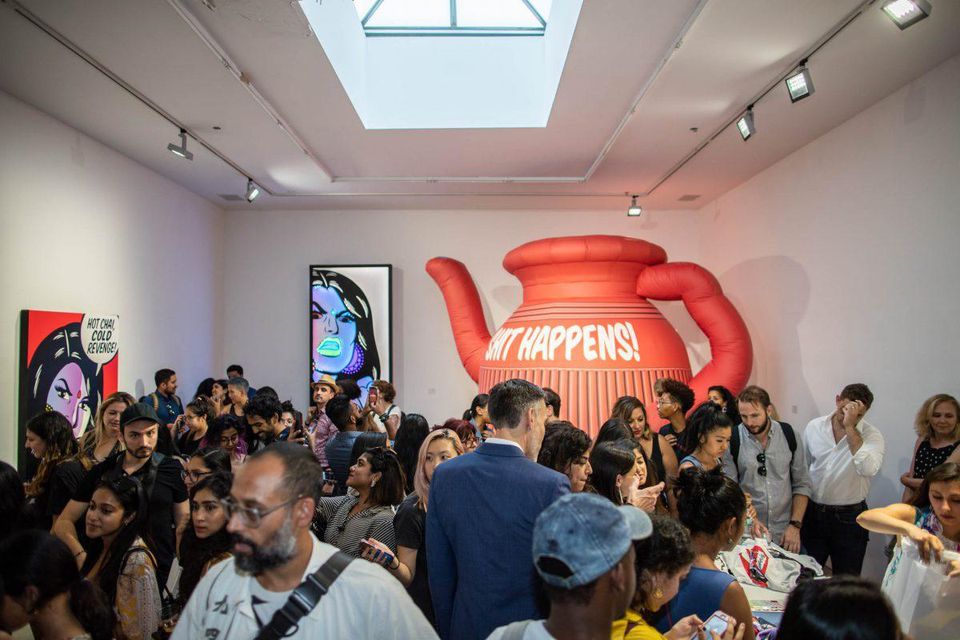
Crowds at the opening of “Maria Qamar:
Fraaaandship” at Richard Taittinger Gallery, New York. Photo by
Happy Monday.
“Right now everything is sold out!” Taittinger said of the
T-shirts and posters when I visited on Monday, promising that new
stock was set to come in the next day. “The idea is that people can
have a bit of work at any price. In many galleries in New York, you
need to spend $10,000 to get an artwork, which is nonsense. If you
want to attract young collectors, you have to have affordable
work.” (The majority of the paintings have also already sold.)
This reflects Qamar’s priorities, too: “I want to make it
accessible for everybody, whether you’re a collector who is
interested in original paintings, or a student who wants to show
off to your friend your love for the work.”
See more works from the exhibition below.
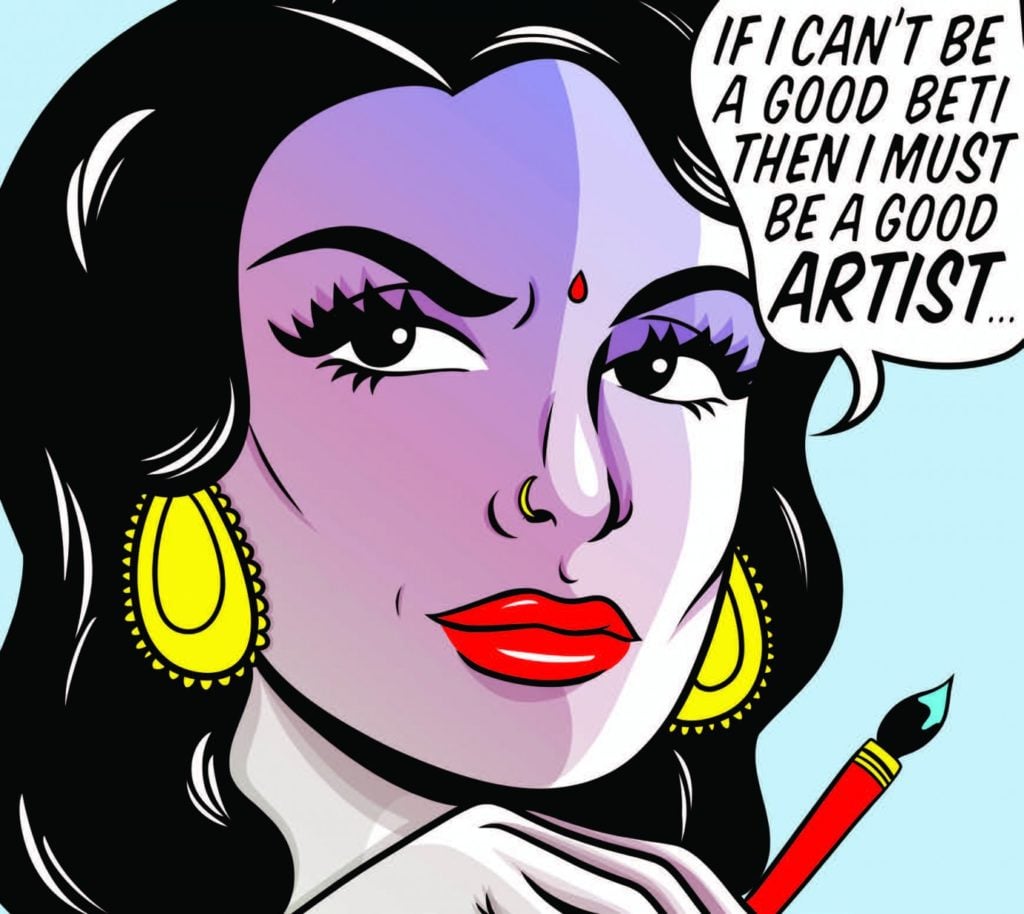
Maria Qamar, A Good Artist
(2019). Courtesy of Richard Taittinger Gallery, New York.

Maria Qamar, Didi From Another
Bibi (2019). Courtesy of Richard Taittinger Gallery, New
York.
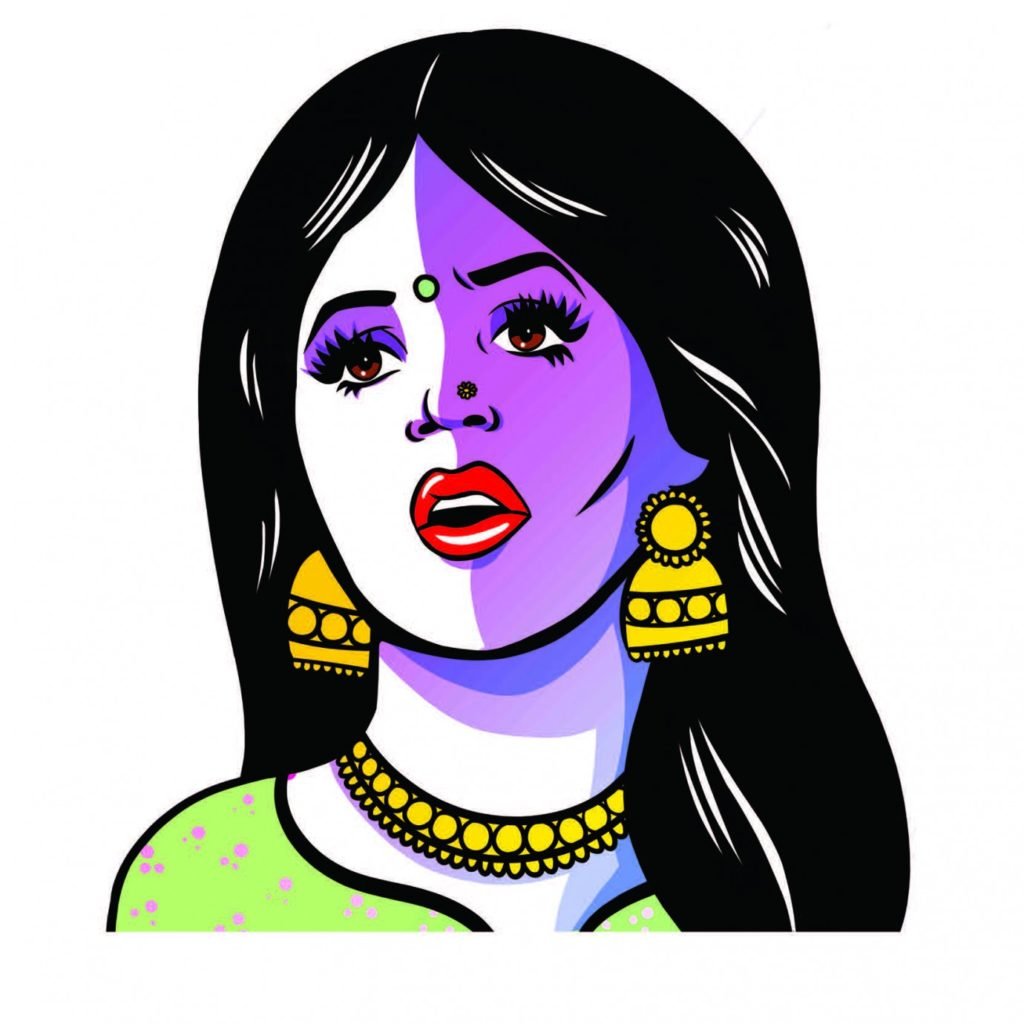
Maria Qamar, Didi 1 (2019).
Courtesy of Richard Taittinger Gallery, New York.

Maria Qamar, Hot Chai (2019).
Courtesy of Richard Taittinger Gallery, New York.

Maria Qamar, Didi 2 (2019).
Courtesy of Richard Taittinger Gallery, New York.
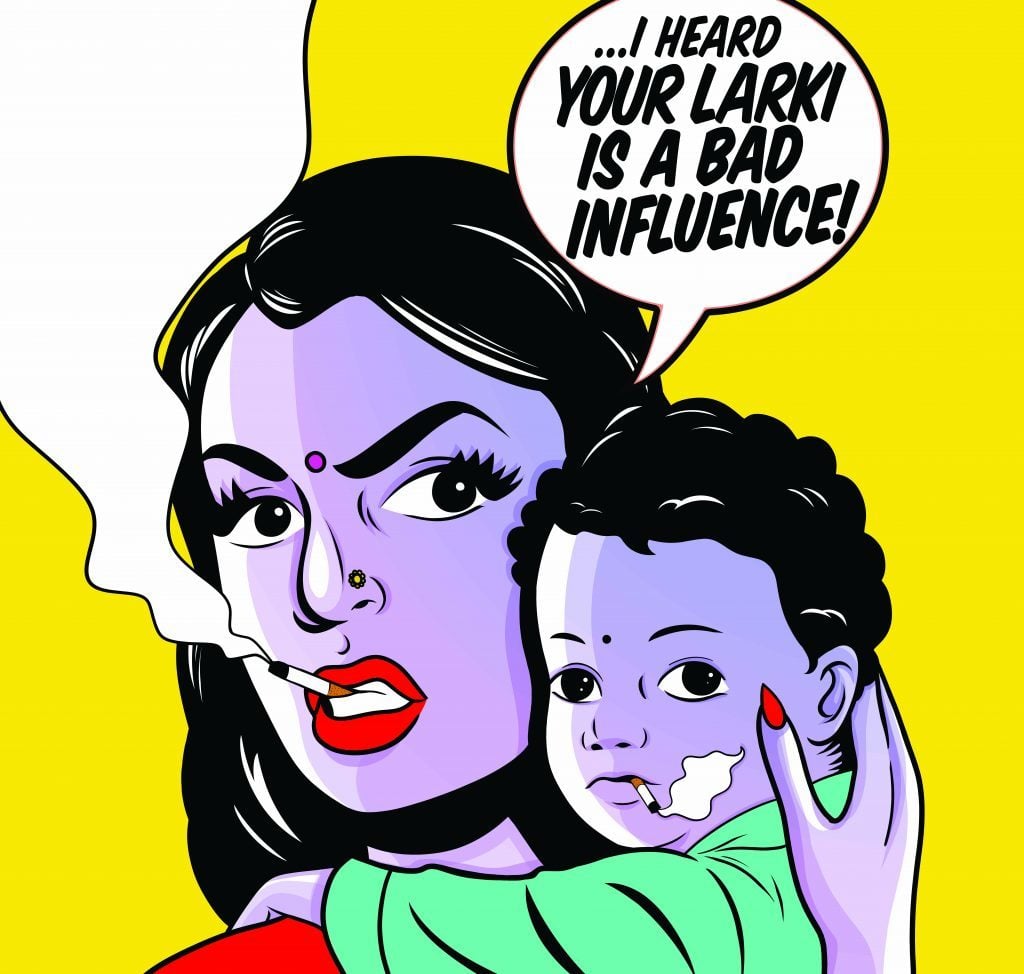
Maria Qamar, Bad Influence
(2019). Courtesy of Richard Taittinger Gallery, New York.

Maria Qamar, Didi 3 (2019).
Courtesy of Richard Taittinger Gallery, New York.

Maria Qamar, Aurat (2019).
Courtesy of Richard Taittinger Gallery, New York.

Maria Qamar, Hai Rabba! (2019).
Courtesy of Richard Taittinger Gallery, New York.
“Maria Qamar:
Fraaaandship” is on view at Richard Taittinger Gallery, 154 Ludlow
Street, New York, August 1–October 6, 2019.
The post How Maria Qamar’s Feminist Desi Pop Art Went Viral
on Instagram, Charmed Mindy Kaling, and Broke Into the New York Art
World appeared first on artnet News.
Read more https://news.artnet.com/exhibitions/instagram-star-maria-qamar-new-york-1631026
Further reading


Leave a comment