
‘I Didn’t Want Her to Carry the Weight’: How Wangechi Mutu’s African-Inspired Caryatids on the Met’s Facade Break Free of Tradition
When the architect Richard Morris Hunt designed the regal
Beaux-Arts facade of New York’s Metropolitan Museum of Art he planned
to install between each pair of Grecian-style pillars a quartet of
sculptures by the Viennese Neoclassical artist Karl Bitter. But the
museum ran out of funding and the niches on its facade remained
vacant—until now.
Earlier this month, the museum unveiled its first-ever
commission for the facade, a subtle yet eye-popping series of
sculptures by the 47-year-old Kenyan-born artist Wangechi Mutu.
Titled “The NewOnes, will free
Us,” the exhibition features four works—The Seated
I, II, III,
and IV—each enlivening the dormant spaces for the
first time since the building was completed in 1902.
The artist is acutely aware that it is only recently possible
that a commission like this would have been open to her. “Richard
Morris Hunt wasn’t creating the niches for my four stately seated
figures and their reflective faces,” Mutu said. “The Met Museum,
the facade and entryway in particular, were designed before women,
and specifically black women, in the United States had rights as
full human beings.”
Mutu was approached about the commission just nine months in
advance, as part of director Max Hollein’s “efforts to place
contemporary art throughout the building, to break down the
barriers between departments, between historical periods, between
continents,” according to Kelly Baum, a contemporary art curator at
the Met.
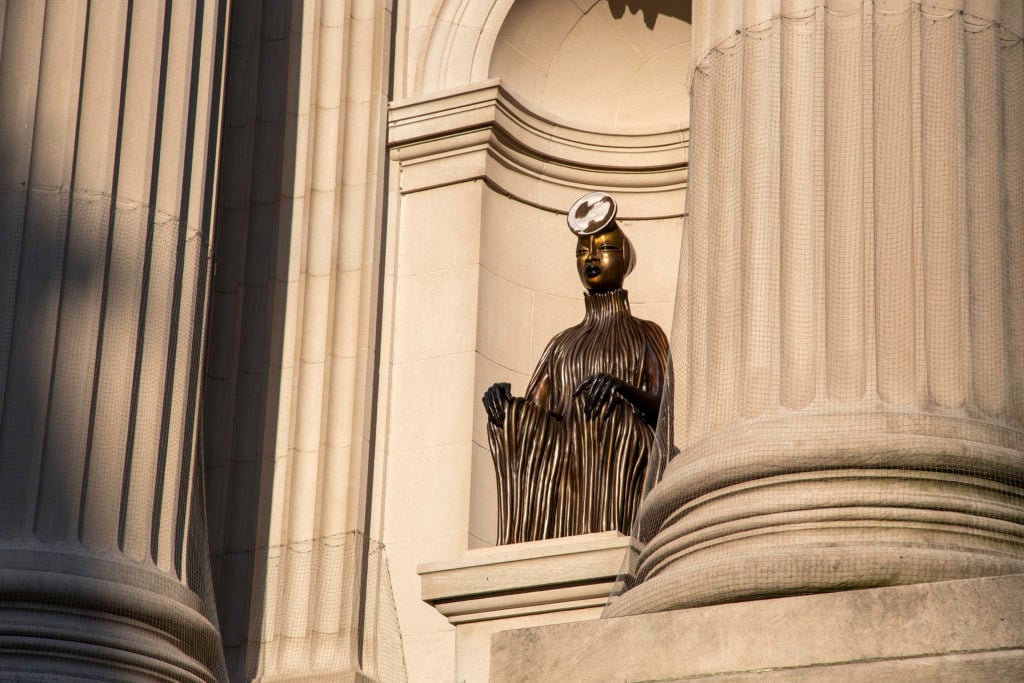
Wangechi Mutu, installation view
of The Seated II, from “The NewOnes, will free Us”
(2019). Photo courtesy of the artist; Gladstone Gallery, New York
and Brussels; and the Metropolitan Museum of Art, New York.
Mutu decided it was important to her to blend Western and
African art traditions, and to depict strong black female figures.
She settled on a contemporary take on the traditional caryatid,
which are almost always sculpted female forms that double as
architectural elements, typically supporting a roof or balcony.
“Caryatids, throughout history, have
carried these buildings to express the might and the wealth of a
particular place,” Mutu told artnet News in an email. “In Greek
architecture, you see these women in their beautiful robes, and
then in African sculpture across the continent you see these women
either kneeling or sitting, sometimes holding a child, as well as
holding up the seat of the king.”
In contrast, Mutu’s statues are freestanding.
“I wanted to keep the DNA of the woman in an active pose, but I
didn’t want her to carry the weight of something or someone else,”
she said.
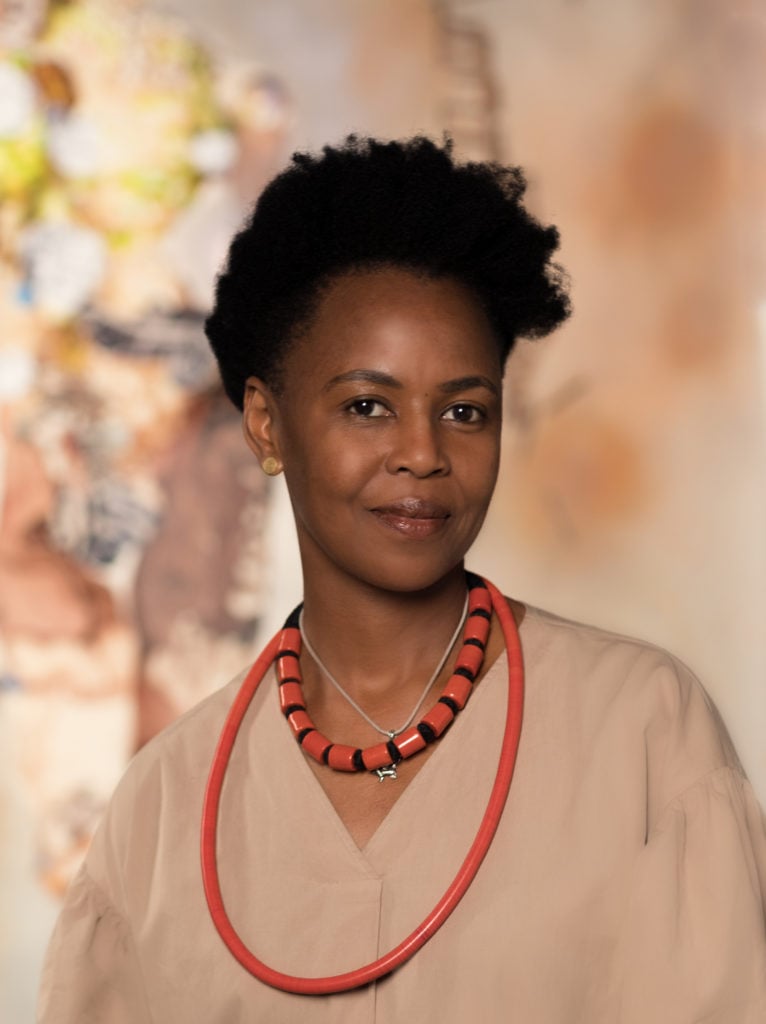
Wangechi Mutu (2019). Photo by Eileen
Travell, courtesy of the Metropolitan Museum of Art.
“Wangechi likes to say that women’s bodies, especially in
Africa, are meant to carry culture,” said Baum. “They’re like
living museums—the art history of any particular group is actually
borne by the bodies of women.”
The set of four bronze humanoid female figures, larger than life
at seven feet tall, now stand sentry over the museum. Their
otherworldly forms sheathed in coils, they seem as though beamed
down from an alien planet. Sunlight reflects off large mirrored
discs placed prominently on the statues’ faces, referencing
traditional tribal jewelry and lip plates worn in some parts of
Africa.
“Wangechi’s imposing figures carry the weight and the
roots of tradition, while pointing also to the future, asserting a
new authority, and becoming the new ambassadors of the Met,
welcoming our visitors, and welcoming also a new perspective,” said
Hollein at the exhibition’s press preview. “They have the power and
the presence to make us look at the institution, and at cultural
narratives that have been portrayed, in a new expanded and in an
expanded way.”
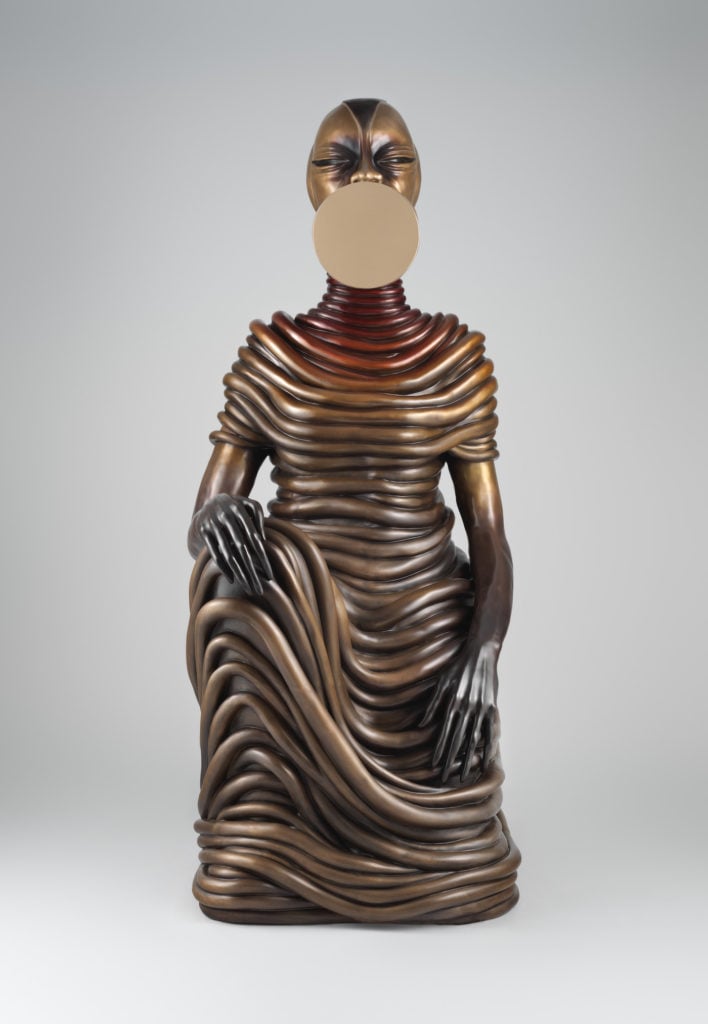
Wangechi Mutu, The Seated I,
from “The NewOnes, will free Us” (2019). Photo courtesy of the
artist; Gladstone Gallery, New York and Brussels; and the
Metropolitan Museum of Art, New York.
Installing the massive works, a whopping 840 pounds each, was no
easy undertaking. “It involved closing lanes of traffic and hauling
in an enormous crane,” Baum said. But with that daunting task
complete, “they look like they have always been here.”
Mutu began visiting the Met as an art student newly arrived to
New York in the 1990s. “I love the span of histories the museum
captures. It is so vast and yet not intimidating, majestic, but
still everyone’s ‘art class,’” she said.
“There are images I never get tired of looking at among the
Ancient Egyptian scrolls,” she added, naming “the hybrid
human-animal gods, the seated tiered royal families, the
high-ranking god-queens.”
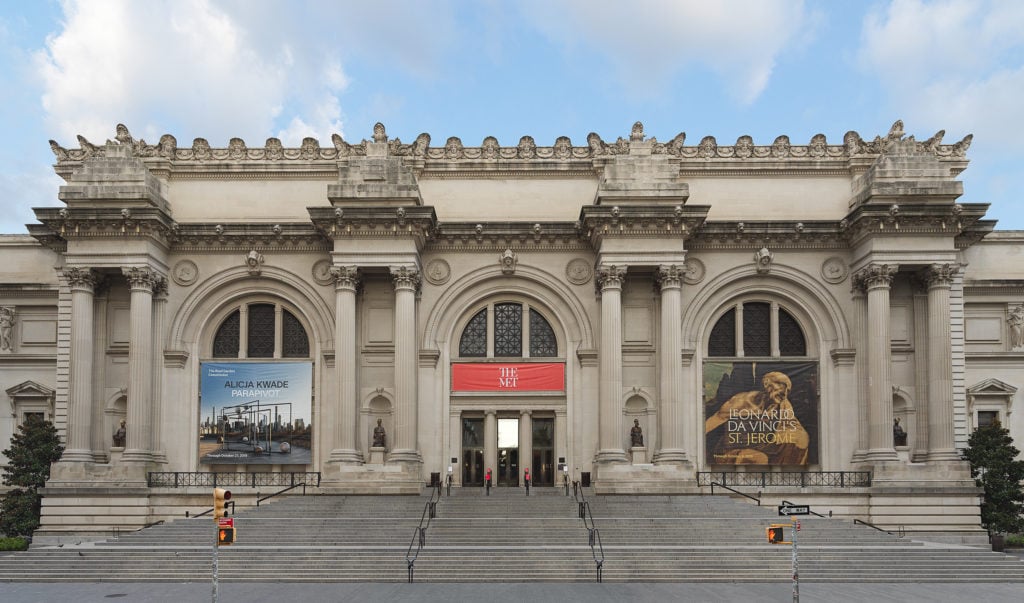
“Wangechi Mutu: The NewOnes, will free
Us” (2019), installation view. Photo courtesy of the artist;
Gladstone Gallery, New York and Brussels; and the Metropolitan
Museum of Art, New York.
In preparation for the project, Mutu looked especially to the
museum’s African and Oceanic collections for inspiration. “Combing
through ritual objects in particular was essential and
fascinating,” Mutu recalled. Two works in particular stood out to
her: a Yoruba caryatid, featuring a standing woman supporting a man
on horseback atop her head, and a Congolese “prestige stool,” a
female figure kneeling, her legs suggestively parted.
Ultimately, Wangechi hopes her work will open visitors’ eyes to
a more global art history. “Museums of this scale and scope are
impressively capable of evolving and admitting their blind spots or
transgressions,” she said. “It’s a refreshing and very admirable
aspect about this commission: that a museum is its people and is a
living, thinking, moving brain—or else it atrophies and
stagnates.”
See more photos of the works below.
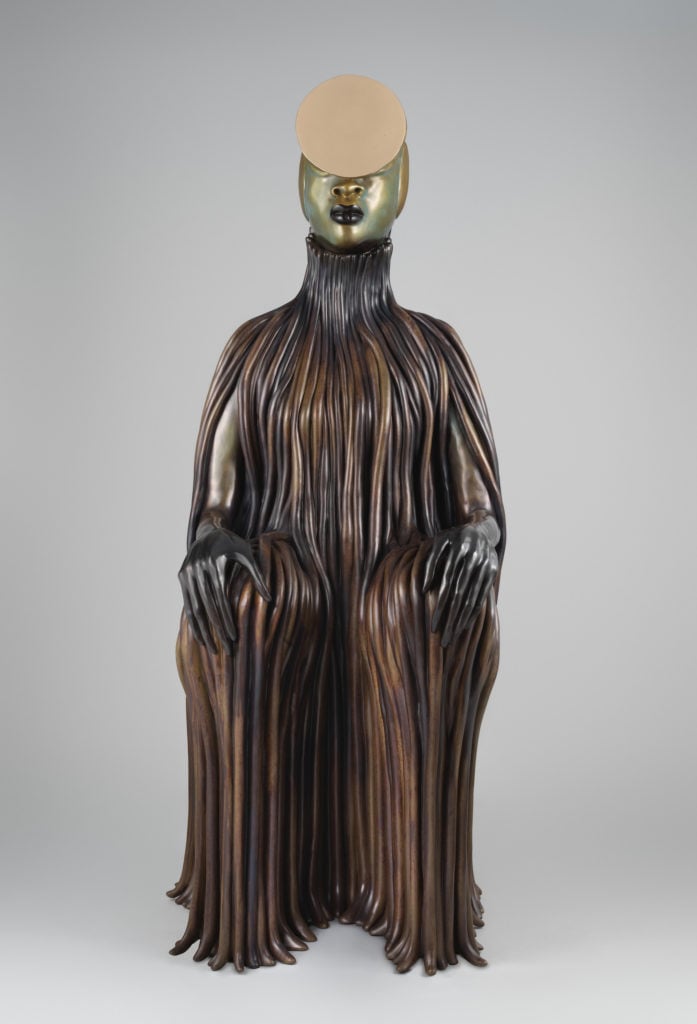
Wangechi Mutu, The Seated IV,
from “The NewOnes, will free Us” (2019). Photo courtesy of the
artist; Gladstone Gallery, New York and Brussels; and the
Metropolitan Museum of Art, New York.
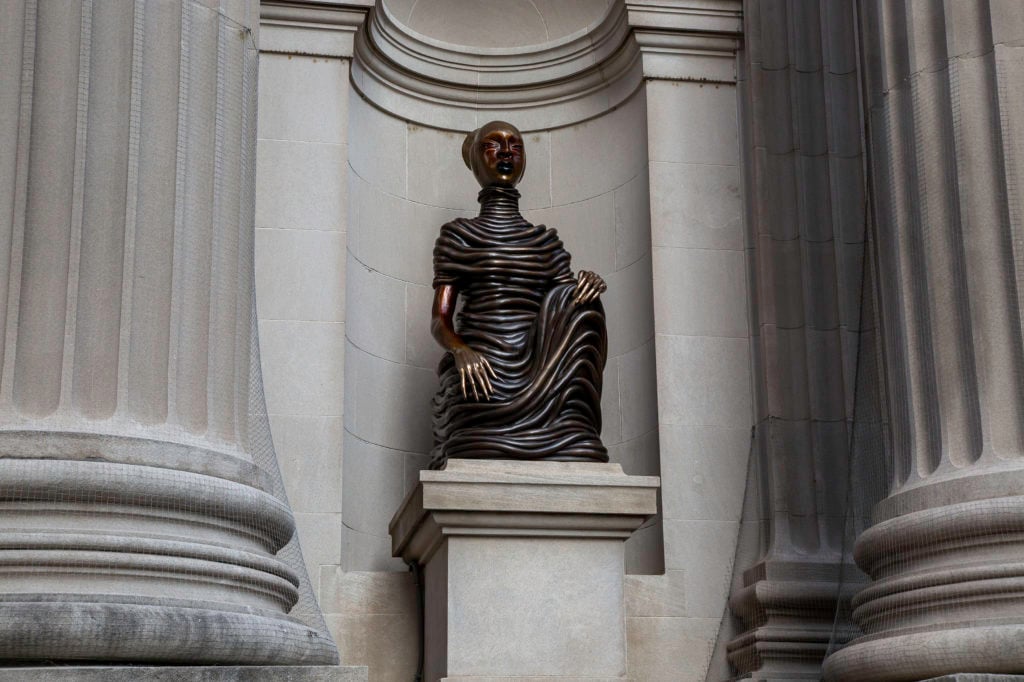
Wangechi Mutu, The Seated III,
from “The NewOnes, will free Us” (2019), installation view. Photo
courtesy of the artist; Gladstone Gallery, New York and Brussels;
and the Metropolitan Museum of Art, New York.
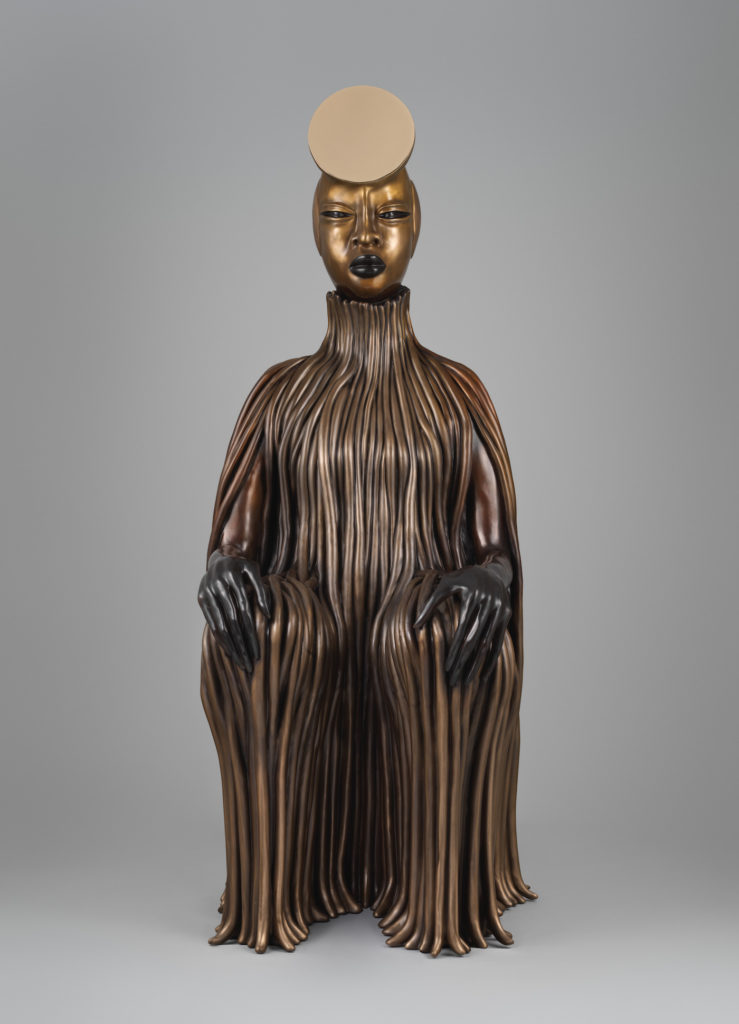
Wangechi Mutu, The Seated II,
from “The NewOnes, will free Us” (2019). Photo courtesy of the
artist; Gladstone Gallery, New York and Brussels; and the
Metropolitan Museum of Art, New York.
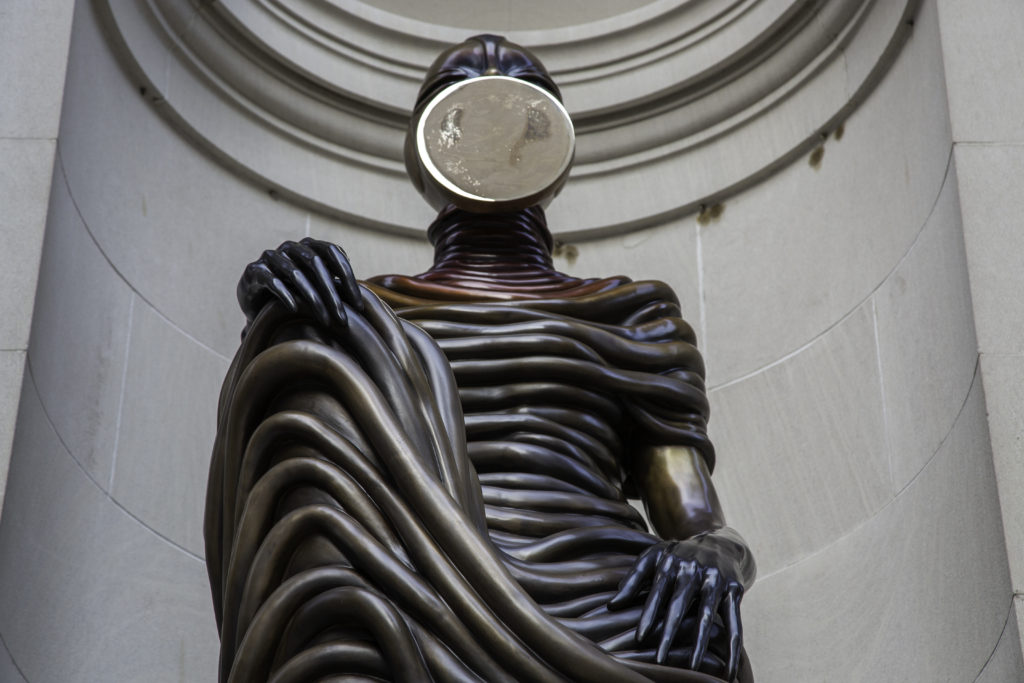
Wangechi Mutu, The Seated I,
from “The NewOnes, will free Us” (2019), installation view. Photo
courtesy of the artist; Gladstone Gallery, New York and Brussels;
and the Metropolitan Museum of Art, New York.
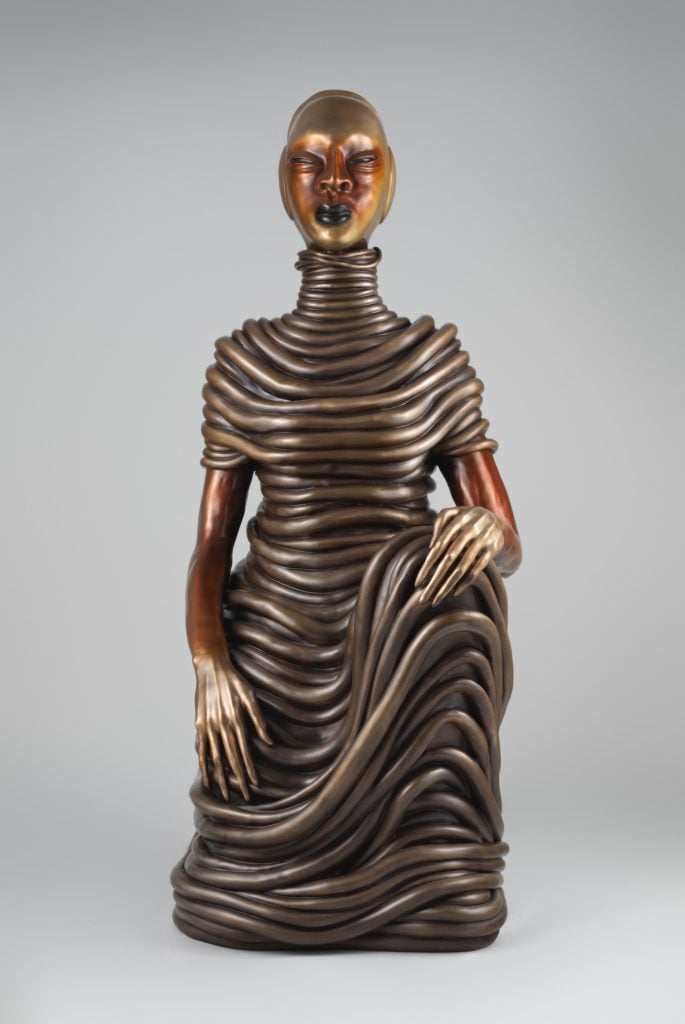
Wangechi Mutu, The Seated III,
from “The NewOnes, will free Us” (2019). Photo courtesy of the
artist; Gladstone Gallery, New York and Brussels; and the
Metropolitan Museum of Art, New York.
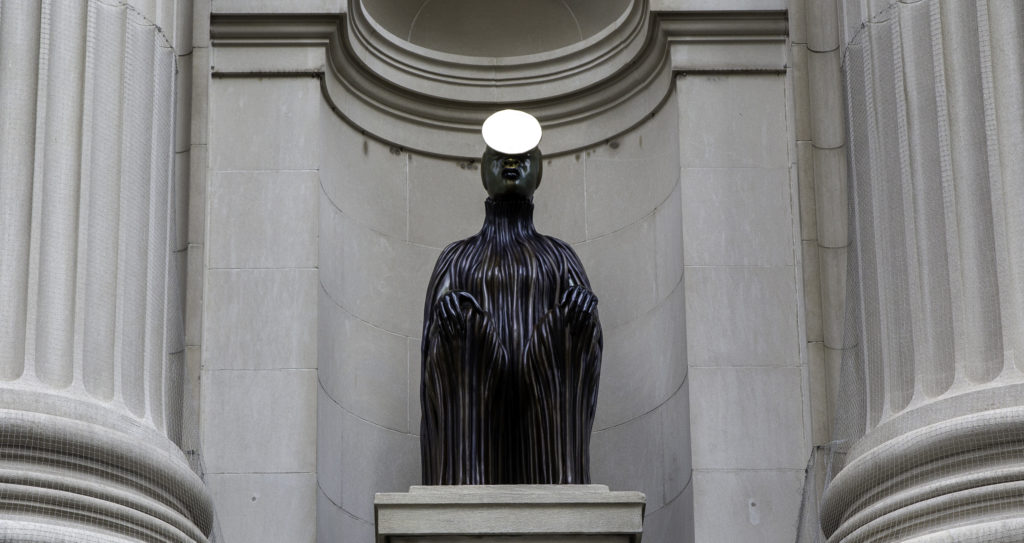
Wangechi Mutu, The Seated IV,
from “The NewOnes, will free Us” (2019), installation view. Photo
courtesy of the artist; Gladstone Gallery, New York and Brussels;
and the Metropolitan Museum of Art, New York.
“Wangechi Mutu: The NewOnes,
will free Us” is on view at the Metropolitan Museum of Art,
1000 Fifth Avenue, New York, New York, September 9–January 12,
2020.
The post ‘I Didn’t Want Her to Carry the Weight’: How
Wangechi Mutu’s African-Inspired Caryatids on the Met’s Facade
Break Free of Tradition appeared first on artnet
News.
Read more https://news.artnet.com/exhibitions/wangechi-mutu-metropolitan-museum-facade-1662937
Further reading


Leave a comment