
‘I Fell in Love With Art There’: As the San Francisco Art Institute Closes, 5 Distinguished Alumni Reflect on What It Taught Them
Last week, the San Francisco Art
Institute (SFAI) announced that after the end of its current
semester, it would suspend its degree programs, stop enrolling
students, and close indefinitely, leaving open the possibility that
the institution may never reopen.
In a letter sent to
students, faculty, and staff, the school’s president, Gordon Knox,
and board chair Pam Rorke Levy said they had tried to merge SFAI
with a larger educational institution that could keep the art
school intact and afloat, but discussions with potential suitors
fell through as the coronavirus pandemic
hit.
“At this time, it is unclear
when instruction will resume, and in what form, pending our efforts
to secure additional funding and potentially resume our talks with
educational partners,” Knox and Levy
wrote. Levy told the
New York Times
that the school’s total debt is roughly $19 million, a figure that
will likely grow in the months to come.
For many, the news came as no
surprise. The school, which is just a year away from
celebrating its 150th anniversary, has struggled financially for years.
Enrollment figures have
dwindled over the past decade in the face of a growing student loan
crisis in the US. The ballooning cost of living in the Bay Area
have only exacerbated the problem.
But for decades, SFAI
groomed some of the art world’s best talents. Its
long list of notable alumni—including Annie
Leibovitz, Paul McCarthy, and Kehinde Wiley—rivals that of other
top schools around the world. We asked five of those distinguished
alumni to reflect on their experiences at the Bay Area institution
and to consider its legacy.
Dara Birnbaum
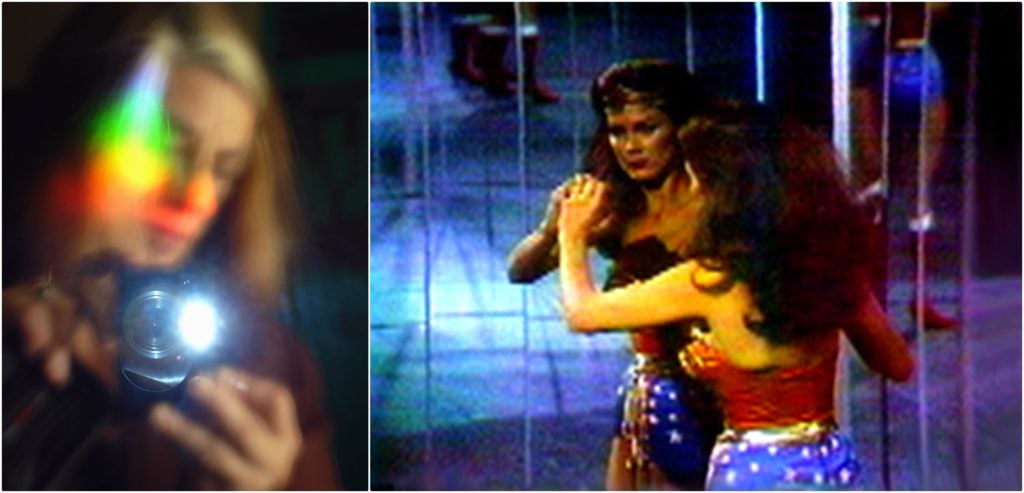
Left, Dara Birnbaum’s Self Portrait,
courtesy of the artist. Right: Birnbaum’s
Technology/Transformation: Wonder Woman (1978-9). Courtesy
of the artist and Electronic Arts Intermix.
I attended [SFAI] from 1971 to
1973, graduating with a degree in painting.
I found that I had incredible
freedom at SFAI and that the more I put into it, the more I would
get out of it. Since hardly anyone used the library, I virtually
had all the books I wanted to myself. Because I showed enthusiasm
for drawing, different professors would let me sit in on their
classes for free. I remember sometimes doing six hours of drawing
per day. I simply fell in love with it. The school’s location was
beautiful and the architecture of the original building is more
than inspiring.
I was able to fall in love with
art there—that’s what I remember the most.
At SFAI I was left to my own
devices. Sometimes I would come home and cry after crits in Sam
Tchakalian’s class. I am not sure if I would be an artist now if I
had not taken the time and energy to be at SFAI during those years.
It provided a haven—both heaven and hell—but it certainly formed a
strong part of who I am today.
It felt shocking to hear that
the SFAI is closing. I feel very badly about this. I had been back
there numerous times over the years as a guest teacher, or to
lecture. The last time was a few years ago in the graduate division
and it still felt very good to me. I also remember going to the
Canyon Cinema, so many decades ago, when films were screened there
in the SFAI auditorium. I think that awakened a real interest in
the moving image for me. I think the original establishment of this
institute, seemingly based strongly upon the work of Clyfford Still
(who taught there from 1946, the year I was born, to 1950) was, for
me, the spine of the institute. I was exposed to painters from the
Bay Area like David Park, Richard Diebenkorn, and Elmer Bischoff.
It is amazing the number of known, respected, artists who went to
or graduated from the SFAI over the years. It provided an
atmosphere that ranged from “wild”—my time of being there in the
early ’70s in San Francisco—to upright and serious.
Bill Jacobson
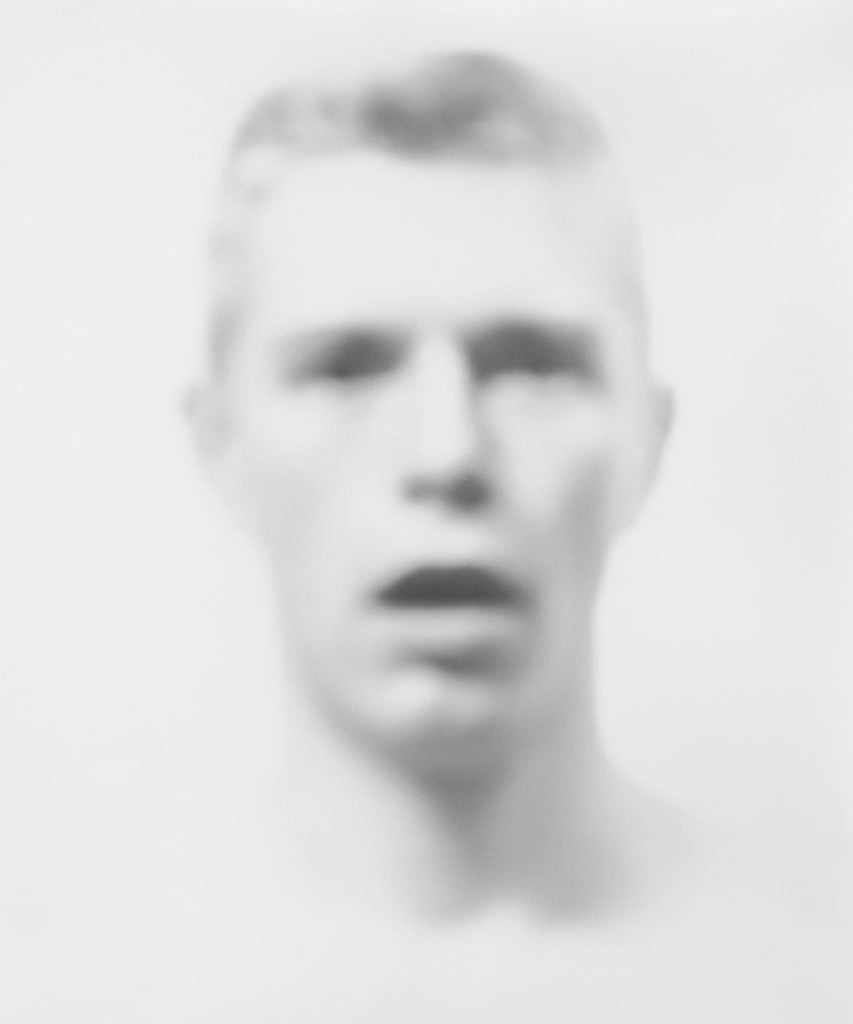
Bill Jacobson, Interim Portrait
#373 (1992). Courtesy of the artist.
I took my junior year away from
Brown University and spent it at SFAI. This would have been from
Septmber 1975 to May 1976. Then I returned in 1979 for my
MFA.
Those were formative years for
me. Having always lived on the east coast, just being in San
Francisco in the ‘70s was life-changing. Overall, it gave me the
freedom to come out not only sexually but also creatively. The
school was permeated by a pretty radical energy—a number of the
students had been in Vietnam and were there on the GI Bill. Their
work was intense in the best of ways. James Broughton and the
Kuchar brothers were teaching film, Jay de Feo’s Rose was
wedged into a wall, drugs were everywhere, and the views of the bay
were mesmerizing. The massive Diego Rivera mural was extraordinary
and felt like a member of the family—it was treated so
un-preciously. The front door of the place was always open and
anyone could come in and walk around at any time. It all spoke to a
complete sense of freedom to make art, and to do whatever we
wanted. And don’t forget Arnold Herstand, who served briefly as
president and was forced out by a massive months-long insurrection
by students, faculty, and trustees, which got pretty
wild.
I was fortunate to work closely
with Ellen Brooks and Larry Sultan, who encouraged us to make work
that was personal and intimate and not to follow trends. Without a
doubt, I’d still be an artist if I hadn’t been at SFAI, though it’s
likely my path would have been different.
I wasn’t surprised when I heard
of the closing, as I sensed the school had been on rocky footing
for some time. It’s hard to say specifically what the school’s
legacy might be. I suppose it’s summed up in the lives of all the
artists who passed through that open door over the last 150
years.
Carol Szymanski
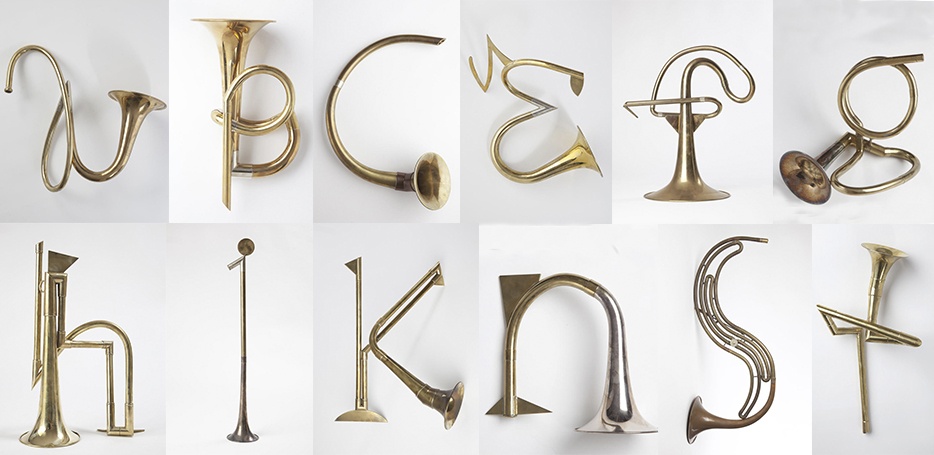
Carol Szymanski, The Phonemophonic
Alphabet Brass Band. Courtesy of Carol Szymanski.
I was at SFAI in the mid ’80s.
It was a time of great change for me and I still reflect on it a
lot. I received my MFA in video and performance art. My main
mentors were Howard Fried, Paul Kos, and David Ross, all of whom I
admire to this day for their intelligence, wit, and creativity. Too
bad there weren’t more women.
Luckily there were quite a few
in the school’s intensive visiting artist program, thanks to which
I was directly exposed to other great artists such as Vito Acconci,
Kathy Acker, Laurie Anderson, Chris Burden, Frank Gillette, Julia
Heyward, David Ireland, Joan Jonas, Shigeko Kabota, The Kipper
Kids, Linda Montano, Dennis Oppenheim, Nam June Paik, and Lawrence
Weiner, to name a few. More often than not we got to know them on a
one-to-one, personal basis. Neil Jenny taught us how to play
softball. That was cool!
The emphasis was on blurring the
boundaries between video/performance and reality/life/real-time.
And there were no rules. Or the exception was the rule—a
brilliantly free and open experience.
Ours was a small, close-knit
department, with no interaction with the other departments. I felt
as though I was experiencing something very important about what
art and life were and could be. Nothing was saddled with convention
or history. It was all about the act of creating and
discussing.
It deeply saddened me to hear
that the school is closing. Its legacy for me is the understanding
that art can be anything, made of anything, seen any way. Art is a
way of life.
Stephanie Syjuco
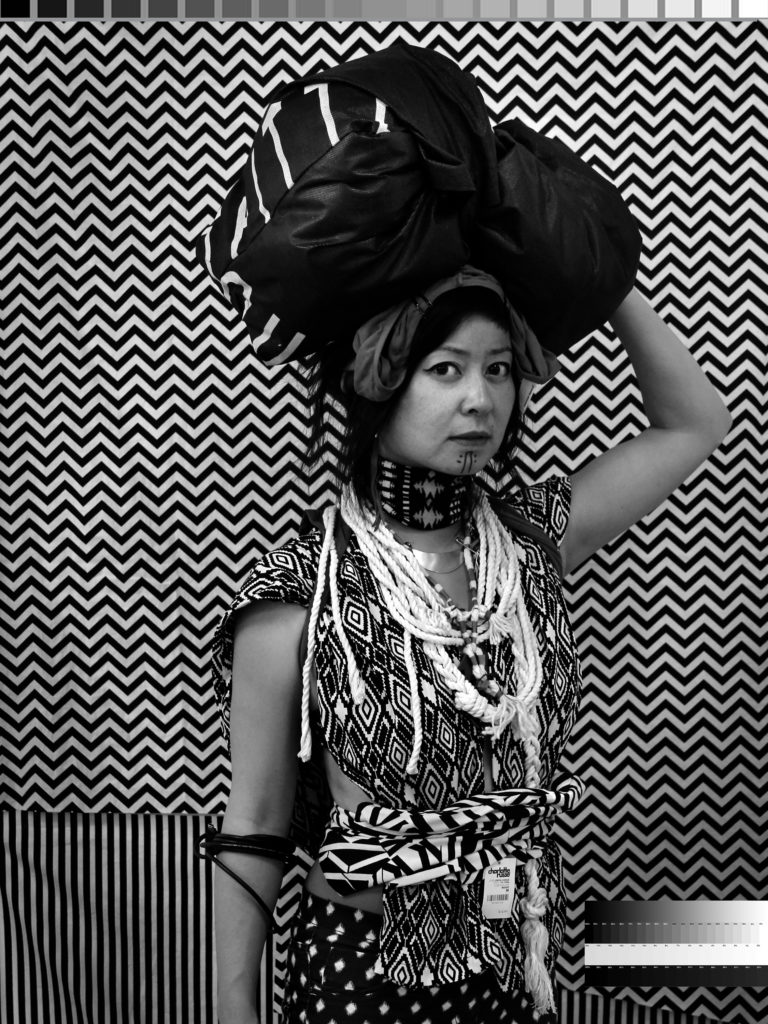
Stephanie Syjuco. Cargo Cults: Head
Bundle (2013-16). Courtesy of the artist and Catharine Clark
Gallery, San Francisco and Ryan Lee Gallery, New York. © 2018
Stephanie Syjuco.
I was there from 1991 through
1995 as an undergraduate student in the sculpture
department.
SFAI has always been super
experimental—many students were pushing the envelope in terms of
performance, new genres, and conceptual works. If I remember
correctly, tuition, when I started, was a fraction of what it costs
today, and that made it more accessible to students from all walks
of life. People would drop in and out of classes, and some students
were only there for a year or two at a time before just drifting
off—or spinning out—into other interests in their lives. Getting an
art degree didn’t feel like the point of being there,
really.
I like to say that the program
at SFAI created feral artists. I was able to make artwork without
thinking about the market because at the time, there was no market,
and SFAI didn’t seem to care about training students toward even
thinking about it at all. I think it’s very different for art
students right now, who are constantly bombarded with dangling
promises of “success” and exposure in a larger art world. Being at
SFAI gave me the courage to think outside of this, and probably
helped fuel my later projects in social practice and works that
didn’t have a specific object trajectory.
Despite the glowing eulogies
that will be written, SFAI was also a product of its time, and that
included the active presence of misogyny, sexism, racism, and
harassment. It wasn’t a utopia, and there could be a bravado that
went hand-in-hand with experimental attitudes, leading to acute
forms of imbalance and skewed power dynamics that were just left to
fester. Wild places could have wild effects, and I could see some
of it actively damaging people. Looking back on it, I wish I had
had the language to name these dynamics and even the self-awareness
to more actively resist them.
The legacy of SFAI is huge and I
will always remain thankful that I went there. SFAI felt a bit out
of time and place, adhering to the primacy of a fine-arts degree
over the decades while other schools added architecture and design
programs to bolster their student numbers and financial support.
But I do appreciate the purely fine arts focus it had, despite its
potentially unmarketable reality. This defiance feels very much
like the spirit of SFAI.
Marc Horowitz

Artist Marc Horowitz attends the Ten
Over Six fall preview and cocktail party at Ten Over Six on March
20, 2009 in West Hollywood, California. Photo: Casey
Rodgers/WireImage.
Even though I was only at SFAI
for a year, from 2000 to 2001, I can absolutely say that I would
not be who I am today without my experience there.
This is an enormous tragedy and
a huge hole will be left. While I was there, I noticed the
mismanagement. In fact, the reason I attended SFAI for only a year
was because the school said they had to pull my full ride and could
offer me half tuition. For a while, I had a deal with a few
teachers and would show up for classes without paying tuition.
Richard Wentworth was there at the time and he brought in Tom Sachs
for a couple classes. I couldn’t keep up with school and work and
eventually quit.
Part of me thinks they will be
back, that this is just a blip like the 1906
quake.
The post ‘I Fell in Love With Art There’: As the San
Francisco Art Institute Closes, 5 Distinguished Alumni Reflect on
What It Taught Them appeared first on artnet News.
Read more https://news.artnet.com/art-world/san-francisco-art-institute-alumni-1820244
Further reading


Leave a comment