
‘I Felt Like I Needed to Do More Than Stay at Home’: Meet the Artists Who Have Transformed Their Studios Into Mask-Making Workshops
Here’s a measure of how many artists have turned to making face
masks during America’s coronavirus-induced lockdown period:
inspired by the large number she’s spotted on social media,
Cincinnati collector Sara Vance Waddell is already in the
process of organizing an exhibition of artist-made masks.
“I thought, ‘there’s a lot of creativity in that. There’s a lot
of meaning in that,’” Waddell told Artnet News. She has her own
private 1,200-square-foot art gallery at her home for her
collection of work by women and artists of color, but her hope
is to open an exhibition of masks at a public venue, when social
distancing rules allow.
“Some of these masks are ingenious—they are works of art,” she
said. Waddell already has more than 50 artists from across the
country lined up, including a number of contributions from the
Women of Color Quilters Network, founded in
1985 by Carolyn Mazloomi.
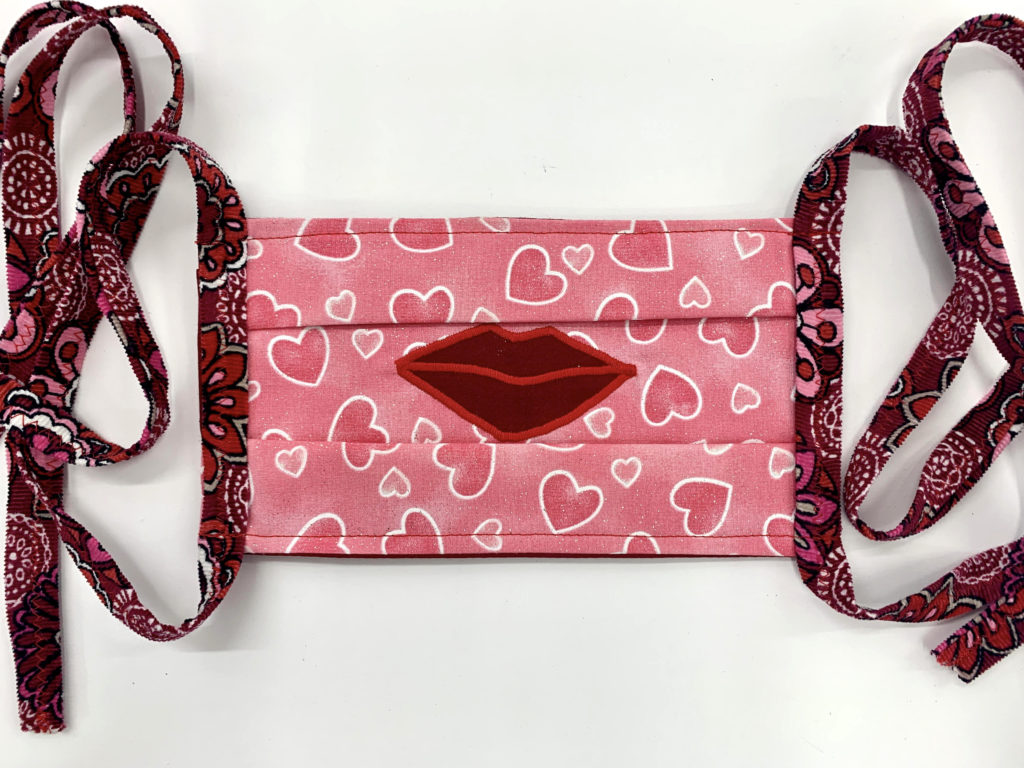
A mask by Sarah Stolar, from the
collection of Sara Vance Waddell. Photo courtesy of Sara Vance
Waddell.
Across the country, many artists have paused their normal studio
practice to craft masks, either to give to those in need of
them or to raise money via limited editions. They are united
in their inspiration: the health crisis that has paralyzed the
globe.
“I felt like I needed to do more than just stay at home,”
Chicago artist Michelle Hartney told Artnet
News in an email. So far, she has made about 100 masks, made from materials repurposed
from a previous project, donating one to Chicago hospitals for
every one sold for $25. “I feel a sense of responsibility to
do all I can to prevent the spread of the virus and respect and
honor those amazing souls risking their lives now for us—it’s the
least I can do.”
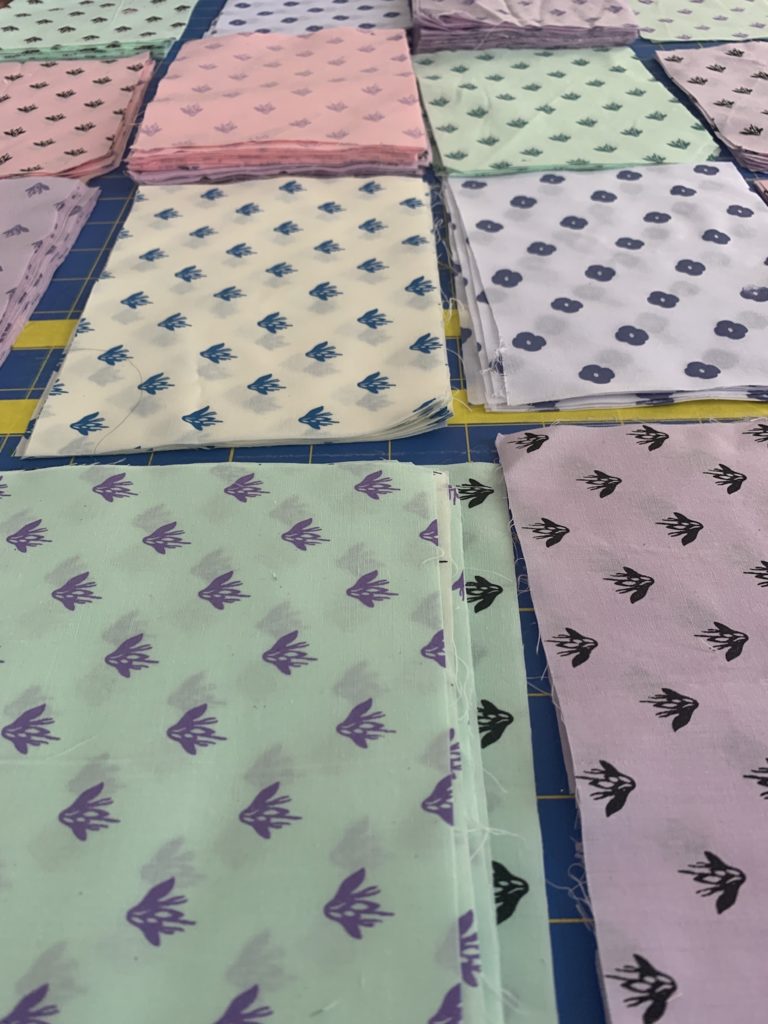
To make face masks, Michelle Hartney has
been repurposing leftover materials from her earlier project
“Mother’s Right,” in which she teamed with midwives and doulas to
sew 1,200 hospital gowns representing every woman who died during
childbirth in the US in 2013. Photo courtesy of Michelle
Hartney.
Homemade masks are not as
effective in blocking the transmission of the virus as
medical-grade masks—Etsy prohibits sellers
from making health claims about their products—but there have been
PPE shortages at hospitals as the outbreak swept across the
country. And, after months of advising that masks were unnecessary
for the general public, the CDC issued new guidelines in early
April recommending the use of homemade cloth face coverings for
non-healthcare workers.
The majority of artists making masks appear to be women, in
keeping with long-held views of sewing as “women’s work,” but
there’s also the husband and wife team Beth Lipman, a glass artist, and Ken Sager, a leatherworker. They first
started making masks for friends who were doctors—their cloth
versions were better than nothing, they thought, in the face of
dire shortages. At their home in Sheboygan Falls, Wisconsin,
Sager does the bulk of the sewing, while Lipman cuts and
measures the fabric ahead of assembly.

Ken Sager, Beth Lipman, and their
children making their homemade masks. Photo courtesy of the
artists.
They are now donating masks to organizations in need, and
selling them at a nominal cost to the general public to offset the
cost of supplies. “We have made about 425 masks,” Sager told Artnet
News in an email. “We started by supplying them to medical
professionals, [but] after a couple of weeks I realized if we
didn’t start getting them out to the general public, we were really
hitting the back end of the crisis and not helping to preempt
it.”
Before the global heath crisis struck the US, Bay Area
artist Stephanie Syjuco was two weeks into a
residency at the Joan Mitchell Center in New Orleans.
Abruptly forced to head home, she found herself locked out of her
art studio on campus at UC Berkeley, where she is a professor,
under the state’s shelter-in-place order.
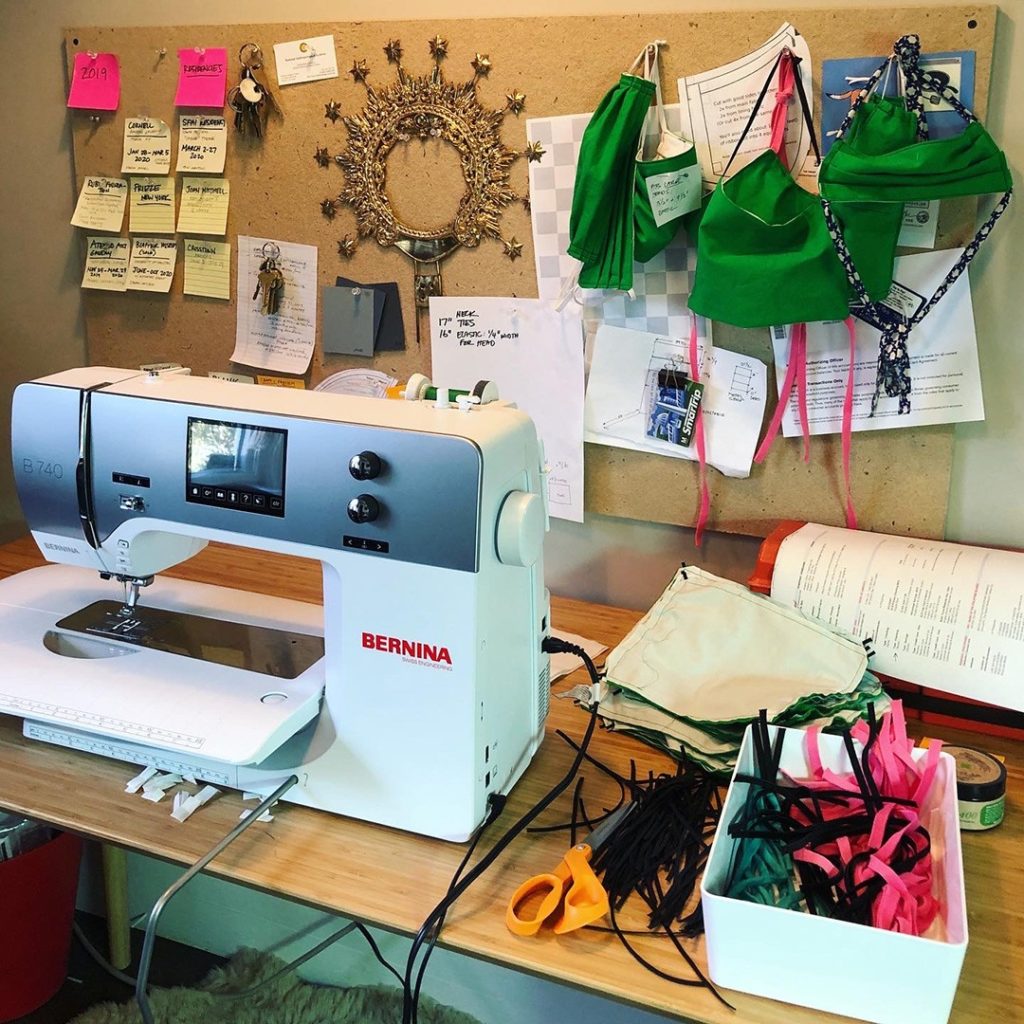
Stephanie Syjuco has been making face
masks at home while her studio has been shut down due to
California’s state-wide shelter-in-place order. Photo courtesy of
Stephanie Syjuco.
“That cut me off from my normal art-making facilities, but at
home I had the equipment to make masks,” said Syjuco, who
recognized ahead of time that there would soon be a real need for
this protective gear. “It was something I turned to in part because
I didn’t really have another creative outlet, but I was also trying
to preempt the demand.”
Since March 20, Syjuco has made close to 800 masks, donating
them to “frontline and vulnerable communities who have been left
out of the supply chain.” She has fundraised $2,000 for the
project, raiding her own supply closet—textiles feature prominently
in her sculpture and installation work—and turning to friends for
additional materials.
“There’s a run on supplies,” Syjuco said. “The hot commodities
are cotton fabric and elastic.”
Textile artist Natalie Baxter, of Ridgewood,
Queens, is a self-described “fabric hoarder.” Since starting to
make masks, she has been able to supplement her stash with an
online order of cotton fabric. When elastic wasn’t available, she
was able to sub in spandex to make ear ties.
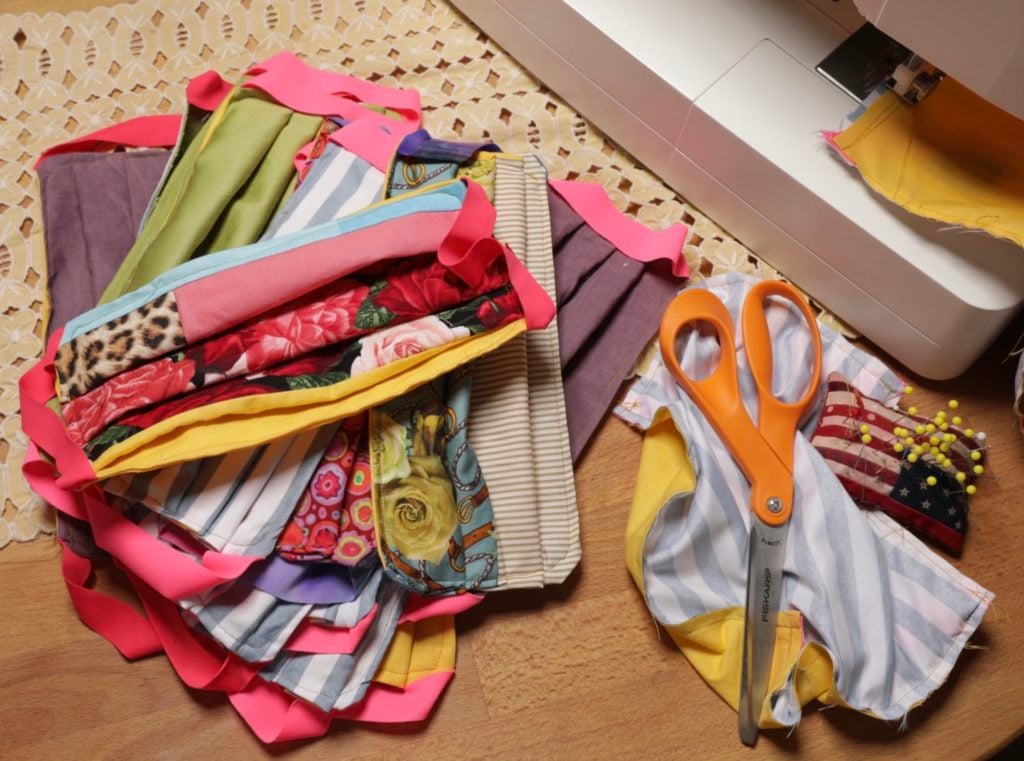
Natalie Baxter’s face masks. Photo
courtesy of Natalie Baxter.
“I felt very helpless when this first started and was anxious to
do anything to support healthcare and frontline workers,” said
Baxter. Her grandmother taught her to sew as a child in Kentucky,
but she rarely uses patterns, so making masks required a bit of
trial and error. Nevertheless, Baxter has made over 300 face
coverings, mailing them out individually with 70 cent stamps to
avoid unnecessary trips to the post office.
“They have gone to doctors, healthcare providers, grocery store
workers, food delivery workers, family, friends, and a lot of
strangers all over the country, from Florida to California to
Alaska and a few to Canada,” she said. “The masks are free, but
some people have been extremely generous with donations for which I
feel so grateful.”
Albuquerque artist Valery Jung
Estabrook has often incorporated textiles in her practice.
During the crisis, she has churned out 250 masks and 22 plastic face shields,
which enable lip reading for the deaf community. She’s selling
these for $20 each to support her practice, while giving away one
in five, mainly to employees at the local post office.
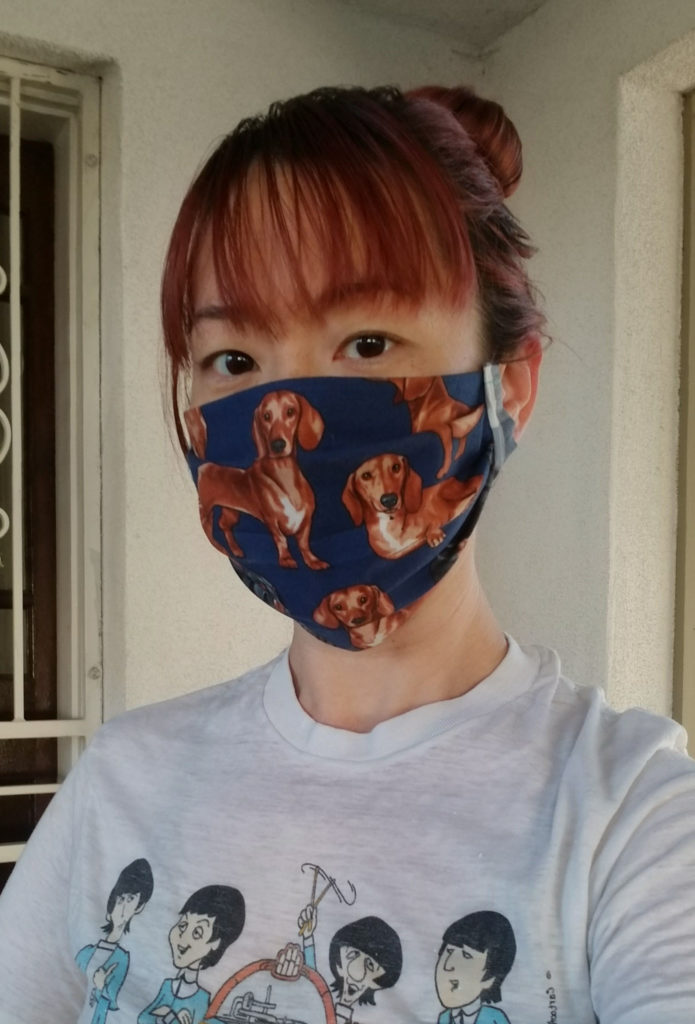
Valery Jung Estabrook in one of her
handmade face masks. Photo courtesy of Valery Jung Estabrook.
Estabrook started making masks before the CDC recommended
everyone wear one. “It was actually a little difficult finding
resources for a design,” she told Artnet News in an email. “I chose
a surgical-style mask designed by a Taiwanese doctor. The
original directions were in Chinese (which I can’t read), so it
actually took me a few hours to figure out the
first mask!”
Rather than hand sewing them herself, artist Michele Pred has outsourced the process,
enlisting a Canadian company to produce a signed, numbered edition
of 200 “Art of Equal Pay”
masks. They cost $32, with ten
percent of the proceeds going toward relief efforts.
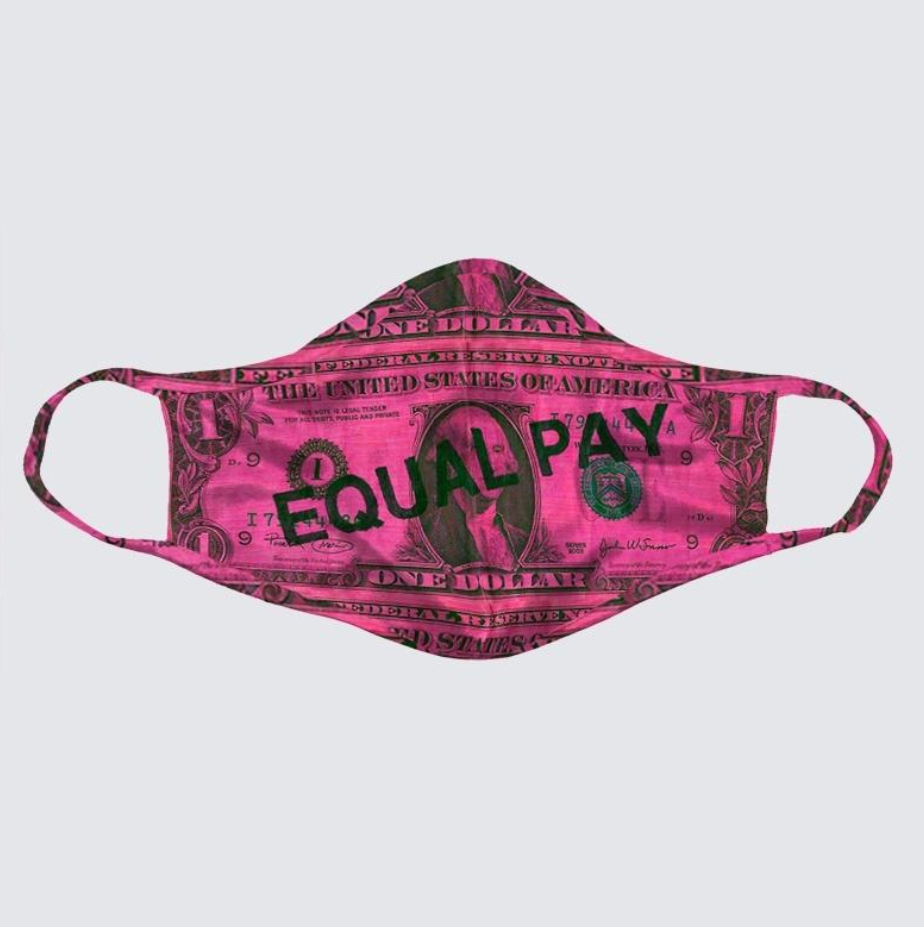
Michele Pred, Art of Equal Pay
Mask. Photo courtesy of Michele Pred.
“I consider my masks to be a functional medical supply
that are also an artist multiple,” Pred told Artnet News
in an email. (She believes that she herself was sick with the
virus, but so far has been unable to get tested.)
Stephanie Hirsch, a former fashion designer
currently under lockdown in the Hamptons, is also treating her
masks as limited edition works of art. She teamed up with curator
Natasha Schlesinger, of art advisory ArtMuseNY to sell floral pattern masks
reading “love” in capital letters, for $45, or $175 with
hand-stitched Swarovski crystal beading. The first run sold out but
a new edition is dropping May 15, with 20 percent of the proceeds
donated to Direct Relief.
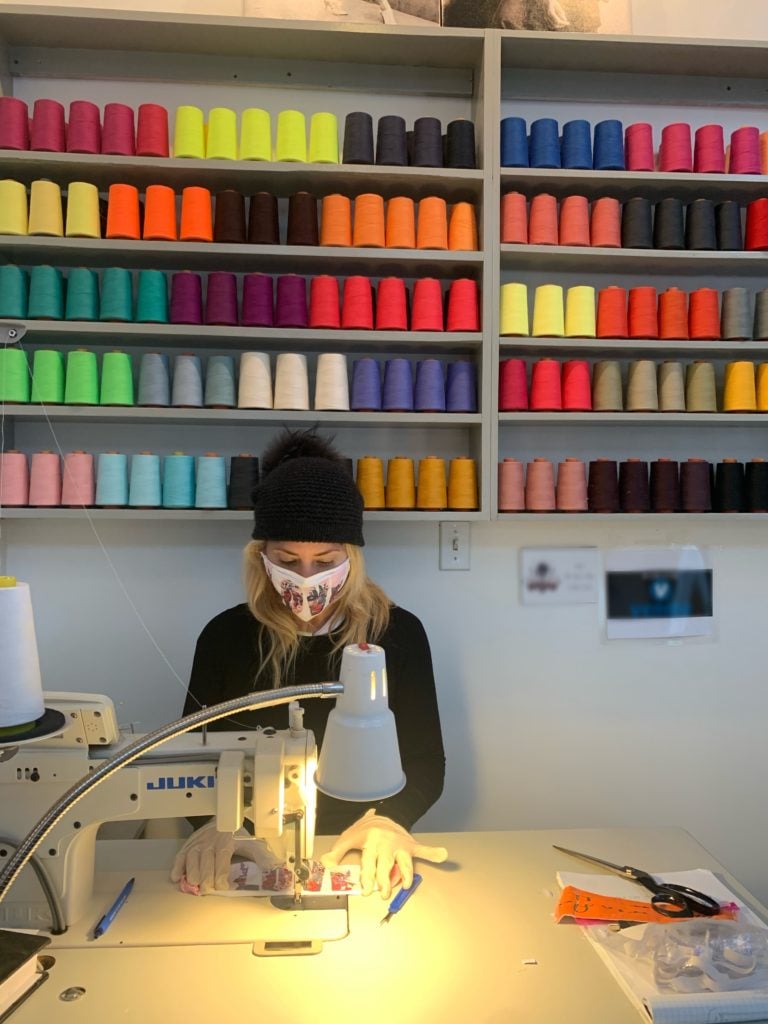
Artist Stephanie Hirsch wearing her
collectible masks. Photo courtesy of Stephanie Hirsch.
With a planned residency in Lower Manhattan on hold indefinitely
due to lock down, Hirsch has found in the face masks a crucial
means of income that still allows her to give back to the
community. “People are so appreciative that I have made my artwork
more accessible, spreading LOVE not the virus,” she told Artnet
News in an email.
Open Editions, which makes wholesale artist
goods for museum shops across the country, started out making a few
dozen masks for friends with leftover yardage from an artist
project. Artist founders Lauren DiCioccio and
Braden Weeks Earp soon realized there was a
growing demand, and that it wasn’t easy for people to make masks
for themselves.
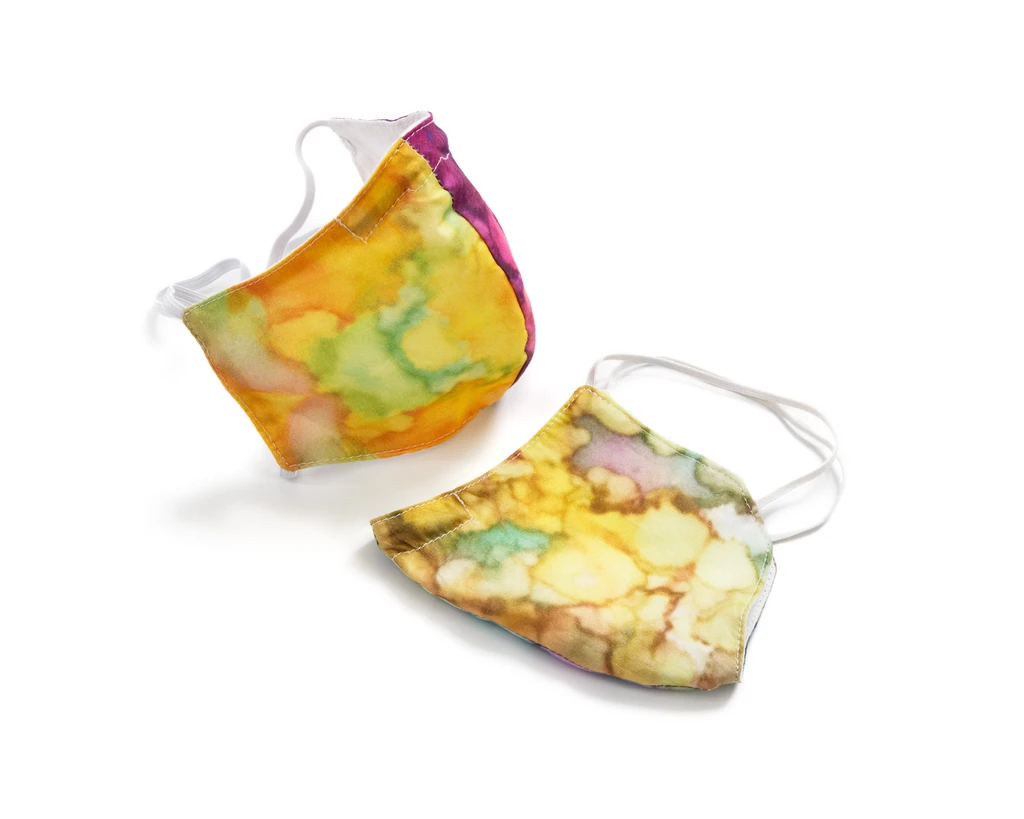
Margie Ramirez face mask from Open
Editions. Photo courtesy of Open Editions.
The duo decided to scale up production, enlisting five artists
(including Syjuco) to create face masks prints, and sending the
fabric to the homes of its out-of-work sewers for construction.
A set of two masks is
$28, and Open Editions is donating one mask to a nonprofit
for each one sold, with a total of 1,275 donated to date. “Because
the mask is something not so
pleasant to wear on your face,” the duo told Artnet News, “we
thought people might be more incentivized to wear them if they
featured their favorite artists‘
prints.”
The post ‘I Felt Like I Needed to Do More Than Stay at
Home’: Meet the Artists Who Have Transformed Their Studios Into
Mask-Making Workshops appeared first on artnet News.
Read more https://news.artnet.com/art-world/artist-making-masks-1855542
Further reading


Leave a comment