
I’ve Been Reporting From the Front Lines of the Hong Kong Protests. Here’s What It Taught Me About the Power of Art
Gas mask: check. Eye mask:
check. Helmet: check. A press ID and reflective vest that spells
out “PRESS” across the chest: check.
As I packed my black-and-white
polka-dot designer backpack—the only backpack I own—earlier this
month to prepare myself for the December 8
rally that marked the
six-month anniversary of the Hong Kong
protests, a feeling of
uneasiness and doubt weighed heavy inside my chest. Since when did
such protective gear become a must-have when I head out to cover a
demonstration? And since when did writing about arts and culture
involve putting myself on the front lines, where tear gas and
rubber bullets face off against bricks and Molotov
cocktails?
I might not have been able to
imagine it six months ago, but this is now a somewhat regular day
on assignment for me.
It didn’t have to be this way.
As a journalist who covers art and culture, I have the option to
look away. Footage depicting the violent clashes between the police
and black-clad protesters may have been making international
headlines over the past six months, but for Hong Kong’s art world,
things seemed to be business as usual. I could have chosen to
attend an art opening with a stylish clutch under my arm, sipping
champagne while keeping my antenna up for news and gossip. The fall
art auctions took place on schedule amid the shooting of tear gas,
and I could have chosen to stay in the comfort of the auction room,
taking in the frenetic bidding over the work of Yoshitomo
Nara and
Sanyu.
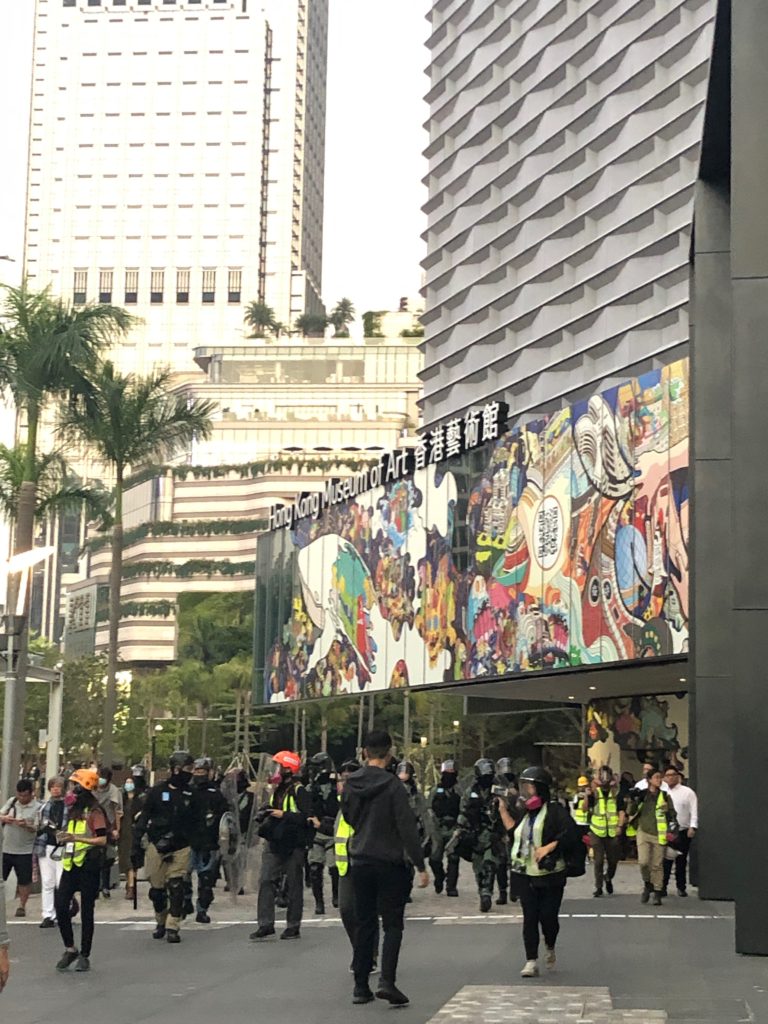
Riot police outside the Hong Kong Museum
of Art after tear gas was fired nearby. Photo: Vivienne Chow.
But as Hong Kong descends into
an unthinkable state, what seems to be the normality of the art
world has suddenly become a detached reality might as well exist in
a parallel universe. Protesters and unarmed civilians have been hit
with more than 16,000 rounds of
tear gas, nearly 14,000
rounds of so-called
non-lethal weapons from rubber bullets to sponge grenades, and two
live rounds. One student
protester fell to death during a clash in a residential area, and more
than 6,000 arrests have been made over the past six months,
including of a child as young as 11. How can one still keep her
head buried in the sand, thinking that the city is operating
normally?
A New Normal
At the height of some of the
most violent clashes, like the siege of university
campuses in
mid-November, Hong Kong was, quite literally, a war zone. None of
this is normal. Had I chosen to stay in the art bubble and not
witness at least some of what might be the worst events of terror
my hometown has ever seen, I would have regretted it for the rest
of my life—as a human being, a Hongkonger, and as a
journalist.
Am I scared? I’m terrified.
Covering art and culture has rarely involved encountering squads of
armed riot police or hearing shots of tear gas fired at crowds in
the heart of Central, the city’s core business district where
international galleries like Gagosian, Lehmann Maupin, Simon Lee,
and Pearl Lam are located. Nor does it typically involve getting
jostled by crowds of protesters running across Salisbury Garden in
Tsim Sha Tsui, where tear gas canisters were fired outside
the newly reopened Hong Kong
Museum of Art.
Sure, I had the experience of
covering the Umbrella
Movement on the
frontline occasionally as a culture news reporter in 2014. I have
also recently taken a safety workshop for journalists given by a
former member of the Australian military. But this kind of
reporting was never something I could get used to. And as news
continues to surface about journalists
becoming targets of riot
police, many getting shot with rubber bullets or sponge
grenades, and
one even losing an
eye, I have had to
decide in a split second on the ground: should I stay or should I
go? Should I continue to take pictures or filming?
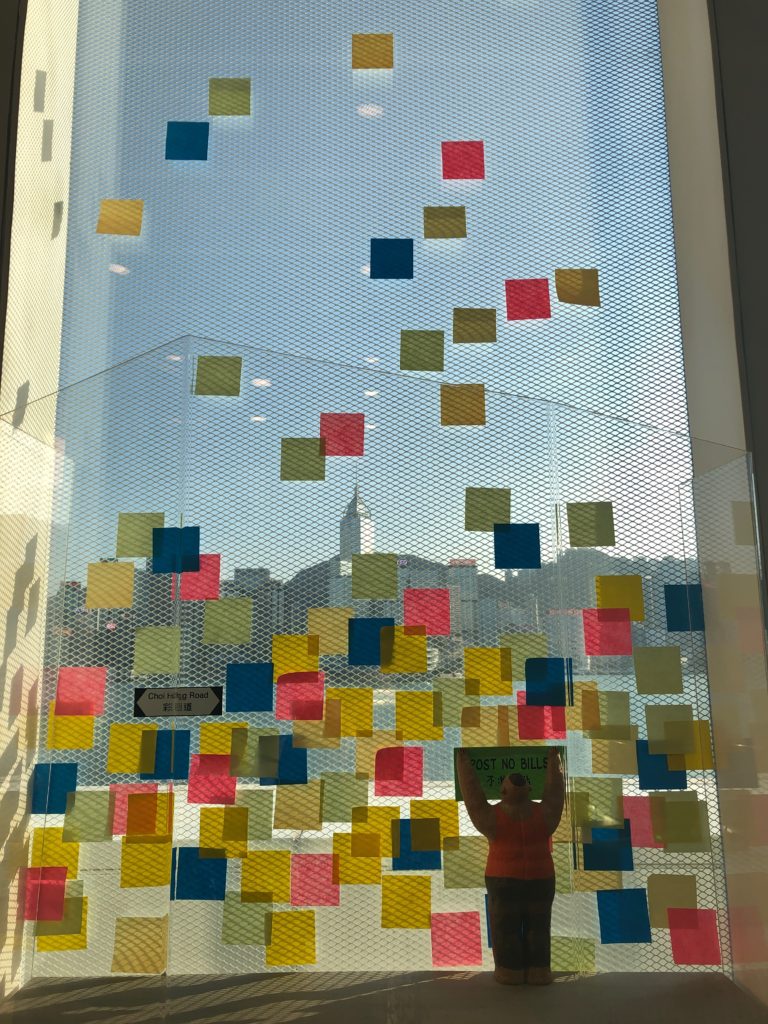
The installation Beyond by Hong
Kong artist Rosanna Li Wei-han on show at Hong Kong Museum of Art.
Photo: Vivienne Chow.
As an art journalist, it may
seem unnecessary for me to put myself in danger like many of my
colleagues who have been on the frontline on a day-to-day basis,
and for whom I have the utmost respect. But these traumatic
experiences have opened my eyes to humanity in a new and deeper
way, which has inevitably informed the way I cover my own beat and
helped me to reflect on the true meaning of art.
The words of Abby Chen, the head
of contemporary art at the Asian Art Museum in San Francisco,
constantly ring in my ears. During our conversation
back in July, Chen told
me that she believed the greatest art will be produced in Hong Kong
in the wake of this uprising. “This is about being human, and the kind of
resistance and resilience that we are seeing … Hong Kong artists
are at the forefront in terms of thinking about their global
identity in this rapidly shifting world,” she said. “Artists are
part of this light.”
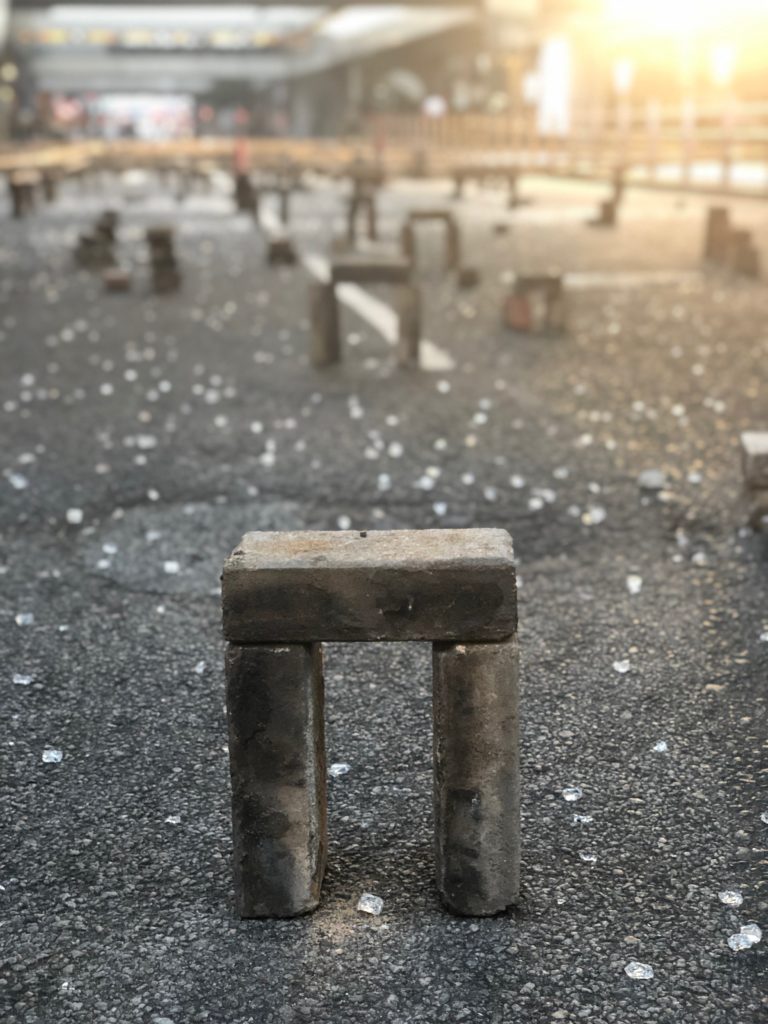
Protesters’ mini Stonehenge rockblock in
Hong Kong. Photo: Vivienne Chow.
What’s Art Got to Do With It?
Five months later, Chen has been
proven right. Her understanding of art, and more importantly, her
understanding of humanity, has led me to realize
that the most meaningful and
relevant creative expressions are living on the streets, rather than inside
perfect white cubes insulated from the real world.
Often made anonymously by groups
of Hong Kong people who are determined to fight an impossible
fight, these creative expressions—graffiti, songs, protest signs,
memes, Stonehenge-looking roadblocks, and even performative
protests—represent the
demands, dreams, hopes, and fears of the people of this former
British colony as they struggle to retain its freedoms and systems
under the rule of the People’s Republic of China before the
50 years
unchanged promise
expires in 2047.
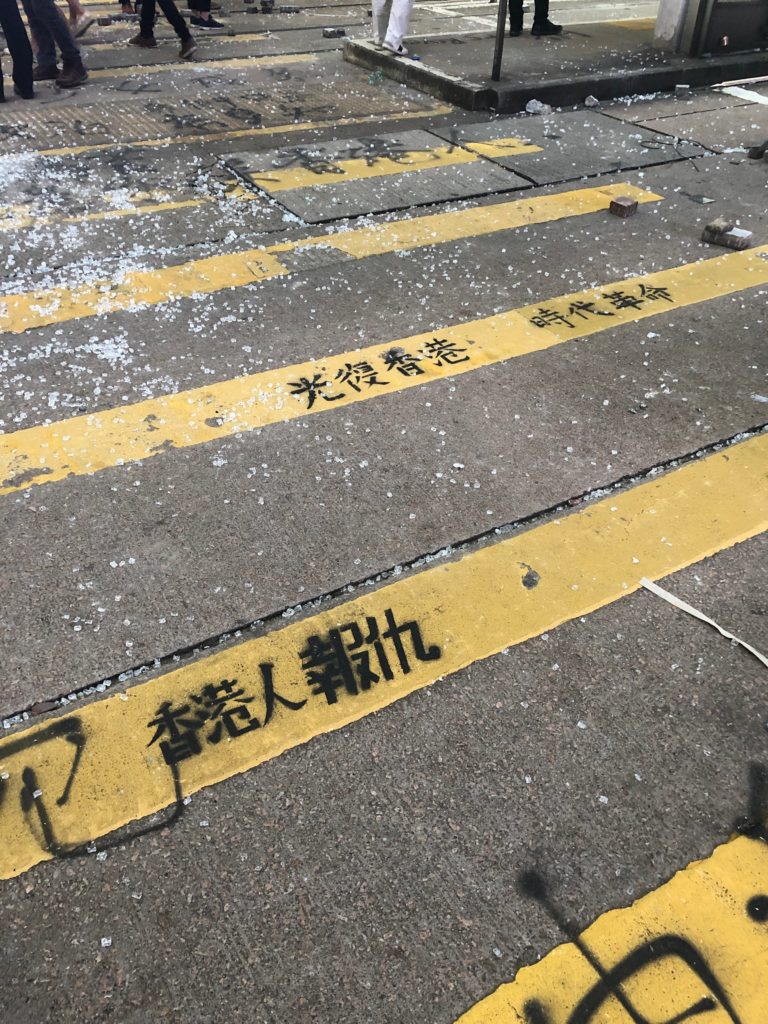
Graffiti that reads “Hongkongers,
revenge.” Photo: Vivienne Chow.
The protests sparked by the
now-withdrawn extradition bill have morphed into a much larger
scale pro-democracy movement, and the symbolism has expanded, too.
These creative outputs have not only transformed public spaces into
a living gallery of visual culture, but have also played an
important role in keeping the movement vital and engaging. It is no
coincidence that a record number of
artists ran for public office during the most recent Hong Kong
elections—and won.
When I walk pass a Lennon Wall and look at the post-its,
graffiti, and posters spelling out protest slogans such as
“Liberate Hong Kong, Revolution of Our Times” or “Five Demands, Not
One Less,” I often ask myself:
Is it art? But what is art, anyway? A banana duck-taped
on the wall sold for
$120,000? Or an object of desire made with impeccable
craftsmanship?
Art, to me, is an honest
statement, and what I see in the streets and in images circulating
in cyberspace are expressions that require both artistic skill—be
it drawing, design, or street calligraphy—and sincerity. They are
the product of hybrid cultural influences inherited from Chinese
tradition, Japanese pop culture, the Western world, as well as Hong
Kong’s cinema heritage, Canto-pop, street humor, and
cynicism.
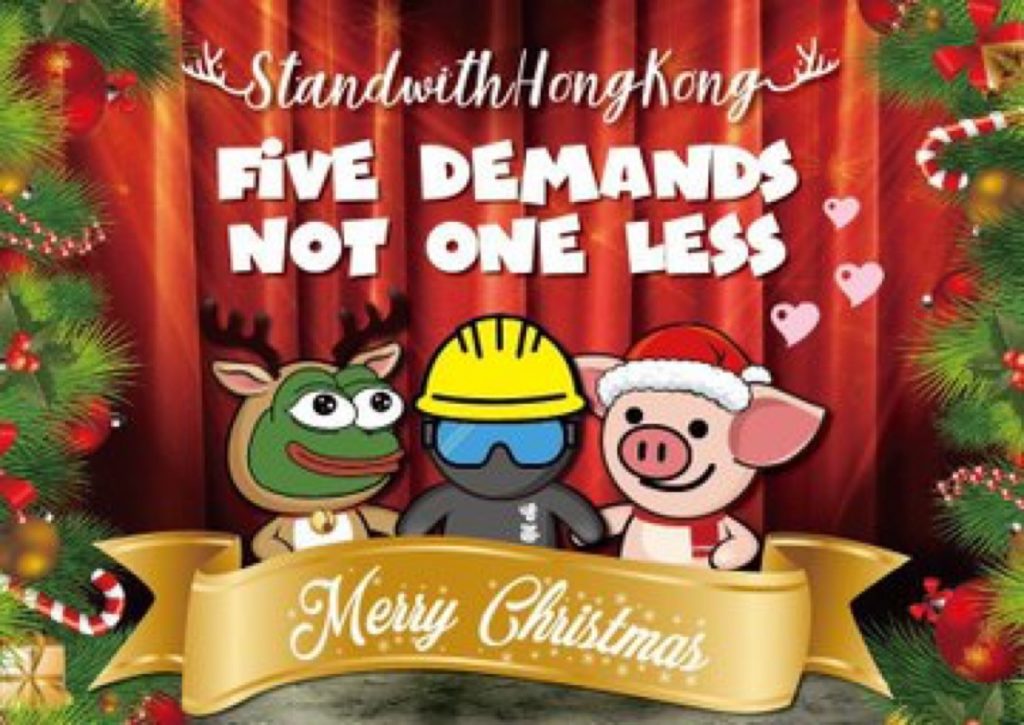
Christmas card from Hong Kong
protesters.
These creative outputs embody a unique Hong Kong cultural
identity, but can also resonate with a global audience. They borrow
icons and memes from other cultures and reinvent a new identity for
them, such as Pepe the Frog, which was reimagined as an irreverent
symbol of Hong Kong’s resistance and resilience rather than the
symbol of hate co-opted by the alt-right in the United States. And
more importantly, these visual expressions are the vessels of the
pain and trauma Hong Kong people have experienced over the past six
months—people whose voices have been muted by a government that
fails to respond to their demands. Some have resorted to violence
out of desperation, but many have also turned to art and creativity
as their weapon of choice. Their creations might not be perfect,
but they are genuine. They are people’s art.
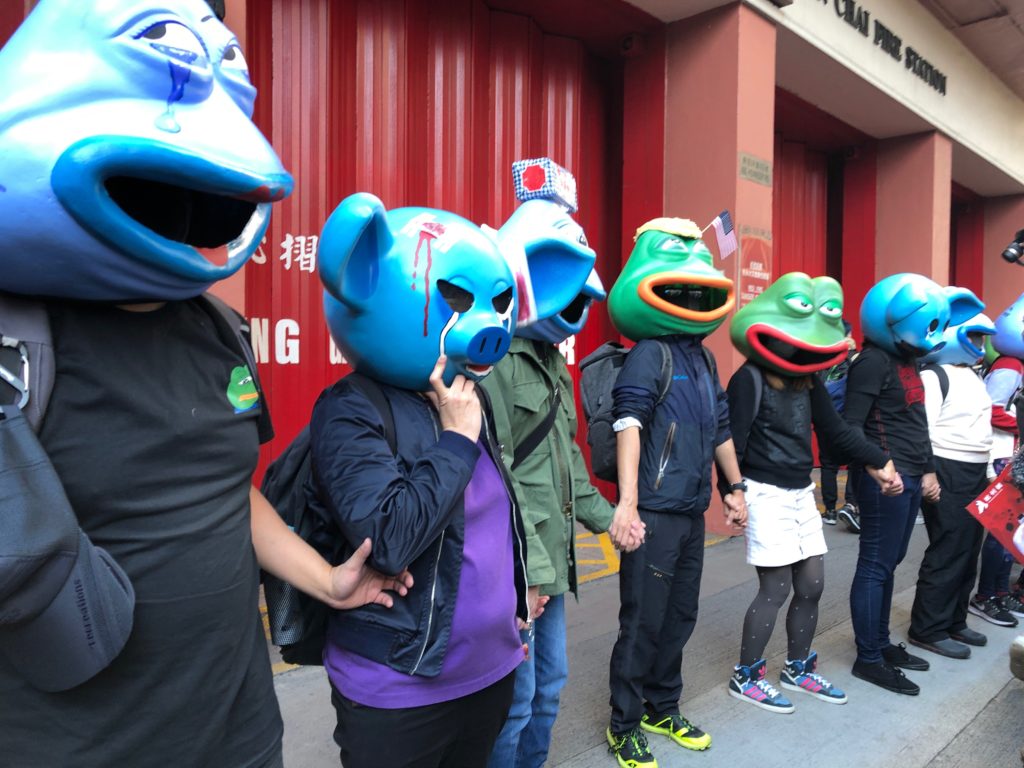
Protesters in fiberglass masks of Pepe
the Frog and LIHKG Pig at the December 8 protest. Photo: Vivienne
Chow.
What will be interesting to see
next is how artists distill all this to express themselves with
their own artistic language. Some have already
begun, but there will be
more to come in the next decade or so. And as the movement is still
ongoing, so is the pain and trauma—but I have absolute faith in the
future of Hong Kong art. That, now more than ever, is what makes
this city one of the most interesting places to write about
art.
The Pulitzer Prize-winning art
critic Jerry Saltz began writing when he was over the age of 40.
Being in such a rapidly changing Hong Kong at age 41, I feel that
my career has only just begun. I am looking at the world around me,
and at art, with fresh eyes.
The post I’ve Been Reporting From the Front Lines of the
Hong Kong Protests. Here’s What It Taught Me About the Power of
Art appeared first on artnet News.
Read more https://news.artnet.com/opinion/vivienne-chow-first-person-hong-kong-1733448
Further reading


Leave a comment