
‘It Is Time for Our Struggles to Be Recognized’: Lawmakers Push for a National Museum of Asian Pacific American History and Culture
A new bill from congresswoman Grace Meng, a democrat from
Queens, calls on the Smithsonian to consider opening a National
Museum of Asian Pacific American History and Culture. The proposed
institution would honor the history, accomplishments, and culture
of Americans of Asian and Pacific Islander descent, such as
Chinese laborers on the transcontinental railroad, Filipino
agricultural workers who helped lead the farm worker revolution,
and the Japanese American incarceration during World War II.
“We need to weave the narrative of Asian American and Pacific
Islander communities into the greater American story,” read a
statement from
Meng, who proposed a similar bill back in
2015. “I firmly believe the story of Asian Americans and Pacific
Islanders is sorely misunderstood and creating a national museum
would ensure that our experiences—both good and bad—are recognized
by all Americans.”
Introduced on July 30, HR 4132 would
establish an eight-person panel of experts in museums and Asian
American and Pacific Islander culture. The commission would have 18
months conduct a study determining the viability of the proposed
museum, identifying possible sites for it in Washington, DC,
developing a fundraising plan, and considering whether the
institution should be part of the Smithsonian.
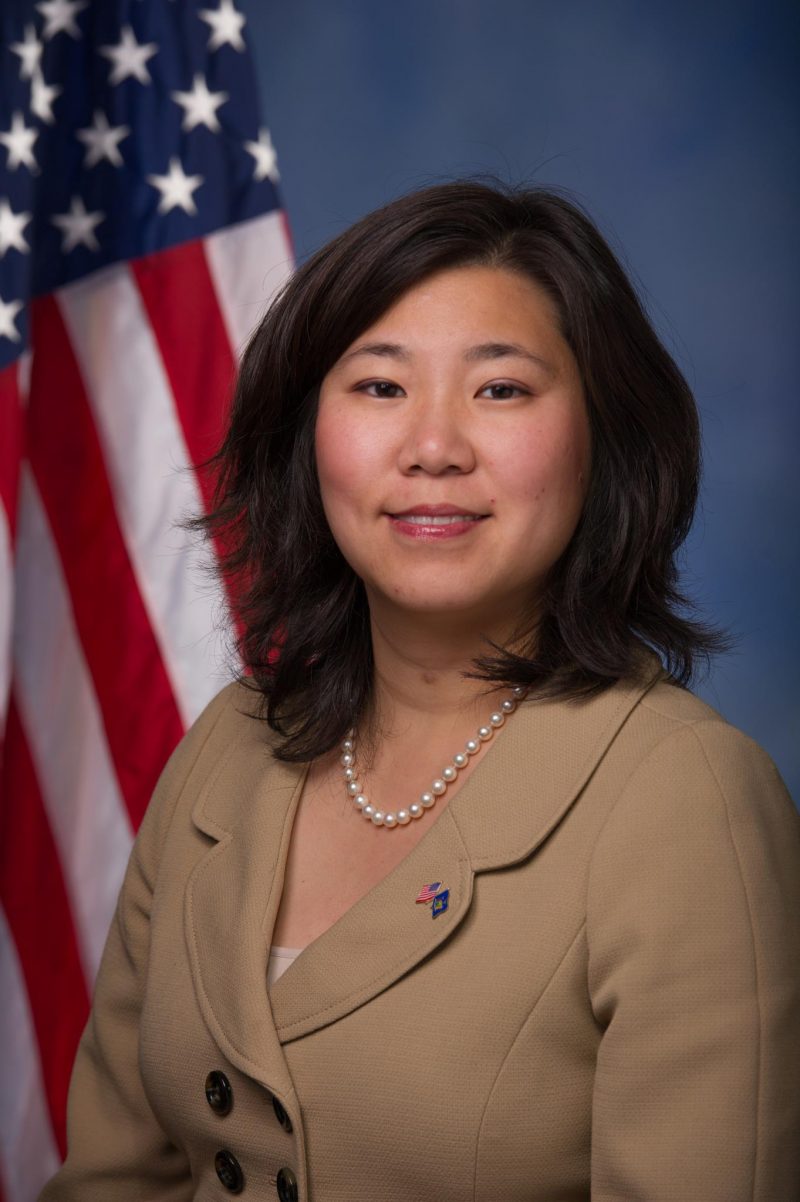
US Representative Grace Meng. Photo
courtesy of Grace Meng.
Asian Americans are the fastest growing minority group in the
country, comprising about six percent of the population, or 20
million people.
There are currently 19 museums in the Smithsonian Institute, as
well as the Smithsonian Asian Pacific American
Center, a Los Angeles-based migratory museum founded in 1997
that presents programming and exhibitions at other Smithsonian
institutions, as well as online. The Smithsonian also dedicates a
section of its website to highlight areas of its
collections that are focused on Asian Pacific American
heritage.
But establishing a full-fledged museum on the National Mall
would not be an easy task. The most recent addition to the
Smithsonian, the National Museum of African
American History and Culture, which opened in 2016, took 15
years to receive passing legislation. It didn’t open for another 13
years, and at a cost of $540 million.
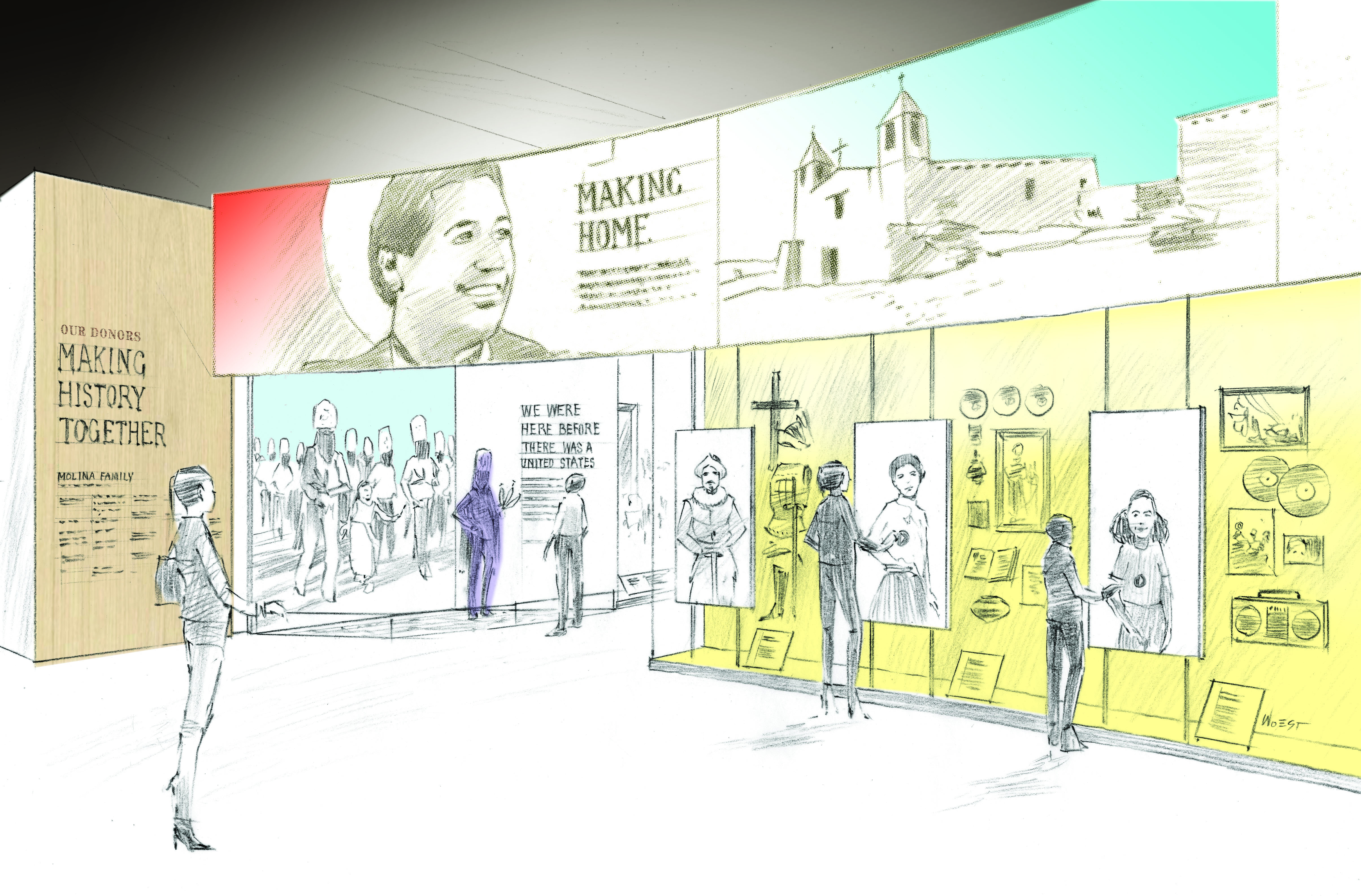
A sketch of the planned Molina Family
Latino Gallery at the Smithsonian’s National Museum of American
History, set to open in 2021. Courtesy of Museum
Environments/Branded Environments.
There are also advocates pushing for the foundation of national
museums for Latinos and for women. In 2017,
the Women’s History Congressional
Commission submitted a report to
Congress recommending the establishment of an American
Museum of Women’s History, and bipartisan legislation on
the matter was introduced in March of this year.
Given all of this, Franklin Odo, the founding director of the
Smithsonian Asian Pacific American Center, is less than optimistic
when it comes to the prospects of an Asian American museum. There’s
“no chance in the near future,” he lamented to NBC News back in
2016. “Latinos have been pushing for [a national museum for] over a
decade now.”
But where a standalone museum requires Congressional approval, a
dedicated gallery is more within the realm of possibility, at least
in the short term. In December, the Molina Family Latino
Gallery, the first dedicated exhibition space for
the Smithsonian Latino Center (also
founded in 1997), announced plans to open at the
Smithsonian’s National Museum of American History in
2021.
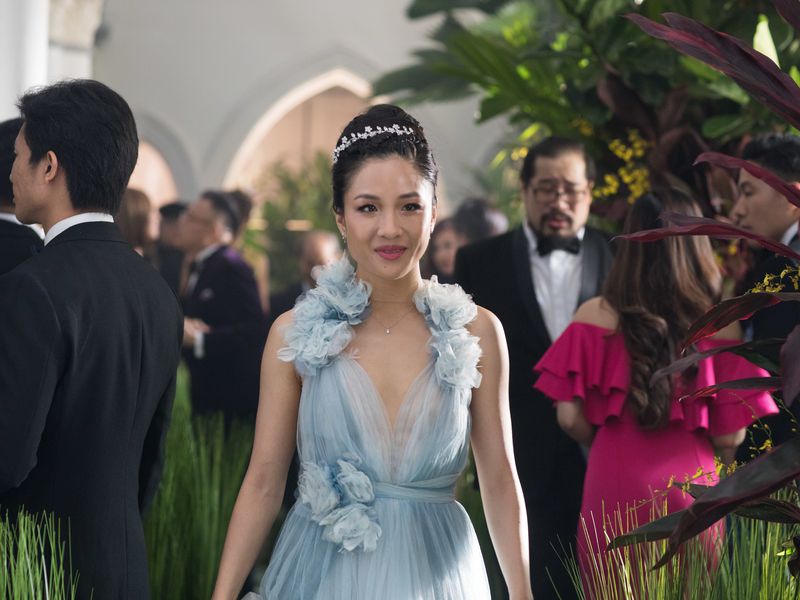
Constance Wu’s character, Rachel Chu,
wore a Marchesa gown to a wedding in Crazy Rich Asians. It
is now part of the collection of the Smithsonian’s National Museum
of American History. Photo courtesy Sanja Bucko/Warner Bros.
Entertainment Inc. and RatPac-Dune Entertainment LLC.
The Smithsonian Asian Pacific American
Center hopes to follow in its footsteps, and held its
first annual fundraising gala
toward that goal in Los Angeles in May. The $25 million Keystone Initiative campaign kicked off
with a glitzy event honoring fusion chef Helene An,
Grammy-nominated R&B jazz band Hiroshima, singer-songwriter Jay
Park, and software mogul and Sacramento Kings owner Vivek Ranadive.
To mark the occasion, Marchesa donated a dress worn by Constance Wu in
the 2018 blockbuster film Crazy Rich
Asians to the Smithsonian.
“For over 200 years, Asian Pacific Americans have been an
integral part of America’s cultural fabric,” said representative
Doris O. Matsui, a Smithsonian regent and a member of the center’s
advisory board, at the spring gala. “It
is time for our struggles to be recognized and our diverse
contributions honored within the respected halls of America’s
Smithsonian Institution.”
The post ‘It Is Time for Our Struggles to Be Recognized’:
Lawmakers Push for a National Museum of Asian Pacific American
History and Culture appeared first on artnet News.
Read more https://news.artnet.com/art-world/national-asian-american-museum-proposal-1618897
Further reading


Leave a comment