
‘It Was a Long Day’: We Spent 18 Frenzied Hours With Art Dealer Johann König as He Raced to Reopen His Berlin Gallery Post-Lockdown
At 9:00 a.m. last Wednesday,
Johann König was having coffee on the terrace of his Berlin
apartment. It was sunny, with a few scattered clouds, and
König—one of the most famous art
dealers in the global gallery capital, who has outposts in
London and Tokyo to complement his giant Berlin space in a former
church—was thinking about how to show art again. After nearly two
months in lockdown, the gallerist was getting ready to open up to
the public.
Thankfully, he didn’t have a
commute that would require a mask and gloves.
“I live in the gallery,” he
said. “I live where the preacher man used to live.”
I was not on that terrace in
Berlin last Wednesday morning. I was in the Catskills, and the
journey to Galerie König’s converted Brutalist chapel in Berlin’s
Kreuzberg neighborhood would not have been deemed
“essential.”
But König had agreed to engage
in an unorthodox reporter-subject dialogue for the sake of a
socially distanced profile of sorts. I wanted to remotely
tail him over the course of a day, “watching” as he hustled
for sales, installed a real show in an actual gallery, and
generally waded back into the art-world social life that’s still
very much on hold in London, New York, and Los
Angeles.
After finishing his coffee,
König went down to what’s become a makeshift gym—one with an Andi
Fischer painting on the wall and, on the floor, an elephant box by
Nicolas Party first shown at Swiss Institute in
2012.
“To be honest, it’s more rare
than often,” he said of his exercise regime in a recorded message that he texted me on
Whatsapp. “There’s a bike and a rowing machine—it’s too
hard.”
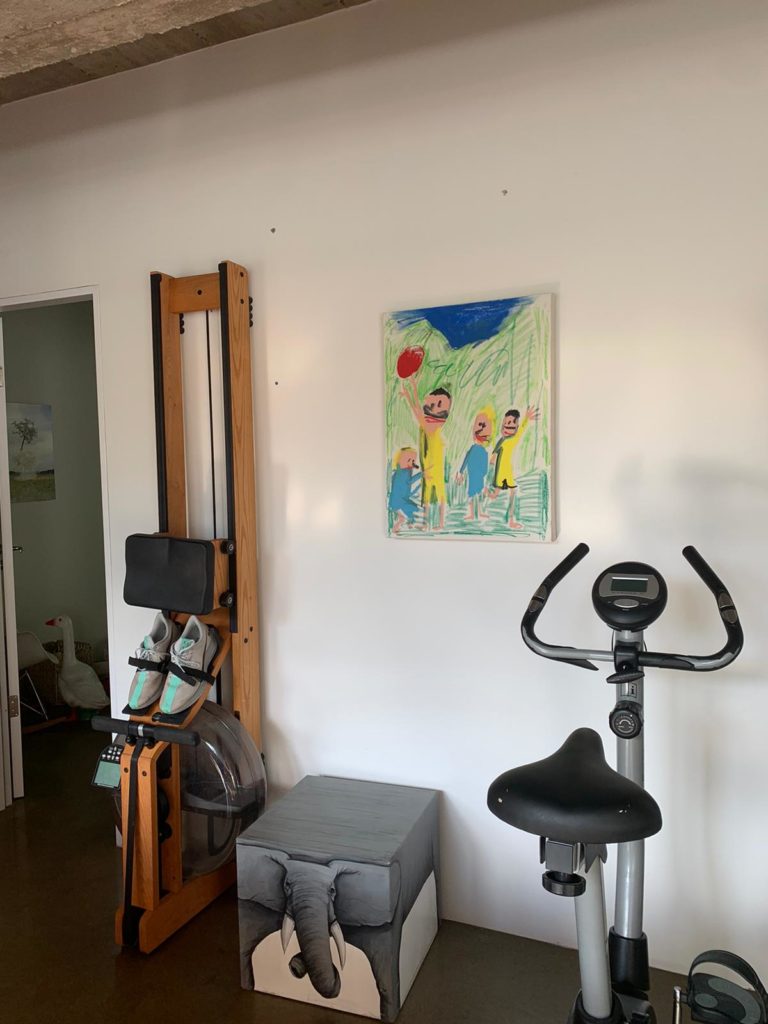
On the wall, a work by Andi Fischer. On
the floor, a work by Nicolas Party. This and all photos below by
and courtesy Johann König.
10:30 a.m.: a Gallery Check-In
After his workout, König walked
from his living quarters over to the neighboring gallery space, the
monumental former church nave that’s big enough for about a dozen
gallery-goers to practice social distancing, even if the thought of
visiting a gallery was a little bonkers to the reporter receiving
images of such a space on his phone. When he entered, König saw
what appeared to be a gigantic grid of some kind.
“Elmgreen and Dragset’s new
commissioned work is a big tennis court,” he explained. A new show
by the artist duo opens at the gallery on May 16.

An Elmgreen & Dragset installation in
progress.
11:30 a.m.: Homeschool
König promised he’d return to
check on the installation’s progress, but it was time to switch
hats from art dealer to schoolteacher. He and his wife,
Lena König, are taking turns tackling the curriculum, and he
took over instruction so his wife could work on the gallery’s
magazine, which she edits.
His daughter seemed to be an
engaged student, kneeling on the floor next to a Tatiana
Trouvé sculpture with her nose buried in a book in which a
fairy-chef explained how to make leckere blumchen
cupcakes.
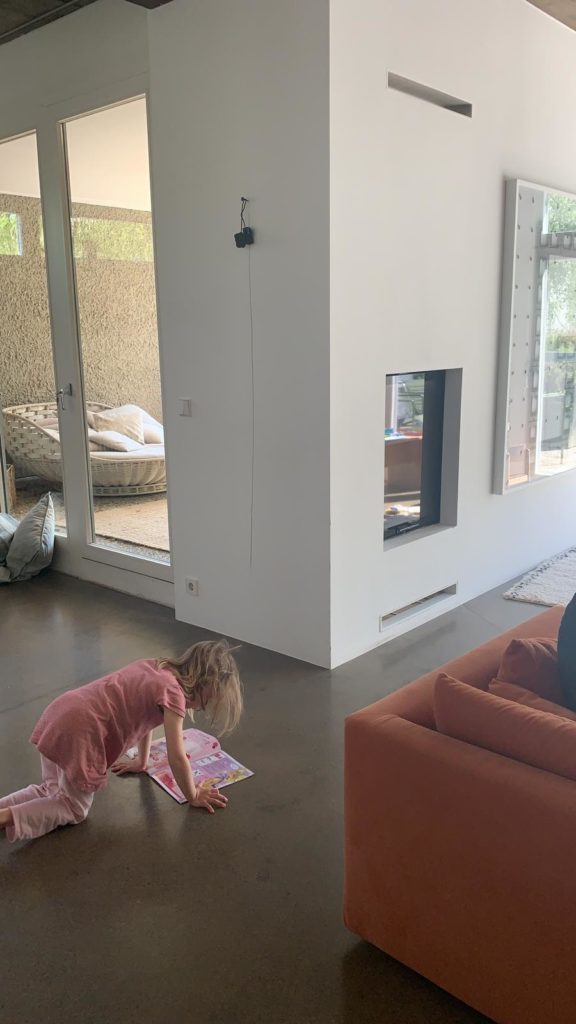
Johann König’s daughter in “school” with
a Tatiana Trouvé sculpture.
While she read, it was time to
check on the main office space, which was just beginning to come to
life again as directors were allowed to leave their
houses.
12:30 p.m.: Magazine Cover Selection
“The gallery I would say is
about half-staffed,” König said, walking over to a table where
galleys for the latest edition of the magazine were laid
out.
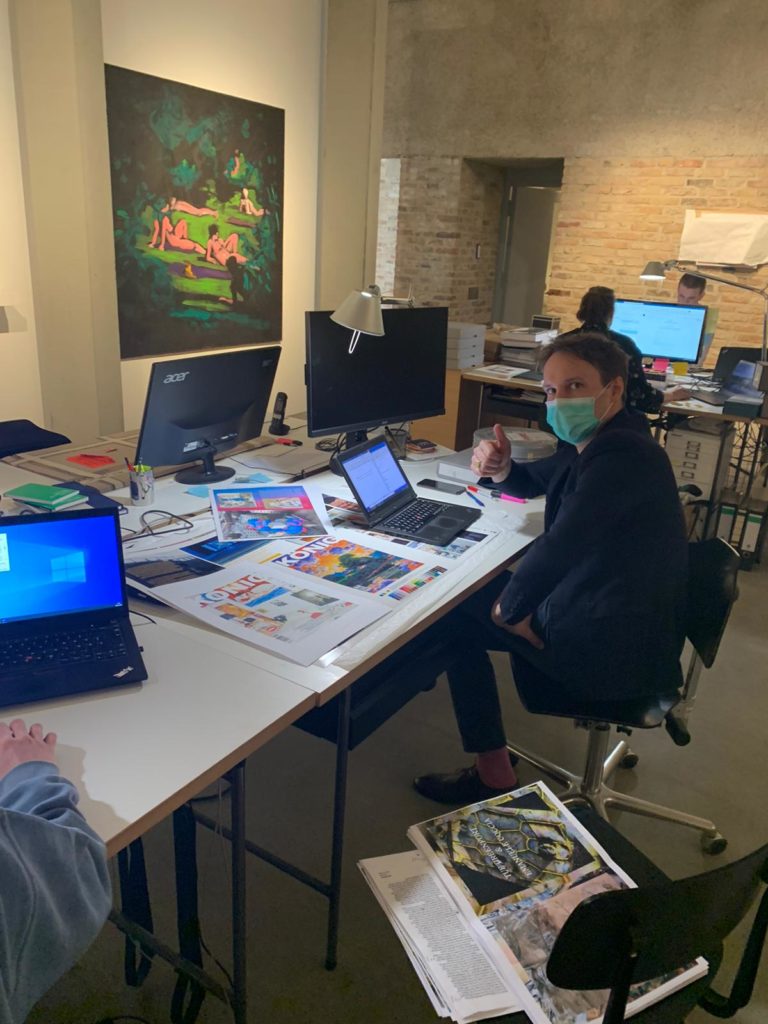
Pandemic or no pandemic, König’s
magazine will come out on schedule. Above, a staffer with a
painting by Karl Horst
Hödicke.
“There are two cover options,
and I think we’re going to end up publishing both covers of work by
Friedrich Kunath.” König walked past one staffer who flashed a
hearty thumbs up, mask plastered across his face.
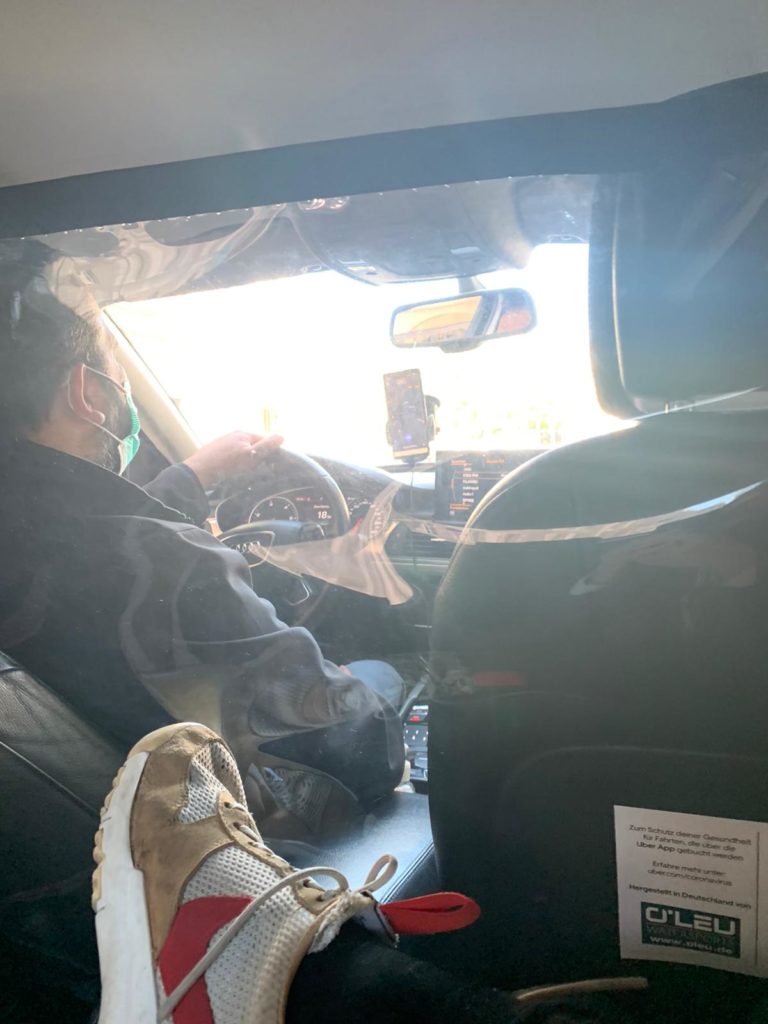
König in a taxi on his way to a museum
opening.
1:00 p.m.: a Socially Distanced Museum
Opening
Next, König donned a mask and
hopped in a taxi—the driver separated from the rider by a thick
slice of plastic—speeding toward downtown Berlin to attend
something that from where I was sitting sounded like an ancient
ritual: an opening reception at a museum. It was a survey of work
by artist duo Christo and Jeanne-Claude from the Ingrid & Thomas
Jochheim Collection, hosted by Palais Populaire, the space
maintained by Deutsche Bank.
“It’s a relief to be going back
to shows again after eight weeks,” König said.
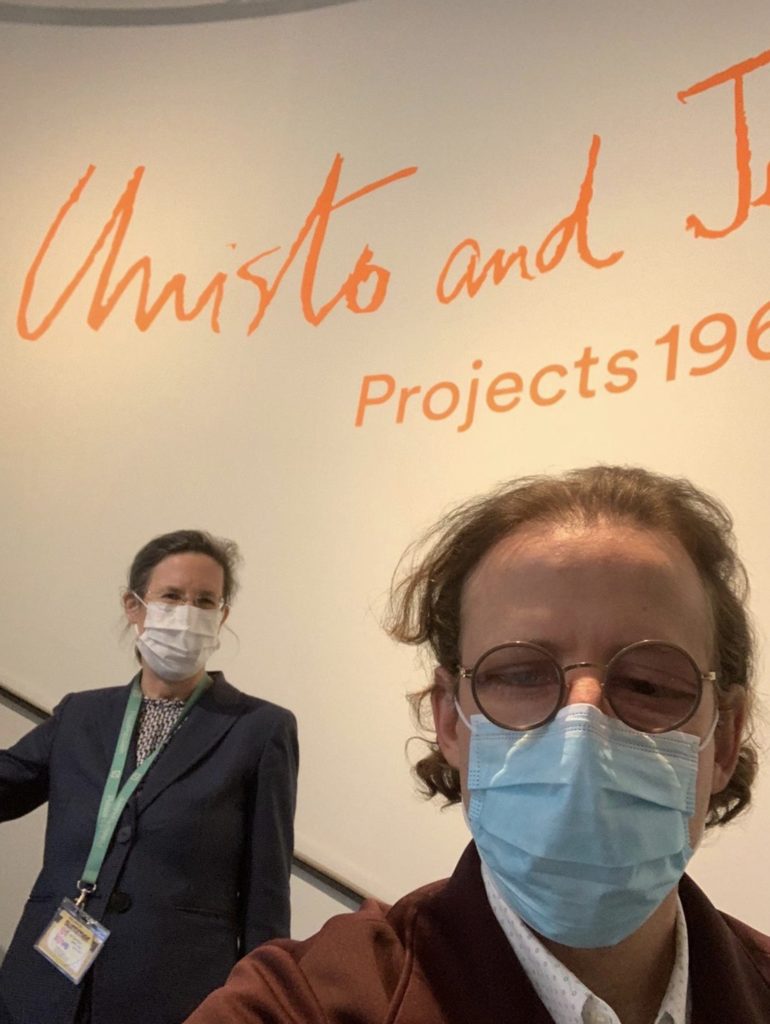
Johann König ventures to an opening
in Berlin.
A decent amount of visitors, all
wearing masks, flowed through the show, which consisted of striking
studies for the couple’s public works. The focus was on Wrapped
Reichstag, for which they covered the Berlin monument in a
million square feet of fabric in 1995.
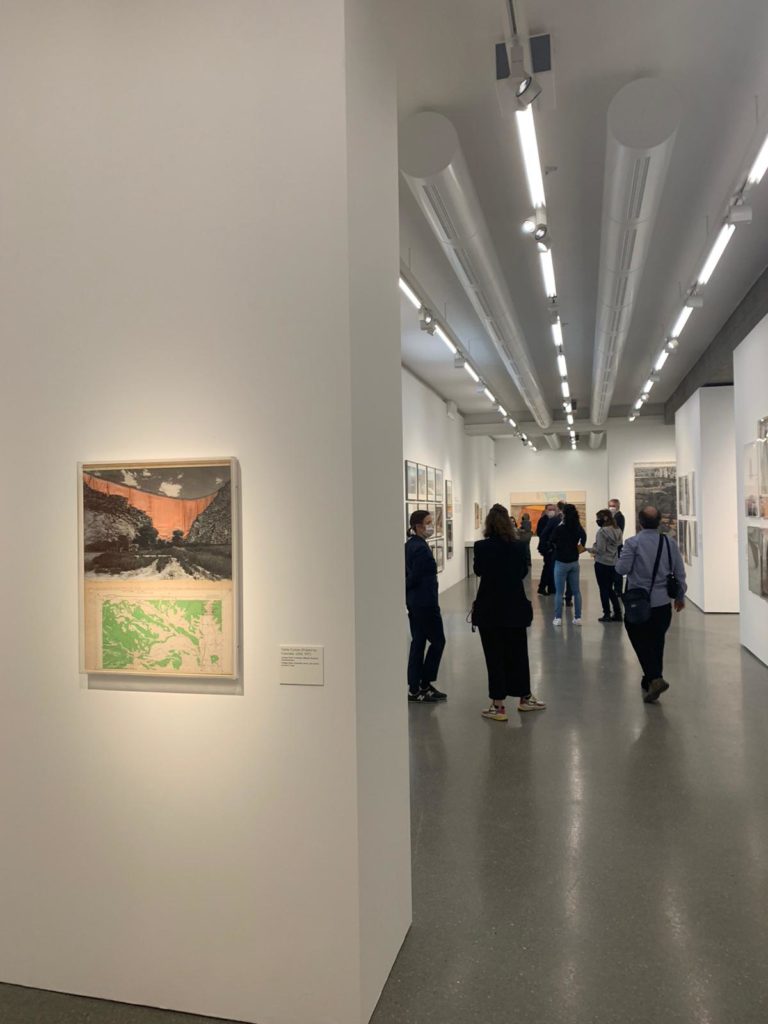
Inside the Palais Populaire.
Like at openings before the
lockdown, König worked the halls—but this time, he kept his
distance and spoke through a mask to curators of the Deutsche Bank
art collection and members of the Jochheim family.
“It was very nice to see another
show—one that’s not my own,” he said. “It felt actually quite natural, like a small
private opening, and I saw all the editors of the art magazines
there, too.”
1:30 p.m.: Family Lunch
It was a quick stop. By 1:15
p.m., König was heading back to the gallery to have lunch with his
family. Alas, with König and his wife both trying to keep the
sprawling business functioning, there isn’t much time to experiment
with sourdough starters.
“A lot of people do home cooking
and seem to really enjoy it, but we limit ourselves to delivery
services,” König said. “Having a company to run doesn’t leave
space for cooking.” Today, lunch was an attractive spread of pizza,
pasta, and salad from Domino’s.
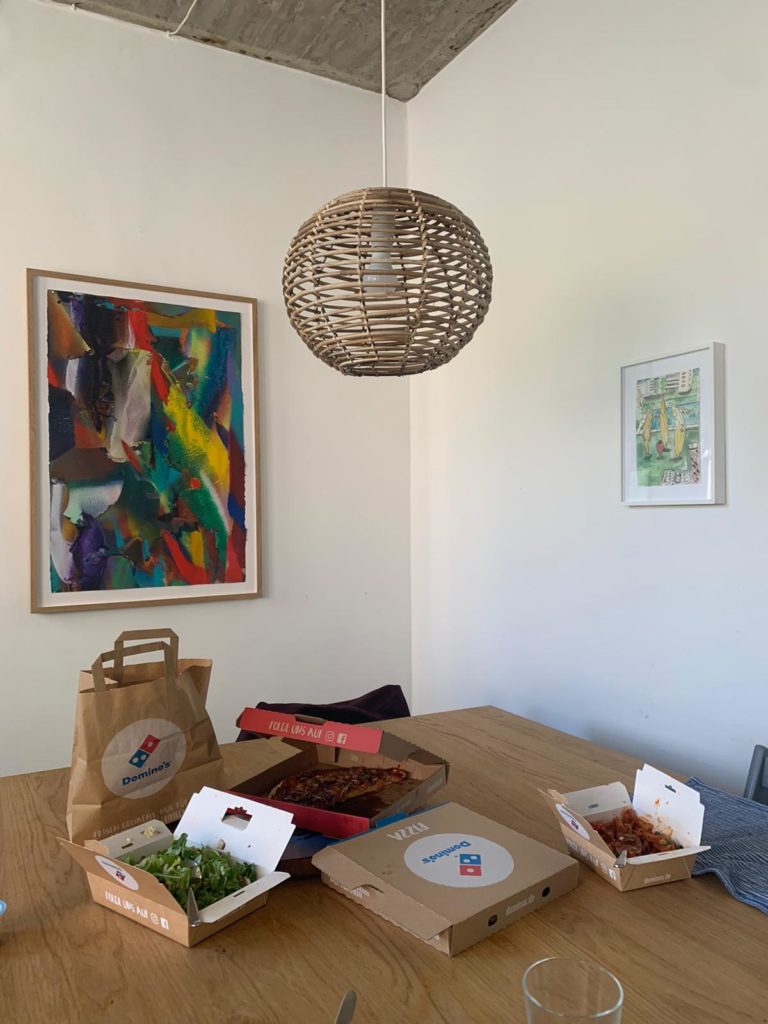
Lunch at the König residence: Domino’s
against a backdrop of a work on paper by Katharina Grosse.
2:00 p.m.: Daily Sales Meeting
Next up was the daily sales
meeting. Though conducted over Zoom, the meeting concerned Elmgreen
& Dragset works that would be shown not just IRL in the gallery,
but, ideally, IRL indefinitely—if they were sold to private museums
or institutions.
“We’re discussing which
sculpture parks to reach out to,” König said. “There’s still a
big possibility right now for art in public.”
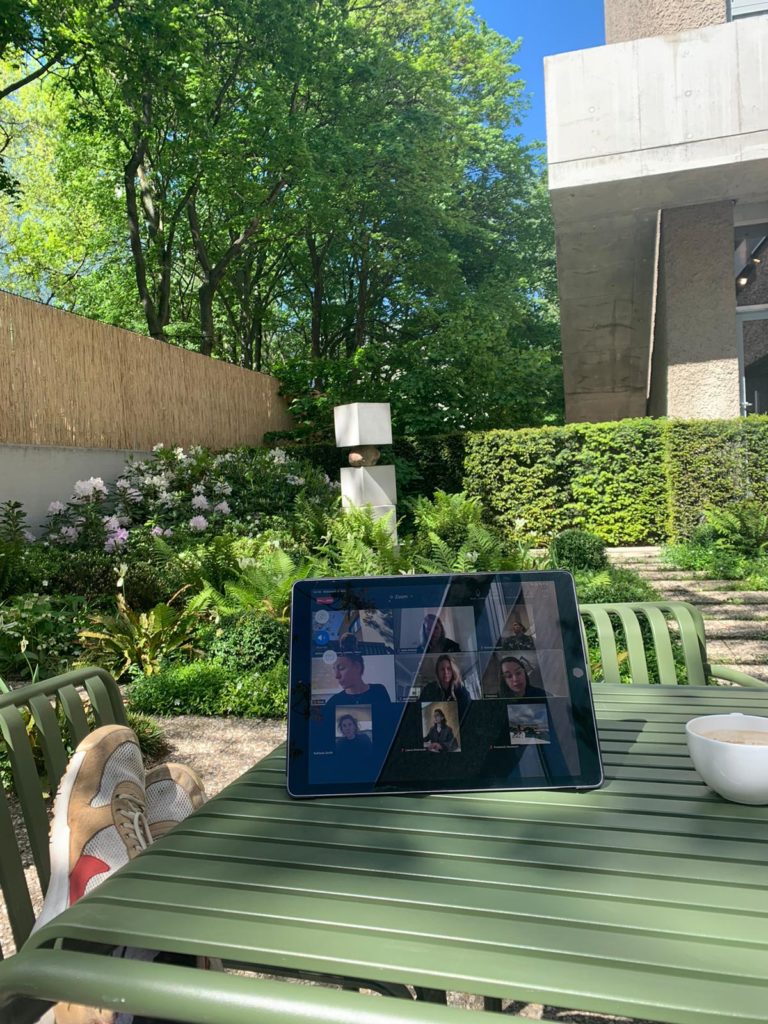
A sales meeting in the lockdown era.
As he recorded a voice message
for me, he was sitting outside, drinking a coffee, his Nike Air
Jordans propped up on the chair next to him. In the distance, his
son climbed on a statue.
4:00 p.m.: Instagram Live
After the meeting, it was time
to go inside to rig up his phone for his 10 a.m. Instagram Live
series, which consists of a chat between König and an artist or
colleague. Every Tuesday through Sunday, since the middle of March,
there have been two chats per day, one at 10 a.m. Berlin time and
the other at 10 a.m. New York time. He’s gone live with all of his
artists (the videos now doubling as efforts to drive online sales)
as well as fellow dealers (Tim Blum, Emmanuel Perrotin, Esther Kim
Varet) and a number of prominent collectors (Andy Hall, Dennis
Scholl).
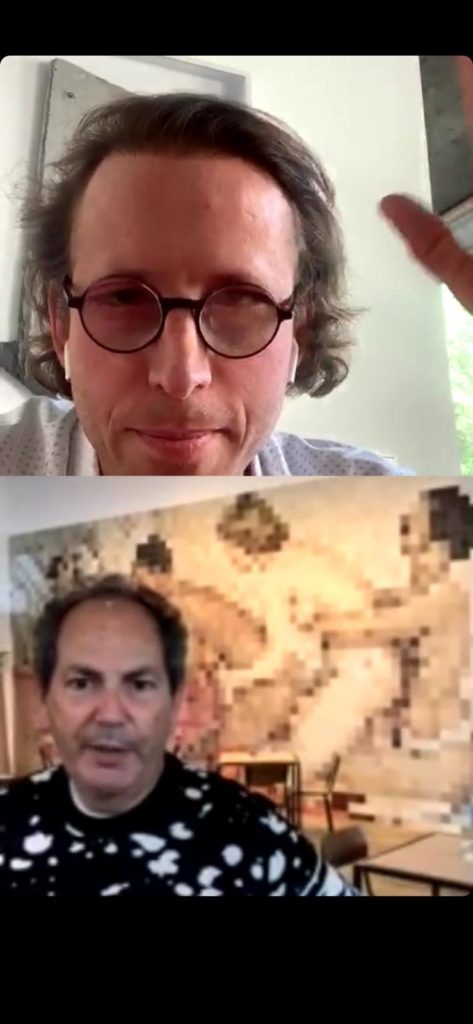
König and collector Gil Bronner in
conversation on Instagram Live.
Today, the guest was Gil Bronner, the Düsseldorf-based collector
whose private institution, the Philara Collection, has been housed
in a former glass factory since 2016.
5:00 p.m.: Browsing Frieze’s Online Viewing
Room
Wednesday also happened to be
the VIP opening of the Frieze New York online
viewing room, and while König didn’t have a “booth” in the
fair, he wanted to check it out and maybe buy some work by younger
artists. So he sat down on his Franz West sofa and fired it up on
an iPad. He wasn’t too impressed.
“There’s a lot of problems
navigating because it’s super super super slow, and once you’re
inside one gallery, you can’t really move back and forth because it
takes too long,” he said, scrolling through some works by Katharina
Grosse in the Gagosian booth and Loie Hollowell in the Pace
booth. “It’s not really a new experience. What I really
miss in these online fair possibilities is a communications
function to the dealer. I don’t know why they don’t implement
it—it’s so easy to implement FaceTime on something like
this.”
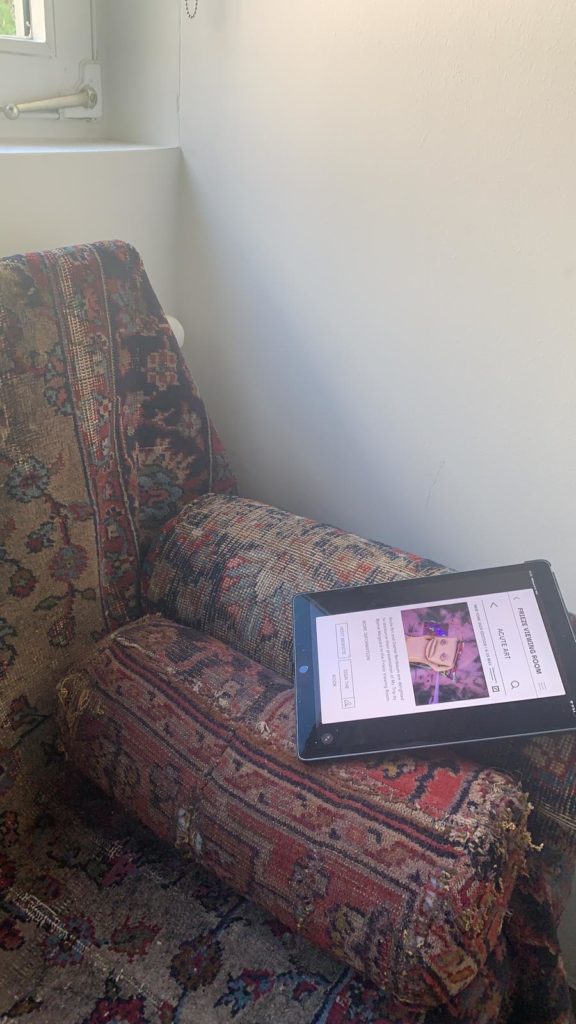
König exploring the Frieze online
viewing room on his Franz West couch.
“If I couldn’t enjoy the Frieze
online viewing room on a sofa by Franz West,” he said, “I wouldn’t
enjoy it at all.”
6:00 p.m.: a Visit to the Showroom
As evening arrived, König walked
over to the room where masked art handlers were deinstalling and
rehanging the Galerie König online showroom, which offers a look at
gallery inventory outside the normal exhibition
schedule.
There, König took out a laptop
and logged into Trello and Slack, two workplace-related apps that
he implemented due to the shutdown but plans to use more going
forward. Judging by his Trello interface, he’s got a busy two weeks
ahead—there is set to be a real, live reception for Elmgreen &
Dragset this Friday at the gallery in Berlin.
He then went over to the
editions and merch shop, König Souvenir, where he was putting the
finishing touches on his latest bit of swag: a paint-stained
freestanding bar cart that artist Anselm Reyle made from leftover
wood at his studio.
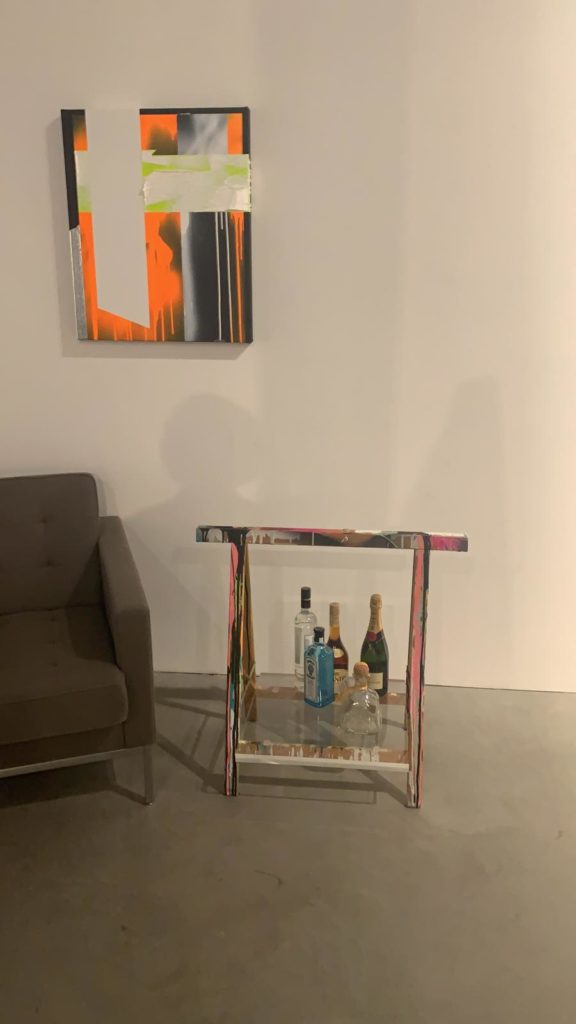
An Anselm Reyle bar cart at König
Souvenir.
7:30 p.m.: A Collector Rendezvous
König ducked his head into the
nave to check on the Elmgreen and Dragset tennis court before
meeting downstairs with a Hamburg collector who’s building up a
trove of large works for an outdoor sculpture park and wanted to
check out the Tatiana Trouvé.
“He wanted to take
it—unfortunately—only as a loan for his garden show,” König
said.
8:30 p.m.: An Escape for Dinner
As the sun began to
set, König jumped into a car—he and Lena were allowing
themselves to leave the compound for dinner.
“As a big surprise, for the
second time today I left the house, the first time since eight
weeks I think—because we are visiting a friend for dinner,” König
told me from the backseat. “It’s really so weird to do that! It’s been so
long.”
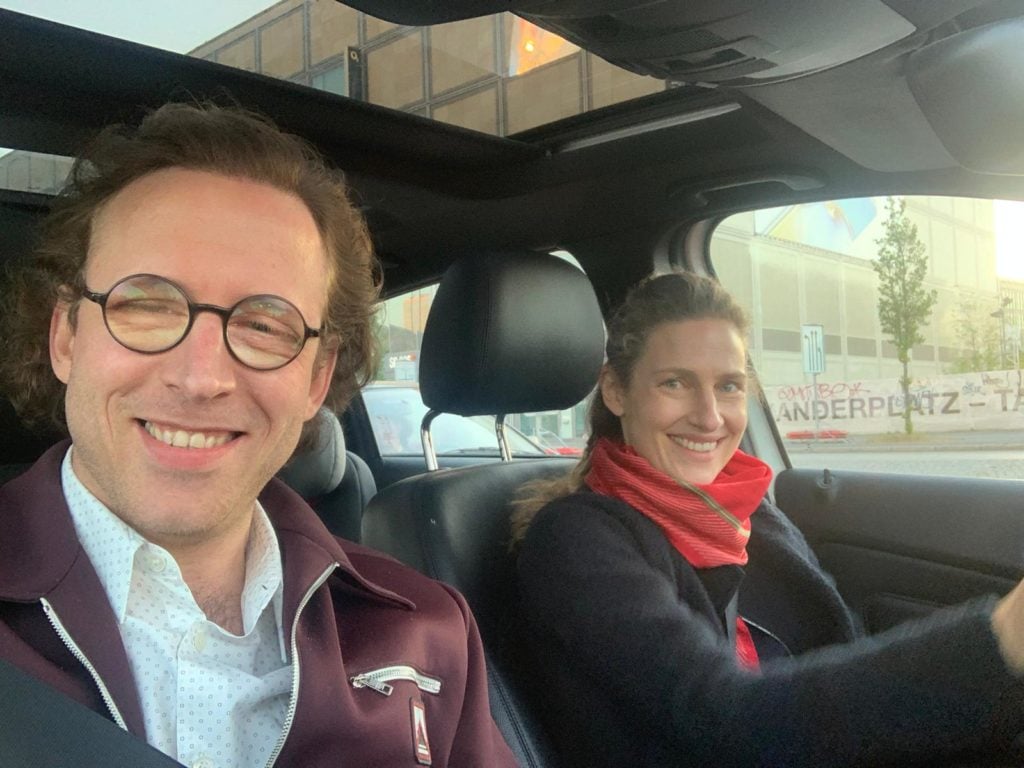
König and his wife Lena en route to
dinner.
11:30 p.m.: A Last Glimpse of the Gallery
After dinner, he checked in once
again on the exhibition, and saw that remarkable progress had been
made: one of the Elmgreen and Dragset sculptures, of a man slumped
in a wheelchair, had been placed on the tennis court and lit from
above, creating an eerie sensation of being helplessly
alone.
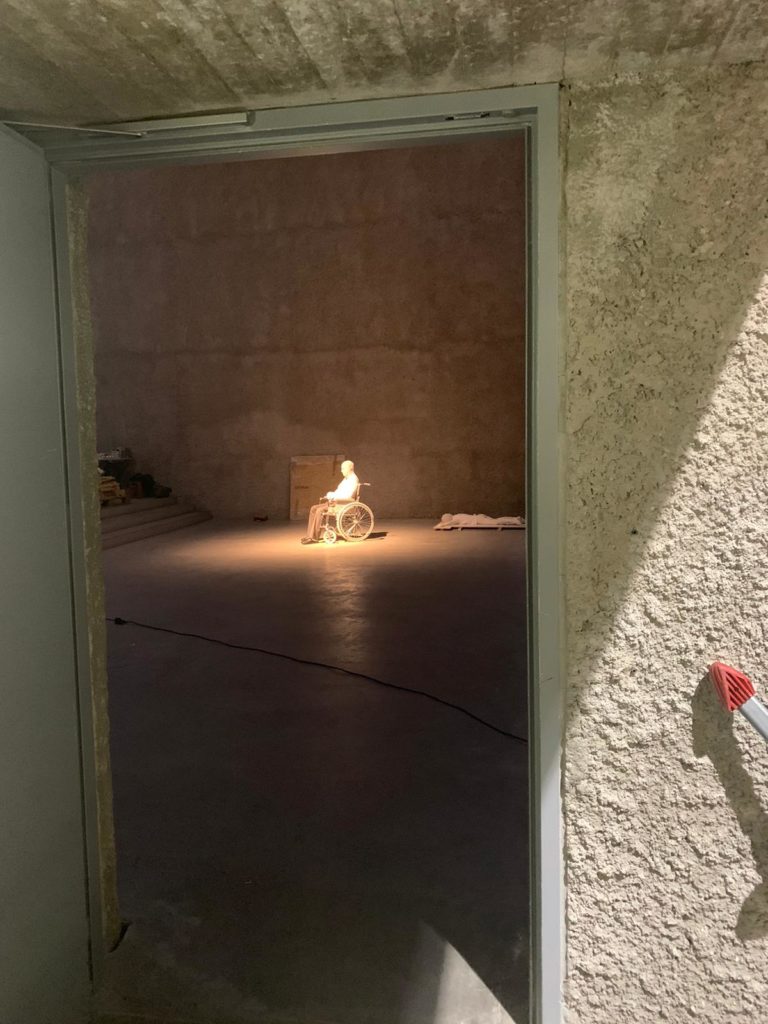
Elmgreen and Dragset’s
installation-in-progress.
“It was a long day,” König said. “So maybe one last picture
and then that’s it?”
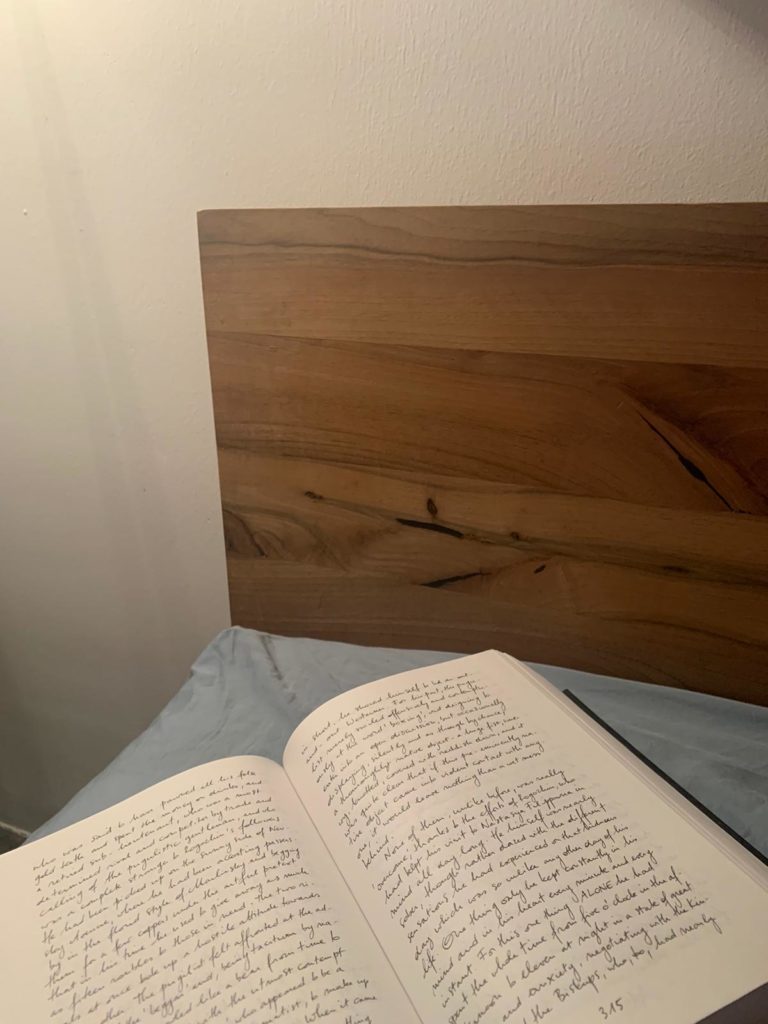
Bedtime reading.
12:30 p.m.: Lights Out
König got in bed and curled up
with some very art-world reading: Kris Martin’s handwritten,
1,500-page translation of Dostoevsky’s The Idiot—in which
every mention of Myshkin is replaced by a mention of “Kris Martin”—
and read until he fell asleep.
The post ‘It Was a Long Day’: We Spent 18 Frenzied Hours
With Art Dealer Johann König as He Raced to Reopen His Berlin
Gallery Post-Lockdown appeared first on artnet News.
Read more https://news.artnet.com/art-world/frenzied-day-johann-koenig-reopens-berlin-gallery-1858689
Further reading


Leave a comment