
LGBTQ Activists Are Condemning the Palais de Tokyo for Hosting a Show by a Qatari State Museum
Is the France-Qatar Year of
Culture doomed only a week into 2020?
In Doha yesterday, programming
for the year-long cultural exchange was announced
to great fanfare, but one planned exhibition is already catching
flack.
“Notre monde brûle” (Our
World is Burning), an exhibition organized by Mathaf, Qatar’s
state-run Arab Museum of Modern Art, is set to open at Palais de
Tokyo on February 21 (through May 17), but critics say the
collaboration, between a French museum that espouses a
LGBTQ-friendly ethos, and the Qatari state, which criminalizes
homosexuality, is unacceptable.
“This is part of the Qatari government’s shameless and long-term
strategy to bribe French society and soften its stance on human
rights issues in the Persian Gulf region,” Yves Michaud, the former
director of the École Nationale Supérieure des Beaux-Arts, told the
Art Newspaper.
Curated by Mathaf’s director,
Abdellah Karroum, with French art historian Fabien Danes, the
exhibition is a “committed look at contemporary creation from the
Persian Gulf” amid the wars and diplomatic tensions that defined
the beginning of the 21st century, according to the show’s
organizers.
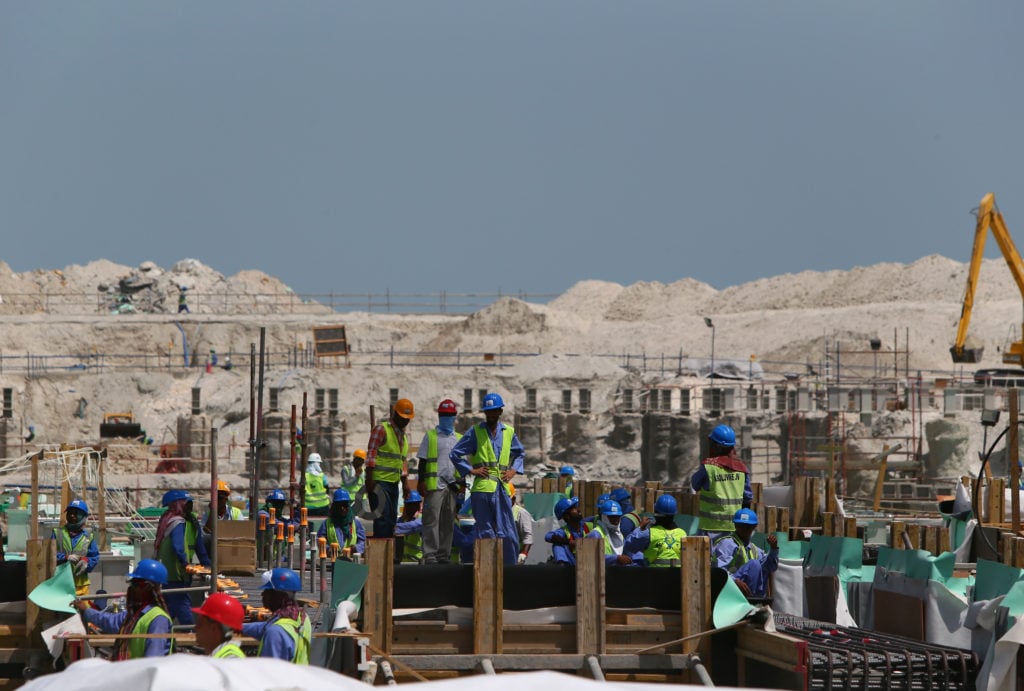
Workers at the site where the Lovure Abu
Dhabi was being constructed in 2013. Photo: Marwan
Naamani/AFP/Getty Images.
Drawn from Mathaf’s collection,
the exhibition is slated to feature works by international artists
including Francis Alÿs, Wael Shawky, and Yto Barrada, and will
touch on everything from the Arab Spring to the impact of climate
change.
The backlash against the show,
first reported by the Art Newspaper, comes amid growing scrutiny over Qatari
investments in France, especially in the cultural sphere, and
growing global concerns over the nation’s stance on homosexuality
in the prelude to the 2022 FIFA World Cup, which Qatar will host.
The travel safety blog Asher and Lyric in December ranked
Qatar the second-most-dangerous
country in the world for LGBTQ travelers.
Museums in France have faced
mounting scrutiny over the past decade for taking money from
nations that have poor human rights records.
In 2017, the celebratory opening
of the Louvre Abu Dhabi was tarnished by the poor treatment
of South Asian migrant
construction workers who built the museum. Yet the Louvre will
bring in €974 million
($1.12 billion) from the UAE over three decades, some of which will
be spent to bolster operations at the Paris
flagship.
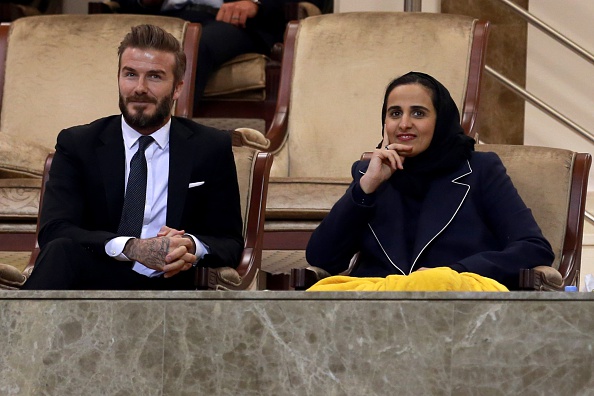
Sheikha Al-Mayassa bint Hamad bin
Khalifa Al-Thani (right), with David Beckham at a tennis match in
Doha, Qatar on February 27, 2015. Photo by Mohamed Farag. Courtesy
of Getty Images.
Yet the Al Thani family, which
rules Qatar, has been a growing force in the art world. Sheikha
Mayassa Al Thani, the sister of the Emir, was reported to have
spent over $1 billion on art in
2013, and in 2017, the family paid $300 million for
Paul Gauguin’s 1892 painting Nafea Faa Ipoipo (When Will You
Marry?).
The exchange with France marks
the ninth Year of Culture organized by Qatar. The annual cultural
exchange is intended to foster “mutual understanding across
borders” and opportunities “to encounter and appreciate one
another’s creativity” through exhibitions, festivals, bilateral
exchanges, and events, according to a statement. Among Qatar’s
previous partners are Germany, India, and Japan.
Neither the Palais de Tokyo nor
Mathaf provided comment by the time of
publication.
The post LGBTQ Activists Are Condemning the Palais de Tokyo
for Hosting a Show by a Qatari State Museum appeared first on
artnet News.
Read more https://news.artnet.com/art-world/palais-de-tokyo-qatar-exhibition-lgbtq-rights-1748475
Further reading


Leave a comment