
Literally Sit on Your Hands and 5 Other Tips on How to Pull Off a Professional Virtual Studio Visit
The humble studio visit is a
pillar of art world routine, the ritual by which curators hunt for
fresh talent, collectors or dealers get to know an artist’s
practice, and art teachers examine their pupils. As the global art
world settles into full “shelter in place” mode, the ritual will go
on—but, as with so much else, in virtual form.
Within the global art industry,
doing studio visits remotely was actually already fairly
common. “It’s not
strange to do a virtual studio visit because we are already working
with people all over the world,” the artist Oliver Beer tells Artnet News from his
studio in London’s eerily quiet Soho. “I used not to have a studio
and I used to do my studio visits on my laptop, so I think a lot of
artists know what that feeling is like.” Nearly all three years of
preparations for his exhibition at New York’s Metropolitan Museum of
Art last summer, he says, were done remotely.
Other experts concur that the
protocols are well in place to carry on. “I’m pretty sure I’ve always done more virtual
studio visits than in-person ones,” Lucia Pietroiusti,
curator at the
Serpentine, tells Artnet News. Kelani Nichole, founder of TRANSFER, says the same—though her space,
which describes itself as a “networked contemporary art
gallery,” specializes in digital art anyway, so it may be a special
case: “Often
during the in-person studio visits, we are just sitting in front of
a computer anyway.”
Still, the experience may be new
to some, and it has its special quirks. Below, we’ve gathered
together some tips from the experts on best practices for a
successful virtual studio visit.
1) Know Your Platforms
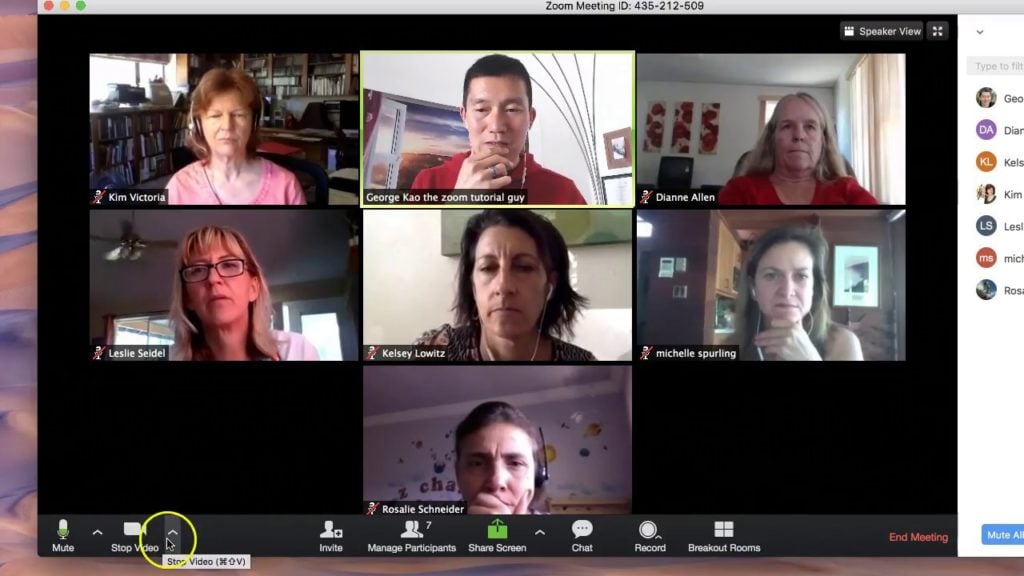
A remote meeting on Zoom Meetings.
Screenshot via YouTube.
There’s no shortage of
platforms that offer video calling. Some swear by Zoom, others pray
at the altar of Google Hangouts. There is also Skype, Facebook
Messenger, Slack, FaceTime, WhatsApp, and many more. If you’re
thinking of doing a tour for a group of people at once, you could
even consider doing a livestream on YouTube or
Instagram.
But each has its quirks, so it’s best to acquaint yourself with
these in advance.
The virtual studio visit format
actually allows for some benefits in terms of being able to
showcase a range of materials easily. Experts recommend choosing a
platform that allows for screen-sharing so that you can showcase
press clips or previous examples of work that are on your
desktop.
2) Share Your World—in
Advance
“It’s always really useful to
have shared links and info beforehand, so the chat is actually
expanding on shared knowledge,” Lucia Pietroiusti says. So think
about what you want the other person to know before entering the
call.
“Think about how you would talk
with a curator or another artist or a musician when they’re abroad,
and use all the tools you possibly can to communicate your world
and to get them inside your head space if you can’t get them into
your physical space,” Oliver Beer says.
The artist, who works a lot with
sound, suggests getting a visitor to listen to the right music, and
get a sense of the spaces he wants to build in other creative ways.
“They won’t be able to appreciate the physicality of what I’m
doing, or the chemistry of what I’m doing, but they can get close
to the ideas if you’re there with it on the phone.”
3) Expect Hiccups

A Facebook error page. Photo by Julian
Stratenschulte/picture alliance via Getty Images.
When communicating online, you
have to adjust your expectations and have patience with the
technology. While you may both be in locations with perfect wifi
connections, the reality is that often the resolution will not be
movie theater quality. It depends on the quality of the camera,
microphone, lighting, and internet speed.
“You just have to expect
connection issues, weird audio, and the normal hiccups of virtual
meetings,” Nichole says.
She adds that it is common
courtesy to start with video. However, if the connection is
too slow, switching to audio and sending links back and forth is
always an option.
4) Stay
Focused
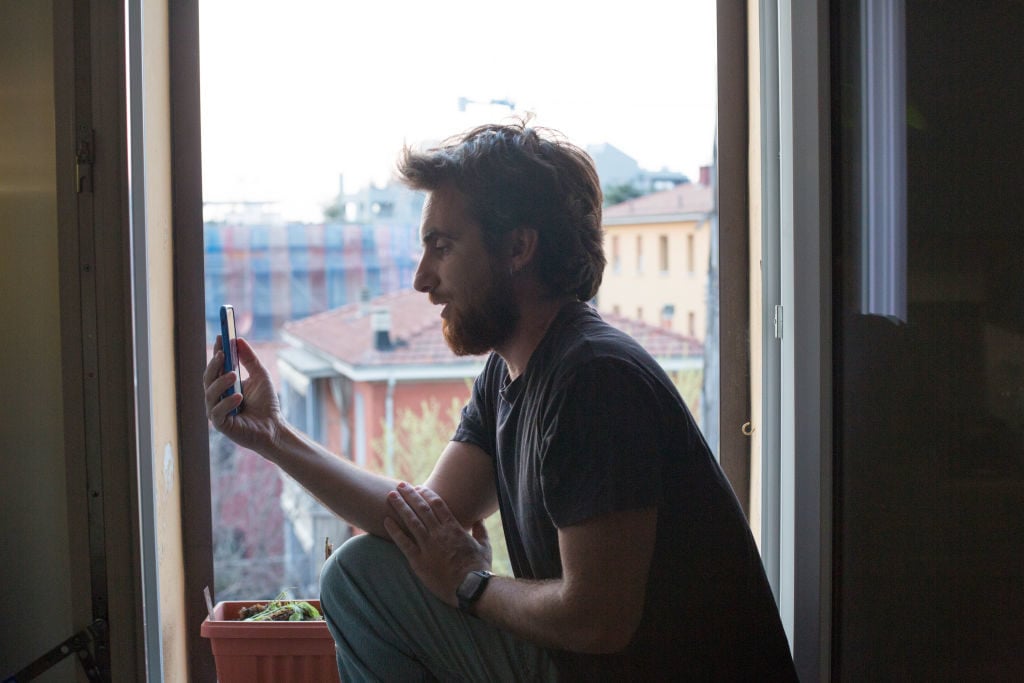
A man using WhatsApp video during
lockdown. Photo by Massimo Cavallari/Getty Images.
The web is a garden of distraction, designed to suck you away
from the task at hand, so conducting a studio visit from your
desktop offers some particular pitfalls. If you are trying to
impress someone as to the importance of your vision, it doesn’t do
to be thrown off by some other thing blinking at you for your
attention online.
“All-important is to not get
distracted by other apps or tabs,” Pietroiusti says. “The computer
may be able to multi-task, but it’s important to give one another
full attention as though you were in the same room!”
If you struggle with this, the
Serpentine curator recommends literally sitting on your
hands.
5) Think About the
Tools Already in Your Arsenal
Since you have to communicate
remotely, artists can be creative about ways to communicate what
they do. Beer’s been
documenting his own process, exhibitions, and performances over the
past few years, without finding quite the right use for
it.
“I have been using this time to
think about actually making the most of the resources that we have
sitting in our phones already, which we haven’t had time to share,
and thinking about them as materials to be shared,” he
says. Beer suggests
that, if you can get a bloc of attention from a curator or other
virtual visitor, this “wealth of material” could actually as
fruitful as a way to generate interest as virtual face
time.
6) Treat It Like It’s the Real
Thing (Because It is)
If you want a virtual studio visit to feel like it has the
gravitas of a real one, don’t let the fact that you are not
expecting a “real” visitor to your studio affect how you present
yourself.
Which might mean (among other things): don’t wear pajamas
(unless that is what you would wear to an in-person meeting) and be
online at the arranged time (since you really can’t blame traffic
for being late).
On the other thing, the studio visit is a very particular kind
of ritual, all about building up rapport and understanding. So it
shouldn’t exactly have the starchy feeling of teleconferencing in
to a board meeting either.
“I think as long as the
collector treats the virtual studio visit with the same respect
that they would treat a private one, then there’s nothing that I
would ask them not to do,” Beer says. “It’s all about building a
relationship that allows an artist to feel relaxed enough to share
what is actually a very private and experimental space.”
And a Final Thought From Our
Experts….
In the brave new world of
coronavirus, many artists may have lost their safety nets and are
struggling to make ends meet, perhaps even to pay the rent on the
studio that’s being virtually visited.
So if you’re the one doing the
visit, and you have the means, why not think about whether it
merits some kind of support—whether or not you end up buying
something? It may be virtual, but it’s still a commitment of time
and energy on the part of the artist to do.
“It is a super tough time for artists and
freelancers, so those curators and art professionals that have a
more guaranteed income should really reflect on how to remunerate
people for their time,” Pietroiusti says. “This might mean thinking
about it for studio visits, too? Or at least discussing it as a
possibility.”
The post Literally Sit on Your Hands and 5 Other Tips on How
to Pull Off a Professional Virtual Studio Visit appeared first
on artnet News.
Read more https://news.artnet.com/art-world/virtual-studio-visits-1810200
Further reading


Leave a comment